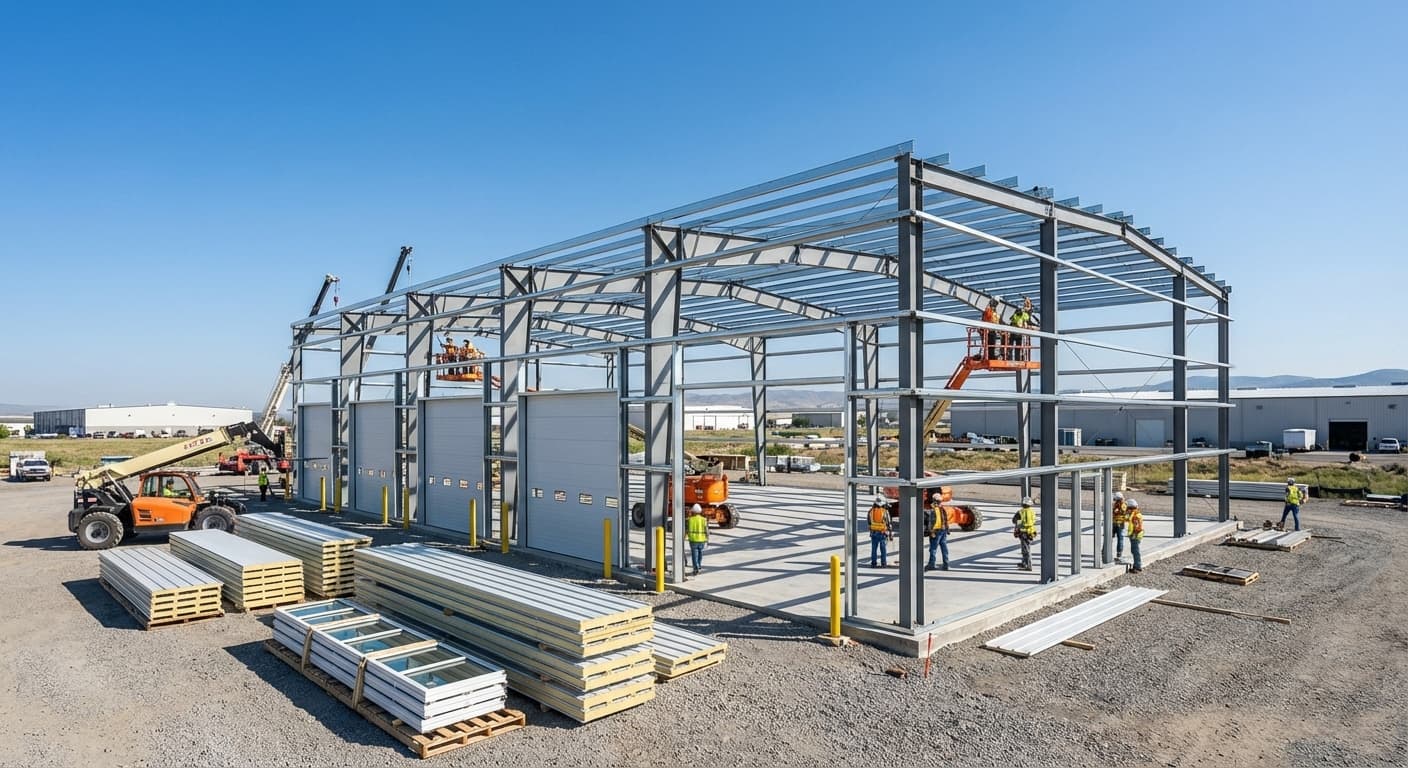

A 40×80 metal-building package delivers 3,200 sq ft of code-compliant, warrantied space, and this article shows how to personalize it–extra doors, energy-smart windows, thicker insulation, snow-load upgrades–without ever triggering the dreaded "warranty void." Readers learn the critical two-foot setback rule for openings, the insulation thickness that cuts utility bills in half, the paperwork trail that keeps 20- to 25-year rust-through and paint coverage intact, and why factory-certified ProTrades crews must handle every add-on from day one. It demystifies snow loads, wind ratings, IAS AC472 certification, and the hidden cost of retrofits, while revealing tax breaks, seasonal steel pricing dips, and the documentation habits that turn a metal shell into a 50-year, low-maintenance asset. By following these manufacturer-approved steps, owners secure maximum flexibility, lower lifetime costs, and the peace of mind that every upgrade is protected by the same warranty that guards the original structure.
Understanding the Core 40×80 Metal Building Package
A 40×80 metal building ships as a 3,200-sq-ft, code-compliant shell–pre-cut, weathertight, and backed by 20-25-year warranties that guard your wallet against rust, paint failure, and structural defects.
What's Included in the Standard Package
A standard 40×80 metal building package delivers 3,200 square feet of usable space with components designed for durability and efficient installation. The base package includes essential structural elements: durable primary framing (the main support columns and rafters), secondary framing (purlins and girts that attach to the primary frame), and exterior sheeting [1].
All components arrive pre-cut and partially assembled to minimize waste and installation time [1]. The standard package is engineered specifically for your location's building codes and environmental conditions, including factors like snow loads and wind ratings [2].
This engineering customization happens before manufacturing begins, ensuring your building meets local regulatory requirements without additional modifications [1]. The structural elements form a complete, weathertight exterior shell ready for your specific use case, whether for commercial, agricultural, or storage applications.
How the Warranty Protects Your Investment
Metal building warranties directly protect your financial investment by covering manufacturing defects that would otherwise require costly out-of-pocket repairs. Quality 40×80 metal buildings typically include a 20-25 year warranty on roofing and structural components like 12-gauge frames [5][5]. These warranties shield you from expenses when materials fail prematurely, ensuring panels don't rust through and finishes don't deteriorate under normal conditions [4].
Most manufacturers offer multiple warranty types that protect different building aspects: rust-through coverage for serious corrosion, paint warranties against fading or peeling, panel warranties for structural integrity, and sometimes workmanship guarantees when installed by factory-certified crews [4]. When comparing warranty options, examine whether coverage is full or prorated over time, whether it protects structural elements or just cosmetics, and investigate the manufacturer's history of honoring claims [4]. Remember that warranties typically exclude damage from natural disasters, neglected maintenance, unauthorized modifications, and third-party installations [4].
With proper care, a warranted metal building becomes a protected long-term investment, lasting 50+ years while minimizing unexpected repair costs [5].
Key Quality Standards and Certifications
Quality metal buildings must meet rigorous certification standards that verify structural integrity and code compliance. The most significant industry credential is the IAS AC472 accreditation program, developed jointly by the International Accreditation Service and the Metal Building Manufacturers Association (MBMA) [6]. This third-party certification verifies that manufacturers follow quality control processes based on Chapter 17 of the International Building Code (IBC) [6].
Accredited manufacturers must demonstrate proper non-destructive testing capabilities, documented procedures, and certified personnel [6]. AC472 accreditation provides a key advantage: building officials can recognize accredited manufacturers as "approved fabricators," potentially exempting them from additional special inspections while ensuring quality standards are maintained [6]. When evaluating metal building packages, confirm the manufacturer meets current building code editions (like the 2018 IBC) which determine requirements for material specifications and structural design [6].
Quality buildings should also undergo custom engineering to address local environmental factors including wind ratings, snow loads, and seismic activity [7]. The MBMA considers these standards so essential they made AC472 accreditation mandatory for membership, establishing it as the industry benchmark for quality metal buildings [6].
Approved Add‑Ons That Preserve Warranty Coverage
Protect your warranty and cut energy bills in half by using only metal-building-approved doors, windows, and insulation–like Low-E argon glass and R-30 vinyl-faced fiberglass–installed at least 2 feet from corners with sealed eave wraps.
Compatible Door and Window Options
You keep your warranty intact by choosing doors and windows designed for metal buildings. Your standard 40×80 package includes one 10'x8' overhead door and a 3'x7' personnel door–but you can customize based on your needs [8]. Just remember the 2-foot rule: keep doors and windows at least 2 feet from corners and eaves (add 8-10 inches for bypass sidewalls) [8]. Your door choices include overhead garage, rollup, sliding, and bifold styles. Pre-assembled doors arrive ready to install–no field cutting that could void your warranty [9].
Need something unique? Knock-down systems work for special applications when you follow manufacturer specs [9]. For windows, stick with frames engineered for metal buildings. Self-flashing vinyl windows integrate seamlessly with metal panels [9]. Want better efficiency?
Low-E argon glass cuts your energy loss with a . 23 U-factor versus . 49 for standard glass [10]. Quick sizing tip: vinyl windows run 1/2 inch smaller than listed (a 4030 window measures 47½" x 35½") [10]. Match your sub-jambs to standard girt heights for clean, warranty-compliant installation [10].
Insulation and Interior Finish Choices
Insulation and interior finish choices
Your insulation choice affects comfort, costs, and warranty coverage. Three options work best: vinyl-faced fiberglass, spray foam, or insulated metal panels (IMPs) [11]. Fiberglass remains the popular choice–3" to 8" thick with R-values from R-10 to R-30. The reinforced backing means no chicken wire needed, saving you labor costs [12]. Go with premium packages for deeper wall cavities that don't compress your insulation.
You'll get R-19 to R-30 walls and R-20 to R-40 roofs [12]. Here's what proper insulation delivers: – Up to 50% lower utility bills – Quieter workspace (NRC 0. 75 sound absorption) – Protection from condensation that voids warranties [12] Your installer must wrap insulation around eave struts with closure strips and mastic sealing–skip this step and you risk warranty problems [12]. For interior finishes, vapor barriers do double duty. They're 300% stronger than standard films and give you a bright white finish without extra painting [12].
Want color? Decorator options are available and warranty-approved [12]. Install everything during initial construction. Retrofitting later often creates warranty headaches you don't need.
Structural Enhancements for Snow Load and Wind Bracing
Structural enhancements for snow load and wind bracing
Your location dictates your structural requirements–they're not optional. Snow loads range from 10 psf down south to 70+ psf up north. Wind ratings hit 150+ mph on the coast [13]. These aren't upgrades; they're code requirements. Start with diagonal braces connecting legs to roof framing. They handle wind and seismic forces while keeping your warranty valid [14].
In heavy snow country, upgrade to 12-gauge framing instead of standard 14-gauge–it's thicker, stronger, and warranty-approved [14]. Your roof design matters too. "Unobstructed" roofs shed snow naturally and carry lower load ratings. Add snow guards or other "obstructions" and you'll need stronger structural support [15]. The smart move? Work with [ProTrades certified installers](https://nationalsteelbuildingscorp.
com/service/custom-built-cold-formed-steel-buildings/) who understand these requirements. Your building arrives with stamped engineering drawings that prove code compliance–making permits easier [13]. One warning: never modify your building without checking with the engineer first. Even small changes can void your warranty if they affect the original design [15]. Build it right from the start–retrofitting structural elements later gets expensive fast.
Seamless Integration with Single‑Source Services
Protect your warranty by demanding written, pre-approved documentation for every add-on–no exceptions–because verbal promises and skipped steps will void your coverage when you need it most.
Coordinating Add‑Ons Through ProTrades You need certified installers for add-ons.
Period.
Use anyone else, and your warranty disappears [4].
Streamlined Communication and Documentation
Documentation protects your warranty. It's that simple. Verbal promises mean nothing when you need coverage–only written records count [17]. Keep these documents safe: – Purchase agreements – Inspection reports – Maintenance records – Manufacturer approvals for every add-on Smart owners go digital and physical–backup everything [17]. Before ordering any add-on, get written approval. Weathertightness warranties demand pre-approval, no exceptions [18].
Skip this step, and you'll hear "warranty void" when you need help most. The paper trail flows like this: You request modifications. We secure manufacturer approval. Inspectors verify compliance. Everyone gets copies [19]. Miss a deadline, lose your coverage–even if everything else is perfect [17].
Premium warranties demand more paperwork. Basic coverage needs installation verification. No-Dollar-Limit protection requires inspection reports at every construction phase [19]. More protection means more documentation, but it's worth every page when you need it.
Managing Delivery and Installation Timelines
Your 40×80 building timeline breaks down like this: 3-6 weeks from order to completion. Custom manufacturing takes time–every building is engineered for your exact site [20]. Installation runs $5-$10 per square foot. Add 7-10 days for concrete curing before we can start assembly [20]. Rush the foundation, risk the entire project. Weather matters.
Wet conditions void warranties faster than you can say "moisture damage" [21]. Professional crews know when to work and when to wait. They protect your materials from exposure and your warranty from problems. The timeline reality check: – Order processing: 1-2 weeks – Manufacturing: 2-3 weeks – Foundation prep: 7-10 days – Assembly: 3-7 days (weather permitting) Get everything in writing. Installation milestones, weather contingencies, inspection schedules–documented expectations prevent disputes [22]. Your certified installer provides 2-3 years workmanship coverage, but only if they handle the entire job [22].
Here's what kills timelines: DIY attempts, multiple contractors, and weather gambles [21]. Schedule inspection checkpoints throughout assembly. Post-installation modifications need authorized contractors or your warranty vanishes [21]. Plan it right the first time.
Cost‑Effective Decision Making and Long‑Term Value
Spend a little more now on 12-gauge framing and Low-E windows, lock in 6-8-year paybacks, protect your warranty with certified crews and documented maintenance, and watch your metal building outsmart traditional construction on cost, energy, and risk.
Evaluating ROI of Add‑Ons
Your metal building add-ons pay for themselves faster than you might think. Most premium upgrades–like the insulation options detailed earlier–deliver 6-8 year payback periods versus 10-15 years for traditional construction [23]. Energy-efficient windows make a real difference too: Low-E argon-filled glass drops your U-factor to . 23 compared to .
49 for standard glass [24]. For structural decisions, think beyond upfront cost. Upgrading from 14-gauge to 12-gauge framing in snow country costs more today but saves you from structural failures insurance won't cover [24]. The tax benefits sweeten the deal–commercial buildings depreciate over 39 years, and certain improvements qualify for Section 179 deductions [23].
When you're comparing quotes, demand itemized breakdowns. You need to see materials, labor, and engineering costs separately to spot the real value [24]. That transparency helps you make smart choices that protect your warranty while maximizing your investment.
Avoiding Common Warranty Pitfalls
Here's what voids warranties faster than anything: using unauthorized installation crews [21]. Even small changes after installation–like cutting new door openings–kill your coverage unless you get written approval first [4]. Maintenance matters more than you think.
Skip the recommended cleaning schedule? Your warranty's gone, no matter what actually caused the problem [4]. And that storm damage you thought was covered?
Natural disasters need separate insurance–warranties don't touch them [21].
Leveraging Market Monitoring for Pricing Advantage
Smart timing and comparison shopping put thousands back in your pocket. As discussed in earlier sections, 40×80 buildings run $18-$22 per square foot for kits alone, with complete projects hitting $27-$40 per square foot [26]. These prices shift with steel markets and seasons. Get quotes from multiple suppliers at once–not one at a time. Most manufacturers match written competitive offers [27].
Use online configurators to see instant price impacts from small changes. Every 2-foot height increase adds $3,000-$7,000 to your base cost [28][26]. Time your purchase right. Late fall through winter often brings 5-10% discounts as manufacturers keep production lines moving [26]. For foundations, local contractors typically beat bundled pricing by 15-20% since concrete costs vary wildly by region [28].
Watch the fine print. Some quotes leave out 20-30% of real costs by excluding site prep and foundation work [26]. Get everything itemized so you're comparing apples to apples. The cheapest quote rarely stays cheap once you add the missing pieces.
- Only factory-certified crews preserve your 20-25-year warranty; unauthorized installers void coverage.
- Document every add-on with written manufacturer approval or lose warranty protection.
- Keep doors/windows 2 ft from corners/eaves and use metal-building-specific frames to stay warranted.
- Upgrade to 12-gauge framing in heavy-snow zones–code-required and warranty-approved.
- Insulate during initial build: retrofits risk warranty void and 50% higher energy bills.
- Natural disasters, neglected maintenance, or DIY mods always void the warranty.
- https://www.metalbuildingoutlet.com/40×80-metal-building-kit/
- https://gensteel.com/steel-building-kits/base-building-packages/40×80/
- https://alansfactoryoutlet.com/40×80-steel-building/?srsltid=AfmBOorjpERp14L0-vJCP-EoZlsPKfnJ6MDH_R1Ex-l36eErpb-xhjah
- https://garagebuildings.com/steel-building-warranties-explained-whats-really-covered-in-2025-2026
- https://mavericksteelbuildings.com/40×80-metal-buildings/
- https://www.iccsafe.org/building-safety-journal/bsj-technical/non-destructive-testing-building-code-requirements-and-ias-ac472-accreditation/
- https://mbmisteelbuildings.com/blog/metal-building-warranties/
- https://www.buildingsguide.com/products/standard-size/40x80x10-metal-building/?srsltid=AfmBOool4aeKQ4uqInsACmFTPGTT2mE8aOBZg06s_5dJLEtAcvQ00YKm
- https://therm-all.com/door-and-window-systems/
- https://www.sbadoors.com/products/window-vinyl/
- https://www.buildingsguide.com/standard-sizes/40×80-metal-building/?srsltid=AfmBOootNUUTxXOIfgD4l1NG2RmKE8idNx4cTb6Guzcglqzfqv4oK479
- https://www.rhinobldg.com/metal-building-insulation
- https://www.aametalbuildings.com/blog/snow-load-wind-speed-requirements-for-metal-buildings-with-codes-pricing-impact?srsltid=AfmBOormKGVD9BQBjKMk9dJpQIZtTv_kOX5LdFMqbDqBkybQf6gvfPWq
- https://americansteelinc.com/features/
- https://www.linkedin.com/pulse/use-caution-when-modifying-existing-metal-buildings-justin-tedesco
- https://www.nucorbuildingsystems.com/resources/warranty/
- https://www.vikingsteelstructures.com/blog/what-is-included-in-a-metal-building-warranty-know-the-in-out?srsltid=AfmBOorxWlvnqe77XjLWvymUQa5nMSA2GoF5hxlaAQu927w4T3qWknRf
- https://www.starbuildings.com/blog/tips/knowing-what-your-metal-panel-warranty-isand-isnt/
- https://www.metallic.com/warranties/
- https://www.buildingsguide.com/standard-sizes/40×80-metal-building/?srsltid=AfmBOoopQDNi8riL7Y9C5cNdvoBPKKVDCPYl81Q1WcAU4swM0GD2rIwE
- https://www.vikingmetalgarages.com/blog/what-you-should-know-about-metal-building-warranty
- https://lelandsmetalbuildings.com/warranty/?srsltid=AfmBOoqHxo83pSTCAjmV8Mwlzw2TmwE0KtGbiKnsor31tqbx54y0NRcz
- https://www.hswilliams.com/blog/commercial-metal-buildings-cost-vs-value-analysis
- https://roimetalbuildings.com/how-to-vet-a-metal-building-quote/
- https://www.worldwidesteelbuildings.com/blog/mistakes-to-avoid/
- https://chinasteelbuildsales.com/40×80-metal-building-cost/
- https://www.buildingsguide.com/metal-building-prices/?srsltid=AfmBOor447Ke3kVm2vhM2eBNsCk1-XmvT5JoRmpCBn_BvabDdsyVLqLJ
- https://alansfactoryoutlet.com/40×80-steel-building/?srsltid=AfmBOorn33pPXLQfCUPxNSpFYFWaZUI_84rE5lunUlHY_JIDOgk19Ecc