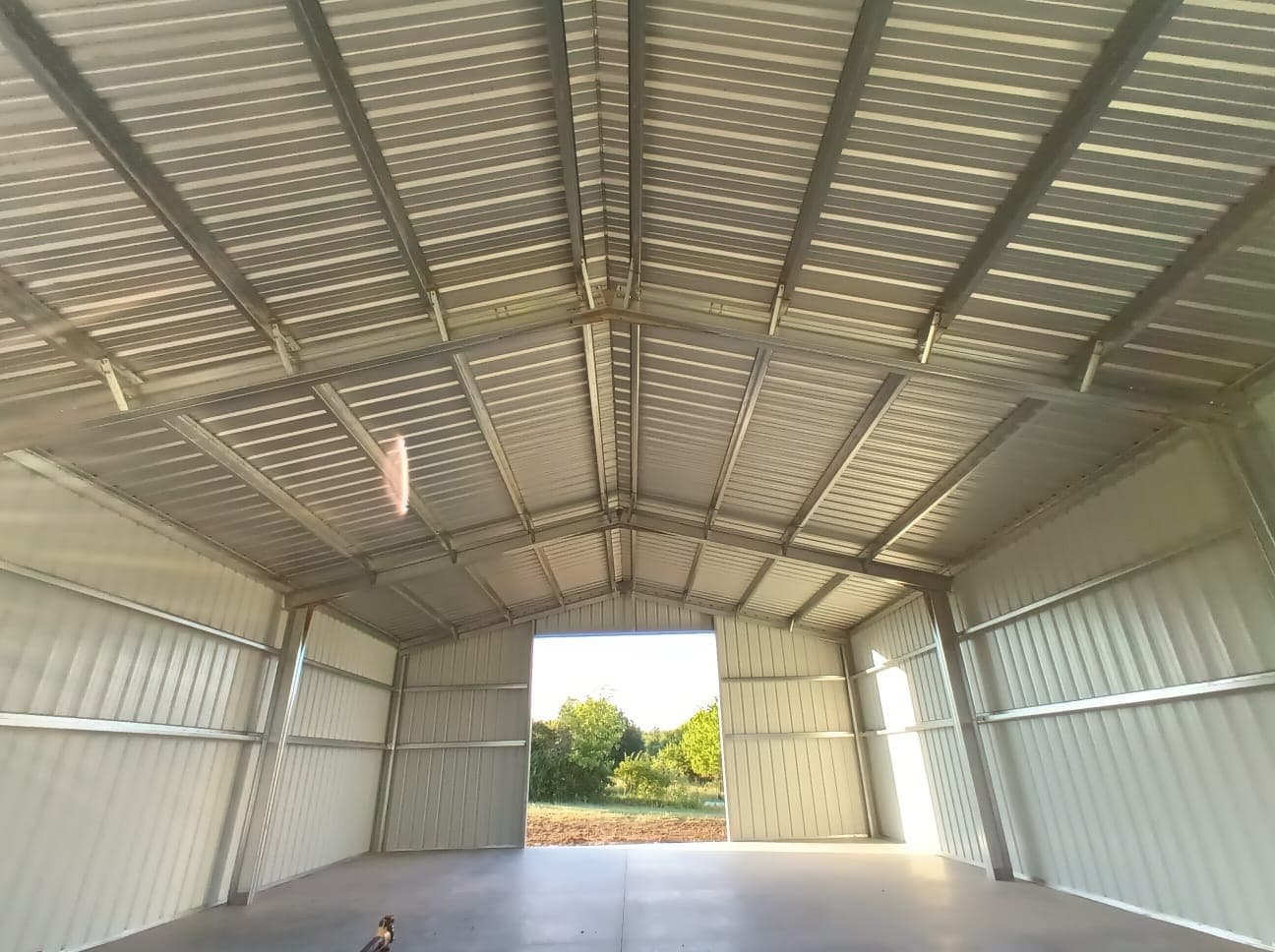


Why Choose NSB Cold-Formed Steel Buildings?
Lightweight, economical construction for buildings 40 feet wide or less
Safe & Long-Lasting
Noncombustible construction resists fire, moisture, rot, and pests with superior dimensional stability
Fast Installation
Pre-cut, pre-drilled components bolt together without welding for rapid assembly
Cost-Effective
Lower construction costs, reduced insurance rates, and minimal waste disposal
Sustainable
100% galvanized steel with 25-70% recycled content and fully recyclable components
Cold-Formed Steel Buildings Features
Every cold-formed steel building can be customized to meet your specific needs
No welding required - bolt-together construction
Pre-punched panels for electrical and plumbing
Withstands heavy snow loads and seismic activity
Dimensional stability prevents warping or cracking
Lower insurance rates due to fire resistance
Ideal for buildings 40 feet wide or less
Cold-Formed Steel Building Information
Custom-Built Cold-Formed Steel Buildings
Cold-formed steel buildings, also called C-channel buildings, are a perfect solution for your new garage, barn, or even house. These structures are made of 100% galvanized cold-formed steel. The lightweight steel material is designed to bolt together with no welding, and provides our customers with a structurally sound, engineered, certified, and warranted steel building solution.
Fast, Economical, and Maintenance-Free
NSB cold-formed steel buildings are fast, economical, and maintenance-free. They offer a more cost-effective solution for metal buildings 40 feet wide or less. Building with cold-formed steel materials costs you less across the entire construction cycle because of the predictability, accuracy, and design efficiency of the components. This results in lower insurance rates, shorter project cycles, and less waste disposal.
Versatile Applications
Use cold-formed steel for commercial, industrial or more unconventional applications: Self-storage facilities, Residential housing, Barns, Warehouses, Garages, and Mid-rise buildings up to three stories.
Superior Building Material Benefits
Cold-formed steel offers numerous advantages: Safe & long-lasting with noncombustible properties and resistance to moisture-related expansion and contraction. Disaster resistance with strength and ductility that withstands heavy loads, wind, earthquakes, and more. Sustainability with framing containing 25%-70%+ recycled steel. Easy construction with components that come pre-cut, pre-drilled and ready to assemble. Safe job sites with low-risk conditions that mean lower insurance rates. Fast installation with panels containing pre-punched holes for mechanical, electric, and plumbing installation. Recyclability with components that are 100% recyclable. Dimensional stability that prevents shrinking, splitting, warping, cracking or creeping. Long-term savings with reduced maintenance and repair costs compared to less stable building materials.
Perfect For Every Application
Residential
Garages, barns, workshops, and residential structures up to three stories with bolt-together construction and pre-punched utility panels.
Commercial
Self-storage facilities, retail buildings, and small warehouses requiring fast construction and fire-resistant materials for lower insurance rates.
Light Industrial
Small manufacturing facilities, processing buildings, and light industrial operations requiring economical construction for buildings 40 feet wide or less.
Cold-Formed Steel Building FAQs
Yes. The steel structure is the frame; exteriors can use brick, stone, stucco, or other finishes, and interiors can be finished to any level, so the building fits your congregation’s vision.
Yes. Steel buildings are well suited to future expansion. If you expect to grow, we can engineer your warehouse so an end wall can be removed and the building extended later, saving time and cost when you are ready to add square footage.
Yes. We can engineer your building so additional bays can be added down the line, which is why many ag operations plan for future growth up front.
Yes. We engineer framing for crane loads, high eave heights, and heavy production equipment, so the structure is built around how your operation actually runs.
Yes. Buildings can be engineered so additional bays can be added down the line, which is why many industrial clients plan for expansion up front.
Yes. Buildings can be engineered so future bays or wings can be added later, which makes steel a practical choice for growing congregations.
Yes. We regularly build warehouses with dock-high and drive-in doors, insulation packages, interior offices and mezzanines, and reinforced slabs for forklifts and heavy racking. These are engineered into your drawings from the start so everything fits your operation and your local codes.
Yes. We engineer eave and ceiling heights around your lifts and equipment, and clear-span framing keeps the bays column-free so you can position lifts and vehicles however you need.
- Bolted connections.
- Clear Span Rigid Frame Designs.
- Extensive selection of single-skin and insulated panels.
- All sheets cut to size.
- Zinc Primer (Gray) on Primary Members.
- Hot Dipped Galvanized Secondary Members.
Yes, steel buildings from National Steel Buildings are designed and engineered to meet local building codes and requirements. Our buildings are engineered to comply with the International Building Code (IBC) and are designed to meet specific local requirements including wind loads, snow loads, and seismic requirements based on your building location. We provide all necessary engineering drawings and documentation required for building permits. It’s important to work with your local building department early in the process to ensure all requirements are met. Our team has extensive experience working with building departments across the country and can help guide you through the permitting process.
Every warehouse we build is engineered to your local wind, snow, and seismic loads and comes with PE-stamped drawings for your permit submission. We design to the code requirements for your specific jurisdiction, which helps permitting and inspections go smoothly.
Yes. Every building comes with in-house engineering and PE-stamped drawings sealed for your local code, so you have what you need for permitting and inspections.
Yes. Every building comes with in-house engineering and PE-stamped drawings sealed to your local code, so permitting and inspections go smoothly.
Yes. Every building comes with in-house engineering and PE-stamped drawings sealed to your local code, so permitting and inspections go smoothly.
Yes. We provide everything from engineered hangar kits for your own crew to fully turnkey design, delivery, and construction, with any level of on-site support you need.
Yes. Every building includes in-house engineering and PE-stamped drawings sealed to your local code for smooth permitting and inspections.
Yes. Every building includes in-house engineering and PE-stamped drawings sealed to your local code for permitting and inspections.
Steel construction is significantly faster than conventional building. After drawings are approved and materials delivered, installation typically runs weeks rather than months, depending on size and site work.
Steel goes up far faster than conventional construction. Once drawings are approved and materials delivered, installation usually runs weeks rather than months, depending on size and site prep.
Because components are pre-engineered and fabricated off site, steel hangars go up far faster than conventional construction. Timelines vary with permitting, site work, and size, but prefabrication removes most of the on-site cutting and welding that slows traditional builds.
The construction timeline for a steel building depends on several factors including the size and complexity of the building, site preparation requirements, and weather conditions. Generally, pre-engineered steel buildings can be constructed much faster than traditional buildings. The manufacturing process typically takes 4-8 weeks after order approval, and on-site erection can often be completed in 3-12 weeks depending on the size and complexity of the building. Smaller buildings may be erected in 3-4 weeks, while larger commercial or industrial facilities may take 8-12 weeks. Our experienced erection crews at ProTrades, LLC, an NSB Company, work efficiently to ensure your building is completed on schedule.
Timelines vary with size, complexity, and permitting, but a typical steel warehouse moves from design and engineering to delivery in a matter of weeks, with installation once your site is ready. Because we handle engineering, manufacturing, and installation in-house, there are fewer handoffs and delays than a multi-vendor project.
Timelines vary with size, permitting, and site prep, but steel goes up far faster than conventional construction. Once your drawings are approved and materials are delivered, installation is measured in weeks, not months.
Steel goes up much faster than conventional construction. Once drawings are approved and materials delivered, installation is usually measured in weeks, depending on size and site prep.
Steel construction is much faster than conventional methods. After drawings are approved and materials are delivered, installation is typically measured in weeks, depending on size and site work.
As many as your site and operation call for. Clear-span construction means no interior columns between bays, and buildings can be engineered so you can add bays later.
Clear-span steel can cover wide, column-free floor areas, giving you uninterrupted space for production lines, equipment, and material flow. We size the span to your layout.
The cost of metal buildings varies significantly based on several factors including size, location, design complexity, and additional features. Generally, steel buildings are more cost-effective than traditional construction methods. Factors that influence pricing include building dimensions (width, length, height), wall and trim color selections, insulation requirements, doors and windows, and local building codes. At National Steel Buildings, we offer factory-direct pricing that can save you thousands compared to traditional construction. We recommend using our online quote tool to get an accurate price for your specific building needs.
It depends on the size, ceiling height, your site, and the loads the building must be engineered for. A free quote is the fastest path to a real number for the finished, installed building.
Cost depends on size, door system, insulation, and site work. A steel hangar shell runs a predictable per-square-foot range, and a small single-aircraft hangar costs far less than a corporate or MRO facility. We leverage buying power and value engineering to lower your cost per square foot.
It depends on the size of your sanctuary and support spaces, your site, and the loads the building must be engineered for. A free quote is the fastest way to a real number. We design, engineer, manufacture, and install the finished building.
It depends on the number of bays, ceiling height, your site, and the loads the building must be engineered for. The fastest way to an accurate figure is a free quote for the finished, installed building.
The cost of a steel warehouse depends on its size, height, site location, and features such as insulation, loading docks, and offices. Because we are a direct design-build manufacturer with no brokers in the middle, you get factory-direct pricing. The fastest way to get an accurate number for your project is to request a free quote with your dimensions and location.
Cost depends on the size, your site, and the wind, snow, and seismic loads it must be engineered for. The best way to get an accurate number is a free quote. We design, engineer, manufacture, and install, so the price you see reflects the finished building, not a kit.
Cost depends on the size, eave height, your site, and the loads the building must be engineered for, including any crane loads. A free quote is the most accurate way to price the finished, installed facility.
We engineer eave and ceiling heights around your use, whether that is clearance for a basketball court, a riding arena, or an event space with mezzanines.
- Bolted connections.
- Clear Span Rigid Frame Designs.
- Extensive selection of single-skin and insulated panels.
- All sheets cut to size.
- Zinc Primer (Gray) on Primary Members.
- Hot Dipped Galvanized Secondary Members.
Common hangars range from roughly 40×40 for a single light aircraft up to 60×60, 80×80, and much larger for business jets and multi-aircraft storage. Door width and clear height are driven by your largest aircraft’s wingspan and tail height.
Gyms and courts, riding arenas, indoor sports, event and community venues, and more. Clear-span framing gives you full-size, column-free floors with the ceiling height active uses need.
Equipment and machinery storage, hay and feed, livestock, workshops, and multi-use barns. Clear-span framing means no interior columns, so you get the full width to work with.
Steel buildings are incredibly versatile and can be used for a wide variety of applications. Common uses include agricultural facilities (equipment storage, livestock stables, hay storage), commercial buildings (retail space, corporate headquarters), industrial facilities (warehouses, manufacturing plants), garages and auto repair shops, aviation hangars, boat storage facilities, churches and religious buildings, recreational buildings (gyms, sports facilities, riding arenas), and residential applications (workshops, barns, and even homes). The flexibility of steel building design allows for customization to meet virtually any need, from small personal storage buildings to large commercial and industrial facilities.
The most common systems are bifold doors, hydraulic one-piece doors, and sliding or bi-parting doors. We engineer the hangar structure around your door choice so it opens reliably for the life of the building.
An aircraft hangar is an enclosed building used to store, protect, and service aircraft. Steel hangars use a clear-span frame, so the interior is completely open with no interior columns to work around when moving planes in and out.
National Steel Buildings stands behind the quality of our products and services. We offer comprehensive warranties on our steel building systems. The specific warranty terms depend on the components and materials used in your building. Typically, our steel building systems come with manufacturer warranties covering materials and workmanship. Paint and finish warranties are also included, often ranging from 20 to 40 years depending on the coating system selected. We recommend discussing warranty details with your sales representative during the quoting process to understand the specific warranty coverage for your building. Our commitment to quality and customer satisfaction means we work to resolve any issues that may arise during and after construction.
We design clear-span steel warehouses from small storage buildings up to large distribution facilities hundreds of feet wide. Clear-span construction means no interior columns, so the full width stays open for racking, equipment, and vehicle movement. Tell us your required square footage and ceiling height and we will engineer it to fit.
Clear-span framing keeps sightlines open in the sanctuary and leaves room for fellowship halls, classrooms, offices, and nurseries, all without interior columns in the way.
Steel buildings offer numerous advantages over traditional construction methods. They are highly durable, resistant to fire, pests, and extreme weather conditions. Steel buildings are cost-effective with lower construction costs, reduced insurance premiums, and minimal maintenance expenses. They also feature quick construction times due to pre-engineered designs, meaning faster delivery and installation compared to traditional buildings. Additionally, steel requires minimal upkeep and resists rot, mold, and corrosion for years to come.
Steel is durable, fire-resistant, and low-maintenance, and clear-span interiors give you more usable working space than post-frame or wood-framed shops.
Steel delivers wide clear-span interiors, stands up to heavy snow and wind when engineered for it, and needs little maintenance, making it a durable, cost-effective choice for large open spaces.
Steel resists rot, fire, and pests, holds up to heavy snow and wind when engineered for it, and needs far less maintenance over its life. Clear-span steel also gives you wider, column-free interiors than post-frame.