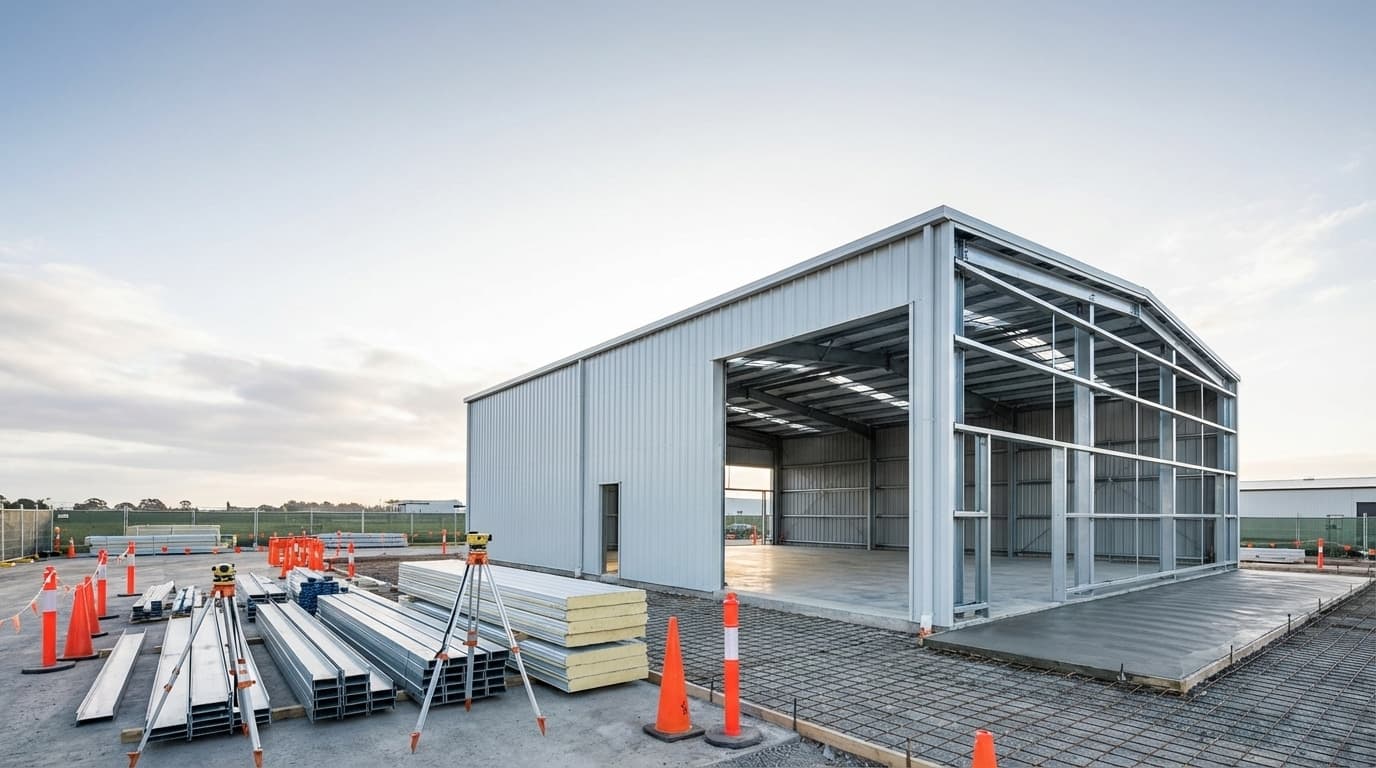

A 30×40 metal building with slab delivers 1,200 sq ft of clear-span, low-maintenance space for shops, garages, or small businesses at a turnkey price of roughly $28-48k, and this guide walks you through every dollar–showing how base-kit steel, concrete, delivery, labor, and popular add-ons like insulation and doors stack up–so you can lock in realistic budgets, compare quotes, and avoid hidden costs. You'll learn why choosing multi-span framing, standard 12-ft heights, and local code-driven wind or snow loads can cut 10-25 %, how thicker concrete and vapor barriers protect heavy equipment and energy bills, and where regional labor rates, steel-gauge upgrades, or DIY assembly can swing the total by thousands. The article deciphers permits, financing, and tax strategies–including 100 % first-year bonus depreciation–while detailing warranties, maintenance schedules, and contractor vetting steps that stretch a 30-year-plus building life with only 1-3 % annual upkeep. By weighing upfront savings against lifetime energy and repair costs, readers can tailor a durable, efficient structure that meets both their checkbook and their business goals.
Understanding the Basics of a 30×40 Metal Building with Slab
A concrete slab foundation distributes weight evenly, blocks moisture that causes rust and mold, and improves energy efficiency through thermal mass benefits.
What Is a 30×40 Metal Building?
A 30×40 metal building delivers 1,200 square feet of adaptable space engineered with premium steel framing and sheeting [2]. These structures exemplify modern construction efficiency–offering exceptional durability, weather resistance, and minimal maintenance requirements that meet the demanding needs of today's residential, commercial, and industrial sectors [2]. The standard 30×40 dimension offers cost efficiency through standardized manufacturing, which can reduce production costs by up to 15% [1].
Most designs feature clear-span construction, eliminating interior support columns to maximize usable floor space and provide layout flexibility [1][3]. For more economical options, multi-span designs with interior columns deliver comparable space at lower construction costs [1]. These buildings can be customized with various roof pitches (typically 1:12 for flat designs or 4:12 for gable-style roofs with improved drainage), door types, windows, insulation, and exterior color schemes to suit specific needs [1][2][3].
This adaptability positions these structures as strategic assets for growing businesses and property developers seeking cost-effective expansion solutions [1][2].
Benefits of Adding a Concrete Slab Foundation
A concrete slab foundation provides critical structural benefits for a 30×40 metal building. First, it distributes the weight of the structure evenly across the surface area, preventing uneven settling and shifting that can compromise integrity over time [4]. This stability is particularly important in areas with varied soil composition or moisture conditions [5].
Second, a properly sealed concrete foundation acts as a moisture barrier, protecting your metal building from water seepage that could cause rust, corrosion, and mold–especially valuable in humid or flood-prone regions [4][5]. Third, concrete slabs improve energy efficiency by functioning as thermal mass that absorbs heat during the day and releases it gradually at night, helping maintain comfortable interior temperatures year-round [4]. This thermal regulation can reduce heating and cooling costs significantly [4][5].
Fourth, the solid surface simplifies cleaning and maintenance while supporting heavy equipment without risk of sinking [5]. Finally, concrete foundations create an effective barrier against rodents and pests that might otherwise access your building from below [4].
Typical Use Cases and Layout Options
A 30×40 metal building's versatility makes it an ideal solution for diverse applications across multiple industries [6]. Workshop configurations leverage the clear-span advantage, incorporating specialized components like custom door openings and strategic window placement for optimal workflow [7]. Automotive applications transform the space into high-capacity garages housing 4-6 vehicles, often featuring advanced specifications like 10'x10' insulated doors on tilt tracks for lift systems [6].
Agricultural and industrial storage solutions prioritize functionality with wider access points (12'-16'), while entrepreneurial ventures customize layouts with professional office areas, essential facilities, and client-ready aesthetics [6]. The construction industry's evolution toward prefab metal buildings reflects broader market efficiency trends–a shift that forward-thinking organizations recognize when planning facility expansions. Strategic customization transforms basic structures into optimized workspaces through lean-to additions, purposeful entry points, natural lighting solutions, and zone-specific interior configurations [6][7].
Professional installations incorporate robust infrastructure–200-amp electrical service, sophisticated climate control, and equipment-specific foundation requirements integrated directly into the slab design–ensuring facilities meet current operational demands while accommodating future growth [6].
Detailed Cost Breakdown for a 30×40 Metal Building with Slab
A 30×40 metal building kit costs $14,400 to $16,800, while a professional concrete slab adds $7,000 to $14,000 depending on your location and site specifications.
Base Kit Price per Square Foot
The base kit price for a 30×40 metal building typically ranges from $12 to $14 per square foot as of early 2024, translating to approximately $14,400 to $16,800 for the complete 1,200-square-foot structure [10]. This price covers only the primary components: the main steel I-beams and columns (primary frame), roof supports and wall supports (secondary framing), steel panels for the roof and walls, plus necessary trim and hardware [8].
Most manufacturers price their basic kits between $15,000 and $25,000, with final costs varying based on steel gauge, design specifications, and current material prices [8]. This base price excludes crucial elements needed for a functional building, including concrete foundation, doors, windows, insulation, interior finishes, and utility systems [8][9].
When comparing prices, note that the per-square-foot cost becomes more economical as building size increases since fixed costs like engineering and permits spread across larger square footage [8]. The most significant factors affecting your base kit price include steel gauge (lower gauge numbers indicate stronger, more expensive steel), local code requirements for wind and snow loads, and any customizations like specialized door openings or roof pitch variations [8].
Concrete Slab Expenses (excavation, pour, reinforcement)
A professionally installed concrete slab for a 30×40 metal building typically costs between $7,000 and $14,000, with premium specifications reaching $21,000 depending on your location and site requirements [11][12]. This price breaks down into three main components. First, site preparation and excavation runs $1-$2.50 per square foot ($1,200-$3,000 total), covering soil removal, grading, compaction, and forming [12].
Second, the concrete material itself costs $125-$150 per cubic yard, requiring approximately 15 cubic yards for a standard 4-inch thick slab ($1,875-$2,250) [11]. Thicker 6-inch slabs needed for heavy equipment add about 50% to material costs [12]. Third, reinforcement options significantly impact durability and price – wire mesh adds $0.75-$1 per square foot while rebar grids cost $1.50-$2.50 per square foot [12].
Labor represents the largest expense at $4-$8 per square foot ($4,800-$9,600), covering forming, pouring, leveling, and finishing [11]. Recent real-world projects confirm these ranges, with most 30×40 reinforced 4-inch slabs costing $8,000-$12,000 installed [6]. Additional options like vapor barriers ($0.50-$1/sq ft), concrete sealers ($1-$3/sq ft), or specialized finishes can further affect the total investment [12].
Delivery, Site Preparation, and Labor Costs
Delivery and installation costs represent a substantial portion of your 30×40 metal building investment, often exceeding the base kit price. Labor alone represents $10-$25 per square foot ($12,000-$30,000 total), varying by location and contractor experience [13][14]. Site preparation costs depend on your property's current condition — clearing, leveling, and utility setup can add $1,500-$5,000 to your project [14].
For complex sites requiring extensive grading or fill dirt, preparation costs increase substantially [15]. Delivery fees range from $1-$2 per mile from the manufacturing facility with a typical range of $600-$2,000 depending on distance [15]. Once materials arrive, professional erection takes 3-5 days for just the shell, with complete turnkey installation (including foundation work) extending to 2-4 weeks [15].
The total for delivery, site work, and professional installation typically adds $13,000-$21,000 to your project, bringing the comprehensive turnkey cost to $28,000-$46,000+ for a finished 30×40 metal building with slab [15]. These costs vary significantly based on regional labor rates, with projects in coastal or high-cost-of-living areas commanding premium prices compared to identical buildings in the Midwest [15].
Optional Add‑Ons and Their Price Impact
Strategic customization options enhance functionality while typically adding 15-20% to your base kit investment [16]. Insulation represents one of the most common and valuable add-ons, with basic fiberglass installations costing $2,000-$4,000 for a 30×40 structure [6]. Higher-performance options like spray foam insulation cost considerably more at $2.50-$4.50 per square foot ($3,000-$5,400 total), while top-tier Structural Insulated Panels (SIPs) run $5-$10 per square foot ($6,000-$12,000) [16].
Door upgrades substantially affect both functionality and budget, with upgraded sectional or roll-up garage doors adding $2,000-$5,000, while additional windows or custom entry doors contribute another $1,000-$3,000 [6]. Electrical systems represent another essential consideration, with basic lighting and outlet packages for a 30×40 building typically costing $2,000-$4,000 installed [6]. Climate control systems add further costs depending on the building's intended use, while exterior customizations like canopies, overhangs, or decorative elements increase expenses but may improve functionality and aesthetics [16].
When planning your investment, these strategic add-ons can elevate a basic $18,000-$25,000 structure into a fully functional $30,000-$40,000+ facility complete with foundation–figures that align with the comprehensive cost ranges detailed in our FAQ section [6].
Factors That Influence the 30×40 Metal Building with Slab Cost
Your 30×40 metal building costs swing 15-25% based on location, with coastal hurricane zones and northern snow loads requiring mandatory upgrades that directly impact your budget.
Regional Material and Labor Variations
Your 30×40 metal building costs will vary significantly based on location, with regional differences creating price swings of 15-25% or more. Understanding these variations helps you budget accurately and make informed decisions. Rural markets typically offer installation rates as low as $3 per square foot, while metropolitan areas command $7+ per square foot–though remote locations may offset savings through higher delivery charges and limited contractor availability [17].
Regional building requirements dramatically impact your bottom line. Coastal areas facing hurricane exposure require enhanced structural engineering, adding $3-$6 per square foot [17]. Northern states demand reinforced roof systems for snow loads, while tornado-prone regions need stronger framing regardless of building size [17]. These aren't optional upgrades–they're mandatory requirements that directly affect material specifications and quantities.
Foundation requirements present another location-based variable. The stark differences between Minnesota's deep frost lines and Texas's minimal requirements create entirely different concrete specifications and associated costs [18]. Transportation distances from steel manufacturing facilities compound these regional differences, affecting both pricing and project timelines. Smart buyers factor in local labor market conditions–competitive markets with multiple specialized contractors typically offer better value than areas with limited options [17]. As detailed in our permits section, urban jurisdictions often enforce stricter codes than rural areas, further affecting your total investment.
Building Height, Roof Pitch, and Span Choices
Building height significantly impacts both functionality and cost of 30×40 metal buildings. The leg height (measured from base rail to roof eaves) creates pricing tiers: structures with standard 12' heights use single legs, 13'-14' heights require more expensive double legs, and buildings 15'+ tall need ladder legs–each step adding substantial material and labor costs [1]. Roof pitch choices similarly affect pricing and performance, with 1:12 pitch (one foot rise per 12 feet of length) being the standard economical option for flat designs [1]. Upgrading to a 4:12 gable-style pitch increases costs but creates significant additional interior space while improving snow and water drainage–a crucial consideration in regions with heavy precipitation [1].
Higher pitches (3/12 to 5/12) provide better runoff management but require more materials [19]. The building's span design–whether clear-span or multi-span–represents one of the most consequential structural cost factors. Clear-span construction eliminates interior support columns, maximizing usable floor space but requiring stronger, more expensive framing systems [1]. Multi-span designs incorporate interior columns that reduce material requirements and can lower construction costs by 10-15% while still providing considerable interior space [1].
Buildings wider than 32 feet trigger a notable price jump as they require webbed trussing and additional reinforcement materials [19]. Width increases generally cost more than length extensions, as each foot of additional width requires extending every supporting rafter rather than simply adding frame lines [1].
Insulation, Door, and Window Selections
Your choices in insulation, doors, and windows significantly influence both initial investment and long-term performance of your 30×40 metal building. These critical selections typically account for 15-25% of total project costs while determining daily functionality and energy efficiency [20].
As covered in detail within our optional add-ons section, insulation costs range from $1,980-$4,800 for a complete 30×40 structure [9]. The investment extends beyond temperature control–proper insulation prevents condensation that leads to corrosion, protecting both structural integrity and appearance [9].
Door configurations offer customizable solutions for various needs: standard walk-in doors for personnel access, sectional garage doors for vehicle storage, and specialized roll-up doors for commercial operations [2]. Custom door specifications can increase base kit costs by 20-50%, making early planning essential [20].
Window placement requires strategic consideration to optimize natural lighting while maintaining thermal efficiency. Each framed opening necessitates additional structural support, impacting material costs [2]. Our energy efficiency section provides comprehensive guidance on maximizing performance while controlling expenses.
Custom Design Features and Engineering Fees
Customizing your 30×40 metal building creates a tailored solution for specific needs while adding 15-20% to base kit prices [16]. Understanding these costs helps you prioritize features that deliver the most value for your investment.
Engineering documentation represents a critical component of customization costs. While manufacturers typically provide basic stamped structural drawings, complex modifications–custom roof designs, specialized openings, or unique utility configurations–require additional engineering analysis and certification [21]. These modifications demand structural recalculations to ensure building integrity while satisfying local codes [16].
As detailed in our permits and building codes section, these engineering investments serve multiple purposes: securing permit approval, ensuring safety compliance, and preventing costly structural issues. Smart planning during the design phase minimizes expensive changes later, keeping your project on budget while achieving your vision [21].
Choosing the Right Materials and Features for Cost Efficiency
Matching your steel grade and concrete slab specifications to your building's actual use prevents costly upgrades later and extends your 30×40 structure's lifespan significantly.
Selecting Cost‑Effective Steel Grades and Coatings
Steel grade selection dramatically impacts both upfront costs and long-term value for 30×40 metal buildings. Standard steel grades typically cost $10-$25 per square foot, while premium options with better structural properties command higher prices [23]. The thickness of steel (gauge) represents a critical decision point–thinner gauges reduce initial expenses but often lead to accelerated wear and potential structural issues, while thicker gauges provide superior durability and weather resistance [22].
For coastal areas or regions with harsh weather conditions, investing in galvanized steel or premium coatings prevents corrosion and extends building lifespan by decades, offsetting the 10-15% price premium through reduced maintenance [22]. Cost-conscious builders should consider pre-engineered metal buildings with standardized components, which typically save 10-20% compared to custom designs while maintaining structural integrity [23]. When evaluating proposals, focus on the steel's performance ratings for wind, snow, and seismic conditions specific to your location rather than simply choosing the lowest-priced option [22].
The global steel market remains volatile, with prices fluctuating based on supply chain disruptions and international trade policies, making early price locking advantageous when possible [23].
Choosing Slab Types: Standard vs. Reinforced
Strategic concrete slab selection directly impacts your 30×40 metal building's performance and longevity. As detailed in the cost breakdown section, standard 4-inch reinforced slabs provide adequate support for most applications, while 6-8 inch slabs become essential for heavy equipment or vehicle lifts [6][24]. The critical decision lies not in initial cost savings but in matching slab specifications to your building's intended use–upgrading later proves impossible.
Building-specific requirements should drive your selection process. A workshop with vehicle lifts demands thicker concrete with strategic reinforcement placement, while storage facilities often function perfectly with standard specifications [6]. Essential foundation enhancements include vapor barriers to prevent moisture infiltration and concrete sealers that extend surface life, representing minimal upfront investments that prevent costly future repairs [24].
Just as selecting the right
Energy‑Efficient Roofing and Insulation Options
Energy-efficient insulation represents one of the highest-return investments in metal building construction. While the optional add-ons section covers basic costs, understanding performance implications proves crucial for informed decision-making. Fiberglass insulation with polypropylene facing delivers exceptional value, with R-30 double-layer systems providing optimal performance for most applications [25].
This strategic investment generates at least $24,000 in energy savings over 20 years–effectively paying for itself multiple times while eliminating condensation issues and enhancing acoustic control [25]. Advanced insulation systems like those offering R-30 for walls and R-38 for roofs can slash heating and cooling bills by up to 50% [26]. Roofing choices significantly impact energy performance, with reflective cool-coated steel roofing reducing summer cooling costs by up to 15% in hot climates [26].
For maximum efficiency, pair quality insulation with proper sealing techniques–install vapor barriers, tape sealants between panels, and use closure strips where walls meet foundation and roof [26]. Climate considerations should guide your selections; hot regions benefit from heat-reflective solutions while cold areas require better thermal retention [27]. When budgeting, focus on high-impact areas like the roof, exterior walls, and door openings, while adding features like ridge vents and skylights to enhance natural ventilation and lighting [26][27].
Balancing Aesthetics with Budget Constraints
Achieving aesthetic appeal while controlling costs requires strategic decisions at every phase of your 30×40 metal building project. Focus on exterior finishes that offer both durability and visual impact–wainscoting with stone or brick along the bottom third creates a high-end appearance while limiting expensive materials to the most visible areas [28]. Metal siding with wood accents strikes an effective balance between industrial efficiency and warmth [28]. Color selection significantly impacts both budget and appearance–neutral palettes like beige, gray, and white reduce costs while providing timeless appeal that complements various architectural styles [28].
For roofing, select profiles that offer both performance and aesthetics; standing seam systems cost more initially but provide clean lines and superior longevity [29]. When planning interior details, consider using polished concrete floors with decorative staining instead of more expensive flooring options [28]. Strategic lighting placement enhances architectural features without requiring extensive custom work–LED fixtures cost 25-40% more upfront but deliver 75% lower operating costs over their lifespan [28]. Modular design approaches further stretch your budget while maintaining visual cohesion–standardized components reduce fabrication costs while still allowing for customized appearances [30].
This approach particularly benefits window and door placements, where strategic positioning creates architectural interest without requiring custom sizes [29]. When selecting building materials, focus on standard sizes and shapes which cost significantly less than custom designs while still offering clean, modern aesthetics [30].
Financing, Permits, and Installation Considerations
Permit costs range from $150 to $7,500 depending on location, so budgeting $550-$2,000 typically covers most 30×40 projects in standard areas.
Obtaining Permits and Meeting Local Building Codes
Building codes and permits form the foundation of any successful 30×40 metal building project–mastering this process early prevents costly delays and ensures structural integrity. These comprehensive regulations dictate design specifications, construction methods, and material requirements tailored to your location's unique challenges [31]. Regional variations are substantial: coastal Florida structures must withstand 140-170 mph wind loads, northern buildings require heavy snow load capacity, while California projects demand seismic engineering [32].
Your permit application package must be thorough and professional. Required documentation includes detailed site plans, precise building dimensions, engineered foundation specifications, structural calculations, and clear intended use statements [31]. Professional-grade metal building suppliers provide engineer-stamped drawings that streamline approval by demonstrating compliance with local wind, snow, and seismic requirements [32].
Budget strategically for permit costs, which fluctuate dramatically from $150 in rural communities to $7,500 in major metropolitan areas, with most projects averaging $550-$2,000 [31]. Your comprehensive permit strategy should account for building, electrical, plumbing, mechanical, and potentially fire safety approvals based on your structure's intended use [32].
The stakes are high–proceeding without proper permits risks severe consequences including substantial fines, property sale complications, insurance coverage denial, and potential demolition orders [31]. Expect inspections at critical milestones: foundation completion, steel erection, utility rough-ins, and final occupancy certification [31].
Understanding local code nuances empowers better decision-making. Roof pitch minimums vary by region for optimal weather management, foundation requirements depend on soil conditions, and wind resistance standards differ significantly between jurisdictions [33]. Whether managing the process yourself or delegating to contractors, this knowledge ensures all necessary approvals are secured before breaking ground [31].
Financing Options and Tax Considerations
Strategic financing transforms your 30×40 metal building from concept to reality through multiple customizable funding solutions. Unsecured home improvement loans offer quick access without collateral requirements, though at premium rates. Home Equity Loans and HELOCs leverage your property's value for competitive rates, while construction or construction-to-permanent loans provide comprehensive funding for larger projects [36]. Rural property owners gain additional advantages through USDA agricultural financing programs designed specifically for farm-supporting structures [36]. Integrated supplier financing programs streamline the process with single-point qualification, though savvy buyers compare these convenient options against traditional lender rates [36]. Tax advantages amplify your investment returns dramatically. The landmark "Big Beautiful Bill" revolutionized metal building economics by restoring 100% first-year bonus depreciation on qualifying properties [34]. This game-changing provision allows immediate full expense deduction versus traditional 39-year depreciation schedules, creating powerful cash flow advantages for business owners [34]. Manufacturing facilities gain an extended benefit window through 2033, making 2026 an optimal investment year [34].
Maximizing financing success requires strategic preparation. Your approval terms hinge on credit profile strength, accurate building classification, and location-specific factors [36]. Many lenders unfamiliar with metal building valuation inadvertently miscategorize these structures, triggering unnecessarily restrictive terms [35]. Combat this by providing comprehensive documentation–detailed quotes, professional blueprints, and approved permits–that demonstrates project viability and reduces perceived risk [36]. Partner with financing specialists who understand metal building economics rather than generic lenders who undervalue these efficient structures [35].
Installation Timeline and Contractor Selection
Your 30×40 metal building transforms from order to occupancy through a well-orchestrated timeline that maximizes efficiency. Following order placement, manufacturers require 6-8 weeks to fabricate your customized building kit–strategic timing that allows concurrent site preparation and foundation work [38]. The remarkable efficiency of metal construction becomes evident during assembly: professional crews erect the complete shell in just 3-4 days once your cured foundation is ready [38]. Comprehensive turnkey projects incorporating interior finishing extend timelines to 2-4 weeks total [37]. Each phase flows seamlessly: site preparation, foundation installation, structural assembly, roofing and siding attachment, utility integration, and final inspection certification [37]. Contractor selection represents a pivotal decision balancing expertise, cost, and personal involvement. Three distinct approaches offer customizable solutions:
DIY Construction: Ambitious builders with construction experience can capture 20-30% savings by self-managing the entire project, though this demands significant time investment and technical knowledge [38].
Self-Contracting: Acting as your own general contractor while hiring specialized subcontractors saves the 10-20% GC markup. This approach requires strong project management skills and local subcontractor relationships [38].
Professional Installation: Partnering with metal building specialists delivers the most efficient path to completion. These experts bring invaluable knowledge of foundation specifications, component assembly sequences, and permit navigation that general contractors often lack [37].
When evaluating contractors, prioritize metal building expertise over general construction experience. Request specific 30×40 project references and verify their understanding of specialized foundation requirements unique to metal structures [37][38]. Finding the right professionals–whether contractors, engineers, or project managers–can determine project success. The 10-20% professional installation premium delivers measurable value through workmanship warranties, expedited permit approvals, and established inspector relationships that prevent expensive delays [38].
Maintenance Planning and Long‑Term Savings
Strategic maintenance planning transforms your metal building investment into decades of reliable performance with minimal upkeep costs. Metal structures deliver exceptional value through maintenance expenses of just 1-3% of building value annually–a fraction of traditional construction requirements [40]. This predictable budget covers essential tasks including sealant refreshing, systematic roof inspections, strategic repainting, and minor component repairs [23].
Proactive prevention multiplies your savings exponentially. Vapor barriers installed during construction create an impenetrable moisture defense, preventing the corrosion and structural degradation that plague unprotected buildings. Your greatest returns come from energy efficiency investments–quality insulation, reflective roofing systems, and strategic window placement combine to slash heating and cooling expenses by up to 50% [39]. For 30×40 structures, these efficiency gains translate to thousands in annual savings while the concrete slab's thermal mass naturally moderates temperature swings.
Metal buildings' inherent advantages eliminate costly maintenance burdens that traditional structures demand. Natural resistance to termites, fire damage, and moisture infiltration removes the need for regular chemical treatments and repairs [40]. Implement a systematic maintenance schedule for maximum longevity:
- Bi-annual gutter cleaning prevents water damage
- Annual roof inspections catch minor issues early
- Semi-annual door hardware checks ensure smooth operation
- Scheduled touch-up painting maintains protective coatings
Budget $300-$600 annually for routine maintenance on your 30×40 building–a minimal investment that protects your structure's 40+ year service life [23]. This comprehensive approach ensures your metal building delivers maximum value through minimal maintenance requirements and exceptional energy performance.
Frequently Asked Questions About 30×40 Metal Building with Slab Costs
A 30×40 metal building with concrete slab costs $28,000 to $48,000 installed, with smart design choices like multi-span configurations saving up to 15 percent.
How Much Should I Expect to Pay Overall?
Expect to invest $28,000 to $48,000 for a complete, professionally installed 30×40 metal building with concrete slab [41][6][42]. This comprehensive figure breaks down into three primary components, as detailed in our cost breakdown section above: the base kit ($15,000-$25,000), reinforced concrete foundation ($8,000-$12,000), and professional installation ($6,000-$12,000) [6][41].
Your specific investment depends on project complexity and customization choices. A basic storage or workshop facility with minimal finishing typically lands at $30,000-$35,000, while a fully equipped garage with climate control, premium doors, and complete electrical systems can exceed $40,000 [42]. Regional factors significantly influence pricing–coastal markets and areas with stringent building codes command 15-25% premiums over Midwest locations [42].
Essential add-ons to budget for include insulation ($2,000-$4,000), door and window packages ($3,000-$8,000), and electrical infrastructure ($2,000-$4,000) [6]. The good news? Per-square-foot costs decrease with larger buildings as fixed expenses like permits and engineering spread across additional square footage [42].
Can I Reduce Costs Without Compromising Quality?
Smart cost reduction strategies focus on value engineering without sacrificing quality. As covered in our materials selection guide, standardized dimensions deliver up to 15% savings through efficient production and assembly processes [43]. Here are proven approaches that maintain structural integrity while optimizing your investment:
Design Decisions That Save Money:
- Multi-span configurations with interior columns reduce costs substantially compared to clear-span designs [1]
- Length extensions cost less than width increases–each additional foot of width requires extending all supporting rafters [1]
- Standard 1:12 roof pitch provides adequate drainage at lower cost than 4:12 gable designs [1]
Material and Construction Strategies:
- Specify exact steel gauge requirements–thinner gauges reduce initial costs but may compromise longevity [43]
- Verify all weatherproofing components are included; some contractors omit critical seals to lower quotes [6]
- Consider DIY installation for non-structural elements like basic insulation and electrical rough-ins, potentially saving $7,000-$8,000 [6]
Documentation Is Critical: Always request itemized quotes detailing connection methods, weatherproofing specifications, and exact material grades. Focus your budget on structural integrity and weather resistance–cosmetic upgrades can wait, but foundation and framing quality cannot be compromised [6].
What Warranty and Support Are Available?
Quality metal building manufacturers stand behind their products with comprehensive warranty packages that protect your investment. Understanding coverage details helps you evaluate true long-term value beyond initial pricing.
Standard Warranty Components:
- Structural Coverage: Main frame integrity warranties typically extend 20 years, ensuring your building's core remains sound [44]
- Rust-Through Protection: Guards against corrosion that penetrates the steel, not just surface oxidation [44]
- Paint/Coating Performance: Advanced UV-resistant formulations now offer 30-40 year protection against fading, chalking, and peeling [44]
- Workmanship Guarantees: When manufacturers handle installation, assembly errors and installation damage should be covered [44]
Critical Exclusions to Understand: Natural disasters require insurance coverage, not warranty claims. Most warranties become void with poor maintenance, unauthorized modifications, or third-party installation errors [44]. Doors, windows, and vents often carry separate, shorter coverage terms than the main structure [44].
Evaluating Warranty Value: Look beyond duration to examine whether coverage remains full throughout the term or becomes prorated. Verify that structural elements receive protection beyond cosmetic features. Most importantly, research the manufacturer's claim-handling reputation and financial stability–the best warranty terms mean nothing from a company that won't honor them [44].
Where to Get Reliable Quotes for a 30×40 Metal Building with Slab
Securing accurate, comparable quotes requires a systematic approach and attention to critical details. Professional buyers typically save 20-30% by obtaining multiple competitive bids and understanding exactly what each quote includes.
Effective Quote Comparison Strategy: Start with online comparison platforms that connect you with multiple pre-screened vendors–buyers report average savings of 28% using these services [46]. Request itemized breakdowns showing separate costs for the base kit ($15,000-$25,000), concrete foundation ($8,000-$12,000), and professional installation ($6,000-$12,000) [6][46].
Foundation Provider Evaluation: Concrete work represents a critical investment requiring careful vendor selection. Verify each provider's specific experience with metal building foundations–not just general concrete work. Confirm their insurance coverage adequately protects your project value [45]. For specialized needs like 6-inch slabs supporting heavy equipment, only work with suppliers providing engineer-sealed drawings [45].
Key Questions for Every Quote:
- Does the foundation price include vapor barriers and proper drainage systems?
- Are all weatherproofing components specified in the building kit?
- What warranty coverage applies to each component?
- Does the contractor have proven experience with similar 30×40 projects?
Regional availability varies significantly–some providers require minimum project sizes of 2,400-8,000 square feet. Turnkey packages offering single-source accountability typically command 10-15% premiums but may justify the cost through reduced coordination complexity and unified warranty coverage [45].
- A turnkey 30×40 metal building with slab costs $28k-$48k installed, varying by region and add-ons.
- Concrete slab runs $7k-$14k: 4-in for standard use, 6-in+ for heavy lifts; vapor barrier is essential.
- Clear-span framing maximizes floor space but costs 10-15 % more than multi-span with interior columns.
- Insulation payback exceeds $24k over 20 yrs; spray foam or SIPs cut HVAC costs up to 50 %.
- Permits range $150-$7,5k; coastal/high-snow zones mandate stronger engineering that adds $3-$6/sq ft.
- 100 % first-year bonus depreciation applies through 2026, slashing after-tax cost for business use.
- Maintenance budget: 1-3 % of building value yearly; slab thermal mass plus reflective roof lowers utility bills.
- https://bulldogsteelstructures.com/blog/the-ultimate-guide-to-building-a-30×40-metal-structure-costs-design-and-more/
- https://www.empirebuilt.com/30×40-metal-building/
- https://gensteel.com/steel-building-kits/base-building-packages/30×40/
- https://armstrongsteel.com/blog/complete-guide-to-concrete-slabs-for-metal-buildings
- https://magnoliaconcretepros.com/do-i-need-a-concrete-slab-for-a-metal-building-exploring-your-options-and-best-practices/
- https://www.reddit.com/r/metalbuildings/comments/1mer6n7/real_cost_breakdown_of_a_30x40_metal_garage_with/
- https://gensteel.com/steel-building-kits/workshops/30×40-workshop/
- https://www.probuiltsteel.com/blog/30×40-metal-building-cost/?srsltid=AfmBOorOhJDBxIMD1zDp8kuVZaYV8L5WYpCqjlpooQnrvSxJLBZ1kl2A
- https://mavericksteelbuildings.com/how-much-does-a-30×40-steel-building-cost/
- https://www.metalbuildingoutlet.com/how-much-does-a-30×40-steel-building-cost/
- https://bucketcityconcretecontractors.com/how-much-does-a-30×40-concrete-slab-driveway-cost/
- http://concretecompany.org/how-much-does-a-30×40-concrete-slab-cost/
- https://www.buildingsguide.com/metal-building-prices/?srsltid=AfmBOop14QxIC4oH6yIJW4BltrJu0kVUFAgGN_E2tTg0mdh7knqGhbuG
- https://homeguide.com/costs/metal-building-cost
- https://www.probuiltsteel.com/blog/30×40-metal-building-cost/?srsltid=AfmBOop2ZJ-VRbKPL-eeybL-VKtEjukLpD_kxQRzxXEtkfh8hk1XN4Ik
- https://www.cascadingfallsinc.com/what-do-prefab-metal-building-cost-to-construct
- https://www.metal-buildings.org/metal-building-prices/
- https://metalbuildingsnorthamerica.com/accurate-concrete-prices-for-metal-buildings/
- https://midweststeelcarports.com/what-factors-will-affect-the-price-of-my-steel-building/
- https://www.uspatriotsteel.com/blog/how-much-does-a-30×40-metal-building-cost/
- https://pricebuildings.com/steel-buildings/cost/30×40-metal-building-cost/
- https://www.alliedbuildings.com/cost-vs-worth-of-steel-for-pembs/
- https://swfunk.com/news/metal-buildings-costs/
- https://chinasteelbuildsales.com/30×40-metal-building-with-slab-cost/
- https://steelbuildinginsulation.com/insulate-30×40-metal-building/
- https://www.rhinobldg.com/blog/how-to-construct-energy-efficient-buildings-part-2
- https://www.generalplastics.com/blog/how-to-insulate-a-metal-building-on-a-budget-best-methods-revealed
- https://www.metalbuildingoutfitters.com/affordable-design-choices-for-custom-metal-buildings/
- https://www.hswilliams.com/blog/balancing-cost-style-strength-metal-building-projects
- https://kgssteel.com/articles/affordable-metal-design-techniques-for-construction-projects/
- https://www.buildingsguide.com/build/metal-building-codes-permits/?srsltid=AfmBOorGND1kQKNjGt905a6a1_IUwIe0fvf84HvZgvBFHE1Yt9Oaq9Zi
- https://garagebuildings.com/navigating-building-codes-permits-for-steel-structures-state-by-state-guide
- https://metalbuildingsnorthamerica.com/30×40-metal-building-construction-facts/
- https://gensteel.com/resources/infographics/steel-building-tax-advantages-2026/
- https://metalbuildingsnorthamerica.com/metal-building-financing-guide/
- https://bullbuildings.com/5-options-for-financing-your-metal-building/
- https://bullbuildings.com/what-to-expect-when-building-a-30-x-40-metal-building/
- https://www.buildingsguide.com/build/30×40-building-construction/?srsltid=AfmBOooA8SNGZjbGZhAi97QnEvu_Dr9ZsXiYnxiNX5m8eLSlfN6gCODB
- https://bulldogsteelstructures.com/blog/exploring-the-cost-efficiency-of-metal-buildings-vs-traditional-construction/
- https://www.steelcobuildings.com/steel-building-cost/
- https://www.buildingsguide.com/standard-sizes/30×40-metal-building/?srsltid=AfmBOopeyXponzYJChta5YsqVVHETLK9UGucWyJyDCp4vW2lCRJpTVy0
- https://www.probuiltsteel.com/blog/30×40-metal-building-cost/?srsltid=AfmBOopoYzIxvT-9xxd7BRijOLyVByeZRyGF8WmTR9PEZnmw9iplRuME
- https://www.probuiltsteel.com/blog/30×40-metal-building-cost/?srsltid=AfmBOopeTL7MudOJfpHYCBLr7eNDdg6BHUewU2LwLq6RgDoEqNx6PAO7
- https://garagebuildings.com/steel-building-warranties-explained-whats-really-covered-in-2025-2026
- https://champion-buildings.com/prefabricated-metal-building-services/concrete
- https://steelbuildingsguide.org/30×40-metal-building/