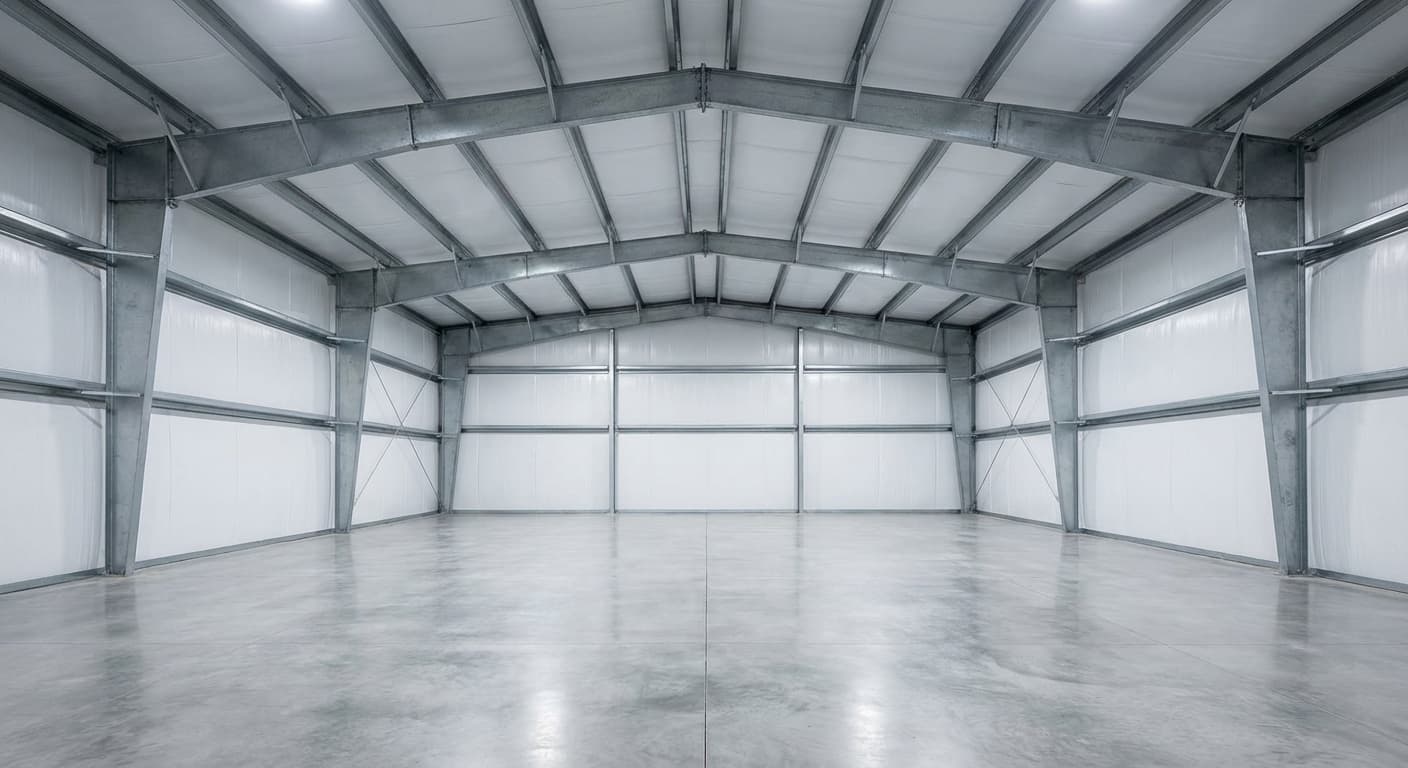

A 30×40 metal building delivers 1,200 square feet of clear-span, column-free space that can be erected in weeks, outlasts wood-frame structures by decades, and slashes energy and maintenance costs while adapting to almost any use–workshop, garage, warehouse, farm shed, or small business–anywhere from hurricane coasts to snow-belt mountains. This guide walks readers through every decision that shapes price, performance, and permitting: choosing eave heights, roof pitches, doors, windows, insulation, and exterior coatings matched to local wind, snow, humidity, and salt-air loads; budgeting turnkey packages that run $40-55k and lock-in 2025 steel prices before seasonal hikes; financing with SBA, rent-to-own, or accelerated depreciation that can turn the building into a tax-saving asset; and managing site prep, foundation tolerances, DIY vs. professional assembly, inspections, and a simple maintenance schedule that keeps the structure trouble-free for 50-70 years.
Understanding the 30×40 Metal Building
Your 1,200 square feet of completely open space lets you arrange equipment however you need today and rearrange it tomorrow without a single interior column in the way.
Definition and core dimensions of a 30×40 metal building
A 30×40 metal building gives you 30 feet wide by 40 feet long–exactly 1,200 square feet of wide-open space to work with [1][3]. No columns. No posts in your way. Just clear, usable space from wall to wall that lets you arrange equipment however you need it today–and rearrange it tomorrow [2][3].
You've got height options from 10 to 20 feet at the eave, with 12, 14, 16, and 18 feet being the most popular choices [1]. Here's what matters: you need two feet between your tallest door and the eave. Got a 10-foot door? You'll need at least 12-foot eaves [1]. Simple as that.
Your roof pitch affects both how your building looks and how it handles weather. The standard 2:12 pitch works fine for most locations, but you can go anywhere from nearly flat (1:12) to steeper (4:12) depending on your snow loads and local requirements [1][2]. Some projects even call for 5:12 or 6:12 custom pitches–we'll help you figure out what's right for your site [1].
Door placement? You decide. Overhead doors up to 12 feet wide fit on either end walls or side walls [1][2]. The beauty of pre-engineered steel is you can modify the interior however you want without touching the structural shell [2]. Your building adapts to your business, not the other way around.
Key structural benefits and clear‑span advantages
Clear-span means no columns in your way–period. Your entire 1,200 square feet stays open and usable [4]. Traditional buildings stick support posts right where you don't want them, blocking equipment movement and locking you into one layout forever. Not here. Move your forklift anywhere. Rearrange your workspace next month. Expand your operation without tearing out columns [4][5].
Here's how it works: rigid steel frames span the full 30-foot width using either straight or tapered columns connected to roof rafters [4]. No interior supports needed. The engineering handles your local wind speeds and snow loads while keeping that interior completely open [4]. Could we go wider? Sure–clear-span can reach 300 feet. But 30-40 feet hits the sweet spot for strength and cost [4].
Your building fights off everything nature throws at it. Galvanized steel won't burn, rot, warp, or feed termites [6]. Pre-cut, pre-drilled components mean faster assembly and lower labor costs–you're operational weeks sooner than with traditional construction [6]. At National Steel Buildings, we've completed over 1,480 projects using these
Typical applications and use‑case scenarios
What can you do with 1,200 square feet of open space? More than you'd think.
Workshop owners love the flexibility–park your equipment anywhere, move it anytime, no posts blocking your workflow [7][2]. Need vehicle storage? Those 12-foot overhead doors handle everything from daily drivers to RVs and boats [7].
Small businesses turn these buildings into profit centers. Partition off an office, create a showroom, set up manufacturing–all without touching the structural shell [2]. With 12-20 foot eaves, you're not just getting floor space, you're getting volume. Stack inventory high. Install mezzanines. Use every cubic foot [2].
Farmers store equipment, house livestock, and process crops. Hobbyists create dream workshops, home gyms, and entertainment spaces. The uses keep expanding because the building adapts to you. Your location matters too–we'll make sure your building handles local conditions, whether that's humidity in the South, salt air on the coast, or snow loads in the mountains [2]. The details are covered in our planning section, but know this: your 30×40 building works anywhere.
Why a 30×40 metal building is a smart, sustainable choice
Your 30×40 metal building saves money and protects the environment–both matter to your bottom line.
Start with energy costs. Proper insulation (detailed in our Customization section) cuts heating and cooling bills significantly [8]. Metal roofs reflect heat instead of absorbing it, keeping interior temperatures stable. Add reflective coatings and you'll cut cooling costs even more in hot climates [8].
You can earn LEED certification points across multiple categories–a credential that matters to customers, tenants, and regulators [9]. Your building outlasts traditional construction by decades because steel doesn't rot, warp, crack, or attract pests [10]. Less replacement means less waste.
Here's the long view: when your building finally reaches end-of-life (after 50-70 years), every bit of steel gets recycled. No landfill. No waste. Just material for the next generation of buildings [8]. That's sustainability that makes sense–for your business and your community.
Planning and Designing Your Project
Proper site selection, drainage assessment, utility location, and professional soil preparation prevent foundation failures that plague metal building projects.
Site assessment, ground conditions, and layout planning
Proper site selection and preparation directly impact your metal building's structural integrity and longevity. Start by evaluating drainage patterns to ensure water flows away from the structure rather than toward it. Consider how surrounding buildings and terrain might affect water movement, potentially requiring additional trenching for gutters and downspouts [11]. Assess the site's orientation relative to prevailing winds, sun exposure, and precipitation patterns to optimize energy efficiency and weather resistance [12]. Before breaking ground, locate all underground utilities by contacting your local building department–critical for safety and compliance [11]. Allow sufficient construction clearance (10-12 feet minimum) around the entire perimeter for equipment access and steel frame assembly [13].
The delivery truck will need an unobstructed path to the site without overhead wires or tight turns that could complicate material unloading [13]. Once you've selected the optimal location, hire a surveyor to precisely mark foundation parameters [13].Ground preparation begins with removing all vegetation, trees, stumps, and large rocks from the site [13]. Excavators should then remove topsoil and any unstable clay or silt-based soils that could compromise foundation stability [13]. The soil composition directly affects load-bearing capacity–denser soils support more weight while proper moisture content ensures effective compaction [13]. Many foundation problems stem from inadequate soil preparation, making professional excavation worthwhile for inexperienced builders [13]. After proper soil removal, the site requires specific fill dirt to create a stable foundation bed that won't shift over time [13].
This foundation bed must be thoroughly graded and compacted before concrete work begins [13]. Pre-engineered metal buildings have zero tolerance for foundation errors–anchor bolts must be positioned with absolute precision, making experienced concrete contractors essential for successful installation [13]. While planning the immediate foundation area, also consider adjacent spaces that will require paving, such as sidewalks, driveways, and parking areas, ensuring they all drain away from the structure [11]. This comprehensive approach to site assessment and preparation creates the solid foundation your 30×40 metal building requires.
Choosing optimal height, roof pitch, and eave options
The eave height of your 30×40 metal building directly impacts both functionality and cost. Standard height options typically range from 10 to 20 feet at the eave, with popular configurations available in 12, 14, 16, and 18-foot increments. When selecting height, maintain a two-foot clearance between the eave and the top of your tallest door–a 10-foot door requires a 12-foot minimum eave height for proper installation [14]. Your building's purpose determines the ideal height: residential garages function well with 12-foot eaves, equipment storage may require 14-16 feet, while workshops with lifts need 18-20 feet [14]. Note that 30×40 metal frame buildings cannot exceed 30 feet in height [14].Roof pitch–the slope ratio expressed as inches of vertical rise per 12 inches of horizontal run–affects appearance, weather handling, and interior volume.
A standard 1:12 pitch creates a nearly flat, economical roof suitable for areas with minimal precipitation, while a 4:12 pitch offers improved rain and snow shedding capabilities [16]. Beyond functionality, pitch dramatically influences aesthetics; a steeper pitch transforms industrial-looking structures into more visually appealing buildings that blend with traditional architecture [16]. Higher pitches add valuable interior space and improved clearance above eaves, but increase initial construction costs [16]. When selecting pitch, consider local weather conditions–areas with heavy rainfall or snow accumulation benefit from steeper pitches that prevent pooling and structural stress [15].Most 30×40 metal buildings feature gable roofs that slope downward on two sides, offering economical construction while maintaining structural integrity [16]. The hip roof alternative, which slopes on all four sides, provides superior durability against high winds but requires additional materials and complexity [16].
Your selection should balance regional weather considerations, aesthetic preferences, and budget constraints [16]. Remember that roof style significantly impacts long-term maintenance needs–proper pitch selection ensures efficient drainage, reducing potential water damage and extending the structure's lifespan [15]. Work closely with suppliers to ensure your selected height and pitch comply with local building codes while meeting your specific requirements.
Integrating doors, windows, skylights, and insulation
Strategic placement of doors, windows, and skylights transforms a basic metal structure into a functional, energy-efficient space. Window selection should align with your building's purpose–consider fixed windows for energy efficiency, sliding windows for ventilation, or upper windows to maximize natural light penetration [7]. For consistent aesthetics and simplified construction, standardize window sizes throughout your building [18]. Most commercial applications benefit from aluminum thermal-broken frames, while residential-style vinyl, wood, or fiberglass frames offer cost savings for appropriate uses [18].
The window rough opening should measure approximately ¼ inch larger than the window on all sides, with proper sill height placement (24-30 inches for offices, 48 inches for workshops) to ensure optimal functionality [18].Door placement requires similar planning–standard walk doors and overhead doors up to 12 feet wide can be positioned on either end walls or sidewalls based on site requirements [7]. When integrating windows and doors, verify their compatibility with the building's structural bracing system. Windows positioned where X-bracing exists require either portal frame installation or acceptance of bracing crossing the window view [18]. For natural lighting without compromising privacy or insulation, consider light transmitting panels in three main varieties: economical fiberglass reinforced panels for basic applications, polycarbonate panels offering superior impact resistance, or high-performance translucent sandwich panels that provide both diffused light and thermal insulation [17].
All openings demand careful sealing to prevent energy loss–window and door framing locations are particularly vulnerable to air leaks that compromise efficiency. Properly insulate around frames with foam filling, and tape all loose insulation ends terminating into the steel framing to maintain building envelope integrity [18].
Adapting the design to local climate and energy codes
Climate variations across regions require specific adaptations to your 30×40 metal building design for optimal performance and code compliance. In southern regions, high humidity levels necessitate enhanced ventilation systems and specialized insulation choices to prevent moisture-related issues common in metal structures [2]. For coastal installations, salt exposure significantly affects metal finishes and fasteners, requiring corrosion-resistant materials and specialized coatings to maintain structural integrity over time [2].
Mountain regions demand stronger designs with steeper roof pitches (often 4:12 or greater) to effectively shed snow loads and withstand variable wind patterns, with local building codes specifying minimum requirements based on historical weather data [2]. Energy efficiency requirements vary by location but typically mandate specific R-values for roof, wall, and foundation insulation. Most energy codes now require reflective roof coatings in warmer climates to reduce cooling demands, while northern regions emphasize thermal envelope integrity to minimize heat loss [2].
Temperature control features–including proper insulation systems–significantly impact both comfort and operational costs, with various systems offering different performance levels for specific climate conditions [2]. Urban installations often face stricter aesthetic requirements and energy performance standards than rural applications, with some municipalities requiring specific exterior finishes or architectural features for approval [2]. Before finalizing any design, consult with professionals who understand both regional weather patterns and local code requirements, as proper planning prevents costly modifications after construction [12].
Budgeting, Financing, and Getting Accurate Quotes
Your 30×40 metal building totals $40,800 to $55,200 all-in, with every cost category–materials, labor, foundation, and delivery–clearly itemized so you know exactly where your money goes.
Comprehensive cost breakdown: materials, labor, foundation, and accessories
Your 30×40 metal building investment breaks down into predictable categories, making budget planning straightforward. Total project costs typically range from $40,800 to $55,200, including everything from materials to final construction [19]. Let's walk through each component so you know exactly where your money goes.
The building kit itself runs $10,000 to $30,000, with price variations driven by your local codes and chosen materials [20][21]. Steel components cost $12-14 per square foot–that's $14,400-$16,800 for your 1,200 square feet–with the exact price reflecting your area's wind speeds, snow loads, and building requirements [19].
Your foundation investment, detailed in the construction section, represents $15-20 per square foot ($18,000-$24,000 total) [19]. This isn't where you cut corners–a solid foundation protects your entire investment.
Construction labor adds $7-12 per square foot ($8,400-$14,400), varying by local rates and contractor expertise [19]. Professional installation pays for itself through proper assembly and warranty protection.
Customization drives your final number. Adding specialized doors, windows, premium insulation, or interior finishes can increase base costs by 20-50% [21]. Your location matters too–coastal sites need stronger wind ratings, mountain locations require heavier snow-load designs, and both mean additional structural steel [21].
Don't forget the extras in your budget:
- Delivery: $500-$2,500 based on distance and site access [21]
- Permits and engineering: varies by municipality [20]
- Site work and utilities: depends on existing conditions [20]
Here's the bottom line: while upfront costs feel substantial, you're buying decades of low-maintenance performance. Unlike traditional construction that demands constant upkeep, your steel building just keeps working [21].
2025‑2026 pricing trends for the 30×40 metal buildings guide
Current market conditions favor buyers who act decisively. Steel prices stabilized in the low-mid $800s per short ton through summer 2025, creating a pricing sweet spot after the June tariff increase from 25% to 50% on imports [22]. This stability won't last forever.
For your 2026 project, expect these ranges:
- Total turnkey cost: $40,800-$55,200 ($24-$43 per square foot) [23][24]
- Building kit only: $10,000-$30,000 [23][24]
- Premium I-beam frames cost more than tubular–but deliver superior strength
Steel futures point upward through spring 2026, driven by predictable seasonal patterns. Every Q4, demand spikes as buyers rush to lock in orders for spring construction, creating backlogs and pushing prices higher [22]. Smart money moves now.
Your location directly impacts your bottom line. Coastal projects need enhanced wind ratings. Mountain sites require beefier snow-load capacity. Both mean more steel, higher costs [23]. The good news? Transportation costs have eased from 2024 peaks as diesel prices moderate, especially helping remote sites [22].
Here's your action plan: Order before the seasonal rush hits. You'll lock in current pricing, secure your delivery slot, and avoid the spring scramble [22]. With tariffs up, material costs stabilizing temporarily, and seasonal demand patterns clear, waiting means paying more [22]. Our
Financing options, tax incentives, and ROI considerations
Smart financing turns your metal building from expense to investment. You've got multiple paths to ownership, each with specific advantages for different situations.
Traditional Financing Routes:
- Bank loans: Best rates, flexible terms, but expect thorough documentation and strong credit requirements [25]
- SBA programs: Lower down payments through 7(a) loans for general business use or 504 loans for fixed assets like buildings [27]
- Dealer financing: Work directly with suppliers for flexible terms, though rates may run higher [27]
- Rent-to-own: Same-day approval, no credit checks, ownership in as little as 36 months [27]
Tax Advantages That Boost Your ROI: Your metal building isn't just shelter–it's a tax-saving machine. Here's what you can claim:
- Accelerated depreciation: While standard commercial buildings depreciate over 39 years, metal buildings often qualify for faster schedules through MACRS [25]
- Section 179 deduction: Write off up to $1,160,000 in the year you place the building in service (2024 limits) [25]
- Bonus depreciation: Thanks to recent extensions through 2033, deduct 100% of qualified costs in year one instead of spreading over decades [26]
- Energy credits: High-performance insulation, reflective coatings, and solar additions can trigger Section 45L credits ($2,000 per unit) plus state incentives [25]
- Agricultural bonuses: Farm operations often qualify for additional financing options and tax benefits [27]
Making the Numbers Work: Your ROI calculation goes beyond initial costs. Factor in these long-term savings:
- Minimal maintenance versus constant repairs on traditional buildings [25]
- Energy efficiency from day one (see insulation benefits in the customization section)
- Decades of reliable service without major renovations
Financing Success Tips:
- Polish your credit score before applying
- Prepare a clear business plan showing how the building generates returns
- Organize financial records for smooth approval
- Compare multiple options–never take the first offer [27]
The math is simple: combine smart financing with available tax advantages, add in reduced maintenance and energy costs, and your metal building pays for itself while traditional structures still need their first major repair [25].
How to request a precise, single‑source quote from National Steel Buildings Corp
Getting your precise quote from National Steel Buildings takes minutes, not days. Call (866) 453-3904 or use our online form–either way, you'll talk to someone who knows steel buildings, not a call center [28].
Before You Call, Gather This Information:
- Building dimensions (width x length x height)
- Your zip code (critical for local load calculations)
- Door sizes and quantities needed
- Preferred roof style
- Special features or requirements [30]
Why zip code matters: Your location determines wind ratings, snow loads, and seismic requirements. These directly impact your building's engineering and final cost [29]. We know every county's requirements–it's what we do.
What Happens Next: Our building specialists reach out to refine your design. We'll discuss:
- End wall configurations
- Side wall options
- Gable preferences
- Door and window placement
- Any specialty features you need [28]
The Single-Source Advantage: No juggling multiple vendors. No finger-pointing when questions arise. One call to us covers design, engineering, materials, and construction [28]. We even have bilingual representatives for Spanish-speaking customers [28].
Quote Comparison Tip: When evaluating quotes (ours or others), verify everything's included:
- Foundation specifications and costs
- Delivery fees
- Permit-ready engineering documents
- All components needed for your specific loads [29]
Hidden costs kill budgets. We spell out everything upfront.
Customization, Compliance, and Sustainable Features
Choose the right coating system for your climate–galvanized steel for coastal areas, PVDF for industrial pollution, and powder coating for maximum protection where you need it most.
Exterior finishes, color palettes, and advanced coating technologies
Your exterior finish choice makes a real difference in how your building looks and lasts. You'll find two main finish options that balance cost and performance: SMP (Silicone Modified Polyester) for standard protection or Kylar 500 fluoropolymer when you need extra durability [31]. Your color choice affects more than curb appeal–lighter colors cut cooling costs by reflecting heat, while darker shades absorb more warmth in colder climates [31].
For tough environments, you need tougher protection. Coastal buildings demand galvanized steel with zinc coating that sacrifices itself to protect your investment [32]. In areas with salt spray or industrial pollution, PVDF coatings add years to your building's life [32]. Modern powder coating creates a rock-hard finish through heat-cured particles, with AAMA 2605-grade providing maximum protection where you need it most [33].
Color selection depends on your building's purpose. Commercial properties often look sharpest with neutral base colors and contrasting trim. Agricultural buildings work well with traditional barn reds, forest greens, or classic blues that fit the landscape [31]. As discussed in the climate adaptation section, your location drives many finish decisions–we'll help match the right coating system to your specific challenges [32].
Insulation, interior wall systems, and energy‑saving upgrades
You'll spend $1,200-$3,300 to insulate your 30×40 building, but that investment pays you back $24,000 over 20 years–even at modest $100 monthly energy savings [34]. Basic fiberglass with facing runs $0.50-$1.50 per square foot for materials, plus another $0.50-$1.25 for installation [34]. You have three main insulation choices:
- Fiberglass – Most cost-effective, available in single-layer (R-13) or double-layer (R-30) systems [35]
- Continuous insulation – Rigid boards or spray foam for seamless coverage
- Insulated metal panels – Highest upfront cost but best thermal performance [35]
Your vapor barrier does double duty–it stops moisture problems while giving walls a clean, finished look. Choose white for brightness, black for a workshop feel, or reflective for maximum light bounce. These barriers are 300% stronger than basic vinyl, so they'll last as long as your building [36].
Steel buildings have naturally deeper wall cavities than stick-built structures. This extra depth lets you pack in more insulation without compression, capturing nearly the full R-value [36]. If your building falls under IECC 2015 or newer codes, you'll need continuous air barriers at all joints–no negotiation there [35].
The payoff extends beyond energy savings. Proper insulation cuts condensation that causes rust, absorbs sound for a quieter workspace (NRC 0.75), and keeps temperatures steady year-round [36]. When you factor in comfort, equipment protection, and lower utility bills, insulation becomes your smartest square-foot investment.
Utility integration: HVAC, electrical, plumbing, solar and smart controls
Running utilities transforms your shell into a working building. Start with smart thermostats–they'll cut your energy bills 10-15% while letting you control climate from your phone [37]. Check compatibility first: most smart systems work with standard 24-volt HVAC units under 20 years old [37].
Smart controls pay off fast. Connect them to Google Home, Alexa, or Apple HomeKit for voice control and automated schedules [37]. During power outages, battery backup saves your settings (though the HVAC won't run until power returns) [37]. For multi-zone systems or complex setups, spend $100-$250 on professional installation–it protects your warranty and ensures everything works right [37].
But don't stop at thermostats. Today's building controls handle lighting schedules, security systems, and energy monitoring through one app. You'll see usage patterns, catch problems early, and optimize operations without thinking about it [37]. In extreme climates, zoning systems make even more sense–heat the shop while the storage area stays cool, saving money every month [37].
Our
Permits, building codes, and green certification pathways
Getting permits keeps you legal and protects your investment. Your local building codes specify exactly what your structure needs–from snow load capacity to wind resistance–based on your zip code [38]. The International Building Code (IBC) provides the framework, but your local officials add their own requirements [38].
You'll submit engineered plans along with your property deed, building specs, and site location to get permits [39][40]. Any quality supplier provides engineer-stamped drawings with your building package–if they don't, find another supplier [39][40]. Permit costs vary wildly: $150 in small towns to $7,500 in major cities, averaging $550-$2,000 [38].
Skip permits at your own risk. Penalties include:
- Fines up to 3x the permit cost
- Forced demolition of your building
- Problems selling your property
- Denied insurance claims [38]
Commercial buildings face stricter requirements since the public uses them. Your building department might also require certified foundation plans matched to local soil conditions–another reason professional help pays off [38][39].
As covered in the climate adaptation section, modern steel buildings easily meet energy codes with proper insulation and reflective roofing [38]. Many jurisdictions offer green building incentives that offset permit costs. Check zoning rules early–height limits, setbacks, and use restrictions can affect your plans [38].
We handle the engineering and documentation that gets your permits approved. Our nationwide experience means we know what inspectors look for, saving you time and preventing costly rejections.
Construction, Quality Assurance, and Ongoing Support
Exact anchor bolt placement and pre-poured utilities are non-negotiable for your foundation, so hire professionals to avoid expensive mistakes that compound throughout your project.
Delivery logistics, site preparation, and foundation choices
Your 30×40 metal building arrives 6-8 weeks after ordering, giving you time to prep the site properly. You'll need a forklift or backhoe ready to unload steel framing packages and panels [41]. Since site preparation requirements vary by location (as covered in Planning and Design), focus on having your foundation ready–a 4-inch slab for standard use or 6-inch for heavy equipment, costing $4-$8 per square foot [41].
Here's what matters most: anchor bolt placement must be exact. Pre-engineered buildings have zero tolerance for foundation errors [41]. Run your utilities before pouring concrete–plumbers install pipes, electricians place conduits–everything gets covered by the slab [41]. Unless you've poured foundations before, hire professionals. Foundation mistakes create expensive problems that ripple through your entire project [41].
Step‑by‑step erection process – DIY versus professional contractor
You've got three ways to erect your 30×40 building: DIY, manage it yourself with subs, or hire professionals. Let's cut to what matters.
DIY Route: You'll need four people and 3-6 days. You'll save $4-$8 per square foot in labor [42]. The sequence is straightforward–columns first, then rafters, secondary framing, end walls, doors and windows, sheeting with insulation, and finally trim [44]. You'll need power screw guns with adjustable clutches, impact wrenches, and lifting equipment. No shortcuts on safety gear–falls are construction's leading injury [44].
Self-Build Option: You're the general contractor hiring specialized crews. You save 10-20% by cutting out the GC markup while keeping professional expertise where it counts [44]. You handle permits, scheduling, and coordination–more headaches but more control.
Professional Installation: This is where National Steel Buildings'
Final inspections, quality checks, and warranty activation
Final inspection gets you that certificate of occupancy and releases final payment. Your local building authority checks code compliance and confirms all previous issues are resolved [45]. Before scheduling, complete all prerequisite inspections–electrical, plumbing, mechanical–and have documentation ready [45]. Create a punch list: exit signs, handrails, fire systems, outlets, accessibility features. Inspectors examine everything from exterior drainage to interior HVAC [45].
Quality control separates smooth closings from payment negotiations. Check every detail: weatherproofing seals, fastener placement, trim security [47]. Document with photos–especially roof penetrations, flashings, and weatherproofing. This visual record turns walkthroughs into quick verifications, not debates [47]. Verify structural elements too: bolt torque, screw placement, component alignment [46].
Your warranty package makes or breaks long-term satisfaction. Collect all documentation–manufacturer warranties, operation manuals, maintenance schedules, as-built drawings [47]. Hold a proper handover meeting to review everything, demonstrate systems, and transfer any specialized tools [47]. Most manufacturers require proof of proper installation to honor warranties, so keep those inspection records, material certs, and installer qualifications organized [46]. This documentation protects both you and your investment [47].
Routine maintenance plan and long‑term support from National Steel Buildings
Your steel building needs simple maintenance to last 50-70 years. National Steel Buildings keeps it straightforward with a three-tier schedule that prevents small issues from becoming expensive problems.
Year 1: Check the basics while everything settles–inspect seals and fasteners, clean gutters, check insulation for moisture, touch up any coating scratches [49].
Year 5: Time for deeper looks at structural connections and insulation performance. Schedule a professional envelope inspection to catch panel fatigue early [49].
Year 10: Full structural audit, recoat protective finishes, evaluate roof and foundation thoroughly [49].
Between scheduled checks, watch for red flags: rust spots, water stains, loose fasteners, bent panels, peeling coatings, sticky doors, or foundation cracks [49].
National Steel Buildings doesn't disappear after installation. We provide ongoing support tailored to your location–whether you're dealing with coastal salt, mountain freeze-thaw cycles, or industrial conditions [49]. Our maintenance programs keep your building efficient and extend its life well beyond typical structures. Simple cleaning removes corrosive moisture and debris. Proper sealants maintain your weather barrier. Smart HVAC scheduling prevents damaging condensation [50].
That's the National Steel Buildings difference–we're with you from first design sketch through decades of reliable service.
- A 30×40 metal building delivers 1,200 ft² of clear-span space with no interior posts.
- Total turnkey cost ranges $40,800-$55,200; kit-only runs $10,000-$30,000.
- Anchor-bolt placement has zero tolerance–hire pros for the foundation to avoid costly errors.
- Insulating costs $1,200-$3,300 yet saves ~$24,000 in energy over 20 years.
- Steel prices stabilized in 2025 but seasonal Q4 demand and tariffs point to 2026 increases.
- Permits cost $150-$7,500; skipping them risks fines, demolition orders, and denied insurance claims.
- Maintenance every 1, 5, 10 years plus spot checks prevents rust and extends life to 50-70 years.
- https://www.buildingsguide.com/standard-sizes/30×40-metal-building/?srsltid=AfmBOopWKNnpkGlOJEExMtSsgWGFuxMZIiEygb3aq7xnla-GbwnSFRNN
- https://metalbuildingsnorthamerica.com/30×40-metal-building-construction-facts/
- https://www.engineeredmetalbuildings.com/blog/30×40-metal-building-prices/?srsltid=AfmBOopZ-W8y9Pp17K7-IRS-awYRgVQLePxr6gRcJjCeUluL5tDE2xlH
- https://www.buildingsguide.com/build/clear-span-buildings/?srsltid=AfmBOorfTtFP-t2p7FzuywxIxMxAGML1lrVmK6WaEFq3m04KJC61kYNP
- https://www.alliedbuildings.com/open-span-steel-buildings/
- https://unionsteelstructures.com/why-30×40-metal-buildings-are-the-perfect-fit-for-homeowners-and-small-businesses/
- https://www.empirebuilt.com/30×40-metal-building/
- https://www.fswest.com/energy-efficiency-of-metal-buildings/
- https://metalconstruction.org/index.php/online-education/environmental-benefits-of-metal
- https://waldropmetalbuildings.com/the-benefits-of-metal-buildings-over-traditional-construction/
- https://www.buildingsguide.com/build/30×40-building-construction/?srsltid=AfmBOor8VomWw0isjGkJnMrcMUiNOW5a_F3DTgAcO7MutGmk_cJb4yxE
- https://bullbuildings.com/what-to-expect-when-building-a-30-x-40-metal-building/
- https://www.rhinobldg.com/blog/how-to-prepare-a-metal-building-site
- https://www.buildingsguide.com/build/30×40-building-construction/?srsltid=AfmBOoqbxPraFzcHpB5cVE-hlvLJvYq2NGz9wRSOUtU1h9mR1OXCD3ZV
- https://corrugated-industries.com/how-to-plan-your-ideal-metal-building-from-dimensions-to-roof-pitch/
- https://www.alliedbuildings.com/metal-building-roof-pitch/
- https://www.texassteel.com/building-blog/metal-building-window-guide
- https://www.metalbuildingoutlet.com/metal-building-windows/
- https://www.metalbuildingoutlet.com/how-much-does-a-30×40-steel-building-cost/
- https://pricebuildings.com/steel-buildings/cost/30×40-metal-building-cost/
- https://www.uspatriotsteel.com/blog/how-much-does-a-30×40-metal-building-cost/
- https://gensteel.com/building-faqs/steel-building-prices/forecast/
- https://www.engineeredmetalbuildings.com/blog/30×40-metal-building-prices/?srsltid=AfmBOor8qAgQSdCdZnrcGlV45sJvdSAI-FvC4I-UzoZFwwT-ntxf-iVY
- https://www.buildingsguide.com/metal-building-prices/?srsltid=AfmBOorooVnvSmj6Q12MASsIHU0e80IGf6JjRlQbXlzWvdnkoXc0mkUM
- https://www.paramountmetalsystems.com/tax-advantages-of-metal-building-systems-save-money-while-adding-value
- https://gensteel.com/resources/infographics/steel-building-tax-advantages-2026/
- https://www.vikingsteelstructures.com/blog/tips-for-financing-your-commercial-metal-building-project?srsltid=AfmBOoosmdHx-jG48I4EhpKG4aNLwXbYaq6JNLEea6NGx0fZuo4kRIug
- https://www.engineeredmetalbuildings.com/blog/30×40-metal-building-prices/?srsltid=AfmBOopAmuKEl1z9m6-zeR_rJHSI30fQPSa8TowHatarmidhrFI0Vktl
- https://www.rhinobldg.com/blog/how-to-get-a-metal-building-quote
- https://premierbuildings.com/prefab-metal-building-colors/
- https://www.alliedbuildings.com/coatings-and-finishes-of-steel-for-pembs/
- https://stealthfinishing.com/the-ultimate-guide-to-metal-finishing-for-architectural-applications/
- https://steelbuildinginsulation.com/insulate-30×40-metal-building/
- https://therm-all.com/a-guide-to-metal-building-insulation/
- https://www.rhinobldg.com/metal-building-insulation
- https://www.libertyhomeguard.com/blog/home-maintenance/installing-smart-thermostats/?srsltid=AfmBOoqDlOX50lUlq7uyRGMz1kGPhHgFbVi5vtUQM8bs2xIfRk5q7qf0
- https://www.buildingsguide.com/build/metal-building-codes-permits/?srsltid=AfmBOoqNwSmD2_iV-_gKv4lmKIS_gySjvWuLyFOcknMc5knjxEFUiAo7
- https://www.rhinobldg.com/blog/construction-permits-for-metal-buildings
- https://www.vikingsteelstructures.com/blog/how-to-obtain-metal-building-permits-and-certifications?srsltid=AfmBOor3_nHbCpT0rWArQMqfPb-cEHJ7kHG-F9rlc4YuFVOfz1mIbF5H
- https://www.buildingsguide.com/build/30×40-building-construction/?srsltid=AfmBOoqcZJgFXksUNlc2CNaQ1bJvza82hEfqkAU4ak605u_eyWmNV04D
- https://www.buildingsguide.com/build/30×40-building-construction/?srsltid=AfmBOoq0fpJIb1y0b6ik6jhc56Y9g3DEUsGP1TKx5yDkRSCOOyyirN9y
- https://harrisconstructorsinc.com/erecting-a-steel-building/
- https://steelbuildingsguide.org/construction/
- https://www.procore.com/library/final-inspection
- https://iconsteelbuildings.com/construction-quality-control-checklist/
- https://www.tylerbuilding.com/post/the-metal-building-checklist-that-protects-your-margins
- https://metalprobuildings.com/steel-building-maintenance-checklist/
- https://metalcon.com/blog/effective-maintenance-strategies-for-metal-buildings/