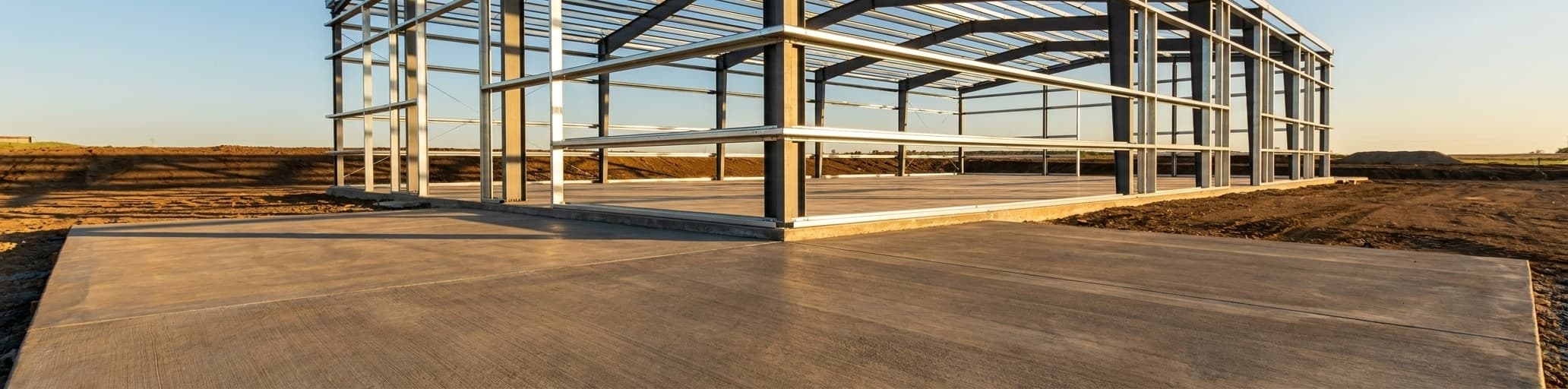

A 30×50 metal building typically costs $14,000 to $22,000 for the structure, with total installed costs ranging $25,000 to $52,500 when you factor in the slab, site prep, and permits. We help you understand exactly which costs fall where so you can budget accurately and avoid surprises.
How Much Does a 30×50 Metal Building Cost in 2026?
A standard 30×50 metal building costs $14,000 to $22,000 installed, but budget separately for the concrete slab, site prep, and permits.
Base building price range and what's included
A 30×50 metal building — 1,500 square feet of clear-span space — typically runs between $14,000 and $22,000+ for a standard enclosed structure with 12-foot sidewalls.[1] That base price generally covers the prefabricated steel kit, delivery, and professional installation, but it does not include the concrete slab, site prep, permits, or utility work — all of which are separate budget line items.[1] Stepping up to 14-foot sidewalls adds roughly $1,500 to $3,500 to the base figure.[1] On a per-square-foot basis, metal building kits broadly range from $8 to $25 per square foot depending on frame type, gauge, and design complexity, so a 1,500-square-foot footprint can land anywhere in a wide band before add-ons enter the picture.[2] Customization — insulation packages, extra door openings, lean-to additions — typically pushes the total 10-20% above the base kit price.[2] The clearest way to read any quote is to separate the structural package from site-related costs: the building itself has a defined price; the ground it sits on does not.
A quick breakdown of what a standard base package typically includes versus what falls outside it:
Usually included in the base building price:
- Prefabricated steel framing and panels
- Standard walk doors and one or more roll-up bay doors
- Roof panels and trim
- Delivery and professional installation (within the supplier's service area)
- Anchor bolt layout and foundation specifications
Typically billed separately:
- Concrete slab or gravel pad
- Site grading and drainage
- Building permits
- Insulation upgrades
- Electrical, plumbing, and HVAC rough-in
- Lean-to or canopy additions
Cost per square foot comparison to other sizes
Size drives per-square-foot cost more than almost any other variable in metal building pricing, and the 30×50 footprint lands in one of the more efficient spots on that curve. Smaller buildings carry higher per-square-foot costs because fixed engineering, delivery, and erection expenses get spread across fewer square feet — a 20×20 structure (400 sq ft) starts around $8,500, which works out to roughly $21 per square foot.[3] A 30×40 (1,200 sq ft) starts near $16,000, dropping the per-square-foot figure to about $13.[3] At 1,500 square feet, the 30×50 typically prices out between $9 and $15 per square foot for the structure alone, depending on gauge, wall height, and door configuration. Step up to a 40×60 (2,400 sq ft) and the starting price moves to around $28,000, but the per-square-foot rate continues to compress toward the low end of that band.[3] Industry-wide, raw steel material costs average $8 to $10 per square foot, which explains why the per-square-foot figure for larger buildings converges toward that floor — you're paying less overhead per square foot the more steel you're buying.[4] The table below puts those figures side by side so you can see where the 30×50 sits relative to common alternatives:
| Building size | Square footage | Starting price (structure) | Approx. cost per sq ft |
|---|---|---|---|
| 20×20 | 400 sq ft | ~$8,500 | ~$21 |
| 30×40 | 1,200 sq ft | ~$16,000 | ~$13 |
| 30×50 | 1,500 sq ft | ~$14,000-$22,000 | ~$9-$15 |
| 40×60 | 2,400 sq ft | ~$28,000 | ~$12 |
For buyers comparing the 30×40 prefab building cost against a 30×50, the extra 300 square feet rarely adds a proportional dollar amount — the incremental cost of lengthening an already-engineered frame is smaller than the cost of the frame itself, making the 30×50 a strong value step-up when your workflow can use the additional depth.
Why National Steel Buildings pricing beats the market
The engineering and construction sector carries some of the thinnest net profit margins of any industry — hovering around -3% on average — which means every player in the chain looks for ways to recover margin somewhere.[5] The most common recovery mechanism is a material markup. Contractors working on a cost-plus basis routinely add 30% to 50% above wholesale material prices, a practice that covers overhead, logistics, and supply-chain risk before a single beam is erected on your site.[6] Layer a separate tariff problem on top: 25% duties on imported steel and aluminum are now in effect nationwide, and analysts project those duties could add $7,500 to $10,000 to a typical U.S. building project when materials are sourced piecemeal through the open market.[7] National Steel Buildings sidesteps both pressures.
Contracted, volume-based steel purchasing locks in pricing before tariff announcements move the market, so your quote doesn't change between the day you sign and the day the steel ships. The single-source model also eliminates the coordination markup that compounds when a general contractor, a framing subcontractor, and a roofing crew each independently price their materials before handing the job to the next trade.
You see one number — factory to finished structure — with no hidden markup layers buried between line items.
30×50 Metal Building Slab and Foundation Costs
A 6-inch monolithic slab for your 30×50 metal building runs $12,000 to $21,000 installed, depending on your region and site conditions.
Concrete slab pricing for 30×50 footprints
A 30×50 concrete slab — 1,500 square feet — costs between $9,000 and $13,500 at the national average of $6 per square foot for materials and labor combined.[9] That baseline applies to a standard 4-inch pour. Step up to a 6-inch slab — the correct specification for any floor that will carry heavy equipment, vehicles, or livestock — and the arithmetic shifts considerably: a 6-inch 30×50 slab requires approximately 27.8 cubic yards of concrete, and with a 10% waste allowance factored in, materials alone run about $10,230 at current national concrete pricing.[8] Add professional labor at $2 to $3 per square foot and the fully installed cost for a monolithic slab-on-grade lands between $12,000 and $15,500.[8][9] Reinforcement adds another line item: rebar is required for slabs thicker than 4 inches and costs $1.40 to $1.85 per linear foot, while wire mesh is a lighter, lower-cost option better suited to driveways than to structural building floors.[9] Regional pricing creates meaningful spread — central-state markets average roughly $5.35 per square foot while coastal markets such as California and New York can reach $8.50 per square foot, a difference of more than $4,700 on a single 1,500-square-foot pour.[9] Site conditions add one more variable: a monolithic slab-on-grade (the most common choice for metal buildings on level, stable soil) runs $6 to $14 per square foot installed, while a stem wall foundation — appropriate for sloped sites or soil with stability concerns — stretches that range to $6 to $18 per square foot.[10]
The table below shows how total installed slab cost scales with thickness and foundation type for a 30×50 footprint:
| Slab type | Thickness | Installed cost per sq ft | Total for 1,500 sq ft |
|---|---|---|---|
| Monolithic slab-on-grade (light use) | 4 in | $6-$8 | $9,000-$12,000 |
| Monolithic slab-on-grade (commercial/ag) | 6 in | $8-$14 | $12,000-$21,000 |
| Stem wall foundation (sloped site) | 6 in | $6-$18 | $9,000-$27,000 |
Concrete delivery for a pour of this scale typically arrives by ready-mix truck at $125 to $133 per cubic yard, with fuel surcharges of $40 to $50 per truckload depending on distance — costs that are easy to miss when reading a preliminary estimate.[8] The slab is also where permit requirements can quietly expand the budget: some jurisdictions require inspections at the footing stage before the pour, adding both time and fees that your contractor should build into the schedule from day one.[9]
Site preparation and soil requirements
Site preparation is the cost most buyers leave out of their first draft budget, and it sits entirely outside both the building kit price and the concrete slab quote.
For a level lot with stable, well-draining soil, basic grading and excavation for a 30×50 footprint typically runs $1,500 to $3,000.[13] Costs scale quickly when conditions aren't cooperative: sloped sites requiring significant regrading can run $5,000 to $15,000 or more, and in dense urban markets, site prep can reach $7,500 even on relatively flat ground once local inspection fees are factored into the total.[13] Soil type is the variable most directly linking site prep expense to foundation cost — poor soil, a high water table, or clay-heavy ground without adequate drainage can require engineered solutions that change both the foundation type and the slab thickness needed for long-term stability.[11] Foundation work more broadly ranges from $4 to $10 per square foot when excavation or special engineering is required, which on a 1,500-square-foot footprint adds $6,000 to $15,000 above the building kit before the first steel panel arrives on site.[12] Across the full project, site prep costs typically account for 5-10% of the total budget, making it a meaningful line item — not a rounding error — worth confirming with an on-site assessment before locking in any quote.[13]
Total installed cost: building plus foundation
Putting all the budget layers together reveals the full picture a base building quote never shows you. A 30×50 metal building starts at $14,000 to $22,000+ for the enclosed structure and professional installation — but concrete, site prep, permits, and utility rough-in are each priced separately.[1] Add a 4-inch slab for basic storage use ($9,000-$12,000), minimal site grading on a flat lot ($1,500-$3,000), and a permit budget ($500-$2,000 depending on jurisdiction), and the all-in number for a simple storage configuration lands between $25,000 and $39,000.[1][14] Step up to a 6-inch reinforced slab for equipment or agricultural loads and add site prep for a mildly sloped lot, and the total installed range moves to $30,000-$50,000 before any customization.[1][14] For context, a traditionally framed detached structure of comparable size costs $40 to $70 per square foot installed — putting a 1,500-square-foot wood-frame build at $60,000 to $105,000 before finishes.[14] The table below shows three realistic 30×50 configurations and where their total installed costs land:
| Configuration | Base building | Slab (installed) | Site prep | Permits | Estimated total |
|---|---|---|---|---|---|
| Agricultural storage (4" slab, flat lot) | $14,000-$17,000 | $9,000-$12,000 | $1,500-$2,500 | $500-$1,000 | **$25,000-$32,500** |
| Commercial storage (6" slab, light grading) | $17,000-$20,000 | $12,000-$16,000 | $2,000-$4,000 | $750-$1,500 | **$31,750-$41,500** |
| Hybrid shop/barndominium (6" slab, utility rough-in) | $20,000-$22,000+ | $14,000-$21,000 | $3,000-$7,500 | $1,000-$2,000 | **$38,000-$52,500+** |
The single-source model matters most when you read that hybrid column. Coordinating a building supplier, a concrete crew, a grading contractor, and a framing sub independently means each trade prices materials at retail plus markup — compounding overhead at every handoff.[14] A turnkey approach locks the structural package at contracted pricing and sequences site prep, foundation, and erection without coordination gaps, keeping the total installed cost closer to the low end of each range rather than the high end.[1][14]
30×50 Building Specifications and Customization Options
Vertical roof panels shed snow and debris immediately, making them the correct choice for snow load or high-wind zones, not a premium upgrade.
Standard roof styles, heights, and load ratings
Three roof profiles dominate 30×50 metal building orders: the regular (rounded-corner) style, the boxed-eave (A-frame with horizontal trim), and the vertical roof. Regular-style roofs are the lowest-cost option and work fine in mild climates, but their horizontally running panels shed standing water slowly and allow debris to accumulate. Boxed-eave roofs share a similar panel orientation but add a cleaner ridge line and slightly better drainage. The vertical roof is the highest-performing option: panels run perpendicular to the ground, so rain, snow, and debris shed immediately without pooling. For any 30×50 building carrying meaningful snow load or located in a high-wind zone, the vertical profile is the correct specification — not a premium upgrade.
Sidewall height shapes what a 30×50 can actually hold. A 10-foot sidewall clears standard vehicles and light farm equipment. Twelve feet — the most common default for a building this size — accommodates most pickup trucks, small tractors, and single-aisle storage racks without headroom conflict. Stepping to 14-foot sidewalls opens the space for larger agricultural equipment, commercial vehicles, or mezzanine storage levels. Eave height is the measurement that governs usable interior clearance, not peak height, so confirm eave dimensions — not ridge height — before finalizing a quote.
Load ratings are the specification most buyers overlook and inspectors most frequently flag. Every 30×50 steel building must be engineered to meet the roof live load, snow load, wind load, and dead load requirements of its specific jurisdiction.[15] Snow load is expressed in pounds per square foot (psf) and varies widely by region — a structure rated for 20 psf is insufficient in a northern climate where ground snow loads routinely hit 40 to 50 psf.[15] Wind load ratings similarly follow local codes, with high-wind and hurricane zones requiring certified engineering that must appear on stamped drawings submitted with the permit application.[15] Ask for the design load certificates — roof live load, ground snow load, and basic wind speed — before signing any building contract. A reputable supplier provides those numbers upfront because the building cannot be legally erected without them.
Enclosure levels: bare frame versus fully enclosed
Enclosure level is the single variable that explains most of the price spread between two 30×50 quotes that look nothing alike. A bare structural frame — primary steel members, secondary framing such as purlins and girts, fasteners, and anchor bolts — starts at roughly $11 to $20 per square foot and delivers the skeleton only.[11] That tier makes financial sense only when you plan to source wall panels, roofing, and erection labor separately, because all of those scopes still have to be paid before the building is usable.[11] An enclosed shell adds roof panels, wall panels, basic trim, and standard door openings, making the building weathertight — but uninsulated, without interior finish or utility rough-in. A fully finished, turnkey structure layers in insulation, interior finishing, and installed utilities, pushing the installed per-square-foot cost to roughly $25 to $45 depending on region and finish level.[11] Insulation is the largest single cost driver between an enclosed shell and a finished building: a 30×50 insulation package runs $2,500 to $6,000 for standard options, with closed-cell spray foam or high-R cold-climate assemblies adding more above that band.[11] On a material basis, double bubble reflective insulation (R-5) costs meaningfully less than 2-inch fiberglass batts (R-7), with fiberglass priced approximately 50% higher per roll — so choosing between energy-efficient metal building insulation specs directly shifts your finishing budget in either direction.[16] Confirming which tier a quote covers before comparing any two numbers is the single most useful step in reading a 30×50 budget accurately.[11]
| Enclosure tier | What's included | Approx. cost per sq ft | Practical use case |
|---|---|---|---|
| Bare structural frame | Primary frame, purlins, girts, fasteners, anchor bolts | $11-$20 | Owner-supplied panels and self-managed erection |
| Enclosed shell | Frame + roof/wall panels + trim + standard doors | $14-$25 | Weathertight storage; insulation added later |
| Fully enclosed, finished | Shell + insulation + interior finish + utilities | $25-$45 | Commercial, agricultural, or hybrid shop use |
Popular add-ons and how they impact total cost
Add-ons are where a 30×50 project budget most commonly drifts — not because the upgrades are unnecessary, but because buyers price them late. Wall height is the first lever: stepping from a 12-foot to a 14-foot sidewall adds $1,500 to $3,500 to the base kit price, a worthwhile investment if the building needs to clear large trucks, RV storage, or a vehicle lift.[1] Lean-to additions are the second most requested upgrade — they extend covered square footage without adding a fully engineered bay, and they typically run $3,500 to $7,000 depending on depth and whether the lean-to is open or enclosed.[1] Door and window packages are the third budget variable most buyers underestimate: a configuration with three roll-up doors, one walk-in door, and windows can total as much as $24,000, depending on door dimensions and quantity.[13] Insulation rounds out the most common add-on category — wall and roof insulation packages range from $0.50 to $2.00 per square foot and can reduce heating and cooling costs by up to 20% over the life of the building.[13] Interior liner panels, when specified for a finished shop or commercial space, add another $3 to $5 per square foot, and a basic electrical rough-in typically starts at $5,000 before fixtures or panel work.[13] The table below puts those line items side by side so you can see where each add-on lands relative to the base building price:
| Add-on | Typical cost range | Notes |
|---|---|---|
| 14-foot sidewalls (vs. 12 ft) | $1,500-$3,500 | Required for RV, large equipment, vehicle lifts |
| Lean-to addition | $3,500-$7,000 | Open or enclosed; depth drives cost |
| Roll-up doors (per door) | Varies; full door package up to $24,000 | 8×8 to 12×14 sizes; quantity and size drive total |
| Insulation (walls and roof) | $0.50-$2.00 per sq ft | Saves 10-20% on energy long-term |
| Interior metal liner panels | $3-$5 per sq ft | Required for finished shop or commercial interior |
| Electrical rough-in | Starting at $5,000 | Fixtures and panel work billed separately |
The compounding effect matters here. A buyer who starts with a $16,000 base quote and adds 14-foot walls, a lean-to, a full door package, and basic insulation can easily reach $30,000 before the slab is poured. Pricing each add-on upfront — rather than layering them onto a signed contract — is the clearest way to keep the total installed cost within budget.[1]
Real-World 30×50 Metal Building Use Cases and ROI
A 30×50 with dual two-post lifts and 16-foot sidewalls lets you run simultaneous projects while overhead storage keeps your floor clear for workflow.
How many cars, equipment, or livestock fit in a 30×50 space
Real-world shop owners who have built and used 30×50 structures offer the most honest answer to the capacity question. In practice, a 30×50 with standard 12-foot sidewalls fits a pickup truck and a passenger car side by side — but owners describe that configuration as filling the space "barely," with little room left for circulation or work zones.[17] The math behind that experience is straightforward: forum builders planning 30×50 layouts use a car footprint of roughly 8×16 feet as the reference unit for layout drawings, which means the 30-foot width accommodates two vehicles abreast with approximately 7 feet remaining — workable for walking, not for tool storage or a workbench.[17] Stepping up to 16-foot sidewalls dramatically changes what you can do vertically, opening space for overhead storage mezzanines and pallet racking without consuming floor square footage.[17]
For automotive shop use, the most practical 30×50 layout centers on vehicle lifts rather than flat parking. A standard two-post lift spans about 12 feet wide, and shop builders consistently recommend leaving at least 2 feet of clearance between the outer lift post and the nearest wall so you can walk past a car on the lift without squeezing.[17] With those numbers, the 30-foot width supports two two-post lifts side by side — one as a dedicated project lift, one as a working lift for shorter-turnaround jobs — while still leaving a 4-foot aisle between the outer posts and the wall on each side.[17] That configuration is a common target for hobbyist builders, who plan dual-lift setups specifically so a long-term restoration doesn't block access to a service lift when a friend's vehicle needs attention.[17] A 12×12 roll-up on the front wall and a 10×10 on a side wall handle traffic flow for vehicles entering and exiting without requiring a full-width opening that compromises wall rigidity.[17]
Cost comparison: metal buildings versus traditional construction
The upfront price gap between steel and wood-frame construction is real but narrower than most buyers expect — and it reverses clearly when you look past the initial quote. A standard stick-built structure in 2024 averages $150 to $250 per square foot for custom builds, with premium construction exceeding $300 to $450 per square foot.[18] A completed metal building or barndominium runs $65 to $160 per square foot at standard finish levels, representing a 20-30% savings over comparable conventional construction.[18] On a 30×50 footprint, that spread is a meaningful dollar figure — wide enough to fund the slab, utility rough-in, and several add-ons before you reach what a wood-frame equivalent costs bare.
Material price volatility is the structural reason steel keeps widening that advantage. Lumber prices have held approximately 80% above pre-pandemic levels, driven by tariffs on Canadian softwood imports — which supply roughly 85% of all U.S. construction lumber — plus ongoing sawmill closures.[19] Steel prices, by contrast, remained nearly flat year-over-year during the same period.[19] When lumber spiked during the early COVID period, a Steel Framing Industry Association study found cold-formed steel framing packages became 24% less costly than wood on a comparable building, dropping total project cost by $310,000 on a single mixed-use build in Chicago.[19] Prefabrication amplifies the labor side of that equation: McKinsey analysis cited by the industry shows prefabricated construction can speed up build timelines by up to 50%, cut material cost by 10%, and reduce total project cost by 20%.[19] A 30×50 steel shell can reach dried-in status in days once the slab cures; a comparable wood-frame structure moves through framing, inspection cycles, and drying-in over months.[18]
The 20-year total-cost-of-ownership math is where steel's advantage becomes decisive. Wood-framed structures carry ongoing exposure to rot, termites, mold, and moisture — liabilities that drive up both repair bills and insurance premiums year after year. Steel avoids all of them: it's termite-proof, mold-resistant, and fire-retardant, reducing insurance premiums by 10-20% and cutting maintenance costs by up to 50% compared to conventional construction over a 20-year period.[19] A long-term ownership analysis shows steel's lifetime cost running approximately 15% below wood when those ongoing expenses are totaled.[19] For a 30×50 building owner planning a multi-decade use case — whether agricultural, commercial, or hybrid — those percentages compound into savings that dwarf any upfront price comparison.
| Cost factor | 30×50 metal building | 30×50 wood-frame equivalent |
|---|---|---|
| Finished cost per sq ft (standard) | $65-$160 | $100-$250 |
| Finished cost per sq ft (premium) | $150-$300 | $300-$450+ |
| Construction timeline (shell) | Days to weeks | Months |
| Lumber price exposure | None | ~80% above pre-pandemic baseline |
| Insurance premium impact | 10-20% lower | Baseline |
| Maintenance over 20 years | Up to 50% less | Baseline |
| 20-year total cost of ownership | ~15% lower than wood | Baseline |
One cost category that often surprises buyers is construction speed. Because the steel building components arrive pre-engineered and bolt together rapidly, labor hours drop significantly — in some documented cases by up to 30% compared to conventional framing — which directly reduces the labor line on your project budget rather than just speeding the calendar.[19] Faster completion also limits exposure to weather delays and material price movement between contract signing and project close, two variables that routinely push wood-frame projects over budget in ways that don't show up on an initial quote.[18]
Financing options and long-term savings with National Steel Buildings
Financing a 30×50 metal building follows the same channels as any commercial construction project: conventional commercial loans, construction-to-permanent loans that convert at project close, and flexible payment plans structured directly through the supplier.[20] What separates steel from a wood-frame equivalent on the financing side is certification. Lenders and insurance companies frequently prefer or require engineer-stamped, code-compliant structures, and a certified metal building makes that underwriting process straightforward because the structural calculations are already validated before the first conversation with a bank.[21] Certification also tends to unlock more favorable insurance terms: steel's non-combustible profile and resistance to pests and moisture give underwriters a lower-risk asset to insure, which translates directly into premium savings that compound every renewal cycle.[21]
The long-term savings case builds quickly when you put real numbers against it. Pre-engineered metal buildings can compress construction schedules by 30-40% compared to conventional framing systems, meaning a 30×50 structure can begin generating revenue — as a rental space, a working shop, or a storage facility — weeks or months before a comparable wood-frame build reaches dried-in status.[20] Once operating, the maintenance picture stays lean: steel avoids the rot, pest infiltration, and moisture damage that drive recurring repair costs in wood structures, and insulated panel assemblies deliver high thermal performance that cuts heating and cooling loads year over year.[20] Properties with energy-efficient, low-maintenance buildings command stronger offers because buyers and appraisers factor future operating costs into what they'll pay today.[22]
Property value appreciation is the financial lever most buyers leave out of their initial ROI calculation entirely. A well-engineered, certified metal building adds functional square footage and documented durability to the underlying asset — two factors that directly influence what a buyer or appraiser assigns to the parcel.[21] Buildings configured to generate rental income, whether as storage space, a workshop, or an event venue, push valuations higher still: income-producing structures are assessed on a capitalization-of-income basis rather than pure replacement cost, so a building that earns money appraises differently than one that simply sits.[22] Working with a single-source provider locks in contracted material pricing before construction starts, which keeps the financing math accurate from the day you sign through the day the project closes — no mid-build material surprises that quietly push your loan-to-cost ratio in the wrong direction.[20]
- A 30×50 metal building structure costs $14,000-$22,000 installed, but total project cost reaches $25,000-$52,500 when concrete slab, site prep, and permits are included.
- Concrete slab costs range from $9,000-$15,500 for a 4-6 inch monolithic pour, with regional variation of $4,700+ between central and coastal markets on the same footprint.
- Metal buildings cost 20-30% less than wood-frame construction ($65-$160 vs $100-$250 per square foot) and offer 15% lower 20-year total cost of ownership due to reduced maintenance.
- Load ratings for snow, wind, and roof live loads must be confirmed upfront and match local jurisdiction requirements before any building contract is signed.
- Common add-ons like 14-foot sidewalls ($1,500-$3,500), lean-to additions ($3,500-$7,000), and full door packages ($24,000) are frequently underestimated and should be priced before finalizing quotes.
- A practical 30×50 automotive shop layout accommodates two vehicle lifts side-by-side with 4-foot aisles, not flat parking of two vehicles, requiring careful space planning.
- Single-source metal building suppliers eliminate coordination markups between trades and lock pricing before tariff announcements, avoiding the 30-50% material markup common in fragmented contracts.
- https://www.northtexassheds.com/steel-buildings/30×50
- https://qebuildings.com/2025/10/how-much-does-a-50100-metal-building-cost/?srsltid=AfmBOorxBxfFed_fP1LK3QkSjNMbHQ5HY8EGwZuBv4nUeAOk-JUULiQS
- https://www.northtexassheds.com/steel-building-cost-guide
- https://www.smaestimating.com/40×60-morton-building-cost/
- https://www.venasolutions.com/blog/average-profit-margin-by-industry
- https://truittandwhite.com/contractor-markup-on-materials
- https://thegreenmissioninc.com/tariffs-may-finally-drive-a-shift-to-the-secondary-market/
- https://www.metal-building-homes.com/30×50-concrete-slab-cost/
- https://www.homeadvisor.com/cost/outdoor-living/concrete-slab/
- https://homeguide.com/costs/foundation-cost
- https://kafafab.com/30×50-metal-building-cost/
- https://hartvilleoutdoorproducts.com/how-much-does-a-metal-building-cost/
- https://chinasteelbuildsales.com/30×50-metal-building-costprice-guide-breakdown/
- https://trusscore.com/blog/how-much-does-it-cost-to-build-a-garage.html
- https://www.nachi.org/structural-design-loads-home-inspector.htm
- https://www.legacycarports.com/post/metal-building-insulation-double-bubble-vs-fiberglass-insulation
- https://grassrootsmotorsports.com/forum/grm/30×50-shop-layout-ideas/182658/page1/
- https://www.vcstar.com/press-release/story/11641/americans-turning-to-metal-buildings-for-affordable-living/
- https://www.scottsdalesteelframes.com/residential-construction/pricing-of-wood-and-steel-framed-homes-revisited-all-you-need-to-know
- https://metalprobuildings.com/steel-industrial-building-cost-roi/
- https://metalcarportsandbuildings.com/2026/03/21/do-metal-buildings-increase-property-value/
- https://primesteelmanufacturing.com/blog/how-to-increase-property-value-with-a-custom-metal-building/