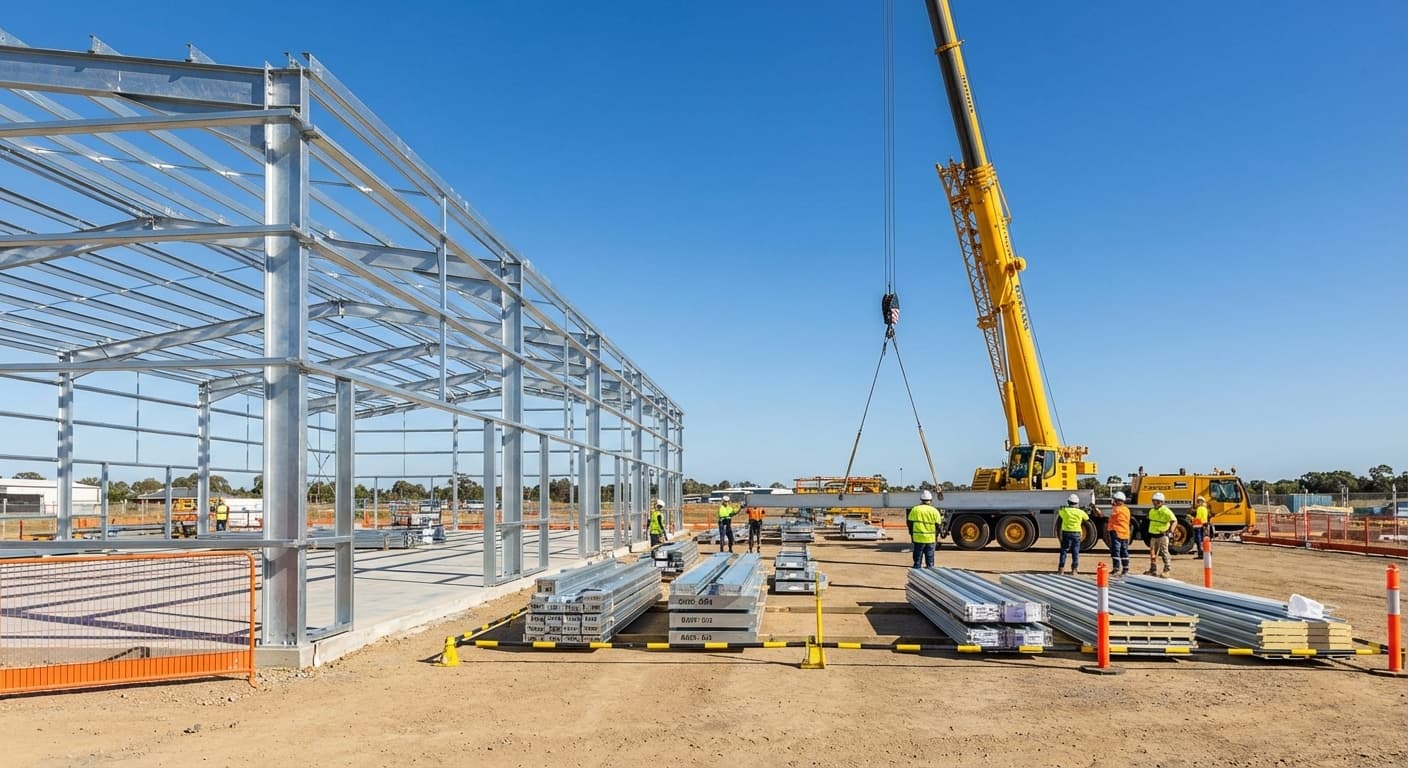

Before you sign with a 40×80 steel-building erection crew, vet them like your investment depends on it–because it does–by demanding proof of daily safety documentation, verified TRIR/DART rates, OSHA-specific training logs, and a site-specific erection plan, while also confirming an active contractor license, general liability, worker's comp, bond, and a workmanship warranty that covers fasteners, panel alignment, and flashing; insist on a portfolio of identical completed buildings, call recent owners for unfiltered references, and scrutinize detailed, itemized quotes against cost-plus options to expose hidden extras, then lock everything into a contract that spells out scope, milestones, engineering calculations, and 20- to 40-year rust-through, panel, and labor warranties with clear post-install inspection triggers and transferable coverage. Prioritize crews that communicate via real-time cloud reporting, daily digital briefings, and single-source material supply to erase vendor blame games, and judge their crisis history–weather delays, damaged steel, design conflicts–through past-customer stories of quick, safe, on-site decisions. Finally, secure a maintenance playbook that specifies fastener inspections, sealant upkeep, and drainage care to keep warranties valid for decades, ensuring your 3- to 6-month pre-engineered project finishes on time, on budget, and without expensive surprises.
Understanding the Role of a 40×80 Building Erection Crew
Professional erection crews combine ironworker and sheet metal expertise to keep your 40×80 project on schedule without costly delays.
Core responsibilities and expertise
A 40×80 building erection crew turns your steel kit into a finished building. These specialized teams handle everything from reading blueprints to tightening the last bolt.
Your crew's job starts before the first beam goes up. They'll review every component against the plans, check the site preparation, and catch problems before they cost you time [1]. During construction, they raise the main steel frames, install secondary supports, and add the bracing that keeps your building standing strong [2]. The final phase brings it all together–wall panels, roof panels, insulation, and trim that seal your building tight [2].
Here's what separates professional crews from weekend warriors: they combine ironworker skills for the heavy framing with sheet metal expertise for the finish work [3]. Most crews excel at one or the other. When they don't have both skill sets, your project slows down and quality suffers [3].
The best crews–like our in-house ProTrades team–also know OSHA regulations cold. They handle specialty features like high-insulation systems or custom door packages without breaking stride [3]. That's the difference between a smooth project and expensive delays.
Typical project timeline for a 40×80 structure
Your 40×80 steel building follows a predictable schedule when professionals handle it:
Foundation and prep: 1-4 weeks (varies by soil and weather) [4] Component delivery: 1-2 weeks after foundation completion [4] Frame erection: 5-7 days with a 3-4 person experienced crew [5] Panel installation: 1-3 weeks for walls and roof [4]
What affects your timeline? Weather tops the list. Then crew experience, building complexity, and special features like extra doors or interior walls [5].
Total project time from permits to move-in? Usually 3-6 months. Simple buildings go faster [4]. Here's the bottom line: pre-engineered steel cuts construction time by 33% compared to traditional building [5]. That's months of rent or operations you gain back.
Key performance indicators for quality and safety
You need concrete ways to measure crew performance before problems arise. Smart owners look beyond basic metrics to what actually predicts success.
Safety indicators that matter:
- Incident rates over the past three years [8]
- Near-miss reporting (shows they catch problems early)
- Daily safety documentation habits
Quality checkpoints to verify:
- Pre-shift equipment inspections
- Connection inspection records
- Column stability checks [6]
The crews worth hiring document everything. They maintain training records for specialized positions–crane operators, connectors, decking workers [6]. They develop site-specific safety plans that address your project's unique challenges [6].
Today's top crews use real-time reporting systems and pattern-recognition software to spot hazards before accidents happen [8]. But technology only helps if the culture supports it. Look for crews where every worker actively identifies and reports potential problems [7].
For deeper safety evaluation criteria, see "Safety record, training programs, and compliance" below. The key takeaway: professional crews leave a paper trail. If they can't show you their safety metrics and quality records, keep looking.
Essential Criteria for Vetting Your Erection Crew
Verify your erection crew's commercial contractor license, active liability insurance, worker's compensation coverage, and bonding before signing anything.
Credentials, licensing, and insurance verification
You need proof they're legal and insured. Simple as that.
Check these three things first: valid commercial contractor license for steel buildings, active general liability insurance, and current worker's compensation coverage [9]. Smart move–also verify they're bonded to protect your investment if something goes sideways [9].
Don't take their word for it. Call your state licensing board. Contact their insurance company directly. Confirm everything's current and covers what you need [10]. Any crew worth hiring hands over this documentation without blinking. They'll include exact coverage amounts right in their proposal [10].
Professional associations like AGC or CMAA membership? Nice bonus. Shows they invest in staying current with industry standards [9].
Experience with 40×80 steel buildings and references
Your 40×80 building needs a crew that erects steel for a living–not weekend warriors filling gaps between paint jobs [11].
Ask for their portfolio. Count how many 40×80 buildings they've actually completed. A steady crew that works together daily beats a rotating cast of subcontractors every time [11]. Quality shows in the details. Speed shows in their teamwork.
Skip the cherry-picked testimonials. Call other building owners in your area directly [11]. Your concrete contractor probably knows which crews show up prepared and which ones waste time [11]. Ask specific questions:
- What size was your building?
- Did they stick to the schedule?
- Any surprises or disappointments?
- Would you hire them again?
For commercial or industrial projects, experience isn't optional–it's critical [12]. One wrong move during assembly compromises your entire investment. The right crew, like our ProTrades division, knows exactly how to handle your specific insulation needs, door systems, and interior requirements [12].
Get everything in writing. Their experience with similar buildings. Their approach to your specific features. Their timeline. No guesswork.
Safety record, training programs, and compliance
Steel erection is dangerous work–top 10 most hazardous construction jobs according to federal data [13]. Your crew's safety record tells you everything about how they'll treat your project. As discussed in the performance indicators section, you need their TRIR and DART rates for the past three years. Zero tolerance for crews that dodge this request.
OSHA requires specific training for steel erection [14]. Every crew member needs documented training in:
- Fall protection systems
- Rigging procedures for multiple lifts
- Equipment inspection protocols
- Hazard recognition and prevention
Specialized positions need extra certification–riggers, connectors, decking zone workers [15]. No exceptions.
Ask for their site-specific erection plan. This document shows how they'll handle your unique project safely [15]. Quality crews develop these plans upfront, identifying potential problems before steel arrives.
The best indicator? How they handle near-misses and unexpected situations. When checking references, ask specifically about safety incidents. Did they stop work to address hazards? Did they communicate clearly about risks? Their response under pressure reveals their true safety culture–not just their paperwork [14].
Evaluating Communication and Service Excellence
Real-time construction management systems and cloud-based platforms keep you informed on progress, resources, and issues without chasing down your crew.
Clear communication protocols and reporting
Good communication saves money and time. Period. Professional erection crews know this, so they implement daily reporting systems that track every detail–progress, resources, issues–all documented in real-time construction management systems [16].
You want crews that use their scheduling software as the single source of truth. They run daily digital briefings that keep everyone updated on progress, challenges, and any changes to the erection sequence [16]. No surprises, no confusion.
Look for these communication standards:
- Open channels between workers, contractors, and project managers
- Formal protocols for work instructions, safety updates, and plan changes [17]
- Complete documentation tracking–safety records, certifications, permits, inspection reports, and any structural modifications [17]
- Cloud-based platforms that give you real-time access to project data [16]
Ask potential crews for examples of their daily reports and communication workflows. How they document tells you everything about how they operate. The best teams keep you informed without you having to chase them down.
Single-source solutions and coordination with suppliers
Single-source providers change everything. When your erection crew works through one supplier for the entire building envelope, you eliminate headaches before they start.
Here's what single-source actually means for your 40×80 project:
- One phone number for everything–no vendor ping-pong
- Streamlined logistics and faster delivery times [18]
- Consistent quality across all components
- No risk of Vendor A blaming Vendor B when something goes wrong [19]
For 40×80 structures, single-source solutions speed up construction significantly. All components arrive in clearly labeled bundles with detailed packing lists. Your crew spends time building, not hunting for parts [19].
The best erection teams maintain long-term manufacturer relationships that pay off during your project. Need to adjust specifications? They make one call. Technical question at 3 PM on Friday? They get answers. Supply chain hiccup? They have backup plans [18].
This is exactly why companies offering both
Problem-solving approach and responsiveness
Problems happen. What matters is how fast your crew solves them.
The difference between good crews and dangerous ones shows up under pressure. Take the GL Construction tragedy–a worker died because the crew tried to hoist a 1,000-pound wall in high winds instead of waiting for better weather [20]. That's not a mistake. That's a failure of judgment that costs lives.
Professional crews handle challenges differently:
- They document response procedures before problems arise
- They analyze every incident to prevent repeats [20]
- Supervisors stay on-site with authority to make immediate decisions [16]
- They communicate critical information to all stakeholders without delay [16]
During reference checks, ask specific questions:
- "Tell me about a time when weather delayed the project. How did they handle it?"
- "What happened when materials arrived damaged?"
- "How did they manage when they discovered a design conflict mid-build?"
The answers tell you everything. Quality teams have stories about preventing disasters, not causing them. They implement risk assessments during pre-construction and develop contingency plans for each potential issue [16].
This responsiveness matters for more than just safety. Design conflicts, material deficiencies, scheduling changes–professional crews handle them all with minimal impact to your timeline and budget. They solve problems before you even know they exist.
Finalizing the Partnership with Confidence
Demand itemized quotes, engineering calculations, and written warranties before signing–these three elements protect your investment from hidden costs and installation failures.
Contractual safeguards and warranty terms
Your contract is your protection. Get it right before anyone picks up a tool.
Start with the basics. Your contract needs clear project scope, hard deadlines, payment milestones, and specific performance standards. No wiggle room, no surprises.
For your 40×80 building, you'll see multiple warranty types–not one catch-all coverage:
- Rust-through warranty: Protects against corrosion that actually perforates the steel [21]
- Panel warranty: Covers roof and wall sheet integrity [21]
- Workmanship warranty: Your crew's guarantee on installation quality [21]
Most structural warranties run 20-40 years. Paint and panel coverage often extends 30-40 years, but check the fine print [22]. Full replacement beats prorated coverage every time–those "40-year" warranties that decrease in value after year 5 aren't worth much [22].
Know what's not covered. Storm damage? That's insurance, not warranty [21]. Skip maintenance? Coverage void. Make unauthorized modifications? Protection gone [21].
The workmanship warranty tells you everything about your crew's confidence. Quality teams guarantee their fasteners stay tight, panels align perfectly, and flashing keeps water out [23]. If they won't put that in writing, find another crew.
Demand engineering calculations that back up structural load specifications for your exact location [22]. Your contract should spell out post-installation inspection procedures and exactly what triggers warranty coverage [23]. The best agreements include dispute resolution steps with clear timelines and documentation requirements [23].
Bottom line: A solid contract with a
Cost transparency and value-based pricing
If a crew won't itemize their quote, walk away. Professional crews break down every cost: labor hours, equipment rental, project management fees. No mysteries, no lump-sum guessing games [24]. Get documentation on what's actually included. Foundation work, unloading steel, site prep, permit assistance–these "extras" can add thousands if they're not in writing [24].
Build a comparison table for each quote:
- Specifications
- Materials
- Services included
- Lead times
- Warranties
- Total cost
This shows you real value, not just the lowest number [24].
For your 40×80 building, consider cost-plus pricing. You pay actual expenses plus a fixed management fee [26]. Monthly reports show exactly where your money goes–material costs, labor allocation, subcontractor bills. Complete transparency [26].
Why cost-plus works:
- Design changes don't trigger expensive change orders
- Material price spikes don't blow your budget
- You see every dollar spent in real time [26]
Smart crews save you money without cutting corners. They use standardized components and efficient sourcing while maintaining structural integrity [25]. They answer pricing questions without hesitation and provide references who'll confirm their financial transparency [24].
The right crew treats your budget like their own. They find savings you didn't know existed and document every decision. That's value-based pricing–quality work at a fair price with zero surprises.
Post-erection support and maintenance guarantees
Skip maintenance, lose your warranty. It's that simple. Your steel building needs regular care to keep warranty protection active [21]. Quality crews hand you a maintenance playbook before they leave your site. Look for specific guidance on:
- Fastener inspection schedules
- Sealant maintenance requirements
- Drainage system upkeep
- Panel condition monitoring [28]
These aren't suggestions–they're warranty requirements [28].
Your post-erection coverage breaks into three parts:
- Structural frame warranty: Covers columns and rafters
- Panel/roofing warranty: Often prorated by age
- Finish warranty: Protects against fading and chalking [27]
Reality check: Warranties cover material defects, not labor or shipping for replacements [27]. Planning to sell? Get transferable coverage or watch your resale value drop [27].
Professional crews document everything. They photograph completed work, save receipts, and maintain service records that prove warranty compliance [28]. Their maintenance agreements specify inspection frequency–spring and fall work best for comprehensive checks [28].
Choose crews backed by manufacturers with 20+ years in business. That 40-year warranty means nothing if the company vanishes in year 5 [27].
The right crew sets you up for long-term success. They explain maintenance requirements, provide clear documentation, and answer your calls two years later when you have questions. That's real post-erection support–not just a warranty certificate and goodbye.
- Verify active contractor license, liability & worker's comp before signing.
- Demand 3-year safety TRIR/DART records; zero tolerance for evasion.
- Insist on site-specific safety plan and documented OSHA training.
- Check 40×80 portfolio: count completed jobs, call owners directly.
- Get itemized quote listing labor, equipment, exclusions; reject lump-sum.
- Secure separate warranties: rust-through, panel, workmanship; read exclusions.
- Require maintenance playbook and twice-yearly inspection schedule in contract.
- https://www.tylerbuilding.com/post/the-essential-guide-for-metal-building-erectors
- https://harrisconstructorsinc.com/metal-building-erection/
- https://www.steelsmithinc.com/2017/05/how-to-choose-the-right-erection-crew/
- https://gravitycontractors.com/how-long-does-it-take-to-erect-a-steel-building/
- https://www.rhinobldg.com/blog/how-long-does-it-take-to-erect-a-metal-building
- http://www.osha.gov/laws-regs/federalregister/2001-01-18-0
- https://onekeyresources.milwaukeetool.com/en/construction-safety-metrics
- https://www.compliancequest.com/blog/safety-metrics-kpi-for-osha-ehs-leaders/
- https://www.kobaltconstruction.com/checklist-for-hiring-a-reputable-commercial-contractor
- https://armstrongsteel.com/blog/key-questions-to-ask-before-hiring-commercial-metal-building-contractors
- https://www.bucksteel.com/blog/steel-buildings/finding-a-steel-building-erector/
- https://www.facilitybuilders.com/blog/2021/01/experienced-steel-pemb-erector-and-general-contractor.html
- http://www.osha.gov/steel-erection
- http://www.osha.gov/etools/steel-erection/training
- https://oshatraining.com/more-osha-training-resources/osha-construction-industry-training-requirements/steel-erection/
- https://steelestimatingsolutions.com/structural-steel-erection-project-management/
- https://suburbanpipeandsteelinc.com/2023/12/steel-erection-101-best-practices-for-erecting-steel/
- https://claironmetals.com/benefits-having-stop-supplier-metal-components/
- https://norsteelbuildings.com/advantages-of-steel-series/advantages-single-source-responsibility/
- https://hazwoper-osha.com/blog-post/what-are-the-top-hazards-in-steel-erection-and-how-can-you-mitigate-them?srsltid=AfmBOorddS19BEW_pSIa1JozUw4adP00QAIzFWom6u3GGX-U8goc6mCJ
- https://garagebuildings.com/steel-building-warranties-explained-whats-really-covered-in-2025-2026
- https://www.getcarports.com/steel-building-warranties-explained?srsltid=AfmBOoogfHO9tWd2NvGtFYSHPGIurhIdFTGrugkDdCCOC_nbJLCFJQ4Y
- https://www.steelbuildingsandstructures.com/warranty/
- https://metalprobuildings.com/steel-metal-buildings-what-you-need-to-know-before-signing-a-contract/
- https://www.metalbuildingoutfitters.com/building-cost-effective-steel-structures-a-how-to-guide/
- https://www.willjohnsonbuilding.com/blogs/the-value-of-transparency-understanding-the-cost-plus-approach-to-custom-home-building
- https://www.factorysteeloverstock.com/steel-building-warranty-coverage/
- https://steelcommandercorp.com/warranty-maintenance-upkeep-how-ongoing-care-impacts-lifetime-cost/