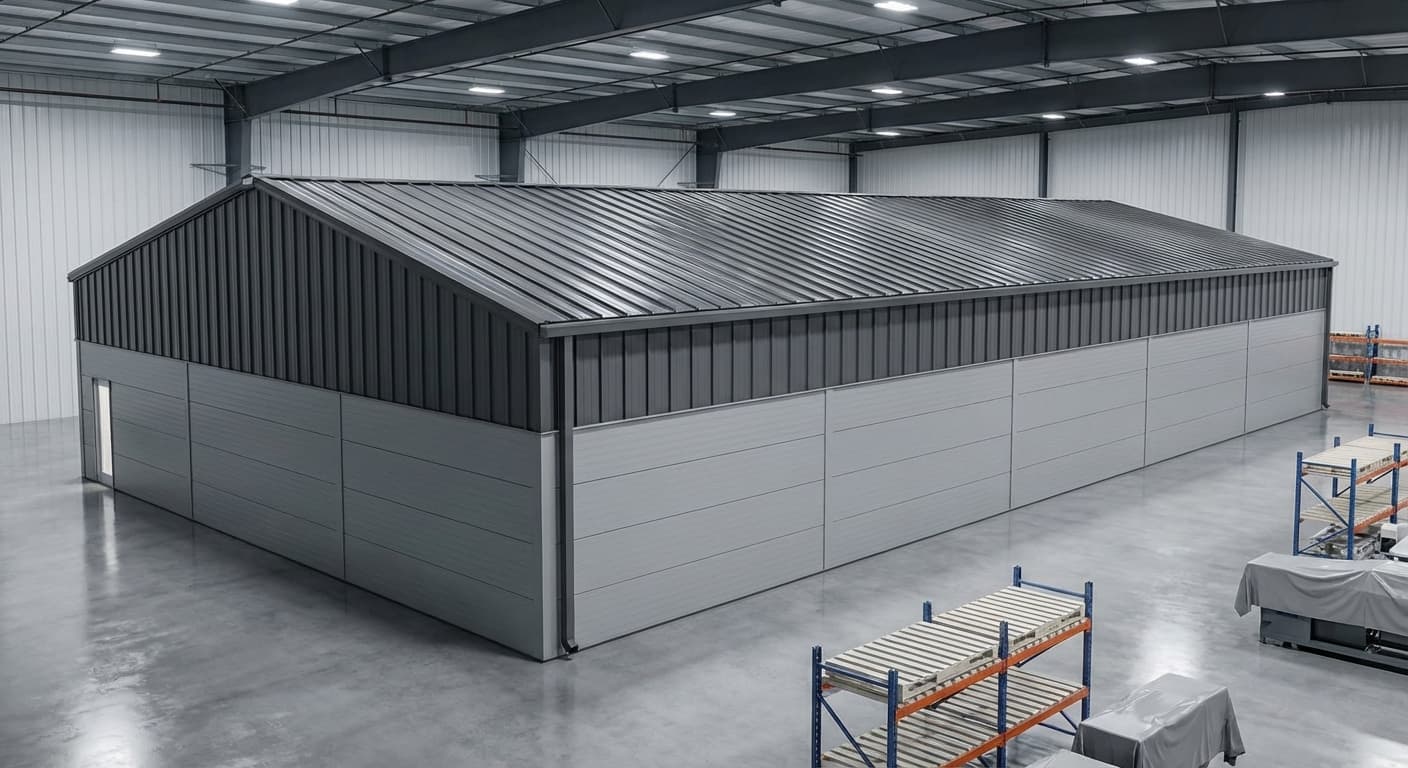

A 40×80 insulated metal building only earns a clean retail-energy-audit if every thermal detail is engineered, installed, and documented to out-perform IECC 2018 R-values that climb from R-19 in the Sun Belt to R-30 plus R-11 liner in zones 7-8. Readers learn how to translate code tables into real-world assemblies–choosing among economical fiberglass Liner Systems, bridge-stopping continuous polyiso, or high-end insulated metal panels–while guarding against the compression, air leakage, and missing paperwork that can slash effective R-values by 30% and trigger costly retrofits. The article walks through five audit checkpoints (code minimums, true R-value, air-tightness, documentation trail, and right-sized HVAC), supplies proven sealing and light-colored-roof tactics, and shows how to capture utility-bill proof that can recoup insulation costs in as little as two years in extreme climates. It finishes with field-tested installation sequencing, thermal-spacer and vapor-barrier best practices, and a simple inspection routine that keeps condensation, corrosion, and energy waste at bay for decades, turning a one-time insulation decision into permanent cash-flow and compliance confidence.
Understanding R-Values for a 40×80 Insulated Metal Building
Higher R-values in your 40×80 metal building directly reduce heating and cooling costs while preventing condensation damage to structural components.
How R-Values Impact Energy Efficiency
R-values measure a material's resistance to heat flow, with higher values indicating superior insulation performance. For metal buildings, which readily conduct heat, proper insulation directly impacts energy consumption and comfort [1]. The relationship between R-values and energy efficiency is mathematical – as R-values increase, heat transfer decreases proportionally.
This is critical because metal building insulation R-values typically range from R-8 to R-30, with each increment significantly affecting heating and cooling costs [1].While R-values measure individual materials, the overall thermal performance of a building depends on the assembly's U-factor (U=1/R), which accounts for all components including thermal bridges [2]. This distinction matters for compliance, as energy codes increasingly specify assembly performance rather than individual material ratings. Since IECC 2012, requirements have tightened substantially, making higher R-value systems standard practice across most climate zones [2].The energy efficiency benefits of proper R-value selection extend beyond cost savings.
Adequate insulation regulates interior temperature, prevents condensation (which can damage structural components), and reduces HVAC system strain [1]. For a 40×80 metal building, even small improvements in R-value can yield significant operational savings, particularly in extreme climate zones where heat gain or loss is pronounced. Building codes now reflect this relationship, with specific R-value requirements based on location and building purpose [2].
Selecting the Right Insulation Type for 40×80 Structures
Three primary insulation options exist for 40×80 metal buildings, each with distinct performance characteristics and price points. Fiberglass insulation, the most common and cost-effective solution, comes in multiple configurations. Standard single-layer systems offer basic thermal resistance, while high-R fiberglass systems provide enhanced performance through multi-layer installations. These include Banded Liner Systems (Ls) for both roofs and walls with continuous vapor barriers, and Long Tab Banded Systems (FC) designed specifically for roof applications [1].
For projects requiring superior thermal performance, continuous insulation (CI) systems eliminate thermal bridging with uncompressed insulation across structural members. These typically use rigid polyisocyanurate or polyurethane foam boards installed on exterior framing, meeting the strict "CI" designation in energy codes [1]. The highest-performing but most expensive option, insulated metal panels (IMPs), consist of prefabricated metal sandwich panels with foam cores. While primarily used for walls, they provide excellent thermal efficiency, durability, and aesthetic versatility [1].
When selecting insulation for a 40×80 structure, three factors should guide your decision: building end-use (with special considerations for high-humidity environments), project budget (with fiberglass at the lower cost spectrum and IMPs at the highest), and climate zone requirements that determine minimum R-values per IECC Table C402.1.3 [1][3]. The 2018 IECC prescribes specific minimum R-values ranging from R-19 to R-30 depending on climate zone, with secondary insulation requirements of at least R-11 for liner systems [3].
Interpreting Climate Zone Requirements
Climate zones determine the minimum insulation R-values required for metal buildings across the United States. The International Energy Conservation Code (IECC) divides the country into eight climate zones, each with specific insulation requirements based on local temperature patterns and energy demands. For a 40×80 metal building, these requirements are found in Table C402.1.3 of the IECC, which lists minimum R-values for different building components by climate zone [3].
For metal building roofs, the code recognizes specific construction types including Liner Systems (LS), which require two insulation values–the first ranging from R-19 to R-30 depending on climate zone for the draped insulation over purlins, plus a minimum R-11 LS insulation installed in the liner system across all climate zones [3]. The requirements become progressively stringent as climate zone numbers increase, with zones 7-8 requiring the highest R-values to account for extreme temperature variations. When evaluating requirements for a retail facility, note that the prescriptive approach (simply meeting the minimum R-values in Table C402.1.3) offers the simplest path to compliance [3], though alternative methods like the building envelope trade-off or whole-building performance approach may provide more flexibility.
These alternatives require demonstrating that the overall building achieves equivalent or better energy performance than the prescriptive values [3]. For 40×80 buildings, checking your state's specific code adoption is essential, as local jurisdictions may enforce different versions of the IECC or ASHRAE 90.1 standards, potentially with amendments that modify the base requirements [1]. Once you've determined your climate zone, consult with your insulation supplier to select the appropriate insulation system based on both code requirements and the building's specific use [1].
Meeting Retail Energy Audit Standards
Energy auditors assess five critical areas–insulation R-values, air leakage, documentation, HVAC sizing, and code compliance–so sealing gaps and choosing reflective roofing during construction prevents costly retrofits.
Key Audit Metrics for 40×80 Insulated Metal Buildings
When energy auditors arrive at your 40×80 metal building, they zero in on five critical areas that determine pass or fail. First, they'll check your insulation against IECC code minimums–requirements vary by climate zone, as detailed in the previous section [4]. Second, they measure effective R-values, not just what's printed on the package. Compressed insulation, gaps, and thermal bridges can slash your actual performance by 30% or more [5].
Third comes air leakage testing. Even tiny gaps fail section C402.5 requirements and drain energy dollars [4][5]. Fourth, auditors review your documentation trail–manufacturer specs, installation records, and compliance reports per section C407.4 [4]. Without proper paperwork, even perfect insulation can trigger violations.
Finally, they verify your HVAC sizing matches actual building performance, not wishful thinking. Oversized systems waste money; undersized ones can't maintain comfort [4]. Each checkpoint represents potential savings or costly retrofits. Smart owners prepare for these audits during construction, not after.
Strategies to Achieve Required R-Values
Meeting R-value requirements starts with smart material selection–your options range from economical fiberglass to premium spray foam, each with specific advantages for passing audits [6]. As discussed in previous sections, Liner Systems (LS) and thermal spacer blocks provide proven solutions for achieving code compliance [3].
Three strategies consistently help buildings pass energy audits:
1. Stop air leaks before they start. Seal every penetration–doors, windows, utilities–during construction. Air infiltration kills R-value performance faster than any other factor [7].
2. Choose light-colored roofing. Reflective surfaces stay up to 55 degreesF cooler than dark alternatives, slashing cooling costs and helping you meet overall efficiency targets [6].
3. Consider alternative compliance paths. When prescriptive requirements seem impossible, the IECC allows trade-offs through whole-building performance calculations. Our
Documentation and Reporting Best Practices
Documentation makes or breaks your energy audit. Without proper records, even perfect insulation means nothing to auditors. Start collecting these essentials from day one:
Installation Records
- Manufacturer data sheets with R-values
- Installation dates and methods
- Photos showing proper techniques
- Compression calculations at structural connections [8]
Performance Data
- 12 months of utility bills (minimum)
- Actual vs. designed R-values
- As-built drawings showing insulation placement
- Thermal break locations and air barrier details [8]
Audit Report Components Your final report needs:
- Executive summary with pass/fail items
- Building envelope breakdown comparing your R-values to code minimums
- Cost-benefit analysis of recommended improvements
- Prioritized action plan with payback periods [8]
For liner systems, document each layer separately–auditors check both the draped insulation and the liner insulation against specific requirements [9]. Installation photos prove invaluable when explaining why your building performs better than calculations suggest. They show attention to detail that paper specifications can't capture.
Keep modification records current. Every change to doors, windows, or insulation affects compliance. Update your documentation within 30 days of any envelope modification to avoid scrambling before your next audit.
Cost-Effective Insulation Solutions
Proper insulation cuts your heating and cooling costs by 10-50% annually, with payback periods as short as two years in extreme climates.
Budgeting for Insulation Without Compromising Quality
Single-Source Options Through ProTrades, LLCWorking with a single-source provider for your 40×80 metal building eliminates the coordination headaches that kill budgets and timelines. When one company handles design, materials, and construction, you get consistent quality and accountability from start to finish.
National Steel Buildings' integrated approach covers every aspect of your insulation system:
- Structural steel framing designed for optimal insulation placement
- Proper vapor barriers and thermal breaks engineered into the design
- Professional installation that maintains rated R-values
–
Long-Term ROI of High-Performance Insulation
Quality insulation pays you back every month. The U.S. Department of Energy confirms what building owners already know–proper insulation cuts heating and cooling costs by 10-50% annually [15]. For your 40×80 metal building, that's real money returning to your bottom line.
Calculate your payback period with simple math: Total insulation cost / Annual energy savings = Years to payback [15]. After that break-even point, every dollar saved is profit.
Metal buildings need insulation for more than energy savings:
- Prevents condensation that causes expensive structural corrosion
- Reduces HVAC strain, extending equipment life by years
- Creates comfortable workspaces that boost productivity
- Increases property value and marketability [16]
Material costs vary widely (see "Budgeting for Insulation" above), but remember–the most expensive option often delivers the fastest payback. Closed-cell spray foam costs $1.50-$5.00 per square foot but pays for itself quickest through superior performance and air sealing [17].
Your climate zone drives ROI speed. Extreme temperatures mean faster payback–sometimes under 2 years. Moderate climates might take 5-10 years. But with insulation lasting 20+ years, you're looking at decades of pure savings after payback [17].
Don't forget: Air leaks waste 25-40% of your heating and cooling dollars [17]. Quality insulation with proper air sealing plugs those profit leaks permanently.
Implementation and Ongoing Performance Management
Proper installation with consistent banding, thermal spacer blocks, and sealed vapor barrier overlaps keeps your metal building's R-value performing for decades.
Installation Best Practices for Consistent R-Value
Your insulation's R-value is only as good as its installation. Get it right the first time, and your 40×80 metal building performs as designed for decades.
Start with proper spacing. Verify your purlins and girts match the insulation specs exactly–compression kills R-value performance [1]. For fiberglass, handle it gently. Stretching the material compresses fibers and cuts effectiveness [19].
Installing a high-R Liner System? Keep your banding consistent–30 to 60 inches apart, running both ways across purlins. This supports your vapor barrier properly [1]. At connection points, thermal spacer blocks are non-negotiable. They maintain insulation thickness where it matters most [1].
For continuous insulation boards, tight joints and proper taping stop air infiltration cold [18]. Your vapor barrier needs 6-inch overlaps minimum, sealed with metal-building-specific tape [19]. Phase your installation smartly in extreme climates to protect materials before the building envelope closes [19].
Around penetrations–electrical, plumbing, HVAC–use the right-sized foam blockers or specialized boots. Every gap compromises your thermal barrier [18]. With insulated metal panels or Metal Roofing Systems, precise alignment prevents costly thermal bridges [1].
Visual inspections during installation save headaches later. Check for compression, gaps, and tears before they disappear behind finished surfaces [19]. Your future energy bills depend on what you catch today.
Monitoring Energy Performance Post-Construction
Maintenance Tips to Preserve Insulation IntegrityProtect your insulation investment with smart maintenance. Your 40×80 metal building's R-values stay consistent when you stay ahead of problems. Inspection Schedule That Works:
- Check drainage systems twice yearly–water is insulation's worst enemy [22]
- Deep-inspect sealants, fasteners, and flashings annually to catch failures early [22]
- After storms or repairs, walk the building envelope for damage [22]
Moisture Management: Condensation destroys R-values and corrodes metal. When warm air hits cold surfaces, you've got problems [1]. In high-humidity environments, run dehumidifiers. Fix water infiltration immediately–every day counts [23].
Clean Smart, Not Hard:
- Use soft brushes and mild detergent
- Keep pressure below 1,500 PSI
- Never compromise seams where moisture sneaks in [23]
Act Fast on Damage: Rust stains and scratches aren't cosmetic issues–they're thermal performance killers. Treat rust immediately. Seal scratches before they reach bare steel [22]. For liner systems (discussed in Section 2), verify 6-inch seam overlaps stay sealed with proper tape [1].
Document Everything: Keep a detailed logbook with dates, inspections, and repairs. Manufacturers want this before honoring warranties. For retail facilities, these records prove ongoing compliance–critical when energy codes tighten and retrofits loom [22]. Good documentation today prevents expensive surprises tomorrow.
- IECC 2018 mandates R-19 to R-30 for roofs plus R-11 liner in all climate zones.
- Compressed insulation or gaps can cut real R-value by 30%, causing audit failure.
- Continuous insulation and thermal spacer blocks stop thermal bridging in metal buildings.
- Air leaks waste 25-40% of HVAC energy; seal penetrations during construction.
- Light-colored reflective roofing lowers surface temps by up to 55 degreesF, easing cooling loads.
- Document every insulation layer, photo installation, and update mods within 30 days.
- Proper maintenance–drain checks, sealant upkeep, moisture control–preserves rated R-values.
- https://therm-all.com/a-guide-to-metal-building-insulation/
- https://www.metalconstructionnews.com/articles/features/insulation-systems-metal-building-code-compliance/
- https://www.cecobuildings.com/blog/energy-code-insulation-solutions-metal-buildings/
- https://up.codes/viewer/new_hampshire/iecc-2015/chapter/CE_4/ce-commercial-energy-efficiency
- https://stellrr.com/optimal-r-value-commercial-property/
- https://smartbuildsystems.com/10-strategies-for-creating-an-energy-efficient-metal-building/
- https://www.metalbuildingoutfitters.com/optimizing-energy-efficiency-in-metal-buildings-a-how-to-guide/
- https://bluerithm.com/guide-to-energy-audits/
- https://thermaldesign.com/techinfo/category/codes_standards/codes_standards_intro/
- https://bulldogsteelstructures.com/blog/metal-building-insulation-benefits-types-cost-tips/
- https://steelbuildinginsulation.com/steel-building-insulation-cost/
- https://www.protradesusa.com/
- https://www.protradesusa.com/markets
- https://www.protradesusa.com/sinks-and-drains
- https://www.insulation4less.com/the-real-return-on-insulation-investment?srsltid=AfmBOooR881WqIkgIEVkHjOIq3RbbSGofPy8HWGxkZZYF5nJEuYwfTGd
- https://www.eaglecarports.com/blog/metal-building-insulation-benefits
- https://solartechonline.com/blog/most-energy-efficient-insulation-guide/
- https://mbmisteelbuildings.com/blog/steel-building-insulation/
- https://bullbuildings.com/how-to-insulate-a-commercial-metal-building-the-right-way/
- https://www.buildingenclosureonline.com/blogs/14-the-be-blog-building-enclosure/post/92307-using-post-construction-metrics-to-improve-building-efficiency
- https://www.energystar.gov/industrial_plants/measure-track-and-benchmark/tools-tracking-and
- https://sqpanel.com/blog/the-facility-managers-guide/
- https://mbmisteelbuildings.com/blog/maintenance-and-care-tips-for-metal-buildings/