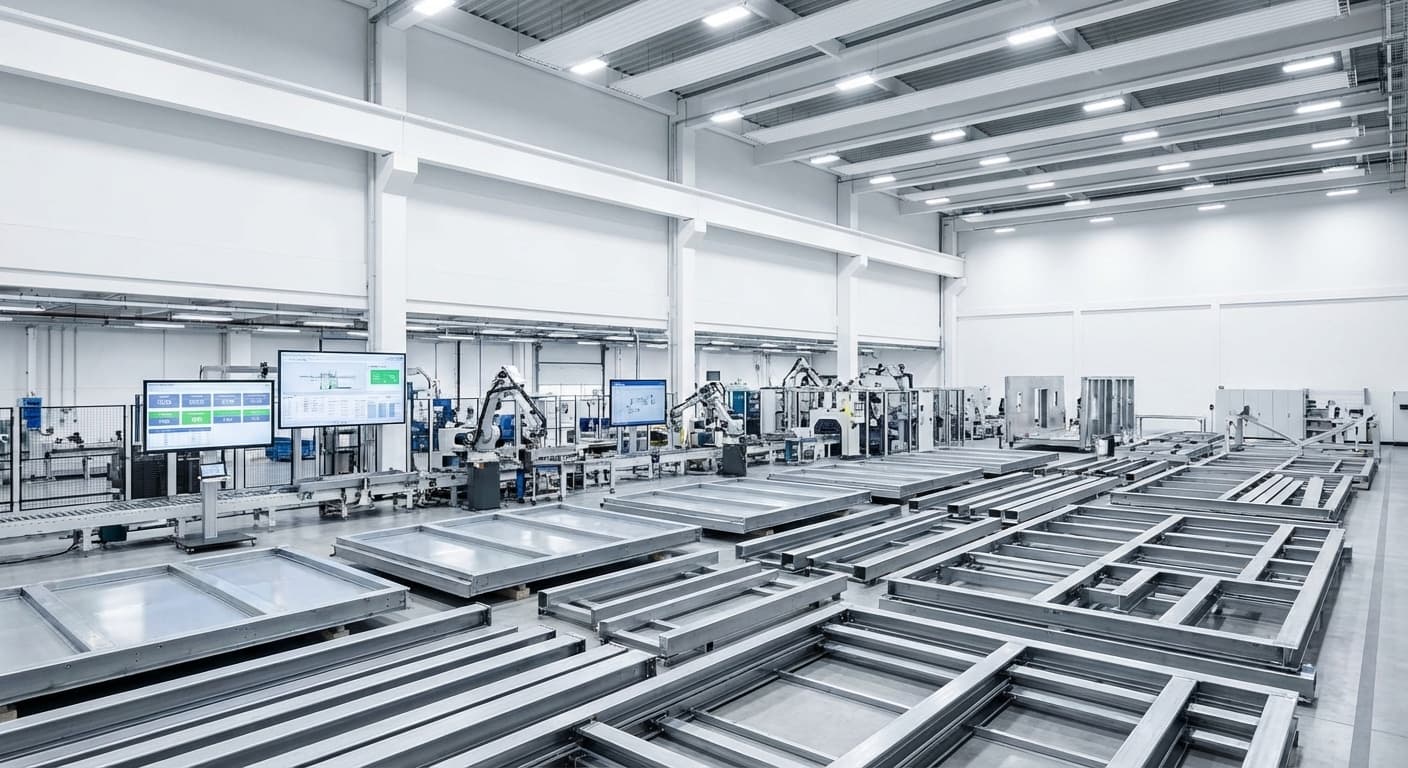

Prefinished steel buildings slash construction time by 40-60% through off-site fabrication that arrives ready to bolt together, turning months of weather-exposed work into a fast, predictable assembly that lets owners start generating revenue while competitors are still pouring foundations. Factory precision delivers millimeter-tight fits, consistent protective coatings, and 80% fewer on-site accidents, while using 40-60% fewer workers and cutting lifetime maintenance costs 35% compared to wood or concrete. The buildings excel in energy efficiency with factory-integrated insulation, cool-roof technology, and smart IoT-ready infrastructure that can drive toward net-zero performance, all while earning LEED credits through 100% recyclable steel and 90% waste reduction. Readers will learn how digital BIM planning, modular expansion capability, and rigorous partner selection based on certifications, portfolios, and smart monitoring systems create a flexible, fire-resistant, corrosion-proof asset that adapts to business changes and delivers decades of lower insurance, energy, and repair bills.
Why Prefinished Steel Buildings Lead Modern Construction
You'll open doors 6-8 weeks faster than traditional construction while your competitors are still pouring foundations.
Reduced Build Time and Accelerated Project Schedules
Your prefinished steel building goes up 40-60% faster than traditional construction. That's 6-8 weeks for a 10,000 sq ft industrial building instead of 4-6 months [3]. How? We manufacture your components off-site while you prep the foundation–no weather delays, no waiting for concrete to cure.
Everything arrives pre-drilled and ready to bolt together [1][3]. Your crew assembles components like a precision kit, not a jobsite puzzle. A 50,000 sq ft warehouse? You're looking at 3-4 months instead of 8-12 months [3].
This speed matters to your bottom line. You open doors months ahead of schedule. You start generating revenue while competitors are still pouring foundations. Weather can't derail your timeline when manufacturing happens indoors [2]. Material shortages don't catch you off-guard when everything's pre-ordered and allocated.
Every week saved is revenue gained and financing costs avoided.
Factory‑Controlled Quality and Consistent Finish
Factory manufacturing delivers quality you can't achieve on a jobsite. Your steel components are built in climate-controlled facilities with automated precision–no rain damage, no temperature warping, no rushed work before bad weather hits [5].
Each component follows the exact same process. Same cuts. Same welds. Same quality checks. When pieces arrive at your site, they fit together perfectly because they were engineered to millimeter tolerances in ideal conditions [4][6].
Compare that to traditional construction. Different crews, different days, different weather–you get different results. One wall might be perfect while another has visible flaws [4]. Not with
Lower On‑Site Labor and Safety Benefits
You need 40-60% fewer workers on-site with prefinished steel buildings [8]. In today's tight labor market, that's the difference between starting now and waiting months for crews.
Your components arrive ready to bolt together–no welding, no cutting, no fabrication in the weather [8]. Workers spend less time on scaffolding and more time on the ground assembling pre-made pieces. The dangerous work happened in the factory where conditions are controlled.
The safety numbers speak volumes: 80% fewer accidents on prefabricated construction sites [9]. That's fewer injury claims, lower insurance costs, and workers who show up tomorrow. Costco builds their warehouses in 110 days this way instead of 160-180 days with traditional methods [9].
You also avoid the scheduling nightmare of coordinating multiple trades. Fewer workers on-site means clearer communication, simpler safety protocols, and less chance for costly mistakes. When skilled labor commands premium rates–if you can find it at all–prefinished steel keeps your project moving with the crews you have [7].
Enhanced Weather and Corrosion Resistance
Your prefinished steel building stands up to whatever nature throws at it. Desert heat, mountain snow, coastal hurricanes–the factory-applied protective coatings handle them all [10].
Here's what sets prefinished steel apart: every component gets the same professional coating in controlled conditions. No thin spots from rushed field application. No missed areas because weather forced crews to work fast. Just consistent, comprehensive protection against moisture, UV rays, and corrosive elements.
This matters most in challenging environments. Building near the coast? Salt spray demands serious corrosion resistance. Industrial area? Chemical pollutants in the air require extra protection [10]. Your prefinished components arrive with these defenses already built in.
The payoff is measured in decades. While other buildings need constant maintenance and recoating, yours keeps performing with minimal upkeep. (For the technical details on specific coating types and protection levels, see our Performance Benefits section below.)
Financial Advantages and Return on Investment
Your project stays 23% more predictable than conventional builds, avoiding the typical $34,000 in surprise costs through digital design and factory precision.
Predictable Costing Through Prefabrication
You know your budget from day one. That's the power of prefinished steel buildings–no surprises, no overruns, just predictable costs from start to finish.
Factory fabrication cuts material waste to under 3%, while traditional construction typically wastes 15-20% [12]. Your materials arrive pre-cut and ready to assemble, eliminating those costly field modifications that blow budgets.
Digital design catches problems before they cost you money. BIM technology creates exact prototypes before fabrication begins, preventing the measurement errors that cause delays and overruns in 12-18% of traditional projects [11]. The result? Your project stays 23% more predictable than conventional builds, avoiding the typical $34,000 in surprise costs [11].
Weather won't derail your timeline or budget. Since 95-98% of your building components arrive ready to install, you dodge the weather delays that plague two-thirds of traditional construction projects [11].
Faster permits mean lower carrying costs. Standardized engineering packages cut permit times by 40%, saving you $18-22 per square foot in financing expenses [11]. Banks love the certainty too–you'll get faster loan approvals and better terms.
The savings continue for decades. Your steel building will cost 35% less to maintain over 30 years compared to wood or concrete alternatives [12]. That initial budget certainty becomes long-term financial advantage.
Material Efficiency and Waste Reduction
Less material, lower costs, stronger building. That's what precision manufacturing delivers for your project.
Factory-controlled cutting reduces waste to under 3%–compared to the 15-20% waste you'd see with traditional construction [12]. You're paying for building, not dumpsters. Steel's superior strength means you need 15-30% less material than conventional methods while getting a stronger structure [12].
Computer-guided fabrication cuts each piece exactly right the first time. No guesswork, no field adjustments, no paying crews to fix mistakes [13]. Components arrive ready to bolt together perfectly.
Even the scraps work for you. Steel maintains 98% of its properties when recycled, so manufacturing leftovers offset your material costs by up to 25% [12]. Try that with wood scraps.
Your building components won't deteriorate like traditional materials. No rot, no replacements, no surprise repair bills eating into your profits [13]. The material efficiency pays off immediately in lower costs and keeps paying through reduced waste disposal fees and environmental compliance benefits [9].
Integrated Insulation for Energy Savings
Cut your energy bills from day one with factory-integrated insulation that actually works.
Insulated metal panels (IMPs) arrive with thermal protection built in–no gaps, no missed spots, just consistent coverage that slashes heating and cooling costs [14]. Whether you're battling desert heat or sub-zero winters, your building gets the right insulation strategy from the start [14].
Metal roofing pays you back every sunny day. The surface naturally reflects heat, and cool roof coatings can drop your interior temperatures even further [14][15]. Less heat in means less money spent on cooling.
Factory-sealed connections stop energy leaks before they start. Unlike field-applied insulation where crews might miss spots, your building arrives airtight [16]. No thermal bridges, no drafts, no wasted energy dollars.
Ready for solar? Your steel structure handles panels, smart controls, and high-efficiency HVAC systems without breaking a sweat [14][16]. Many owners push toward net-zero energy performance, turning their building from a cost center into an asset.
For temperature-sensitive operations–think warehouses storing perishables or climate-controlled manufacturing–these energy savings make the difference between profit and loss [15]. When you're looking at [
Long‑Term Maintenance and Lifecycle Cost Savings
Your building should make money, not eat it. Steel buildings keep more cash in your pocket year after year.
Industry data shows you'll spend 35% less on maintenance over 30 years compared to wood or concrete buildings [17]. For commercial facilities, that adds up to six-figure savings–money you can reinvest in your business.
Steel doesn't rot, warp, or feed termites. No annual pest treatments. No replacing damaged siding. No structural repairs from moisture damage [15]. Those problems simply don't exist with steel.
Factory-applied galvanized coatings protect your investment for 50+ years with minimal upkeep [17]. Compare that to repainting wood every few years or patching concrete cracks.
Better insulation means lower operating costs too. Your HVAC system works 40% less than in traditional buildings, thanks to superior thermal performance and airtight construction [17]. Those savings show up every month on your utility bills.
Insurance companies know steel buildings last. Many offer premium reductions up to 30% compared to conventional structures [18]. Lower risk means lower costs–another way steel keeps paying you back.
Add it all up: lower maintenance, reduced energy costs, cheaper insurance. The savings often exceed your initial investment within the first decade, then keep delivering returns for decades more. That's not just a building–it's a smart business decision.
Performance and Technical Benefits
Factory-applied protective coatings arrive ready to defend your steel building against salt spray, chemicals, and corrosion for decades without constant maintenance.
Superior Corrosion Protection with Factory‑Applied Coatings
Your steel building arrives with factory-applied protective coatings already in place–no waiting for weather windows or hoping field crews apply them correctly. This controlled factory process delivers consistent protection you can count on, whether you're dealing with salt spray on the coast or chemical exposure in industrial zones [19][20][21].
The coating options match your specific needs. Hot-dip galvanizing creates a protective zinc barrier that takes the hit so your steel doesn't. Powder coating adds durability plus the color options you want. For demanding environments, electroplated finishes provide extra protection against wear and corrosion [19].
These aren't just surface treatments–they're your defense against the four main types of corrosion that eat away at unprotected steel buildings [19]. The payoff? Your building stays strong for decades without constant maintenance, keeping your costs down and your operations running [20]. As covered in our weather resistance section, this protection extends across all climate conditions.
Fire Rating and Safety Enhancements
Prefinished steel buildings provide superior fire safety through their inherently non-combustible structure. Steel doesn't burn. That simple fact saves lives and protects your investment. With a melting point over 2,500 degreesF, your steel building stays standing long after other materials fail–giving everyone more time to evacuate safely and firefighters more time to respond [22][23].
Your insurance company notices too. Many offer premium cuts up to 30% for steel buildings versus traditional construction (as noted in our financial benefits section) [24]. In wildfire country, steel becomes your best defense against flying embers and radiant heat–the two main ways fires jump from property to property [23].
Factory-controlled construction lets you add fire protection exactly where you need it. Fire-resistant coatings slow heat transfer. Fire-rated wall assemblies meet code requirements. Sprinkler systems, emergency lighting, and fire doors integrate cleanly without structural gymnastics [22][23].
For high-risk operations–manufacturing plants, chemical storage, commercial kitchens–these built-in protections aren't just nice to have. They're essential for keeping your business running and your people safe [22].
Acoustic Comfort and Thermal Performance
Your steel building stays comfortable year-round while keeping energy costs down.
Factory-installed insulated panels deliver R-values of 8 per inch–serious thermal protection that beats traditional construction hands down [25].
Our
Design Flexibility and Customization Options
Prefinished steel buildings offer exceptional adaptability through their modular design. Your building, your way. Need 300 feet of clear workspace without posts in the way? Done. Want to expand to 480 feet with minimal supports? No problem. Planning to add length as you grow? Steel buildings expand right along with your business [28].
Since the steel frame carries the load, you decide where interior walls go–or don't go. Open floor plan today, divided spaces tomorrow. Your business changes, your building adapts [28].
Outside, you're not stuck with the metal look if that's not your style. Add brick, stucco, stone, or decorative block facades that match the neighborhood. Choose from multiple panel colors. Make it yours [28].
The design process keeps things simple:
- Define what you need
- Pick your building style (clear-span, multi-span, or single-slope)
- Set your dimensions
- Work with designers to optimize your floor plan [29]
Inside, everything goes where you need it–insulation, lighting, ventilation, electrical. Add mezzanines for extra space, canopies for covered work areas, or lean-tos for additional storage. Every addition maintains structural integrity while expanding your capabilities [29].
From manufacturing plants to retail spaces, from warehouses to offices, steel buildings flex to fit your exact requirements [30]. As discussed in our modular expansion section, this adaptability continues throughout your building's life.
Sustainability and Green Building Impact
Steel's 100% recyclability means your building materials maintain full properties through unlimited recycling cycles, creating a permanent resource that never downgrades in quality or value.
100% Recyclable Steel and Circular Economy
Steel buildings create a perfect circular economy loop through their 100% recyclability–maintaining full material properties through unlimited recycling cycles without quality loss [31]. Unlike materials requiring downcycling, structural steel sections maintain their value indefinitely, with industry surveys confirming 100% recovery from demolition projects (93% recycled, 7% directly reused) [31]. This perpetual material lifecycle means prefinished steel components become permanent societal resources, with modern structural elements containing an average 92% recycled content from cars, appliances, and decommissioned buildings [33].
Factory-controlled prefabrication maximizes this sustainability advantage by precisely calculating material requirements, virtually eliminating construction waste through pre-cut and pre-drilled components while ensuring any manufacturing scrap returns directly to the production stream [32]. Steel's inherent durability compounds these benefits by extending building lifespan–structures resist termites, fire, and weather damage while remaining adaptable throughout their service life [32]. When buildings eventually reach end-of-life, their bolted connections enable straightforward disassembly for component reuse or recycling, avoiding the landfill destiny of conventional construction materials [31].
Electric arc furnace technology has transformed steel manufacturing into a low-carbon, circular process by using electricity to melt scrap rather than extracting new raw materials, making the American steel industry the least carbon-intensive among major producing nations [33].
Reduced Carbon Footprint via Off‑Site Manufacturing
Off-site manufacturing fundamentally transforms construction's carbon profile by shifting production to controlled factory environments. This manufacturing approach reduces embodied carbon through precise CNC cutting and automated assembly that lowers material overuse, while enabling lightweight structural systems that minimize unnecessary mass [36]. Factory production achieves material waste reductions of up to 90% compared to traditional construction methods by standardizing processes and allowing for closed-loop recycling of metals, plastics, and timber within production lines [35][36].
Transportation emissions decrease significantly through consolidated shipments of completed components rather than continuous deliveries of individual materials and equipment–particularly valuable for remote sites where traditional construction would require extensive vehicle movements [36]. On-site carbon emissions diminish through compressed construction schedules, reduced concrete works, and minimal equipment idle time, with prefabricated projects typically requiring 40-60% fewer workers on location [36]. Research from Chongqing, China offers an important counterpoint, finding that prefabricated buildings can sometimes generate higher carbon emissions than traditional methods when manufacturing processes aren't optimized or when transportation distances increase [34].
This variability emphasizes the importance of comprehensive planning and regional manufacturing networks to maximize carbon benefits. Beyond construction-phase advantages, prefabricated buildings deliver operational carbon reductions through superior airtightness, consistent insulation installation, and precision joints that minimize energy loss–addressing the largest component of a building's lifetime emissions [36].
LEED Credits and Sustainable Certification Support
Prefinished steel buildings directly contribute to LEED certification across multiple categories, particularly in Materials & Resources, Energy & Atmosphere, and Indoor Environmental Quality [37]. The inherent recyclability of steel makes it exceptionally valuable for sustainability certification–steel maintains its structural integrity through multiple recycling cycles, creating a closed-loop system that earns points under Materials & Resources [37]. Factory-controlled production delivers precise material usage with minimal waste, typically diverting 90% more construction debris from landfills than traditional building methods [37].
For Energy & Atmosphere credits, prefinished modules arrive with high-performance insulation, airtight joints, and optimized glazing that minimize thermal bridging and improve building envelope performance [37][39]. The controlled manufacturing environment ensures consistent application of low-VOC materials and proper ventilation system installation, directly supporting Indoor Environmental Quality requirements [37]. Sustainability benefits extend to site impact as well–prefabricated components reduce on-site construction time by 40-60%, minimizing ecosystem disruption, noise pollution, and transportation emissions that factor into Sustainable Sites criteria [37].
Project teams pursuing LEED certification can leverage Building Information Modeling (BIM) to simulate building performance against certification benchmarks before construction begins, generating documentation that streamlines the certification process [37]. The LEED framework rewards these efficiencies across four certification levels (Certified, Silver, Gold, and Platinum), with prefinished steel components contributing significantly to point totals through their material efficiency, energy performance, and indoor environmental benefits [39]. For maximum certification advantage, designers should incorporate these systems early in planning rather than retrofitting sustainability features later, as integrated design decisions dramatically impact downstream certification potential [37].
Lifecycle Assessment and Environmental Reporting
Lifecycle assessment (LCA) provides the only comprehensive framework to measure the true environmental performance of prefinished steel buildings across their entire lifespan. Unlike partial evaluations that examine single metrics or isolated building phases, LCA quantifies environmental impacts from raw material extraction through manufacturing, use, maintenance, and end-of-life recycling or disposal [40]. For steel construction projects, this comprehensive approach prevents unintended consequences by ensuring improvements in one lifecycle phase don't create hidden impacts elsewhere [40].
Multiple studies confirm prefinished steel buildings outperform traditional construction in global warming potential, with one assessment of modular steel alternatives showing a 23% reduction in total environmental impact compared to conventional reinforced concrete systems despite higher initial costs [42]. The standardized LCA methodology developed by worldsteel provides project teams with consistent environmental performance measurement across markets and applications, enabling informed material comparisons based on cradle-to-gate data that includes recycling benefits at end-of-life [40]. Environmental reporting gains credibility when based on this ISO-standardized approach, with steel-intensive buildings demonstrating particularly strong performance in material efficiency, recyclability, and reduced lifetime carbon footprint [41].
For construction teams needing to document environmental performance, LCA data substantiates both regulatory compliance and voluntary certification submissions, while helping identify specific improvement opportunities throughout the supply chain [40]. The most effective environmental reporting initiatives integrate LCA metrics early in design rather than retrofitting sustainability assessments later, allowing stakeholders to make informed decisions that optimize both environmental and economic performance [42].
Integration with Digital and Smart Construction Technologies
Smart sensors automatically adjust lighting and HVAC based on actual occupancy, cutting energy waste while maintaining comfort throughout your building.
BIM‑Driven Design and Clash Detection
IoT‑Ready Smart Building Controls and SensorsYour steel building becomes smarter from day one. Built-in sensors monitor equipment health and catch problems before they break your budget [46]. Lights turn off when areas empty out. HVAC adjusts to actual occupancy, not guesswork. You cut energy waste while keeping people comfortable [46].
Real-time monitoring shows exactly where energy goes–and where it's wasted. Systems automatically adjust to slash consumption without you lifting a finger [46]. The intelligence starts during construction, with connected systems tracking every phase from design through assembly [47].
For warehouses and manufacturing, smart features track inventory, monitor production, and keep workers safer [46]. Your building doesn't just shelter operations–it actively improves them through automated workflows and instant data access [46].
Pre‑Engineered Connections for Rapid Assembly
Every connection arrives ready to bolt–no welding, no cutting, no delays [48]. Factory quality control checks every bolt hole and plate before shipping, so components fit perfectly on your site [48]. You save 20-50% on construction time because crews simply connect pre-drilled pieces [48].
Digital assembly happens first. BIM technology builds your structure virtually, catching fit problems before steel gets fabricated [49].
Modular Expansion and Adaptive Reuse Strategies
Your building grows with your business. Bolt-based connections let you expand horizontally or vertically without starting over [51]. No load-bearing interior walls means you reconfigure space as needs change–crucial when operations evolve [51].
Digital records of every connection point make future additions precise and predictable [50]. BIM keeps expansion plans accurate years after initial construction. You're building a flexible asset, not a fixed box.
Add factory-produced sections without shutting down operations. Traditional renovations force closures–steel expansions work around your schedule [52]. Properties with built-in adaptability command higher values than single-use structures. You preserve your investment instead of demolishing and rebuilding [51].
Smart steel buildings turn change into opportunity. Digital planning, modular design, and bolt-together flexibility mean your facility adapts as fast as your business does.
Selecting the Right Prefinished Steel Partner
Verify your partner controls in-house manufacturing, provides detailed assembly drawings, and holds AISC, AWS, and ISO certifications before committing to your project.
Evaluating Expertise and Portfolio of Prefinished Projects
Start with the portfolio. A quality steel building partner shows you real projects across different industries–warehouses, aircraft hangars, churches, agricultural facilities [53][54]. Ask for references from buildings like yours. The best partners hand over contact information without hesitation, letting their work speak through actual customers [53][55].
Look for versatility, not templates. Your partner should demonstrate how they've adapted steel structures to match existing architecture–brick facades, stucco finishes, whatever keeps your building fitting the neighborhood [53]. Check if they control their own manufacturing. Partners with in-house facilities deliver tighter quality control than those farming out production [53].
Documentation tells the real story. Professional partners provide detailed assembly drawings, anchor bolt patterns, and clear erection guides [53]. This precision matters–it's the difference between smooth assembly and expensive field fixes. Review case studies from multiple sectors (manufacturing, retail, government) to verify they handle both the structural requirements and the aesthetic details your project needs [54][55].
Certifications, Warranties, and Compliance Standards
Certifications separate professional partners from budget shops. Your steel building needs four certification categories: design standards (AISC 360-16 for structural loads), fabrication standards (AWS D1.1 for weld quality), corrosion protection (ISO 1461:2022), and safety standards (OSHA 1926 Subpart R) [56].
Every certified building gets engineered for your specific location–local wind speeds, snow loads, seismic requirements. This engineering produces the stamped plans you need for permits [57]. Quality partners also carry management certifications: ISO 9001:2015 for quality control and ISO 45001:2018 for safety. These aren't just wall decorations–they prove consistent processes that protect your investment [56][58].
Look for ICC-ES evaluations that verify code compliance, plus industry associations like SFIA that set manufacturing standards [58]. Here's the bottom line: certified buildings carry stronger warranties because they've passed standardized testing. Non-certified structures? You're rolling the dice [57]. For sustainability goals, certified partners help you qualify for green building ratings that can reduce insurance costs and improve resale value [58].
Transparent Project Management and Communication
Clear timelines save money. Expect 8-22 weeks from order to delivery, depending on your building's complexity and the manufacturer's workload [59]. Professional partners spell out exactly where you stand–approval phase or production-ready–and stick to their schedules [59].
You need one project manager who owns your job from start to finish. This person coordinates the two dozen professionals working on your building and delivers what you need when you need it: anchor bolt drawings for your foundation crew, permit packages for the building department, erection drawings for assembly [59].
Ongoing Support, Service, and Performance Monitoring
Smart monitoring saves serious money. Modern steel buildings use sensors–strain gauges, accelerometers, temperature monitors–that catch problems before they become expensive emergencies [60]. Think of it as your building's early warning system, tracking everything from vibration patterns to thermal movement [60].
As covered in our financial advantages section, proper maintenance dramatically reduces lifecycle costs. Here's how technology makes that happen: predictive analytics tell you when components need attention, cutting emergency repairs that cost 30-40% more than scheduled maintenance [60]. Regular inspections using ultrasonic testing find hidden issues without tearing anything apart [60].
Digital platforms track your building's financial performance in real-time–maintenance costs, energy usage, everything that affects your bottom line [61]. Your team accesses this data from anywhere, coordinating maintenance before small issues become big problems [61]. The payoff is clear: properly monitored steel buildings cost less to own over 30 years than any traditional alternative [60]. Your building partner should explain exactly how their monitoring systems protect your investment long after the ribbon cutting.
- Prefinished steel buildings cut construction time 40-60%, turning months into weeks.
- Factory coatings give 50-year corrosion protection with zero on-site recoating.
- Steel's 100% recyclability and 92% recycled content create a closed material loop.
- Digital BIM planning prevents 12-18% of costly field errors before fabrication starts.
- Prefabrication slashes on-site labor 40-60% and worker accidents by 80%.
- Steel structures reduce lifetime maintenance costs 35% versus wood or concrete.
- Integrated insulation and airtight joints cut HVAC energy use 40%.
- https://www.summitsteelbuildings.com/20-year-cost-comparison
- https://www.tylerbuilding.com/post/pre-engineered-metal-buildings-vs-traditional-builds-a-comprehensive-comparison
- https://www.metaltree.in/pre-engineered-buildings-cut-construction-time-costs/
- https://www.hcsteelstructure.com/pros-cons-prefabricated-steel-buildings-vs-traditional-construction/
- https://peb.steelprogroup.com/peb-structure/industrial/prefabrication-benefits/
- https://starreo.com.au/the-advantages-of-using-prefabricated-steel-for-faster-safer-builds/
- https://pbsbuildings.com/metal-building-industry-trends/
- https://www.transparencymarketresearch.com/north-america-pre-engineered-steel-building-market.html
- https://metalcon.com/blog/metal-buildings-power-manufacturing-spaces-the-big-picture/
- https://www.buildingsguide.com/build/advantages-of-pre-engineered-steel-buildings/?srsltid=AfmBOopM8amtLzAtnnfDCq8IoyrV_QUvMVEIMNvGSHC7LsKufIN5jgLc
- https://www.jysteelstructure.com/blog/quick-occupancy-of-prefabricated-steel-buildings-fast-roi
- https://www.prefabsteelpro.com/what-cost-saving-benefits-do-prefabricated-steel-structure-buildings-have
- https://mirinbuildingsystems.com/prefabricated-steel-the-future-of-sustainable-construction/
- https://ecosteel.com/ecosteelprefab/maximize-energy-efficiency-prefabricated-metal-buildings/
- https://www.alliedbuildings.com/cost-efficiency-of-pre-engineered-metal-buildings/
- https://www.buildingsguide.com/build/advantages-of-pre-engineered-steel-buildings/?srsltid=AfmBOooz_jrklbVQGtQHROt4sqSBR74IpzZvbHFmHuqB3iVgHn6HVw2f
- https://www.prefabsteelpro.com/blog/what-cost-saving-benefits-do-prefabricated-steel-structure-buildings-have
- https://www.buildingsguide.com/build/advantages-of-pre-engineered-steel-buildings/?srsltid=AfmBOopgC31C9hr1NHIN5FzvxIgQJvVxCTEKph1IodVeowQNnDV0v_t_
- https://www.buildmatt.net/blog/corrosion-resistance-in-factory-steel-buildings-surface-treatments/
- https://unicheminc.com/custom-coatings/how-anti-corrosion-coatings-improve-safety-and-reliability-in-infrastructure/
- https://qcarchitectural.com.au/blog-1/f/why-factory-applied-coatings-are-game-changers
- https://premierbuildings.com/how-fire-resistant-are-prefab-metal-buildings/
- https://fdc-comp.com/pre-engineered-metal-buildings-fire-safety/
- https://www.buildingsguide.com/build/advantages-of-pre-engineered-steel-buildings/?srsltid=AfmBOorvTMvPRt60NrYxNZZK_vWTn7JgRBkLjKpfeTadTYR5AAvZ-O23
- https://ecosteel.com/insulated-panels/
- https://www.clearspan.com/news/everything-you-need-insulated-steel-buildings/
- https://therm-all.com/a-guide-to-metal-building-insulation/
- https://www.rhinobldg.com/blog/the-amazing-versatility-of-pre-engineered-steel-buildings
- https://bmbsteel.com.vn/en/how-to-customize-your-pre-engineered-steel-buildings
- https://coastalsteelstructures.com/the-customization-opportunities-of-a-prefabricated-building/
- https://steelconstruction.info/Steel_and_the_circular_economy
- https://www.kaizenprefab.com/blogs/sustainable-prefabricated-steel-buildings
- https://parallax.aisc.org/sustainability.aspx
- https://pmc.ncbi.nlm.nih.gov/articles/PMC8872307/
- https://curtisnyc.com/the-environmental-impact-of-prefabricated-construction-a-greener-approach/
- https://www.dorce.com/sustainable-construction-how-prefabrication-significantly-reduces-carbon-footprint-and-waste/
- https://velent.com/achieving-leed-certification-through-pre-fabricated-steel-modules-a-builders-guide/
- https://www.usgbc.org/articles/leed-building-design-and-construction-credits-prerequisites-and-points
- https://www.cecobuildings.com/blog/understanding-leed-green-metal-buildings/
- https://worldsteel.org/wider-sustainability/life-cycle-thinking/life-cycle-assessment-in-the-steel-industry/
- https://constructsteel.org/reports/life-cycle-assessment-report/
- https://pmc.ncbi.nlm.nih.gov/articles/PMC11513562/
- https://strand-co.com/blogs/bim-clash-detection-benefits/
- https://www.hitechcaddservices.com/news/bim-clash-detection-process-advantages-and-best-practices/
- https://www.united-bim.com/what-is-clash-detection-in-bim-process-benefits-and-future-scope-in-modern-day-aec-industry/
- https://www.kaizenprefab.com/blogs/ai-iot-pre-engineered-buildings
- https://www.mdpi.com/2076-3417/10/18/6311
- https://pinnacleinfotech.com/pre-engineered-metal-building-structure-features/
- https://www.sciencedirect.com/science/article/pii/S1110016824017137
- https://www.mdpi.com/2075-5309/15/5/765
- https://www.mckinsey.com/industries/engineering-construction-and-building-materials/our-insights/putting-the-pieces-together-unlocking-success-in-modular-construction
- https://metalcon.com/blog/what-are-the-advantages-of-prefab-modular-construction/
- https://armstrongsteel.com/blog/navigating-the-market-how-to-evaluate-pre-engineered-steel-building-manufacturers
- https://mbma.com/case-studies
- https://swfunk.com/news/prefabricated-steel-building-contractor/
- https://qsbsteel.com/en/pre-engineered-steel-building-standards-a-complete-guide-from-a-to-z/
- https://www.aametalbuildings.com/certification-requirement?srsltid=AfmBOooELb3P7k9SBANw3BSqhT1US7upwGZRZOk8QznSWAxhv31O9T2T
- https://www.deepbluehome.com/certifications
- https://www.metalconstructionnews.com/articles/delivering-metal-buildings-on-time/
- https://buyabeam.com/blogs/steel-beams/steel-building-maintenance/
- https://steelestimatingsolutions.com/pre-engineered-metal-building-estimating-software/