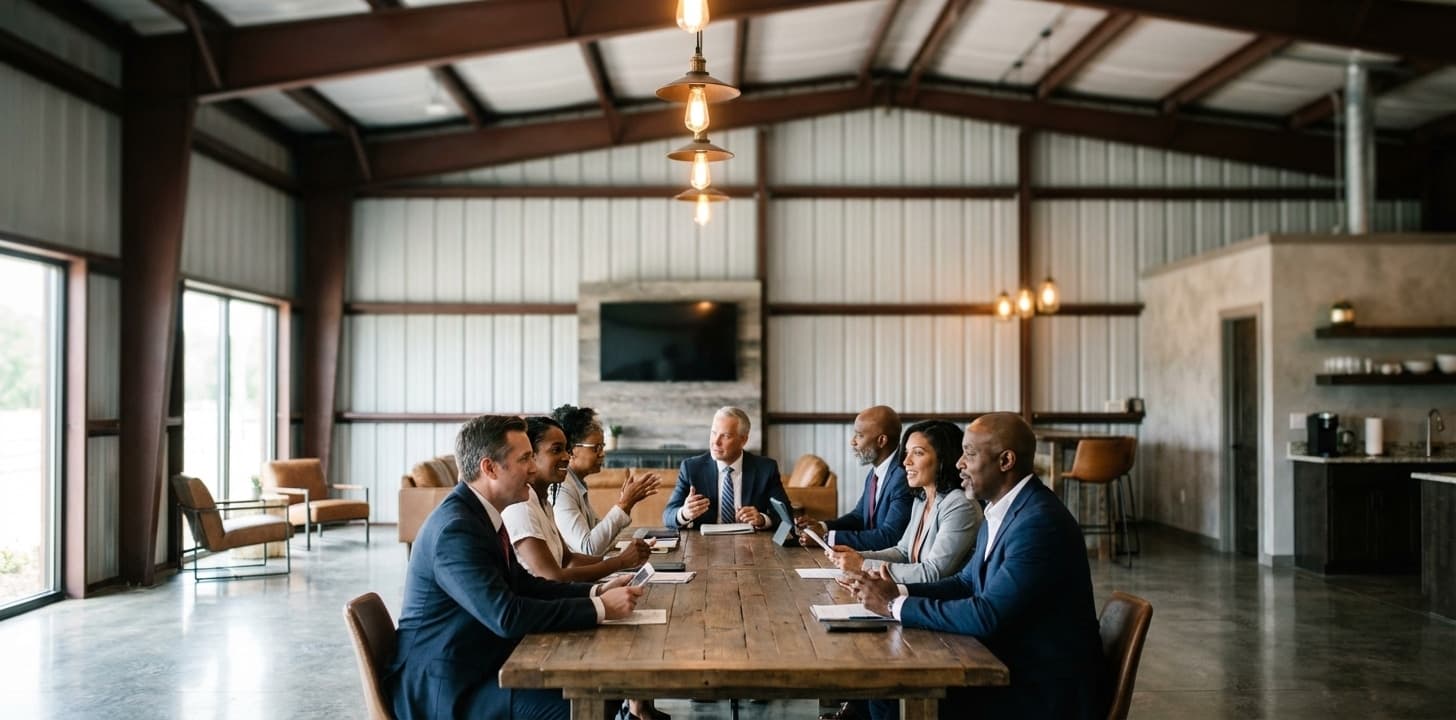

Barndominiums fuse the strength of a steel-framed metal building with the warmth of a modern home, delivering up to 30 % lower upfront costs ($60-$160 vs. $150-$400 per sq ft) and 40-60 % lifetime maintenance savings while offering clear-span interiors that can morph from open living-loft to live-work-shop hybrids under one roof. Readers will learn how prefabricated kits slash labor and waste, how closed-cell spray foam and solar-ready roofs push the envelope toward net-zero bills, and how to navigate zoning, specialized financing, and builder selection so their project sails through permits in four months rather than twelve. The article dissects fire, pest, and snow-load resilience, maps smart-home and renewable-energy integration, and forecasts 2025-2030 trends that favor rural and growth-region barndos as affordable, sustainable, highly customizable alternatives to conventional housing–perfect for buyers who crave space, speed, and savings without sacrificing style or long-term value.
Barndominiums vs Traditional Homes: Core Differences Explained
Barndominiums combine metal building durability with home comfort, offering clear-span interiors that eliminate load-bearing walls for maximum layout flexibility.
What is a barndominium? Origins and definition
A barndominium blends the durability of a metal building with the comfort of a traditional home [3]. These structures typically feature metal framing, wide-open interiors, and clear-span construction that eliminates the need for interior load-bearing walls [3]. The term combines "barn" and "condominium" and was originally coined by Karl Nilsen, a Connecticut real estate developer who used it to describe master-planned developments centered around living near horses [1].
The concept evolved in the mid-2000s when people began using it to describe metal buildings converted into primary residences [1]. Barndominiums gained mainstream popularity in 2016 after being featured on HGTV's Fixer Upper show, causing a surge in public interest [1]. Modern barndominiums are no longer just converted barns but purpose-built homes that maximize space efficiency and flexibility [3].
These structures typically include combined living and working spaces, often with a large shop, garage, or storage area integrated with the living quarters [2]. Their design allows for customization ranging from rustic farmhouse aesthetics to contemporary styles [3]. Barndominiums can be constructed as one to three-story dwellings and are available as customizable kits that can be adapted to local building requirements [1].
Structural contrast: steel framing vs wood framing
Steel and wood framing represent fundamentally different approaches to barndominium construction, each with distinct structural characteristics. Steel framing employs metal components including posts, rafters, and trusses that create expansive, open interiors free from obstructions [4]. The clear-span construction eliminates the need for interior load-bearing walls, allowing for flexible floor plans and uninterrupted spaces [4]. This structural freedom makes steel-framed barndominiums ideal for those seeking versatile, customizable layouts that can accommodate large equipment or multipurpose areas.Wood framing, by contrast, offers several construction methods including timber frame, post and beam, stick frame, and log construction [6].
Timber frame and post and beam structures feature heavy wooden elements that provide both structural support and aesthetic appeal with exposed beams creating architectural character [6]. While steel derives its strength from the material itself, wood gains structural integrity through strategic joining techniques and engineering principles that have been refined over centuries [4].The two materials respond differently to environmental forces–a critical consideration we'll explore further in our durability section. Steel framing maintains its form regardless of moisture exposure, while wood naturally expands and contracts [5]. The key difference lies in thermal properties: steel's heat conductivity demands strategic insulation solutions, whereas wood provides natural insulation [6].
This distinction becomes crucial for energy efficiency planning, which we'll address comprehensively in our sustainability section.From a construction perspective, steel's prefabrication accelerates project timelines, while wood offers greater on-site flexibility for modifications [5][6]. This fundamental difference affects your entire building experience–steel demands precise upfront planning, while wood accommodates field adjustments. Finding contractors with the right expertise for your chosen material becomes essential. Whether you opt for steel's efficiency or wood's adaptability, your structural choice shapes every aspect of your barndominium, from initial design through final living experience.
Space utilization: floor plans and interior flow
Barndominiums fundamentally transform living space utilization through their clear-span construction. Unlike traditional homes with load-bearing interior walls that create fixed room divisions, barndominiums feature expansive, open layouts that eliminate structural barriers [7]. This architectural freedom allows homeowners to design fluid floor plans that adapt to changing needs without major renovations [9]. The absence of interior supports creates uninterrupted sightlines and seamless traffic patterns impossible in compartmentalized traditional homes, where structural walls dictate movement and sight barriers [8].This open-concept design delivers practical advantages that redefine daily living. Natural light floods these spaces through strategically placed windows, reducing dependence on artificial lighting [8]. Unlike traditional homes with single-purpose rooms, barndominium spaces adapt throughout the day–your morning yoga studio becomes your afternoon office, then transforms into evening entertainment space [7].
This flexibility proves especially valuable as work-from-home arrangements continue reshaping how we use residential space, eliminating the inefficiency of dedicated rooms that sit empty for hours [9].Maximizing this open layout requires strategic approaches to furniture and room definition. Without permanent walls, barndominiums rely on alternative methods to delineate functional zones while maintaining the open feel. Room dividers, bookcases, and strategically placed area rugs create visual boundaries without sacrificing the connectedness of the space [7]. Multi-functional furniture pieces–like storage ottomans, sleeper sofas, and nesting tables–serve dual purposes that preserve floor space while addressing practical needs [7]. Vertical storage solutions capitalize on the barndominium's height advantage, utilizing wall space and ceiling areas that would otherwise remain empty [7].The flow between spaces requires careful planning in barndominiums. Without hallways and doorways directing movement, furniture placement becomes crucial for establishing natural pathways [9].
Sliding barn doors offer particular advantages in these open environments–they provide temporary privacy without requiring the swing clearance traditional doors demand, preserving precious floor area for other uses [7]. This consideration extends to kitchen designs, where strategic placement of islands and peninsulas can simultaneously define the cooking zone while maintaining connection to adjacent living spaces [8].The acoustic considerations of open living require thoughtful planning–a topic we'll explore in our design section [8]. Yet this openness creates invaluable family connectivity, allowing natural supervision and conversation flow that compartmentalized homes can't match [9]. The barndominium lifestyle ultimately offers something unique: spaces that feel both expansive and intimate, adapting to your changing needs without costly renovations. As we'll see in upcoming sections, this flexibility extends to everything from multi-use workshops to aging-in-place modifications [7].
Cost Analysis: Budgeting, Savings, and Financing Options
Build a 2,000-square-foot barndominium for $130,000-$320,000, roughly half the cost of traditional home construction in 2025.
Initial construction costs: material, labor, and kits
Barndominiums deliver compelling cost advantages that make them increasingly attractive to budget-conscious builders. Construction costs average $60-$160 per square foot–a significant savings compared to traditional homes' $150-$400 range in 2025 [10]. For a typical 2,000-square-foot home, this translates to total project costs of $130,000-$320,000, positioning barndominiums as a smart financial choice [11]. The most economical approach starts with barndominium kits, providing the essential metal structure for $20-$35 per square foot before customization [10]. These prefabricated solutions offer exceptional value–some shell kits cost as little as $10-$30 per square foot, though interior finishing work remains additional [11].Labor represents a critical cost factor, with general contractors typically charging 10-20% of total construction costs [11].
Here's where barndominiums shine–their streamlined construction process requires smaller, more efficient crews and less specialized equipment than traditional builds [10]. The precision of prefabricated metal components manufactured in controlled environments eliminates weather delays and reduces material waste, accelerating project timelines [10]. Finding the right construction team with metal building expertise can maximize these efficiencies–specialized recruitment solutions like Multiple variables influence your final investment. Location drives significant cost variations through regional labor rates, permitting requirements, and local building codes [11]. Within the barndominium category, material selections–from roofing systems to insulation quality and interior finishes–create wide price ranges [12].
Customization levels further impact budgets: while open floor plans reduce interior wall construction costs, premium features like custom cabinetry and high-end appliances quickly escalate expenses [12]. Smart builders engage local barndominium specialists early for accurate regional pricing and financing guidance, ensuring realistic budget expectations from project inception [11]. These initial cost considerations set the foundation for understanding the long-term operational savings explored in the following section.
Long‑term operating savings and return on investment
Barndominiums deliver significant operating cost advantages over traditional homes through their durable metal construction. Steel siding and roofing eliminate common maintenance expenses like shingle replacements after windstorms, rot repairs, and mold remediation that plague wood-frame structures [13]. This maintenance differential compounds annually–while traditional homes require regular painting, pest treatments, and roof maintenance, barndominium owners typically face minimal upkeep costs [14]. Energy efficiency represents another potential savings area, though results vary with insulation quality.
Properly insulated barndominiums with their simpler, open layouts often achieve more efficient heating and cooling distribution than traditional homes with their maze of small rooms [14]. The simplified design elements of barndominiums–straightforward rooflines without complex angles and dormers–further reduce maintenance points where leaks and damage typically occur [14]. Insurance considerations present a more complex picture, with rates depending on location, construction quality, and carrier familiarity with metal structures [15]. The investment outlook balances these operational advantages against market considerations: traditional homes offer established appreciation data while barndominium resale value remains less predictable in many regions [13].
For long-term owners, however, the cumulative maintenance and utility savings often outweigh resale uncertainty, particularly in markets where barndominium popularity is rising [14]. This cost advantage makes barndominiums especially attractive to buyers prioritizing long-term operational economics over immediate resale potential [15].
Financing pathways: loans, incentives, and tax credits
Financing a barndominium requires navigating specialized lending options since these structures don't fit traditional home classifications. Conventional loans have become more accessible for barndominium projects, but applicants typically need a credit score above 620, stable income history, and a down payment of 10-25% [16]. For rural properties, USDA Construction loans offer significant advantages with zero down payment requirements, government-regulated interest rates, and single-close mortgage structures that eliminate the need for separate construction-to-permanent loan conversions [16]. Construction loans provide another pathway, covering both land acquisition and building costs before converting to standard mortgages upon completion [17].
Veterans and service members may qualify for VA loans with no down payment and no private mortgage insurance requirements, particularly beneficial when using the barndominium as a primary residence [17]. Obtaining financing requires comprehensive documentation, including detailed floor plans, contractor estimates, property specifications, construction timelines, and personal financial records [16]. The appraisal process presents unique challenges due to limited comparable properties, potentially affecting valuation [17]. Local banks and credit unions often prove more flexible than national institutions when financing non-traditional structures [17].
First Federal Bank of Kansas City, Compeer Financial, Farm Credit, and New Century Bank specialize in post-frame construction lending with nationwide service areas and expertise in navigating the unique requirements of barndominium projects [16]. Preparing financially by improving credit scores, saving for substantial down payments (10-20% minimum), and establishing contingency funds for unexpected expenses significantly improves approval odds and loan terms [17]. The non-traditional nature of barndominiums requires identifying lenders experienced with rural properties and metal building construction to overcome the hesitancy many traditional financial institutions demonstrate toward these innovative housing alternatives [16].
Real‑world cost comparison case study
A direct comparison between barndominium and traditional home construction reveals substantial cost differences across all building phases. A 2,000-square-foot barndominium typically costs between $120,000-$320,000 ($60-$160 per square foot), while an equivalent traditional home ranges from $300,000-$800,000 ($150-$400 per square foot) [10]. This 15-30% cost advantage stems primarily from streamlined construction methods and reduced material waste [18].
The Collins family in Tennessee exemplifies these savings–completing their 2,400-square-foot barndominium in just four months, significantly reducing temporary housing expenses compared to the typical 6-12 month timeline for traditional construction [13]. Concrete numbers show the efficiency of prefabricated metal construction: barndominium kits provide the basic structure for merely $20-$35 per square foot before finishes [10]. The cost differential becomes more pronounced when examining long-term expenses.
While traditional homes demand ongoing maintenance for wood components susceptible to moisture and pest damage, barndominiums resist these issues, translating to approximately 40-60% lower annual maintenance costs [13]. Even in financing, the difference remains significant–traditional homes access conventional mortgages with standard rates, while barndominium buyers often face specialized lending requirements that may affect overall project affordability [13]. This cost advantage holds across multiple scenarios, from basic 1,500-square-foot homes to high-end 3,000-square-foot luxury builds, though the percentage savings typically decreases as customization and premium finishes increase [18].
Durability, Maintenance, and Longevity of Metal Buildings
Steel framing provides permanent immunity to termites, moisture damage, and rot while withstanding winds up to 180 mph–eliminating costly maintenance that traditional homeowners face throughout ownership.
Resistance to pests, moisture, fire, and rot
Metal construction delivers comprehensive protection against the four primary threats to structural integrity. Steel framing provides permanent immunity to termites and wood-destroying insects–eliminating billions in annual damage that traditional homeowners face [19]. This isn't a temporary solution requiring chemical retreatments, but an inherent architectural advantage that saves money throughout the building's lifetime. The moisture resistance of steel frames proves equally valuable. Unlike wood that absorbs water, warps, and eventually rots, metal components maintain their dimensional stability in any humidity level [20] [21]. This stability breaks the destructive cycle common in traditional homes: moisture intrusion leads to mold growth, which attracts pests and accelerates structural decay while compromising indoor air quality [21].
Fire resistance adds another layer of protection. Metal frames remain non-combustible even as traditional wooden structures can be consumed within minutes [21]. This critical difference provides valuable escape time and limits fire spread–advantages that translate into both safety benefits and potential insurance savings.
These combined protections–against pests, moisture, fire, and rot–create a fundamentally different ownership experience. While traditional homeowners must maintain constant vigilance through inspections and treatments, barndominium owners enjoy peace of mind knowing their structure inherently resists these common threats [19].
Weather performance: wind, snow, and seismic ratings
Steel construction delivers measurable advantages in extreme weather performance. Wind resistance ratings for barndominiums typically range from 90-150 mph, with commercial-grade structures achieving up to 180 mph tolerance [22]. This engineered resilience proves essential in hurricane-prone regions where conventional wood-framed homes often fail at significantly lower wind speeds. Snow load capacity showcases another structural advantage. Metal roofing systems support between 30-70 pounds per square foot (psf), adapting to regional requirements [23]. Building codes reflect these regional differences–North Carolina requires 10-25 psf capacity while West Virginia mandates 20-30 psf [22]. Steel's superior strength-to-weight ratio maintains structural integrity under heavy snow loads that can cause traditional wood frames to warp or fail [24].
Seismic performance further distinguishes metal construction. The ductility and unified framework of steel structures distribute earthquake forces more effectively than traditional homes with multiple failure-prone connection points [24]. This integrated strength system provides critical protection in earthquake zones.
These weather-resistant properties translate into practical benefits: simplified insurance requirements in many regions and suitability for challenging environments from coastal hurricane zones to heavy-snow mountain areas [23] [24]. However, specific performance ratings must always align with local building codes, which vary significantly by state and county.
Maintenance schedule and lifecycle cost
The maintenance advantages of metal construction create substantial lifecycle savings, as detailed in our cost analysis section. Barndominiums require minimal upkeep–primarily occasional inspections and repainting every few years for aesthetic purposes [8]. This simplified maintenance schedule eliminates the constant demands traditional homeowners face: annual roof inspections, regular gutter cleaning, termite treatments, and exterior painting every 5-10 years [26]. The durability difference proves dramatic. While wood-framed homes need systematic painting, sealing, and pest control that accumulate significant costs [25], metal exteriors naturally resist the rot, termites, and weather damage that trigger expensive repairs [25]. This resistance translates into measurable savings–barndominium owners typically spend 40-60% less on annual maintenance than traditional homeowners [26].
With proper care, barndominiums offer a 50+ year lifespan that justifies any additional upfront investment in quality insulation [26]. The reduced maintenance burden delivers both financial and lifestyle benefits. Owners gain freedom from constant upkeep worries while potentially qualifying for insurance discounts based on the structure's inherent durability [26].
While well-maintained brick traditional homes can achieve comparable longevity, they require significantly more effort and expense to reach that goal. The barndominium's low-maintenance design provides these benefits automatically, making it an attractive option for those seeking long-term value with minimal ongoing investment.
Warranty, insurance, and resale impact
Despite their structural advantages, barndominiums encounter unique market challenges that prospective owners must understand. Insurance complexities arise from providers' limited familiarity with metal construction methods and inconsistent quality standards across builders [27]. Premium rates vary significantly based on location, construction quality, and individual carriers' experience with metal homes [28]. The financing landscape presents similar hurdles, as discussed in our financing section. Many traditional lenders hesitate to fund barndominiums because they fall outside standard home classifications [29]. This reluctance impacts both initial purchases and eventual resales by limiting the potential buyer pool and affecting market valuations.
Resale considerations deserve careful evaluation. Traditional homes maintain stronger resale values through established market expectations and broader buyer appeal [29]. Barndominiums' highly customized nature–while perfect for original owners–can limit marketability when personal specifications don't align with future buyers' needs [29].
The appraisal process compounds these challenges. Without abundant comparable properties, metal structures often receive conservative valuations compared to conventional homes with established pricing methods [27]. This market reality positions barndominiums as lifestyle-driven decisions rather than purely financial investments. Buyers prioritizing immediate cost savings, low maintenance, and customization may find these trade-offs acceptable, while those focused on traditional appreciation patterns should carefully weigh these factors [28].
Design Flexibility, Lifestyle Benefits, and Modern Aesthetics
Open-concept layouts eliminate interior load-bearing walls, allowing natural light to flow throughout your home while families interact seamlessly across unified living spaces.
Open‑plan layouts and customizable interiors
Barndominiums excel with open-concept designs that leverage their structural advantages. Unlike traditional homes, steel-framed barndominiums eliminate the need for interior load-bearing walls, creating uninterrupted living spaces that flow seamlessly between kitchen, dining, and living areas [30]. This structural freedom transforms how families interact–allowing conversations to continue while cooking, parents to monitor children from across the room, and natural light to penetrate deep into the home [31]. The dramatic height of barndominium ceilings becomes a feature rather than a challenge, with exposed beams and cathedral heights serving as stunning focal points [32].
For those seeking balance between openness and privacy, hybrid layouts offer solutions by strategically placing defined spaces around central communal areas [31]. This approach positions common spaces in the center while relegating private areas like bedrooms and offices to the perimeter [32]. Vertical space becomes a valuable asset with lofted areas serving as guest rooms, reading nooks, or home offices [32]. This adaptability extends to future needs–spaces can transform as families grow, work arrangements change, or lifestyle priorities shift [30].
The customization possibilities extend beyond layout to aesthetic choices, with barndominium interiors ranging from rustic wood retreats to industrial-modern hybrids or refined stone escapes [32]. This design flexibility creates homes that evolve with owners' changing needs while maintaining the distinctive open character that makes barndominiums increasingly popular alternatives to traditional construction.
Multi‑use spaces: workshops, garages, and home offices
Barndominiums excel at integrating dedicated workspaces into living environments, eliminating the need to separate professional life from home life. Stepping directly from a kitchen into a fully-equipped workshop or home office creates a seamless transition between daily activities without the commute [33]. This integration isn't merely convenient but transformative for how owners interact with their space. The clear-span construction allows for zoned floor plans that maintain distinct boundaries between living quarters and work areas while keeping everything accessible under one roof [33]. Strategic design elements like separate entrances for workshops reduce disruption to family life while maintaining professional boundaries for clients and deliveries [33].Practical considerations drive the functionality of these multi-use spaces.
Heavy-duty electrical wiring supports industrial equipment, while polished concrete floors offer durability and easy cleanup for workshop messes [33]. Climate-controlled workshop areas protect tools and materials year-round, while soundproofing between zones prevents noise transfer [33]. High clearance garage doors accommodate RVs, boats, or tall equipment, making barndominiums particularly attractive to mechanics, outdoor enthusiasts, and contractors [33]. The vertical advantage of these structures enables loft spaces for inventory storage or additional workstations without consuming valuable floor area [33].These spaces adapt to changing needs over time. Remote workers benefit from integrated home offices with natural lighting and high-speed internet infrastructure [33].
Hobby enthusiasts can create dedicated spaces for crafting, woodworking, or automotive restoration without leaving home [34]. Small business owners find particular value in barndominiums, using the workshop areas for manufacturing, inventory storage, or client meetings [33]. The flexibility extends to family evolution as well–spaces can transform as needs change, with movable dividers creating temporary work zones that later become recreational areas [33]. This adaptability serves everyone from weekend crafters to full-time mechanics to entrepreneurs seeking a live-work arrangement that balances professional functionality with residential comfort [33].
Design trends: rustic, industrial, and contemporary finishes
Barndominiums offer remarkable design versatility, accommodating styles from rustic country to sleek industrial. The rustic aesthetic embraces natural elements–exposed wooden beams, reclaimed wood accent walls, and earth tone color palettes that create warm, inviting spaces [35]. Wood shutters provide striking contrast against metal exteriors while sliding barn doors deliver functional charm that honors the structure's agricultural heritage [35]. Industrial-inspired barndominiums feature metal roofing, exposed ductwork, and concrete flooring that celebrates the building's structural components rather than concealing them [36].
These spaces often incorporate sleek metal fixtures alongside factory-inspired lighting to balance ruggedness with contemporary elegance [36]. For modern appeal, homeowners integrate clean lines, minimalist furniture, and neutral color schemes that create sophisticated, uncluttered spaces [32]. The most successful barndominium designs often blend these aesthetics rather than adhering strictly to one style. This hybrid approach might combine polished concrete floors with warm wooden cabinetry, or pair industrial lighting with rustic furniture pieces [32].
Distinctive architectural elements like floor-to-ceiling stone fireplaces, galvanized tin indoor siding, and spiral staircases serve as statement features that personalize these flexible spaces [32]. This adaptability allows barndominiums to transcend their utilitarian origins and accommodate diverse design preferences from classic farmhouse to luxury contemporary [36].
Adaptability for remote work, growing families, and aging in place
Barndominiums excel at evolving with changing life needs through their inherently flexible design. Their open floor plans and clear-span construction create adaptable spaces that transform as work arrangements shift, families grow, or accessibility needs change. For remote workers, barndominiums offer strategic zoning possibilities with acoustic separators that create professional environments without sacrificing connection to family spaces [37]. Noise-dampened zones and pocket offices integrate seamlessly into the overall design, allowing simultaneous activities without disturbance–ideal for balancing virtual meetings with family life [37].
For growing families, barndominiums shine through their expansion potential. Designers recommend incorporating designated "growth points" in the original layout with non-load-bearing walls that can be removed when expansion becomes necessary [38]. Forward-thinking owners often install capped plumbing, electrical, and HVAC lines in areas planned for future additions, while securing approval for maximum build size during initial permitting saves time and money later [38]. Perhaps most valuable is the barndominium's adaptability for aging in place.
The single-story layouts eliminate dangerous stairs while open floor plans accommodate mobility aids [39]. Practical aging-in-place features include 36-inch doorways for wheelchair access, slip-resistant flooring, lever-style door handles for those with limited hand strength, and walk-in showers with strategically placed grab bars [39]. Smart home technology further enhances independence through voice-controlled lighting, temperature, and security systems [39]. This multi-stage adaptability makes barndominiums uniquely suited for life's transitions without requiring costly renovations or relocation.
Energy Efficiency, Sustainability, and Smart Home Integration
Closed-cell spray foam insulation seals steel frames completely while delivering R-values of 6-7 per inch, protecting your structure from costly condensation damage.
Insulation solutions for steel structures
Steel-framed barndominiums demand strategic insulation approaches due to metal's efficient thermal conductivity–without proper barriers, these structures become uncomfortable and inefficient workspaces [40]. Industry-leading closed-cell spray foam delivers optimal performance for metal buildings, expanding to seal gaps while creating an airtight, moisture-resistant barrier with R-values of 6-7 per inch [41]. This premium solution strengthens the structure while preventing the condensation damage that compromises long-term building integrity [42].
Rigid board insulation offers another high-performance alternative, providing continuous coverage with minimal thermal bridging when professionally installed beneath steel siding or around foundations [42]. The structural design of post-frame barndominiums actually creates superior insulation efficiency–thermal breaks occur only every 8 feet compared to every 16-24 inches in traditional construction, significantly reducing energy loss [42]. For budget-conscious projects, batt insulation (fiberglass or mineral wool) remains viable but demands meticulous installation with proper vapor barriers to prevent moisture issues inherent in metal buildings [40].
Successful efficiency strategies prioritize critical heat transfer zones: properly sealed walls, roofs where heat naturally rises, and floors above unheated spaces [41]. Regional climate determines specific R-value requirements, with northern locations demanding R-30 to R-49 for ceilings and R-13 to R-21 for walls [41]. Strategic insulation investments protect structures from moisture damage while delivering the energy savings discussed in our cost analysis section–establishing the foundation for sustainable, cost-effective operations [40].
Renewable energy readiness: solar and net‑zero potential
Barndominiums excel as platforms for renewable energy integration, leveraging their expansive, unobstructed metal roofs to maximize solar panel efficiency [45]. The structural advantages detailed in earlier sections translate directly to solar performance–standing seam roofs accommodate clamp-on mounting systems without penetration, while corrugated profiles utilize secure bracket systems with weatherproof seals [45]. Rural barndominium locations typically avoid the shading challenges that limit urban solar installations, enabling consistent peak performance throughout daylight hours [45]. These design advantages deliver compelling returns on investment, with solar installations achieving payback within 6-10 years before providing decades of reduced energy costs [45].
Current market conditions favor solar adoption, with system costs averaging $2.77 per watt and the Federal Investment Tax Credit covering 30% of installation expenses through 2032, including battery storage systems [43] [45]. Property owners can select between grid-tied configurations that enable net metering benefits or independent systems utilizing battery banks for complete energy autonomy [44]. Modern lithium-ion storage solutions typically require just 1-3 batteries to meet residential demands while providing multi-day backup capacity [45]. Forward-thinking barndominium designs incorporate solar readiness from conception–optimizing roof orientation, integrating concealed conduit pathways, and ensuring structural capacity for future panel additions [45].
This renewable energy capability enhances property resilience while demonstrating environmental responsibility, with typical 8kW systems offsetting approximately 9 tons of CO₂ annually [45]. For organizations seeking sustainable facilities that attract environmentally conscious talent, solar-ready barndominiums represent a strategic advantage in today's competitive landscape.
Recyclable steel and carbon‑footprint reduction
Steel's extraordinary recyclability makes it one of the most environmentally responsible building materials for barndominiums. The American Iron and Steel Institute reports that approximately 88% of the world's steel is recycled, creating a perpetual resource cycle without quality degradation [46]. This high recycling rate significantly reduces the demand for virgin materials and the environmental impacts associated with mining and raw material processing [46]. The steel industry has dramatically improved its environmental performance, with modern steelmaking techniques reducing energy consumption by approximately 60% over the past five decades [46].
Electric arc furnace technology, which predominantly uses recycled steel scrap, now accounts for about 60% of U.S. steel production, substantially lowering carbon emissions compared to traditional methods [46]. Beyond production benefits, the precise prefabrication of steel components for barndominiums virtually eliminates on-site waste–in stark contrast to traditional construction where material waste often exceeds 20% [47]. Steel-framed barndominiums require fewer resources and less land than conventional homes, creating smaller physical and carbon footprints [48]. Their clear-span design optimizes material usage through superior strength-to-weight ratios that reduce the total volume of building materials needed [46].
Even at end-of-life, barndominium steel remains valuable and recoverable, unlike many traditional building materials that end up in landfills [47]. This complete lifecycle recyclability creates a circular construction economy that traditional wood-framed homes simply cannot match.
Smart‑home integration and utility incentives
Barndominiums provide ideal frameworks for comprehensive smart-home integration, transforming these versatile structures into intelligent, responsive environments [49]. Advanced climate control systems featuring zone-specific management eliminate energy waste by precisely conditioning occupied areas while maintaining optimal comfort levels throughout the facility [49]. These sophisticated systems adapt to occupancy patterns and utility rate structures, delivering customizable solutions that align with modern lifestyle demands [49]. The open-concept designs discussed in our lifestyle benefits section particularly benefit from integrated automation–lighting, security, and environmental controls respond to voice commands or automated schedules, enhancing both convenience and accessibility [51].
Real-time energy monitoring platforms provide actionable insights, enabling data-driven decisions that optimize operational efficiency [50]. Strategic integration with renewable energy systems creates intelligent load management–high-demand equipment operates during peak solar production while excess generation charges storage systems for evening use [51]. This comprehensive approach ensures operational continuity during grid disruptions while maximizing return on renewable investments [50]. Financial incentives further enhance the value proposition, with utility rebates supporting heat pump installations, Energy Recovery Ventilation systems, and demand-response technologies [49].
Combined with federal tax credits covering 30% of renewable energy investments through 2032, these incentives accelerate payback periods [50]. The synergy between barndominium structural efficiency and smart technology integration enables net-zero energy performance–facilities that produce as much energy as they consume while delivering superior occupant experiences [50]. For forward-thinking organizations, these intelligent buildings represent more than efficiency gains; they demonstrate commitment to innovation and sustainability that resonates with
Planning, Permits, Builder Selection, and Future Market Trends
Securing the five essential permits–building, septic, zoning, electrical, and driveway–requires comprehensive documentation but prevents costly construction delays.
Zoning, building codes, and permit process for barndominiums
Successfully navigating zoning laws and permitting requirements forms the foundation of any barndominium project. Understanding these regulatory frameworks prevents costly delays and ensures your vision aligns with local requirements. Zoning regulations establish critical parameters including setback requirements, height limitations, and maximum square footage allowances [52]. While rural jurisdictions typically embrace barndominiums, suburban and urban zones often impose restrictions on metal residential structures based on aesthetic considerations [53].
The permitting journey begins with confirming proper residential zoning designation. Properties lacking appropriate zoning require variance or special use permit applications, typically involving formal presentations to local zoning boards [52]. Comprehensive documentation drives the building permit process–expect to provide architectural drawings, site plans, structural calculations, floor plans, and code compliance verification [52].
Five essential permits typically govern barndominium construction: building permits ensuring code adherence, septic permits for non-municipal sewer properties, zoning permits confirming land use designation, electrical permits for power infrastructure, and driveway permits addressing access and drainage requirements [54]. Processing timelines vary dramatically–rural jurisdictions often expedite applications while suburban authorities enforce more stringent review processes [54].
Legal construction commences only after full permit approval, with mandatory inspections at critical phases: foundation completion, framing, electrical installation, plumbing, and final occupancy [52]. Early permit preparation proves essential, as administrative delays can extend project timelines by weeks or months [54]. Strategic relationship building with local officials and engaging regional experts helps anticipate and resolve potential obstacles [52]. Prudent budgeting accounts for both standard permit fees and contingencies addressing common challenges like site preparation complications or zoning disputes [53].
Choosing a qualified metal‑building contractor
Identifying and securing qualified metal building contractors determines project success from day one. The specialized nature of pre-engineered metal buildings demands contractors with specific expertise beyond general construction capabilities [55]. This critical selection process mirrors the precision required in executive recruitment–matching specialized skills to unique project requirements.
Credential verification forms your first line of defense. Professional contractors readily provide state licensing documentation, comprehensive insurance coverage (workers' compensation and general liability), and industry certifications including IAS Accreditation or Metal Building Manufacturers Association membership [56]. Portfolio evaluation reveals true capabilities–examine completed metal building projects matching your vision, assessing consistency in workmanship and meticulous attention to detail across multiple structures [57].
Direct client references provide invaluable insights. Contact previous clients to investigate timeline adherence, budget management effectiveness, problem-solving approaches, and communication quality throughout project lifecycles [55]. Professional quotes should detail materials, labor, timeline, and potential additional costs–never accept vague bottom-line figures [57].
Evaluate project management infrastructure carefully. Leading contractors demonstrate systematic approaches with dedicated project coordinators and proven tracking systems maintaining transparent communication [56]. Red flags demanding immediate attention include ambiguous contracts, upfront payment demands, reference reluctance, or erratic bidding communication [57].
Local contractors often excel through regional code familiarity, established supplier relationships, and reputation-driven accountability within their communities [57]. The parallels to
Project timeline checklist and risk mitigation
A barndominium build typically spans 6-12 months from initial concept to move-in day, divided into distinct phases [58]. The pre-construction phase requires 1-3 months for design, planning and securing financing [58]. Site preparation and permitting follows, taking 1-5 months depending on local regulations and property conditions [58]. Foundation work adds 2-4 weeks, with the stub-ahead process allowing utilities to run while concrete cures [58].
The shell construction ranges from 7 days for simple designs to 3 months for complex structures with multiple roof pitches [58]. Interior work represents the longest and most variable timeline–2-4+ months with professional contractors or potentially years with DIY approaches [58]. Mitigate timeline risks by completing critical pre-build tasks: verify zoning restrictions before purchasing land, conduct soil tests, secure financing approval, finalize floor plans, and obtain all permits before breaking ground [59]. Weather disruptions, supply chain issues, and contractor scheduling conflicts represent common delay sources [58].
Combat these by building flexibility into your schedule, ordering materials well ahead of need, establishing clear communication protocols with contractors, and documenting all decisions in writing [60]. Simplify your design to reduce both timeline and budget risks–single roof lines, open floor plans, and standard materials significantly accelerate construction compared to custom features [58]. Prepare contingency funds of 10-20% above initial estimates to cover unexpected expenses without halting progress [60]. The financial structure affects timeline risk; cash purchases provide maximum flexibility while financing introduces additional approval steps and potential constraints on DIY work [58].
Market outlook: 2025‑2030 trends and future resale value
Market dynamics position barndominiums for substantial growth through 2030, driven by their compelling cost advantages detailed earlier in this guide [61]. This economic efficiency continues attracting buyers, particularly in rural and suburban markets where zoning frameworks accommodate metal residential structures [10].
Location quality emerges as the primary value determinant. Barndominiums situated in economically vibrant areas demonstrate appreciation rates approaching traditional home performance [62]. Construction excellence amplifies market value–premium materials, contemporary finishes, and energy-efficient systems significantly enhance buyer appeal and resale potential [62].
While appreciation patterns currently show more variability than conventional homes, expanding market acceptance suggests strengthening value trajectories as buyers increasingly recognize durability benefits and operational efficiencies [62].
2025-2030 Value-Driving Design Trends:
- Multi-functional layouts seamlessly integrating residential and workshop spaces
- Indoor-outdoor connectivity through integrated porches and transitional areas
- Sustainable infrastructure including solar-ready electrical systems [61]
Regional market dynamics create distinct investment considerations. Rural markets demonstrate stronger acceptance and value stability, while suburban locations encounter resistance from aesthetic preferences and homeowner association restrictions [62]. Investors maximizing appreciation potential should target growth-oriented regions with favorable regulatory environments for metal structures [62].
The economic landscape favors barndominium expansion as housing affordability challenges intensify. Combined with the substantial maintenance savings discussed throughout this guide, barndominiums represent increasingly attractive alternatives for cost-conscious buyers seeking quality housing solutions [10].
- Barndominiums cost $60-$160/sq ft vs $150-$400 for traditional homes, saving 15-30% upfront.
- Steel frames cut annual maintenance costs 40-60% by resisting termites, rot, and fire.
- Clear-span metal framing removes load-bearing walls, enabling open, customizable interiors.
- Solar-ready roofs and smart-home wiring can drive net-zero energy performance in barndominiums.
- Rural zoning is barndo-friendly; suburban permits often restrict metal residential exteriors.
- Builders need proven metal-building credentials, licensing, insurance, and local code expertise.
- Resale values trail traditional homes; barndos are lifestyle choices, not guaranteed investments.
- https://en.wikipedia.org/wiki/Barndominium
- https://greatwesternbuildings.com/what-barndominium/
- https://bosshogbarndos.com/what-is-a-barndominium/
- https://dcstructures.com/blog/wood-framed-vs-steel-framed-barndominiums-which-is-better/
- https://alansfactoryoutlet.com/blog/steel-framing-vs-wood-framing/?srsltid=AfmBOoo1VQrR1wbheiDmsukjoXnAgUZlaox5vlNU7ur2tZ-L3qSSIoRo
- https://cascadecustomconstruction.com/steel-or-wood-which-is-the-right-materials-for-your-barndominium/
- https://barndominiumsintexas.com/barndominiums-vs-traditional-homes-a-cost-and-lifestyle-comparison/
- https://www.kypolebuildings.com/barndominiums-vs-traditional-homes-what-to-expect
- https://shermanpolebuildings.com/barndominium-vs-traditional-home-which-one-wins/
- https://www.houseplans.com/blog/is-it-cheaper-to-build-a-house-or-barndominium-in-2025
- https://www.trulogsiding.com/barndominium-cost/
- https://www.extraspace.com/blog/moving/your-complete-guide-to-barndominiums/
- https://www.barndosdirect.com/blog/barndominium-vs-traditional-home-which-is-right-for-you
- https://boonecountybuilders.net/why-barndominiums-cost-less-to-maintain-long-term-than-traditional-homes/
- https://www.bayandbent.com/barndominium-cost
- https://info.fbibuildings.com/blog/barndominium-financing
- https://kcon.build/2024/09/24/financing-your-dream-barndominium/
- https://sunpanelhomes.com/blog/barndominium-vs-house-cost
- https://buildwithcal.com/blog/barndominium-vs-traditional-homes-which-is-right-for-you/
- https://buildmax.com/durability-of-barndominiums-a-comprehensive-exploration/?srsltid=AfmBOorBNNKAFwFT93p0YcE7nvt3MjEtaXfxasJ0errP_HpI9RfPlhdb
- https://www.barndominiumlife.com/are-barndominiums-durable/
- https://americanmetalgarages.com/snow-load-vs-wind-speed-metal-buildings/
- https://valuemetalbuildings.com/blog/snow-load-and-wind-speed-ratings
- https://alldraft.com/post-frame-vs-steel-frame-barndominiums-which-is-stronger/
- https://mybarndoplans.com/cost-comparison-of-metal-versus-traditional-building-materials/
- https://www.classicbuildingsales.com/barndominiums-vs-traditional-homes/
- https://www.manuelbuilders.com/blog/barndominium-vs-traditional-home-why-stick-built-is-the-better-choice-for-your-dream-home
- https://www.heraldmailmedia.com/press-release/story/35225/americans-turning-to-metal-buildings-for-affordable-living/
- https://www.ubh.com/barndominium-vs-traditional-home/
- https://buildmax.com/open-floor-plans-why-they-work-so-well-in-barndominiums/?srsltid=AfmBOoqWTknlZwEhqshs94C8MuVQIjaVUKVa6LlCRlyjxd1VgTvuYcvi
- https://lancasterbarndos.com/openfloor-plans-vs-spaces/
- https://planner5d.com/blog/barndominium-interior-design/
- https://barndominiumsintexas.com/barndominium-workshops-garages-combining-work-and-home-life-under-one-roof/
- https://metalcon.com/blog/barndominiums-discover-benefits-trends-unique-designs/
- https://www.brickandbatten.com/barndominium-design-ideas/
- https://bluegrassbarndominiums.com/barndominium-style-and-design-ideas-inspiration-from-bluegrass-barndominiums/
- https://www.coohom.com/article/what-building-a-x-barndominium-really-taught-me
- https://alldraft.com/barndominium-planning-for-future-expansion/
- https://barndominiumsintexas.com/aging-in-place-designing-a-barndominium-for-long-term-comfort/
- https://mybarndoplans.com/barndominium-insulation-the-ultimate-guide-to-choosing-the-right-material/
- https://www.barndosdirect.com/blog/how-to-insulate-a-barndominium-for-energy-efficiency
- https://info.fbibuildings.com/blog/barndominium-insulation-options-for-maximum-efficiency
- https://www.hansenpolebuildings.com/2022/09/adding-solar-to-your-barndominium/
- https://www.worldwidesteelbuildings.com/blog/solar-panels-on-a-steel-building/
- https://alldraft.com/barndominium-solar-panel-installations-turning-your-metal-roof-into-a-power-generator/
- https://buildmax.com/the-eco-friendly-benefits-of-steel-frame-barndominiums/?srsltid=AfmBOorCr5xpQA8l6llCIA5KeyLdj8YH6hjacjFxMoSHcZ-CdoXIUzgA
- https://mybarndoplans.com/sustainability-of-materials-used-in-barndominium-construction/
- https://barndomodern.com/eco-friendly-living-how-barndominiums-promote-sustainability/
- https://watsonmetals.com/how-barndominiums-are-so-energy-efficient/
- https://alldraft.com/net-zero-energy-barndominiums-design-and-engineering-strategies/
- https://info.fbibuildings.com/blog/7-ways-to-build-your-barndo-for-maximum-energy-savings
- https://alldraft.com/barndominium-zoning-and-permitting-what-you-need-to-know-before-you-build/
- https://fabral.com/know-the-codes-for-barndominiums-when-and-where-can-you-build/
- https://info.fbibuildings.com/blog/barndominium-permits
- https://www.clarkroofingtx.com/how-to-choose-the-best-pemb-building-contractor-for-your-project/
- https://www.wrightbuildings.com/2024/12/metal-building-contractors/
- https://qebuildings.com/2025/09/how-to-find-a-metal-building-contractor/?srsltid=AfmBOooPSgR_EN7J46qhUSTZEwle3oa1FV1DhKGBM3RYOV0o6g4BKaVW
- https://info.fbibuildings.com/blog/barndominium-timeline
- https://www.pbdmn.net/post/barndominium-build-essentials-a-step-by-step-planning-checklist
- https://alldraft.com/the-ultimate-barndominium-checklist-everything-you-need-to-plan-before-you-build/
- https://armstrongsteel.com/blog/emerging-barndominium-design-trends-shaping-the-future-of-metal-homes
- https://www.uspatriotsteel.com/blog/are-barndominiums-good-investment/