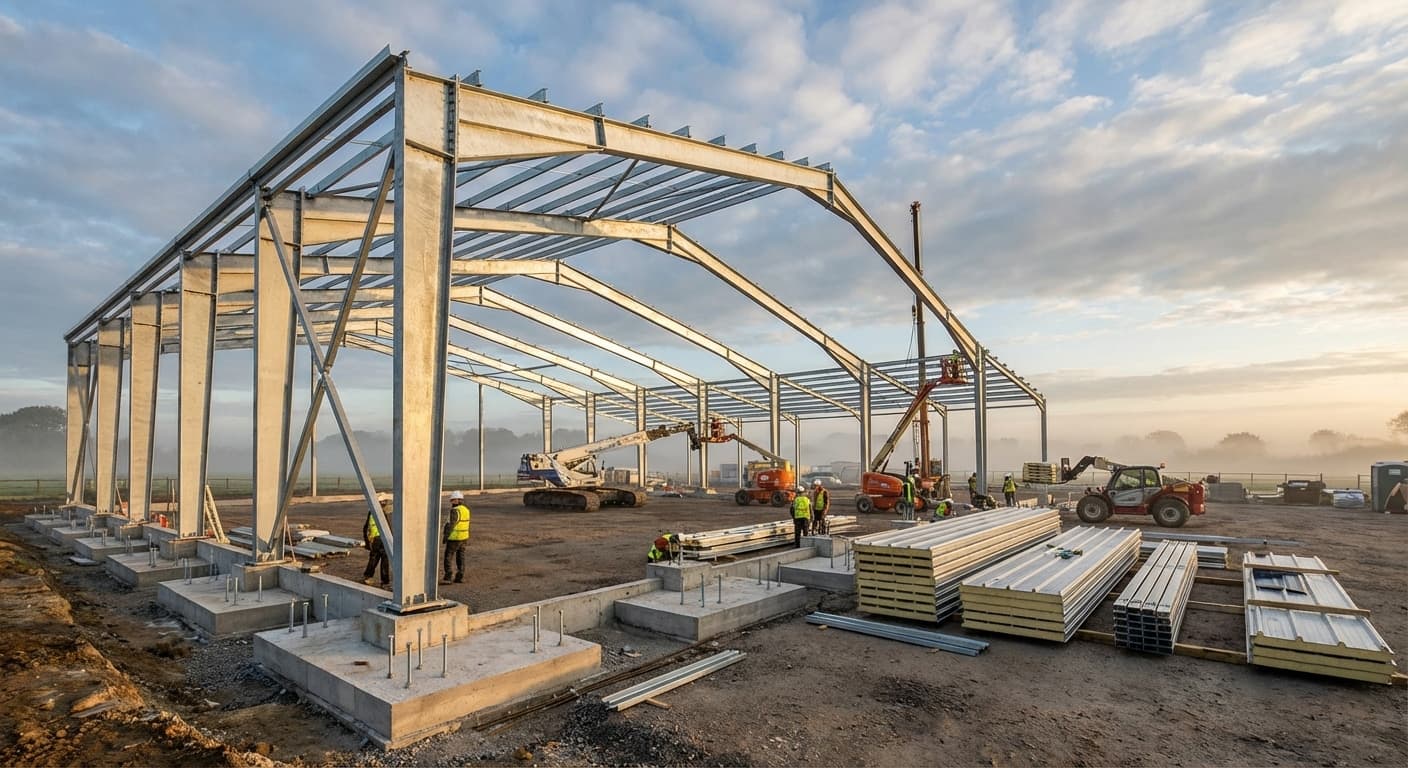

Prefabricated steel riding arena kits deliver a fast, cost-effective path to a clear-span, column-free training space that can be riding-ready in four to six months and expanded or reconfigured as needs grow; readers will learn how to size, engineer, and outfit arenas–from 80 x 120 ft private barns to 130 x 260 ft competition venues–so they meet local wind, snow, and seismic loads without over-building, while choosing between open-sided ($25-$45/sq ft) or fully-enclosed, insulated ($60-$100/sq ft) packages that protect horse and rider health through superior ventilation, daylighting, and LED lighting systems that cut energy use up to 56 %. The article walks owners through foundation options (slab, pier, hybrid), roof pitches, door placement, and accessories such as mezzanines, wash stalls, and viewing decks that double usable footage without enlarging the footprint, and it demystifies permits, hidden costs, and single-source installation timelines that keep projects on budget and warranty-compliant. With 80 % recycled steel, low-maintenance durability, and engineered expansion bays, these modular arenas offer a sustainable, lifetime-value alternative to wood or stick-built facilities, letting equestrian businesses start small, add bays or lean-tos later, and ultimately boost revenue through year-round, climate-controlled training and events.
Understanding Prefabricated Steel Riding Arena Kits
Prefabricated steel arena kits ship ready to assemble, cut your construction timeline to 4-6 months, and eliminate costly on-site fabrication work.
What defines a prefabricated steel riding arena kit
You get exactly what you need with a prefabricated steel riding arena kit–factory-built components that ship directly to your site, ready to bolt together. Your kit includes everything: pre-cut steel frames, roof panels, wall systems (if you choose them), and every fastener you'll need [1]. No surprises, no delays.
Here's what makes these kits work for you: Your facility goes up fast. Most arenas are operational within 4-6 months from design approval [3]. Compare that to traditional construction that can drag on for a year or more. You save on labor costs too–pre-cut components mean your crew spends time assembling, not measuring and cutting [2].
Your size options fit your needs and budget. Private facilities typically run 80×120 feet. Commercial operations often need 100×200 feet or larger [3]. Open-sided designs cost $25-$45 per square foot. Fully enclosed facilities with doors and insulation run $60-$100 per square foot [3].
Every component is engineered for your exact location. Your building handles your local wind speeds, snow loads, and seismic requirements without overbuilding [2]. You pay for the strength you need–nothing more, nothing less.
Core components and clear‑span capabilities
Your steel riding arena starts with the frame–rigid I-beams that create completely open interiors. No posts. No columns. Just clear space for you and your horses to work without obstacles [5]. These frames handle spans up to 300 feet wide while staying rock solid [4]. Your kit includes:
- Primary and secondary framing
- 26-gauge steel panels for walls and roof
- All trim pieces and fasteners
- Pre-punched components ready to connect
- Sealants for weathertight assembly
- Complete engineered drawings [4][5]
The overlapping panel design keeps weather out and energy costs down [6]. Everything arrives precision-cut, so your crew assembles faster with fewer errors [4].
For riding arenas, clear-span design matters. You need at least 60 feet of width for proper riding patterns–anything less restricts movement [5]. Wall heights start at 18 feet, giving you room for lights, fans, and overhead clearance for jumping [5].
Your documentation package includes foundation specs and assembly drawings stamped for your local building codes [5]. The structural details for more complex configurations are covered in the next section.
Benefits of steel construction for equestrian performance
Your horses perform better in steel arenas–it's that simple. The open design means you can practice any pattern or exercise without dodging posts. Your communication with your horse stays consistent because you're not constantly adjusting for obstacles [8].
Steel buildings protect respiratory health. Your ventilation system removes ammonia, dust, and moisture that damage lungs and reduce stamina [7]. Healthier horses train harder and perform better–you see the difference in their endurance.
Safety improves too. Steel won't splinter when kicked. It won't develop sharp edges that cause injuries. The material stays stable during high-impact work, protecting both horse and rider [7].
With proper insulation, your arena maintains steady temperatures year-round. Your specialized footing stays consistent. You train regardless of weather outside [7][8]. The strong framing supports professional lighting that eliminates shadows–crucial for precision work and reducing eye strain during long sessions [7].
These aren't just building features. They're performance advantages that translate directly to better training results. Our
Typical size ranges and layout considerations
Your arena size depends on what you do. Dressage needs 20m x 40m minimum–Olympic standard runs 20m x 60m [9]. General training? Go with 70' x 200' for maximum flexibility [10]. Hunter/jumper operations need more room–at least 30m x 80m for safe obstacle work [11]. Competition jumping can require 130' x 260' or larger [10]. Smart layout saves money and improves function:
- Choose well-draining, flat sites to minimize earthwork costs [9][10]
- Position your long axis north-south to reduce sun glare [10]
- Keep 20+ meters between arenas and stables for fire safety [11]
- Place doors at both ends of long walls for smooth traffic flow [10]
Your site selection directly impacts your bottom line. Poor drainage means expensive fixes later. Wrong orientation creates unusable hours when sun blinds riders. Bad door placement disrupts every training session.
Get these decisions right upfront. They determine both your construction costs and your daily operating efficiency for decades. The structural options that support these layouts are detailed in the next section.
Structural Design Choices
Clear-span arenas eliminate maintenance obstacles and cut labor time by 30-40%, while column-supported designs save $3-5 per square foot on buildings over 80 feet wide.
Clear‑span vs. column‑supported frame configurations
As covered in the previous section, clear-span construction creates completely open riding spaces. But when do you choose this over column-supported designs? Here's what affects your decision–and your budget.
Clear-span keeps your arena completely open. No posts. No obstacles. Your equipment moves freely during maintenance, cutting labor time by 30-40% [13]. For most riding disciplines, this unobstructed space isn't just nice–it's essential for proper training patterns and safety.
Column-supported designs save money on wider buildings. Once you exceed 80 feet in width, adding strategic support columns cuts your steel costs by up to 15% [13][14]. Those columns also handle heavier snow loads–critical if you're building in snow country [14]. Yes, you'll work around posts during riding sessions, but you'll save significant dollars upfront.
Your choice comes down to three factors:
- Width needed: Under 80 feet? Clear-span works great. Over 100 feet? Columns start making financial sense
- Budget available: Column designs typically save $3-5 per square foot on materials [13]
- Primary use: Competition training demands clear-span. Recreational riding can work with columns
For
Roof system options: gable, hip, flat, hybrid
Your roof choice drives both your budget and your arena's performance. Here's what each option means for your operation. Vertical roof systems handle whatever nature throws at them. Superior drainage. Better load distribution. Perfect for buildings over 100 feet wide [15]. They cost more upfront but save you money long-term through reduced maintenance and longer lifespan.
Roof pitch affects your usable space. Higher pitch means more overhead clearance–critical for jumping disciplines where you need 16+ feet of clearance [2]. But higher pitch also means deeper rafters and more steel, adding to your costs.
Open vs. enclosed changes everything. Open-sided arenas face more wind uplift, requiring beefier rafters and stronger connections [2]. That extra engineering adds 10-15% to your roof system cost but keeps your building standing through severe weather.
Consider these factors:
- Snow loads in your area (heavier snow = stronger roof required)
- Desired interior height for your discipline
- Whether you'll enclose the building later
- Local wind ratings and storm frequency
Smart material choices pay off. Insulated metal panels cost more initially but slash your heating/cooling bills by 30-50% [2]. They also protect your expensive footing materials from temperature swings that cause breakdown. In most climates, insulated panels pay for themselves within 3-5 years through energy savings alone.
Wall and enclosure systems: full, open‑side, sliding doors
Riding arena enclosure systems directly impact training conditions, maintenance requirements, and operational costs. Fully enclosed structures with complete wall systems provide comprehensive climate control–essential in regions with extreme temperatures, high humidity, or frequent precipitation [17]. These sealed environments protect specialized footing materials while allowing year-round training regardless of external conditions. Open-sided (covered) designs maximize natural ventilation and airflow, reducing respiratory issues in horses while decreasing construction costs by approximately 20-30% compared to fully enclosed structures [18].
These configurations work best in moderate climates with low humidity and minimal temperature fluctuations. Door systems significantly affect both functionality and accessibility–sliding doors offer maximum clearance without obstructing riding space and typically measure 10-16 feet wide and 10-14 feet high to accommodate equipment and mounted riders [17]. Bi-fold and overhead options provide alternatives when space around door openings is limited [17]. Wall materials typically consist of 26-gauge PBR metal panels, though facilities can incorporate strategic openings with vented walls to optimize airflow while maintaining structural integrity [18].
Many facilities employ hybrid approaches by combining fully enclosed sections with open sides to balance climate control needs with ventilation requirements [19]. This versatility allows operations to create environments specifically tailored to their training programs, climate conditions, and budget constraints.
Integrating mezzanines, lofts, and accessory bays
Don't waste your vertical space. Steel buildings give you 14-24 feet of height–use it to double your functional square footage without expanding your footprint.
Mezzanines pay for themselves fast. Add a viewing area. Build offices above. Create climate-controlled tack rooms. Your riding space stays completely open below while you gain 1,000-3,000 square feet above [20]. Most facilities recover mezzanine costs within 18 months through increased lesson capacity and event hosting.
Accessory bays solve your support space needs:
- Wash stalls (typically 12' x 12')
- Grooming areas (16' x 20' works well)
- Equipment storage (20' x 30' minimum)
- Feed rooms with overhead access
These 12-30 foot wide additions use the same structural system as your main building [2][20]. Order them initially or add them later–the modular design makes expansion straightforward.
Design details that matter:
- Place stairs at corners to preserve riding space
- Use 42" railings with vertical balusters (horizontal rails tempt climbing)
- Consider load requirements–offices need 50 PSF, storage might need 125 PSF [2]
- Install separate HVAC for mezzanine comfort zones
Popular mezzanine layouts: Semi-open designs overlooking the arena create perfect viewing galleries. Parents watch lessons in comfort. Judges get elevated perspectives. You charge premium rates for climate-controlled seating during shows [2].
The beauty of steel? Start simple, expand smart. Your building grows with your business–no major reconstruction needed [20].
Customization, Expansion, and Engineering Enhancements
Customize your arena's steel gauge, load rating, and foundation to match your region's specific climate demands rather than relying on generic standards.
Selecting steel gauge, profile, and load rating
Steel gauge directly impacts your arena's durability, cost, and performance, with most prefabricated kits using 26-gauge PBR metal panels for walls and roofing as the industry standard [22][23]. For facilities requiring additional strength or facing extreme weather conditions, 24-gauge upgrades provide enhanced durability, particularly for roofing panels, available in white and galvalume finishes [22]. The structural framework typically features steel I-beam primary framing that delivers clear-span capabilities for unobstructed riding space [22][23].
This framing system creates column-free interiors with spans up to 200 feet wide while maintaining structural integrity–essential for all riding disciplines from dressage to jumping [23]. Load rating represents a critical engineering decision that determines how your arena withstands regional environmental forces. Each prefabricated structure must be engineered to specific load requirements based on local climate conditions, ensuring facilities can withstand your area's wind, snow, and seismic forces while maintaining structural integrity [22][23].
Higher load ratings become necessary in regions with substantial snow accumulation, significant wind exposure, or seismic activity, though they increase material requirements and consequently overall costs [22]. When selecting load ratings, avoid generic standards–facilities in Wyoming face vastly different environmental stresses than those in Florida, requiring customized engineering solutions rather than one-size-fits-all specifications [23].
Foundation systems: slab, pier, insulated, hybrid
Choosing the right foundation directly impacts your riding arena's performance, longevity, and budget–typically representing 15-25% of your total project cost [25]. Slab foundations remain the most popular option, creating both the floor and structural support in a single pour. These monolithic designs combine the footer and floor in one continuous installation, with thickness typically ranging from 4-6 inches and thickened edges extending 12-18 inches to distribute column loads effectively [25]. For riding arenas with specialized footing materials, pier foundations offer distinct advantages.
These concrete supports extend below the frost line and place one pier beneath each steel column, ideal for structures requiring dirt or gravel floors [24]. The elevated design creates valuable crawl space for utilities while reducing moisture issues, though you'll need a separate floor system–adding cost compared to integrated slab designs [25]. Insulated foundations incorporate thermal barriers either beneath the concrete or within stem walls, dramatically improving energy efficiency in climate-controlled facilities. This approach prevents heat transfer through the foundation while protecting specialized footing materials from temperature fluctuations–particularly valuable in facilities operating year-round in extreme climates [25].
Hybrid approaches like stem wall foundations combine elements of both slab and pier systems, using continuous perimeter walls on concrete footers with interior filled areas for the arena surface. These excel in areas with moderate frost concerns or slightly sloped sites while providing superior water intrusion protection [25]. For riding arenas on challenging terrain, hybrid systems often prove most practical–accommodating grade changes more efficiently than standard slabs while offering more economical installation than full pier systems [25].
Wind, seismic, and regional engineering upgrades
Prefabricated steel riding arenas must be engineered to withstand location-specific environmental forces–making your exact site coordinates and elevation critical information during the design phase. Wind load requirements vary dramatically by region and directly impact structural components–higher design wind speeds (measured in Vult/Vasd per IBC codes) necessitate stronger frames, tighter purlin/girt spacing, heavier panel gauges, and increased fastener counts to prevent uplift failure [26][27]. The surrounding terrain further modifies wind forces through exposure categories: B (suburban/wooded areas), C (open fields), or D (coastal/unobstructed water)–each step from B to C to D significantly increases pressure on frames and sheeting, requiring corresponding structural upgrades [27].
Seismic engineering presents another critical consideration, with buildings classified according to Seismic Design Category (SDC) based on local ground motion potential. Even locations in the central United States may require substantial seismic detailing–potentially altering bracing configurations, base plate designs, hold-down systems, and anchor specifications to maintain structural integrity during earth movement [27][28]. Regional climate adaptations extend beyond wind and seismic concerns to include snow load engineering, where ground snow (Pg) translates to roof snow (Pf) after accounting for exposure, thermal factors, and potential drift patterns.
Higher snow loads significantly increase frame weight requirements and may necessitate specialized drift checks at step-downs or parapets–potentially pushing larger spans from cold-formed steel to more robust rigid frame solutions [27]. These location-specific engineering upgrades directly impact both initial costs and long-term performance–upgrading from minimum specifications to region-appropriate engineering typically increases steel weight, modifies foundation requirements, and enhances connection details throughout the structure [28]. Rather than applying generic standards, effective engineering requires understanding that structures in Wyoming face fundamentally different environmental stresses than those in Florida–making precise location data essential for optimizing both safety and construction efficiency [26][27].
Modular add‑ons and phased expansion strategies
Prefabricated steel riding arenas offer built-in expansion capabilities that let you start with a core facility and grow systematically as needs evolve. The modular design allows for straightforward horizontal expansion–simply remove end wall sheeting, pour additional concrete footings, and add 20-25 foot bays to extend your existing structure [29]. For this approach to work efficiently, specify "expandable end walls" during initial ordering to ensure structural compatibility with future additions [30].
Vertical expansion options include adding mezzanines for viewing areas or office space, while lateral expansion can incorporate lean-tos for attached stables or storage without disrupting the main riding space [30]. The bolt-together construction method significantly simplifies these modifications compared to traditional building methods, requiring minimal specialized equipment for installation [31]. This expansion flexibility proves particularly valuable for growing equestrian operations–allowing facilities to begin with essential training space and strategically add complementary features like stabling, wash areas, or spectator accommodations as business develops [31].
Real-world applications demonstrate this adaptability: one veterinary facility in Texas began with two connected buildings (100' x 70' x 21' and 100' x 230' x 15') before later adding an open-air 90' x 100' x 14' structure for additional exercise space [31]. This phased approach helps manage initial investment while preserving future options, making prefabricated steel particularly suitable for operations with evolving space requirements or budget constraints.
Climate Control, Energy Efficiency, and Sustainable Features
Proper insulation with reflective roofing and smart ventilation systems protect your horses' health, extend your training season, and save thousands in energy costs over your building's lifetime.
Insulation packages and reflective roofing for year‑round comfort
You need year-round climate control to protect your investment and keep horses performing at their best. Start with proper insulation–it's not optional when you're heating or cooling your arena [32]. Without it, warm air hits cold steel and creates condensation that corrodes your structure, ruins insulation, and threatens your horses' health [32].
Your insulation choices balance cost and performance:
- Fiberglass blanket: Most economical option with built-in vapor barrier [32]
- Reflective foil: Superior moisture resistance and brightens interiors [32]
- Spray foam: Fills every gap for maximum coverage [32]
- Insulated metal panels: Top thermal performance with fastest installation [32]
Add reflective roofing to cut heat transfer from sun exposure. Your metal roofing systems work with ridge vents to maintain comfortable conditions without breaking your budget [32]. Smart facilities install thermal blocks between panels and frames–a simple upgrade that prevents thermal bridging and saves thousands in energy costs over your building's lifetime [32].
This integrated approach keeps your arena comfortable year-round, protects expensive footing materials, and extends your training season regardless of weather [32].
Advanced ventilation and smart HVAC integration
Your horses need fresh air–constantly. Without proper ventilation, dust, ammonia, and moisture build up fast, causing respiratory problems and damaging your facility [33].
A smart ventilation system pays for itself through:
- High-capacity exhaust fans removing contaminated air continuously [33]
- Balanced intakes preventing drafts while maintaining airflow [33]
- Specialized filtration catching bedding and hay particles [33]
- Corrosion-resistant components that survive ammonia exposure [33]
Take it further with smart HVAC integration. Real-time sensors monitor ammonia, humidity, and temperature–adjusting automatically before conditions harm your horses or structure [33]. Heat recovery ventilators (HRVs) and energy recovery ventilators (ERVs) capture thermal energy from exhaust air, bringing in fresh air without the heating or cooling costs [33].
Your location drives design choices. Coastal facilities need salt-resistant components. Northern arenas require condensation control on cold surfaces [33]. Whatever your climate, backup power is non-negotiable–even brief ventilation failures spike ammonia to dangerous levels [33].
The payoff? Healthier horses, lower vet bills, and a facility that lasts decades instead of years.
Energy‑efficient lighting: LEDs, skylights, daylight sensors
Good lighting keeps horses calm and cuts your power bills by more than half. LED fixtures deliver 56%+ energy savings compared to old metal halide systems while spreading light evenly across your riding surface–no shadows to spook horses [34]. Your lighting requirements depend on use:
- Recreational riding: 5-10 foot-candles with UFO high bay fixtures [35]
- Competition environments: 30+ foot-candles for precise work [35]
- Color temperature: 4000K-5000K neutral white mimics daylight [34]
Prismatic skylights transform your arena during daylight hours. They diffuse sunlight into micro-beams that spread evenly, eliminating hot spots and harsh shadows [36]. Add daylight sensors that automatically dim your LEDs when natural light is sufficient–cutting lighting costs by 40-60% annually [36].
This integrated approach does more than save money. Consistent lighting helps riders judge distances accurately and keeps horses focused. The seamless transition between natural and artificial light means no sudden changes that could startle your animals [34]. Your facility operates efficiently while creating ideal training conditions.
Sustainable materials, green certifications, and lifecycle cost analysis
Steel brings you sustainability that pays. With 80% recyclability, your arena stays environmentally responsible while delivering superior performance [3]. But the real savings come from lifecycle costs that beat traditional construction every time. Your sustainable design features work together:
- Translucent panels and cupolas for natural light and airflow [3]
- Passive climate control reducing mechanical system needs [3]
- Weather, fire, and pest resistance requiring minimal maintenance [3]
- Water-saving footing systems meeting conservation regulations [37]
Calculate your true costs over 20-30 years. Steel's durability means you spend less on repairs, replacements, and energy. Your maintenance crew handles basic upkeep instead of constant fixes. Energy-efficient systems cut monthly bills while extending equipment life [3].
Smart owners tap into incentives. Agricultural water conservation grants and green business certifications can offset 30-50% of your sustainable upgrades [37]. These programs turn environmental responsibility into bottom-line savings.
The result? You get a facility that costs less to operate, qualifies for incentives, and maintains its value for decades. Your initial investment pays dividends through reduced operating costs and increased property value.
Planning, Budgeting, Installation, and Ongoing Support
A standard 80'x200' steel arena costs $304,000-$459,200 total, with National Steel Buildings handling material sourcing, engineering, and installation through one transparent point of contact.
Accurate cost estimation, financing, and ROI for design options for prefabricated steel riding arena kits
Your steel riding arena investment breaks down predictably: $25-45 per square foot for open designs, $60-100 for enclosed facilities [38]. Take a standard 80'x200' arena–you're looking at $304,000-$459,200 total, including materials and labor [39]. Clear-span designs cost more upfront but pay you back with unobstructed training space and zero column maintenance.
Hidden costs hit unprepared buyers hard. Here's what catches most people:
- Permits: $500 to several thousand (varies by location)
- Site prep: $1,000-$10,000 based on your terrain
- Utilities: $2,000-$20,000 depending on existing connections
- Foundation work: 15-25% of total project cost [39]
Your location drives engineering costs. High winds? Heavy snow? Seismic activity? Each requires specific structural upgrades that increase your steel requirements and connection complexity [39]. We've engineered buildings for every climate zone–we know exactly what your area demands.
Traditional financing requires 20-30% down with construction-to-permanent loans [38]. Smart operators calculate total ROI beyond construction costs. Your enclosed arena extends training seasons year-round. It protects expensive footing materials from weather damage. Most importantly, it creates consistent conditions that improve training outcomes–directly impacting your bottom line [38].
National Steel Buildings' buying power keeps your costs predictable. We handle material sourcing, engineering, and installation coordination through one point of contact. No surprises, no budget creep–just transparent pricing from design to completion.
Permitting, zoning, and compliance best practices
Start with the rules–they'll make or break your timeline. Your state and local codes dictate everything: building standards, zoning restrictions, sanitary regulations for pollution and pest control [41]. Don't assume "agricultural" zoning means automatic approval for riding arenas.
Check these compliance layers:
- Building codes for construction standards
- Zoning laws confirming equestrian use
- HOA covenants (often stricter than county rules)
- Environmental regulations for manure and runoff
- Grading and stormwater requirements [41][42]
Homeowners associations hide expensive surprises. They might require specific siding materials or roof styles to match neighboring buildings–details the county planning office won't mention [41]. Environmental compliance gets strict around water protection. Your manure management and runoff control plans need teeth [41].
The permitting checklist includes grading approvals, egress spacing, and stormwater documentation [42]. Support your application with a geotechnical report confirming soil stability and compaction potential. This proves your project meets structural safety standards [42].
We've navigated permits in all 50 states. Our engineering team knows which jurisdictions require special documentation, where inspectors focus their attention, and how to keep approvals moving. One call to National Steel Buildings means one less headache with local authorities.
Step‑by‑step installation workflow and single‑source service coordination
Your arena goes up fast when you follow the right sequence. Here's the timeline:
Week 1-2: Site and Foundation Site prep and foundation pour, adjusted for your terrain and drainage needs [44].
Week 3-5: Steel Erection
- Rigid frames positioned with cranes or telehandlers
- Secondary framing connects the structure
- Purlins and girts installed for panel support
- Roof and wall panels secured with weather-tight fasteners [44][45]
Single-source coordination changes everything. No finger-pointing between foundation contractors, steel crews, and finishing trades. One company owns the entire process–from engineering through final inspection [45]. When problems pop up (and they will), you make one phone call.
Your installation package includes engineered drawings, foundation specs, and assembly guides specific to your building and local codes [44]. Technical representatives check critical connection points during installation. They verify proper techniques before mistakes become expensive [44].
Specialized systems–ventilation, lighting, doors–coordinate through the same source. Everything fits the first time. No conflicts, no rework, no delays [44][45].
National Steel Buildings brings our own ProTrades erection crew to your site. We control quality from delivery through completion.
Maintenance plans, warranty protection, and performance monitoring
Your warranty depends on documented maintenance. Standard packages include 20-year rust-through protection, 10-year panel warranty, and 1-year workmanship coverage [46]. Skip the maintenance, lose the coverage–it's that simple [47].
Focus your maintenance on what matters:
- Fasteners: Check twice yearly (prevents 90% of leaks)
- Sealants: Inspect around all openings
- Drainage: Clear gutters and downspouts
- Coatings: Look for wear on panels [47]
Schedule biannual inspections covering:
- Foundation settlement
- Gutter blockages
- Panel seam separation
- Interior condensation signs [47]
Document everything. Take photos, keep receipts, note dates. When you need warranty coverage, this paper trail makes the difference between approval and denial [47].
Most tasks you can handle yourself. But every 3-5 years, bring in professionals to check structural connections, roof systems, and weatherproofing. They'll catch issues before they become problems [47].
The math works: every maintenance dollar saves $5-10 in repairs and extends building life [47]. National Steel Buildings designs for minimal upkeep. Our steel structures resist weather, fire, and pests naturally–reducing your maintenance burden from day one. When you do need support, you call us directly. No runaround, no third parties.
Your riding arena represents a major investment. Protect it with simple, consistent care that keeps warranties valid and performance strong for decades.
- Clear-span steel frames up to 300 ft wide eliminate interior posts for unobstructed riding.
- Open-sided arenas cost $25-45/sq ft; fully enclosed insulated ones run $60-100/sq ft.
- Most kits are ride-ready 4-6 months after design approval vs. 12+ for conventional builds.
- Engineering must match local wind, snow, seismic loads–generic codes risk failure or overbuilding.
- Insulated panels and smart ventilation cut energy 30-50 % and protect equine respiratory health.
- Start small and bolt-on 20-25 ft bays or mezzanines later without major reconstruction.
- Proper site orientation (long axis north-south) and door placement reduce glare and traffic issues.
- https://www.vikingsteelstructures.com/metal-riding-arenas?srsltid=AfmBOoqx9b_BtEMZgu031cp66UbTxqkbuJxUeVCK_Acr9QaLTCVV2dRO
- https://www.alliedbuildings.com/equestrian-buildings/
- https://www.steelcobuildings.com/steel-buildings/horse-arenas/
- https://gensteel.com/steel-building-kits/riding-arenas/200×400-riding-arena/
- https://towersteelbuildings.com/60x120x18-riding-arena-kit/
- https://titansteelstructures.com/120×200-steel-riding-arenas/
- https://lionbuildings.com/equestrian-facilities-in-steel-durable-design-for-horses/
- https://www.uspatriotsteel.com/blog/steel-vs-wood-riding-arenas/
- https://www.performancefooting.com/blog/horse-arena-construction-guide/
- https://coastalsteelstructures.com/planning-on-purchasing-a-riding-arena-read-here-before-you-do/
- https://gaxtent.com/blog/news/horse-arena-sizing-and-construction-explained/
- https://breakingac.com/news/2025/may/21/the-versatility-of-steel-buildings-for-riding-arenas/
- https://ostrostructures.com/riding-arena-metal-buildings/
- https://torosteelbuildings.com/blog/clear-span-vs-multi-span-metal-shop/
- https://www.vikingsteelstructures.com/blog/comparing-metal-riding-arena-prices-prefab-vs-custom-built-structures?srsltid=AfmBOorXTrFtq_YHzLkJV7MW7VZSNY0uxeJvoX0FsEme1iMkazsL8588
- https://gensteel.com/recommended-use/riding-arena/
- https://www.buildingsguide.com/metal-building-kits/riding-arenas/?srsltid=AfmBOoro2IEQbOywKJR9C_iiCB8HRJogg5ernyPURwVIYbgkBSsrG6Ua
- https://mortonbuildings.com/projects/riding-arena
- http://metacerometalbuildings.com/equestrian-arena-buildings/
- https://www.vikingsteelstructures.com/metal-riding-arenas?srsltid=AfmBOoqucWPEiTn5AIimu8z-1ul6KGL9tA4Ry9w3kSN4dFH7qSJ8HQi2
- https://powersteelbuildings.com/uses/steel-riding-arena-buildings/
- https://sunwardsteel.com/building-type/equestrian/
- https://www.buildingsguide.com/metal-building-kits/riding-arenas/?srsltid=AfmBOoqspBibpC74sa0jb80FNyWeqY7KQBvYR98Dq2iIse9mF-yc37ze
- https://www.rhinobldg.com/blog/steel-building-foundations-facts
- https://mbmisteelbuildings.com/blog/steel-building-foundation/
- https://www.alliedbuildings.com/pemb-building-codes/
- https://metalbuildingsguide.com/loads-codes
- https://norsteelbuildings.com/us/building-codes-permits-us/steel-building-codes-loads/
- https://gensteel.com/steel-building-kits/riding-arenas/
- https://www.buildingsguide.com/metal-building-kits/riding-arenas/?srsltid=AfmBOopKsRozQU6MC4n1tcjkchKCMGIne3qizNxEsjRsvmYh-ynHK6kx
- https://www.rhinobldg.com/indoor-horse-arenas
- https://www.alliedbuildings.com/when-to-insulate-your-prefab-metal-garage/
- https://alliancehvac.net/specialty/indoor-equestrian-stables-arenas/
- https://www.paclights.com/explore/horse-riding-arenas-why-it-matters-in-lighting-projects/
- https://www.ledlightingsupply.com/led-sports-lighting/horse-arena-lighting
- https://www.cbcsteelbuildings.com/products/daylighting/
- https://www.performancefooting.com/blog/sustainable-horse-arenas/
- https://reichconstructionllc.com/cost-of-pre-engineered-steel-indoor-horse-riding-arena/
- https://roimetalbuildings.com/cost-of-constructing-a-private-metal-equestrian-building/
- https://www.vikingsteelstructures.com/metal-riding-arenas?srsltid=AfmBOophUF2letDv8EmgjVgOhgTmMOJZo_YjU1gAiv26ujSvoRaXWgvF
- https://mortonbuildings.com/blog/top-planning-tips-for-building-a-riding-arena
- https://www.foxblocks.com/blog/indoor-riding-arena-plans
- https://precisebuildings.com/1183-2/
- https://vizsteel.com/metal-buildings/indoor-riding-arena/
- https://www.metal-buildings.org/horse-riding-arena-metal-building/
- https://www.vikingsteelstructures.com/metal-riding-arenas?srsltid=AfmBOoo1UP0OGImj6AkvjXnud1PTsOhOuTOnKV5H3uz7galuhtDf7WtI
- https://steelcommandercorp.com/warranty-maintenance-upkeep-how-ongoing-care-impacts-lifetime-cost/