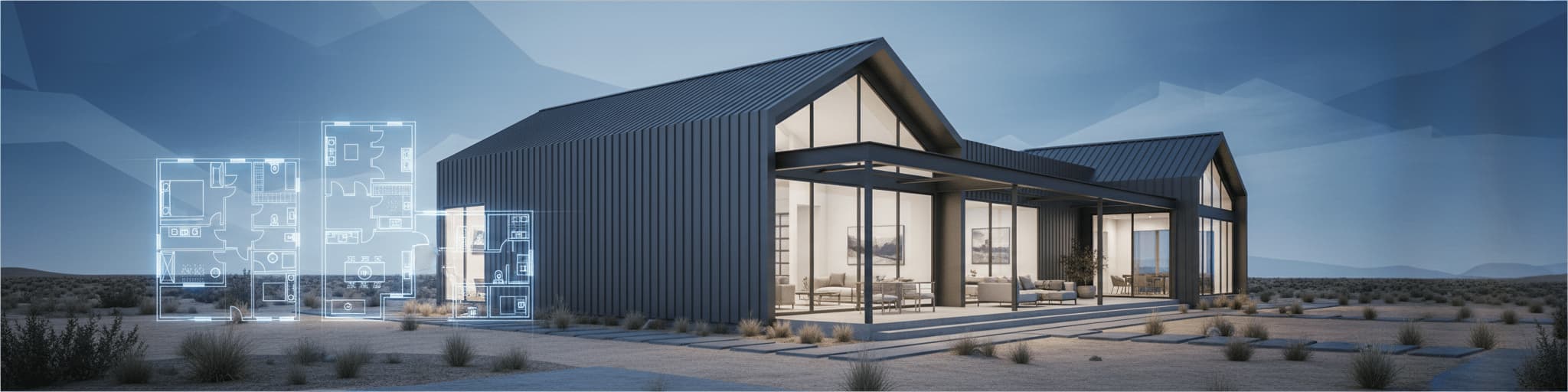
Understanding the Potential of 30×40 Metal Building Homes
A 30×40 metal home delivers 1,200 sq ft of column-free, loft-ready space—no load-bearing walls, no wasted halls, and a turnkey price around $100–150k—that feels bigger, builds faster, and flexes from family home to barndominium or live-work “shouse” without breaking standard material sizes or budgets.
The Versatility of 1,200 Square Feet for Modern Living
When you’re considering a metal building home, the 30×40 footprint delivers 1,200 square feet of remarkably adaptable living space. We’ve seen this size gain tremendous popularity among homeowners who want efficient living without compromising comfort [1]. What makes metal construction truly exceptional is how it maximizes every square foot in ways traditional building methods simply can’t achieve. The vertical advantage sets these structures apart—metal buildings naturally accommodate soaring ceilings that create an enhanced sense of spaciousness, making your 1,200 square feet feel significantly larger [1]. This height opens exciting possibilities for loft areas or mezzanines that traditional construction would struggle to support. Thanks to steel’s exceptional strength-to-weight ratio, you’re working with a column-free interior span—essentially a blank canvas with no load-bearing walls restricting your design choices [1]. Smart designers eliminate hallways entirely, dedicating that square footage to functional living areas that flow seamlessly together [2]. This efficient approach means your 30×40 footprint can comfortably accommodate two to three bedrooms with multiple bathroom configurations—perfect for small families, couples, or professionals needing dedicated home office space [2]. We often incorporate covered porches that extend your living area outdoors, creating valuable transition spaces without significantly impacting your budget [2]. The straightforward 30×40 dimensions work perfectly with standard material sizes, simplifying construction and keeping costs reasonable—typically ranging from $100,000 to $150,000 for a complete home in most regions [2]. This versatile footprint adapts beautifully to various living concepts. Whether you envision a purely residential design, a barndominium blending rustic charm with modern amenities, or a “shouse” combining living quarters with workshop space, the 30×40 foundation supports your vision [3]. Interior flexibility remains paramount—choose between open concepts that encourage family interaction or traditional layouts with defined spaces for privacy and acoustic separation, as we’ll explore in detail throughout this guide [1].Structural Advantages of Metal Construction for Residences
The structural advantages of metal construction deliver tangible benefits that enhance your residential living experience. At the core of these advantages is steel’s exceptional strength-to-weight ratio, which eliminates interior load-bearing walls entirely—giving you complete freedom to design open floor plans that traditional construction simply cannot achieve [4]. This structural independence means you can modify your home’s layout years down the road without worrying about compromising the building’s integrity. When it comes to protecting your investment, steel frames provide unmatched resilience. With a minimum tensile strength of 50,000 pounds per square inch in both compression and tension, your metal home stands ready to withstand extreme weather events, from tornadoes to hurricanes [5]. This isn’t just about survival—it’s about maintaining your home’s condition through whatever nature delivers. The long-term benefits become clear when you consider maintenance. Unlike wood structures that battle constant threats from fire, termites, mold, and rot, steel remains impervious to these common enemies [4]. This resistance translates directly to your bottom line, eliminating the recurring maintenance headaches and expenses that traditional homeowners face annually. Dimensional stability represents another crucial advantage. While wood-framed homes suffer from warping, twisting, and settling that create those frustrating drywall cracks and misaligned doors, steel maintains its precise shape indefinitely [6].Popular Styles: Barndominiums, Shouses, and Contemporary Designs
The evolution of metal building homes reflects today’s diverse lifestyle needs and aesthetic preferences. We’ve witnessed these structures transform from purely functional buildings into sophisticated residential designs that rival—and often surpass—traditional construction in both beauty and performance. Barndominiums lead this residential revolution, masterfully blending rustic charm with modern luxury within an affordable, low-maintenance framework [7]. These designs showcase steel’s remarkable versatility, supporting everything from soaring exposed beam ceilings and industrial-chic finishes to cozy shiplap walls and high-end amenities [1]. What makes barndominiums particularly appealing is their ability to combine spacious living quarters with recreation areas, all under one efficient roofline. The “shouse” concept takes functionality even further, integrating professional workspace with comfortable living quarters—an ideal solution for today’s entrepreneurs, artisans, and remote professionals [1]. Within the 1,200 square foot footprint of a 30×40 building, these hybrid designs maximize every inch. The column-free interior span enables flexible room divisions without the constraints of load-bearing walls, allowing your living and working spaces to complement rather than compromise each other [7]. Contemporary metal home designs represent the cutting edge of residential architecture. These bold interpretations feature dramatic window walls that flood interiors with natural light, cantilevered sections that seem to defy gravity, and minimalist aesthetics that highlight steel’s structural elegance [1]. By incorporating sophisticated finishes—think marble countertops, crisp painted drywall, and soaring vaulted ceilings—these homes shatter outdated perceptions about metal buildings [7]. What unites these diverse architectural expressions? They all benefit from pre-engineered metal building systems that slash construction timelines by approximately 50% while delivering superior structural performance [1]. This efficiency doesn’t limit creativity—whether your vision leans toward farmhouse charm with reclaimed timber accents or sleek modern minimalism, the steel framework adapts beautifully. As we’ll explore in the interior design section, this architectural flexibility combined with significant cost advantages explains why discerning homeowners increasingly choose metal construction for their dream homes [7].Cost Efficiency Compared to Traditional Construction Methods
When evaluating the financial aspects of metal building homes, the numbers tell a compelling story. Your 30×40 metal building home investment typically ranges from $100-$250 per square foot—a significant advantage compared to traditional construction’s $200-$450 per square foot [8]. This cost efficiency doesn’t mean compromising quality; rather, it reflects the intelligent use of prefabricated components that reduce both labor expenses and construction timelines. Let’s break down the real numbers: a complete 1,200 square foot metal home with concrete slab foundation typically costs between $24,000 and $60,000 total. The base building kit represents $12,000-$30,000 of this investment, with the engineered concrete slab adding approximately $9,600 [9]. These figures make homeownership attainable for many who might otherwise be priced out of traditional construction markets. The financial advantages multiply over time. Where traditional homes demand constant maintenance and repairs, metal buildings require minimal upkeep—just 1-3% of the building’s value annually [8]. Energy efficiency provides another significant benefit. With proper insulation (detailed in our technical considerations section), metal homes can slash heating and cooling expenses by up to 50%. This matters because temperature control typically accounts for 48% of an average American home’s energy consumption [8][9]. Insurance companies understand metal buildings’ inherent advantages, often reducing premiums by up to 30% thanks to superior fire resistance and structural integrity during severe weather events [9]. This ongoing savings adds thousands to your bottom line over the life of your home. From an investment perspective, metal buildings excel. Studies indicate they can increase property values by approximately 13%, often returning 2-2. 5 times your initial investment [9]. This appreciation stems from their exceptional durability—while traditional wood structures gradually deteriorate without constant maintenance, steel buildings maintain their structural integrity and appearance for decades. Financial institutions recognize this value proposition, classifying pre-engineered metal buildings as permanent structures eligible for conventional financing [9]. As we’ll discuss in the implementation section, this classification opens doors to better loan terms and higher property assessments, making your metal building home not just a place to live, but a smart financial decision that continues paying dividends year after year.Essential Floor Plan Considerations for 30×40 Dimensions
Eliminate hallways, cluster bedrooms around shared plumbing, and let clear-span steel turn your 30×40 ft, 1,200 sq ft footprint into a two- to four-bedroom home that flows effortlessly from master suite to kitchen without wasting a single square foot.
Space Optimization: Eliminating Hallways and Maximizing Functionality
Making every square foot count in your 30×40 metal building home starts with a simple principle: eliminate unnecessary hallways. As discussed in our overview of metal building advantages, the 1,200 square foot footprint works best when rooms flow naturally into each other without wasted corridor space [1]. Smart floor planning positions the master bedroom for direct access to both kitchen and utility areas, creating efficient daily living patterns. By incorporating walk-in closets and bathrooms thoughtfully, you preserve valuable living space [1].Bedroom and Bathroom Configurations (2-4 Bedroom Options)
A 30×40 metal building offers flexible bedroom and bathroom configurations within its 1,200 square foot footprint. This versatile space accommodates anywhere from two to four bedrooms depending on family needs and lifestyle priorities [1]. For couples or small families, a two-bedroom layout maximizes comfort while preserving space for other functions. This configuration typically features a spacious master suite with private bathroom and walk-in closet, plus a second bedroom that can serve multiple purposes—from guest accommodations to home office space [1]. The bathroom count in two-bedroom designs generally ranges from 1. 5 to 2 full bathrooms, with the master bath often including luxury features like walk-in showers [13]. Three-bedroom layouts work well for families with children, positioning the master suite on one side of the home with children’s bedrooms sharing a second bathroom to optimize square footage [1]. This arrangement maintains privacy while enabling natural supervision in common areas. For maximum sleeping capacity, four-bedroom configurations distribute bedrooms efficiently around central living spaces, though each room necessarily becomes more compact to fit within the footprint [12]. Bathroom placement becomes particularly crucial in these layouts to maintain privacy while minimizing plumbing costs through strategic clustering [1]. Single-story designs utilize the full 1,200 square feet for living space, while two-story options effectively double the available floor area to 2,400 square feet, allowing for larger or additional bedrooms upstairs [12]. The most efficient floor plans eliminate hallways entirely, positioning bedrooms with direct access to living areas and strategically clustering bathrooms near the kitchen and utility areas to reduce plumbing runs and maximize usable space [13]. Master bedrooms typically include walk-in closets and private bathrooms while maintaining easy access to kitchen and utility areas [13]. A well-designed 30×40 metal home accommodates varied bedroom needs through thoughtful space allocation, with bedroom sizes generally ranging from 10×10 feet for secondary bedrooms to 12×14 feet for master suites [1].Open Concept vs. Traditional Layouts for Small Metal Homes
Choosing between open concept and traditional layouts fundamentally shapes how your 1,200 square foot metal home lives day to day. Open concept designs merge kitchen, dining, and living areas into one flowing space—a natural fit for metal buildings where structural freedom already eliminates interior load-bearing walls [14]. **Open Concept Advantages:** The benefits align perfectly with steel construction’s strengths. Natural light flows freely throughout, making your home feel substantially larger [15]. Parents can supervise children from the kitchen while preparing meals, and the flexible space adapts easily as your family’s needs evolve [15]. The layout encourages connection during gatherings and maximizes the spacious feel that metal buildings naturally provide. **Open Concept Challenges:** However, open layouts in compact metal homes present practical considerations. Sound carries throughout the space—conversations, TV noise, and kitchen activities all blend together [14]. Temperature control becomes more complex and potentially costlier when heating or cooling one large area. Privacy becomes limited, with few places to retreat from household activity, and kitchen messes remain visible from living areas [15]. **Traditional Layout Benefits:** Defined, separate rooms address these challenges directly. Each space serves its specific purpose with proper acoustic separation [14]. You’ll enjoy clearer boundaries between public and private areas, more efficient zoned heating and cooling, and the ability to contain cooking odors and sounds [15]. Each room can express its own design personality without coordinating with adjacent spaces. **Finding Your Balance:** The most successful 30×40 metal homes often blend both approaches. Consider a hybrid design that opens kitchen and living areas while maintaining separate, private bedrooms and utility spaces [14]. This strategy leverages steel construction’s flexibility while addressing the practical realities of daily living in 1,200 square feet. Your choice should reflect your family’s lifestyle, noise tolerance, and entertainment habits [16].Creating Multi-Functional Areas in Limited Square Footage
Maximizing functionality in 1,200 square feet demands creative thinking—and steel construction provides the perfect framework for flexibility. The high ceilings and clear-span design inherent in metal buildings open up vertical possibilities that traditional construction simply can’t offer [1]. **Transformable Spaces That Work Harder:** Design rooms that serve multiple purposes throughout the day. A home office equipped with a built-in murphy bed instantly becomes guest quarters when needed. Utility rooms with floor-to-ceiling storage systems handle both daily needs and seasonal items efficiently [1]. Since metal buildings don’t require interior load-bearing walls, you can use furniture and movable partitions to define spaces—reconfiguring as your lifestyle changes without structural modifications [1]. **Smart Zoning Strategies:** Group plumbing-dependent areas strategically to reduce costs while creating natural activity zones. A dining area with proper task lighting and built-in storage becomes a productive home office during work hours. Living rooms with quality sleeper sofas or concealed beds accommodate overnight guests without sacrificing daily functionality [1]. **The Shouse Advantage:** As mentioned in our building styles overview, the “shouse” concept brilliantly addresses work-from-home needs. Imagine 600 square feet of comfortable living space paired with a 600-square-foot workshop or studio—ideal for entrepreneurs, craftspeople, or anyone running a home-based business [17]. This configuration maximizes your property’s potential while maintaining clear boundaries between work and home life. **Vertical Solutions:** Don’t forget to look up—mezzanines and loft spaces capitalize on metal buildings’ generous ceiling heights. These additions provide extra square footage for storage, sleeping areas, or quiet retreats without expanding your footprint [18]. The key to successful multi-functional design? Plan for flexibility from day one. Consider how your space needs might evolve over the next decade, then design accordingly. Your metal building home should adapt to life’s changes without requiring costly renovations [1].Inspiring 30×40 Metal Home Floor Plans
The 30×40 metal home’s clear-span steel frame lets you choose a three-bedroom family layout with split-suite privacy or a two-bedroom plan that tucks a convertible home office between opposite-corner bedrooms, both flooding 1,200 square feet with light, storage, and seamless sight-lines from kitchen to porch.
The Family-Friendly Layout: 3 Bedrooms with Open Living Space
In our experience designing metal building homes, the three-bedroom configuration proves most popular among growing families. This layout maximizes your 1,200 square feet by positioning the master suite with its private bath and walk-in closet separate from children’s bedrooms, which share a well-appointed second bathroom [1]. What makes this design particularly effective is how it balances privacy with connection—parents can easily supervise activities from the kitchen while meal prepping, yet everyone has their own retreat space when needed [1]. The steel structure’s clear-span capabilities eliminate the constraints of load-bearing walls, allowing us to create flowing traffic patterns that make daily life easier. Large windows flood the space with natural light while framing your property’s best views, and adding a back porch during construction extends your living area cost-effectively without expanding the building footprint [1]. Smart storage solutions transform every corner into usable space—from bedroom closets handling seasonal gear to utility rooms pulling double duty for holiday decorations. Even the laundry area’s vertical surfaces become storage for bulky linens and comforters [1]. This proven floor plan delivers the perfect balance of affordability and comfort, accommodating households of 2-4 people while maintaining the quality of life families expect [19]. The thoughtful design ensures each room serves its purpose without wasted square footage, creating a home where the kitchen truly becomes the heart of family life [19].The Efficient Design: 2 Bedrooms with Home Office Potential
The two-bedroom configuration has become increasingly requested as more clients embrace remote work and simplified living. We position bedrooms at opposite ends of your 30×40 structure to create distinct privacy zones, dedicating the central space to a versatile home office that easily converts to guest quarters when family visits [1]. This arrangement takes full advantage of steel construction’s clear-span capabilities—no interior columns means you can reconfigure spaces as your life evolves without structural limitations [1]. Natural light transforms productivity, so we strategically place large windows to illuminate your workspace throughout the day. The psychological benefits of abundant daylight during work hours can’t be overstated, especially for those spending extended time at their desk [1]. Our open floor plan approach maintains smooth traffic flow while using furniture placement to define spaces—a more flexible solution than permanent walls [1]. Built-in storage keeps your office organized and professional, maximizing every square foot without cluttering the space. This design particularly suits professionals building their businesses from home, couples transitioning from larger homes, or anyone seeking dedicated workspace without sacrificing comfort [1]. The beauty of metal construction shows here—that office can become a nursery, craft room, or third bedroom down the road without costly renovations.The Indoor-Outdoor Connection: Integrating Porches and Patios
Creating seamless indoor-outdoor living transforms how your 30×40 metal home feels and functions. We’ve found that incorporating wraparound porches during initial construction adds valuable covered outdoor space at minimal additional cost—essentially giving you extra square footage for entertaining and relaxation [1]. These covered areas become natural extensions of your interior, serving as morning coffee retreats, evening gathering spots, and weather protection for your home’s exterior. Steel’s structural advantages really shine here—we can design generous covered porches without cluttering the space with support posts, maintaining that open, airy feeling you want [1]. Positioning patios adjacent to your kitchen or main living areas creates a natural flow for entertaining, while large sliding glass doors blur the lines between inside and out [1]. In our designs, back porches prove especially valuable, effectively expanding your living space without increasing the building’s footprint or your property taxes [1]. This integration works beautifully whether you prefer open concept or traditional room layouts, with natural light flowing deeper into your home while making your 1,200 square feet live much larger. It’s these thoughtful design elements that elevate a basic structure into a home that truly enhances your lifestyle.Split Floor Plans vs. Centralized Living Arrangements
Split floor plans have become a signature feature in many of our 30×40 metal home designs, separating the primary bedroom suite from secondary bedrooms by placing common living areas between them. This arrangement maximizes privacy within your 1,200 square feet—parents can retreat to their space while children play in theirs, with the kitchen, dining, and living areas creating a natural sound buffer [1]. The beauty of steel construction really supports this layout choice. Without load-bearing interior walls to restrict placement, we can position bedrooms exactly where they make sense for your family’s lifestyle [1]. Some clients prefer the alternative—clustering all bedrooms on one side for easier nighttime access to children’s rooms. Both approaches work beautifully in metal homes, it’s simply a matter of matching the design to your family’s needs [21]. Split designs particularly excel for households valuing quiet time, accommodating different sleep schedules, or frequently hosting overnight guests who appreciate private quarters away from family bedrooms [21]. The zoned approach creates distinct spaces for both privacy and togetherness, adapting easily as children grow and family dynamics evolve [20]. We’ve also noticed these layouts maintain strong resale appeal, as future buyers recognize the versatility for various living situations [21]. When deciding between split and centralized bedroom arrangements, we help clients consider their daily routines, noise preferences, and long-term plans. There’s no one-size-fits-all answer—it’s about creating a home that works for how you actually live.Interior Design Strategies for Metal Building Homes
Transform cold steel into a warm home by layering drywall or shiplap walls, engineered hardwood floors, aged-brass lighting, reclaimed-wood accents, and plush textiles that absorb sound and create cozy zones within the metal shell.
Overcoming the ‘industrial Feel’ with Thoughtful Design Elements
Metal building homes naturally possess industrial characteristics that can feel cold and uninviting without thoughtful intervention. At National Steel Buildings Corp, we’ve guided countless homeowners through the transformation process, understanding that the key lies in using materials that contrast with and soften steel’s inherent strength. Start with proper wall finishes—unfinished metal walls create echoes and a cold atmosphere that quality interior treatments effectively counteract. Our clients often choose between drywall for a clean, versatile canvas or shiplap for farmhouse charm and textural interest [22]. For those seeking maximum warmth, reclaimed wood elements on accent walls, ceiling beams, or furniture balance the metal structure with natural texture and history [23]. Consider our Flooring choices significantly impact the feel of metal homes—avoid bare concrete when possible, opting instead for engineered hardwood, luxury vinyl plank, or cork. These materials add visual warmth while providing practical benefits like sound absorption and comfortable underfoot feel [22]. Area rugs further soften the space while defining functional zones within open floor plans. Strategic lighting transforms metal interiors from cavernous to cozy through layered illumination. Combine overhead fixtures, task lighting, and ambient options like floor and table lamps to create multiple pools of warm light [22]. Choose fixtures with warm-toned finishes such as aged brass or oil-rubbed bronze rather than chrome or stainless steel, which can reinforce the industrial feel [22]. Textiles play a crucial role in softening metal spaces—incorporate plush area rugs, throw pillows in varied textures, window treatments that filter light softly, and upholstered furniture with tactile fabrics [22]. For additional warmth, introduce architectural details like wood trim, wainscoting, interior shutters, or decorative ceiling treatments that break up the box-like nature of metal buildings [22]. The industrial aesthetic can be embraced selectively through exposed brick (real or veneer), concrete elements, and strategic metal accents that complement rather than dominate the space [24]. This approach creates an industrial chic vibe that feels intentional rather than unfinished. Finally, incorporate plants and natural materials throughout your space—living greenery softens metal’s hardness while improving air quality and adding life to the environment [22].Material Selections That Complement Steel Structures
Selecting materials that harmonize with steel structures requires understanding how different textures and finishes interact—expertise we’ve developed through years of metal building construction. Wood elements provide the strongest counterpoint to metal, with reclaimed timber softening spaces while adding character, and wooden flooring grounding rooms with natural warmth [23]. Strategic pairings enhance both materials: darker woods complement matte black or iron accents, while lighter varieties harmonize with brass or copper elements [25]. Glass components introduce visual lightness—from glass tabletops with metal frames that maintain spatial flow to expansive windows that blur indoor-outdoor boundaries [23]. For sophisticated contrast, stone elements create striking juxtapositions—marble countertops paired with brushed fixtures deliver timeless luxury, while slate or concrete surfaces with metal accents establish grounded elegance [25]. Professional designers recommend limiting your metal finish palette to two or three per room, mixing warm metals (brass, copper) with cooler tones (steel, nickel) for intentional contrast rather than visual chaos [25]. These thoughtful material combinations transform steel buildings from purely functional structures into refined living spaces that celebrate both strength and comfort.Lighting Considerations for Metal Building Interiors
While comprehensive lighting strategies are essential for metal building comfort (as detailed in our Technical Considerations section), the aesthetic impact of lighting deserves special attention in interior design. The right lighting transforms steel structures from utilitarian spaces into inviting homes. Natural light through strategically placed skylights reduces electricity usage while creating dynamic interior environments that change throughout the day [26]. When selecting artificial lighting fixtures, prioritize warm-finish options like aged brass or oil-rubbed bronze over chrome or stainless steel—these warmer tones counteract the industrial feel while complementing the structural elements [22]. Layer your lighting approach with overhead fixtures for general illumination, task lighting for functional areas, and accent lighting to highlight architectural features or artwork. This thoughtful lighting design, combined with proper insulation and HVAC planning covered in our technical specifications, ensures your metal building home feels both efficient and welcoming.Color Schemes and Textures That Create Warmth and Comfort
Creating warmth through color and texture transforms steel buildings into inviting homes—a transformation we’ve perfected through countless residential projects. High-contrast combinations deliver dramatic impact: dark metal roofing with light siding suits farmhouse, colonial, and Mediterranean aesthetics [28]. For subtler sophistication, tone-on-tone schemes blend harmoniously with surroundings while maintaining visual interest [28]. Regional considerations guide smart color choices—southwestern builds embrace terracotta and sand tones echoing desert landscapes, while coastal projects incorporate sea-inspired blues and sandy neutrals [28]. Interior surfaces demand equal attention to create residential comfort. Professional-grade wall treatments eliminate the echo and coldness of unfinished metal—drywall offers versatility for any design direction, while shiplap delivers instant farmhouse appeal [22]. Flooring selections dramatically impact both aesthetics and acoustics; engineered hardwood, luxury vinyl plank, or cork flooring add warmth underfoot while absorbing sound that would otherwise reverberate through steel structures [22]. Textiles serve as the softening agent that completes the transformation. Layer plush area rugs to define living zones, incorporate throw pillows in varied textures, and select window treatments that filter light while adding fabric warmth [22]. Upholstered furniture with tactile appeal invites relaxation while breaking up hard surfaces. Natural elements provide the final touches—potted plants and fresh greenery literally bring life to metal interiors while improving air quality [22]. This comprehensive approach to color, texture, and material selection ensures your steel building home feels as welcoming as it is durable.Technical Considerations for Comfort and Efficiency
Seal every seam and pair climate-tuned insulation (R-19 walls, R-30 roofs) with STC-35+ acoustic layers to turn your 30×40 metal shell from an echo-prone warehouse into a quiet, moisture-proof home.
Insulation Solutions for Temperature Control and Sound Dampening
Your 30×40 metal building home needs thoughtful insulation planning to transform it from a basic structure into a comfortable living space. While metal naturally conducts heat and reflects sound, proper insulation creates the thermal and acoustic comfort you expect in any quality home. The right insulation strategy delivers three essential benefits: maintaining comfortable temperatures year-round, preventing moisture-related issues, and creating peaceful, quiet interiors [30]. For budget-conscious builders, fiberglass insulation provides reliable performance at $1. 50-$3. 00 per square foot, with options ranging from basic single-layer systems to high-performance configurations [31]. Your climate zone determines the ideal R-value—typically R-19 for walls and R-30 for roofs in most regions [32]. For those seeking premium performance, Creating a quiet interior requires understanding how sound behaves in metal structures. Without proper treatment, conversations echo and footsteps amplify, making your home feel more like a warehouse than a residence. The solution lies in selecting materials with appropriate Sound Transmission Class (STC) ratings—aim for STC-35 in general living areas and STC-45 where you need extra privacy, like bedrooms or home offices [31]. Open-cell spray foam works exceptionally well for soundproofing, while closed-cell foam prioritizes thermal performance with moderate acoustic benefits [31]. Focus sound-absorbing materials where they matter most: at wall and ceiling intersections, on large flat surfaces that create echoes, and around mechanical equipment that generates noise [30]. Beyond material selection, proper installation techniques dramatically impact performance. Every seam must be continuously sealed with vapor barriers installed on the warm side of the structure to prevent condensation that can saturate insulation and reduce its effectiveness [31]. For comprehensive sound management, incorporate additional strategies like acoustic panels at reflection points, sound-absorbing flooring materials, and strategic placement of furniture and textiles to disrupt sound paths [30]. For maximum efficiency in a 30×40 footprint, cluster plumbing-dependent areas to reduce heat loss through pipes while positioning sound-generating spaces (mechanical rooms, laundry areas) away from quiet zones [32].HVAC Planning for Year-Round Comfort in Metal Structures
HVAC planning for metal building homes requires early integration in the design process. System selection affects structural requirements, particularly when implementing overhead HVAC with ductwork that increases roof collateral load beyond the standard 1-pound-per-square-foot design [33]. Split systems offer versatile temperature control through separate indoor and outdoor units, making them ideal for residential metal structures. These systems can be configured with multiple indoor units to create distinct temperature zones throughout a 1,200 square foot space [33]. Heat pumps present an economical solution by transferring heat between indoor and outdoor spaces rather than generating it, significantly reducing operational costs compared to conventional systems [33]. Right-sizing your HVAC system matters more than many homeowners realize. An oversized system cycles on and off frequently, failing to properly dehumidify your home while wasting energy. Work with experienced professionals who understand metal building requirements to calculate the correct capacity for your typical usage, not for the hottest or coldest day of the year [33]. Variable Refrigerant Flow (VRF) systems excel in metal homes by providing simultaneous heating and cooling to different zones, though they require higher upfront investment [33]. Proper sizing calculations following Manual J, S, and D standards ensure the system matches the building’s exact requirements while adhering to local building codes [1]. The HVAC design must account for the metal structure’s unique characteristics, including strategic insulation with R-19 in walls and R-30 in ceilings to maintain year-round comfort while optimizing energy efficiency [34]. Supplementary design elements can enhance HVAC performance—south-facing windows provide additional winter heat (with summer shading options), while energy-efficient windows and doors reduce overall heating and cooling demands [33].Addressing Moisture Management and Condensation Prevention
Condensation presents a unique challenge in metal building homes when warm, moist air contacts cooler metal surfaces, forming water droplets that can cause rust, structural damage, and mold [35]. This issue requires comprehensive prevention strategies beyond standard construction practices. Start with proper insulation—the primary defense against condensation. Fiberglass systems ranging from R-19 to R-30 maintain consistent interior temperatures, preventing the rapid cooling that creates condensation while significantly reducing energy costs [32]. Pair insulation with appropriate vapor retarders, which act like “raincoats” for your structure with perm ratings from 0. 02 to 0. 9 (lower numbers indicate better performance) [32]. Strategic ventilation creates essential airflow that prevents moisture accumulation through cross-ventilation with openings on opposite walls, ridge and soffit vents, and exhaust fans in high-humidity areas like bathrooms and kitchens [36]. Incorporate smart design elements including steeper roof pitches that prevent water pooling, proper gutters and downspouts for drainage, and roof overhangs that keep walls dry during rain [35]. Actively control indoor humidity using dehumidifiers in moisture-prone areas, proper HVAC systems sized for the space, and ventilation fans in kitchens and bathrooms [36]. Air barriers, now mandatory in most building codes, limit uncontrolled air leakage into and out of the building envelope, reducing both energy usage and moisture infiltration [32]. Implement a regular maintenance routine that includes checking for leaks, inspecting gutters and downspouts for blockages, and addressing condensation issues immediately rather than allowing them to worsen [35]. Every metal building home faces unique moisture challenges based on your local climate, how you use the space, and construction details. In humid regions, focus on robust dehumidification. In areas with large temperature swings, prioritize vapor barriers. Understanding these specific vulnerabilities helps you implement targeted solutions that protect your investment and maintain healthy indoor air quality [36].Energy-Efficient Features for Reduced Operating Costs
Metal building homes require strategic energy efficiency measures to overcome their natural thermal conductivity. Comprehensive insulation is the primary defense against energy loss, with options ranging from foam board insulation between metal framing to spray foam that fills gaps in hard-to-reach areas [37]. Properly sealed buildings prevent energy waste through tiny openings around windows, doors, and utility penetrations, which contribute significantly to heating and cooling costs over time [37]. Reflective roofing and wall coatings dramatically reduce cooling demands by bouncing sunlight away from the structure—a critical consideration as metal surfaces absorb heat quickly [37]. These specialized coatings contain infrared-reflecting pigments that can lower interior temperatures and reduce cooling costs by up to 50% [37]. Energy-efficient windows with low-emissivity coatings and proper sealing further regulate indoor temperature while strategically positioned south-facing windows maximize winter warmth [37]. Passive solar design principles work exceptionally well with metal structures by positioning the home to capture winter sun while using overhangs to block summer heat [37]. Modern HVAC systems with high efficiency ratings and zoned controls prevent energy waste in unused spaces, while smart thermostats optimize temperature management based on occupancy patterns [37]. As covered in our interior design section, LED lighting throughout your metal home provides energy savings while reducing heat generation that would otherwise increase cooling costs [37]. ENERGY STAR rated appliances, particularly refrigerators and water heaters, substantially reduce electricity consumption, with tankless water heaters providing hot water only when needed [37]. Eliminating phantom energy loads—the power drawn by electronics even when turned off—can be achieved through smart power strips that automatically cut power to inactive devices [37]. Metal roofs provide ideal surfaces for solar panel installation, offering clean energy that can dramatically reduce or eliminate grid dependence while qualifying for government incentives and tax rebates [37]. Proper humidity control through dehumidifiers and strategic ventilation prevents HVAC systems from working harder than necessary to maintain comfort [37]. The tight construction possible with steel structures minimizes air leaks and energy loss, potentially lowering utility bills and reducing environmental impact [38]. These energy-efficiency strategies transform your metal building from a simple structure into a comfortable, cost-effective home. While the initial investment in quality insulation, efficient HVAC systems, and smart technology may seem substantial, the long-term savings on utility bills and maintenance costs deliver an excellent return. Metal homes, when properly equipped, often outperform traditional construction in energy efficiency, proving that smart design overcomes any inherent thermal challenges [39].From Blueprint to Home: Implementation Guide
Map every dollar of your 30×40 metal-home dream by locking in material grades, labor split, site prep scope, and regional code upgrades before you request a single quote—because the gap between $100 and $250 per square foot is where hidden costs live or die.
Budgeting Realistically for Your 30×40 Metal Building Home
Creating a realistic budget for your 30×40 metal building home starts with understanding the complete cost picture—both immediate expenses and long-term value. As covered in our cost efficiency section, metal homes typically range from $100-$250 per square foot, but your specific project requires detailed consideration of multiple factors [40]. Material grades, insulation specifications, and door configurations all directly influence your base price, making it essential to clearly define your requirements before seeking quotes. Beyond the steel structure itself, installation represents a significant budget component that varies with site conditions and local labor availability. While professional installation increases upfront costs, it typically includes valuable warranty protections and proper permitting that safeguard your investment [40]. Many homeowners successfully balance costs through hybrid approaches—managing certain project aspects themselves while engaging professionals for critical structural elements [40]. Your foundation investment, typically an engineered concrete slab, must support both the steel structure and your planned usage [40]. Site preparation requirements vary dramatically—developed lots may need minimal work while rural properties often require extensive grading and utility connections [40]. Customization decisions substantially affect your final investment. Interior partitions, sophisticated lighting systems, specialized ventilation for metal structures, comprehensive electrical layouts, and quality flooring materials each add value while increasing costs [40]. Regional considerations further impact budgeting: coastal installations demand corrosion-resistant materials, mountain locations require enhanced snow load capabilities, and urban settings often impose aesthetic requirements that affect material selection [40]. Smart budgeting extends beyond construction costs. Insurance companies frequently recognize metal buildings’ superior durability and fire resistance with reduced premiums, while the minimal maintenance requirements deliver ongoing savings [40]. Quality steel construction maintains its value exceptionally well, making proper initial investment in materials and professional installation a strategic financial decision [40].Finding Qualified Contractors Experienced with Metal Residences
Selecting the right contractor for your metal building home is crucial—steel construction demands specialized expertise that goes beyond traditional building methods. Your contractor must demonstrate proficiency in steel framing systems, advanced insulation techniques for metal structures, and comprehensive moisture management strategies. Prioritize contractors with proven barndominium or metal home experience over those focused solely on conventional construction [7]. Thorough vetting protects your investment. Request to view completed metal building projects in person—finished structures reveal workmanship quality and attention to critical details like thermal bridging prevention and proper vapor barrier installation [41]. During interviews, pose technical questions that reveal genuine expertise: “What specific insulation systems do you recommend for our climate zone? ” “How do you address condensation challenges in metal structures? ” “What foundation specifications ensure long-term stability for 30×40 steel buildings? ” Experienced contractors will provide detailed answers backed by successful project examples [41]. Documentation verification is non-negotiable. Examine physical license documents, confirm comprehensive insurance coverage including liability and workers’ compensation, and verify that policies specifically cover metal building construction [41]. Previous client references offer invaluable insights—ask about communication effectiveness, problem-solving abilities, schedule adherence, and overall satisfaction levels [41]. Your contract must address metal building specifics comprehensively. Beyond standard elements like timelines and payment schedules, ensure detailed specifications for steel-appropriate materials, specialized installation procedures, and integration requirements for mechanical systems [41].Financing Options Specific to Metal Building Projects
Securing financing for your metal building home requires understanding specialized lending options beyond conventional mortgages. The steel construction industry’s unique characteristics often challenge traditional lenders unfamiliar with these structures’ advantages, making it essential to work with institutions that recognize metal buildings’ value and durability [43]. For accessory structures like workshops or garages, home improvement loans offer accessible financing from $1,000-$50,000 with terms spanning 2-12 years at 4%-20% APR [43]. These unsecured options work well for smaller projects, though credit score requirements typically range from 660-850 [43]. Full residential metal buildings demand more substantial financing solutions. Construction loans provide $5,000-$50,000 funding with compressed 2-5 year terms and elevated interest rates between 5%-30% [43]. Lenders require comprehensive project documentation including detailed budgets, material specifications, and construction timelines before approval. They’ll evaluate factors like steel price stability and contractor qualifications to assess project viability [43]. Construction-to-permanent loans streamline the financing process by combining building and mortgage phases into one instrument. This approach reduces closing costs and simplifies the transition from construction to permanent financing [44]. During construction, you’ll make interest-only payments, shifting to standard principal and interest payments upon completion [44]. Metal building homes encounter unique financing obstacles, particularly the Federal Housing Administration’s exclusion of barndominiums from their programs [43]. This policy significantly reduces available lenders, though specialized institutions like New Century Bank have developed expertise in metal building mortgages [43]. Qualification standards exceed traditional home requirements. Construction loans typically demand minimum credit scores of 680 (compared to 620 for conventional mortgages) and down payments of 20% (versus 5-10% for traditional homes) [45]. These stricter requirements reflect lenders’ unfamiliarity with steel construction rather than actual risk factors. Rural property owners benefit from agricultural lending programs that understand metal buildings through their widespread farm use. The Farm Service Agency provides loans and loan guarantees for qualified borrowers unable to secure commercial farm credit, offering valuable alternative funding paths [43]. Understanding these specialized financing options ensures you can navigate the lending landscape successfully and secure appropriate funding for your steel home project.Timeline Expectations from Planning to Move-In Day
Your 30×40 metal building home can progress from initial concept to move-in day within 3-4 months—dramatically faster than traditional construction timelines [1]. This accelerated schedule represents one of steel construction’s most compelling advantages, allowing you to enjoy your new home sooner while reducing construction loan interest and temporary housing costs. The journey begins with a focused planning phase of 1-3 weeks. Investing time here to finalize specifications, floor plans, and customization options prevents expensive mid-project changes [1]. Our experience shows that thorough upfront planning directly correlates with smoother project execution and satisfied homeowners. Permit acquisition represents the most variable timeline element, ranging from 2-6 weeks depending on local regulations and review processes [1][47]. Initiating permit applications immediately after design finalization keeps your project moving forward while manufacturing begins. Modern steel fabrication facilities produce your custom components within 4-8 weeks of order confirmation [1][47]. This precision manufacturing occurs while site work progresses, maximizing efficiency through parallel processing. Foundation preparation and pouring typically requires 1-3 weeks including essential curing time—proper foundation work cannot be rushed despite timeline pressures [1][47]. The erection phase demonstrates steel construction’s remarkable efficiency. Professional crews assemble the primary frame within 1-2 weeks, followed by roof and wall panel installation in another week [1][47]. Weather conditions represent the main variable, with experienced contractors building schedule flexibility rather than compromising installation quality [1]. Door, window, and accessory installation adds 2-3 days to complete the weather-tight shell [47]. Your construction approach choice significantly affects timeline and costs. Experienced DIY builders can erect basic structures in 3-4 days, though most homeowners benefit from professional installation despite the 10-20% cost premium [46]. Interior finishing varies most dramatically, from minimal trim-out to 1-4 weeks for comprehensive customization including flooring, cabinetry, and fixture installation [47]. Final inspections and punch list resolution typically require 1-2 weeks before certificate of occupancy issuance [46][47]. Throughout this process, proactive communication with your construction team ensures smooth phase transitions and timely completion. This efficiency—from planning through move-in—exemplifies why metal building homes increasingly appeal to homeowners seeking quality construction without extended timelines.- 30×40 metal homes deliver 1,200 sq ft of column-free, load-bearing-wall-free space for under $150k.
- Steel’s 50,000 psi strength and fire/pest resistance cut maintenance to 1–3 % of building value yearly.
- Eliminate hallways and cluster plumbing to fit 2–3 bedrooms, 2 baths, and multi-use zones in 1,200 sq ft.
- Pre-engineered kits slash build time to 3–4 months and qualify for conventional 30-year mortgages.
- Spray-foam R-30 roof + R-19 wall insulation plus reflective coatings can halve HVAC energy use.
- Strategic vapor barriers, ventilation, and 1–2 % annual upkeep prevent condensation and rust in steel shells.
- Open-span framing lets you reconfigure interiors or add lofts without structural changes later.
- https://nsbprod.wpenginepowered.com/liquid-portfolio/30×40-metal-building-home-floor-plans-design-guide/
- https://mybarndoplans.com/1200-sq-foot-barndominium-plan/
- https://www.buildingsguide.com/floor-plans/shouse-floor-plans/?srsltid=AfmBOoqwm8RbwR4H57wQYHBteWb4lW9HNVwkxGeNPkelhVZVOAdnIqWh
- https://www.fedsteel.com/insights/benefits-of-using-steel-in-residential-construction/
- https://www.alliedbuildings.com/6-advantages-of-steel-over-other-materials/
- https://www.scenicridge.com/blog/materials-matters/steel-buildings-vs-wood-framed-buildings
- https://nsbprod.wpenginepowered.com/blog/how-much-does-a-30×40-metal-building-with-slab-cost/
- https://sunwardsteel.com/maximize-interior-building-space/
- https://www.buildingsguide.com/metal-building-kits/homes/30×40-metal-home/?srsltid=AfmBOookVlk_5KZX35IuhQFP6qvf11fJ_VLAXKNnccghtalNugKemuhn
- https://mybarndoplans.com/floorplan/rustic-nook-barndominium-30×40-1200-sq-feet/
- https://www.trinityestatehomes.com/news/open-traditional-floorplans
- https://www.jjonesdesignco.com/blogs/the-great-debate-open-concept-vs-traditional-floor-plans
- https://mavericksteelbuildings.com/steel-homes-vs-traditional-houses-a-value-comparison/
- https://www.buildingsguide.com/products/shop-houses/30-x-40-shop-house/?srsltid=AfmBOoq3oty91dzExNQD4oeiDzf2HRcUnOHmPOQQtXmsWnhJuJqFeKSr
- https://www.buildingsguide.com/metal-building-kits/residential/?srsltid=AfmBOooUDSadBXYQi2W6qu8W7g-_aK6ldev8meM8aeN0LCTuFaqbeBnN
- https://www.arcsite.com/template/30×40-3-bedroom-floor-plan
- https://www.mihomes.com/blog/what-is-a-split-floorplan
- https://planner5d.com/blog/what-is-a-split-floor-plan/
- https://metalbuildingsnorthamerica.com/metal-building-homes-interior-design-tips/
- https://ludwigbuildings.com/blog/the-art-of-interior-design-in-metal-buildings-turning-steel-structures-into-stunning-spaces
- https://planner5d.com/blog/industrial-design-style/
- https://thecharmingbenchcompany.com/blogs/news/home-aesthetics-a-guide-to-metal-and-mixed-element-decor
- https://cdmg.com/building-faqs/efficient-ways-light-metal-building
- https://gensteel.com/resources/case-studies/metal-building-lighting-options/
- https://www.buildingsguide.com/design/metal-building-colors/?srsltid=AfmBOorEKtZF1LvObQRTLoLb2OkqUGtKIK1K0EqnARCoaBz3-YKExHwR
- https://www.eurolinesteelwindows.com/creating-cozy-industrial-style-tips-for-warmth-and-comfort/
- https://nsbprod.wpenginepowered.com/liquid-portfolio/metal-building-insulation-techniques-benefits-and-best-practices/
- https://therm-all.com/a-guide-to-metal-building-insulation/
- https://cdmg.com/building-faqs/how-to-choose-an-hvac-system-for-your-metal-building
- https://www.worldwidesteelbuildings.com/blog/beat-the-heat-hvac-for-steel-buildings/
- https://armstrongsteel.com/blog/7-proven-methods-to-prevent-condensation-in-steel-buildings
- https://www.torosteelbuildings.com/7-effective-ways-to-prevent-condensation-in-steel-buildings/
- https://lionbuildings.com/how-to-save-energy-in-your-metal-home/3/
- https://www.futurebuildings.com/blog/steel-built-homes.html
- https://thelunacrew.com/metal-building-homes-the-future-of-affordable-durable-housing/
- https://metalbuildingsnorthamerica.com/30×40-metal-building-construction-facts/
- https://www.absoluterv.com/kit-homes-and-cabins/hiring-a-contractor/
- https://coloradobarndominiumpros.com/
- https://www.buildingsguide.com/build/metal-building-financing/?srsltid=AfmBOooJ5DImRTKK_yw0Q_exAlgGNatgUVchIP5fXMkY0VtA_FCXFFde
- https://www.rocketmortgage.com/learn/construction-loans
- https://www.granitewestfunding.com/construction-loan-vs-mortgage/
- https://www.buildingsguide.com/build/30×40-building-construction/?srsltid=AfmBOorX1cOFABc4RXKN9CCBCvKOq9o4O42yg1tStzHs7Q17H72GOKKp
- https://lionbuildings.com/what-is-the-building-timeline-for-diy-metal-building-kits/