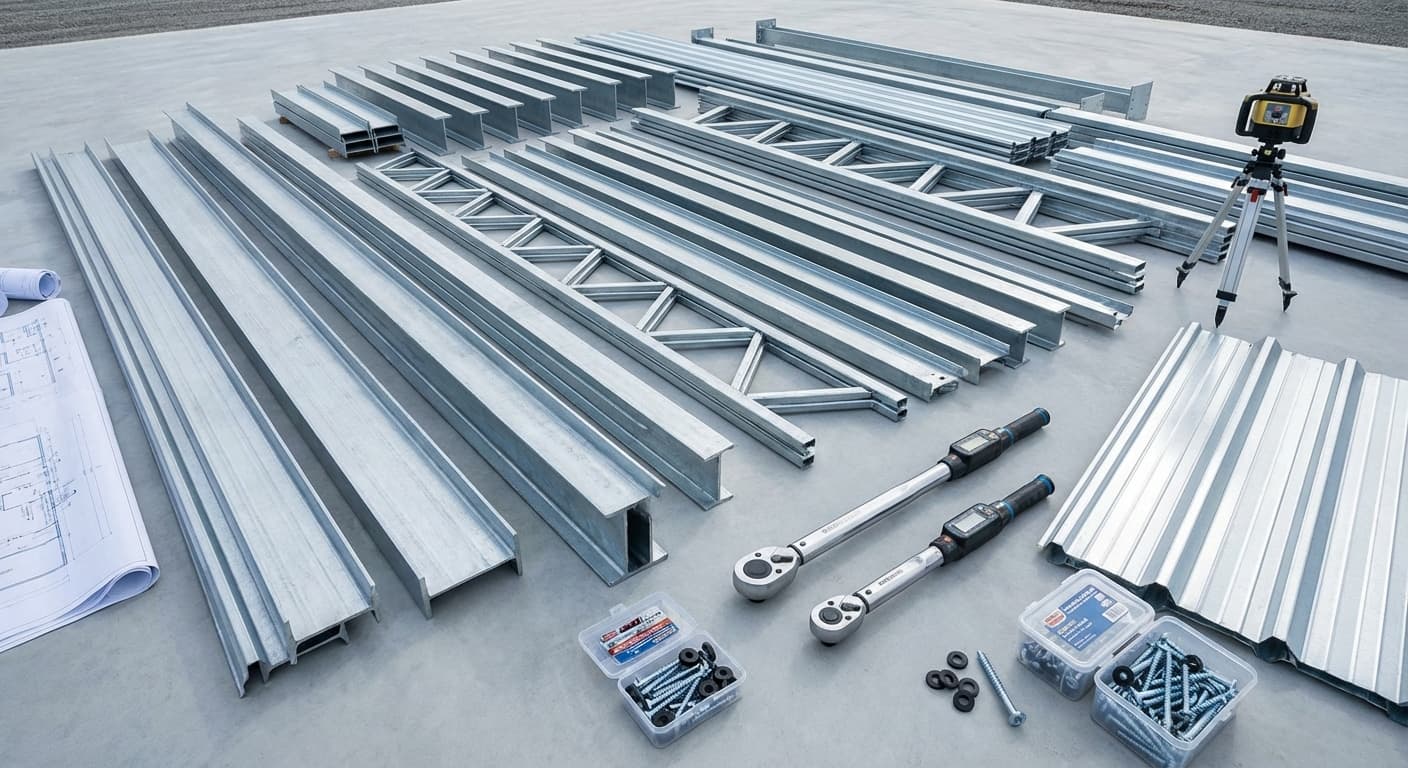

DIY metal building kits now deliver professional-grade results in a weekend: every pre-cut, pre-drilled steel piece snaps together in a fool-proof sequence–base rails, columns, trusses, panels, trim–slashing labor costs and build times from weeks to 1-3 days while outlasting wood by decades with minimal upkeep. The guide walks readers from site survey to finished structure, showing how to pick the right foundation for soil and climate, engineer snow and wind loads into the kit, navigate 2024 codes and permits, and integrate insulation, doors, windows, electrical and HVAC without costly retrofits. It stresses precision–torque every bolt to spec, seal every overlap, slope drainage 2 %–and documents each step for warranties, while seasonal maintenance Essentials protect a 20-50 year investment that typically cuts energy and insurance bills by up to 50 %. With customizable colors, clear-span expansion options and engineer-stamped plans that speed approvals, today's kits let owners erect fire-, pest- and rot-proof shops, barns or offices that look as sharp as they perform, all for a fraction of conventional construction.
Understanding DIY Metal Building Kits
Assemble your steel building in 1-3 days with pre-cut, pre-drilled components engineered to fit together perfectly, no fabrication required.
What are DIY metal building kits and how they work
DIY metal building kits put steel construction within your reach. You get every component you need–base rails, columns, trusses, anchors, bracing, panels, and trim–engineered to fit together perfectly [1][2]. No guesswork, no custom cutting, no delays.
The modular design lets you tackle one section at a time, keeping your project manageable and your timeline realistic [3]. Every piece arrives pre-cut, pre-drilled, and pre-welded. You're assembling, not fabricating [3].
The sequence stays simple: set your base rails, stand your columns and trusses, lock in the bracing, attach your panels, then finish with roofing and trim [1][2]. Smart builders bring help for the heavy lifting–this keeps everyone safe and moves the project faster [3]. With clear instructions and precision-made components, you'll complete your building on schedule, even without extensive construction experience.
Core components and modern pre‑punch technology
Your kit contains every structural component engineered to work together: base rails that anchor to your foundation, columns and trusses that create your frame, purlins and girts for panel support, and diagonal bracing for rock-solid stability [4][5]. Modern pre-punch technology saves you hours–trusses arrive with factory-welded clips already attached, so you skip the field drilling entirely [6].
That's time saved and mistakes avoided. You'll work with
Benefits of DIY metal building kits versus traditional construction
Steel beats traditional construction where it counts–your bottom line and your timeline. You'll save on materials, labor, and time. Most buildings go up in 1-3 days instead of weeks or months [7][9]. That means you're operational faster with less disruption to your business. Your steel building shrugs off what destroys wood structures–fire, termites, rot, and weather. Expect 20-50+ years of service with minimal maintenance [8][9].
No annual termite treatments. No replacing rotted boards. No repainting every few years. Just decades of reliable protection. Properly insulated steel buildings cut energy costs up to 50% by maintaining consistent temperatures year-round [8]. Your insurance company will notice too–steel's resistance to fire and weather damage typically means lower premiums [9].
Need to expand? Steel's clear-span design and modular construction make additions straightforward and cost-effective. Traditional buildings require expensive structural modifications and complex permits for the same expansion [8]. Speaking of permits, pre-engineered steel buildings move through approval faster with engineer-stamped plans that building departments trust [9].
Evolution of kits: 2024‑2025 design and performance upgrades
Today's metal building kits deliver what you actually need–better performance, faster assembly, and professional results. The 2024-2025 designs prove steel buildings don't just function–they impress. Choose blackened steel interiors for industrial elegance, weathering steel facades that age beautifully, or corrugated accent walls that add texture and character [10]. Your building works as hard as it looks. Assembly keeps getting smarter.
Factory-welded clips and enhanced pre-punch systems cut installation time without compromising strength [11]. The modular approach breaks your project into manageable sections–you'll stay organized and maintain momentum throughout construction [11]. High-performance Galvalume Plus(TM) Steel delivers decades of corrosion resistance whether you're building a sleek commercial space or modern barn [10]. Modern kits anticipate your needs. Pre-planned pathways for electrical and plumbing save headaches during installation.
Smart home mounting points come standard. Even sustainability features like living wall supports integrate seamlessly [10]. Every component meets current building codes with precision engineering that reduces waste and keeps you on schedule [11]. These aren't the basic metal boxes of the past–today's kits combine steel's strength with design flexibility, creating buildings that look as good as they perform.
Planning, Design, and Permitting
Define your building's purpose, dimensions, and load requirements upfront because these foundational choices lock in your structure and cannot be altered later without compromise.
Defining purpose, size, and load requirements for your kit
Start with your end goal. What's this building for? A workshop needs clearance for equipment. Storage requires capacity calculations. Commercial spaces need customer flow [5].
Map out your minimum square footage using real measurements–equipment dimensions, workflow patterns, future growth. No guessing [5]. Your building's purpose drives every structural decision that follows.
Load requirements aren't optional–they're engineering essentials. You need two numbers: dead loads (the building's own weight) and live loads (snow, wind, occupancy) [12]. These vary dramatically by location. Arizona buildings handle 10 pounds of snow per square foot. Minnesota? Try 70+ pounds [5].
Document everything that matters: occupant count, equipment weights, vehicle access needs. These details determine your column spacing, door sizes, and foundation specs [12]. Get it right now–you can't alter pre-engineered components later without compromising the whole structure [4].
Choosing the right DIY metal building kit and customization options
First decision: your building's dimensions. Width, length, and height set everything else in motion [13]. Next, pick your roof style. Regular? Vertical? A-frame? Each handles snow differently and changes your interior clearance [13]. These choices lock in your building's basic structure.
Don't think prefabricated means boring. Today's kits offer real customization–multiple door types, window configurations, color schemes. You're building what you need, not settling for what's available [14].
Doors matter more than you think. Walk-in doors for daily access. Overhead doors for vehicles. Roll-ups for storage. Sliding doors for wide equipment [13]. Place them where work flows naturally.
Windows cut electricity bills. Position them strategically for maximum natural light. Add skylights where it makes sense. Your workspace stays brighter, your costs stay lower [13].
Insulation isn't optional if you're working year-round. Quality packages control temperature, slash energy bills, and stop condensation before it starts [13]. Even color choices affect performance–light colors reflect heat in Phoenix, dark colors absorb it in Minneapolis [13].
The kit you choose must meet your local codes. Period. Quality suppliers deliver engineer-stamped plans designed for your exact location–your wind speeds, your snow loads, your seismic requirements [13]. Ask for steel gauge specs and coating types. Look for Galvalume Plus(TM) Steel–it's the corrosion resistance standard [13].
Check supplier credentials beyond price. Years in business? Warranty terms? Material quality? Technical support? The right partner provides clear instructions, answers questions, and stays available throughout your project [14]. Smart builders pick suppliers who've solved problems before they arise.
Permits, zoning, wind and snow code compliance for 2024
Get permits first. Always. Metal buildings follow International Building Code (IBC) requirements, with local modifications your area adds [15]. For 2024, codes keep evolving–verify which version your jurisdiction enforces [15].
Your building department checks everything: code compliance, safety, size, aesthetics, setbacks from property lines [15]. Budget $550-$2,000 for permits. Cities charge more than rural areas [15].
Zoning matters too. Your area might restrict building height, footprint, style, or use [15]. Got an HOA? You'll need their approval separately. Check both before buying any kit [15].
Load ratings make or break your project. Northern Minnesota demands 70+ pounds per square foot snow ratings. Mississippi? Maybe 10 pounds [16]. Gulf Coast buildings need 150+ mph wind resistance. Interior regions might need half that [16]. These aren't suggestions–they're engineering requirements that determine your building's survival.
Start right with engineer-stamped plans designed for your exact location.
Site Preparation and Foundation Systems
Soil testing and proper drainage reduce settlement risks by 30% while GPS tools catch expensive foundation mistakes before construction begins.
Soil assessment, drainage, and digital site‑survey tools
Your soil tells you everything about your foundation needs. Start with a site survey–measure boundaries, mark elevation changes, identify where water flows [17]. Today's GPS tools and 3D software boost site utilization by 15% and catch expensive mistakes before they happen [17].
You'll need soil testing. Geotechnical engineers check bearing capacity, moisture content, and stability–the factors that determine which foundation works best and can cut settlement risks by 30% [17][18]. Test at least 2 meters deep. Lab analysis confirms your soil can handle your building's weight [17].
Drainage keeps your building dry. Document natural water flow. Create a 2% slope (about ¼-inch per foot) away from your foundation [18]. Build your pad 6-12 inches above surrounding grade. When natural drainage falls short, install French drains or perimeter tiles [18].
Got a tricky site? Digital mapping tools create contour maps that show exactly where to build and where erosion might strike [19]. If you're adding a septic system, percolation tests (done with health officials present) verify proper water absorption rates [19].
Selecting the optimal foundation: slab, pier, or hybrid
Your foundation choice affects everything–stability, cost, and 15-25% of your total project budget [20]. Three options solve different site challenges.
Concrete Slab Foundations The workhorse solution. Pour foundation and floor together. Use 4-6 inches for most buildings, thicken edges to 12-18 inches where columns sit [20][22]. Perfect for level sites with stable soil. Doors align properly. Floors clean easily. Skip them on expansive clay or slopes [22]. Add a vapor barrier to stop moisture that ruins tools and equipment [22]. Cost: $4-8 per square foot–your most economical choice for simple sites [20].
Pier Foundations Problem-solver foundations. Concrete supports go right under column loads. Ideal for poor soil, steep slopes, high water tables [20][22]. You get crawl space for utilities. Air circulation fights moisture [20]. Individual piers run $200-600 each. Total cost beats slabs by 30-50% after adding your floor system [20]. Space piers 20-40 feet apart based on your building's specs [20].
Stem Wall Foundations The hybrid approach. Build a perimeter wall on concrete footers, pour a slab inside. Start with footers (12-24 inches wide, 8-12 inches thick). Build walls to floor height. Pour your slab [20]. Great for moderate frost zones and gentle slopes. Superior water protection [20]. Cost runs 25-40% above basic slabs [20].
Making the Right Choice Your site dictates your foundation. Soil testing ($500-1,500) reveals bearing capacity and expansion risks–saving thousands in future repairs [20][22]. Northern climates need foundations 48+ inches deep. Southern zones need just 12 inches [20].
Drainage can't wait. Slope everything away from your building. Plan water management first [22]. Anchor bolts need surgical precision–small errors create big headaches [20].
Pick wrong? You'll fight door alignment, water intrusion, and structural stress forever [22]. Foundation repairs cost far more than doing it right initially [20]. On tough sites, spending more upfront saves money long-term [21].
Ground preparation, anchor points, and erosion control measures
Clear your site completely–vegetation, rocks, debris all go [5]. Heavy equipment levels the ground and compacts soil to handle your building's weight. Create proper drainage slopes while you're at it [5].
Erosion Control Install erosion measures before you dig. Your options:
- Silt fences
- Straw bales
- Sediment basins
- Erosion blankets
- Diversion channels
Local regulations dictate specifics. These controls protect your site and keep neighbors happy [5].
Foundation Excavation With erosion controls set, excavate per your plans. Measure precisely. Watch soil conditions [5].
Anchor Bolts–Get Them Right These connect your building to its foundation. No room for error [5]. Use templates to set exact:
- Depth
- Projection height
- Alignment
Lock them in place before concrete pours [5]. As mentioned earlier, build pads 6-12 inches above grade. Install drainage solutions when needed [5].
Final Inspection Before assembly starts, verify:
- Level conditions
- Proper drainage slopes
- Perfect anchor bolt placement
Small mistakes here create huge problems later [5]. Taking time now saves money and headaches during assembly.
Safety inspections and pre‑erection checklist for DIY kits
Stop. Check everything before you lift the first beam. This inspection saves time, prevents injuries, and ensures smooth assembly.
Foundation Ready? Your concrete needs 28 days to cure properly [24]. Rush this and you risk everything. Verify anchor bolts align perfectly with base plates–even small misalignments stop columns cold [23].
Inventory Check Match every component against your packing list. Organize by assembly order. Set up a staging area that keeps materials accessible without dangerous stacking [23][24].
Safety First
- Verify operator certifications
- Establish hand signals for lifting
- Mark safety zones
- Plan traffic flow [23][24]
Gear Up Everyone needs:
- Hard hats
- Steel-toed boots
- Fall protection for height work [24]
Team Preparation Review instructions together. Assign clear responsibilities. Know who makes decisions [23]. Check weather–wind and panels don't mix [24].
Final Checklist ✓ Drainage working ✓ Utilities marked ✓ Equipment access clear ✓ Delivery routes open [23]
This prep work prevents expensive delays. You've invested in quality steel–now invest the time to install it right. With proper preparation, your DIY assembly runs smoothly from first column to final trim.
Step‑by‑Step Assembly Process
Organize components into labeled groups before assembly so you're not hunting for parts mid-installation while holding steel beams.
Unpacking, inventory, and labeling all kit components
When your metal building kit arrives, you'll save hours of assembly time with proper organization. Start by unloading components with a forklift–those main beams are heavy [13]. Check everything against the packing list immediately. Missing or damaged parts now means project delays later [25].
Sort your components into clear groups: main framing, secondary framing, panels, fasteners, trim, and accessories [13][26]. Small parts disappear fast on job sites. Use labeled bins or buckets to keep every bolt, nut, and screw exactly where you need it [26].
Lay out components near your foundation in assembly order. You'll cut your build time significantly when you're not hunting for parts mid-installation [26]. Your manual shows where every piece goes–study it during unpacking to spot any questions before you're holding a beam in the air [26]. Smart builders create their own color-coding system with spray paint or tags. It's an extra hour upfront that saves a full day during assembly [13].
Erecting columns, beams, and trusses with ergonomic tools
Your frame goes up faster and safer when you follow the right sequence. Start by grouping columns with their matching rafters and keeping fasteners organized–scrambling for bolts while holding steel is dangerous and expensive [1].
Build smart: assemble one bay at a time. Position your first two columns on the anchor bolts (already set during foundation prep) and hand-tighten a few nuts to hold them [24]. Here's the key–attach the rafter while everything's still on the ground. Then lift the entire assembled frame as one unit with your forklift or crane. Much more stable than juggling individual pieces in the air [24].
Temporary bracing is non-negotiable. Run heavy cables from the frame to ground stakes. Without it, your structure can sway and collapse before you add the next section [24]. Keep bolts finger-tight until you've got a full section up–you'll need wiggle room for adjustments [24].
Your essential tools:
- Calibrated torque wrench (not an impact driver)
- Laser level for perfect alignment
- Quality ratchet sets
- Lifting equipment rated for your building's weight [1][24]
Safety pays dividends. Hard hats, steel-toed boots, and fall protection aren't suggestions–they're requirements. Establish hand signals before anyone touches steel [1][27]. Check every frame for plumb and square using your level and diagonal measurements. Equal diagonals mean square corners [24].
Final tightening comes only after alignment checks. Torque every bolt to spec–this creates the
Installing wall and roof panels, fasteners, and weather seals
Roof first, walls second–that's your weather protection strategy. Install roof panels from one end to the other, overlapping exactly as specified [28]. Those overlap measurements aren't suggestions. Short overlaps leak. Every time [28].
Self-tapping screws with neoprene washers are your fasteners. Tighten until the washer compresses slightly–then stop. Overtightening crushes washers and creates leak points that'll haunt you for years [1].
Start wall panels at a corner and work around systematically. Check alignment constantly with your level. One crooked panel throws off your entire wall [28]. Your roof style determines attachment: vertical panels mount to purlins, horizontal sheets attach directly to trusses [29].
Weatherproofing separates professional results from callbacks:
- Install foam closures before mounting panels–they block light, pests, and weather [29]
- Seal every exposed screw head and panel seam with quality sealant [28]
- Ridge caps need foam strips first, then bolt the cap directly to panels [29]
Your trim package completes the weatherproofing:
- Base trim stops foundation water seepage
- Corner trim seals panel intersections
- J-trim frames windows and doors (detailed installation covered in the next section)
- L-trim finishes overhead door openings [29]
Each trim piece bolts directly to panels. No shortcuts here–proper trim installation prevents 90% of weather-related problems [29].
Alignment checks, final tightening, and quality‑assurance documentation
Get your alignment right now or pay for it forever. Use laser levels to check every vertical member–they must stand perfectly perpendicular to your foundation [30]. Square your building by measuring both diagonals. Different measurements mean you're out of square. Fix it before proceeding [30].
Final tightening is where DIY builders often fail. You need a calibrated torque wrench–not an impact driver, not a regular wrench. Every bolt gets torqued to the exact spec in your engineering plans [30]. Too loose? Bolts work free and your building fails. Too tight? You strip threads or crack components [31].
Work from center outward when tightening. Hand-tight first, then systematic torquing maintains even pressure across your structure [31].
Document everything for warranties and insurance:
- Photograph every connection point
- Note all panel overlaps and measurements
- Record sealant applications
- Create a detailed punch list covering every building aspect [30]
This documentation saves thousands in warranty disputes and proves proper installation to insurers. It's also your reference guide for future modifications [30].
Your final check: primary framing must align within ⅛ inch, secondary members within ¼ inch. These aren't arbitrary numbers–they're engineered tolerances that ensure your building performs as designed [31].
Next up: Systems integration brings your shell to life with doors, windows, electrical, and climate control.
Systems Integration, Finishing Touches, and Ongoing Support
Precise door and window installation with proper framing, leveling, and complete weatherproofing sealing prevents costly water damage and structural issues that void warranties.
Adding doors, windows, and access features
You've already selected your doors and windows during the planning phase (see "Choosing the right DIY metal building kit"), now it's time to install them correctly. Start by marking openings precisely where you planned them–remembering that placement affects both function and structural integrity [12].
Cut openings carefully using metal-rated tools. Frame each opening with the structural supports included in your kit. These aren't optional–they carry loads around the opening and keep your building square [33].
Window installation follows this sequence: measure twice, cut once, frame properly, set level, seal completely [33]. Skip any step and you'll face water leaks, drafts, or worse–structural issues that void warranties.
Door installation requires similar precision. Whether you're mounting walk-through doors, overhead doors, or roll-ups, follow the manufacturer's exact specifications [32]. Each door type has specific clearance requirements and load ratings. Don't guess.
Weatherproofing makes the difference between a building that lasts decades and one that leaks from day one. Use the sealants specified in your kit–they're chosen for steel compatibility. Apply flashing at every opening. Seal every edge, every screw, every potential water path [32].
Common mistakes that cost you later: cutting openings too large (you can't put metal back), inadequate framing (doors sag, windows leak), and skipping sealant steps (water finds every gap) [33]. Take your time here–fixing these problems after the fact costs ten times more than doing it right.
Insulation, weatherproofing, and interior finish options
Your insulation choice determines whether you're comfortable year-round or fighting temperature swings and moisture problems. Here's what actually works:
Fiberglass: Cheapest upfront, easiest DIY install. But once it gets wet, it's useless–and metal buildings create condensation [35].
Spray foam: Seals every gap, stops moisture, cuts energy use by 30-40%. Yes, it costs more. Yes, you need pros to install it. But you'll save that difference in two years of lower heating bills [36].
Rigid foam board: Good for walls in humid climates. Won't solve all your problems alone–pair it with other materials [35].
Reflective barriers (like BlueTex(TM)): Reflects heat instead of absorbing it. Works in Phoenix summers and Minnesota winters. Just remember–you need that air gap between the barrier and your panels or it won't work [35].
Condensation kills metal buildings faster than anything else. In climate-controlled buildings, your insulation must include vapor barriers. In unheated storage? At minimum, install a basic vapor barrier. Skip this step and watch rust eat your investment [34].
Interior Finishes That Make Sense
Match your finish to your purpose:
Exposed metal panels: Zero extra cost. Perfect for equipment storage, workshops, anywhere you value function over form. The steel's already there–why cover it? [36]
Spray foam finish: One application gives you insulation plus a bright white interior surface. Cuts energy costs and looks clean–ideal for working spaces where you need both [36].
Framed walls with drywall: Want it to look like a regular building inside? Frame it out and drywall it. Costs more but essential for offices, retail, anywhere customers visit [34].
Smart owners mix approaches–finished walls in the office, exposed panels in the warehouse. Your building, your choice [36].
Ceiling Options
Exposed structure: Maximum height, minimum cost. That industrial look works great for gyms, breweries, modern retail [36].
Insulated panels: Attach directly to purlins. Gives you climate control without losing much headroom.
Drop ceiling: Best sound control, easy utility access. Right choice for offices but cuts your clearance [36].
Floor Finishes
Your concrete slab is your floor–treat it right:
Penetrating sealers: Basic protection against stains and moisture. Fine for storage, light-duty use [36].
Epoxy coatings: Tough enough for forklifts, chemical spills, heavy traffic. Looks professional, cleans easy. Standard choice for serious work areas [36].
Polished concrete: The upscale option. Glossy, durable, zero maintenance. Retail and showroom favorite [36].
Pick based on use, not wishes. A polished floor in a welding shop won't stay polished long.
Integrating electrical, plumbing, HVAC, and smart‑home technology
Plan your electrical, plumbing, and HVAC before you pour concrete–not after. Metal buildings need different approaches than stick-built structures, and retrofitting costs triple what doing it right initially costs.
Electrical: Your kit includes routing guidelines that show exactly where to run wiring without compromising the structure [38]. Find an electrician who's worked with steel buildings–regular residential guys often don't understand the grounding requirements or how to work with steel frames.
Plumbing: Map every pipe run during foundation planning. Once your slab's poured and walls are up, adding plumbing means cutting concrete and working around structural steel. Your kit shows which frame members you can penetrate and which you can't–follow those guidelines exactly [38].
HVAC: Two smart options that don't require major structural modifications:
- Mini-split systems: Mount on walls, minimal ductwork, zone control
- Roof-mounted package units: Everything's outside, simple duct drops
Smart building prep: Run conduit during construction for future tech upgrades. Security cameras, automated controls, high-speed data–they all need pathways. Adding conduit now costs pennies. Threading wire through finished walls costs thousands.
This is where
Maintenance schedule, troubleshooting tips, warranty and service resources
Your steel building needs two inspections yearly–spring and fall. Takes half a day, saves thousands in repairs [39][41].
Spring (after last freeze):
- Check for snow damage on roof
- Inspect all seals and caulking
- Test gutters and downspouts
- Look for any shifted panels
Fall (before winter):
- Clear debris from roof and gutters
- Check door and window operation
- Verify heater function
- Inspect insulation for gaps
Quick Troubleshooting
Think you have a leak? Here's the truth–most "leaks" are condensation problems [40]. Test with a garden hose, section by section, while someone watches inside. Real leak? You'll see water immediately. Condensation? Shows up hours later as temperature changes. Solution for condensation: better ventilation, not more sealant.
Small problems become expensive fast. Loose screw today, failed panel tomorrow. Tiny rust spot now, major repair next year. Walk your building monthly. Fix what you find immediately.
Warranty Protection
Your structure likely has 25-50 year coverage–if you maintain it properly [39][40]. Manufacturers don't cover neglect. Document everything:
- Inspection dates
- Repairs made
- Maintenance performed
- Problems found and fixed
This documentation saves you during warranty claims and helps track recurring issues. More importantly, it proves you're maintaining the building properly–critical for insurance and resale [41].
Safety Checks (Quarterly):
- Electrical connections and panels
- Fire extinguishers and exits
- Structural bolts and connections
- Door and window operation
Smart owners know the secret: 30 minutes of prevention beats 30 hours of repair. Your building's built to last decades–a little attention ensures it does [41].
- Pre-engineered steel kits assemble in 1-3 days, saving weeks over wood.
- Every component arrives pre-cut/pre-drilled; you bolt, never fabricate.
- Torque every bolt to spec with a calibrated wrench–loose or stripped joints fail.
- Pick foundation type (slab, pier, stem wall) only after soil bearing tests.
- Install openings exactly framed and sealed; leaks void warranties.
- Spray foam cuts HVAC costs 30-40% and stops condensation in steel buildings.
- Spring and fall inspections catch loose screws and seal gaps before costly rust.
- https://norsteelbuildings.com/steel-building-design-construction/steel-building-step-by-step-assembly-guide/
- https://mwsteelbuildings.com/metal-building-step-by-step-installation-process/
- https://futurebuildings.com/blog/diy-steel-building-kits-are-both-easy-and-simple.html
- https://futurebuildings.com/blog/a-complete-guide-for-constructing-a-diy-metal-building.html
- https://roimetalbuildings.com/how-to-build-a-metal-building/
- https://www.worldwidesteelbuildings.com/blog/the-perfect-easy-to-assemble-steel-building-kit-for-every-diy-guy/
- https://bulldogsteelstructures.com/blog/exploring-the-cost-efficiency-of-metal-buildings-vs-traditional-construction/
- https://armstrongsteel.com/blog/metal-buildings-vs-traditional-construction-a-comparative-analysis
- https://goldtierstructures.com/blogs/news/metal-buildings-vs-traditional-construction-which-is-better?srsltid=AfmBOorp_FJURiq9F3zPNuKKeGztW-qWkrKyjFs-qTEu0hiZfEh5bYbl
- https://iconsteelbuildings.com/metal-building-design-ideas/
- https://alansfactoryoutlet.com/diy-metal-buildings/?srsltid=AfmBOooVpxcOKPpvKrfca5zTxVB5bvUnxu3rNGHtWwdeb0gArDWYNuc_
- https://bullbuildings.com/the-ultimate-guide-to-installing-a-metal-building/
- https://iconsteelbuildings.com/prefabricated-metal-building-kits/
- https://alansfactoryoutlet.com/diy-metal-buildings/?srsltid=AfmBOopsz_aR1ICD99KtZUVj7EQzg48LaElakKkhAEJRrsdwk5-haG48
- https://www.buildingsguide.com/build/metal-building-codes-permits/?srsltid=AfmBOoq0sy9TYiYXm9gCgYZrt1HUSWGBP6p264g3_amPrCzzRzTm4T8N
- https://www.aametalbuildings.com/blog/snow-load-wind-speed-requirements-for-metal-buildings-with-codes-pricing-impact?srsltid=AfmBOooke6pn666OYKR9bpdSbJbRkTdHuojdac_wUNbKPzB7GhzbKhZf
- https://chinasteelbuildsales.com/construction/site-preparation/
- https://metalprobuildings.com/drainage-grading-tips-for-steel-building-sites/
- https://www.buildingsguide.com/build/metal-building-site-prep/?srsltid=AfmBOoqks6-Vr7lm9R3KWRhIOLWGRIdcQk9jNZ3sFX8j3EPioUZf3YIr
- https://mbmisteelbuildings.com/blog/steel-building-foundation/
- https://www.uspatriotsteel.com/blog/what-is-the-cheapest-foundation-for-a-steel-building/
- https://www.aametalbuildings.com/blog/metal-garage-foundation-guide-slab-vs-gravel-vs-piers-cost-best-use?srsltid=AfmBOop0I51GPL_5AAxog6r5GSqYJ8eM-l9tKy4ixcSIiBwaqFyTxS49&srsltid=AfmBOoqcJO3ixOBX8BKaIhRdqDYxzLHZwCzmBsSPhvYYOqmYwRVHKQkm
- https://metalprobuildings.com/preparing-the-site-what-to-do-before-your-steel-building-erection-begins/
- https://iconsteelbuildings.com/how-to-erect-a-metal-building/
- https://www.metalbuildingoutfitters.com/top-tips-for-setting-up-custom-metal-garages/
- https://www.hcsteelstructure.com/assemble-prefabricated-steel-building-kit-yourself-guide/
- https://www.steelcobuildings.com/diy-steel-building/
- https://qebuildings.com/2025/10/step-by-step-guide-installing-your-metal-building-kit/?srsltid=AfmBOoq-3QYwitIy0_t55Vn2KM2_oorcacfynpp0YAweCdWjUCjRX20s
- https://midweststeelcarports.com/metal-building-installation-process/
- https://harrisconstructorsinc.com/metal-building-installation/
- https://bullbuildings.com/4-essential-steps-in-building-a-metal-building-project-with-precision/
- https://qebuildings.com/2025/10/step-by-step-guide-installing-your-metal-building-kit/?srsltid=AfmBOoo8BIKNBX0SMtU1l8xtXlocbD3udzumJQUn1vDenT1B2adYL-ra
- https://www.worldwidesteelbuildings.com/blog/installing-windows-in-metal-buildings/
- https://www.buildingsguide.com/build/metal-building-interiors/?srsltid=AfmBOorZXFf3a9Jx2jpUayL6KtB7yaBBvyE7MHbxUv6wNxNW7aKEVUOK
- https://bluetexinsulation.com/blogs/articles/how-to-insulate-a-metal-building?srsltid=AfmBOoqYaqSrAhRMcTptJyz6MwjpFmxqJ6S5pCR5yFkgqnhD1HZ5G4z9
- https://mbmisteelbuildings.com/blog/steel-building-interior-finishing/
- https://jagmetalsllc.com/blog/can-i-build-my-own-metal-building/
- https://integratedsteelframingsystems.com.au/step-by-step-guide-building-your-own-steel-frame-kit-home/
- https://www.worldwidesteelbuildings.com/blog/metal-buildings-keeping-up-maintenance/
- https://futurebuildings.com/blog/steel-building-maintenance.html
- https://premierbuildings.com/seasonal-maintenance-guide-for-metal-buildings/