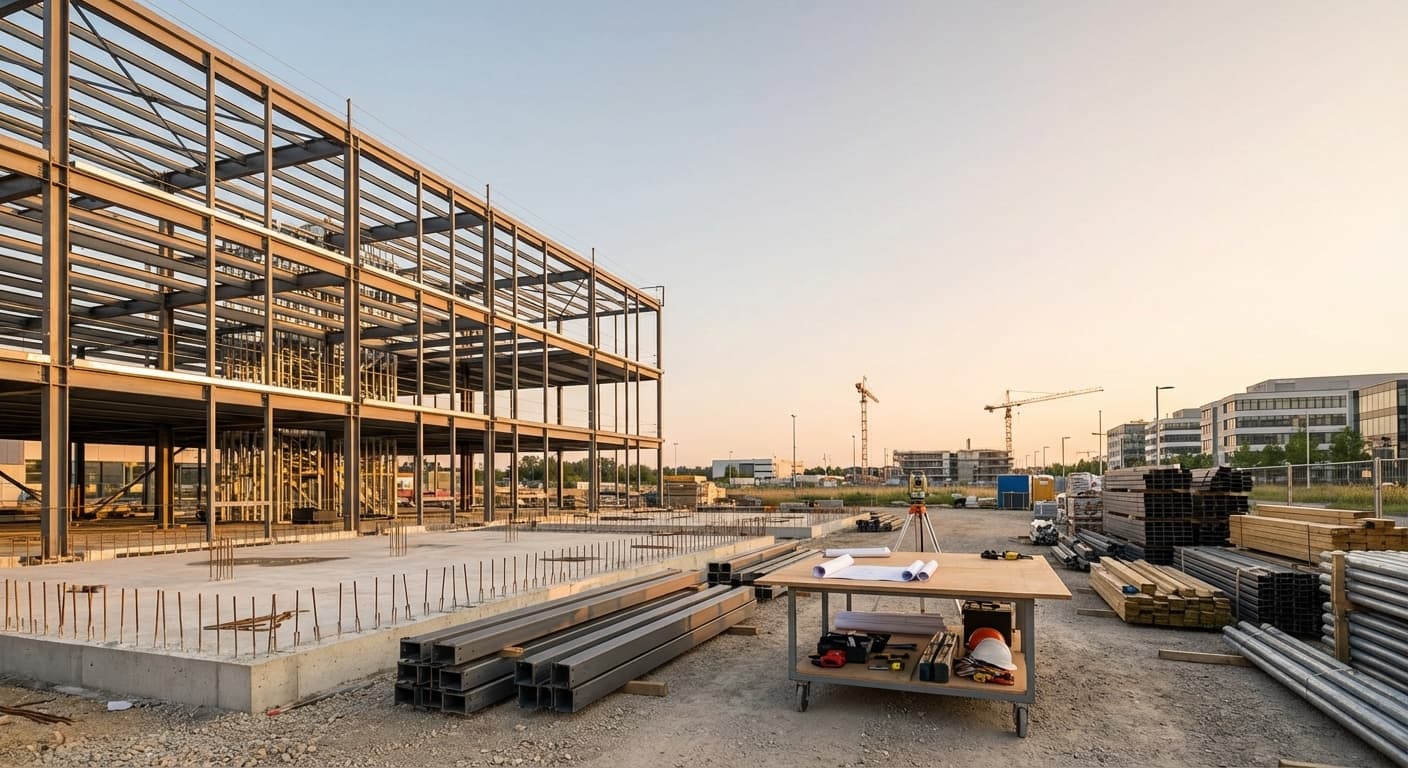

We help you navigate five proven financing paths for your 30×40 build, from home improvement loans to specialized steel lenders. Matching the right loan to your project eliminates months of delays and secures funds before materials quotes expire.
Understanding Your Financing Landscape
Match your loan type to your building's intended use, and you'll skip months of delays that traditional banks create through confusion.
Overview of 30×40 building financing options
Your local bank might take one look at your metal building plans and start shuffling papers nervously.
They'll miscategorize your 30×40 structure — calling it prefab one day, construction the next — and that confusion translates directly to delays, higher rates, or flat-out denials. [1] You'll save weeks by knowing exactly which financing path fits your project before you walk through their door.
For a 30×40 build, you're looking at five real options: home improvement loans if you're adding a workshop or garage to your property; HELOCs when you've got equity to leverage; construction loans for ground-up builds; agricultural financing on farm property; and dealer-backed programs through your steel supplier. [2] Each path comes with its own credit thresholds and timelines — but here's what matters: match the loan to your intended use, not just the building size. [1]
Key factors that affect loan eligibility
Comparing traditional lenders vs. specialized metal‑building financiersTraditional banks dangle lower rates, then make you jump through hoops for months. They've simply haven't seen enough metal building projects to evaluate yours confidently — so your application lands in limbo while they figure out which box it fits. [5] Specialized lenders flip the script: digital applications, decisions in days not months, and underwriters who actually understand what you're building.
They'll approve borrowers with seasonal income or non-traditional credit profiles that make banks nervous. [6] Yes, you'll pay a point or two more in interest — but when you're holding a materials quote that expires in 30 days and a contractor with a tight schedule, that premium buys you certainty. Agricultural lenders offer the sweet spot for rural builds; they've financed enough barns and equipment sheds to know exactly how metal structures work. [5] Working with a high-quality preengineered steel buildings supplier who maintains lender relationships can shorten your path even further — when the financing partner already understands the product, approval becomes a formality rather than an education process. [6]
Choosing the Right Loan Type for a 30×40 Build
Lock in a fixed-rate home improvement loan with no collateral needed to fund your 30×40 build at rates from 4% to 20% APR.
Home improvement loans and HELOCs for small projects
Building a personal workshop, garage, or storage building? A home improvement loan gets you funded fast. You'll work with unsecured personal loans–no collateral needed–at fixed rates from 4% to 20% APR. Loan amounts reach $50,000 with 2 to 12-year terms. [7]
That fixed rate protects your budget. Steel prices shift, but your monthly payment won't. The catch? You can't draw extra funds if costs climb. Build a 20% buffer into your loan request upfront. [1] Apply online or by phone. Get your money in one lump sum. Then you're ready to build. [7]
A HELOC puts flexibility first. You tap your home's equity for a revolving credit line. Draw what you need, repay what you use. [8] Your home secures the loan, so rates beat unsecured options–but missed payments risk foreclosure. [1]
Variable rates mean your costs can shift mid-build. Plus, you'll pay application and origination fees that home improvement loans skip. Most HELOCs require a $10,000 minimum draw. [8]
Which works better for your 30×40 project? If you've locked in costs and contractors, a fixed-rate home improvement loan keeps things simple. Choose a HELOC when you're building in phases or want payment flexibility.
Commercial construction loans and equipment leases
GreenSky and partner programs tailored to steel structuresGreenSky stands out in steel building financing–17,000 merchants, $21 billion funded, nearly 3 million satisfied customers. The program was built for home improvement projects like yours. [11]
For your 30×40 build, here's what matters: 0% interest for 18 months. Complete construction and settle in before interest kicks in. Spend the funds at any home improvement retailer nationwide. No single-supplier restrictions. [12] Credit decisions come back in minutes, not weeks. That speed keeps your contractor on schedule and your materials locked at quoted prices. [11]
GreenSky handles personal and mid-range builds beautifully. For other situations, dealer partner programs fill the gaps:
- Citizen State Bank loans up to $25,000 at 9.95-17.95% APR
- 24-72 month terms with just 630 minimum credit score
- Lower threshold than most construction lenders [12]
For larger commercial structures, specialized dealer networks offer financing up to $100,000 through their lending partners. At National Steel Buildings, we connect you with the right financing match for your specific project size and use.
The real advantage? Single-channel processing. Your building purchase and loan application flow together. No document shuffling between departments. No delays from lender confusion about steel buildings. Just smooth, coordinated approval that keeps your project moving.
Streamlining the Application Process with National Steel Buildings
A complete, professionally formatted documentation package with construction plans, detailed cost breakdown, and realistic timeline removes the underwriting delays that typically stall metal building financing.
Preparing clear documentation and cost breakdowns
Lenders approve what they understand, and a disorganized application is the most common reason metal building projects stall before financing is secured.
The documentation package you submit functions as a proxy for your reliability as a borrower — a complete, clearly structured submission answers underwriter questions before they're asked, while a thin or disorganized one generates follow-up requests that add weeks to approval timelines.
At minimum, your package should include stamped construction plans, a line-item project budget, proof of income, and a summary of existing debts and assets. [14] Beyond the financial paperwork, lenders financing steel construction specifically need detailed project estimates and a realistic construction timeline — not because they're being cautious, but because draws on construction loans are released in stages tied to verified milestones, and that structure requires them to map funding against actual build progress. [4] A professionally formatted cost breakdown that separates materials, labor, permits, and contingency removes the ambiguity that slows underwriting; lenders familiar with steel construction already know that metal buildings go up faster and cost less to maintain than stick-built alternatives, so clear documentation that confirms your project meets code requirements and is managed by an experienced contractor removes the last points of uncertainty from their decision. [14]
How NSB's single‑source solution simplifies approval
The core problem with financing a 30×40 build through a traditional bank isn't just paperwork volume — it's that most lenders have processed too few metal building applications to evaluate them confidently, which means your project gets misclassified, deprioritized, or routed through underwriting pipelines designed for conventional construction. [15] A single-source provider flips this dynamic.
Rather than submitting a loan application separately from your building order, the financing request moves through the same workflow as the purchase itself — NSB matches the build to lenders who already understand steel construction, eliminating the back-and-forth that occurs when a borrower has to educate a bank about what they're financing before approval can even begin. [9] The practical result is prequalification that happens during the quoting stage rather than after — so by the time you've confirmed your 30×40 spec and pricing, you already have a financing match based on building size, intended use, and location, rather than discovering mid-process that your lender doesn't work with prefab or steel structures. [1] For buyers working against a construction window — materials priced, contractor scheduled — this compression of the approval timeline isn't a convenience feature; it's what keeps the project on budget when steel costs are locked to a delivery date. [9]
Step‑by‑step guide to submitting your financing request
Once your documentation is organized, the submission sequence moves through six distinct phases — and knowing the order matters because each step gates the next.
Start with prequalification: contact your lender (or NSB's financing partner) and provide basic financial details — estimated credit score, income, debt load, and intended building use — to establish which loan programs you qualify for before committing time to a full application. [16] From there, compile your formal document package: two years of tax returns, recent pay stubs or business profit-and-loss statements, bank statements, a government-issued ID, and your current credit profile. [17] The third step is builder credentialing — your lender needs proof that your contractor is licensed and insured, along with any signed agreements, since construction loan draws are tied to verified milestone completions and an uncredentialed contractor creates a funding bottleneck mid-build. [16] Step four is submitting the construction package itself: stamped plans, a line-item budget that separates materials from labor and permits, and a realistic construction timeline that maps against the draw schedule your lender will use to release funds. [17] Underwriting follows, typically running 3 to 5 weeks for standard applications, though a complete first submission can compress this window significantly by eliminating back-and-forth document requests. [16] The final step — closing — is where loan funds are committed, and for construction-to-permanent structures, it's the only closing you'll attend before your loan converts to a permanent mortgage once the build is complete. [16] Working through a single-source provider like NSB compresses steps three through five into a coordinated workflow: lenders in the network already understand steel construction timelines and cost structures, which means your project cost breakdown speaks their language from the first submission rather than requiring translation. [14]
Managing Payments and Protecting Your Investment
Align your draw schedule with contractor payments and material deliveries before breaking ground to avoid floating costs from your own pocket mid-build.
Setting realistic payment schedules and budgeting tips
Your payment schedule drives whether contractors keep working or stop to wait for funds. Construction loans release money in stages — foundation done, frame up, mechanicals installed, building complete. Each milestone triggers a lender inspection before the next payment releases. [18] For your 30×40 build, match your draw schedule to contractor payments and material deliveries before you break ground. Get those terms negotiated upfront so you're not floating costs from your own pocket mid-build. [18]
Most owners forget the building kit is just one line on your budget. You need site prep, foundation work, utilities, permits, engineering — and a contingency buffer. That 5-15% extra isn't padding; it's what keeps your project moving when a permit changes or site conditions surprise you. Build it into your loan request from day one. You don't want to go back asking for more money — that second request restarts the approval clock and delays everything.
Protecting your build with insurance and warranty considerations
Steel buildings cost less to insure than wood or masonry — your metal structure resists fire, wind, and water damage better, which means lower premiums. [19] Most 30×40 builds get a Class 3 fire rating, the standard for steel. You could upgrade, but the premium savings rarely justify the extra construction cost. [19]
What really cuts insurance costs? Add fire suppression. Intumescent coatings that expand under heat, fireproof boards around columns, or a simple sprinkler system — insurers see these as real risk reducers and price accordingly. [19] Your location matters too. Hurricane zones, flood plains, earthquake areas — you'll pay higher base premiums no matter what. Standard policies won't cover flood or earthquake damage either, so you'll need separate coverage. [20]
If you're financing your build, get insurance lined up during the loan process. Your lender won't release funds without proof of coverage — it's not optional. [20] Lock in coverage when construction finishes. New buildings with modern safety standards cost less to insure, and that rate is the best you'll see over your building's lifetime. [21] When you're working with durable options like our
Leveraging NSB's ongoing support for post‑construction financing needs
Your financing needs don't stop when construction ends. Equipment additions, interior buildouts, utility upgrades — these come after your 30×40 is complete, and you need a financing partner who already knows your building. That's where staying with a provider through construction pays off. They understand your project, so adjustments don't mean starting over with applications. [14]
HELOCs and cash-out refinancing work well for post-construction improvements on steel buildings. You get flexibility to fund upgrades as needed instead of locking into another fixed payment schedule. [14] Our lender network already knows steel construction costs and timelines. When you need follow-on financing, they're evaluating a building they understand — not starting from scratch. Approvals move faster, documentation stays simple. [1]
The real advantage? Continuity. A partner who matched your original financing knows which loan fits your next need. You're not explaining your building again or settling for whatever product is available. You get the right financing tool for each phase of your building's life. [14]
- Five primary financing options exist for 30×40 builds: home improvement loans, HELOCs, construction loans, agricultural financing, and dealer-backed programs.
- Specialized metal building lenders approve applications in days with digital processing, while traditional banks take months and often misclassify steel structures.
- Home improvement loans offer fixed rates (4-20% APR) up to $50,000 with 2-12 year terms, protecting budgets from price fluctuations during construction.
- Complete documentation packages including stamped plans, line-item budgets, income proof, and contractor credentials eliminate underwriting delays and back-and-forth requests.
- Construction loans release funds in stages tied to verified milestones, requiring matched draw schedules with contractor payments and material deliveries to avoid floating costs.
- Steel buildings qualify for lower insurance premiums than wood or masonry due to superior fire, wind, and water resistance, with additional savings from fire suppression systems.
- Single-source providers compress approval timelines by prequalifying buyers during the quoting stage rather than after, keeping projects on budget when material prices are locked.
- https://www.buildingsguide.com/build/metal-building-financing/?srsltid=AfmBOoqwBf2THgMkoaOVpEva3N_cebZOqO-adUYh_UUrIed3LIdw2Ezu
- https://cascaracapital.com/blog/construction-loan-requirements-every-builder-should-know/
- https://idadevelops.com/can-you-finance-metal-building-construction/
- https://www.buildingsguide.com/build/metal-building-financing/?srsltid=AfmBOoo_EGoWbAwX0YSgpSojXNxJKHQe5CUMfOK2iAm0mTskwXMJpvbq
- https://bluebridgefinancial.com/banks-vs-alternative-lenders/
- https://www.buildingsguide.com/build/metal-building-financing/?srsltid=AfmBOornDMaIVMuZ8bFRlaGFvPPUm-6dqL58gUAD8h_tixklD-mp8RMs
- https://nari.org/nari-blog-main/home-improvement-loan-vs-home-equity-loan-vs-heloc/
- https://www.buildingsguide.com/build/metal-building-financing/?srsltid=AfmBOor3ueKnMp_5HNseEtAgMSbnDzqQwJdS3OUNqkqEMgO_2XUx5zaZ
- https://www.hfsfinancial.net/home-improvement-loans/metal-buildings-loans/
- https://gomortgage.com/applying-for-a-one-time-close-construction-loan/
- https://1steaglemortgage.com/what-documents-do-i-need-for-a-construction-loan-application/
- https://cascaracapital.com/blog/how-construction-draw-schedules-keep-cash-flowing/
- https://www.hswilliams.com/blog/commercial-metal-buildings-and-insurance-need-to-know