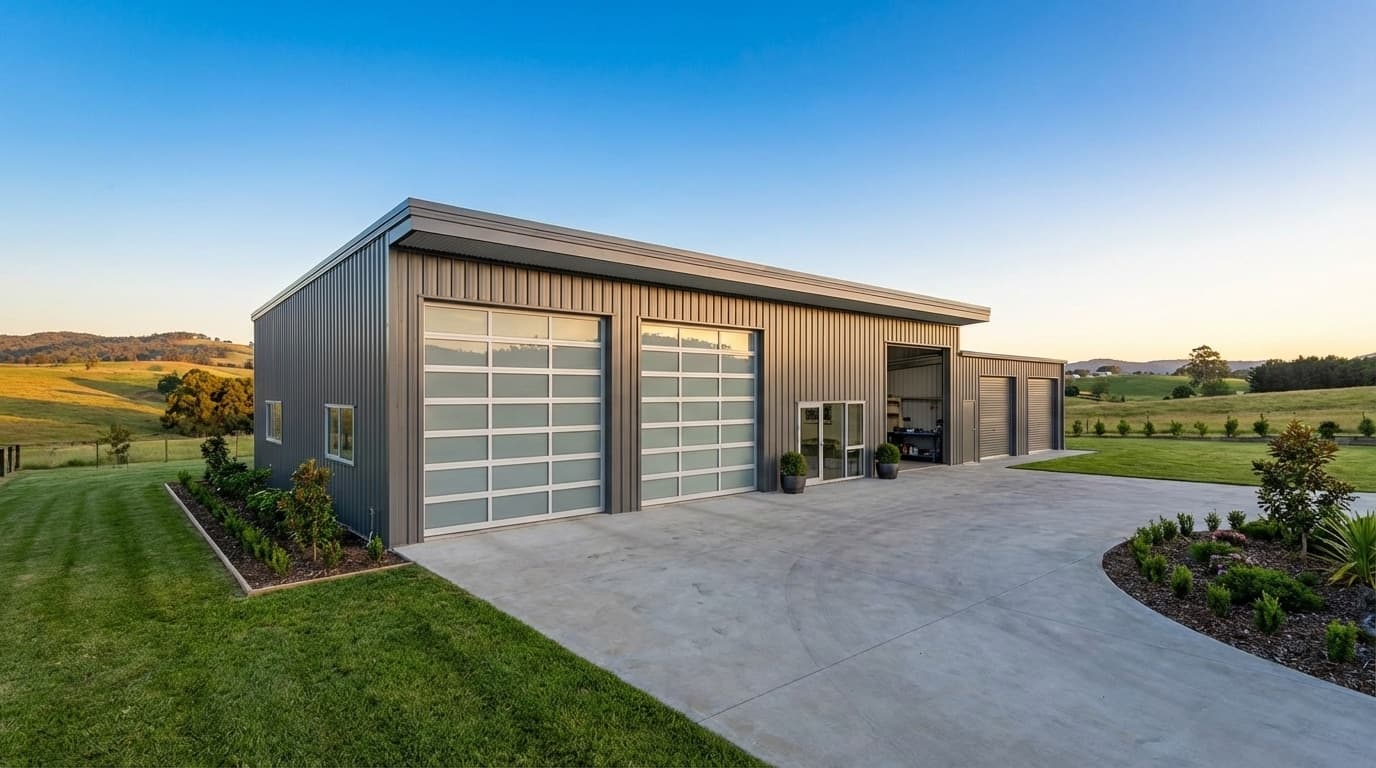

Choosing a steel garage building is a high-stakes investment that can slash upfront costs by 30-40%, double lifespan versus wood, and add 5-20% to property value, but only if you match the frame type, roof style, and insulation package to your climate zone, soil conditions, and intended use–vehicle storage, workshop, studio, or future expansion–while navigating permits, setbacks, and HOA rules that dictate where and how you build. The article walks you through sizing correctly the first time (12-36 ft wide), orienting for drainage and energy efficiency, selecting vertical or horizontal roofs based on snow and wind loads, and locking in pre-engineered components that cut weeks off construction and thousands off labor. Readers learn to run conduit and rough-in utilities before the slab is poured, exploit clear-span designs for easy later enlargement, and specify thermal breaks and reflective roofing that can halve energy bills. With Essentials for soil testing, foundation costs, color and door placement, plus real-world timelines and price ranges, the guide equips homeowners to turn a simple shell into a climate-controlled, income-producing space that outperforms wood on fire, termite, and maintenance fronts for decades.
Introduction
Steel garage buildings reduce construction time and costs while providing exceptional durability against harsh weather, fire, and pests with minimal maintenance requirements.
The Rising Popularity of Steel Garage Buildings
Steel garage buildings have surged in popularity as property owners recognize their significant advantages over traditional construction materials. These structures now boost property values [1] while providing exceptional durability against harsh weather conditions, including hurricanes and earthquakes [2].
The appeal extends beyond mere strength–prefabricated steel garages reduce construction time and costs with components that arrive pre-cut, numbered, and ready for assembly [2]. Modern designs have transformed utilitarian structures into versatile spaces supporting multiple functions beyond vehicle storage, including workshops, home offices, and studios [2].
The sustainability factor also drives adoption, as metal buildings minimize waste through optimized material usage [2] and incorporate energy-efficient features like high-performance insulation systems [2][3]. Aesthetic innovations now allow these buildings to complement residential properties with customizable exteriors that can integrate brick, stucco, and other materials to match existing homes [2].
Key Benefits of Steel vs. Traditional Construction Materials
Steel buildings deliver clear advantages that save you time, money, and headaches compared to traditional wood construction. You'll see immediate cost savings–typically 30-40% less upfront–plus faster installation that gets your project operational weeks sooner. Your steel garage resists fire, termites, rot, and severe weather while requiring virtually zero maintenance year after year. When you choose Key benefits of steel vs. traditional construction materialsYou'll save 30-40% on day one with steel. Your metal garage runs $3,000-$10,000 while the same wooden structure hits $6,000-$15,000 [6]. That's money back in your pocket before you even start. And here's where it gets better–your steel building goes up in days, not weeks. Less time means less labor cost [6]. You won't need expensive footings either. A simple concrete slab or level gravel pad does the job, unlike wood structures that demand substantial foundations [6]. Our Your maintenance budget stays in your bank account with steel. Wood garages drain cash year after year–repainting, sealing, termite treatments, rot repairs [6]. Steel?
You'll clean it occasionally and inspect it once in a while [4]. That's it. No termites can eat steel. Fire won't consume it. Water damage? Mold? Rot? Not your problems anymore [5]. Your wooden-garage neighbor writes maintenance checks while you write none [6].When storms hit, you'll sleep better. Steel garages stand strong through hurricanes, earthquakes, and whatever nature throws at them–conditions that flatten wooden structures [4]. Your steel garage will outlast a wooden one by double the years [6]. Do the math: twice the lifespan means half the annual cost. Insurance companies know this too.
They'll cut your premiums because steel doesn't burn and won't collapse [4][6]. You get peace of mind and keep more money.Your energy bills drop with proper steel construction. Add the right insulation, and your garage holds steady temperatures better than wood structures–fewer drafts, less waste [5]. Configure it with reflective roofing and quality insulation, and you'll cut energy use by up to 50% [5]. (We cover specific insulation strategies in the Climate and Environmental Factors section.)Need more space later? No problem. Steel's clear-span design means you can expand out or up without tearing everything apart [5]. No load-bearing walls in your way. No architect fees for complex redesigns. Pre-engineered blueprints make modifications straightforward–something wood structures can't match [4]. (See "Planning for Future Expansion and Versatility" for detailed expansion strategies.)
The Importance of Making an Informed Decision for Your Property
Choosing the right steel garage for your property represents a significant investment decision with long-term implications. A well-planned garage can increase property value by 5-20%–potentially adding $10,000-$40,000 to a $200,000 home [7]. This value appreciation varies based on location, with urban areas experiencing parking shortages seeing higher returns than rural settings.
Making an informed choice involves understanding how your selection aligns with neighborhood norms; properties with garages matching or exceeding local standards (such as 2-car versus 1-car designs) maintain stronger market appeal [7]. Beyond immediate financial considerations, your decision affects long-term ownership costs through maintenance requirements, energy efficiency, and structural durability [8]. A carefully planned garage serves both present needs and future versatility–potentially functioning as a workshop, home office, or even business space that generates additional income [8].
Working with experienced builders provides crucial guidance through complex decisions about materials, design, and compliance with local regulations that ultimately determine your investment's success [9].
Assessing Your Garage Needs and Requirements
Plan your garage's electrical, doors, and utilities now because relocating them after construction becomes expensive and disruptive.
Identifying Your Primary Usage Goals (Storage, Workshop, Vehicles)
Start with a simple question: What will you do in this space? Your answer drives every decision that follows.
Vehicle storage keeps things straightforward. You need open floor space, proper clearance, and doors sized for what you're parking. Standard cars fit comfortably with 20' depth. Got an RV or boat? You'll need taller eave heights and wider openings [10].
Workshop layouts work differently. You're not just parking–you're creating. Position workbenches for efficient workflow. Plan electrical drops where you'll actually use them. Think about task lighting placement before the walls go up [10].
The smartest move? Design for both. Many owners combine vehicle bays with workshop zones, perfect for restoration projects or equipment maintenance [10]. Measure what you own now, then add room for what you'll likely buy in the next 5-10 years [11]. Underbuilding ranks as the top regret among steel building owners–don't join that club [11].
Your steel garage adapts to whatever you need: music studio, home brewery, even guest quarters [10]. But here's the catch–changing door locations, adding windows, or running new utilities after construction gets expensive fast [12]. Plan these details now, build once, and save money.
Determining the Ideal Size and Dimensions for Your Needs
Sizing your garage correctly saves money and headaches. As covered in the Building Types section, standard dimensions range from 12' wide for single-car to 30' wide for triple-car configurations.
But don't stop at vehicle measurements. Consider these practical factors:
- Door placement for easy daily access
- Extra height for lifted trucks or stacked storage
- Local building codes that may limit your options [14]
- Snow load requirements in northern climates [14]
Remember–bigger buildings mean higher costs beyond just materials. You'll pay more for permits, site prep, and potentially larger foundations [14]. Size it right the first time by thinking through your actual daily use, not just minimum parking requirements.
Planning for Future Expansion and Versatility
Your needs will change. Smart steel building design accepts this reality and plans for it.
Build expansion into your initial design with these strategies:
- Choose expandable end walls for easy horizontal additions [15]
- Select clear-span framing–no interior columns means total flexibility [15]
- Consider bar joist systems that support future second floors or lofts [15]
- Add 14-foot self-supporting overhangs you can enclose later [15]
The modular design lets you start small and grow smart. Begin with your core structure, then add workshop zones or office space when budget allows [16]. Your building adapts as your life does–single-car storage becomes multi-vehicle housing, empty corners transform into workshops [16].
Plan utility pathways now for future upgrades. Run conduit for power and data where you might need it someday. It costs pennies during construction but hundreds to add later [17]. Steel's structural integrity handles both horizontal and vertical expansion without the engineering nightmares of stick-built additions [17].
Establishing Your Budget and Timeline Expectations
Let's talk real numbers. Your steel garage investment breaks down like this:
- Building components: 40-50% of total
- Site preparation: 10-20%
- Freight: About 10%
- Labor, permits, accessories: The rest [18]
Simple rectangular designs cost less–no surprise there. Complex layouts, multiple bays, and custom features drive prices up [19]. Remote sites mean higher delivery costs and potentially pricier labor [18][19].
Steel prices can swing wildly. They jumped 91% between late 2020 and 2021 [18]. Protect yourself with a 10% contingency fund and lock in material prices when you can [18][19]. National buying power helps here–larger suppliers weather market storms better than local shops.
Your timeline looks like this:
- Permits: 2-6 weeks
- Site prep: 1-2 weeks
- Foundation cure: 7-10 days minimum
- Building erection: 1-4 weeks depending on size
- Finishing touches: Variable [20]
Weather, contractor schedules, and supply chains can stretch these times. Build in cushion [20]. The right partner makes all the difference–experienced steel building contractors who handle everything from
Understanding Steel Garage Building Types and Configurations
Match your roof style to your climate–vertical roofs handle extreme weather while horizontal roofs save money in mild conditions.
Comparing Roof Styles: Vertical, Horizontal, and A-Frame Options
Your roof choice directly impacts how long your garage lasts and what you'll spend on maintenance. You have three main options, each built for different conditions and budgets.
Vertical roofs run panels from peak to eave, letting rain and snow slide right off [21]. You get extra framework that stands up to extreme weather–critical if you're building over 35 feet long or dealing with heavy snow and high winds [22][23]. Yes, you'll pay more upfront. But you'll save on repairs and maintenance for decades.
Horizontal roofs (boxed eave) cost less because they use fewer parts [22]. The panels run side to side, creating the traditional peaked look most neighborhoods expect [21][23]. Perfect if you live in moderate climates without harsh winters or hurricane seasons. You get solid protection at a budget-friendly price.
A-frame roofs come in both vertical and horizontal styles [22][23]. The difference? How water runs off. Vertical A-frames shed everything quickly–ideal for heavy rain or snow regions [21]. Horizontal A-frames save money while still looking sharp [22].
Here's what matters: Match your roof to your weather. Vertical roofs handle anything nature throws at them. Horizontal roofs work great in mild climates and save you money. Consider your location, your budget, and how much maintenance you want to deal with [23].
Size Categories: Single-Car, Double-Car, and Triple-Car Designs
Steel garages come in standard sizes that match what you actually need. Pick the right size now–it costs far less than expanding later.
Single-car garages start at 12' x 20' with a 9' door [24]. Tight but functional for one vehicle. Want storage space too? Go 18' wide. You'll fit your car plus lawn equipment, tools, and still walk around comfortably [24].
Two-car garages need at least 20' x 20', but that's cramped [24]. At 22-24' wide, you avoid door dings and actually enjoy using your garage [25]. Standard double doors span 16' for easy access [24][25].
Three-car garages work at 32' x 22' minimum, but 36' x 24' gives you breathing room–especially with trucks [24]. Smart money tip: Put doors on the side instead of the front. You'll save on roof costs without sacrificing function [24].
The pattern is simple. Minimum sizes work but feel tight. Add 2-4 feet of width for comfort. Your future self will thank you when you're not squeezing between vehicles or scraping mirrors [25].
Construction Methods: I-Beam vs. C-Channel Steel Framing
Your garage frame determines how much weight it holds, how long it lasts, and what you'll pay. You have two main options.
I-Beam frames ("red iron") deliver maximum strength [26]. Picture a capital "I"–that shape handles massive loads and wide, column-free spaces [27]. Perfect for large garages, heavy equipment storage, or areas with severe weather. You'll pay $30-50 per square foot installed, and you need experienced crews with proper equipment [26]. But you get a garage that shrugs off hurricanes and holds anything you park inside.
C-Channel frames cost less–typically $25-30 per square foot installed [26]. These lighter frames work great for standard garages and moderate climates. Assembly goes faster. Your foundation costs drop by up to 25% [26]. Transport is easier since crews can cut and modify pieces on-site [27].
Pre-Engineered Kits vs. Custom-Designed Structures
You'll save time and money with pre-engineered buildings–without sacrificing what you need.
Pre-engineered garages arrive ready to assemble. Every piece is cut, drilled, and numbered in the factory [29]. Your garage goes up in half the time. You pay 15-25% less. And here's what surprises people: modern pre-engineered systems handle 200-foot clear spans, heavy equipment loads, and complex designs [28]. You're not settling for less–you're building smarter.
Your timeline? 6-10 weeks from order to completion [28]. Components arrive with precision that on-site fabrication can't match [29]. Need to expand later? Engineered end walls and clear-span designs make additions simple [28].
Custom designs work when you need something truly unique [29]. Your crew cuts and welds on-site, allowing changes as you go. But you'll wait 12-20 weeks and pay premium prices [28]. Skilled welders don't come cheap.
Most garage projects don't need full custom treatment. Today's pre-engineered systems adapt to almost any requirement while keeping your budget intact [28]. Unless you're building something genuinely unusual, pre-engineered gets you there faster and cheaper–with the same quality and durability [28].
Site Selection and Property Considerations
Strategic placement near existing utilities and on elevated terrain saves thousands in hookup costs while protecting your foundation from water damage.
Evaluating the Optimal Location on Your Property
Your garage location drives its success–from daily functionality to long-term value [30]. Get this right, and you'll save thousands on utilities, avoid costly repairs, and boost your property value. Get it wrong, and you'll fight drainage issues, pay premium prices for hookups, and frustrate future buyers.
Start with these critical factors:
Home Access: Balance convenience with aesthetics. You want easy access in all weather without compromising your property's appearance [31]. Keep adequate clearance from water lines, electrical wiring, and other underground infrastructure [31].
Terrain and Drainage: Pick elevated areas when possible–water is steel's enemy when it pools around foundations [30]. Professional grading that creates gentle slopes away from your building prevents thousands in future foundation repairs [31].
Soil Stability: Your soil's load-bearing capacity determines foundation requirements. A geotechnical engineer's assessment reveals if you need special foundation support [32]–critical information that affects your budget.
Daily Use: Think beyond construction day. Awkward placements requiring tight turns discourage regular use and can reduce property value when you sell [31].
Utility Connections: Every foot farther from existing power, water, or sewer lines adds to your hookup costs. Smart positioning near existing utilities saves significant money [31].
Weather Orientation: Face your building to maximize natural light while minimizing exposure to prevailing winds and storms [30]. As detailed in our Climate and Environmental Factors section, proper orientation improves energy efficiency year-round.
Zoning Compliance: Research setback requirements and building codes before choosing your location [32]. Many areas restrict distances from property lines, waterways, and neighboring structures [31]. (See our Permits and Regulations section for detailed compliance guidance.)
Assessing Soil Conditions and Foundation Requirements
Your foundation accounts for 15-25% of your total steel garage cost–and soil conditions drive that number up or down dramatically [34]. Steel buildings concentrate weight at column points differently than traditional structures, making proper soil assessment critical.
Why Soil Testing Saves Money
That $500-1,500 soil test prevents foundation failures that cost tens of thousands to fix [34]. A geotechnical engineer checks:
- Bearing capacity (most codes require 2,000+ pounds per square foot) [35]
- Soil composition and density at various depths [34]
- Moisture content and expansion potential [34]
- Water table levels that affect foundation stability [34]
What Your Soil Type Means
Different soils demand different solutions:
- Sandy/Gravelly Soils: Excellent bearing capacity (2,000-3,000 PSF), simplest foundations [34]
- Clay Soils: Highly variable strength, prone to swelling and shrinking [35]
- Expansive Soils: Require specialized designs with expansion joints or separated footings [35]
- High Water Tables: Need deeper foundations or drainage systems [34]
Frost Line Considerations
Your foundation must extend below frost depth to prevent heaving:
- Southern regions: Near-zero depth
- Northern climates: 48+ inches deep [34]
The Steel Building Difference
Unlike wood structures, steel buildings require absolutely consistent foundation support across all column points. Differential settling–where one part sinks more than another–can distort your entire structure [35]. That's why uniform foundation materials matter more for steel than any other building type.
Smart builders invest in professional soil analysis upfront. Yes, it adds to initial costs. But it prevents the nightmare scenario: watching your new garage crack and shift because you saved a few hundred dollars on testing.
Planning for Access, Utilities, and Drainage
You'll use your garage every day–plan access that works for both construction and decades of daily use.
Access Planning That Pays Off
Think beyond delivery day. Your building needs:
- Room for concrete trucks and steel delivery during construction [36]
- Comfortable turning radius for your daily vehicles [36]
- Easy access that encourages regular use–awkward entry angles become major regrets [36]
Utility Connections: Location = Money
Every foot from existing utilities adds cost:
- Position close to power, water, and sewer lines for lowest hookup expenses [36]
- Contact utility companies early for accurate cost estimates [37]
- Complete trenching and conduit installation before pouring foundations [37]
- Get proper permits and inspections–required by code, protects your investment [37]
Drainage: Your Foundation's Best Friend
Water destroys foundations. Your drainage plan needs:
- Slopes directing water away from the building [37]
- French drains or culverts for problem areas [37]
- Crushed gravel base for improved drainage and foundation stability [37]
Smart Orientation Saves Energy
Building placement affects your utility bills:
- Maximize natural light to reduce electricity costs [36]
- Position doors away from prevailing winds–prevents drafts and weather damage [38]
- Consider seasonal sun angles for heating and cooling efficiency [36]
Our
Considering the Relationship to Existing Structures
Your new garage should enhance–not clash with–your existing property. Smart positioning creates both visual harmony and functional efficiency.
Safety and Code Requirements
Get spacing right to avoid costly corrections:
- Attached Garages: Require fire-rated separation with 1/2-inch gypsum board per IRC Table R302.6 [41]
- Detached Buildings: Maintain required clearances from wells, septic fields, and other structures [40]
- Utility Easements: Never build over utility lines–codes require 3+ feet clearance for small structures, 6-8 feet for larger units [40]
Creating Visual Harmony
Your garage should complement, not compete:
- Align rooflines with existing structures for cohesive appearance [39]
- Match or coordinate materials and colors [39]
- Position accessory buildings to support–not overshadow–your main residence [39]
Functional Relationships That Work
Daily use trumps everything else:
- Ensure convenient access from your home in all weather [39]
- Orient doors away from prevailing winds for protection and energy savings [39]
- Use sun exposure strategically:
- East-facing doors get morning sun that melts winter ice [39]
- South-facing walls maximize natural light throughout the day [39]
Unified Site Planning
Think holistically about your property:
- Create clear visual hierarchy with your home as the focal point [39]
- Position structures to work together functionally [39]
- Plan traffic flow between buildings for maximum efficiency [39]
A well-positioned garage adds value and functionality. A poorly placed one becomes a daily frustration and potential resale obstacle.
Climate and Environmental Factors
Match your insulation R-value and vapor barrier to your specific climate zone to prevent costly heat loss, condensation damage, and rust.
Selecting Appropriate Insulation for Your Region
Your location determines exactly what insulation your steel garage needs. The U.S. has eight climate zones, and each one requires different insulation levels to keep your building comfortable and code-compliant [44].
In cold northern climates, you need serious insulation. Higher R-values prevent heat loss and stop condensation–that damaging moisture that forms when warm air hits cold metal [43]. Southern garages face the opposite challenge. You want insulation that blocks heat and keeps cooling costs down. Even unheated spaces benefit from radiant barriers that bounce solar heat away [42].
R-values tell you how well insulation works. Think of it as a performance score–higher numbers mean better protection. Standard fiberglass runs from R-8 to R-30, depending on thickness [42]. In humid areas, moisture protection matters just as much. You need vapor barriers with low perm ratings (under 0.1) to prevent rust and structural damage [43].
Match your insulation to your climate and use:
- Extreme climates: Liner systems that wrap continuous insulation across the entire structure
- Moderate regions: Filled cavity systems that balance performance with budget
- Mild climates: Simple single-layer applications for basic protection [42][44]
Your garage's purpose drives your insulation choice too. Workshop spaces need comprehensive systems for year-round comfort. Simple storage buildings just need condensation control [42]. Local codes keep getting stricter, so verify current requirements before you buy. What passed inspection five years ago might not work today [43].
Addressing Wind, Snow, and Seismic Load Requirements
Your steel garage faces three major environmental forces: wind, snow, and earthquakes. Each one affects your building differently, and getting any requirement wrong means expensive fixes–or worse.
Wind loads depend on three factors [45]:
- Speed (your local code sets this)
- Exposure (B for suburbs with trees, C for open fields, D for coastal areas)
- How enclosed your building is
Moving from B to C or D exposure changes everything. You'll need heavier frames and more fasteners to handle increased wind pressure [46].
Snow loads work differently than you might think. Engineers calculate two numbers: ground snow (what actually falls) and roof snow (what your building must support). The roof number factors in your building's exposure, temperature, and slope [46]. Heavy snow areas need stronger frames and drift protection at roof transitions. Some designs push you from economical cold-formed steel to more expensive rigid frames [46].
Seismic requirements surprise many buyers. Even "stable" central states often need earthquake detailing beyond minimal standards [46]. Your Seismic Design Category determines everything from bracing patterns to anchor bolt specifications. Installers must follow these requirements exactly to maintain structural integrity [46].
Getting these loads wrong creates a cascade of problems:
- Re-engineering during permits
- Expensive change orders
- Construction delays
- Potential structural failure in severe weather [46]
Don't trust generic assumptions. Many cities add local amendments based on historical weather patterns. Work with
Energy Efficiency Considerations for Steel Garage Buildings
Yes, metal conducts heat. But smart design turns this challenge into an energy-saving opportunity. Your steel garage can actually outperform traditional buildings–if you know what features to include.
Start with thermal breaks. These simple spacers between metal components stop heat transfer cold. Without them, you lose up to 70% of your insulation's effectiveness. Add reflective barriers with proper air gaps, and you'll deflect 97% of radiant heat before it ever enters your building.
Cool roof technology delivers immediate savings. Light-colored metal roofing reflects 70-80% of solar radiation versus 30-40% for conventional roofs. That translates to 15-25% lower cooling costs in your pocket.
Smart orientation costs nothing but saves plenty:
- South-facing windows capture free winter heat
- Overhangs block expensive summer sun
- Proper door placement shields openings from prevailing winds
Your HVAC system needs special attention. Steel buildings heat and cool quickly, tempting you to oversize equipment. Don't. Right-sized systems run efficiently. Oversized units cycle constantly, wasting energy and money.
Simple upgrades with big payoffs:
- LED lighting cuts electrical use while reducing heat buildup
- Quality weatherstripping stops 30% of energy loss through doors
- Smart controls adjust temperature zones based on actual use
Every efficiency feature you add reduces operating costs for decades. Plan these elements from the start–retrofitting later costs triple.
Navigating Permits, Codes, and Regulations
Building codes protect your steel garage from costly mistakes, and a quick pre-application meeting with your building department prevents expensive revision cycles.
Understanding Local Building Code Requirements
You might think building codes are just red tape, but they're actually your protection against costly mistakes. These standards ensure your steel garage can handle whatever nature throws at it–from 170 mph coastal winds to heavy snow loads up north [48].
Here's what matters: the International Building Code (IBC) sets the baseline, but your local officials add their own requirements based on regional risks [47][49]. When they review your plans, they're checking critical factors:
- Soil conditions and foundation depth requirements
- Wind load ratings for your specific location
- Snow load capacities (if applicable)
- Seismic standards for earthquake zones
- Intended use (storage vs. workshop with utilities)
Every steel garage needs engineer-stamped plans proving it meets these standards [48]. The plans must detail everything from foundation specs to frame design–and yes, codes change regularly as we learn from storms and structural failures [47].
Skip compliance? You're looking at fines, insurance denials, financing roadblocks, and potentially tearing down your finished building [47]. That's why working with experienced builders who know current codes saves you time, money, and headaches down the road.
Obtaining Necessary Permits for Steel Building Construction
Steel buildings need more paperwork than wood structures, but don't let that scare you. Your permit package includes stamped engineering drawings, site surveys, soil reports, and utility plans [50][51]. Get it right the first time, and you'll see permits in:
- 2-4 weeks for residential and agricultural projects
- 4-8 weeks for commercial buildings
- 8-12 weeks for complex industrial structures
Budget $550-$2,000 for permits on average, though small towns might charge just $150 while major cities can hit $7,500 [50].
Here's your insider tip: schedule a pre-application meeting with your building department. This 30-minute conversation identifies requirements specific to your project and prevents costly revision cycles [51]. It's free, and it works.
Watch the clock–permits expire. Most require you to start within six months and finish within a year [50]. No permit means no insurance coverage, no financing, and potentially demolishing your completed building [50].
Expect three main inspections:
- Foundation (before pouring concrete)
- Structural (frame assembly and connections)
- Final (triggers occupancy certification)
Each inspection verifies your building matches approved plans [51]. Pass these, and you're home free.
Addressing Zoning Restrictions and Setback Requirements
Where you place your garage matters as much as how you build it. Zoning rules protect property values and neighborhood character–work with them, not against them.
Standard setback requirements:
- Residential: minimum 5 feet from side and rear property lines [52]
- Rural: often 15-foot sides, 25-foot rear setbacks
- Corner lots: stricter requirements on both street-facing sides [52]
Most areas restrict garages to side or rear yards (no front yard placement) and cap heights at 20 feet for lots under 36,000 square feet [53]. You're also limited by coverage–typically 30% of your rear yard area max [52].
Get ahead of problems with a site plan showing:
- Property dimensions
- Existing structures
- Proposed garage location with exact measurements to all property lines
Submit this to your zoning office before buying materials. Many offices offer free pre-application consultations that spot issues early–use them [52].
Watch for conflicts between HOA rules and municipal codes (HOAs usually stricter). Historic districts and environmentally sensitive areas need special permits regardless of size [52]. As discussed in Site Selection and Property Considerations, proper planning prevents expensive surprises.
Facing zoning roadblocks? A land use professional can identify variance opportunities or design tweaks that keep you compliant while meeting your needs.
Complying with HOA and Neighborhood Regulations
HOAs often have tighter rules than city codes–and yes, you need approval from both [56].
Many HOAs still carry outdated restrictions against metal buildings, but here's the good news: today's
Customization and Design Options
Choose light colors in hot climates or dark tones up north to cut energy costs by 15% while enhancing your garage's appearance.
Exterior Finishes, Colors, and Aesthetic Considerations
Your color choice does double duty–it shapes your garage's look and your energy bills. Pick light colors in hot climates to reflect heat. Choose darker tones up north to absorb warmth. That simple decision can cut energy costs by 15% [57].
Three factors drive smart color selection:
- Your building's purpose (workshop needs different aesthetics than storage)
- Your surroundings (match or complement existing structures)
- Your climate zone (desert heat vs. mountain snow) [58]
Want a traditional look? Go high-contrast with dark roof, light walls. Prefer subtle? Use similar tones throughout [57]. Your region matters too. Southwest properties favor earth tones. Northern builds lean toward forest greens. Coastal areas pick blues and sandy shades [57].
Paint quality pays you back. Basic siliconized polyester (SMP) works fine for mild conditions and tight budgets. But polyvinylidene fluoride (PVDF/Kynar) resists UV damage and holds color longer–especially important for dark or vibrant colors that show fade first [57].
Smart details multiply your investment. Wainscoting protects lower walls from equipment dings while adding visual appeal [59]. Contrasting trim colors highlight your building's lines and secure panels against wind [59]. Match your home's colors or create complementary schemes that boost your whole property's curb appeal [59].
As discussed in the HOA and Neighborhood Regulations section, modern steel buildings offer facades that mimic wood, brick, or stucco to satisfy aesthetic requirements [58].
Door and Window Placement and Selection
Door placement makes or breaks your garage's daily usability. You need two types: big roll-ups for vehicles and walk-ins for quick access without wrestling a heavy door in bad weather [60].
Position matters. Place roll-up doors where you have room to maneuver–nobody wants to thread their truck through a tight approach. Put walk-in doors on the side closest to your house. You'll appreciate that short dash during storms [60].
Size right the first time. Standard cars fit through 9-foot doors. RVs and boats? Measure twice, order once. Those specialized vehicles need custom heights and widths [60]. Build for tomorrow too. Extra doors cost less now than retrofits later [60].
Windows work triple duty:
- Natural light cuts your electric bill
- Cross-ventilation clears fumes and dust
- Visibility boosts security [61]
Standard vinyl-framed windows resist corrosion and insulate well. Common sizes run 24"x36", 30"x30", and 36"x36" [61]. Need something special? Frame-outs accommodate custom windows that match your exact needs [61].
More light options: Skylights and translucent panels brighten your space without electricity. They stay watertight when properly installed [62]. For workshops, position windows to create airflow that pulls fumes out–your lungs will thank you [62].
Interior Layout Planning and Workspace Design
Smart layouts turn empty shells into money-making workspaces. Zone your space from day one–tools here, mechanical work there, storage along the walls. This organized approach keeps you productive without tripping over clutter [63].
Think vertical. Your walls and ceiling hold triple the storage of your floor:
- High shelves for rarely-used items
- Wall cabinets at eye level for frequent access
- Ceiling systems for seasonal gear [64]
Workbench placement drives productivity. Position based on tasks, not convenience. Standard height runs 34-36 inches. Pick surfaces that match your work–hardwood handles heavy impacts, laminate works for light assembly. Leave clearance on all sides [64]. Build storage underneath with drawers for small tools, cabinets for power equipment [64].
Game-changing additions pay for themselves. A car lift turns weekend tinkering into profitable repair work. Interior framing creates climate-controlled offices or overhead lofts–doubling usable space without expanding your footprint [65].
Climate control protects your investment. Proper insulation, heating, and ventilation keep you comfortable year-round while preventing rust on expensive tools [65]. Our
Adding Value with Functional Features and Accessories
The right accessories turn storage sheds into profit centers. Start with climate control–proper insulation cuts energy costs by 50% while stopping condensation that ruins tools and equipment [66].
Lighting multiplies productivity. Mix natural light (fiberglass panels) with LED fixtures. You'll work better without burning electricity [67]. As covered in the Energy Efficiency section, smart lighting systems maximize savings.
Storage systems triple your usable space:
- Wall-mounted tool organizers clear floor space
- Ceiling hoists store seldom-used items overhead
- Modular shelving adapts as inventory changes [66]
Professional features create professional results. Car lifts enable real repair work. Built-in air compressor systems eliminate portable units. Dedicated workbenches with proper height and storage turn hobbies into side businesses [66].
Future-proof with infrastructure. Install 220V outlets for serious tools. Add water hookups for wash stations. Run data lines for office conversions. These upgrades cost pennies during construction, dollars later [68].
Solar panels deliver ongoing returns. They slash operating costs, provide backup power, and attract buyers who value sustainability [67].
Your payoff? These features boost home values 5-20%. On a $200,000 property, that's $10,000-$40,000 added value–plus immediate use benefits [68]. Every upgrade works double duty: improving today's functionality while building tomorrow's resale value.
- Steel garages cost 30-40% less upfront and last twice as long as wood.
- Vertical roofs shed snow/rain best; horizontal roofs suit mild climates.
- Size garages 2-4 ft wider than minimum to avoid tight squeezes and regrets.
- Soil testing ($500-$1,500) prevents foundation failures costing tens of thousands.
- Match insulation R-value and vapor barrier to your climate zone and building use.
- Permits take 2-12 weeks; stamped engineering plans are mandatory for approval.
- Strategic door/window placement and clear-span framing allow easy future expansion.
- https://www.khon2.com/business/press-releases/ein-presswire/878840322/metal-america-announces-metal-garages-as-key-property-investment
- https://armstrongsteel.com/blog/the-rise-of-residential-metal-garage-buildings-trends-and-innovations
- https://ecosteel.com/ecosteelprefab/modern-metal-marvels-top-trends-in-us-metal-building-design-for-2024/
- https://bulldogsteelstructures.com/blog/metal-garage-vs-wood-garage-whats-the-difference/
- https://armstrongsteel.com/blog/metal-buildings-vs-traditional-construction-a-comparative-analysis
- https://www.eaglecarports.com/blog/metal-garages-vs-wood-garages
- https://www.vikingmetalgarages.com/blog/is-a-metal-garage-a-good-investment-for-property-value
- https://gensteel.com/resources/case-studies/why-you-need-a-steel-garage/
- https://bulldogsteelstructures.com/blog/understanding-the-key-factors-influencing-metal-building-cost/
- https://gensteel.com/resources/infographics/do-you-need-a-garage-or-workshop/
- https://americanmetalgarages.com/how-to-choose-the-right-metal-garage-size-2025-guide-with-real-pricing/
- https://bullbuildings.com/a-guide-to-metal-building-garage-plans-design-your-dream-space/
- https://lionbuildings.com/typical-metal-garage-dimensions/
- https://www.eaglecarports.com/blog/choosing-right-size-metal-garage
- https://www.worldwidesteelbuildings.com/steel-buildings/garage-shop-workshop/
- https://www.metalbuildingoutfitters.com/7-best-metal-structures-for-versatile-workshop-uses/
- https://armstrongsteel.com/blog/top-metal-building-design-trends-to-watch-in-2025
- https://www.steelcobuildings.com/metal-building-cost-a-comprehensive-guide-to-budgeting-and-planning/
- https://www.steelcarports.com/blog/estimating-the-cost-of-building-a-metal-garage?srsltid=AfmBOoryRvZ3yOkuSbM22u1gh9kZDamiiPDFYxZLZ3yU97KQg_c1wUA2
- https://www.cecobuildings.com/blog/steel-building-cost-estimator-a-contractors-guide-to-pemb-pricing/
- https://www.vikingmetalgarages.com/blog/comparing-vertical-roof-garages-with-horizontal-roof-styles-pros-and-cons
- https://midweststeelcarports.com/which-roof-style-is-the-best-option/
- https://titansteelstructures.com/metal-structure-tutorials/comparing-popular-prefab-metal-building-roof-styles/
- https://alansfactoryoutlet.com/blog/standard-garage-size/?srsltid=AfmBOoqcaQJbunFAO1YJm01B6lpUMDF3NkzFRu3ga-mcn3HebHzJlBZp
- https://thecarportco.com/buyers-guide/standard-garage-size/?srsltid=AfmBOorYpOpK7BsRdrkfBrjwLDDfhwzWGyEGOiIdhnrmdufm5sXUtN_6
- https://metalprobuildings.com/how-to-choose-between-i-beam-cold-form-and-tube-frame-steel-structures/
- https://www.baowi-steel.com/newsdetail/difference-between-c-channel-and-i-beam.html
- https://mbmisteelbuildings.com/blog/pre-engineered-vs-custom/
- https://www.alpha-labor-co.com/blog/pre-engineered-metal-buildings-vs-conventional-steel-construction
- https://garagebuildings.com/selecting-the-best-location-for-your-metal-building
- https://torosteelbuildings.com/how-to-decide-the-location-for-your-steel-garage/
- https://americansteelinc.com/blog/perfect-site-for-metal-building/
- https://up.codes/viewer/washington/wa-building-code-2021/chapter/18/soils-and-foundations
- https://mbmisteelbuildings.com/blog/steel-building-foundation/
- https://ruralbuildermagazine.com/soil-testing-for-building-foundations/
- https://directmetalstructures.com/blog/how-to-prepare-your-site-for-a-metal-garage-a-complete-step-by-step-guide/?srsltid=AfmBOopJUIYHD2miv44dkCSe7SK0g94wVnwMIdSIfQiJf7bbn-1UnlwO
- https://lionbuildings.com/how-do-i-prepare-my-site-for-a-steel-building-install/5/
- https://www.buildingsguide.com/build/metal-building-planning/?srsltid=AfmBOoqziXBVx7o_WCGsJr9pYy302vr39BOOngRt1LP18zhT17KYGvxo
- https://www.danleys.com/blog/best-locations-for-garage/
- https://alansfactoryoutlet.com/guides/metal-building/planning-your-metal-building-site/?srsltid=AfmBOoqAEnjHu4A8Hh_l_yNZw_hRN2JocZR7sHqrlm8qLS0f8iGMp3v2
- https://affiliated-lumber.com/building-a-garage-key-structural-considerations/
- https://therm-all.com/a-guide-to-metal-building-insulation/
- https://www.buildingsguide.com/build/metal-building-insulation/?srsltid=AfmBOooX4B6noBUgG2urHUTNbu_13Y0AYDtlhjTF01SQ9zuJDKvBZIAk
- https://www.cecobuildings.com/blog/energy-code-insulation-solutions-metal-buildings/
- https://norsteelbuildings.com/us/building-codes-permits-us/steel-building-codes-loads/
- https://metalbuildingsguide.com/loads-codes
- https://www.buildingsguide.com/build/metal-building-codes-permits/?srsltid=AfmBOoombhAF1CUX-LOp2PnqI8w1WYJ1TFzVbliE5r4bmY3rKu2v6rKI
- https://garagebuildings.com/navigating-building-codes-permits-for-steel-structures-state-by-state-guide
- https://titansteelstructures.com/metal-structure-tutorials/permits-and-building-codes-what-you-need-to-know-before-installing-your-metal-building/
- https://www.buildingsguide.com/build/metal-building-codes-permits/?srsltid=AfmBOoplPpyDWgHL3qMrZG4foYX-xEDkxi_sT2APPMw4XJ8hLq1trcBu
- https://mbmisteelbuildings.com/blog/steel-building-permits/
- https://www.premierstructures.biz/blog/garage-permits-in-virginia/
- https://online.encodeplus.com/regs/fairfaxcounty-va/doc-viewer.aspx?secid=2553
- https://www.metalbuildingoutlet.com/hoa-regulations-for-metal-buildings/
- https://www.peaksteelbuildings.com/talking-to-hoa-about-steel-building/
- https://www.buildingsguide.com/build/metal-building-codes-permits/?srsltid=AfmBOoqaCFVzNRhhowZLLZsw6bueo908wbHG4KBQrsaiAnrScagoLZSm
- https://www.buildingsguide.com/design/metal-building-colors/?srsltid=AfmBOooceGdQGWE_dlFmHjyT7AmCathi6BUh8BvBJfCcsgeqw7PrPwEb
- https://www.steelcobuildings.com/choosing-the-right-colors-for-your-metal-building/
- https://www.vikingmetalgarages.com/blog/top-exterior-options-for-metal-garage-buildings
- https://americancarportsinc.com/blog/door-selection-guide-for-a-custom-metal-garage-building/
- https://steelbuildingstores.com/accessories/windows-for-metal-buildings/
- https://torosteelbuildings.com/how-to-customize-your-metal-garage-building/
- https://bullbuildings.com/7-creative-interior-ideas-for-metal-buildings/
- https://www.metalcarports.com/blog/metal-garage-design-ideas/
- https://torosteelbuildings.com/ideas-for-your-metal-garage-shop-building/
- https://alansfactoryoutlet.com/blog/metal-building-ideas/?srsltid=AfmBOooWjjX7SPii_W5zJE6BqOBIVjpc2QtCva-7HH8VODg4fczpSyIw
- https://torosteelbuildings.com/features-to-add-to-your-steel-building/
- https://www.probuiltsteel.com/blog/enhance-your-property-and-its-value-with-creative-metal-building-ideas/?srsltid=AfmBOorUCY19F2qyopQHxCW5OWfxJU_O83VrkeqNTIOTSUcTwvO4h9UQ