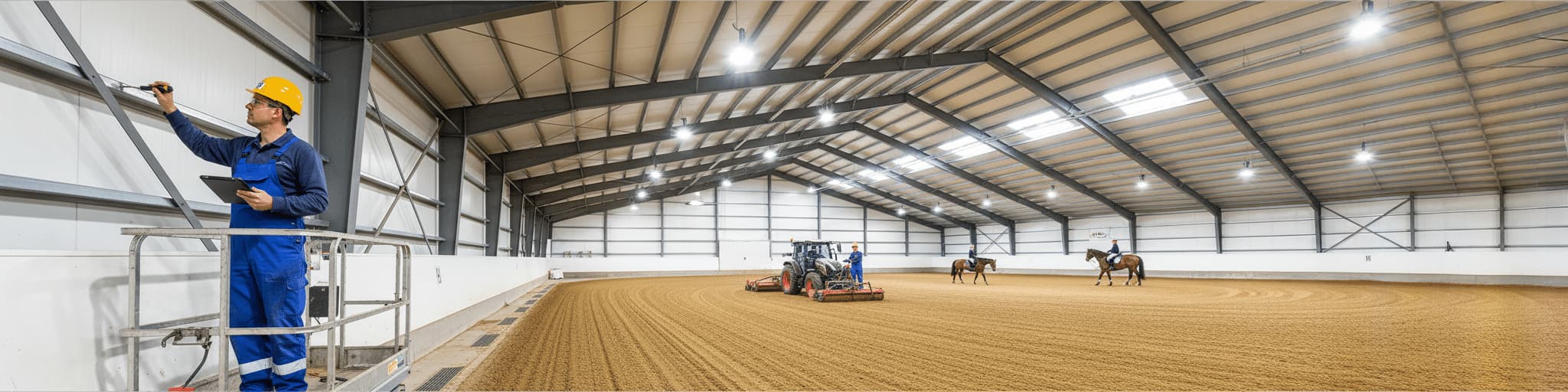

Regular, proactive maintenance of a prefabricated steel riding arena pays for itself many times over by stretching the structure's service life to 40-70 years, slashing total upkeep costs by up to 30 %, and safeguarding both horse and rider from injuries caused by uneven or dusty footing. The article equips owners with a field-tested playbook: conduct twice-yearly "health checks" on the steel frame and roof panels to catch corrosion, loose fasteners, or coating failures while they're still cheap fixes; groom and moisture-balance the arena surface daily or weekly–depending on traffic–to eliminate dangerous compaction ruts and respiratory-dust clouds; and seal every seam, gutter, and penetration so wind-driven rain can't incubate rust. Readers learn how to choose the right cleaning agents, drag equipment, and dust suppressants that protect steel yet keep horses comfortable; how to automate ventilation, lighting, and smart sensors that flag trouble before downtime or expensive emergency repairs; and how to build a digital logbook that schedules preventive tasks, stores inspection photos, and proves diligent care to insurers or buyers. By embedding these habits into a culture shared by staff, trainers, and riders, an arena owner converts a reactive repair cycle into a predictable, data-driven program that preserves structural integrity, maintains consistent riding quality, and ultimately protects the original investment for decades.
Why Regular Maintenance Matters for Prefabricated Steel Riding Arenas
Proper arena maintenance prevents uneven footing that forces horses to adjust their gait unexpectedly, directly reducing injury risk during impact and loading phases.
Understanding the Longevity Benefits
Properly maintained prefabricated steel riding arenas last 40-70 years or more, often outlasting traditional wood or concrete structures [1]. This extended lifespan stems from steel's inherent strength and resistance to environmental threats that typically compromise other materials. Steel frames won't warp, crack, rot, or suffer pest infestations that plague wooden structures [2][3].
The material withstands extreme weather conditions including heavy snow loads, strong winds, and intense sunlight without degrading [2][3]. Modern steel structures feature protective coatings that prevent rust and corrosion, even in high-humidity environments [1]. This durability translates directly to reduced maintenance costs–steel doesn't require frequent painting, sealing, or treatments to preserve its structural integrity [2].
The combination of weather resistance, structural stability, and minimal upkeep requirements ensures your investment maintains its value and functionality for decades with proper care [3].
Impact on Rider Safety and Performance
Proper arena maintenance directly impacts both rider safety and horse performance, with footing quality being the critical link. Poor arena conditions contribute to injuries and diminished performance through three key surface properties: firmness, cushion, and grip [4]. When maintenance is neglected, uneven footing develops from high-traffic areas along rails, diagonals, and centerlines [5]. These inconsistencies force horses to adjust their gait and balance unexpectedly, increasing injury risk.
During the impact phase when a horse's hoof contacts the ground, poorly maintained surfaces can send harmful shockwaves up the leg, potentially causing joint damage [4]. In the loading phase, when the horse's weight shifts fully onto the hoof, inadequate footing maintenance increases fracture risks [4]. Surfaces that become too hard through compaction or too deep through inconsistent dragging create conditions where soft tissue injuries commonly occur [6]. Research shows that arenas with "deep, boggy, or uneven surfaces increase the risk of lameness" while "more frequent arena maintenance reduces the risk of lameness" [6].
Regular maintenance ensures uniform arena conditions, which studies confirm alter movement patterns positively and maintain performance quality even during intensive training [6]. By establishing consistent maintenance schedules for your prefabricated steel riding arena, you create predictable footing that allows horses to move confidently and perform optimally.
Cost Savings Through Proactive Care
Regular maintenance for your prefabricated steel riding arena isn't just about preserving appearance–it's a significant financial investment protection strategy. Studies show reactive maintenance costs 25-30% more than preventive approaches [7]. This cost difference stems from emergency repairs typically requiring expensive rush service, overtime labor, and addressing damage that has spread beyond the original issue.
For arena owners, this means a simple corrosion spot left unchecked can eventually compromise structural connections, leading to costly repairs and extended facility closure. Preventive maintenance systems produce measurable financial benefits: equipment breakdowns decrease 70-75%, downtime reduces 35-45%, and overall maintenance costs drop 25-30% [7]. Beyond direct repair savings, proactive maintenance prevents the hidden costs of unexpected arena closures–cancelled lessons, rescheduled events, and client dissatisfaction that impacts revenue.
The financial advantages extend to the arena's lifespan, as properly maintained steel structures can remain operational decades longer than those subjected to reactive-only care [8]. Creating a balanced maintenance program that emphasizes prevention while maintaining capacity for occasional reactive needs optimizes both short-term operations and long-term value [8]. Even small preventive measures like regular inspections of critical connections, prompt cleaning of corrosive materials, and scheduled coating assessments create substantial cost savings compared to addressing failures after they occur.
Building a Culture of Preventive Maintenance
At National Steel Buildings Corp, we believe that understanding why maintenance matters is the first step toward protecting your investment. Creating a culture of preventive maintenance within your equestrian facility starts with education–ensuring that everyone from facility managers to daily riders understands their role in preserving the arena's condition.
When all stakeholders appreciate how regular maintenance directly benefits horse welfare, rider safety, and financial outcomes, compliance with maintenance protocols naturally follows. This foundational understanding transforms maintenance from a chore into a shared commitment to excellence.
Our high-quality
Essential Inspection Checklist – Spot Issues Before They Grow
Catch corrosion early by inspecting protective coatings for peeling paint, bubbling surfaces, and visible cracks before hidden damage compromises your steel frame.
Structural Frame and Weld Integrity
Think of your arena's steel frame inspection like a health checkup–regular examinations help catch small issues before they become expensive problems. Start by examining all visible beams, columns, and connections for telltale signs of wear: corrosion spots, any deformation from the original shape, or developing cracks [12]. Pay special attention to fasteners in high-stress areas like where roof meets walls or at major beam connections–these should remain tight and properly aligned without any loosening or shifting.
When checking welded joints, rust streaking serves as an early warning system, often indicating developing cracks beneath the surface [12]. Quality welds should show complete fusion without gaps or porosity. While your own visual inspections prove invaluable for routine monitoring, we recommend scheduling professional non-destructive testing every 3-5 years [12]. These specialized methods–like ultrasonic or magnetic particle testing–act like X-rays for steel, revealing hidden defects or internal corrosion that could compromise your
Corrosion Detection and Prevention
Catching corrosion early transforms a minor maintenance task into major savings down the road. Start by examining protective coatings for three red flags: peeling paint, bubbling surfaces, or visible cracking–each signals active corrosion working beneath the surface [13]. Focus your attention on the vulnerable spots where moisture loves to hide: joints between panels, around welds, and near fastener penetrations where the protective coating may be compromised [15].
Your arena's location dramatically impacts inspection frequency. Coastal facilities face salt spray challenges, while those near farming operations encounter chemical runoff–both accelerate corrosion rates and demand quarterly rather than bi-annual checks [13]. Consider investing in professional-grade assessment tools to supplement your visual inspections. Ultrasonic thickness gauges work like medical ultrasounds, revealing internal corrosion you can't see, while coating thickness meters ensure your protective barriers maintain adequate coverage [13].
Prevention involves creating an environment hostile to rust formation. Since corrosion needs both moisture and oxygen to thrive, eliminating either breaks the cycle [15]. This means maintaining proper drainage to channel water away from your structure, ensuring adequate ventilation to reduce humidity buildup, and applying appropriate protective barriers [14]. In high-humidity environments, zinc-rich primers topped with polyurethane coatings provide superior protection for critical components [13]. When it's time for recoating, remember that preparation determines success–professional abrasive blast cleaning creates the ideal surface for new coatings to bond properly and deliver years of protection [15].
Roof and Wall Panel Assessment
Your arena's roof and wall panels serve as the first defense against weather, making their inspection crucial for preventing water infiltration and costly repairs. Schedule thorough examinations twice yearly–spring reveals winter damage while fall prepares you for harsh weather ahead–plus additional checks after significant storms [16][17].
During each inspection, run your hand along panel surfaces feeling for dents, deep scratches, or rough patches that might indicate coating failure and expose the steel beneath to moisture [18]. Areas where organic materials accumulate deserve extra scrutiny; that innocent-looking pile of leaves or manure against your wall creates a moisture trap that accelerates panel deterioration when left unaddressed [18].
Fastener inspection requires a delicate balance–think of it like tuning a guitar string. Too tight and you'll crush the rubber washer seal, creating a water entry point; too loose and gaps form that invite moisture inside [17]. The sweet spot maintains firm contact without deformation. Don't forget your drainage system; clogged gutters and downspouts cause water to back up and attack panel edges, potentially compromising both your roof system and foundation [16].
Safety comes first during roof inspections. Always use proper fall protection and walk only on panel flats near structural supports–this distributes your weight properly and prevents those unsightly (and potentially damaging) dents [16]. Create a simple photo log of problem areas, allowing you to track changes between inspections and demonstrate proper maintenance practices to insurers or warranty providers [17].
Floor Surface and Drainage Evaluation
Your arena floor serves as the foundation for safe, confident riding–making regular surface assessment essential for both horse welfare and performance quality. Focus your evaluation on three critical warning signs that signal deteriorating conditions: uneven compaction patterns, inconsistent footing depth, and improper moisture balance [19].
Test compaction by walking the entire arena, feeling for soft spots or overly hard areas. Uneven surfaces force horses to constantly adjust their stride and balance, increasing injury risk and creating tension during work [19]. Check depth consistency by dragging a boot heel across different sections–significant variations in how deep your heel sinks indicates material migration that creates unpredictable traction [19].
The "handful test" provides a quick moisture assessment: grab some footing material and squeeze. Properly hydrated footing clumps together but crumbles when you open your hand–never forming a muddy ball or releasing dust clouds [20]. Base your grooming frequency on actual usage rather than fixed schedules; busy training facilities often need daily maintenance while private arenas might maintain quality with weekly attention [19][20].
Drainage problems reveal themselves through persistent wet spots or areas that remain saturated hours after watering [21]. These moisture traps not only create dangerous, inconsistent footing but can also penetrate and damage your expensive arena base–a repair that often requires complete reconstruction [21]. A properly constructed base should feel concrete-hard when compacted; soft or spongy areas signal drainage failure that demands immediate attention [21]. When surface water lingers more than a few hours post-rain, consider professional drainage solutions like perimeter French drains to protect your investment and maintain consistent riding conditions throughout the seasons [21].
Cleaning and Surface Care Best Practices
Power washing effectively removes dirt and debris from steel arena structures while mild soap and neutral pH cleaners preserve protective coatings without causing corrosion.
Choosing the Right Cleaning Agents for Steel
Selecting appropriate cleaning agents for steel riding arenas prevents damage while maintaining structural integrity. The non-porous nature of steel makes these structures relatively easy to clean compared to other materials [22]. For routine cleaning, mild soap solutions work effectively on most steel surfaces without causing corrosion. Avoid harsh chemicals containing ammonia or chlorine which can deteriorate protective coatings and accelerate rust formation.
Power washing represents one of the most effective cleaning methods for steel structures, efficiently removing accumulated dirt, grime, and environmental debris from walls and roof panels [22]. For stubborn stains or buildup, specialized metal-safe cleaners with neutral pH balance preserve galvanized coatings while still removing contaminants. In facilities where horses are housed nearby, prioritize eco-friendly, non-toxic cleaning solutions that won't create harmful residues or fumes. For dust management on metal surfaces, consider alternatives to frequent washing in arid environments, though careful product selection is crucial to avoid accelerating corrosion [23].
When cleaning near electrical components or sealed joints, avoid excessive moisture that might penetrate these vulnerable areas. After cleaning, thoroughly rinse all surfaces to prevent residue buildup that could initiate corrosion over time. Establishing a quarterly deep-cleaning schedule using appropriate agents helps maintain both appearance and structural protection.
Routine Floor Cleaning Techniques for Arenas
Effective floor maintenance creates consistent riding conditions while extending your arena's lifespan. Establish a regular dragging schedule based on usage frequency–high-traffic facilities require daily grooming while less-used arenas might need only weekly attention [24]. Dragging serves multiple purposes: it breaks up compacted areas, creates level surfaces, improves drainage, and prevents dangerous footing conditions [19]. The equipment you use significantly impacts results–avoid basic chain drags or straight-tooth implements which cannot properly mix arena materials [19].
Instead, invest in arena-specific equipment with hydraulic rippers, grader blades, and finishing rollers that can effectively rework the surface while filling holes [19]. Moisture management remains crucial for floor maintenance; properly hydrated footing should clump slightly without dripping when grabbed [25]. Inadequate moisture creates unstable, slippery conditions while excessive water damages the base [25]. For indoor arenas, implement a consistent watering system–whether through sprinklers, water tanks, or moisture-retaining products like magnesium chloride [25].
After addressing drainage issues, remove manure daily using proper safety procedures: wear protective gloves, use dedicated tools to prevent cross-contamination, and maintain separate manure storage away from the main facility [24]. This comprehensive approach maintains optimal riding conditions while protecting your investment.
Managing Dust, Debris, and Horse Waste
Dust in riding arenas poses serious health threats to horses and riders beyond mere inconvenience. Horses inhaling dusty air risk developing respiratory conditions, as they can intake up to 600 gallons of air per minute during exercise [26]. Effective dust management starts with understanding its source–primarily fine particles like clay and silt in your footing material that break down over time [27]. Water remains the most effective dust suppressant, with thorough evening applications being more efficient than light daytime sprinklings that quickly evaporate [27].
Install automated watering systems for indoor arenas to maintain consistent moisture levels, or consider a drag with integrated water tank that sprays directly into the footing rather than just on top [27]. For facilities in drought-prone or freezing regions, explore alternatives like polymer coatings that bind sand particles without changing footing characteristics–these typically last 12-16 months before requiring reapplication [27]. Avoid salt-based dust suppressants like magnesium chloride despite their affordability; they dry out horses' hooves and significantly accelerate corrosion of your steel arena structure [27]. Debris accumulation against wall panels accelerates corrosion and compromises structural integrity [5].
Establish a manure removal protocol requiring daily cleaning using dedicated tools and proper protective equipment to prevent cross-contamination between arena areas [5]. Proper waste handling extends beyond cleanliness–accumulated organic matter in footing changes its performance characteristics over time and increases dustiness as it decomposes [5].
Eco‑Friendly Options and Recent Developments
Eco-friendly approaches to arena maintenance balance sustainability with performance. Modern fabric covers offer significant environmental benefits while reducing operational costs. These covers are 100% recyclable and allow natural sunlight to penetrate the space, reducing electricity needs for daytime lighting [28]. Their climate-sensitive properties help maintain comfortable temperatures–cooler in summer and warmer in winter–without excessive climate control systems [28].
Energy Star rated panels provide another sustainable option, improving thermal efficiency and reducing long-term energy consumption [29]. When planning your prefabricated steel riding arena, National Steel Buildings Corp offers For arena footing maintenance, specialized cleaning equipment has evolved beyond basic dragging. Modern screening technology now thoroughly cleans riding surfaces by lifting and sifting the material rather than merely raking the top layer [30]. These systems remove potentially harmful objects below the surface and eliminate bacterial contaminants, creating safer riding environments [30].
Professional arena screening machines can efficiently maintain large riding areas while detecting and removing hazards as small as thumbnails [30]. This advanced cleaning approach not only improves safety but extends footing lifespan by maintaining consistent material quality.
Protecting Against Corrosion and Weather Damage
Seal every seam and joint with mastic sealant and foam closures to prevent moisture infiltration that compromises your arena's structural integrity.
Applying and Maintaining Protective Coatings
Your steel riding arena represents a significant investment, and protective coatings form your first line of defense against corrosion.
Think of these coatings as armor for your structure–they create an essential barrier between the steel and moisture that could otherwise compromise your facility's integrity.
Quality galvanized steel, like that used in
Seam and Joint Sealing Strategies
Proper sealing of seams and joints creates the first defense against water infiltration in steel riding arenas. Unsealed gaps between panels allow moisture to enter, leading to mold formation and structural damage [34]. Focus on critical leak points: roof-to-wall transitions, fastener penetrations, and panel overlaps where water typically infiltrates. Apply high-quality mastic sealant–a thick, pliable material that creates a waterproof barrier–underneath and overtop of building eave closures for double protection [35].
This "doubling up" technique provides superior moisture resistance compared to single applications. Install foam closures at all panel ends to block water from being driven upward by wind or capillary action. PBR roof panels with siphon grooves offer additional protection by channeling away moisture before it reaches insulation [35]. During installation, ensure all fasteners have proper rubber washers and are tightened to manufacturer specifications–neither too loose (allowing gaps) nor too tight (damaging the washer seals) [34].
Conduct twice-yearly inspections of all seals, particularly after extreme weather events, looking for separation, cracking, or deterioration [34]. When replacing damaged sealant, completely remove old material before applying new product to ensure proper adhesion. This comprehensive sealing approach prevents costly water damage and extends your arena's structural integrity.
Seasonal Weather Considerations and UV Protection
Steel riding arenas face distinct challenges across seasons that require specific protective measures. Summer sun exposes metal surfaces to UV radiation that degrades protective coatings over time, weakening their corrosion resistance [36]. Apply UV-resistant polyurethane coatings to surfaces receiving direct sunlight, as these provide flexibility that prevents cracking during temperature fluctuations [37].
Winter brings snow load concerns requiring regular roof clearing to prevent structural stress, while spring and fall transitions demand gutter cleaning to prevent moisture accumulation against panels [37]. In coastal or high-humidity environments, inspect protective coatings quarterly as salt spray accelerates corrosion rates significantly [37]. Temperature extremes cause metal expansion and contraction that can loosen fasteners and create gaps at seams – schedule bi-annual inspections after severe seasonal changes [37].
For year-round rider comfort, consider insulation options for enclosed arenas to regulate interior temperature across seasons [29]. Proper ventilation becomes especially critical during summer months when heat can build up rapidly under metal roofing [36]. This comprehensive seasonal approach ensures your arena maintains structural integrity while providing a comfortable environment for horses and riders throughout changing weather patterns [36].
Monitoring Humidity and Moisture Levels
Managing moisture levels protects both your investment and your horses' health. When warm, humid air meets cooler steel surfaces, condensation forms–creating the perfect conditions for corrosion to begin [38]. This moisture management connects directly with the ventilation systems discussed in the next section, working together to maintain optimal arena conditions.
Install digital hygrometers at horse-height throughout your facility, not just in center aisles where readings can be misleading [39]. Your arena should feel dry, with humidity consistently below 65% to prevent both structural issues and respiratory problems in horses [39]. Early warning signs of excess moisture include condensation on metal surfaces, water droplets on walls, damp bedding, and that telltale musty smell [38].
Track humidity readings daily to identify patterns–you'll likely notice summer bringing high external humidity while winter creates condensation when warm horse breath meets cold steel [38]. Modern automated monitoring systems can alert you before problems develop, proving especially valuable during those tricky seasonal transitions when temperatures fluctuate rapidly [39].
Coastal facilities and those in high-precipitation areas need extra vigilance. Install additional monitoring points near vulnerable corners and joints where moisture naturally collects [38]. When readings indicate high humidity, immediately adjust your ventilation strategy as detailed in our mechanical systems section–ensuring both adequate air exchange and proper distribution throughout your arena [39].
Optimizing Mechanical Systems and Utilities
Monitor your mechanical ventilation system monthly to prevent the 40% airflow loss that occurs silently before you notice any problems.
Ventilation and Airflow Maintenance
Your arena's ventilation system serves as the lungs of your facility, protecting both your horses and your steel investment. Understanding its dual purpose–air exchange (replacing stale air) and air distribution (moving fresh air throughout)–helps you maintain it effectively [39].
For natural ventilation systems, think of your maintenance routine as seasonal housekeeping. Twice yearly, clear those eave openings of dust, cobwebs, and debris that act like clogged arteries in your ventilation system. Here's a critical tip: resist the temptation to cover openings with insect screening or perforated metal–they'll clog faster than you'd expect and severely restrict airflow [39]. Your quarterly checklist should include ridge vent inspections, ensuring rain guards protect without blocking that vital upward flow of warm, moist air [39].
Mechanical systems require more frequent attention but reward you with consistent performance. Monitor fan efficiency seasonally–you'll be surprised to learn that airflow can drop by 40% before you'll hear any concerning noises. Monthly cleaning of fan blades, shutters, and guards prevents those thin dust layers that silently rob your system's efficiency [40]. Stay ahead of failures by replacing worn belts proactively and following manufacturer lubrication schedules [40].
Your horses' seasonal needs drive ventilation requirements: roughly 25 cubic feet per minute (cfm) per 1,000 pounds during cold weather, jumping to 125 cfm in mild conditions, and reaching 325 cfm when summer heat arrives [40]. For humidity concerns that can accelerate steel corrosion, refer to our comprehensive humidity monitoring guidance in the "Protecting Against Corrosion" section.
Don't forget those sneaky dead spots–check that upper stall partitions have open grillwork and clear any obstructions blocking cross-arena airflow [39]. This attention to detail pays dividends in both structural longevity and equine health.
Lighting and Electrical System Checks
Lighting and electrical system checks
Good lighting transforms your arena from merely functional to truly exceptional. Beyond preventing those shadow-induced spooks that every rider dreads, proper illumination enhances both safety and performance by eliminating dark corners where accidents lurk [41][42].
Your electrical system deserves the same respect as your arena's structural components. Schedule bi-annual inspections with qualified electricians who understand National Electrical Code requirements specific to equestrian facilities [43]. During these checks, ensure all arena fixtures sport protective cages or globes–a small investment that prevents expensive damage from errant equipment or exuberant horses. Keep electrical boxes sealed against the trio of troublemakers: dust, water, and corrosion [43].
LED technology has revolutionized arena lighting, delivering steady, flicker-free illumination that keeps horses calm while slashing energy costs. Unlike traditional lighting, LEDs won't stress your horses with imperceptible flickering that can trigger anxiety [42]. Here's a fire safety warning that could save your facility: those inexpensive box fans from the hardware store? They're barn fire starters waiting to happen. Their unsealed motors become dust magnets that overheat and ignite. Invest in agricultural-grade fans with sealed motors–your insurance company will thank you [43].
When expanding your electrical system, resist quick fixes. Temporary wiring has a way of becoming dangerously permanent, and overloaded circuits are disasters in waiting [43]. Consider the psychology of light too: warm tones create relaxed training environments, while cooler temperatures sharpen focus for competition prep [42]. Smart lighting systems that respond to occupancy and daylight levels represent the future of efficient arena management, paying for themselves through energy savings and extended fixture life [42].
Water Supply, Drainage, and Irrigation Upkeep
Water supply, drainage, and irrigation upkeep
Water management in your arena walks a delicate balance–too much moisture invites corrosion to attack your steel structure, while too little creates hazardous dust clouds. Getting this balance right protects both your investment and your riders' health.
Start with the foundation of good water management: drainage. As discussed in our drainage evaluation section, proper water flow prevents costly base damage. Schedule quarterly drainage inspections, paying special attention to French drains and graded surfaces after heavy rains when debris and sediment accumulate [44]. Think of these inspections as preventive medicine for your arena.
Modern irrigation technology has evolved beyond the old overhead sprinkler approach. Underground watering systems have become the gold standard, offering three key advantages: they won't damage kick walls during operation, they maintain lower humidity levels in indoor arenas (protecting your
Integrating Smart Monitoring Technologies
Think of smart monitoring technology as having a 24/7 maintenance expert watching over your arena–except this expert never sleeps and catches problems before they become expensive emergencies. These systems represent a fundamental shift from the old "fix it when it breaks" mentality to a proactive approach that saves both money and headaches.
Today's wireless sensors act like tiny detectives, constantly investigating your arena's structural health. They can spot the earliest signs of fatigue in steel components, watching critical stress points without interfering with daily operations [47]. The beauty of modern sensors? They install in about 10 minutes each, no special surface preparation required–making them practical even for busy facilities [47].
The payoff is impressive: facilities using smart monitoring typically extend their arena's lifespan by more than 15% simply by catching issues early [47]. These systems use edge computing (think of it as on-site intelligence) to process data instantly, sending alerts the moment something needs attention [48]. This real-time response transforms maintenance from a guessing game into precision work, cutting costs by 5-10% while boosting facility availability by 10-20% [49].
Beyond watching for structural issues, modern systems create a complete picture of your arena's health–monitoring everything from humidity levels to energy consumption to surface conditions [48]. Getting started doesn't require an engineering degree. Focus on these high-value monitoring points: connections bearing the most stress, areas prone to moisture problems, and vibration patterns in your ventilation equipment [49].
The implementation roadmap is straightforward: identify what matters most to monitor, install appropriate sensors, set up data collection, and connect everything to maintenance planning software that turns information into action [49]. It's like giving your arena a voice to tell you exactly what it needs, when it needs it.
Creating a Maintenance Schedule and Record‑Keeping System
Digital tracking systems convert scattered maintenance records into actionable intelligence, automating critical reminders for your steel structure's coating inspections, fastener checks, and drainage assessments.
Developing a Monthly, Quarterly, Annual Plan
A well-designed maintenance schedule transforms your steel riding arena from a reactive repair cycle into a proactive preservation system.
Quality steel structures, like those engineered by
Using Digital Tools for Tracking Tasks
Digital tracking systems revolutionize steel arena maintenance by converting scattered records into actionable intelligence. Modern stable management software automates critical reminders for tasks specific to steel structures–coating inspections, fastener checks, and drainage assessments [53]. Cloud-based platforms safeguard your maintenance history while providing instant access during emergencies or contractor consultations [54].
Mobile functionality proves particularly valuable for steel arena maintenance. Inspectors can photograph potential corrosion spots, document fastener conditions, and note coating wear directly from the arena floor [54]. The most effective systems integrate all facility data–maintenance schedules, inspection findings, vendor contacts, and warranty information–into searchable databases that eliminate information silos [55].
For facilities with multiple staff members, real-time communication features ensure critical steel maintenance tasks receive proper attention regardless of shift changes [55]. Automated alerts for mechanical system maintenance prevent the costly failures that can compromise your entire facility [53]. These digital tools generate professional reports documenting your maintenance diligence, supporting warranty claims and revealing patterns that might indicate developing structural concerns [54]. The data-driven approach particularly benefits steel structures, where early intervention dramatically extends component lifespans.
Training Staff and Riders on Upkeep Responsibilities
Training staff and riders on upkeep responsibilities
Successful steel arena maintenance depends on creating a culture of shared responsibility among all facility users. Staff training should emphasize both the technical aspects of equipment operation and the unique maintenance requirements of steel structures–from recognizing early corrosion signs to understanding how environmental conditions affect protective coatings.
Establish practical standards everyone can apply: "If the arena surface doesn't feel good for you to walk on, it isn't going to be comfortable for the horse, either" [56]. Visual guides demonstrating proper conditions help maintain consistency–footing material should form a ball when squeezed but crumble easily, indicating optimal moisture without excess [56].
Educate riders about their role in preservation. Varying riding patterns prevents surface migration that creates dangerous thin spots [56]. Post clear maintenance objectives where all users can reference them: proper surface leveling, moisture management, material blending, compaction prevention, and divot repair [25]. These visual reminders, combined with your equipment operating procedures, reinforce consistent practices.
Implement accessible reporting systems–whether simple whiteboards or digital logs–enabling users to flag concerns promptly [25]. For specialized surfaces like fiber-enhanced footing, provide specific training on compatible grooming equipment to prevent costly damage from improper tools [25]. This collaborative approach protects both your steel investment and ensures optimal riding conditions.
Evaluating Performance and Adjusting the Plan
Performance evaluation transforms maintenance from routine tasks into continuous improvement for your steel arena investment. Establish measurable benchmarks: consistent footing characteristics, structural coating integrity, and mechanical system efficiency. Professional footing analysis every 4-5 years provides objective data on material degradation and additive performance, typically indicating when 10-20% supplementation becomes necessary [52].
Biological feedback offers valuable insights–horses serve as sensitive indicators of surface quality. When riders report gait changes, hesitation patterns, or inconsistent responses, your maintenance protocols require adjustment [25]. Similarly, monitor how your steel structure manages moisture. Post-rainfall inspections revealing prolonged wet areas indicate drainage failures requiring immediate intervention [57].
Equipment performance directly impacts maintenance effectiveness. Quarterly assessments should verify that grooming equipment still achieves designed specifications for your specific footing type [25]. Document all evaluations against baseline measurements, creating trend data that reveals gradual changes in both structural and surface conditions [52].
Implement adjustments incrementally to avoid system disruption [57]. Your steel arena's maintenance needs evolve with seasonal weather patterns and usage intensity, making flexibility essential. Regular evaluation ensures your maintenance investment yields maximum returns in facility longevity and consistent performance [52]. This data-driven approach particularly benefits steel structures, where proactive adjustments can add decades to operational life.
- Preventive maintenance cuts steel-arena costs 25-30% and extends life to 40-70 years.
- Inspect welds and coatings twice yearly; rust streaks often hide developing cracks.
- Drag footing daily for busy arenas; uneven surfaces raise injury risk via harmful shockwaves.
- Seal roof panel seams with mastic and foam closures to stop moisture-driven corrosion.
- Keep indoor humidity below 65% with ventilation at 125-325 cfm per 1,000 lb horse.
- Use LED sealed fixtures and agricultural-grade fans to prevent barn fires and flicker spooks.
- Log inspections digitally; early corrosion detection can add 15+ years to arena lifespan.
- https://atlanticsteelstructures.com/blog/maintenance-longevity-of-steel-buildings/
- https://www.technology.org/2025/07/17/why-steel-riding-arenas-are-the-top-choice-for-equestrian-facilities/
- https://www.uspatriotsteel.com/blog/steel-vs-wood-riding-arenas/
- https://www.performancefooting.com/blog/how-arena-footing-affects-horse-performance/
- https://extension.psu.edu/riding-arena-footing-material-selection-and-management/
- https://thehorse.com/19061/troubleshooting-horse-arena-hazards/
- https://www.aquanomix.com/blog/saving-money-on-maintenance-reactive-vs-preventive-vs-predictive
- https://worktrek.com/blog/reactive-vs-preventive-maintenance-long-term-cost-effectiveness/
- https://sortedpixel.com/steel-industry-seo-strategies-2025/
- https://seocounselors.com/construction-keywords-for-seo-a-simple-guide-to-boost-your-websites-visibility/
- https://www.jacobtyler.com/blog/seo-content-marketing-strategies-for-construction-companies/
- https://benchmarksteel.com/2023/09/what-do-steel-structure-inspections-entail/
- https://peb.steelprogroup.com/steel-structure/maintenance/guide/
- https://s3da-design.com/guest-contribution/the-ultimate-guide-to-maintaining-pre-engineered-steel-buildings/
- https://steelconstruction.info/Corrosion_protection
- https://www.mbci.com/blog/roof-maintenance-and-inspections/?srsltid=AfmBOorkz1Ug5REFKtAnZwXFaqGG4f-2Lj3aWg-ATokX9pdto4_UgjyI
- https://marbuildingsolutions.com/metal-roof-inspection-checklist/
- https://www.vikingsteelstructures.com/blog/maintenance-guide-for-metal-buildings?srsltid=AfmBOoodfNGVoPYw41pXpK4iOAoGBdbVRglksx5xr6gL1AzaPhYhIEOW
- https://lucasmetalworks.com/2022/06/arena-surface-care-and-maintenance-the-basics/
- https://premierequestrian.com/maintenance-101/
- https://www.eastwest-construction.com/blog/quickly-fix-drainage-problems-in-the-equestrian-arena
- https://www.vikingsteelstructures.com/blog/practical-tips-to-keep-your-metal-horse-barn-clean?srsltid=AfmBOopeOa1p-AtmeuWguLcRhGcoDbymY128WQDN-madzjkeFECB3v1j
- https://greystone-usa.com/blogs/news/the-ultimate-guide-to-horse-arena-maintenance?srsltid=AfmBOoqF-HzSjjd5B5kDuKZLDkHD3-QNyxjm1NE3BY2NPweXu_BpAfiz
- https://armstrongsteel.com/blog/practical-tips-for-keeping-your-metal-horse-barn-clean
- https://trutexfooting.com/maintenance-guide
- https://www.performancefooting.com/blog/horse-arena-dust-control-solutions-for-a-dusty-arena/
- https://footingsolutionsusa.com/arena-dust-control-101/?srsltid=AfmBOopMWYjA0uaJY1tkUGqVrdX5wbpnW5tzPmWeYiW-xwSovtmIIDlc
- https://www.clearspan.com/industries-page/equestrian-riding-arenas/
- https://mbmisteelbuildings.com/riding-arenas-and-horse-barns/
- https://www.beach-tech.com/en-US/fields-of-application/horse-arena-cleaning
- https://www.steelcobuildings.com/protecting-your-investment-5-ways-steel-and-metal-buildings-resist-damage/
- https://www.nvcengineering.com/post/best-protective-coatings-for-steel-ultimate-guide-to-prevent-corrosion-and-wear
- https://www.worldwidesteelbuildings.com/blog/how-to-prevent-rust-on-metal-buildings/
- https://bulldogsteelstructures.com/blog/7-important-tips-to-keep-your-metal-barn-in-top-shape/
- https://sunwardsteel.com/sealant-closures/
- https://www.steelcobuildings.com/steel-buildings/horse-arenas/
- https://metalprobuildings.com/steel-building-lifespan-what-you-need-to-know/
- https://www.torosteelbuildings.com/7-effective-ways-to-prevent-condensation-in-steel-buildings/
- https://extension.psu.edu/horse-stable-ventilation/
- https://extension.umn.edu/horse-pastures-and-facilities/ventilation-systems-horse-barns
- https://www.horizonstructures.com/build-safety-horse-and-rider-when-building-indoor-arena/
- https://www.paclights.com/explore/riding-arena-lighting-explained/
- https://horsesdaily.com/article/safety-guidelines-to-follow-when-you-own-or-operate-a-farm-part-four-electrical-maintenance/
- https://www.uspatriotsteel.com/riding-arenas/
- https://premierequestrian.com/product-category/footing-products/irrigation-watering-systems-footing-products/
- https://www.capillaryflow.com/equestrian/irrigation-systems
- https://www.villari-technology.com/steelmanufacturing
- https://www.nanosteelco.com/smart-equipment-monitoring-systems-in-metallurgy-a-new-era-of-efficiency-and-safety/
- https://www.maintonia.com/SmartMaintenanceInSteelAndMining
- https://premierbuildings.com/seasonal-maintenance-guide-for-metal-buildings/
- https://bungersteel.com/blog/news/annual-routine-maintenance-on-your-steel-buildings/
- https://premierequestrian.com/an-annual-guide-to-horse-arena-maintenance/
- https://www.stablebuzz.com/
- https://stablesecretary.com/
- https://getquestri.com/blog/the-benefits-of-equestrian-barn-management-software
- https://horseandrider.com/western-horse-training-tips/riding-arenas/
- https://www.performancefooting.com/blog/horse-arena-construction-guide/