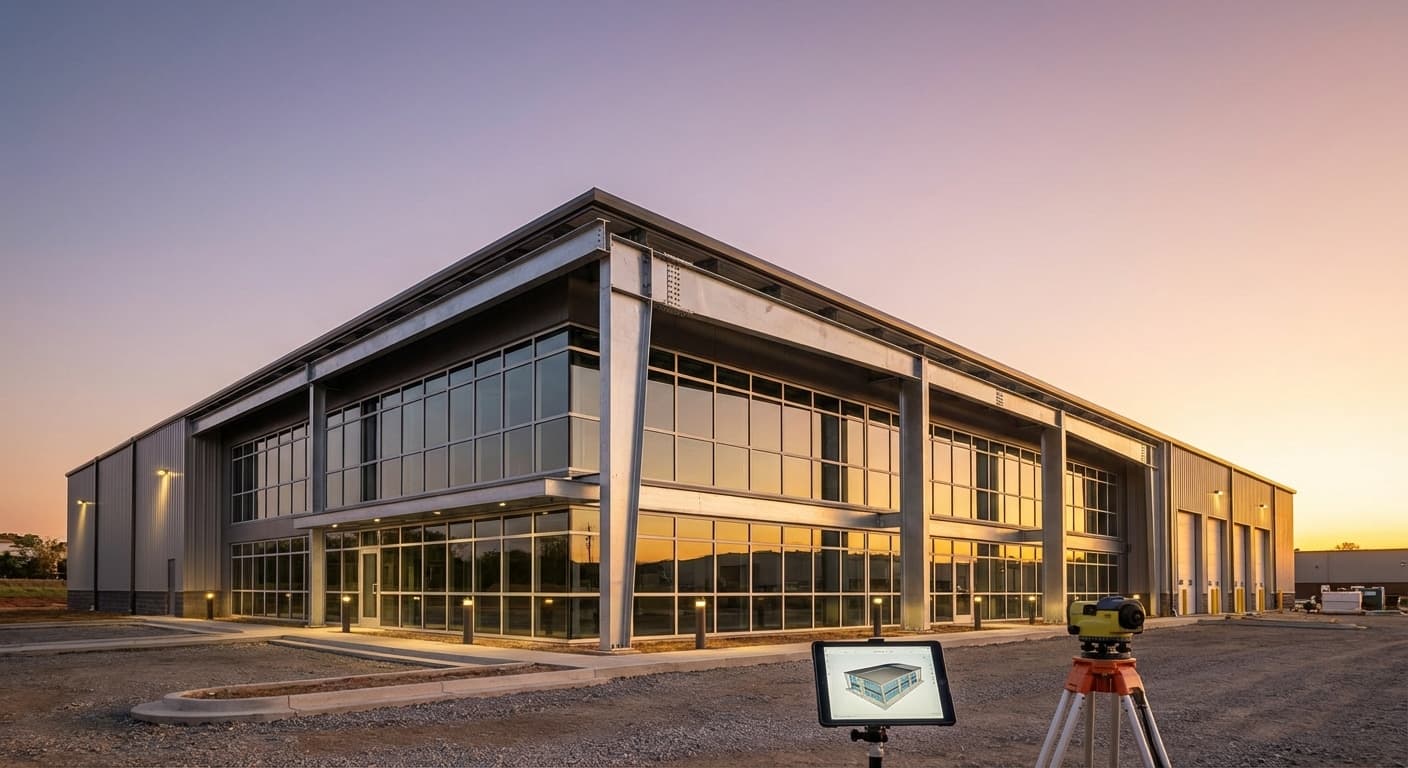

Mastering metal-building design means turning steel's speed, strength and prefabrication advantages into lower lifetime costs and faster occupancy, and this guide walks you from first sketch to decades of low-maintenance service. You'll learn how 2024 code changes, precise foundation detailing for uplift, smart bay spacing and tapered members slash steel use up to 30 %, why the right zinc coating or IMP envelope can trim HVAC bills 40 % and outlast wood or concrete, and how BIM, factory robotics and layout robots cut erection time 25 % while slashing waste. The article shows farmers, manufacturers, hangar owners and even home-office builders how to pick spans up to 300 ft without interior posts, specify corrosion protection matched to coastal or chemical exposure, integrate solar skins and cool roofs to hit looming 2030 net-zero mandates, and embed sensors that predict maintenance and stretch asset life. Whether you need a clear-span warehouse, a column-free sanctuary or a modular garage that goes up in a weekend, these field-tested strategies balance upfront savings against decades of durability, energy efficiency and code-proof performance.
Planning Your Metal Building Design Project
Budget your metal building project by allocating 40-50% for the kit, 10-20% for site prep, and 3-7% for freight, then reserve 5-10% for contingencies.
Defining Project Goals and Budget
You know what you need–now let's talk about what it costs. Start with the basics: your building's purpose, size, and must-have features. These decisions drive your entire budget.
Steel prices swing hard. Between 2020 and 2021, structural steel jumped 91% [1]. Your budget breaks down into four chunks:
- Building kit: 40-50% of total cost
- Site prep: 10-20%
- Foundation work
- Freight: 3-7% [2]
Location matters. Labor costs, soil conditions, and local codes all affect your bottom line [3]. In 2025, steel building kits run $7-14 per square foot, depending on size and complexity [2].
Keep it simple where you can. Every design flourish adds labor hours. Smart builders set aside 5-10% for contingencies–markets shift, sites surprise [1]. That's where our national buying power pays off. We leverage volume purchasing across all our
Understanding Building Codes and 2024 IBC Requirements
Building codes changed in 2024–here's what matters for your project. The International Building Code reorganized Chapter 22 on steel structures, making requirements clearer [4].
The big change? Metal building systems now have their own definition: "fabricated components and assemblies that form a building shell designed by the manufacturer" [4]. This clears up who's responsible for what between manufacturers and engineers.
New rules you need to know:
- Section 2210 covers all structural components–steel, cold-formed steel, joists, cables [4]
- Special inspections now required under Section 1705.2.6 [5]
- Bracing elements get extra attention–they're critical for metal buildings [6]
- New standards for specialty items like steel shelving and work platforms [4]
Don't let code complexity slow you down. We've navigated these requirements on 1,480+ projects. We know which inspections matter, which standards apply, and how to keep your project moving through approvals. Your local code might add requirements–we handle those too.
Site Assessment and Foundation Considerations
Metal buildings need different foundations than traditional structures. They're lighter, so wind can actually lift them–your foundation fights that uplift [7].
Start with soil testing. You need to know what's under there–rock, clay, sand? That geotechnical report tells you bearing capacity, moisture levels, and expansion risks [8]. Skip this step and you're building on guesswork.
Site prep follows a proven sequence:
- Survey first–exact location, property lines [9]
- Clear everything–old structures, trees, underground surprises [9]
- Grade for drainage–water flows away, not toward your building [7]
- In cold climates, dig below frost line to prevent heaving [7]
You've got three foundation options:
Slab-on-grade: Concrete poured at ground level. Cost-effective for smaller buildings [7].
Pier foundations: Concrete columns at key points. Good for problem soils [7].
Perimeter walls: Continuous concrete walls. Maximum stability for large commercial projects [8].
Metal buildings create unique forces. The rigid frame pushes horizontally at the base–standard foundations can't handle that [8]. You need:
- Haunches and moment-resisting footings
- 4,000 PSI concrete for commercial projects
- Anchor bolts placed within 1/2 inch of spec [8]
Miss that anchor bolt placement and columns won't seat properly. That's an expensive fix.
Your foundation carries everything–building weight, equipment, people, plus wind and snow loads [7]. Engineers calculate all these forces to size your foundation right [7]. Our ProTrades erection team has poured foundations in every condition imaginable. We know your local frost depths, soil quirks, and code requirements. More importantly, we get it right the first time.
Leveraging 3D Design Tools for Early Visualization
You can't always see problems in flat drawings. That's why many builders now use 3D visualization tools–they catch issues before steel arrives on site.
These tools turn blueprints into models you can rotate and examine. Companies using them report cutting design time in half [11]. They spot problems early–especially in complex rooflines or where buildings connect [11].
The technology's getting better. Software can now model your entire project in detail, down to bolts and welds [11]. Some systems even check for conflicts between structural steel and other systems like HVAC or electrical [12].
But here's the reality: fancy visualization helps, but experience matters more. We've completed 1,480+ buildings without relying on virtual reality. We use practical design approaches that work, backed by decades of real-world construction.
For complex visualization needs, we covered advanced 3D modeling in detail in the technology section. What matters now is getting your project planned right, with or without the latest software.
Core Principles of Efficient Metal Building Design
Smart span design and tapered columns can reduce your material costs by up to 30% while maintaining full structural strength and durability.
Optimizing Span, Bay, and Roof Pitch for Cost Savings
Here's what smart span design means for your budget: clear span buildings give you wide-open space with no posts in the way, perfect for warehouses and hangars. The sweet spot? Buildings 40' to 100' wide balance cost and function beautifully [13]. Need more room? Add interior columns–you'll cut steel costs significantly while keeping your space functional [14].
Your bay spacing choices directly impact your bottom line. Think of bays as the distance between your main frames:
- 20' spacing: More frames but lighter components
- 25' spacing: The industry standard that balances everything
- 30' spacing: Fewer frames but heavier steel between them
We align these measurements with standard steel lengths to eliminate waste and keep your costs down [13].
Roof pitch matters more than you might think. Low-slope roofs (½:12 to 4:12) use less steel while still shedding water effectively [13]. Single-slope designs work especially well for buildings 60' to 120' wide–they're simpler to build and drain better than traditional peaked roofs [13].
The real savings come from smart engineering. By using tapered columns that put steel only where it's needed, you can reduce material costs by up to 30% compared to conventional construction [14]. That's money straight to your bottom line without compromising strength or durability.
Selecting the Right Steel Grades and Profiles
Choosing the right steel grade saves money without cutting corners. Here's what you need to know:
A36 Steel: Your workhorse grade. It's cost-effective, welds easily, and handles most commercial and industrial buildings perfectly [16].
A572 High-Strength Steel: When you need extra muscle–think heavy equipment storage or high snow loads. The numbers (42, 50, 55, 60, 65) tell you the minimum strength, with higher numbers meaning stronger steel [16].
A992 Steel: The modern standard for main frames. It's engineered to handle wind and seismic forces better than older grades while staying easy to work with [16].
Here's what matters: matching your steel grade to your building's job. Using the wrong grade in connections–like mixing A36 bolts with incompatible steel–creates weak points that can fail [17]. International projects may need different standards, but the principles stay the same [17].
Professional
Integrating Energy‑Efficient Envelope Strategies
Steel conducts heat–that's physics you can't change. But smart envelope design turns this challenge into manageable energy costs. Without proper insulation, your heating and cooling bills skyrocket while condensation damages your investment [18]. Insulated Metal Panels (IMPs) solve multiple problems at once. Picture two steel sheets with foam insulation sandwiched between–you get structure and insulation in one shot. These panels cut your HVAC costs by up to 40% while eliminating those sneaky gaps where heat escapes [19] [20].
Cool roofs work like a mirror for the sun. During peak summer heat, they stay 50 degreesF cooler than dark roofs by reflecting solar energy away from your building [19]. For large commercial buildings, that means cooling costs drop by about 22% [19].
Simple design choices multiply your savings:
- Face your building within 15 degrees of true south for free winter heat
- Position windows and skylights for natural light without glare
- Use proper vapor barriers to prevent moisture damage
These strategies cut heating needs by 18-22% annually while keeping your building bright with natural light [19]. The payback? Lower utility bills every month and a building that lasts decades longer because moisture can't attack the structure [18].
(Note: For comprehensive coverage of advanced insulation technologies, see "Advanced Insulation and High-Performance Facades" in Section 7.)
Applying BIM and Prefabrication to Reduce Waste
Digital design paired with factory prefabrication cuts waste and saves you money. When components are built in controlled factory settings using precise digital models, material waste drops by up to 40% [23]. That's less steel you're paying for and less scrap headed to the landfill.
Here's how it works: digital models feed directly into manufacturing equipment, producing components cut exactly to size [21]. No guesswork, no field modifications, no wasted materials. Quality checks happen at the factory using laser scanning–catching problems before steel ever reaches your site [21].
The real advantage? Time and money saved through:
- Zero rework from measurement errors
- Precise material ordering (no excess "just in case" steel)
- Faster assembly with parts that actually fit
- Reusable component designs across multiple projects
This approach eliminates the 15-30% material waste common in traditional construction. Your building goes up faster, costs less, and fits together like it should–the first time [22] [23].
(For detailed BIM implementation strategies, see "Building Information Modeling Integration Best Practices" in Section 4.)
Ensuring Longevity: Durability and Maintenance in Metal Building Design
Hot-dip galvanizing resists rust 33 times longer than other coatings in coastal environments, protecting your metal building for over a century.
Corrosion Protection Systems and Advanced Coatings
Your metal building's lifespan depends on choosing the right corrosion protection. Zinc-based coatings remain the gold standard because zinc sacrifices itself to protect your steel structure–that's why half of all zinc production goes toward corrosion control [24].
You have four main coating options, each suited to different needs and budgets. Hot-dip galvanizing provides the thickest, most durable protection and works best for harsh environments. Thermal-diffusion coatings offer good hardness but less corrosion resistance. Electro-galvanizing gives you precise, smooth finishes for visible components. Cataphoretic coatings deliver the most uniform coverage [25].
Your location matters. Rural buildings can maintain protection for over 100 years, while industrial sites with chemical exposure need more frequent maintenance [26]. Coastal properties face the toughest challenge–salt air accelerates corrosion, making hot-dip galvanizing your best defense. Testing shows it resists rust 33 times longer than other coating methods in salty conditions [25].
For extreme environments, consider duplex systems that combine galvanizing with paint topcoats. This double protection extends service life significantly while keeping maintenance costs low [26]. Temperature extremes rarely affect quality coatings–they maintain protection even with occasional temperature spikes [26].
The bottom line: thicker coatings mean longer life and lower maintenance costs. After-fabrication hot-dip galvanizing to industry standards delivers the best long-term value for most metal building projects [26].
Designing for Thermal Expansion and Weather Resistance
Metal buildings face unique challenges from thermal expansion and contraction. Unlike traditional materials, steel expands significantly with temperature changes–a critical factor in structural design. Modern Your metal building needs specific features to handle whatever nature throws at it. For high winds, specialized bracing systems distribute forces evenly throughout the structure–keeping your building stable during storms and tornadoes [28].
In snow country, engineered roof designs handle heavy loads while preventing dangerous accumulation. Double-lock seam systems create watertight barriers that won't leak or buckle under snow weight. Smart roof pitch design ensures water runs off quickly, preventing ice dams and structural damage [29].
For earthquake zones, flexible construction lets your building move with ground vibrations rather than fight them. This flexibility prevents the cracking and damage that plague rigid concrete structures [28]. Speaking of concrete–it cracks from freeze-thaw cycles as trapped moisture expands. Steel buildings avoid this problem entirely.
Water resistance goes beyond the roof. Sealed building envelopes keep moisture out while maintaining stable interior temperatures. These systems protect your investment from the inside out [29].
Your geographic location drives design choices:
- Coastal areas need extra corrosion protection
- Temperature-swing regions require enhanced thermal movement systems
- High-wind zones need stronger bracing
- Snow belts need reinforced roof structures
These weather-resistant features pay for themselves. Properly designed metal buildings outlast traditional construction by decades while cutting maintenance costs dramatically. You're not just buying a building–you're investing in long-term protection.
Implementing Access and Maintenance Planning
Metal buildings require strategic access points for maintenance to preserve structural integrity. Effective designs incorporate inspection hatches and service platforms that allow technicians to conduct detailed examinations of roof systems, gutters, foundation connections, and anchoring points at least twice yearly [30]. These access features help catch problems early before they escalate into costly repairs. Design elements should include accessible drainage systems with cleanout points, as gutters and downspouts require regular clearing to maintain proper water flow and prevent foundation damage [31]. Maintenance-focused designs incorporate removable panels near foundation connections, roof seams, and moisture-exposed zones where rust typically develops, allowing early detection and treatment with appropriate primers and coatings [32].Smart maintenance planning starts with good documentation. Your building should come with clear maintenance manuals that spell out inspection schedules, cleaning procedures, and specific care instructions [31]. Simple twice-yearly exterior cleaning with mild detergent removes pollutants that accelerate corrosion–protecting your investment with minimal effort [30].
Your insulation system needs attention too. Design accessible inspection points in moisture-prone areas so you can spot problems early. Damp or moldy insulation signals immediate replacement needs–catching this early prevents expensive structural damage [32].
Key maintenance access points include:
- Insulation inspection panels in high-moisture areas
- Removable sections near sealants and weatherstripping
- Service doors for mechanical equipment
- Cleanout access for drainage systems
Weatherproofing elements like window and door sealants need periodic replacement. Make these areas easily accessible during design–you'll save hours of labor costs over the building's life [30].
The payoff is substantial. Buildings designed for easy maintenance last longer and cost less to operate. You transform maintenance from expensive emergency repairs into simple, scheduled tasks that protect your investment [31].
Utilizing Smart Sensors for Ongoing Health Monitoring
Smart sensors take the guesswork out of metal building maintenance. Instead of waiting for visible problems, these systems catch issues early–saving you from costly emergency repairs.
Modern monitoring technology tracks what matters:
- Strain sensors detect stress at critical connection points
- Accelerometers monitor building movement during high winds
- Wireless sensors track roof stress under snow loads
- Tilt meters warn of foundation settlement issues
The best part? These wireless systems run on batteries that last over 10 years–no complex wiring needed [35]. When sensors detect changes, you get actionable maintenance alerts before small problems become big expenses.
For larger facilities, artificial intelligence analyzes sensor data to predict maintenance needs with over 96% accuracy [34]. As discussed in the Technology section, digital twin capabilities let you simulate how your building responds to different conditions, optimizing maintenance schedules based on actual building performance rather than generic timelines.
The business case is compelling. Buildings with smart monitoring systems identify maintenance needs before failures occur, dramatically reducing repair costs and extending building life. The structural health monitoring market is tripling by 2030 as more owners recognize these benefits [34].
You don't need to monitor everything–start with critical areas like roof connections and foundation points. Even basic monitoring pays for itself by preventing just one major repair.
Technology and Innovation Shaping Modern Metal Building Design
Virtual reality and 3D modeling eliminate construction surprises by showing you true-scale buildings before breaking ground, accelerating client decisions.
Advanced 3D Modeling and Virtual Reality Visualization
Advanced 3D modeling and virtual reality have transformed metal building design by bridging the gap between concept and construction. Approximately one-quarter of contractors now utilize these technologies, recognizing that metal buildings present unique visualization challenges–panel geometries create shadow lines, gloss affects reflectivity, and colors shift based on lighting conditions [36]. Contractors leverage platforms like RenoWorks to apply manufacturer-specific profiles and colors directly to building photos, while architects use digital textures that replicate real-world characteristics in software like SketchUp and Revit, saving up to 180 minutes per material compared to manual creation [36].
Virtual reality offers increasingly immersive experiences, from Google Cardboard smartphone viewing to Microsoft HoloLens untethered exploration where users physically walk through holographic buildings using simple hand gestures [37]. These technologies provide true scale representation before construction begins, eliminating surprises while accelerating client decisions [37]. Effective implementation requires appropriate CAD software like AutoCAD or SolidWorks tailored for metal structures [38].
The resulting models serve as the foundation for precise steel fabrication drawings, ensuring components fit seamlessly during assembly while accounting for structural integrity factors including material stress and load-bearing capacity [38]. For larger projects, Building Information Modeling (BIM) integration creates an environment where engineers, architects, and contractors coordinate seamlessly, facilitating early feedback and minimizing costly revisions [38].
Building Information Modeling (BIM) Integration Best Practices
Building Information Modeling transforms metal building workflows by creating detailed digital representations that integrate design, materials, and systems information. Effective BIM implementation starts with defining clear goals for your software selection, ensuring compatibility with existing applications, and prioritizing cloud support for remote collaboration [39]. To overcome technical challenges, establish interoperability standards before project initiation–addressing the software compatibility issues that commonly disrupt data exchange between different platforms [41]. When managing complex steel structures, implement clash detection protocols to identify and resolve the 2,000-3,000 potential conflicts large projects typically contain before construction begins [40].
For successful organizational adoption, develop phased implementation plans that account for resistance to change–start with simpler projects that demonstrate clear ROI while gradually building team capabilities through targeted training programs [40]. Create standardized data exchange protocols that specify which information transfers between project phases (planning, design, fabrication, transportation, and erection), preventing information loss at critical handoff points [39]. Establish collaborative workflows by creating a Common Data Environment (CDE) where all stakeholders access the same model, ensuring everyone works with current information while preventing miscommunications that delay 85.5% of large-scale projects [40]. Structure BIM model detail appropriately for each project phase–more detailed models increase file size and processing requirements without always delivering proportional benefits [41].
For maximum value, extend BIM integration beyond design into fabrication and construction by connecting BIM directly to Computer Aided Manufacturing systems, enabling precise component production that significantly reduces on-site adjustments and material waste [41]. Consider implementing long-term lifecycle management practices that maintain the digital twin throughout the building's operational life, supporting maintenance planning and future modifications [41].
Automation, Robotics, and Prefabrication Advances
Automation technologies are revolutionizing metal building construction through every phase from design to erection. Robotic systems now perform dangerous and repetitive tasks with minimal human intervention, addressing critical industry challenges including skilled labor shortages, precision requirements, and safety concerns [42]. On the factory floor, automated welding machines and CNC systems deliver consistent, high-precision components with real-time quality monitoring capabilities that traditional manufacturing cannot match [42].
These systems have evolved beyond simple automation into smart machines powered by AI and cloud-based analytics that adjust operations based on material variations and project specifications [42]. The jobsite itself has transformed with layout robots printing anchor points with sub-millimeter accuracy, autonomous cranes performing precision lifts, and robotic welders securing connections in hazardous locations [44]. This technological integration has enabled true prefabrication at scale–metal's inherent strength and formability make it ideal for modular construction that reduces timelines and minimizes onsite waste [43].
Digital twin technology bridges virtual models with physical construction by incorporating real-time sensor data from the site, allowing AI systems to optimize construction sequencing and material logistics while identifying potential issues before they impact schedules [44]. Rather than eliminating jobs, these technologies shift human workers toward supervision, programming, and quality verification roles [42]. Projects utilizing coordinated robotics report up to 25% faster completion in erection phases compared to traditional methods, with significant improvements in first-time quality rates and substantial reductions in workplace accidents [44].
Digital Twin and Asset Management for Lifecycle Optimization
Digital twin technology transforms metal building lifecycle management by creating virtual replicas that monitor and optimize physical structures using real-time data. This market is expanding at a 36.3% annual growth rate through 2030, reflecting industry recognition of its value in sustainable operations [45]. Digital twins integrate IoT sensor data with building information to create comprehensive virtual models that enable predictive maintenance instead of reactive repairs [46]. When applied to metal buildings, sensors monitor critical metrics like vibration patterns, temperature fluctuations, and structural stress, detecting potential failures weeks before they become visible problems [46].
This predictive approach extends asset lifespans by approximately 10% while reducing maintenance costs by up to 15% [46]. The technology creates a comprehensive visual inventory by tagging equipment with model numbers, installation dates, and maintenance histories in an immersive 3D environment–eliminating information silos between construction and operations phases [47]. For complex metal structures, digital twins provide remote monitoring capabilities that reduce site visits while improving decision-making through data visualization [46]. Advanced implementations connect digital twins directly to computerized maintenance management systems, creating automated workflows that optimize resource allocation based on actual asset conditions rather than arbitrary schedules [45].
As the technology matures, digital twins incorporate more sophisticated AI capabilities that analyze performance patterns across entire building portfolios, helping teams extend building lifespans and make data-driven decisions about renovations or expansions [47]. Organizations can start with basic digital twin implementation using existing building data and gradually enhance capabilities by adding real-time monitoring through IoT integration [46].
Tailoring Metal Building Design to Specific Applications
Metal buildings deliver column-free interiors spanning 100 to 300 feet, letting you reconfigure layouts as your business grows without structural modifications.
Agricultural Structures and Barndominiums
Your farm needs space that works as hard as you do.
Commercial and Industrial Facilities
Your business needs space that adapts as you grow. Commercial and industrial metal buildings deliver that flexibility with wide-open interiors–no columns blocking your warehouse flow, no posts limiting your production layout [50][51]. Whether you're running forklifts, installing manufacturing lines, or planning office expansions, you get the room to work efficiently.
Need 100 feet of clear space? 200 feet? Even 300 feet is possible with the right engineering [51]. Your overhead cranes, conveyor systems, and material handling equipment operate without obstruction. When your business model shifts or you land that big contract, you reconfigure your interior layout without touching the structure [51].
Industrial operations demand specific features, and you get them all:
- Reinforced frames that handle your heavy equipment loads
- Extra-wide doors sized for your biggest machinery
- Tapered columns that maximize interior space while minimizing material costs [51]
The efficiency advantages multiply quickly. As discussed in our prefabrication section, these buildings go up 30% faster than traditional construction–meaning you're operational weeks sooner [52]. Your climate control costs drop thanks to superior insulation systems that maintain stable temperatures and humidity levels, protecting both your equipment and your bottom line [52].
Every day of construction is a day you're not producing. Every unnecessary support column is wasted floor space. Every degree of temperature swing is money spent on HVAC. Metal buildings eliminate these profit drains while giving you room to grow.
Specialty Buildings: Hangars, Gyms, Churches, and Self‑Storage
Specialty buildings demand zero compromise on space. Your aircraft hangar needs room for wingspan plus maintenance access–no columns allowed. Those massive hangar doors–whether bi-fold, hydraulic, or rolling–integrate directly with your building frame for smooth operation and weathertight seals [53]. Getting the door engineering right from the start keeps your project on budget and your aircraft protected [54].
Gymnasiums and sports facilities thrive with clear sight lines. No posts blocking the three-point line. No columns obstructing bleacher views. Your 40' youth center or 100' field house gets the same column-free interior, with spans up to 300' when your project demands it [54][55].
Churches discovered what businesses already know–metal buildings deliver more usable space for less money. Your congregation gets unobstructed sanctuary views while you get the flexibility for modern worship needs [54]. Mount those projection screens anywhere. Run complex sound systems without acoustic interference. Create multipurpose spaces that transform from worship to fellowship to community events. The structure handles it all while traditional finishes maintain the aesthetic your members expect.
Self-storage facilities maximize every square foot of rentable space with:
- Long, uninterrupted corridors for easy tenant access
- Flexible unit configurations without structural limitations
- Climate control options that protect stored goods
- Quick construction that gets you collecting rent faster
These specialty applications share one requirement–maximum usable space without structural compromises [55]. Your specific needs drive the design, not the limitations of the building system. That's why metal buildings dominate these markets [53].
Residential Garage and Home Office Solutions
Your home needs more space–for vehicles, projects, or peaceful productivity. Metal garages and home offices deliver that space fast, without the headaches of traditional construction. Want a classic barn look? Clean modern lines? Your metal building adapts to match your home's style while providing the durability you need [56].
Garage Solutions That Work Harder Your garage does more than shelter vehicles. It's your workshop, storage solution, and weekend project headquarters. Metal construction gives you:
- Room for multiple vehicles plus workspace
- Ceiling height for lifts or tall storage
- Natural light through strategically placed windows
- Ventilation that prevents moisture buildup [56]
Home Offices That Mean Business Working from home requires real separation. A dedicated metal office building creates the professional environment you need while keeping work out of your living space [57]. Large windows flood your workspace with natural light. Built-in shelving keeps you organized. Quality insulation maintains comfort year-round while blocking distractions.
Yes, you'll invest about $2,000 in electrical and climate control–but compare that to commuting costs or commercial rent [57]. Plus, you're building equity in your property.
Built-In Advantages You'll Appreciate Daily
- Fire-resistant construction protects your investments
- Zero termite concerns or wood rot
- Paint it once, enjoy it for decades
- Adapts as your needs change [57]
Your new structure must meet local codes–we handle those details so you don't have to [58]. From permit applications to climate-specific requirements, proper planning prevents delays. Smart buyers recognize these buildings boost property values, especially as sustainable construction becomes the market standard [58].
Ready to expand your living space with a structure that goes up fast and lasts for decades?
Future‑Ready Metal Building Design: Trends and Best Practices
Net-zero energy design and modular construction strategies reduce your operating costs for decades while cutting project timelines from months to weeks.
Net‑Zero Energy Targets and Sustainable Materials
Net-zero energy targets are reshaping how you'll design and build metal structures. The stakes are clear–all new buildings need to be zero-carbon-ready by 2030 [59]. That's not just regulatory pressure; it's your competitive advantage waiting to happen.
Your path to net-zero starts with smart material choices and passive design strategies. You reduce embodied carbon during construction. You maximize efficiency during operation [60]. The payoff? Lower operating costs for decades.
Cool metal roofing plays a key role in this strategy. As discussed in the energy envelope section, reflective roofs slash cooling loads and energy bills. Your building works less to stay comfortable [60].
The net-zero market has exploded–growing tenfold since 2010 to over 62 million square feet [61]. Early adopters are winning projects and commanding premium prices. You can join them.
Modern
Modular Construction and Adaptive Reuse Strategies
Modular construction changes everything about your project timeline. You build in a factory while prepping your site. Weather doesn't stop production. Quality stays consistent [62].
Here's how it works: Steel modules get built indoors with precision controls. They arrive ready to connect on your foundation. What used to take months now takes weeks [62].
Your advantages multiply with tight deadlines. Factory work and site prep happen simultaneously. AI-powered BIM, as we covered in the technology section, catches design conflicts before they cost you money–cutting errors by up to 40% [63].
Adaptive reuse offers another smart path forward. You transform existing steel buildings instead of starting fresh. Keep the bones–the steel frame, the character, the history. Update everything else [62].
This approach has revitalized entire districts. Old warehouses become modern offices. Industrial buildings transform into upscale residences. You get authentic character that new construction can't match–soaring ceilings, exposed steel, genuine industrial appeal [62].
Both strategies support circular design principles. Materials get reused, not wasted. Buildings adapt instead of becoming obsolete [63].
Need flexibility? Modular metal construction delivers. Temporary facilities go up fast. Permanent buildings expand easily. Your space evolves with your business–no demolition required [64].
Advanced Insulation and High‑Performance Facades
Your building's skin determines its efficiency. Today's facades do more than protect–they generate power, manage climate, and cut operating costs.
Start with integrated solar. Modern facades embed photovoltaic cells right into your building exterior. You produce electricity without compromising aesthetics. Glass, metal, concrete–pick your look, keep the function [65].
Dynamic glazing takes it further. Windows adjust transparency automatically based on sunlight. Less heat gain means lower cooling bills. Your building responds to conditions in real time [65].
Cool roofing, discussed earlier in our envelope strategies section, remains a cornerstone technology. The latest kinetic facades go beyond static solutions–panels shift to block sun, vents open for natural cooling. Your building breathes [65].
Smart facades bring everything together. IoT sensors track conditions, energy use, and structural health continuously. You spot problems before they happen. Maintenance becomes predictive, not reactive [65].
Bioclimatic design principles maximize what nature provides free:
- Natural ventilation reduces mechanical cooling
- Daylighting cuts electrical loads
- Passive solar heating warms winter spaces
- Shading devices like louvers control comfort [65]
Factory-built facade components deliver consistency you can't get on site. Mix and match modules for custom designs. Quality stays high, installation goes fast [65].
These technologies integrate seamlessly with BIM systems covered in our technology section. You optimize performance before breaking ground [60].
Regulatory Updates and Emerging Standards for 2025 and Beyond
Energy codes keep getting tighter. Some states push back on costs, but the direction remains clear–efficiency requirements will increase, not decrease [68]. The ICC and ASHRAE won't reverse course. They're consensus organizations with multiple stakeholders driving standards forward [68]. Here's what you need to know:
Compliance resources exist. The Metal Building Manufacturers Association provides specific guides for metal buildings–air leakage testing procedures, COMcheck compliance tools. Use them [67].
Documentation matters more than ever. Environmental Product Declarations (EPDs) prove your building's sustainability. They're becoming essential for LEED and Green Globes certification. Smart builders get EPDs for their wall panels, roof systems, and structural components early [67].
Implementation challenges are real but manageable:
- Code officials need better training on modern systems
- Documentation requirements vary by jurisdiction
- Enforcement remains inconsistent [68]
You turn these challenges into competitive advantages by staying ahead of requirements.
The payoff justifies the effort. DOE analysis shows model energy codes will deliver $182 billion in energy savings and avoid 745 million metric tons of carbon emissions [68]. Your clients save money. You differentiate your business.
Metal building manufacturers already respond with innovation. Solar-ready designs come standard. Advanced insulation cuts energy use dramatically. Thermal efficiency drives both compliance and cost savings [66].
The market has turned a corner. For the first time since 2020, construction growth separated from emissions growth in 2023. Stricter codes and performance standards made it happen [68]. You're building for a market that increasingly values–and pays for–efficiency.
Stay informed. Plan ahead. Build better. The regulations coming your way represent opportunity, not obstacles.
- Steel prices jumped 91% 2020-21; budget 5-10% contingency and lock kit costs early.
- 2024 IBC redefines metal-building systems, adds special inspections for bracing and anchor bolts.
- Clear-span 40-100 ft widths balance cost and function; 25 ft bay spacing minimizes steel waste.
- Hot-dip galvanizing lasts 33x longer than other coatings in coastal zones; duplex systems extend life further.
- Factory prefabrication with BIM cuts material waste 40% and speeds erection 25% via robotic assembly.
- Net-zero-ready by 2030: cool roofs, IMPs, and solar-ready frames cut HVAC 40% and win premium bids.
- Smart sensor networks predict failures 96% accuracy, extend asset life 10%, and trim maintenance costs 15%.
- https://www.steelcobuildings.com/metal-building-cost-a-comprehensive-guide-to-budgeting-and-planning/
- https://www.starbuildings.com/blog/case-studies/2025-steel-building-cost-estimator-a-contractors-guide-to-pemb-pricing/
- https://atlanticsteelstructures.com/blog/budget-planning-framework-for-steel-building-projects-cost-allocation-and-financial-control/
- https://www.structuremag.org/article/2024-ibc-significant-structural-changes-part-4-steel/
- https://codes.iccsafe.org/s/IBC2024P1/chapter-17-special-inspections-and-tests/IBC2024P1-Ch17-Sec1705.2.6
- https://www.structuremag.org/article/special-inspection-soils-foundations-ibc-chapters-17-18-part-2/
- https://lionbuildings.com/the-complete-guide-to-metal-building-foundation-design/
- https://iconsteelbuildings.com/steel-building-foundation-requirements/
- https://www.buildingsguide.com/build/metal-building-site-prep/?srsltid=AfmBOopkQi7vjzFggWTrB9dUlMRYQFTpUQKPfaq9SG4L3EGqnvIPKFmw
- https://www.springfieldsteelbuildings.com/blog/3d-design-steel-building-industry/?srsltid=AfmBOorIl8e5063Vq5SCEYZ10Qc9AYtVycr9WHSjpClUdWUdBzoLRED8
- https://www.trimble.com/blog/construction/en-US/article/faster-and-better-metal-buildings-with-3d
- https://www.metalconstructionnews.com/articles/metal-building-systems-3d-technology/
- https://www.buildingsguide.com/build/clear-span-buildings/?srsltid=AfmBOoqNsaWlhbRCZbH1zK9f8DfVZhqdSNDR_619jhyqqV26ZgBcKhZC
- https://www.tylerbuilding.com/post/2026-metal-building-cost-variables
- https://www.alliedbuildings.com/grades-and-standards-of-steel-for-pembs/
- https://kgssteel.com/comparing-structural-steel-grades-choosing-the-best/
- https://globalsteelconstruction.com/structural-steel-standards/
- https://biblus.accasoftware.com/en/insulation-for-metal-buildings-design-criteria-for-efficiency-and-comfort/
- https://www.jysteelstructure.com/blog/energy-efficient-steel-building-designs-reducing-environmental-impact
- https://www.metalbuildingoutfitters.com/top-energy-efficient-metal-building-designs-for-industrial-use/
- https://www.mdpi.com/2076-3417/9/9/1732
- https://pmc.ncbi.nlm.nih.gov/articles/PMC9550401/
- https://www.illuminei.com/blog/integration-of-bim-in-prefabrication-and-modular-construction
- https://www.structuremag.org/article/metallized-coatings-for-corrosion-control/
- https://pmc.ncbi.nlm.nih.gov/articles/PMC11313384/
- https://gaa.com.au/performance-in-various-environments/
- https://butlermfgparts.com/blog/metal-vs-traditional-building-weather-durability
- https://www.anssteelbuildings.com/11-ways-metal-buildings-are-built-to-withstand-extreme-weather
- https://metalcon.com/blog/what-makes-metal-buildings-more-resilient-than-traditional-construction/
- https://www.usametalstructures.com/post/a-guide-to-metal-building-maintenance-ensuring-longevity-and-durability
- https://bulldogsteelstructures.com/blog/9-tips-for-maintaining-your-metal-building-to-ensure-longevity/
- https://premierbuildingswesternoklahoma.com/blog/metal-building-maintenance-tips-for-longevity-and-durability
- https://fprimec.com/sensors-for-structural-health-monitoring/
- https://pmc.ncbi.nlm.nih.gov/articles/PMC10575112/
- https://resensys.com/r20/sensor-applications/building-monitoring.html
- https://blog.mcelroymetal.com/metal-roofing-contractors/how-ai-and-visualization-tools-are-changing-the-way-metal-roof-and-wall-systems-are-designed
- https://www.americanbuildings.com/capabilities/virtual-reality-renderings/
- https://draftingconsultants.com/key-considerations-for-3d-modeling-for-metal-structures/
- https://www.mdpi.com/2075-5309/12/9/1439
- https://robotechcad.com/blog/use-bim-to-make-the-most-out-of-your-metal-building-designs/
- https://www.designingbuildings.co.uk/wiki/Integration%20of%20BIM%20in%20Steel%20Structure%20Modeling:%20Challenges%20and%20Opportunities
- https://www.metalrecruiters.com/automation-in-metal-fabrication/
- https://metalcon.com/blog/metal-construction-industry-101-dive-into-the-basics-emerging-trends-of-2025/
- https://metalprobuildings.com/how-ai-and-robotics-are-changing-steel-building-construction/
- https://www.ibm.com/think/insights/digital-twin-asset-management
- https://matterport.com/blog/digital-twins-asset-management?srsltid=AfmBOooq4V28oh7nEjeMxaFhVOrnIWW5uYSDOXaHDpfE4IspmtHZ6iL7
- https://drmcnatty.com/digital-twins-the-future-of-construction-and-asset-management/
- https://renegadesteelbuildings.com/metal-building-designs/
- https://americansteelinc.com/blog/modern-metal-barn-designs/
- https://www.clearspan.com/metal-buildings/
- https://packagesteelsystem.com/clear-span-metal-buildings-the-future-is-wide-open/
- https://armstrongsteel.com/blog/exploring-metal-buildings-key-features-benefits-and-trends-in-modern-construction
- https://www.rhinobldg.com/blog/the-clearspan-advantage-of-pre-engineered-commercial-steel-buildings
- https://www.buildingsguide.com/build/clear-span-buildings/?srsltid=AfmBOorytmSUMKDvjopq-alRHs4cxWlukvLY7IfK7gahhywLxLspstbE
- https://www.alliedbuildings.com/open-span-steel-buildings/
- https://www.metalbuildingoutfitters.com/top-residential-metal-garage-designs-for-homeowners/
- https://alansfactoryoutlet.com/blog/metal-building-ideas/?srsltid=AfmBOooO-F4rWwrq7HCZEro6dAucHqzdYm2lSFZyNS1tYzHeT-xKv430
- https://mbmisteelbuildings.com/blog/metal-buildings-for-residential-use/
- https://metalcon.com/blog/trends-in-metal-construction-2024-and-beyond/
- https://info.greenspanprofiles.com/blog/metal-trends-for-2024-going-for-green-integrating-tech-and-shifting-aesthetics
- https://newbuildings.org/hubs/zero-energy/
- https://iconsteelbuildings.com/metal-building-design-ideas/
- https://metalcon.com/blog/latest-architecture-trends-to-know-in-2025/
- https://ludwigbuildings.com/blog/the-future-of-metal-buildings-trends-and-innovations
- https://alumshine.ca/top-trends-in-facade-design-for-2024/
- https://www.clarisdesignbuild.com/top-6-global-trends-shaping-the-pre-engineered-metal-building-market-in-2025/
- https://mbma.com/energy-sustainability
- https://www.usglassmag.com/the-battle-over-building-energy-codes-may-2025/