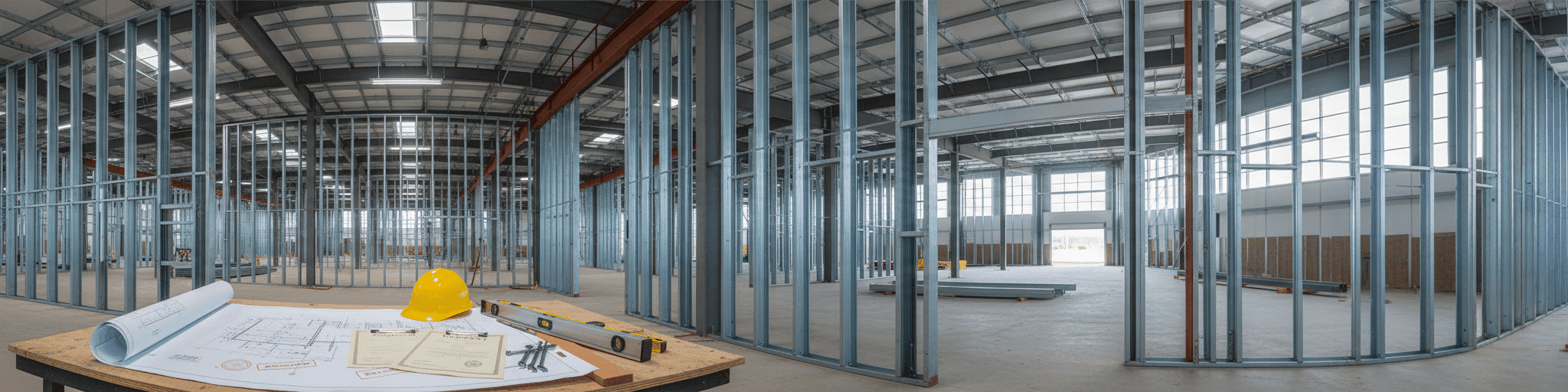

Steel building warranties protect different components on separate timelines, so understanding structural versus component coverage prevents costly surprises down the road. We help you navigate exclusions and transferability terms to ensure your investment stays protected through single-source accountability.
What Steel Building Warranties Actually Cover: The Direct Answer
Your structural warranty and component warranties protect different parts of your building, so knowing which covers what prevents costly claim disappointments.
Structural warranty vs. component warranty: Why the distinction mattersA structural warranty and a component warranty protect two different parts of your building, and mixing them up is how buyers end up disappointed. Structural coverage applies to the frame and main support system, guarding against rust-through and load failure so the skeleton holding your building up stays sound for decades [1].
Component warranties cover the parts riding on that frame: roof and wall panels, paint finish, doors, windows, and vents, each often carrying its own duration and exclusions separate from the structural term [1]. A building can carry a decades-long structural warranty while its paint coverage runs out in a fraction of that time, so a long headline number on a brochure doesn't guarantee every part of the building is protected equally [2].
Knowing which category a problem falls under, structural or component, determines who's responsible and how the claim gets handled.
Typical coverage periods: 20, 30, and 50-year warranties explained
Coverage periods vary by component, not by the building as a whole. Galvalume substrate warranties typically run 15 to 25.5 years, while painted aluminum substrate coverage often tops out around 20.5 years or less, making it a shorter-term guarantee than steel [3]. Paint warranties get more granular still: the same document can cover chalking for 20 years, fading for 30 years, and adhesion for 40 years, since different failure types age at different rates [3].
On the higher end, standing seam systems commonly carry 30 to 50-year manufacturer warranties tied to an expected 50 to 70-year service life [4]. The metal roofing systems National Steel Buildings supplies fall in that long-life range, so you know exactly which number applies to your roof. That spread explains why a 50-year warranty claim on a brochure needs a second look: it may describe the strongest single component rather than the whole assembly.
Matching the warranty term to the specific part, substrate, paint, or panel, keeps expectations realistic and prevents surprise gaps when one coverage period lapses well before another.
What's protected and what isn't: Steel frame, fasteners, coatings, and labor
Structural coverage protects primary framing, beams and columns, plus secondary members like purlins and girts against defects and rust-through under normal conditions, typically for 20 to 50 years.[5] Panel warranties split into substrate protection against perforation and a separate finish warranty covering fading, chalking, and adhesion, since paint and steel age on different timelines.[3] Fasteners and workmanship sit apart from both: installation coverage runs far shorter, often 90 days to a few years, because loose screws or bad flashing surface fast in the first storm cycle.[7] What's usually excluded matters just as much: misuse, impact damage, corrosive exposure from chemicals or salt, unauthorized modifications, and storm loads beyond the ordered code package.[7] Common exclusions include:
- Impact damage from vehicles or falling debris
- Corrosion from chemical or salt exposure
- Unauthorized structural modifications
- Storm damage exceeding the ordered load spec
Knowing which bucket, frame, coating, or labor, a defect falls into determines whether it's a warranty claim or an out-of-pocket repair.[5]
Red Flags in Steel Building Warranties: What to Question Before You Buy
Before signing a steel building warranty, confirm in writing the exact wind speed, snow load, and seismic rating your building is engineered for against your county's actual requirements.
Vague warranty language and exclusion clauses that hide real limitations
Vague warranty wording is the biggest red flag you'll run into when comparing steel building suppliers. Fine-print exemption clauses can make a warranty "not worth the paper it is printed on," so read the actual document instead of trusting the sales pitch.
Ask who actually backs the warranty: a local distributor's promise disappears if that business closes, changes names, or stops carrying the product line, leaving you with no one to call.[8] Many supply contracts also limit your remedy to repair or replacement and cap damages at the purchase price, while excluding consequential losses tied to downtime or repair costs.[9] You're entitled to see a sample warranty before ordering, and you should insist on it. Ask a supplier upfront about maintenance record requirements, since skipping documented upkeep can void coverage even when the defect itself is legitimate.[8] A single-source design-build model removes the finger-pointing that vague pass-through language invites.
Missing coverage for wind, snow, and seismic loads in high-risk regions
Storm damage is one of the most misunderstood exclusions in the industry. Most warranties only cover wind, snow, and seismic events up to the load spec you ordered at purchase, so a building engineered for a 90 mph wind zone gets no protection once gusts exceed that number, even if the frame itself was defective [7].
That distinction matters most for buyers in coastal, high-snow, or seismic-prone counties, where the code package ordered has to match, or exceed, actual local risk rather than a generic regional minimum. Acts of nature like hurricanes and earthquakes sit outside standard manufacturer coverage entirely in many contracts, treated as force majeure rather than a defect [10].
Before signing anything, confirm three things in writing: the exact wind speed, snow load, and seismic category your building is rated for, whether that rating matches or exceeds your county's requirements, and whether the warranty language ties coverage explicitly to that ordered spec rather than a vague reference to "normal conditions."
Warranty transferability: Can you pass coverage to a new owner?
Warranty transferability rarely happens automatically. Most manufacturer warranties can be transferred, but only once from the original owner to a second owner, and only if you complete the paperwork within a strict window, often 30 to 60 days after closing [11]. Miss that deadline and the coverage typically voids outright, leaving a buyer with no recourse [11].
Terms can also shift on transfer: coverage may prorate as the building ages, and workmanship guarantees often don't carry over even when structural coverage does [12]. For a commercial steel building, that means asking your supplier upfront: is the structural warranty transferable at all, how many times, what documentation proves the sale, and does a transfer fee apply. Get the answer in writing before you sign, not after you've listed the property.
A building with a warranty that dies with the first owner is worth less to a future buyer than the brochure number suggests, so transferability terms belong in your buying decision alongside coverage length and exclusions.
How National Steel Buildings Backs Its Warranties With Single-Source Accountability
When one team owns your project from design through closeout, you get a single point of contact empowered to resolve warranty disputes instead of watching subcontractors debate responsibility.
Why design-build with in-house erection eliminates warranty disputes
Warranty disputes usually start with a simple question nobody can answer: whose fault is this, the manufacturer's or the installer's?
Split-scope projects create that gap by design, since a steel erector and a panel installer working as separate subcontractors have no shared accountability when tolerances don't match or a seal fails.[13] National Steel Buildings closes that gap by keeping design, fabrication, and erection under one roof, so there's no second party to blame and no delay while two companies argue over responsibility.
When one team owns the outcome from concept through closeout, you get a single point of contact empowered to resolve problems instead of debate them, which eliminates the finger-pointing that fragmented delivery invites.[14] That structure matters most after installation, when a warranty claim depends on knowing exactly who installed what and whether it followed the manufacturer's erection manual, since deviating from that manual is what typically voids coverage in the first place.[14]
Custom engineering and local code compliance: Built-in warranty protection
Custom engineering isn't a paperwork formality, it's what keeps a warranty valid in the first place. Structural coverage only holds if the building was designed to your actual site conditions, since ASCE 7-22, now referenced by IBC 2024, replaced older generalized wind and snow maps with site-specific, risk-targeted values [15].
A generic template rated for a neighboring county can pass a sales pitch and still fail an inspection or a real storm [15]. Non-certified buildings without stamped engineering plans are typically only appropriate for agricultural or rural sites outside strict permitting jurisdictions, not for commercial, institutional, or habitable structures [15].
Whether your project calls for a heavy red-iron frame or a cold-formed steel building, certified engineering means a licensed professional engineer has signed and sealed drawings confirming the building meets or exceeds local wind, snow, and seismic requirements, the exact criteria a warranty claim will be measured against [16]. Building to your zip code's actual load requirements from day one, rather than a conservative average, closes the gap where warranty disputes usually start.
Proactive communication during and after construction: Your warranty safety net
A warranty only protects you if someone's tracking it, and that starts with documentation the moment construction wraps. Clear communication from the first day of a claim keeps small issues from turning into disputes: acknowledging a problem immediately, setting a realistic timeline for resolution, and providing updates throughout the process builds trust instead of frustration [17]. Speed matters just as much as tone.
Contractors who move fast on legitimate claims, sometimes getting a crew on-site within 24 hours of a reported leak, see clients recommend them to others rather than walk away [17]. On the supplier side, tracking warranty expiration dates and equipment records by model lets a builder flag a possible warranty situation early and act before it becomes a bigger repair [18]. Whether you own a warehouse, an aviation hangar, or an agricultural steel building, that organized tracking is how National Steel Buildings keeps your coverage ready to use when you need it.
That combination, fast acknowledgment plus organized tracking, is what turns a warranty from a document in a drawer into coverage you can actually use when something goes wrong.
Warranty Comparison Essentials: What to Ask Your Steel Building Supplier
Ask your supplier in writing which three warranty promises you're getting, what conditions attach to each, and who actually issues them before you sign.
Warranty evaluation Essentials for comparing suppliers and coverage terms
Comparing suppliers on warranty terms means separating three distinct promises rather than accepting one headline number. A finish warranty on the coating, weathertightness coverage, and structural protection against defects each carry different durations, different conditions, and sometimes different issuers [19].
Confirm whether the frame, the panels, and the paint are each covered, for how long, and what voids them, since terms vary between companies even when the marketing language sounds identical [20]. The right comparison question isn't "how long is your warranty," it's which of these three you're getting, what conditions attach to each, and who actually issues them.
Weathertightness coverage is often conditional on who erects the building and whether installation followed specified details, which makes erection method part of the warranty conversation, not a separate topic [19]. Get every answer in writing before you sign, since verbal assurances about coverage carry no weight once a claim surfaces.
Questions about load ratings, environmental exposure, and maintenance requirements
Load rating questions should start with the engineer-certified drawings themselves: ask whether the wind and snow figures on your warranty match the drawings provided at installation, since certified units are only warranted to the load levels detailed in that paperwork [21]. Environmental exposure deserves its own line of questions, especially near saltwater.
Coverage for steel substrates is often tied to distance from the coastline, with exclusions commonly triggered within roughly 1,500 feet of the shoreline [22]. Ask directly whether your site falls inside that exclusion zone before you sign.
On maintenance, get specifics rather than the vague phrase "normal care": clarify whether debris removal, proper drainage off frame surfaces, and keeping framing away from corrosive materials like fertilizers, chemicals, or soil are documented requirements, since skipping any one of those can void coverage even when the underlying defect is legitimate.
How to verify warranty claims and understand the dispute resolution process
Before you sign anything, ask how a dispute actually gets resolved if a claim gets denied, since many supply contracts route disagreements straight into binding arbitration rather than court.[23] Filing a claim with the American Arbitration Association starts with a demand for arbitration, a copy of the arbitration clause, and a filing fee capped around $225 for the consumer, with the business covering the remainder and the arbitrator's compensation.[23] Arbitration also moves faster than litigation: AAA consumer cases closed in 2025 reached an award in a median of just over nine months, versus roughly 34 months for the average U.S. district court trial.[23] Awards are typically final and binding with limited grounds for appeal, so read the arbitration clause before you sign, not after a claim goes sideways.[23] Construction warranty disputes are further complicated because separate contracts on one project often specify conflicting dispute resolution processes, leaving responsibility unclear when a defect surfaces years later.[24]
The simplest way to avoid a tangle of conflicting contracts is to keep the whole project under one roof. When National Steel Buildings designs, supplies, and erects your building, you get one warranty, one point of contact, and no finger-pointing when a claim comes up. That's single-source accountability working for your bottom line, every step of the way. Ready to build with a partner who owns the details so you don't have to? Get a Free Quote.
- Structural warranties and component warranties protect different parts of a building and carry separate coverage periods, so a long headline number doesn't guarantee all parts are equally protected.
- Paint warranties can cover different failure types with different durations: chalking for 20 years, fading for 30 years, and adhesion for 40 years on the same document.
- Most manufacturer warranties transfer only once to a second owner within a strict 30-60 day window after closing, and missing this deadline typically voids coverage entirely.
- Storm damage exclusions only cover wind, snow, and seismic events up to the load spec ordered at purchase, leaving no protection if actual conditions exceed engineered ratings.
- Warranty claims depend on certified engineering drawings matching actual site conditions per ASCE 7-22, since generic templates rated for neighboring counties can fail inspections or real storms.
- Maintenance record requirements are documented conditions that can void coverage even when the underlying defect is legitimate, so clarify specific upkeep obligations before signing.
- Warranty disputes are often resolved through binding arbitration rather than court, which moves faster but offers limited grounds for appeal once an award is issued.
- https://www.hcsteelstructure.com/prefabricated-steel-building-durability-warranty-2025-facts/
- https://www.getcarports.com/steel-building-warranties-explained
- https://sheffieldmetals.com/learning-center/metal-roof-warranty-types/
- https://trilinkcontracting.com/standing-seam-metal-roof/
- https://metalprobuildings.com/steel-building-warranties-whats-typically-covered/
- https://www.getcarports.com/steel-building-warranties-explained
- https://tolbuildings.com/warranties/
- https://www.networkarchitectural.com.au/blog/the-6-questions-to-ask-about-the-6-questions-to-ask-about-warranties-on-cladding-products/
- https://fullertonlaw.com/contract-terms-and-preserving-rights
- https://metalcarportsandbuildings.com/2026/06/21/how-to-compare-warranties-from-metal-building-manufacturers-before-you-buy/
- https://www.nrcia.org/roof-warranty-transferable-owner/
- https://goldengrouproofing.com/blog/are-roofing-warranties-transferable
- https://terrapincg.com/commercial-general-contractor-columbus-ohio/pemb-contractor
- https://www.gonzalesconstruction.com/services/design-build-delivery/
- https://masonsteelcorp.com/steel-building-wind-and-snow-load-requirements-what-buyers-need-to-know-in-2026/
- https://metalcarportsandbuildings.com/2026/03/26/metal-building-snow-load-vs-ground-snow-load-explained/
- https://n3business.com/how-to-handle-warranty-claims-in-construction-projects/
- https://www.ecisolutions.com/solutions/manage-warranties/
- https://www.universalsteel.com/blog/how-to-choose-a-metal-building-manufacturer/
- https://kafafab.com/best-metal-building-company/
- https://www.getcarports.com/warranty
- https://blog.mcelroymetal.com/metal-roofing-and-siding/metal-roofing-in-coastal-areas
- https://www.adr.org/industries/consumer/
- https://www.constructlaw.com/category/construction-dispute/