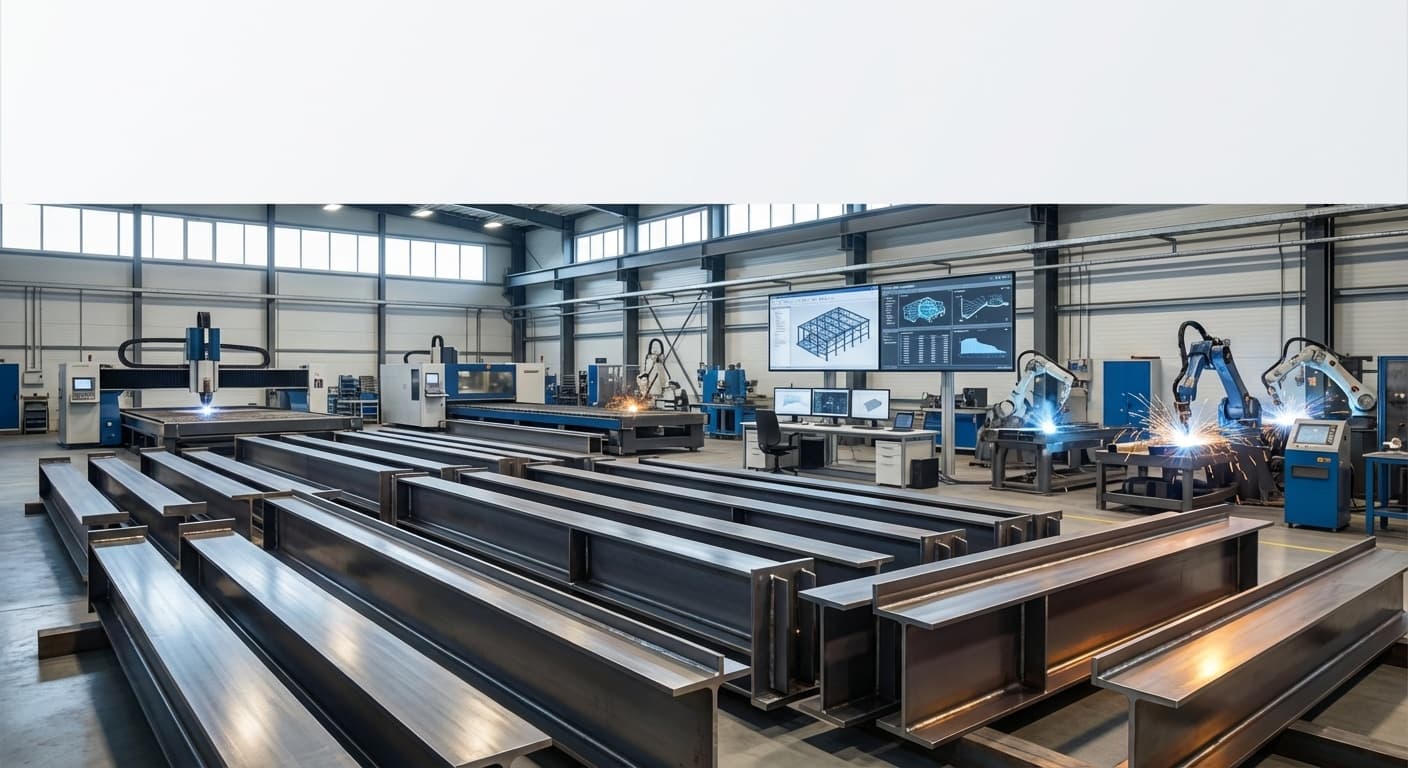

Structural steel components have become the backbone of modern infrastructure because they deliver unmatched disaster resilience, design flexibility, and long-term value–bending without breaking through earthquakes and hurricanes while slashing construction time through prefabrication and digital workflows. From A36 workhorse beams to corrosion-resistant weathering grades, the article demystifies how to select the right steel, understand critical standards like AISC 360-22, and combine columns, beams, and lateral systems into buildings that last decades with minimal maintenance. Readers learn why certified fabrication matters, how hybrid steel-concrete systems accelerate high-rise schedules, and why technologies like BIM clash detection and robotic welding cut waste, cost, and risk on every project. The guide also spotlights emerging advances–hydrogen-based production, embedded health-monitoring sensors, and nano-coatings–that promise cleaner, smarter, longer-lasting steel infrastructure, positioning readers to build safer, faster, and greener while meeting both budget and sustainability targets.
Why Structural Steel Components Are Essential for Modern Infrastructure
Steel structures flex during earthquakes instead of collapsing, keeping essential services running when your community needs them most.
Strategic role in resilient infrastructure
When disaster strikes, you need a building that stands strong. Steel delivers that protection through sheer strength–it bends but doesn't break. Your steel structure absorbs earthquake forces, resists hurricane winds, and handles extreme temperatures without failing [1]. That's why hospitals and emergency centers rely on steel frames. They flex during earthquakes instead of collapsing, keeping essential services running when communities need them most [2].
Steel won't warp, twist, or crack under pressure, giving you peace of mind through any weather event [2].After disaster hits, steel buildings get back to business faster. You'll face fewer repairs and less downtime compared to other building materials [2]. When reconstruction is needed, prefabricated steel components speed up the rebuild–critical for getting transportation networks and utilities operational again [1]. Plus, steel components can be taken apart and recycled into new structures, turning disaster recovery into an opportunity for sustainable rebuilding [2].You build steel once and it lasts. With proper corrosion treatment, your steel structure resists pests, decay, and weather for decades–cutting lifecycle costs whether you're building a bridge, power plant, or transportation facility [1].
That durability means fewer service interruptions and more stable infrastructure for your community. Add fireproofing materials like intumescent coatings or mineral wool insulation, and you buy precious evacuation time during fires [2]. That's protection you can count on.
Evolution and current relevance
Steel wasn't always the go-to building material. Before 1855, it was too expensive for anything but watches and tools–builders stuck with iron, wood, and masonry [3]. Two breakthrough production methods changed everything: the Bessemer Method (1855) and Thomas's "Basic Process" (1879) made steel affordable and consistent [3]. Chicago's Home Insurance Building proved the concept in 1885 as the first steel-skeleton structure. The results spoke for themselves–one-third the weight of masonry but stronger [3].Steel took off fast.
American production exploded from 380,000 tons in 1875 to 60 million tons by 1920, making the U.S. the world's steel powerhouse [3]. Suddenly, architects could dream bigger–the 60-story Woolworth Building (1913) and Empire State Building (1931) showed what was possible [3]. Steel's unmatched strength-to-weight ratio opened new design options. Buildings reached higher while offering more open, column-free space inside [4]. Today's steel is stronger and smarter.
High-strength, low-alloy (HSLA) steels deliver more strength with built-in corrosion resistance [4]. Digital design tools, advanced manufacturing, and even 3D printing let you create precise, complex components that were impossible before [4]. These advances keep steel at the forefront of sustainable construction–it's completely recyclable, energy-efficient to produce, and builds structures that last generations [4].
Key benefits for public and private projects
Steel saves you time and money on any project. Prefabricated components go up fast, cutting labor costs and getting you operational sooner [5]. For public projects–schools, libraries, municipal buildings–that speed matters. You meet tight budgets and deadlines while minimizing disruption to the community [6].
Steel adapts to your needs. Its flexibility lets architects create exactly what you envision without sacrificing function [6]. For industrial facilities, that means column-free spaces where you arrange equipment and workflows your way [7]. The superior strength-to-weight ratio cuts material and foundation costs while maximizing usable space–whether you're planning reconfigurable public buildings or maximizing rentable area in private developments [6].
Steel checks your sustainability boxes too. It's 100% recyclable–helping government projects meet carbon goals and private developers earn green building points [7]. Add minimal maintenance and decades of service life, and you're looking at lower lifecycle costs whether you're building for public or private use [5].
Alignment with sustainability and service excellence
Steel delivers on sustainability from day one. Your building starts with 92% recycled content and stays 100% recyclable forever–no quality loss [8]. When old bridges and buildings come down, they become new steel instead of landfill waste. That's true circular economy in action. You get full transparency too.
Environmental Product Declarations (EPDs) document steel's complete environmental impact–carbon footprint, global warming potential, everything–so you know exactly what you're building with [8]. Steel adapts as your needs change. The flexible connections let you modify and expand without starting over [9]. Smart design makes structures as easy to take apart as they are to build–so components can move to new buildings when requirements shift [9]. That's sustainability that works with your business, not against it.
Prefabrication cuts waste to near zero–components arrive cut to size, ready to install (see our detailed prefabrication section for more benefits) [9]. The strength-to-weight advantage means you use less material, need smaller foundations, and get more usable space–all while maintaining full structural integrity [9]. Long-term, steel's easy maintenance and corrosion protection systems extend building life while cutting costs and environmental impact [9].
Fundamentals: Properties, Grades, and Standards of Structural Steel Components
Pick the right steel grade–A36 for standard projects, A572 for heavy-duty work, A588 for outdoor corrosion resistance–and your project stays on budget and schedule.
Material composition and mechanical performance
You need steel that performs exactly as promised–no surprises, no callbacks. That performance starts with the right chemical mix. Your typical structural steel contains carbon (0.05-0.29%), manganese, and trace elements, each carefully balanced for specific jobs [10].
Take A36 steel–the workhorse you'll use for most projects. It delivers 36,000 psi yield strength and handles temperatures up to 650 degreesF without breaking a sweat [11]. Need more muscle? A572 grades bump that yield strength up to 65,000 psi while staying easy to weld [10]. For outdoor applications, A588 weathering steel gives you four times the corrosion resistance of standard carbon steel–perfect for equipment shelters and agricultural buildings that face the elements year-round [10].
Your project requirements determine the grade:
- Standard buildings and frames: A36 gets it done at the right price
- Heavy-duty industrial facilities: A572 provides extra strength without extra hassle
- Bridges and infrastructure: A709 balances strength with corrosion resistance
- Modern construction: A992 delivers consistent 50,000 psi for beams and columns [10]
Every grade has predictable density (about 0.284 pounds per cubic inch for A36), so your load calculations stay accurate. Melting points hover around 2,600 degreesF–plenty of headroom for field welding without compromising strength [12].
Common grades and their application criteria
You pick steel grades like you pick tools–the right one for the job saves time and money. Each ASTM grade delivers specific strengths, and knowing which to use keeps your project on budget and on schedule.
A36 Steel–Your Go-To Grade This is your bread and butter. With 36,000 psi yield strength and excellent weldability, A36 handles most commercial buildings, warehouses, and
Industry standards (AISC, ASTM, ISO) and certification
Standards keep your building safe, your project approved, and your investment protected. You don't need to memorize them–that's what your steel partner handles–but you should know what protects you.
AISC Standards–Your Quality Guarantee The American Institute of Steel Construction sets the rules everyone follows:
- AISC 360-22: How to design steel buildings that stay standing [14]
- AISC 303-22: The playbook for proper fabrication and delivery [14]
- AISC 341-22: Extra requirements for earthquake zones [14]
- AISC 358-22: Pre-approved connections that skip costly testing [14]
AISC Certification–Not Just a Badge Certified fabricators prove they have the people, equipment, procedures, and track record to deliver quality steel. The certification focuses on preventing problems, not fixing them after the fact. When you work with AISC-certified companies, you get consistent quality and fewer surprises [15].
Material Standards That Matter ASTM specifications cover everything from the steel itself to protective coatings:
- Steel grades and properties (what you're buying)
- Coating thickness standards (D7091)
- Applicator qualifications (D4228)
- Testing procedures (quality verification) [16]
These standards work together to protect your investment. They ensure your steel arrives right, goes up right, and performs right for decades [15].
Quality assurance processes and single‑source sourcing
Quality assurance isn't paperwork–it's your protection against delays, failures, and budget overruns. AISC certification programs verify that fabricators have everything needed for consistent quality: trained people, proper equipment, proven procedures, and a track record that speaks for itself [15].
Prevention Over Correction The best quality programs stop problems before they start. AISC-certified companies build quality into every step instead of catching mistakes later. This means your steel arrives right the first time–no rejected shipments, no field modifications, no schedule impacts [15].
Certification Levels Match Your Needs
- Standard building fabricators handle commercial and industrial projects [17]
- Bridge fabricators work at three complexity levels (Simple, Intermediate, Advanced) [17]
- Special endorsements like Fracture Control cover high-risk applications [17]
Single-Source Advantages Working with one certified supplier from design through erection eliminates finger-pointing and streamlines your project. You get:
- Consistent quality across all components
- Simplified communication and coordination
- Single point of accountability
- Reduced inspection requirements
- Faster problem resolution
Real-World Benefits This quality framework delivers measurable results:
- Fewer warranty claims (problems caught early)
- Smoother inspections (documentation ready)
- Code compliance built in (no surprises at final inspection)
- Protected investment (steel performs as specified) [16]
When your steel partner maintains these certifications, you don't have to worry about quality–it's already handled. You stay focused on your business while they handle the technical details.
Core Structural Steel Elements and Their Infrastructure Functions
Columns, beams, and girders work together to transfer your building's loads smoothly from roof to foundation, creating a structure that stands strong for decades.
Primary load‑bearing members: columns, beams, girders
Your building's strength starts with three fundamental components that work together like a well-coordinated team. Columns are your vertical workhorses–they carry the weight of everything above them straight down to the foundation [18]. You can choose from square, rectangular, or circular shapes based on your specific needs and local building codes [18].
Beams handle the horizontal work, spanning between columns to support your floors and roof [18]. That familiar I-shape isn't just for looks–it delivers maximum strength with minimum steel, keeping your costs down while meeting load requirements [19]. The height of your beam determines how much it can carry, while thickness handles specific loads, and span length affects how far apart you can place your columns [19].
For clear-span applications, I-beams excel at covering long distances without intermediate supports–perfect for warehouses where you need unobstructed floor space [20]. H-beams (wide-flange beams) bring extra stability when you're dealing with side loads from wind or equipment vibration [20].
When you need to span really long distances–think aircraft hangars or industrial facilities–girders step in as the heavy-duty option [18]. These larger beams support secondary framing members, creating the skeleton that makes column-free interiors possible [18]. Each component has its job, and when properly designed, they transfer loads smoothly from roof to foundation, giving you a building that stands strong for decades [20].
Foundation and support components: base plates, anchor bolts, pads
Your steel building is only as strong as its connection to the ground. Base plates spread your column loads across the concrete foundation, preventing punch-through failures that could compromise your entire structure [21]. These thick steel plates bolt directly to column bottoms and handle everything your building throws at them–compression from weight above, tension from wind uplift, and shear from lateral forces [21].
Anchor bolts lock everything in place, but positioning is critical. Even a half-inch misalignment during concrete placement can create major headaches during steel erection [21]. That's why experienced contractors use steel templates to hold bolts exactly where they need to be while concrete sets [22].
Between your base plate and concrete, a layer of non-shrink grout fills any gaps and ensures even load distribution [21]. This might seem like a small detail, but proper grouting prevents stress concentrations that lead to cracks and foundation problems down the road [21].
For typical commercial buildings, you'll see foundation edges thickened to 12-18 inches at column locations [22]. In earthquake or hurricane zones, your engineer will specify additional anchoring–more bolts, deeper embedment, or special patterns designed for your specific wind and seismic loads [22]. Getting these details right during foundation work saves costly fixes later and ensures your
Lateral stability systems: bracing, shear walls, moment frames
Wind doesn't push straight down–it pushes sideways. So does earthquake force. Without proper lateral support, even a well-built structure can fail. Here's how steel buildings stay standing when nature pushes back.
Moment frames create rigidity through welded or bolted connections that won't rotate under pressure [23]. Think of them as the premium option–they give you completely open floor plans with no diagonal braces in the way, perfect when you need maximum flexibility for equipment layout or future renovations [24]. Yes, they cost more upfront due to heavier connections and skilled welding, but for projects requiring clear spans and adaptability, they're worth every penny [24].
Braced frames offer the budget-friendly alternative. Those diagonal steel members you see forming X-patterns or chevrons? They're transferring side loads straight to your foundation through simple geometry [23]. You get excellent lateral stability at a fraction of the cost of moment frames [25]. The trade-off? Those braces can limit where you put doors, windows, or equipment.
Shear walls–whether concrete, masonry, or cold-formed steel–act like vertical beams anchored in the ground [25]. They're incredibly stiff and control building sway better than any other system, making them ideal for taller structures in hurricane country [25]. Position them around stairwells or equipment rooms where solid walls make sense anyway.
Your choice depends on your specific needs. Open warehouse? Braced frame. Office building with future flexibility? Moment frame. Multi-story in a high-wind zone? Shear walls. As discussed in the disaster resilience section, the right lateral system transforms potential catastrophe into just another windy day.
Connection technologies: bolted, welded, high‑strength fasteners
How you connect steel members determines whether your building stands for decades or develops problems in the first storm. Each connection method has its place, and choosing right saves money while ensuring safety.
Welded connections fuse steel members into one continuous piece, spreading loads evenly without stress concentrations [26]. They're your strongest option for permanent structures–perfect for main frames that carry heavy loads or experience constant vibration from equipment [26]. The downside? You need certified welders and can't easily modify connections later. Butt welds join pieces end-to-end, fillet welds handle angled connections, and slot welds work when you're joining overlapping plates [27].
Bolted connections let you assemble buildings like giant erector sets. Your crew can put them together with basic tools, inspect them easily, and take them apart if needed [26]. That's why they're standard for pre-engineered buildings where components ship to your site ready to bolt together [26]. For maintenance access panels or equipment platforms you might relocate, bolts make perfect sense [28].
High-strength bolts bridge the gap between regular bolts and welding. Tensioned to precise specifications, they won't loosen under vibration and handle loads approaching welded strength [26]. They cost more than standard bolts but far less than field welding, making them ideal for critical connections that still need some adjustability.
Smart designers often combine methods–welding primary frames in the shop where quality control is easier, then using bolts for field connections where speed matters [28]. This hybrid approach gets you up faster while keeping costs down. Your local conditions matter too: seismic zones need connections that flex without breaking, while hurricane regions require extra bolts to resist uplift [27].
Prefabrication and Advanced Solutions for Diverse Infrastructure Projects
Modular steel components built in controlled factory conditions arrive ready to assemble, eliminating weather delays and quality surprises on your project.
Modular floor and deck systems for rapid deployment
You need floors that go in fast and carry the load–modular steel deck systems deliver both.
These
Specialized tension and compression members for bridges and towers
Bridge and tower projects demand steel members built for specific forces–some pull, some push, all must perform. Your tension members (bottom chords, hangers, diagonals) handle the pulling forces with steel rated at 50,000-65,000 psi–strong enough for the load, flexible enough for earthquakes [32]. Testing proves these built-up members won't fail catastrophically. If one part cracks, the design prevents it from spreading to the whole structure [32].
Compression members face different challenges. Box shapes and closed sections resist buckling better than open ones, especially critical for your towers and bridge supports that take loads from multiple directions [33]. The member arrangement matters too. Warren trusses spread forces through diagonal members that switch between tension and compression. Pratt trusses put compression in verticals and tension in diagonals [34]. This smart force distribution lets you span longer distances without piers–saving money and improving water flow underneath [34].
For long spans, your tension members get extra safety built in. Instead of single massive pieces, they're assembled from multiple components mechanically fastened together. One component fails? The others carry on [32]. And if you're building in coastal areas or harsh climates, weathering steel gives you four times the corrosion resistance of standard steel–less maintenance, longer life [32].
Custom fabricated components for industrial and utility facilities
Your industrial facility isn't cookie-cutter–your steel shouldn't be either. Custom fabricated components handle your specific loads, resist your environmental conditions, and fit your exact layout needs [35]. Built in controlled factory conditions, these components arrive on-site ready to assemble. No weather delays. No quality surprises. Just consistent, precise steel that meets your specs [36].
The factory approach changes your project economics. Multiple components build simultaneously instead of one after another. Your timeline shrinks. Weather can't stop indoor fabrication [36]. For utility projects, you get modular units with pipes, ducts, and cable trays already installed–three construction phases combined into one [37]. Less site labor. Less material waste. Lower total cost [37].
Industrial operations see the biggest wins. Need to expand later? Your steel frame adapts. Want column-free space for equipment? Done. Planning future production line changes? Your building changes with you [35]. The steel arrives with the right protection for your environment–galvanized for corrosion resistance in chemical plants, fire-rated to your local codes, painted to match your specifications [35].
Every component addresses your real needs. Processing plants get clear-span interiors. Warehouses get maximum vertical clearance. Power stations get frames that support heavy equipment. You're not buying generic steel–you're getting solutions engineered for your specific operation [35].
Emerging hybrid steel‑concrete and smart prefabricated systems
Steel and concrete work better together. Hybrid systems use steel's flexibility where you need it and concrete's mass where it counts. In earthquake zones, steel frames bend without breaking while concrete cores keep everything stable [38]. You get the best of both materials.
Speed is the real advantage. Your steel frame goes up fast from prefabricated components. Precast concrete elements follow right behind. No waiting for one trade to finish before the next starts. Projects finish months sooner [38]. The process is straightforward: design the system, fabricate steel components, erect the frame, add concrete where needed. Each step planned, each component ready when you need it [39].
High-rise projects see dramatic improvements. Prefabricated modules combine steel frames with fiber-reinforced concrete floors–lighter weight, same strength, faster installation [40]. New connection systems make assembly simple. Self-locking modules click together. Grouted connections create solid joints. Everything engineered for fast, secure assembly [40].
Smart technology takes it further. Embedded sensors monitor your structure's health in real-time–catching issues before they become problems. Acoustic floor systems use lightweight concrete with steel fibers to cut noise between floors. Your building works smarter, not just harder [40]. The future of construction is here, combining traditional materials in revolutionary ways.
Best Practices, Digital Workflows, and Future Trends in Structural Steel Components
BIM eliminates costly field mistakes by letting your entire team work from one 3D model, with automated clash detection catching conflicts before steel arrives on site.
Integrated BIM‑driven design and coordination
BIM transforms how you build with structural steel. Everyone works from the same 3D model–architects, engineers, contractors–eliminating confusion and costly mistakes [41]. Your team spots problems before steel arrives on site. Clash detection catches conflicts between systems automatically, saving you from expensive field fixes and schedule delays [42].
The numbers speak for themselves. BIM projects save significantly on labor, materials, and coordination while cutting fabrication and construction risks [43]. You see exactly what you're building through realistic 3D views, understanding complex details without decoding technical drawings [41]. Projects finish weeks or even months faster thanks to automated workflows that streamline every phase from design through construction [43].
Getting started requires the right tools. Revit handles structural modeling and connects seamlessly with analysis software. Navisworks excels at clash detection across all trades [41]. For
Advanced fabrication: laser cutting, robotic welding, 3D printing
Today's fabrication technology delivers what matters: precision cuts, perfect welds, and faster delivery. Laser cutting creates cleaner edges with tighter tolerances than old-school methods, slashing material waste [44]. These systems handle thicker steel plates while maintaining accuracy–opening up new design possibilities for your projects [46].
Robotic welding eliminates guesswork. Smart sensors and AI adjust welding parameters on the fly, producing consistent connections every time [45]. Your workers stay safe while robots handle the dangerous, repetitive tasks. Even smaller shops now use collaborative robots that work alongside skilled welders, speeding production without breaking the budget [46].
3D printing brings the impossible to life. Direct Metal Laser Sintering fuses steel powder layer by layer, creating complex shapes you can't make any other way [45]. Need a custom connection piece with intricate geometry? Rapid prototyping gets you from concept to component fast, with minimal waste [44].
Bottom line: these technologies cut your costs, compress your schedule, and expand what's possible with structural steel [45].
On‑site erection, alignment, and connection verification
Steel erection runs like clockwork when you plan it right. Start with columns–place them accurately on foundation pads, connect base plates to anchor bolts, and grout properly for even load distribution [47]. Today's laser levels and digital surveying tools nail alignment within millimeters. No guesswork, just precision [47].
Your sequence matters:
- Secure columns first
- Hoist horizontal members into position
- Connect with high-strength bolts or field welds based on your specs
- Install bracing for wind and seismic resistance [47]
Quality checks happen throughout. Torque-test every bolt connection. Inspect welds using ultrasonic or radiographic methods. Document everything [47]. Safety never takes a back seat–fall protection, proper rigging plans, and weather monitoring keep your crew safe and your partially erected frame stable [48].
Smart coordination prevents headaches. Schedule steel delivery, crane paths, and staging areas to avoid conflicts with other trades. Your concrete, envelope, and MEP contractors all need space to work [48]. BIM helps you plan every move, while drones let you monitor progress without leaving the trailer [47].
When you integrate proper planning, modern tools, and rigorous verification, you get what counts: a structure that's safe, compliant, and built to last [47].
Sustainable innovations: low‑carbon steel, embedded sensors, corrosion‑resistant coatings
Steel production is getting cleaner, and that's good for your bottom line. Hydrogen-based steelmaking and carbon capture slash emissions while maintaining quality [49]. Direct reduced iron powered by renewable energy replaces old blast furnaces. Near-complete recycling turns yesterday's steel into tomorrow's buildings [50].
Smart sensors change everything about maintenance. Embedded monitoring systems track your structure's health 24/7, catching problems before they cost you money [51]. These sensors detect tiny changes in stress, temperature, and integrity–like having a doctor constantly checking your building's vital signs. You fix small issues before they become big headaches [49], [51].
New protective coatings extend steel life dramatically. Nano-engineered coatings fight corrosion better than ever, especially crucial if you're building near saltwater or in harsh climates [49]. Pair these coatings with corrosion-resistant steel grades, and you slash maintenance costs while your structure stays strong for decades [49].
The future of steel is here: cleaner production, smarter monitoring, and longer-lasting protection. Your projects benefit from lower environmental impact, reduced maintenance, and extended service life.
- Steel's high strength-to-weight ratio and ductility let buildings flex during quakes and hurricanes, cutting post-disaster downtime and repair costs.
- A36 (36 ksi) suits standard frames; A572 (up to 65 ksi) handles heavy loads; A588 weathers four times better for outdoor use.
- AISC-certified fabrication and correct grade selection ensure code compliance, fewer defects, and faster erection.
- Prefabricated steel components arrive cut-to-size, slashing site labor, waste, and schedule by months while maintaining precision.
- Hybrid steel-concrete systems combine steel speed with concrete mass, ideal for high-rises and seismic zones.
- BIM clash detection and robotic welding cut rework, material waste, and total project cost while accelerating delivery.
- Embedded sensors and nano-coatings extend steel life, enabling predictive maintenance and lower lifecycle costs.
- https://solidstatesteel.com/the-role-of-steel-in-creating-resilient-infrastructure/
- https://reganindustrial.com/blog/structural-steel-disaster-resilience/
- https://www.steelincga.com/a-brief-history-of-steel-construction/
- https://www.cgaeng.com.au/blog/the-evolution-of-structural-steel
- https://www.bushwickmetals.com/advantages-of-steel-in-construction/
- https://isenj.com/structural-steel-public-infrastructure/
- https://www.greengubregroup.com/blogs/the-role-of-structural-steel-in-modern-infrastructure-development
- https://parallax.aisc.org/sustainability.aspx
- https://www.infrabuild.com/resources/sustainability-resources/sustainable-design-with-steel/
- https://www.infra-metals.com/resources/astm-structural-steel-standards/
- https://www.azom.com/article.aspx?ArticleID=6117
- https://www.servicesteel.org/resources/a36-steel
- https://www.bushwickmetals.com/structural-steel-grades-explained/
- https://www.aisc.org/aisc/publications/current-standards/
- https://www.aisc.org/certification/
- https://www.aisc.org/aisc/publications/astm-standards/
- https://steelaudit.com/aisc-certification-requirements.html
- https://huntersteel.com.au/components-of-structural-steel/
- https://www.servicesteel.org/resources/steel-beam-basics
- https://endura-steel.com/a-rundown-of-structural-steel-shapes/
- https://www.linkedin.com/pulse/base-plate-anchor-rod-design-overview-javier-encinas-pe
- https://mbmisteelbuildings.com/blog/steel-building-foundation/
- https://everseismic.com/moment-frames-vs-braced-frames/
- https://alldraft.com/the-pros-and-cons-of-moment-frames-vs-shear-walls-for-lateral-stability-in-barndominiums/
- https://ccpia.org/types-of-lateral-force-resisting-systems-in-commercial-buildings/
- https://www.jlmetals.ca/welded-vs-bolted-connections_choosing-the-right-fastening-method-for-your-project
- https://skill-lync.com/blogs/types-of-steel-structural-connections-a-guide-for-civil-engineers
- https://www.jswonemsme.com/blogs/blogs-articles/structural-steel-connections-bolted-vs-welded-joints-pros-cons-and?srsltid=AfmBOoq262tFHH-P-V2_Vjr1nVh91ZoxYmadpvZFbDNKUEtr9EcA0Jx8
- https://pebsteel.com/en/steel-floor/
- https://peb.steelprogroup.com/steel-structure/system/floor/
- https://spstechnology.com/solutions/buildings/
- https://www.aisc.org/bridges/bridge-resource-center/
- https://www.sciencedirect.com/topics/engineering/steel-bridges
- https://www.conteches.com/knowledge-center/archived-pdh-articles/specifying-a-vehicular-prefabricated-steel-truss-bridge/
- https://pebsteel.com/en/6-reasons-to-choose-prefabricated-steel-frames-when-constructing-industrial-buildings/
- https://buildwithpmc.com/exploring-the-benefits-of-prefabricated-structural-steel/
- https://ezarcsolutions.com/off-site-modularization-the-future-of-structural-steel-fabrication/
- https://www.metrosh.in/blog/hybrid-construction-blending-steel-and-concrete-for-maximum-strength
- https://www.kaizenprefab.com/blogs/hybrid-steel-structures
- https://www.sciencedirect.com/science/article/abs/pii/S0141029624018327
- https://www.bimassociates.com/blog/bim-services-structural-engineering/
- https://bayoucitysteel.com/bim-structural-detailing-enhancing-trade-coordination-through-3d-modeling-and-collaboration/
- https://www.autodesk.com/solutions/aec/bim/structural-engineering
- https://www.stssteels.com/post/advancements-in-steel-fabrication-techniques
- https://www.apsindustrialservices.com/blog/technologies-in-steel-fabrication-transforming-the-u-s-industry
- https://endura-steel.com/metal-fabrication-technology/
- https://www.allaboutlgsf.com/post/steel-structure-erection-process-comprehensive-step-by-step-engineering-guide
- https://www.alpha-labor-co.com/blog/structural-steel-installation-best-practices
- https://sheetmetalindustries.com/steels-critical-role-in-climate-change-adaptation-and-extreme-weather-engineering/
- https://www.fedsteel.com/insights/steel-industry-trends-2025/
- https://buyabeam.com/blogs/steel-beams/climate-friendly-steel-innovations/