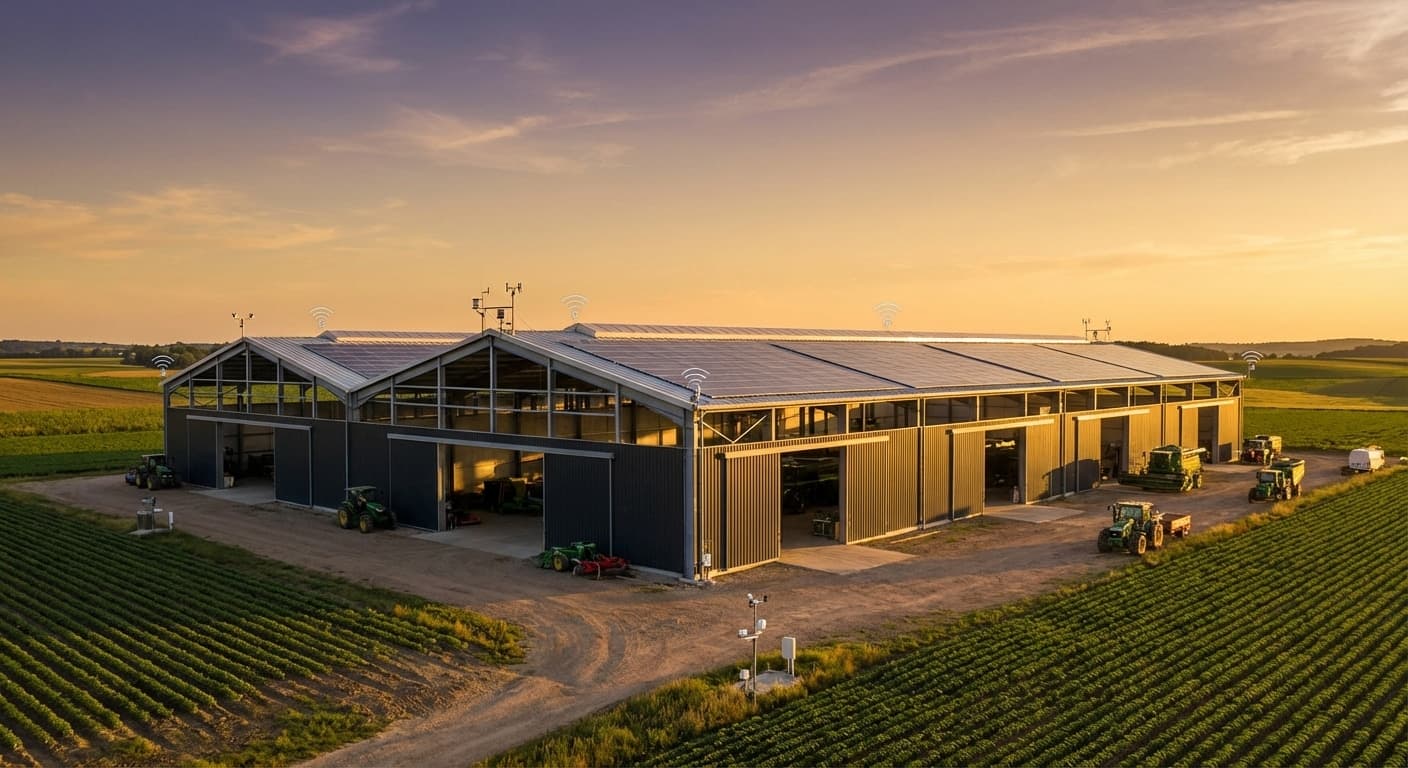

This definitive guide empowers farmers to transform agricultural buildings from passive shelters into profit-boosting assets by integrating strategic design, smart technology, and lifecycle thinking. Readers learn to align site selection, clear-span layouts, and energy-smart envelopes with workflow patterns, regulatory exemptions, and environmental permits, cutting operating costs while protecting livestock and harvests. It walks through material choices–steel for durability, hybrid systems for balance, high-performance insulation for efficiency–using real ROI data and certification pathways like BREEAM and ISO 14001 to validate sustainability claims and market credibility. Budgeting tools, prefabrication tactics, and phased construction schedules keep projects on time and on budget, while IoT sensors, automated ventilation, and climate-adaptive design future-proof barns against volatile weather and labor shortages. By mastering these interconnected decisions, farmers can raise healthier animals, extend growing seasons, and pocket thousands in energy savings, turning every building decision into long-term farm profitability.
Foundations of an Agricultural Building Design Guide
Strategic building design with clear-span layouts and smart placement cuts your energy costs while maximizing usable space and workflow efficiency.
Why strategic design drives farm productivity
Strategic building design drives your farm's productivity and profits. Well-designed structures protect equipment and livestock from harsh weather, cut maintenance costs, and create versatile spaces that work as barns, storage, and equipment shelters [1]. Clear-span designs eliminate support columns that limit productivity, giving you maximum usable space and streamlined workflow zones [1].
Smart building placement optimizes solar gain and wind protection, cutting energy costs significantly [2]. Today's agricultural steel buildings integrate automated climate control, real-time monitoring, and precision resource management–boosting productivity while reducing labor [2]. High-performance insulation and moisture control extend growing seasons and protect harvests, directly improving your yield and revenue [2]. These design elements transform buildings from passive shelters into assets that actively enhance your operations.
Defining project goals and stakeholder expectations
Clear project goals save you money and headaches. Without proper planning, farm construction projects face costly mistakes, missed opportunities, and buildings that don't support your operations [5]. Start with specific, measurable objectives that connect directly to your farm's productivity and profitability. Your goals should address:
- Equipment and livestock protection
- Workflow efficiency
- Environmental considerations
- Technology integration
- Building envelope performance [5]
Identify everyone affected by your building project. Beyond farmers and builders, include equipment operators, livestock handlers, processing staff, regulatory officials, and downstream partners [5]. Each brings unique priorities that enhance your design when properly integrated [5].
Run planning sessions that turn broad objectives into specific targets. Document needs for water access, equipment storage, processing areas, workshops, livestock handling, and feed storage [4]. Address critical decisions during planning–not during construction when changes cost exponentially more [5].
Set performance standards that define success for each component. For agricultural buildings, establish:
- Equipment clearance heights
- Livestock housing ventilation rates
- Durability metrics for high-traffic areas
- Energy efficiency targets [4]
Create milestone checkpoints to track progress and catch issues early [5]. Define decision-making authority, communication protocols, and responsibilities from planning through operation [5]. Anticipate constraints like budget limits, regulations, topography, and existing infrastructure [4].
How this agricultural building design guide supports your vision
This guide turns your agricultural vision into reality. It breaks complex decisions into manageable steps, helping you transform ideas into measurable targets that boost your farm's productivity [6]. You'll evaluate how building choices impact workflow efficiency, environmental factors, and technology integration [8].
The guide's decision-making structure identifies all stakeholders–from equipment operators to regulatory officials–ensuring every perspective shapes your design [6]. It addresses today's needs while planning for tomorrow's growth, preventing expensive modifications later [7].
You'll find sections on sustainable materials, energy efficiency, and technology integration that future-proof your investment [8]. Planning tools convert abstract requirements into concrete specifications:
- Equipment clearance heights
- Ventilation rates
- Durability metrics
- Performance targets [6]
When comparing materials and systems, you'll evaluate options based on durability, maintenance, and climate resilience–not just upfront cost [7]. This guide keeps you focused on your vision while handling the technical details that ensure success.
Key terminology and decision‑making framework
Understanding construction basics helps you make informed decisions. Building production means organizing plans, equipment, materials, and labor while meeting codes–all to create structures that boost farm productivity [9].
Construction methods break down into three types:
- Traditional: Built on-site using established techniques
- Post-traditional: Combines traditional methods with prefabricated parts
- System building: Factory-produced, site-assembled elements [9]
Each affects your flexibility, costs, and labor needs differently. Prefabrication cuts skilled labor requirements on-site while potentially improving quality control [9]. Standardized measurements ensure components fit properly during assembly and reduce expensive field modifications [9].
Your decision-making process follows clear stages. Start with systematic planning that establishes measurable objectives aligned with your operational needs [10]. Define project scope, assess resources, explore approaches, and develop implementation plans [10].
The building process moves through sequential stages:
- Inception (identifying needs)
- Feasibility studies
- Design development
- Detail design
- Production information
- Tender action
- Project planning
- Site operations
- Completion
- Feedback [9]
Each stage requires decisions before moving forward, preventing costly corrections during construction [9]. Agricultural projects face unique constraints–seasonal timelines, specialized resources, regulatory compliance–that you must address during planning [10]. Success requires structured planning with flexibility to adapt to changing conditions [10].
Site Planning and Efficient Farm Layout
Test your soil and map water access before breaking ground, because site selection determines every dollar spent and hour saved over your building's lifetime.
Assessing soil, topography, and climate for optimal placement
Your site selection shapes every dollar spent and every hour saved over your building's lifetime. Get the soil tested first–you need to know what's under your feet before breaking ground. Sandy or clay-heavy soils spell trouble. Loam soils work best, offering solid drainage and stable support for your foundation [11].
Check for erosion patterns and topsoil depth. These tell you where water flows and where problems hide [11]. Moderate slopes help with drainage, but steep grades create headaches–equipment risks, erosion issues, and limited building options [11].
Face your building south when possible. You'll capture free winter heat and cut energy bills significantly [11]. Map your prevailing winds. Open sites need windbreaks. Sheltered areas need ventilation plans to prevent moisture damage [11].
Water access drives everything. List your wells, ponds, and municipal connections. Test the water quality–contaminated supplies hurt livestock and damage irrigation equipment [11]. Pull FEMA flood maps. Know your seasonal water table. Both affect foundation design and long-term drainage [11].
Wildlife matters more than you think. Feed storage attracts everything. Structures near woods or water need serious fencing–8 to 10 feet high, running $6-12 per linear foot [11].
Know your local codes before you design. Research zoning rules, building regulations, and permit requirements now [7]. Finding compliance issues during construction burns money and time you don't have [7].
Building orientation, solar gain, wind, and energy considerations
Smart building orientation cuts your operating costs from day one. Put doors on the south side–you'll block cold winter winds and grab free solar heat through the wall [14]. This simple move alone can slash heating bills.
Position your building to capture winter sun and block summer heat. Use windows, doors, and skylights strategically [12]. Skip expensive cooling systems–add roof overhangs or plant shade trees instead [12].
Good airflow keeps moisture out, temperatures stable, and air fresh. Your livestock stay healthier. Your stored goods last longer [12]. Energy recovery ventilation pulls double duty–fresh air in winter without heat loss [12].
Build these features in from the start. Retrofitting costs three times more and delivers half the results [13]. Yes, energy-efficient design adds to upfront costs. But cutting corners here guarantees higher bills forever [13].
Think about sight lines too. You should see your grain systems and key operations without opening massive doors. Every trip saved adds up [14]. Done right, your building works with nature instead of fighting it–saving money every single day.
Designing traffic flow, equipment access, and workflow zones
Smart workflow saves time and money every single day. Map how your livestock, equipment, feed, and people move through your operation [4].
Every unnecessary trip costs you [15]. Create clear zones for different activities.
Keep maintenance areas, wash bays, and storage separate but accessible [6]. Your equipment needs protection from weather plus easy daily access [4].
Integrating utilities, water management, and existing infrastructure
Your utilities make or break daily operations. Water comes first–map out needs for livestock, irrigation, equipment washing, and worker facilities [4]. You might pull from streams for animals, wells for crops, and municipal lines for washrooms. Start simple or go complex with pumps, filters, and automated systems–match the setup to your operation [4]. Size electrical systems for your heaviest loads. Position outlets where you'll actually use them–throughout maintenance areas and work zones [6]. Install floor drains that handle real water flow. Add plumbing that supports equipment cleaning without creating mud pits [6].
Don't overlook internet access. Rural connectivity varies wildly, even across your own property. Research options now–precision agriculture demands reliable connections [4].
Study your existing setup first. How do current buildings, roads, and utilities work together? Find the friction points [4]. Place new utilities based on actual workflow patterns, not guesswork [4].
Build in flexibility from day one:
- Backup power systems for critical operations
- Capacity for renewable energy additions
- Room for automation upgrades
- Expandable conduit runs for future tech [6]
Position buildings to work with nature. South-facing entries deliver free heat and wind protection, cutting energy costs for decades [16]. Smart utility planning today prevents expensive retrofits tomorrow.
Choosing Systems, Materials, and Sustainable Envelopes
Steel frames give you the clear spans agricultural operations need while costing less over time through lower maintenance and insurance premiums.
Comparing steel, hybrid, and alternative structural systems
Your choice of structural system drives everything–from initial cost to decades of maintenance. Steel frames deliver what matters most in agricultural settings: clear spans that house your largest equipment without support columns in the way [17]. You get buildings that shrug off weather, pests, and time itself. Yes, steel costs more upfront. But you'll save that difference through lower insurance premiums and near-zero maintenance over the building's life [19]. Wood structures cost less initially and provide natural insulation that keeps temperatures steady [17]. But here's the catch–wood spans can't match steel's reach, and you'll need ongoing treatments to fight moisture and pests in farm environments [19]. Plus, fire safety becomes a constant concern with stored hay and equipment nearby.
Hybrid systems split the difference. You put steel where you need strength–main frames and long spans–then use wood for walls or secondary elements where it makes sense [18]. This approach balances cost with performance, though it requires careful design to work properly.
Fire performance? Steel won't burn, period. It needs protection from extreme heat, but that's manageable with proper coatings. Mass timber chars predictably at about an inch per hour, creating its own fire barrier [18]. Both beat traditional stick-frame construction for safety.
Bottom line: Match your system to your operation. Equipment storage and workshops?
High‑performance insulation, panels, and moisture control
Your insulation choices determine whether you're heating the outdoors or keeping your operation efficient. Get this right, and you'll cut energy costs while protecting livestock, equipment, and stored products year-round. Start with your building's purpose. Equipment sheds? Basic insulation works fine. Dairy barns or crop storage? You need serious thermal protection [20]. Focus on R-values–higher numbers mean better insulation. Your roof bleeds 25% of your heat, walls another 35% [21]. Those percentages translate directly to your utility bills.
Your best options:
- Insulated metal panels: Do double duty as structure and insulation
- Rigid foam boards: R-3.2 to R-31 in one layer
- Spray foam: Fills every gap but keep it away from animals
- Fiberglass batts: Budget-friendly for framed walls [20]
Moisture kills insulation performance and rots structures. You need vapor barriers–6-mil polyethylene minimum–on the warm side of your walls [21]. Skip this step and condensation will destroy your investment from the inside out.
Smart ventilation works with your insulation, not against it. As covered in our section on building orientation, proper airflow manages humidity while heat recovery systems keep warmth inside during winter [12]. Combined with quality doors and windows, you create an envelope that performs efficiently for decades.
Match your insulation to your climate, your use, and your budget. But remember–what you save on insulation today, you'll pay in energy costs forever [21].
Energy‑efficient doors, windows, and smart building controls
High-performance doors and windows directly impact energy consumption and interior conditions in agricultural buildings. Windows with multiple glazing layers significantly reduce heat transfer–minimizing loss during winter and preventing gain in summer [12]. Strategic placement supports passive solar design, with south-facing openings maximizing beneficial winter sunlight while properly sized overhangs prevent summer overheating [12]. These components contribute significantly to a building's overall energy performance by maintaining stable interior temperatures without relying solely on mechanical systems [12].Smart building controls transform static structures into responsive systems that automatically adapt to changing conditions.
These technologies gather environmental data and adjust building systems to optimize performance [22]. Programmable controls regulate ventilation with variable-speed fans that modify airflow based on temperature, humidity, and air quality measurements–critical for livestock health and crop preservation [22]. Motion sensors, timers, and daylight harvesting systems ensure lighting operates only when and where needed, reducing electricity usage by up to 75% compared to traditional systems [12]. Digital twin technology enables virtual modeling of building performance, allowing farmers to test different scenarios and identify optimization opportunities before implementing physical changes [22].Integrating these elements produces measurable operational benefits beyond comfort.
Smart systems track energy usage patterns, enabling targeted optimization of ventilation, lighting, heating, and cooling to match real-time needs [22]. This precision control extends equipment lifespan while reducing maintenance costs–one study demonstrated that combining renewable energy with automation reduced energy consumption by approximately 83% for a farm in Portugal, generating return on investment exceeding $36,000 over eight years [22]. For operations with limited capital, strategic improvements to doors, windows, and control systems provide accessible entry points that often pay for themselves through utility savings while creating more productive agricultural environments [22]. Custom agricultural buildings can incorporate these energy-efficient features from the design stage, ensuring ventilation systems, insulation, and other energy-saving components work together as an integrated system rather than as expensive aftermarket additions [23].
Sustainable material options and lifecycle impact analysis
Thinking beyond first cost? Smart move. Lifecycle analysis shows you the real price of materials–from manufacturing through disposal [24]. This matters more than ever as buyers demand sustainable operations and regulations tighten. Low-carbon materials include masonry, wood, brick, and standard drywall. Yes, steel requires more energy to produce, but here's what the numbers miss–steel lasts 50+ years with minimal maintenance and recycles completely at end of life [25]. Wood may start greener, but factor in treatments, replacements, and disposal challenges over decades.
Key sustainability factors:
- Manufacturing energy: Varies widely between materials
- Transport impact: Local sourcing cuts emissions significantly
- Thermal performance: Most materials rate 0-2 W/m.K
- End-of-life options: Recyclability versus landfill [25]
Modern design tools now calculate environmental impacts during planning, not after you've committed [25]. This lets you balance sustainability goals with practical needs like span requirements and maintenance costs.
For remote agricultural sites, transportation becomes critical. Heavy materials like concrete burn fuel getting to your location [24]. Pre-engineered steel components ship more efficiently and go up faster, cutting both transport and on-site impacts.
The sustainable choice isn't always obvious. Consider total lifecycle costs (covered in our Budgeting section), local availability, and how materials perform in your specific application. Sometimes the "greener" option on paper fails in practice. Choose materials that last, perform, and make sense for your operation's long-term success.
Regulatory, Safety, and Certification Pathways
Agricultural buildings in England and Wales may be exempt from Building Regulations if properly positioned, while Scottish structures require structural engineer approval regardless of classification.
Navigating BS 5502‑22, local codes, and permitting processes
Agricultural buildings follow specific regulatory pathways distinct from standard structures. In England and Wales, agricultural buildings meeting certain criteria–not used as dwellings, positioned away from sleeping accommodations, and having sufficient fire exits–are generally exempt from Building Regulations, eliminating the need for structural design calculation submissions [26]. Scottish requirements differ significantly, mandating building warrant approvals by qualified structural engineers regardless of the building's agricultural classification [26].
BS 5502-22:2003+A1:2013 provides the comprehensive framework specifically developed for agricultural structures, with the 2013 amendment aligning requirements with Eurocode standards [26]. This standard establishes two building classifications: Class 1 structures following standard building requirements and Class 2 buildings–which most agricultural structures fall under–designed with a 20-year minimum life expectancy and reduced loading requirements [26]. The classification system directly impacts structural calculations, with Class 2 buildings benefiting from a 0.9 classification factor applied to characteristic loads, resulting in approximately 65% of normal design loads–reflecting their reduced design life expectations [26].
Despite these reduced requirements, BS 5502-22 mandates adherence to Eurocode design principles rather than withdrawn standards like BS 449 or BS 5950, emphasizing that sound engineering principles remain essential even with regulatory exemptions [26]. The standard covers comprehensive design considerations beyond loading, including specifications for roof systems, cladding, and structural elements–while reminding designers that unique agricultural building features like open sides or limited bracing opportunities may present greater engineering challenges than fully-enclosed industrial structures [26]. When navigating local permitting processes, designers should recognize that exemption from Building Regulations doesn't eliminate the need to address other regulatory requirements, and the standard serves as part of a broader regulatory framework covering everything from fire precautions and amenity design to specialized structures for livestock, crops, and agricultural processes [27].
Occupational safety, fire protection, and animal welfare standards
Agricultural buildings require comprehensive fire safety protocols to protect workers, livestock, and property from the thousand-plus fires occurring in farm structures annually [28]. Farms face heightened fire risks due to combustible materials, with primary hazards including improperly stored hay and straw that can spontaneously combust when damp, electrical system failures, machinery malfunctions, hot work operations, fuel storage, and human factors like smoking [29]. Fire prevention demands strategic building design–storing hay and straw at least 10 meters from other structures, particularly those housing livestock, chemicals or fuel [30].
Animal welfare during emergencies requires predetermined evacuation plans specifically designed for livestock, with strict separation between animals and flammable materials [29]. Farm owners or managers serve as the legally designated 'Responsible Person' under fire safety legislation, which applies to all agricultural buildings where people work–including packing sheds, milking parlors, barns, and holiday accommodations [30]. This designation creates a legal obligation to implement adequate fire safety measures, with non-compliance potentially resulting in prosecution [29].
The cornerstone of compliance is a thorough fire safety risk assessment that identifies removable or reducible risks while determining necessary precautions to protect occupants [30]. For farms storing significant quantities of dangerous substances like fertilizers, additional regulatory requirements apply, including the Dangerous Substances Regulations that mandate notification to Fire & Rescue Services when storing 150 tonnes or more of relevant ammonium nitrate mixtures where nitrogen content exceeds 15.75% by weight [30].
Environmental permits, runoff management, and waste reduction
Agricultural building operations require specific environmental permits with compliance scored through a risk-based system. The Environment Agency uses a Compliance Classification Scheme to categorize permit breaches from Category 1 (major impact, 60 points) to Category 4 (no impact, 0.1 points), with accumulated points determining annual compliance bands that directly affect subsistence charges [31]. For waste management, the Environmental Permitting Regulations (EPR) establish the regulatory framework, with recent changes ending free waste exemption registrations–farms now pay a £56 registration fee renewed every three years plus risk-based compliance fees [32].
Strategic waste reduction follows a hierarchy: first avoid waste generation, then minimize unavoidable waste, and finally reuse materials to recover value before considering disposal [32]. For agricultural buildings generating runoff, proper management requires secondary containment for all liquid wastes with appropriate measures matching standards in the Water Resources Regulations [33]. This includes suitable designs detailed in CIRIA guidance documents for livestock storage infrastructure and pollution prevention systems [33].
Waste spreading activities near water sources face strict restrictions–no storage or spreading within 10 meters of inland freshwaters or coastal waters, 50 meters of springs, wells or boreholes, or within groundwater source protection zone 1 [33]. Buildings storing high readily available nitrogen waste must incorporate covers within 200 meters of environmentally sensitive sites to prevent ammonia loss [33]. Compliance scoring affects operational costs significantly–sites in band A (0-1.9 points) pay 95% of baseline charges while those in band F (over 150 points) face 300% charges plus increased regulatory scrutiny and potential permit revocation [31].
Achieving sustainability certifications and performance metrics
Agricultural buildings can achieve credible sustainability standards through established certification programs that measure environmental performance. BREEAM provides a comprehensive framework that evaluates buildings against recognized benchmarks across categories including energy use, materials selection, ecological value, and building user experience [34]. The certification process follows five distinct steps: finding a licensed BREEAM assessor, registering the project, conducting the assessment, undergoing quality assurance checks, and receiving certification with ratings ranging from Pass to Outstanding, reflected in a series of stars on the certificate [34].
Third-party validation from impartial experts ensures credibility–BREEAM assessors verify that buildings meet quality and performance standards before undergoing additional quality audit checks from BRE Global Ltd, which maintains accreditation under BS EN ISO/IEC 17065:2012 [34]. For agricultural facilities seeking alternatives, LEED certification offers a point-based system that evaluates environmental performance across various categories while providing a framework for healthy, efficient, and cost-saving green buildings [35]. ISO 14001 certification complements building standards by establishing broader environmental management systems that help agricultural operations manage environmental responsibilities systematically through efficient resource use and waste reduction [35].
ISO 50001 provides a dedicated framework for energy management that helps farms increase efficiency, reduce costs, and improve environmental performance through systematic energy planning, monitoring, and continuous improvement [35]. These certification frameworks measure performance through established metrics and encourage agriculture-specific adaptations–each system evaluating environmental impacts while providing clear guidelines for achieving sustainability targets that build credibility with stakeholders [36].
Budgeting, Construction Management, and Future‑Ready Solutions
Life-cycle cost analysis reveals that operation and maintenance expenses typically exceed initial construction costs by 1.5 to 5 times over 30 years, making comprehensive financial planning essential.
Accurate cost estimating, ROI, and lifecycle budgeting
Project budgeting serves as the financial compass for agricultural buildings, guiding decisions that impact both immediate construction and decades of operation. Unlike traditional construction that focuses solely on initial costs, agricultural projects require comprehensive financial planning that accounts for building lifespan, maintenance requirements, and operational efficiency [37]. Life-cycle cost analysis (LCCA) reveals that operation and maintenance expenses typically exceed initial construction costs by 1.5 to 5 times over a 30-year period [39]. This reality demands careful evaluation of all components–from structural systems to energy features–based on their total ownership cost rather than purchase price alone. Agricultural buildings face unique budgeting challenges including seasonal timelines, specialized resource requirements, and regulatory compliance needs that must be addressed during planning [37].Accurate cost estimation begins with defining clear project scope through kick-off meetings that engage all stakeholders–from farm managers to equipment specialists [37]. Material costs require careful market analysis across multiple suppliers, with agricultural projects particularly vulnerable to price volatility in commodities like steel and lumber [37].
Labor costs vary significantly depending on construction complexity, with prefabricated systems typically reducing on-site labor requirements while potentially improving quality control [38]. For steel agricultural buildings, maintenance costs average 1-3% of total building cost annually, creating a substantial ongoing expense that must be factored into initial planning [38]. Building envelope decisions dramatically impact operational expenses, with insulation quality directly affecting energy costs, animal welfare, and produce storage conditions [38].Calculating return on investment (ROI) for agricultural buildings requires both bottom-up and top-down budgeting approaches. Bottom-up estimation builds detailed cost projections from specific activities and components, creating more accurate forecasts because it incorporates operational knowledge from equipment operators and field managers [37]. This approach proves particularly valuable when evaluating precision agriculture investments like automated climate controls or energy-efficient lighting systems [37]. LCCA uses a straightforward formula for calculating total cost: LCC = I + Repl – Res + E + W + OM&R + O, where I represents initial costs, Repl covers replacement costs, Res accounts for residual value, E tracks energy costs, W covers water expenses, OM&R includes operations/maintenance/repair, and O captures other costs [39].
For agricultural buildings, this analysis should span at least 20-25 years to capture major maintenance cycles and equipment replacement intervals [39].Practical software tools now simplify complex lifecycle budgeting calculations. The Building Life-Cycle Cost (BLCC) program analyzes energy and water savings alongside other lifecycle expenses, making it ideal for evaluating sustainable design options in agricultural facilities [39]. For less complex structures, the eVALUator program offers an accessible platform for calculating lifecycle benefits of investments in improved building design, particularly those reducing energy costs or enhancing operational efficiency [39]. Zero-based budgeting proves particularly valuable in agricultural settings by requiring justification for every expense rather than simply adjusting previous budgets [37]. This approach helps identify inefficiencies and innovation opportunities–like determining whether new LED lighting technology, while requiring higher initial investment, provides better crop yields and lower energy costs throughout the building lifecycle [37].
Selecting contractors, prefabrication, and phased construction
Effective contractor selection directly impacts project success in agricultural construction. Look for firms with documented experience in agricultural buildings, proper licensing across relevant states, and comprehensive insurance coverage that protects your investment throughout construction [40]. The prefabrication approach fundamentally changes construction dynamics by manufacturing building components off-site, resulting in faster completion times, minimal farm operation disruption, reduced material waste, and lower overall labor costs [40].
This method typically cuts on-site construction time dramatically–many agricultural structures can be installed in just weeks rather than months, allowing farms to minimize operational downtime while maintaining productivity [40]. The construction process follows distinct phases: initial consultation to identify requirements, design development with detailed quotes, engineering and permit drawings preparation, site work and foundation installation (typically spanning 4-8 weeks), materials fabrication and delivery, and finally building erection–which for metal building systems takes approximately 1-3 months depending on complexity and site conditions [41]. Customization remains possible despite the prefabricated nature–experienced contractors can field-modify standard designs to accommodate specific operational requirements, as demonstrated in projects where over twenty modifications were implemented to match exact farm needs [42].
This phased approach creates natural checkpoints for quality control and progress evaluation while allowing concurrent activities like permit acquisition and foundation preparation to occur while materials are being fabricated, significantly compressing the overall project timeline [41].
Maintenance planning, durability, and resilience to climate change
Emerging technologies: IoT monitoring, automation, and climate‑adaptive designIoT sensors transform agricultural buildings into responsive environments that optimize operations while adapting to climate challenges. These systems continuously monitor critical parameters including temperature, humidity, soil moisture, and air quality–providing real-time data that enables precision resource management [45]. Smart agriculture solutions combining IoT sensors with AI analytics reduce input costs by applying water, fertilizers, and pesticides only where needed, potentially increasing farm productivity by up to 25% according to McKinsey research [46]. For climate resilience, IoT-enabled weather stations deliver hyperlocal data on temperature fluctuations and rainfall patterns, allowing buildings and irrigation systems to automatically adjust to changing conditions [46]. Automated systems leverage sensor data to control ventilation, lighting, and temperature without human intervention–critical for maintaining optimal growing environments during increasingly unpredictable weather events [46].
These technologies range from simple moisture sensors controlling irrigation to sophisticated environmental control systems that integrate with building management platforms [47]. LoRaWAN networks provide particularly effective infrastructure for agricultural applications, offering long-range communication (up to 15km) with minimal power requirements–ideal for remote farm buildings where traditional connectivity remains challenging [47]. Climate-adaptive designs incorporate these technologies from the planning stage rather than retrofitting them, positioning buildings to harness maximum solar gain while integrating automated shade systems that respond to temperature changes [47]. The integration of edge AI, which processes data directly on devices rather than in the cloud, enables faster decision-making even in areas with limited internet connectivity [45]. While these systems deliver substantial benefits, they require careful implementation planning.
Initial costs for IoT-based smart agriculture solutions can reach $1,000-$3,000 per acre–a significant barrier for smaller operations–though strategic phasing of technology implementation can distribute these costs over time [46]. Technical barriers including limited rural connectivity affect approximately 70% of agricultural areas in developing regions, requiring systems designed to function with intermittent connectivity [46]. Despite these challenges, agricultural buildings incorporating these technologies demonstrate measurable benefits, including energy usage reductions of up to 83% in some implementations with ROI exceeding $36,000 over eight years [46].
- Clear-span steel frames maximize usable space and cut lifetime maintenance costs.
- South-facing orientation plus roof overhangs slash heating and cooling bills forever.
- BS 5502-22:2003 cuts design loads to 65 % for most farm buildings–use it to save steel.
- Life-cycle costs outrun build cost 1.5-5x; insulate and automate early to avoid decades of high bills.
- IoT climate controls can trim energy use 83 % and yield ROI >$36k in eight years.
- Hay stored <10 m from livestock barns is a major fire risk–separate them now.
- Prefabricated steel erection finishes in weeks, letting farms resume full productivity fast.
- https://farmonaut.com/blogs/horticultural-agricultural-buildings-2026-trends
- https://agriculture.institute/project-management-in-agribusiness/critical-role-planning-process-projects/
- https://farmplanning.ces.ncsu.edu/land-and-water/farm-layout-and-infrastructure/
- https://link.springer.com/article/10.1007/s10460-010-9272-z
- https://agrisysintl.com/key-considerations-when-planning-an-agricultural-construction-project/
- https://timeandleisure.co.uk/promotions/how-to-design-farm-buildings/
- https://www.fao.org/4/s1250e/S1250E0n.htm
- https://agriculture.institute/project-management-in-agribusiness/fundamentals-of-project-planning/
- https://njaes.rutgers.edu/fs1342/
- https://www.ny-engineers.com/blog/energy-efficient-farm-buildings-6-key-design-elements
- https://farm-energy.extension.org/introduction-to-farm-building-energy-and-conservation/
- https://www.lighthoof.com/blogs/blog/20-acre-horse-farm-layout-design-strategies-for-commercial-operations?srsltid=AfmBOopaUrxMI4EC7QynKzjDoMIqx–5er7voHpuXf0Q5Sa4Dh4qeOcR
- https://www.apexcontracting.com/post/steel-wood-or-hybrid-choosing-the-best-structural-system-for-commercial-projects
- https://longboardproducts.com/mass-timber-vs-steel-construction?srsltid=AfmBOop3W3OT87YFK5cx7mz9jQVGou8fiCJl_F5AvSqixXs67fO6GVRI
- https://buildings-uk.com/timber-vs-steel-for-industrial-and-agricultural-building-kits/
- https://www.rmax.com/blog/farm-insulation
- https://www.morningagclips.com/energy-efficient-farm-buildings-how-smart-technology-can-reduce-operational-costs/
- https://www.mdpi.com/2673-4591/57/1/5
- https://journals.bilpubgroup.com/index.php/jaeser/article/view/5964
- https://www.newsteelconstruction.com/wp/agricultural-buildings-designed-to-bs-5502-22/
- https://knowledge.bsigroup.com/products/buildings-and-structures-for-agriculture-code-of-practice-for-design-construction-and-loading
- https://www.gov.uk/government/publications/farm-fires-protecting-farm-animal-welfare
- https://www.ddfire.gov.uk/fire-safety-farm
- https://humbersidefire.gov.uk/your-safety/business-safety/fire-safety-on-the-farm
- https://www.gov.uk/government/publications/assessing-and-scoring-environmental-permit-compliance/assessing-and-scoring-environmental-permit-compliance
- https://adas.co.uk/news/managing-waste-on-farm-ensuring-legislative-compliance/
- https://www.gov.uk/government/publications/landspreading-how-to-comply-with-your-permit/landspreading-how-to-comply-with-your-environmental-permit
- https://breeam.com/about/how-breeam-works
- https://www.suppliergateway.com/sustainability-certifications-to-know-in-2024/
- https://www.mdpi.com/2075-5309/12/2/208
- https://agriculture.institute/project-management-in-agribusiness/overview-of-project-budgeting-techniques/
- https://www.fs.usda.gov/t-d/pubs/htmlpubs/htm08732839/page01.htm
- https://tracextech.com/climate-resilience-in-agriculture/
- https://medium.com/global-climate-solutions/enhancing-climate-resilience-in-agriculture-top-strategies-for-sustainable-farming-32776e6de340
- https://www.mdpi.com/1424-8220/25/12/3583
- https://www.hashstudioz.com/blog/building-climate-resilient-farming-solutions-with-iot-sensors/
- https://tektelic.com/expertise/smart-buildings_iot/