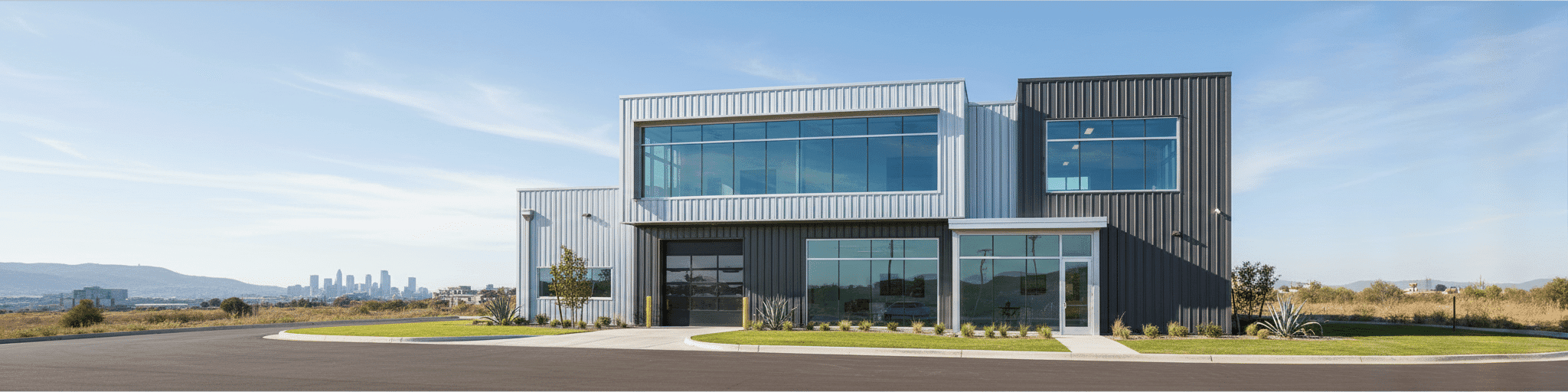

Two-story metal buildings deliver twice the usable square footage on the same footprint by leveraging steel's superior strength-to-weight ratio, cutting both land and foundation costs while resisting fire, wind, and seismic events. The article walks readers through every stage–designing energy-smart, flexible layouts for barndominiums, mixed-use live-work spaces, retail, offices, or high-density storage mezzanines; engineering foundations and framing to handle uplift, live, collateral, and concentrated loads; navigating codes, permits, and stair safety; and managing fast-track, pre-engineered construction timelines–so they can avoid costly surprises and maximize ROI. Up-front material savings of 30-60 % versus wood or concrete, combined with ultra-low 1 % annual maintenance, 30 % lower energy bills through cool roofs and zoned insulation, and accelerated 6-8-year payback periods, position these structures as the most economical long-term building solution. Whether you need a farmhouse with upstairs bedrooms, a showroom with corporate offices overhead, or a warehouse that doubles storage without expanding the slab, the guide equips you with load tables, cost ranges ($24-43 installed PSF), financing options, and pro tips to secure a durable, future-proof asset that appreciates faster and insures for less than conventional construction.
Structural Benefits and Design Advantages
Double your usable square footage by building upward instead of outward, while cold-formed steel delivers up to seven times greater strength-to-weight ratio than traditional lumber.
Maximizing Vertical Space Efficiency
Two-story metal buildings transform your vertical space into usable square footage without expanding the building's footprint. By building upward instead of outward, you effectively double your functional area while minimizing land usage and foundation costs.
This vertical design opens up strategic possibilities for space allocation – imagine dedicating your ground floor to customer-facing operations like retail or workshops while utilizing the upper level for administrative offices, meeting rooms, or specialized work areas. The approach proves especially valuable in areas with limited land availability or high property costs, offering a practical way to maximize your property's potential and deliver stronger returns on your investment.
For businesses seeking storage solutions, the vertical design naturally accommodates mezzanines and storage systems, as we'll explore in detail later.
Superior Strength-to-Weight Ratio
Steel's exceptional strength-to-weight ratio makes it the ideal material for two-story construction. When cold-formed steel is shaped into structural members like C-studs, the bends act as stiffeners that dramatically increase strength – delivering up to seven times greater strength-to-weight ratio compared to traditional lumber.
With a minimum tensile strength of 50,000 pounds per square inch in both compression and tension, steel maintains its structural integrity during seismic events, fires, and extreme weather conditions. This inherent strength means your building requires less material while maintaining superior load-bearing capabilities, ultimately reducing both construction costs and timeline.
The material's ductile nature allows it to flex and absorb energy from ground movement and high winds, providing peace of mind that your investment remains protected during severe weather events.
Versatility in Design and Layout Options
Two-story metal buildings offer unmatched design flexibility through customizable layouts that adapt to your specific needs.
Our
Enhanced Energy Efficiency Potential
Two-story metal buildings deliver significant energy efficiency advantages through strategic design elements that translate directly to lower operating costs. Your vertical layout enables effective temperature zoning, allowing you to control climate separately for each floor based on actual usage patterns – no need to heat or cool unoccupied spaces. Advanced insulation systems, including spray foam and fiberglass options, integrate seamlessly into walls and roofs to maintain comfortable temperatures year-round while reducing HVAC expenses.
Cool roofing strategies deserve special attention – reflective coatings and specialized panels can decrease interior temperatures by up to 30 degrees in warm climates, dramatically cutting cooling costs during peak summer months. By incorporating natural lighting through strategically placed windows and skylights, you'll reduce reliance on artificial lighting while creating a more pleasant work environment. Smart building positioning relative to sun exposure, combined with appropriate overhangs and shading elements, further optimizes passive temperature regulation.
These energy-saving features not only reduce monthly operating costs but also contribute to a smaller environmental footprint – benefits that resonate with both your bottom line and increasingly eco-conscious customers.
Popular Applications and Use Cases
Two-story barndominiums maximize vertical space to create distinct living zones while delivering exceptional value through steel construction's cost-effectiveness and design flexibility.
Residential Solutions: Barndominiums and Modern Metal Homes
Two-story barndominiums represent the perfect fusion of rustic charm and modern functionality, transforming how families approach residential steel construction. These innovative metal homes leverage vertical space to create distinct living zones – positioning bedrooms upstairs provides privacy and separation from daily activities, a layout particularly appreciated by families with teenagers. The beauty of barndominium design lies in its adaptability, with floor plans ranging from intimate 1,600 square foot layouts to expansive 10,000 square foot estates that accommodate diverse lifestyle requirements.
Modern metal homes deliver exceptional value, with building shell costs significantly lower than traditional construction methods. This cost-effectiveness doesn't compromise design flexibility – homeowners can achieve any aesthetic vision, from farmhouse-inspired interiors featuring reclaimed timber and exposed beams to contemporary designs with vaulted ceilings and high-end fixtures. The structures accommodate multiple bedrooms, wraparound porches, and integrated workshops or garages, all while maintaining the energy efficiency inherent in quality steel construction.
Commercial Applications: Offices and Retail Spaces
Two-story metal buildings transform commercial real estate by maximizing every square foot through intelligent vertical design. Ground floors naturally serve customer-facing operations – retail showrooms, reception areas, and service counters – while upper levels create productive environments for administrative offices, conference rooms, and collaborative workspaces. This strategic separation enhances workflow efficiency while improving both employee satisfaction and customer experience.
Our
Mixed-Use Designs: Living Quarters with Workshops/Garages
Mixed-use metal buildings revolutionize live-work arrangements by seamlessly integrating residential comfort with professional functionality. Whether you envision living quarters positioned above your workshop in a two-story configuration or prefer a side-by-side layout that preserves full-height shop ceilings, steel construction adapts to your specific requirements. These versatile structures accommodate various bedroom configurations while maintaining dedicated workspace that supports your business or hobby pursuits.
The dual-purpose approach proves invaluable for entrepreneurs, craftspeople, and hobbyists who value the convenience of combined living and working spaces. You can customize the exact ratio of residential to workshop area, ensuring both zones meet your needs without compromise. The building shell provides the structural framework, while local contractors handle interior build-out to your exact specifications, creating personalized spaces that reflect your lifestyle. This integrated design maintains clear separation between living and work areas – essential for work-life balance – while delivering the cost-effectiveness of a single structure. The inherent durability and minimal maintenance requirements of steel construction make this an economical long-term solution for those seeking functional flexibility.
Storage Optimization with Mezzanine and Second-Level Options
As discussed in the structural benefits section, vertical space optimization remains one of the most compelling advantages of two-story metal buildings. For storage applications specifically, mezzanine installations unlock the full potential of your building's height, transforming previously unused airspace into productive square footage. These elevated platforms serve diverse purposes – from creating observation decks for warehouse supervision to housing administrative offices above production floors, or securing high-value inventory in controlled-access areas.
The configuration flexibility matches your operational needs: freestanding mezzanine systems allow future layout modifications as your business evolves, while integrated catwalk networks provide efficient access across multiple storage levels. For businesses confronting space limitations, mezzanines deliver exceptional value – costing significantly less than traditional building expansion while preserving ground-floor operations. Installation proceeds quickly with minimal disruption to your daily activities, typically completing within days to weeks depending on project scope. This vertical storage strategy revolutionizes facility management by establishing clear sight lines for supervision while organizing inventory in logical tiers that streamline picking, packing, and shipping operations.
Structural Considerations and Requirements
Two-story metal building foundations require engineer-certified designs that account for wind uplift forces and soil conditions to ensure decades of safe performance.
Foundation Requirements for Multi-Level Metal Structures
Two-story metal buildings demand carefully engineered foundations that address unique structural challenges beyond those of single-story structures. The foundation must counteract significant wind-generated uplift forces, as the building's dead load alone typically isn't sufficient for stability. Building codes recognize this challenge by allowing only 60% of the expected dead load to offset uplift effects, requiring additional engineering solutions.
A properly designed foundation begins with comprehensive soil analysis and precise load calculations. The foundation system's "ballast" – which includes the footing, column pedestal, and soil mass on footing ledges – must provide adequate counterforce against uplift while managing the horizontal forces from the building's frame during both normal conditions and extreme weather events.
For optimal stability, foundations should extend below the local frost line and incorporate reinforced concrete footings sized to distribute concentrated column loads effectively into the supporting soil. The critical connection point between the steel structure and concrete foundation utilizes pre-punched metal base plates that fit precisely over anchor bolts embedded in the concrete. This engineered interface ensures proper load transfer while maintaining the building's alignment throughout its service life.
Given these complexities, foundation plans require design and certification by qualified engineers familiar with local soil conditions, drainage patterns, and regional seismic requirements. Working with experienced professionals who understand metal building foundations helps ensure your two-story structure performs safely and reliably for decades.
Load Calculations and Weight Distribution
Accurate load calculations form the foundation of safe two-story metal building design. Engineers must account for multiple load types working simultaneously to ensure your structure maintains integrity under all conditions.
Dead loads represent the building's permanent weight – including the steel framing, roofing system, insulation, and wall panels. These constant forces provide the baseline for all calculations. Live loads account for temporary forces from occupants, moveable equipment, and materials, typically requiring a minimum design value of 20.89 pounds per square foot (PSF) to meet code requirements.
Collateral loads add another layer of consideration, encompassing permanently installed systems that aren't part of the primary structure. These typically start at 3 PSF for basic installations but increase with specific features:
- Fire sprinkler systems: 3-4 PSF additional
- Suspended ceiling systems: 4 PSF
- Solar panel arrays: 9 PSF
- HVAC and mechanical equipment: varies by system
Engineers must also evaluate concentrated point loads from rooftop units, suspended manufacturing equipment, and auxiliary systems like conveyors or catwalks. Each concentrated load creates localized stress that requires specific structural reinforcement.
The real complexity emerges when combining these loads according to building code formulas. These combinations simulate realistic scenarios – such as maximum snow load occurring during high winds, or full occupancy coinciding with equipment operation. This comprehensive analysis ensures your two-story metal building remains stable under both everyday use and extreme conditions.
Second Floor Framing and Support Systems
Strategic framing systems enable two-story metal buildings to support upper levels efficiently while maintaining open, flexible floor plans. Steel's exceptional lateral stability and strength-to-weight ratio – discussed in our structural benefits section – makes it particularly well-suited for multi-story construction without requiring excessive structural members that would compromise usable space.
The framing design typically features a clear bay system utilizing long-span joists and open web configurations. These
Stairway, Access, and Safety Considerations
Safe access between floors requires careful attention to stairway design and safety features in two-story metal buildings. Whether serving a commercial office or industrial facility, your stairway system must meet stringent safety codes while providing reliable daily access.
Standard stairways require specific dimensional requirements for user safety:
- Minimum width of 22 inches between vertical barriers
- Uniform riser heights between 4-7 inches throughout the stairway
- Minimum tread depth of 9.5 inches for secure footing
- Consistent dimensions preventing trip hazards from variations
Fall protection systems form another critical safety layer. Guardrails must feature top rails positioned at 42 inches, with handrails placed between 30-38 inches for comfortable gripping. Balusters or intermediate rails require spacing no greater than 19 inches to prevent falls, particularly important in industrial settings where workers may carry tools or materials.
Industrial applications demand additional considerations for landings and platforms. These must match the stairway width and extend at least 2.5 feet in depth. Where doors open onto platforms, the door swing must not reduce the effective platform depth below 1.7 feet – a crucial detail often overlooked in initial designs.
Alternative stair configurations – including spiral, ship's ladder, or alternating tread designs – may only be used when standard stairs prove genuinely unfeasible due to space constraints. These require case-specific evaluation and often additional safety measures.
All walking surfaces must incorporate slip-resistant materials and support a minimum of five times the anticipated live load, or at least 1,000 pounds concentrated at any point. This robust design ensures safety even during equipment moves or emergency evacuations. Regular inspection programs should address potential hazards including wear patterns, corrosion in metal components, and any environmental factors affecting grip or structural integrity.
Planning and Construction Process
Plan for 20% extra space during initial construction to avoid the significantly higher costs of expanding your two-story metal building later.
Pre-Construction Planning and Permitting
Pre-construction planning for two-story metal buildings starts with understanding both your immediate needs and future growth potential. We recommend defining your intended usage patterns and considering expansion possibilities from the outset – in our experience, adding 20% extra space during initial planning saves significant costs compared to future expansions. The planning phase should address building orientation strategically, positioning your structure to harness natural elements for energy efficiency. Prevailing wind patterns and sun exposure can dramatically impact heating and cooling costs when properly considered.
Site evaluation is crucial for project success. As detailed in our structural considerations section, soil conditions directly affect foundation requirements and costs. Poor soil conditions may necessitate enhanced foundation systems that could impact your budget significantly. For two-story structures, proper height planning ensures functionality – we typically recommend calculating your tallest equipment requirements, adding 2 feet for safety clearance, plus another 2 feet above door openings. This approach generally results in eave heights between 18-26 feet for two-story applications.
The permitting process begins once your design specifications are finalized. Working with experienced professionals who understand local building codes streamlines this phase considerably. Comprehensive documentation, including detailed engineered drawings and specifications, demonstrates your project's structural integrity and code compliance to local authorities.
Selecting Qualified Contractors and Engineers
is perhaps the most critical decision in your two-story metal building project. Your team should include engineers who specialize in metal building foundations and understand your specific geographic area's requirements – from soil conditions to seismic considerations. This expertise ensures your foundation design accounts for all local factors that could impact structural integrity.
For larger or more complex structures, structural engineers with metal building expertise should prepare your foundation plans. They'll work with critical data including loading information, column reactions, and anchor bolt specifications to create a foundation system that properly supports your two-story structure. When evaluating contractors, prioritize those with proven metal building experience and proper licensing. Experienced contractors understand the unique aspects of steel construction and typically include permitting costs in their comprehensive bids.
We strongly recommend engaging specialized professionals early in your planning phase. Their guidance on site preparation and construction requirements can identify potential challenges before they become costly problems. At National Steel Buildings Corp, our
Construction Timeline Expectations
Two-story metal building construction follows a predictable timeline when properly planned and executed. Understanding these phases helps you set realistic expectations and coordinate your project effectively. Foundation preparation typically requires 1-3 weeks, depending on complexity and site conditions. The steel structure assembly phase varies more significantly – smaller buildings may take just weeks, while larger, more complex structures can require several months.
Don't overlook pre-construction timelines. Design approvals and component manufacturing often take longer than anticipated, especially for customized two-story designs. While the actual assembly of small to medium projects might complete within weeks under ideal conditions, remember this represents only one phase of your total project timeline.
Several factors significantly impact construction duration:
- Building Size: Larger structures naturally require more assembly time
- Design Complexity: Custom features and specialized requirements extend fabrication and installation periods
- Weather Conditions: Extreme temperatures and precipitation can cause delays – we recommend scheduling major construction phases during mild weather months
- Crew Experience: Teams specialized in pre-engineered metal building systems can reduce total project duration by 20-30%
Efficient project management requires synchronized material deliveries. Components should arrive just before each construction phase begins, avoiding both storage complications and workflow interruptions. This coordination becomes especially important with two-story structures where sequencing is critical for safety and efficiency.
Common Challenges and Solutions
Two-story metal buildings present unique challenges that, when properly addressed, result in superior structures. Understanding these challenges and their solutions helps ensure project success from planning through completion.
Material and Supply Chain Management: Today's construction environment requires strategic partnerships with reliable manufacturers. Supply chain disruptions can derail timelines and budgets, making vendor reliability crucial. Maintaining consistent communication throughout your project helps identify and address potential delays before they impact construction schedules.
Structural Complexity Considerations: Multi-story designs demand enhanced attention to wind resistance and seismic requirements. While steel's inherent strength and flexibility provide excellent protection against external forces, two-story structures may require heavier gauge materials or hybrid engineering solutions. As discussed in our structural considerations section, proper load calculations and engineering ensure your building meets all safety requirements while optimizing material usage.
Moisture Management: Preventing condensation and moisture accumulation is critical in metal buildings. Effective solutions include:
- Strategic building envelope design with proper vapor barriers
- Adequate ventilation systems sized for your building's use
- Appropriate insulation selection and installation
- Regular maintenance protocols to address any moisture issues early
Navigating Local Regulations: Zoning restrictions and height limitations vary significantly by location. Early consultation with local authorities during planning prevents costly redesigns. Understanding these requirements before finalizing your design ensures smooth permit approval and construction progress.
Success in overcoming these challenges comes from thorough pre-construction planning and partnering with experienced professionals. Quality materials, protective coatings, and proven construction techniques minimize both immediate problems and long-term maintenance needs.
Cost Analysis and Financial Considerations
Metal buildings cost 50-70% less than traditional construction, averaging $24-43 per square foot installed versus $350,000-$700,000 for comparable wood or concrete structures.
Initial Investment vs. Traditional Construction Methods
Two-story metal buildings offer significant cost advantages compared to traditional construction methods. Metal building kits for commercial structures typically range from $10-25 per square foot for materials, with installation adding another $10-20 per square foot. A 10,000-square-foot metal structure's total initial investment ranges from $120,000 to $250,000, depending on customization requirements [35].
In contrast, traditional wood construction costs approximately $35 per square foot for framing alone, while concrete can reach $50 per square foot, pushing total costs to $350,000-$700,000 for comparable structures [35]. Labor expenses further widen this gap – metal buildings require smaller crews and faster assembly times due to pre-engineered components, while traditional construction demands larger teams and longer timelines [36]. The prefabrication process eliminates material waste and reduces transportation costs since steel components are lighter than traditional materials [36].
These efficiency gains translate directly to your bottom line, particularly when working with suppliers who optimize their manufacturing and delivery processes. Current market rates show installed metal buildings averaging $24-43 per square foot for turnkey solutions, including concrete slab, delivery, and construction [37]. This cost-effectiveness stems from using commercial-grade steel I-beam frames that optimize material efficiency while maintaining structural integrity [37].
Long-Term Value: Maintenance and Operational Savings
Two-story metal buildings deliver substantial maintenance and operational savings compared to traditional construction methods. Annual maintenance costs for metal structures average just 1% of initial construction costs ($1,500-2,500 for a 10,000 square foot building), while traditional buildings require 2-4% ($7,000-20,000) for repairs, painting, and replacements [35]. As detailed in the energy efficiency advantages discussed earlier, metal buildings' superior insulation and thermal barriers deliver ongoing operational savings through reduced HVAC costs [35].
The durability of steel eliminates common issues like termite damage, which can cost up to $30,000 to repair in wood-frame buildings [35]. Over a 20-year period, metal buildings maintain their value while offering easier modification options, potentially increasing resale value by 20-30% [35]. This adaptability proves particularly valuable as your business needs evolve, allowing structural modifications without the extensive costs associated with traditional construction.
When factoring in initial costs, maintenance, energy efficiency, and appreciation over two decades, metal buildings cost approximately $350,000 total for a 10,000 square foot facility – less than half the $670,000 to $1.1 million total cost of traditional construction [35]. The non-combustible nature of steel also reduces insurance premiums compared to wood and concrete structures [38].
Factors Affecting Two Story Metal Building Costs
Two-story metal building costs vary significantly based on several key factors. Building size directly impacts material requirements and overall costs, with larger structures requiring more steel but potentially benefiting from economies of scale in price per square foot [39]. Market conditions and global steel prices fluctuate based on supply chain disruptions, tariffs, and international demand, making real-time pricing essential for accurate cost estimation [40].
Location plays a crucial role, as geographic factors affect both material delivery costs and compliance requirements – sites with difficult access increase transportation expenses, while local building codes may mandate specific structural reinforcements [41]. Design complexity significantly influences costs, with custom dimensions and architectural features requiring specialized fabrication and longer lead times compared to standard pre-engineered options [40]. Site conditions and preparation requirements can substantially impact budgets, as poor soil quality may necessitate enhanced foundation work or deep excavation that could exceed the building's base cost [39].
Weather considerations in different regions may require additional structural reinforcements or specialized materials, particularly in areas prone to extreme conditions like heavy snow loads or high winds [41]. The choice of customization options, including high-end finishes, specialty doors, windows, and unique design elements, can significantly affect final costs while potentially improving long-term value [39].
Financing Options and ROI Considerations
Two-story metal building projects can access multiple financing pathways tailored to different scales and needs. Home improvement loans provide funding between $1,000-$50,000 with 2-12 year terms, making them ideal for smaller structures, while larger commercial projects benefit from construction-to-permanent loans that transition seamlessly from building to long-term financing [1]. Most metal building projects achieve payback periods of 6-8 years, significantly outperforming traditional construction's 10-15 year timeline [42].
This accelerated ROI stems from lower maintenance costs, reduced operational expenses, and strong market demand for metal building spaces [42]. Tax advantages further enhance returns through accelerated depreciation schedules and energy efficiency incentives that improve overall financial position [1]. Several financial institutions now specialize in metal building projects, offering construction-to-permanent loans that recognize the unique value proposition of steel construction.
Working with experienced steel building professionals who understand both the construction process and available financing options can help navigate these opportunities effectively. The right guidance ensures your project moves seamlessly from initial planning through final completion while maximizing available financial advantages [1].
- Steel's strength-to-weight ratio is 7x lumber, needs less material yet carries heavier loads.
- Vertical design doubles usable space without expanding land or foundation costs.
- Two-story metal buildings cost $24-43/sq ft installed vs $35-50 for wood or concrete framing.
- Foundations must counter uplift with 60 % of dead load; soil analysis and engineer design are critical.
- Mezzanines convert overhead airspace into storage or offices for far less cost than building outward.
- Metal buildings average 1 % annual upkeep versus 2-4 % for wood, saving thousands yearly.
- Strategic stair width ≥22 in, risers 4-7 in, guardrails at 42 in are mandated for code compliance.
- https://www.steelframing.org/strong-and-resilient
- https://www.alliedbuildings.com/6-advantages-of-steel-over-other-materials/
- https://www.alliedbuildings.com/2-story-metal-building/
- https://mbmisteelbuildings.com/blog/energy-efficient-commercial-steel-buildings/
- https://www.metalbuildingoutfitters.com/optimizing-energy-efficiency-in-metal-buildings-a-how-to-guide/
- https://www.houseplans.com/collection/s-2-story-barndominium-plans
- https://www.worldwidesteelbuildings.com/steel-buildings/barndominiums/
- https://www.buildingsguide.com/metal-building-kits/barndominium-kits/two-story-barndominium/?srsltid=AfmBOoqbRxKxIvS718mNm6oKpyl5h-qkUrBb7tqqTS9peAXNgJ_T-5_N
- https://www.braemarbuildings.com/two-story-office-buildings.php
- https://www.buildingsguide.com/metal-building-kits/residential/?srsltid=AfmBOorhrtSqzrSWaBedf1r-EJwCSErwt2oMbPR-IzGOjkaJqparIQ6J
- https://www.buildingsguide.com/metal-building-kits/residential/shop-living-quarters/?srsltid=AfmBOooG_LnVUXznLfeu23TpmFDdBphWWNe9cUqo-H-5mHkBlTos7XYO
- https://www.metalbuildingcompany.com/2025/07/09/maximizing-space-the-benefits-of-mezzanine-floors/
- https://www.unarcorack.com/steel-mezzanines/steel-mezzanine-benefits/
- https://www.structuremag.org/article/foundations-for-metal-building-systems-finding-a-practical-solution-for-your-project/
- https://www.uspatriotsteel.com/blog/what-is-the-cheapest-foundation-for-a-steel-building/
- https://norsteelbuildings.com/steel-building-foundations/an-introduction-to-building-foundations/
- https://norsteelbuildings.com/building-codes-permits/steel-building-codes-loads/
- https://www.rhinobldg.com/blog/steel-building-construction-loads-101
- https://www.clsteelstructure.com/how-to-design-the-2-story-steel-structure.html
- https://www.summitsteelbuildings.com/choosing-the-best-framing-system
- https://lionbuildings.com/can-you-add-a-second-story-to-a-metal-building-heres-what-to-consider/2/
- http://www.osha.gov/laws-regs/regulations/standardnumber/1910/1910.25
- https://www.lapeyrestair.com/blog/stair-codes-guide/?srsltid=AfmBOop_Qm6iDYey42d7RZugmJEm3VCMpUy6GpEl2WkC9hdqkTv5MJS5
- https://www.reddteam.com/osha-regulations-for-industrial-metal-stairs.html
- https://www.buildingsguide.com/build/?srsltid=AfmBOoqUsFVGmpnoahKG21DJXcmM_hWe5Lohqvj9x4XOS2Vq7Ek_Kvwq
- https://www.worldwidesteelbuildings.com/blog/pre-construction-checklist-for-metal-buildings/
- https://www.buildingsguide.com/build/metal-building-planning/?srsltid=AfmBOoqwtSTbLg8laEzPz1m5HAFmJtg_5U1-r21Jwsm-0WvV74pP3JXb
- https://www.buildingsguide.com/build/?srsltid=AfmBOoqoDBR6RqgBq2-D5d1gNoEsipMeZ95GPDpvjESSMIr0h-pTk70y
- https://www.buildingsguide.com/build/metal-building-codes-permits/?srsltid=AfmBOopBldr_Pt5q2rDyUGbb2tTufP1Tex0TZM-bEW9v_7R9bSgCtAIQ
- https://www.uspatriotsteel.com/blog/how-long-does-it-take-to-put-up-a-steel-building/
- https://peb.steelprogroup.com/steel-structure/building/metal-building-construction-time/
- https://wiebessteelstructures.com/common-challenges-in-steel-building-construction/
- https://www.rainwaterconstruction.com/multistory_pemb/
- https://www.summitsteelbuildings.com/20-year-cost-comparison
- https://lionbuildings.com/metal-buildings-vs-traditional-construction-a-cost-comparison/4/
- https://www.buildingsguide.com/metal-building-prices/?srsltid=AfmBOopZuubJjtcRfn3QFOMZFXTxI9qPGEIwL2t4_uGRgvu9YE2z_of1
- https://armstrongsteel.com/metal-buildings-vs-traditional-construction-a-comparative-analysis/
- https://bulldogsteelstructures.com/blog/understanding-the-key-factors-influencing-metal-building-cost/
- https://www.clarisdesignbuild.com/8-factors-that-affect-your-steel-building-cost-estimator-results/
- https://www.safeguardmetalbuildings.com/news/factors-influencing-the-cost-of-metal-structures/
- https://www.hswilliams.com/blog/commercial-metal-buildings-cost-vs-value-analysis
- https://www.buildingsguide.com/build/metal-building-financing/?srsltid=AfmBOopCauT9pNfvJEgziSRqJd2HAeo9kgVBNeCEUSLv5iAiXTA7Zt_p