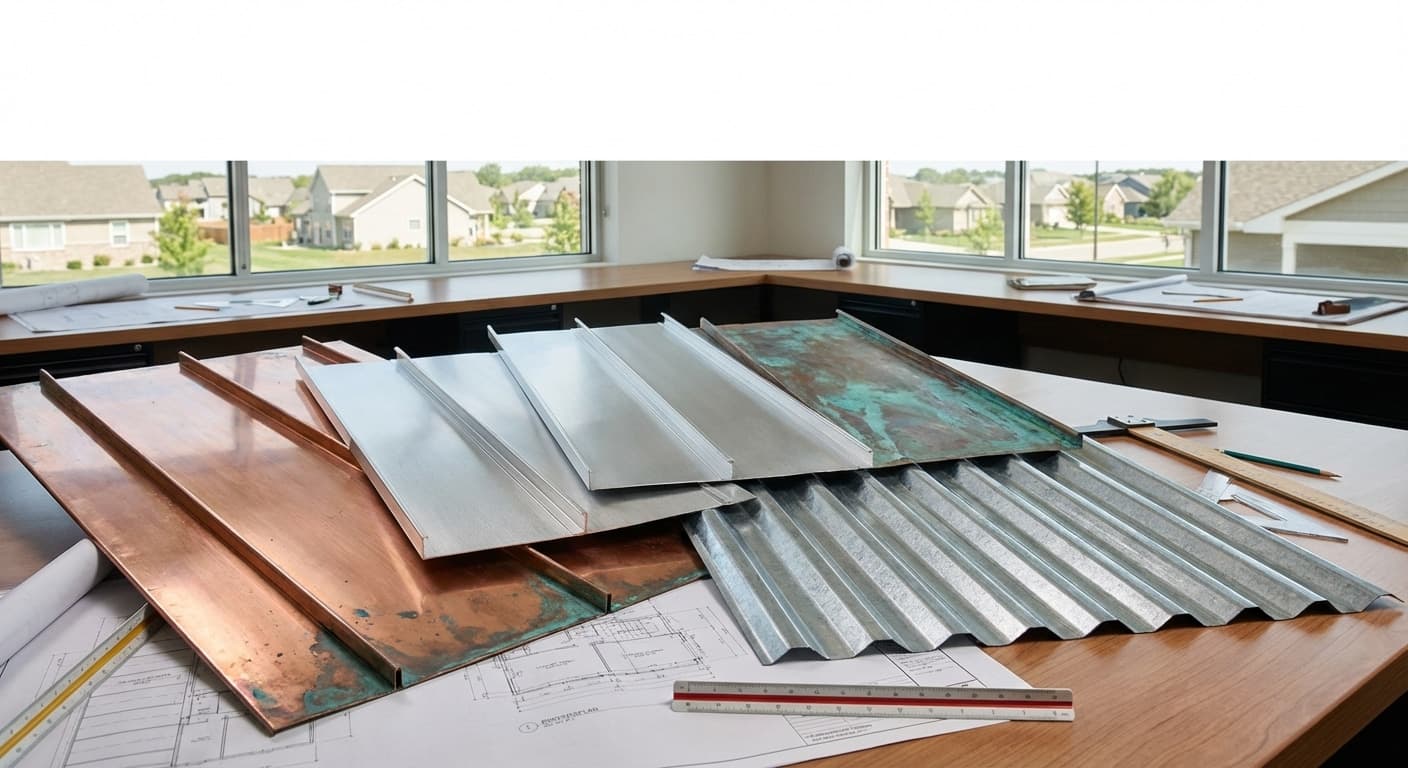

This article equips you with the knowledge to accurately estimate and control the cost of a durable metal roof–typically $7-$16 per square foot for steel, $10-$20 for aluminum, and $28-$40 for copper–by revealing how metal type, panel profile, gauge, finish, roof complexity, and local labor rates each swing the final bill. You'll learn why upgrading from 26-gauge to 24-gauge steel adds 25-40% but pays off in hail zones, why standing-seam systems cost roughly double corrugated panels yet eliminate hundreds of leak-prone screws, and how choosing PVDF over SMP paint extends color life from decades to a lifetime for only 30-40% more. The guide walks you through hidden cost drivers–tear-off, decking repairs, insulation, snow retention, code-rated fasteners–then shows how to cut expenses with off-season scheduling, federal solar-plus-roof tax credits, and utility rebates while still meeting coastal corrosion or high-wind standards. By comparing itemized quotes, vetting certified installers, and matching panel specs to your exact climate and roof geometry, you can lock in a 50- to 100-year roof that boosts home value, slashes cooling and insurance costs, and avoids the five-figure surprises that derail most roofing projects.
Key Factors Influencing Durable Metal Roofing Cost per Square Foot
Steel roofing costs $7-$16 installed and lasts 30-50 years, while premium finishes and thicker gauges add durability where weather demands it most.
Material choices and gauge impact on cost
Your metal choice drives your cost per square foot. Steel gets the job done for $7-$16 installed, lasting 30-50 years [1]. Need corrosion resistance near salt water? Aluminum runs $10-$20 but won't rust [1]. Copper ($28-$40) and zinc ($18-$30) cost more upfront but can outlast your grandchildren [1].
Gauge matters–that's metal thickness. Lower numbers mean thicker panels. You'll pay 25-40% more for 24-gauge versus 26-gauge steel, but you get what you pay for in durability [2]. Basic 26-gauge with SMP paint starts at $1.50-$2.00 per square foot. Upgrade to 22-gauge with PVDF finish? You're looking at $3.40-$4.00 [2]. In hail country or high-wind zones, that extra thickness pays for itself.
Your panel profile affects both cost and performance. Standing seam with concealed fasteners runs $10-$16 installed. Corrugated with exposed fasteners saves money at $7-$12 [1]. Yes, standing seam costs more–but you get superior water protection and a cleaner look [3]. Pick based on your climate, your budget, and what matters most to you.
Panel designs, profiles, and premium finishes
Two panel types dominate the market. Exposed fastener systems (corrugated) cost $4-$8 per square foot. Standing seam runs $10-$16 [4]. You pay double for standing seam, but you get concealed fasteners and better water protection. Want the look of traditional roofing? Metal shingles run $8-$12, while stone-coated steel costs $9-$14 per square foot [4].
Your finish choice impacts both looks and longevity–as detailed in our cost breakdown section. Basic SMP paint keeps costs down. Premium PVDF adds 30-40% but holds color better and fights weather longer [4]. The numbers tell the story: 26-gauge with SMP paint costs $1.50-$2.00 per square foot. Same gauge with PVDF? $2.30-$2.65 [4].
Specialty options include Corten (develops rust patina) and Galvalume coating. Colors range from Midnight Black to Coffee Brown [4]. Here's what matters: profile determines water management and installation cost. Finish determines how long it looks good. Choose based on your priorities and budget.
Roof geometry, pitch, and installation complexity
Your roof shape drives material needs and labor time. Most roofs measure 10-50% larger than the home's footprint due to overhangs and slope [5]. Single-story homes typically need 1.1 to 1.5 times their square footage in roofing. Two-story? Divide total square footage by two first [5].
Steeper roofs cost more–period. Each pitch increase needs more material and slower, safer installation. The math is straightforward: 4:12 pitch multiplies area by 1.05. Jump to 9:12? That's 1.25. Extreme 24:12 pitch? You're at 2.24 times [5].
Complexity hits your wallet hardest. Simple rectangle roof? Standard pricing. Add valleys and dormers? Expect 15-25% more. Multiple angles, skylights, complex design? That's 30-40% over basic pricing [5]. Every valley needs custom cutting, extra flashing, and time. Installation considerations covered later explain these details further [2].
Regional labor rates, permitting, and overhead considerations
Location matters. Big cities like San Francisco and New York charge premium rates. Rural areas cost less [6]. Labor makes up 60-70% of your total bill, ranging from $2.00 to $14.00 per square foot based on where you live [7].
Add permits to your budget–$100 to $500 for plan reviews and inspections [6]. Schedule smart: off-season saves money, peak season adds 10-15% [6].
Your contractor's overhead varies by region too. Storm-prone areas mean higher insurance. Remote locations increase equipment transport costs. State-by-state worker's comp rates differ. These factors explain why the same
Detailed Cost Breakdown by Metal Type and Coating
Steel roofing costs $4 to $21 per square foot installed, while premium copper runs $20 to $40 but protects your building for over a century.
Steel and aluminum pricing ranges per square foot
Steel roofing gives you the most bang for your buck–$4 to $21 per square foot installed [9]. Want to save money? Corrugated panels run $7-$12 installed. Need maximum protection? Standing seam systems cost $10-$16 but hide fasteners and lock out weather better [9]. Here's what thickness means for your wallet: 24-gauge steel costs 25-40% more than 26-gauge, but you get serious dent resistance that pays off in hail country [8].
Your finish choice matters too. Basic SMP paint on 26-gauge panels? Just $1.50-$2.00 per square foot for materials. Premium PVDF finish? Add 30-40% to that price–but your roof keeps looking sharp decades longer [9].Aluminum costs more–$7 to $17 per square foot installed–but you get what you pay for [9]. Live near the coast?
That 35% premium over steel pays off fast when salt air can't touch your roof [9]. At just 5 pounds per square foot, aluminum won't stress your structure like heavier options [9]. Your profile choice affects the final bill: corrugated runs $9-$13 installed, standing seam hits $11-$17 per square foot [9]. Here's the bottom line on aluminum: no rust worries, incredible lifespan in tough conditions, and you might skip costly structural upgrades. The trade-off? It dents easier than steel–something to think about if you get golf-ball hail [9].
Copper, zinc, and other premium metal costs
Copper is the Rolls-Royce of metal roofing–$20-$40 per square foot installed [10]. Yes, that's 3-5 times more than steel. But you're buying a century of protection, plus that distinctive green patina your neighbors will envy.
Materials alone run $13-$25 per square foot, and you need installers who know their stuff [10]. Zinc splits the difference at $16-$25 installed–still premium territory but with a unique advantage: scratches heal themselves over time [10]. You'll love the blue-gray patina that develops naturally.
Here's why these prices make sense: steel gives you 30-50 years, but copper and zinc keep protecting your building for 100+ years with almost zero maintenance [11]. Run the math–one copper roof versus three steel replacements. Plus you get bonuses: copper kills bacteria naturally, zinc takes 75% less energy to produce than steel, and both recycle completely when you're done with them.
Advanced coatings: Galvalume, Kynar 500, stone‑coated options
Coatings make or break your metal roof investment. Galvalume–that's 55% aluminum, 43.5% zinc, and a touch of silicon–beats standard galvanized steel hands down [12]. You get 25-35 years bare, 40+ years painted, and save 20-30% versus pure aluminum [12]. Want paint that lasts?
Kynar 500 (PVDF) costs 30-40% more than basic SMP paint but keeps its color 40-70 years [12]. Real numbers: 26-gauge panels with SMP paint run $1.50-$2.00 per square foot. Same panels with Kynar 500? $2.30-$2.65 [12]. Stone-coated steel brings something different to the table.
Ceramic granules bonded to steel give you the look of tile or slate, Class A fire rating, and serious sound dampening–all at 1.4 pounds per square foot versus concrete's back-breaking weight [12]. You'll pay $9.00-$14.00 installed, but you get premium performance without reinforcing your structure [12]. When selecting
Recycled content and sustainability premiums affecting price
Your metal roof starts green–up to 60% recycled content–and stays green forever since it's 100% recyclable [13]. This eco-factor helps offset higher upfront costs and can boost your property value 6% over asphalt shingles. Sustainability-minded buyers pay extra for green buildings [14]. Unlike petroleum-based shingles that clog landfills, metal roofs recycle endlessly.
Manufacturers know this and price accordingly [14]. You'll save more than just the planet. Metal needs fewer chemicals and fungicides than other roofing–that's less environmental impact and lower maintenance bills [13]. Want maximum green credentials?
Reflective finishes add 30-40% to material costs but slash cooling bills up to 20% in summer [13]. Check local rebates too–many areas reward energy-efficient upgrades, putting cash back in your pocket while you save on utilities [13].
Installation Considerations that Impact the Final Price
Skipping the tear-off costs $1,000-$5,000 upfront but creates a moisture trap that breeds mold and expensive failures within years.
Site preparation, decking, insulation, and underlayment needs
Your metal roof's performance starts with what's underneath. Tear-off costs run $1,000-$5,000–money well spent to prevent moisture trapping that causes mold and early failure [15]. Skip this step at your peril: installing over old shingles creates a moisture sandwich that breeds expensive problems [16]. When we pull off old roofing, damaged decking shows up fast. Budget $2-$5 per square foot for repairs–you can't fasten metal panels to rotted wood [16]. Sound decking isn't negotiable; it's what keeps your roof from sagging in five years.
Your insulation choice drives both upfront costs and energy bills for decades. New construction? Rigid foam ($0.70-$1.25/sqft) stays dry and keeps its R-value year after year [17]. Retrofitting? Closed-cell spray foam ($1.50-$3.50/sqft) fills every gap and blocks moisture–worth every penny [17]. Open-cell foam looks cheap but soaks up water like a sponge–avoid it.
Fiberglass batts ($0.30-$0.50/sqft) work for tight budgets but expect sagging over time [17]. Underlayment choices range from basic felt ($1/sqft) to high-heat shield ($1.30/sqft) and synthetics ($1.15-$1.20/sqft) [16]. Smart money goes on creating an air gap with furring strips between insulation and panels–lets moisture escape and stops thermal bridging through fasteners [17]. This $500 detail saves you from $5,000 in condensation damage down the road. It's why our
Fastening systems, seam sealing, and gauge selection
Your fastening system choice–exposed or concealed–cuts straight to your bottom line and maintenance schedule. As covered in our material selection section, exposed fastener panels save 50% upfront but create hundreds of potential leak points [18]. Those screws loosen as metal expands and contracts, turning savings into service calls. Standing seam's concealed clips cost more but handle thermal movement without drama, working on slopes down to 1:12 versus exposed systems' 3:12 minimum [18]. Clip spacing matters too–tighter spacing means more hardware cost but better wind resistance [19].Since gauge selection drives both cost and durability (detailed in Section 1), focus here on installation impacts.
Thicker 22-24 gauge commercial panels require beefier structure but install faster with less oil-canning risk [19]. Each gauge step adds 20% to material cost–but in hail country, that upgrade pays for itself [19]. Wide panels (400-600mm) need proper gauge to prevent buckling under load [20]. Match thickness to your weather, not just your wallet.Seam height determines water-shedding capacity–65mm handles standard commercial needs, while 100mm+ profiles tackle monsoon conditions [20]. Taller seams move more water and look sharper doing it.
Custom-length panels eliminate horizontal seams entirely, removing leak points at the source [20]. This requires specialized equipment but delivers bombproof weatherproofing. Every component–seam height, panel width, fastening method–works as a system. Get one wrong, and water finds its way in [20].
Custom features: skylights, vents, gutters, and edge trim
Every roof penetration is a potential leak waiting to happen. Skylights run $1,000-$3,000 installed–most of that cost goes to flashing that keeps water out for decades [21]. Each penetration needs custom-fitted flashing, done right the first time [21].
As mentioned in Section 3, trim adds 25-40% to panel costs depending on your fastening system [21]. Standard exposed-fastener trim: $2.50-$4.00 per foot. Standing seam trim: $5.50-$10.00 per foot for premium finishes [21].
Precision-made flashing components–chimney crickets, valley pans, drip edges–create one unified water management system [21]. Add seamless gutters at $10-$25 per foot [7]. Every custom feature multiplies complexity and cost by 15-40% [21].
Warranty options, inspections, and post‑installation services
Your warranty package reflects installation quality as much as material durability. Get both material coverage (40-70 years) and workmanship protection–one without the other leaves you exposed [22]. Annual inspections ($150-$400) catch small problems before they become big expenses [23].
Schedule extra checks after major storms to maintain warranty compliance [23]. Over your roof's lifetime, expect maintenance costs around $1,000 per 100 square feet–pennies compared to multiple roof replacements [23]. Insurance companies know metal roofs resist fire, wind, and impact–many offer premium discounts that offset inspection costs [24].
Read warranty fine print for exclusions, transferability, and whether labor's covered. Best warranties include 30+ year finish coverage and 50+ year panel integrity with non-prorated terms [24]. (See Section 5 for additional warranty considerations by region.)
Geographic, Climate, and Incentive Adjustments
Your climate zone determines which metal roof material and finish protect your investment longest, with coastal areas requiring aluminum and cold regions needing snow retention systems.
Climate‑specific material recommendations for durability
Your climate dictates your metal roof choice–and your long-term costs. In hot regions, cool metal roofing cuts cooling bills 7-15% by reflecting solar energy [25]. Skip standard SMP paint. You need PVDF finishes like Kynar 500 to resist UV damage and fading [25].
Live near the coast? Aluminum is non-negotiable within 3000 feet of saltwater. Standard Galvalume or steel won't survive the salt air [25]. Yes, aluminum costs more upfront. But replacing corroded steel panels costs even more.
Cold climates demand specific solutions. Install snow retention systems to prevent dangerous slides. Add ice and water shield at vulnerable areas. Verify your structure handles snow loads before installation [25]. Standing seam profiles work best here–they shed water through raised channels while concealed fasteners lock out moisture [26].
Severe weather zones need tested protection:
- Wind resistance: UL 580 and UL 1897 rated panels
- Hail impact: UL 2218 Class 4 certification
- Water penetration: ASTM E1646 compliance [25]
Fire-prone areas? Choose Class A fire-rated systems that protect your deck and resist combustion [25].
Pick aluminum or zinc-coated steel for 40-70 year performance in any climate [26]. Want traditional looks with metal durability? Stone-coated systems mimic clay tile, wood shakes, or asphalt shingles while standing up to harsh weather [27]. Our
State‑by‑state cost variations and urban vs rural pricing
Your metal roof cost depends heavily on your zip code. Urban installations in San Francisco or New York run 10-15% higher than rural projects [28][29]. Why? Higher operating costs, stricter permits, and increased contractor overhead all factor into city pricing.
Real numbers help. Missouri homeowners spend $10,000-$33,000 for metal roofs. Most pay $15,000-$18,000 for a standard 2,000 sq. ft. standing seam system [29]. Labor eats up 60-70% of your total cost, ranging from $2.00-$14.00 per square foot based on location [28].
Rural doesn't always mean cheaper. Material transportation to remote sites can offset lower labor rates [28]. Your best savings opportunity? Schedule during off-season when contractor demand drops [28].
The biggest price swings hit extreme weather regions. Coastal areas pay premium prices for corrosion-resistant materials and wind-rated installations. Hurricane zones need specialized fastening systems. Heavy snow regions require structural reinforcement. These climate-driven requirements explain why the same metal roof costs thousands more on the coast than in Kansas.
Energy‑efficiency rebates, tax credits, and financing incentives
The old $500 metal roofing tax credit expired in 2021. But you still have options to reduce costs [30][31].
Install metal roofing with solar panels? You qualify for the Residential Clean Energy Credit–30% off your total solar project cost through December 31, 2025 [31]. That's real money back on both systems.
The Energy Efficient Home Improvement Credit offers up to $3,200 annually for qualifying upgrades through 2025 [32]. Metal roofing alone doesn't qualify, but you can claim:
- Up to $1,200 for building envelope improvements
- Up to $2,000 for heat pumps and biomass systems [30]
Documentation matters. In 2025, manufacturers must provide PIN numbers for eligible products. This year, a four-digit QM code works [32].
Check with your utility company too. Many offer rebates for energy-efficient upgrades that stack with federal credits [31].
Smart planning maximizes savings. Spread improvements across multiple tax years. Combine metal roofing with qualifying upgrades like insulation or heat pumps. Install solar with your metal roof for the biggest credit [32]. We'll help you identify every available incentive for your project.
Wind, snow, and seismic zone impacts on material choice
Your environment drives every metal roofing decision–and cost. Higher wind speeds mean thicker panels, more fasteners, and stronger bracing [33]. In hurricane zones exceeding 115 mph, you need standing seam systems with concealed fasteners. Exposed fastener panels won't cut it [35].
Your exposure category matters:
- B (suburban/wooded): Standard requirements
- C (open fields): Increased wind pressure
- D (coastal/unobstructed water): Maximum structural requirements [34]
Moving from B to D significantly increases costs–but skimping here leads to failure.
Snow loads vary by location and elevation. Heavy snow regions need:
- Thicker gauge materials
- Proper slope for snow shedding
- Snow guards over entrances [35]
Don't forget seismic requirements. Even central U.S. sites may need enhanced bracing and anchor designs [34]. U.S. codes use Seismic Design Categories A through F. Canada uses site-specific acceleration values. Both increase requirements–and costs–as risk rises [33].
Multiple environmental factors compound costs. Thicker 24-gauge steel runs 25-40% more than 26-gauge. But it handles snow loads, wind uplift, and impact damage far better [34]. Pay now for proper gauge, or pay later for repairs.
We know every local code requirement. We'll specify exactly what your site needs–nothing more, nothing less. That keeps you compliant and within budget.
Getting Accurate Quotes and Maximizing Value
Choosing a certified metal roofing contractor with a proven local portfolio protects your 50-year investment and ensures full warranty coverage from day one.
Evaluating contractor expertise with durable metal roofing projects
Your metal roofing contractor choice makes the difference between 50+ years of performance and costly early replacement. Metal roofing isn't like shingles–it requires specific skills in panel cutting, seam work, and thermal movement [36]. Look for manufacturer certifications first. These prove your contractor knows the exact specs needed for full warranty protection [38].
Check their metal roofing portfolio. Many roofers dabble in metal but specialize in asphalt. You want someone who lives and breathes metal systems [36]. Ask to see 2-3 local installations. Talk to those homeowners about how the contractor handled challenges [36].
Red flags to avoid:
- No physical address
- Upfront payments over 30%
- Missing license or insurance proof [36]
Quality contractors provide:
- Written estimates with material specs
- 10+ year workmanship warranties
- Clear understanding of fastening systems and thermal expansion [36][37]
The right contractor becomes your partner through the entire project–from accurate quotes to long-term performance.
Requesting detailed, itemized estimates per square foot
A proper metal roofing quote breaks down every component–not just the square footage price. You need to see materials, labor, accessories, and extras listed separately [1].
Your estimate should specify:
- Panel gauge and finish type
- Trim costs (add 25% for exposed fastener, 30-40% for standing seam) [40]
- Underlayment pricing
- Tear-off costs ($1,000-$5,000)
- Decking repairs ($2-$5 per square foot)
- Ventilation upgrades
- Delivery charges [1]
Compare apples to apples. Make sure each bid uses the same gauge, profile, and finish–these details swing the price significantly [39]. Complex roofs cost more. Multiple valleys, dormers, and angles can add 25-40% to your total [1].
Get warranty details in writing. You want both material coverage and workmanship protection spelled out clearly [1]. A quality contractor puts everything on paper–no surprises later.
Financing options, warranties, and maintenance plans
Finance your metal roof through HELOCs, personal loans, or contractor payment plans. Compare multiple lenders–rates vary widely [13]. Many contractors partner with lenders to simplify the process [42].
Warranty details matter (covered in our Warranty section above). Focus on getting non-prorated coverage that includes labor costs [13]. Quality
Critical questions to ensure clear communication and problem‑solving
Clear communication keeps your project on track and on budget. Ask these critical questions before signing:
Project Management
- How do you handle surprises found during tear-off? [43]
- Who's my dedicated contact person?
- How often will I get updates?
- What's your response time for questions? [44]
Technical Expertise
- How do you prevent oil-canning and accommodate thermal movement?
- What's your fastening approach for our specific roof? [45]
- How do you protect the job during weather delays? [44]
Quality Control
- When do you inspect work–during or just after?
- How do you verify underlayment and flashing before panels go on? [43]
- What's your written process for change orders? [45]
Project Completion
- What's your final inspection procedure?
- How do you document warranty activation? [45]
- Who handles post-installation questions? [44]
Good contractors welcome tough questions. They show you're serious about quality–and they get to demonstrate their expertise. The answers reveal who prevents problems versus who just reacts to them [44].
- Steel roofing costs $7-$16 installed, while copper hits $28-$40 but can last 100+ years.
- 24-gauge steel costs 25-40% more than 26-gauge but resists hail and wind damage.
- Standing seam systems at $10-$16 hide fasteners and outperform $7-$12 corrugated panels.
- Tear-off and decking repairs add $1,000-$5,000; skipping them risks mold and early failure.
- Labor ranges $2-$14 per square foot based on location and can total 60-70% of project cost.
- Aluminum is essential within 3,000 ft of salt water; Galvalume or steel will corrode.
- Combine metal roofing with solar to claim the 30% Residential Clean Energy Credit through 2025.
- https://paccsolutions.com/blog/metal-roof-cost-per-sqft/
- https://www.westernstatesmetalroofing.com/metal-roof-cost
- https://modernize.com/roof/metal/cost
- https://barrierbossusa.com/blogs/news/metal-roofing-cost-usa-2026-your-complete-price-guide-savings-breakdown?srsltid=AfmBOoqh7Kqr2FGeTUgtCwtTnAT9DmEp6r0ng0myEdag3apV7p8JXdoP
- https://roof-installation.com/metal-roof-cost-calculator/
- https://certifiedroofingsolutionsllc.com/blog/metal-roof-cost/
- https://nearmeroofingcompany.com/blog/metal-roofing/metal-roofing-cost-analysis/
- https://www.mightydogroofing.com/blog/categories/guide/metal-roofing-cost-guide/
- https://www.westernstatesmetalroofing.com/blog/metal-roof-types
- https://masterpieceroof.com/blog/how-much-does-a-metal-roof-cost/
- https://foxhavenroof.com/metal-roof-cost-guide-for-homeowners-in-2025/
- https://prestigemetalandexteriors.com/resources/residential-metal-roofing
- https://tomleeroofingsanf.com/metal-roofing-cost/
- https://tricountymetals.com/metal-roofing-info/how-much-is-metal-roofing-per-square-foot/
- https://roofaidusa.com/metal-roofing-guide/
- https://www.angi.com/articles/how-much-does-metal-roofing-cost.htm
- https://americanqualityremodeling.com/blog/how-to-install-insulation-under-metal-roofing/
- https://www.westernstatesmetalroofing.com/blog/exposed-fastener-metal-panels-v.-standing-seam-pros-cons
- https://blog.mcelroymetal.com/metal-roofing-contractors/factors-that-affect-the-installed-cost-of-standing-seam-roofing
- https://www.hfmetalroof.com/knowledge/high-seam-metal-roofing-cost-factors-what-drives-prices
- https://tamcometalroof.com/resources/metal-roof-costs/
- https://roof-elite.com/2025/05/12/how-much-does-metal-roofing-installation-cost/
- https://www.cangaroof.com/blog/p.240328018/calculating-the-cost-of-metal-roofing-over-a-lifetime-installation-repairs-and/
- https://mmroofsiding.com/blog/new-metal-roof-cost/
- https://sheffieldmetals.com/learning-center/warm-cold-weather-metal-roofing/
- https://www.berridge.com/what-climates-are-best-suited-for-metal-roofs/
- https://www.decra.com/blog/why-metal-roofing-is-the-best-choice-for-all-regions-and-all-seasons
- https://www.angi.com/articles/how-much-does-it-cost-install-standing-seam-metal-roof.htm
- https://frgwillhelp.com/blog/metal-roof-cost-missouri/
- https://www.irs.gov/credits-deductions/energy-efficient-home-improvement-credit
- https://www.mountaintopmetalroofing.com/blog/tax-credits-for-metal-roofing/
- https://www.energystar.gov/about/federal-tax-credits
- https://norsteelbuildings.com/us/building-codes-permits-us/steel-building-codes-loads/
- https://metalbuildingsguide.com/loads-codes
- https://basc.pnnl.gov/resource-guides/metal-roofs
- https://roof-installation.com/metal-roofing-contractor/
- https://fixdroofing.com/education/choosing-a-metal-roofing-contractor/
- https://www.schulteroofing.com/latest-news/metal-roof-certifications/
- https://cobexcg.com/how-much-does-a-metal-roof-cost-per-square-foot/
- https://www.metalroofingsource.com/metal-roofing-prices-estimate/
- https://www.threetreeroofing.com/metal-roof-replacement-costs-planning/
- https://master-roofinginc.com/the-ultimate-guide-to-affordable-metal-roofing-options/
- https://classicmetalroofingsystems.com/questions-ask-your-roofing-contractor/
- https://pennohiorc.com/questions-to-ask-roofers/
- https://www.westernstatesmetalroofing.com/blog/choosing-metal-roofing-contractor-installer-hiring-questions