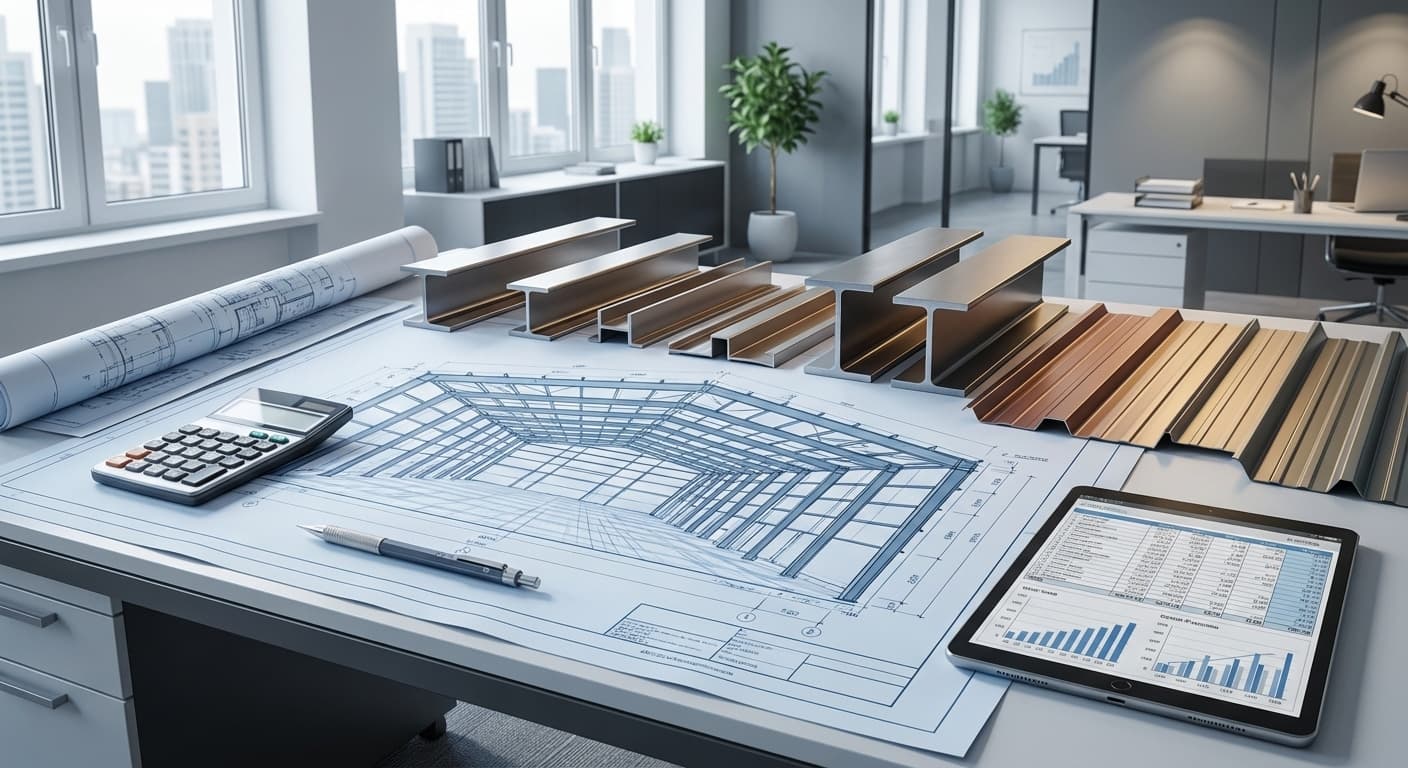

A 30×40 metal building can be built right the first time for about $28-46k if you budget the four hidden pillars–steel kit, engineered slab, professional erection, and code-ready paperwork–instead of stopping at the advertised kit price, and this guide shows exactly how to control every line item without sacrificing strength or comfort. Readers learn to lock steel pricing during market dips, specify 12-gauge only on load-bearing members, insist on certified engineer drawings to dodge permit delays, and schedule slab cure, kit delivery, and crew arrival so labor clocks don't idle. It maps realistic costs for insulation that pays for itself in a year, foundations that jump $6k when frost footings or poor soil appear, and the financing maze–from HELOCs to ag lenders–that can cover the gap left by FHA exclusions. By comparing lifecycle savings–1% annual upkeep versus 2-4% for wood, plus energy cuts and 20-30% higher resale–the article proves that spending a little more upfront on a properly insulated, single-source, permit-ready steel shell saves tens of thousands over two decades while delivering a durable, expandable shop faster than conventional builds.
Understanding the Core Costs of a 30×40 Metal Building Budget
Breaking Down the Kit Price
Breaking down the kit priceYour 30×40 metal building kit includes four core components: primary steel frame (I-beams and columns), secondary framing (purlins and girts), roof and wall panels, plus all trim and hardware. That package runs $15,000-$26,000 based on steel gauge, your local wind and snow load requirements, and your supplier. [1] Here's what catches most buyers: the kit price doesn't include your concrete slab, professional erection, doors, insulation, or permits.
Those are separate line items–and they matter. [2] Add them up, and you're looking at $28,000-$46,000 for a complete, functional build. Coastal or seismic zones?
Add 10-15% to the steel package for stricter engineering requirements. [3] Real-world example: a Tennessee shop came in just under $27,500–$17,000 for the kit, $8,100 for the slab, and $2,000 for insulation. The kit itself typically represents 55-65% of your total project cost.
Foundation and Slab Expenses
Foundation and slab expensesYour concrete slab is the second-largest expense after the steel kit. At $15-$20 per square foot, budget $18,000-$24,000 for the foundation alone–before site prep. [4] What drives that range? Slab thickness. A 4-inch pour handles standard workshop use. Running heavy equipment, vehicle lifts, or forklifts?
You need 5-6 inches of reinforced concrete. That's when you hit the upper pricing. [5] Your site conditions matter just as much. Flat lot with good drainage? Straightforward pour. Need fill dirt, grading, or excavation?
Add thousands to your foundation budget. [6] Building codes add the final variable. High wind and snow load zones require deeper footings and extra rebar throughout the slab. Your structural engineer dictates the specs. Your excavation contractor sets the price. Those costs rarely show up in preliminary estimates–but they're real.
Labor, Erection, and Delivery Fees
Labor, erection, and delivery feesProfessional erection runs $6-$10 per square foot. For your 1,200 sq ft shell, that's $7,200-$12,000 in crew labor. [7] That's for a straightforward build. Add mezzanines, specialized roofing, or climate systems? Each customization extends your timeline and pushes labor toward that $12,000 ceiling. [7] Location matters too. High cost-of-living states run well above national averages.
Get local bids–don't rely on generic estimates. [7] Timeline directly impacts cost. A professional crew raises your frame in 3-5 days–after your slab cures and your kit arrives on site. Both conditions must be met before that clock starts. Smart slab scheduling keeps labor costs in check. [3] Your kit typically includes delivery–pre-cut, pre-drilled, and labeled for assembly. [7] But verify freight terms before signing.
Remote sites, weight overages, or liftgate needs can add hundreds to your final invoice. Those charges won't show in the original quote. Got a capable 3-4 person team? DIY erection saves $6,000-$12,000 on labor. The trade-off: you typically void supplier warranties and still need to pass structural inspections. Choose accordingly.
Strategies to Optimize Your 30×40 Metal Building Budget
Selecting Cost‑Effective Steel Grades
You're paying for steel gauge in places that don't need it–and skimping where you can't afford to. Here's the rule: lower gauge numbers mean thicker steel. Your 12-gauge primary frame beats 14-gauge every time, but that strength matters in columns and I-beams, not wall panels. [8] Ask your supplier to spec the frame gauge for your actual wind and snow loads.
Keep wall panels at climate minimums. [9] You'll dodge premium pricing on components that don't carry loads. Steel prices swing with global markets. Lock in during dips when you can.
A four-to-eight week window gives you room to catch better pricing without triggering rush charges that wipe out the savings. [10] Smart timing alone can save thousands on your kit.
Leveraging Single‑Source Solutions
Every supplier you add creates another chance for delays, markups, and finger-pointing.
Single-source procurement cuts those risks out.
Planning for Energy‑Efficient Insulation and Finishes
Skip insulation now, pay forever. Metal moves heat fast–summer sun turns your building into an oven, winter strips heat just as quickly. Your HVAC runs overtime trying to compensate. [14] Your options break down by cost and performance: – Fiberglass batt: $0. 50-$1. 50 per square foot for R-13 to R-30.
Total installed: $1,200-$3,300. [13] – Reflective barriers: Block 97% of radiant heat before it enters. Perfect for metal roofs where radiant gain drives temperatures. [14] – Rigid boards: Create continuous barriers, stop thermal bridging through steel purlins. [15] – Closed-cell spray foam: Premium option that doubles as vapor barrier. Critical in humid zones or equipment storage.
[14] Condensation kills metal buildings. Warm air hits cold steel, creates moisture, starts rust. Your insulation choice controls this–closed-cell foam and foam-core reflective products handle both temperature and moisture. [14] At $100/month energy savings, insulation pays itself off in one to two years. Then keeps paying you back for decades.
Avoiding Hidden Expenses in Your 30×40 Metal Building Project
Before you price any 30×40 metal-building kit, demand a written checklist from your local building department–because the difference between "certified" and "non-certified" documentation can add weeks of re-engineering fees and permit delays that blow your budget before ground is even broken.
Permits, Codes, and Site Preparation
Permits, codes, and site preparationPermit costs are rarely captured in initial budget estimates, yet they directly control your construction timeline. Every permanent metal building requires approval from the local authority having jurisdiction (AHJ)–the city, county, or regional building office that enforces an adopted building code edition with local amendments tied to ASCE 7 structural load standards. To get that approval, you typically need to submit engineered plans, site data, and load calculations specific to your location. Generic wind or snow ratings get rejected outright; building departments expect full ASCE-based calculations, not a single mph number. [16] The four most common causes of permit delays are submitting non-site-specific load data, missing property or elevation details, overlooking zoning restrictions that exist independently of structural approval, and submitting foundation plans that don't match the engineered loads. [16] Working through any one of these issues after submission adds weeks to the timeline–and delays the clock on your labor schedule.
Certified versus non-certified buildings split here in a way that matters for your budget. A certified building arrives with calculations stamped by a licensed engineer, matched to your site's wind exposure, snow load, seismic zone, and intended use. Non-certified plans regularly trigger requests for re-engineering or additional documentation before the permit office will proceed–fees and delays that weren't in your original budget. [16] Coastal counties and mountain regions with heavy snow almost always require sealed drawings, making certification less optional than it appears when comparing kit prices. [16] The practical implication: before finalizing any kit purchase, confirm with your local building department exactly what documentation they require, because the answer changes what "permit-ready" actually costs in your jurisdiction. Site preparation is the most variable line item in the entire project and the one most likely to surface after other costs are already committed.
A flat, well-drained lot with stable soil is a straightforward prep job; a site needing significant fill dirt, grading, or excavation is a different budget entirely. One real-world build logged $6,500 for dirt and dozer work on the shop pad alone, before any concrete was poured. [17] Soil conditions compound further in cold climates: frost footings–required in many northern and mountain jurisdictions–push a basic 30×40 slab from a standard pour into a deeper, more expensive excavation, with one builder reporting a $27,000 slab cost specifically because frost footings were mandated by code. [17] Soil testing is worth completing before finalizing your foundation quote; unstable ground may require compaction or imported fill that won't appear in any initial estimate.
Customization Choices That Inflate Costs
Customization choices that inflate costsThe gap between a functional 30×40 build and an overbuilt one is usually assembled one line item at a time. Upgraded roll-up or sectional garage doors run $2,000-$5,000 over standard options, and extra windows or custom walk-in doors add another $1,000-$3,000–costs that feel minor in isolation but stack quickly when you're making multiple upgrades simultaneously.
[17] Electrical is where scope creep hits hardest: basic lighting and outlets run $2,000-$4,000, but a full shop setup with heavy circuits, a 200-amp panel, multiple double-gang outlets, and overhead LED arrays can exceed $5,000 before any specialty equipment is wired in. [17] Climate control follows the same pattern–a $1,000 mini-split handles comfort, but a full HVAC system with plumbing and a bathroom (as one builder added to a 30×50) can push a project well past its original budget without changing the building's footprint.
[17] Insulation upgrades are the most defensible cost increase but still require deliberate scoping: closed-cell spray foam, quoted at $5,300 for one build, delivers superior vapor control and thermal performance over fiberglass batt, but applying it to every surface rather than just the ceiling or the climate-controlled zones inflates cost without proportional return. [17] The practical discipline is treating each customization as a line item with a payback period–doors and electrical have functional justification, specialty finishes and full bathrooms rarely do for a basic shop build.
Maintenance and Long‑Term Ownership Savings
Maintenance and long-term ownership savingsThe annual maintenance burden on a steel building runs roughly 1% of total construction cost–translating to $1,500-$2,500 per year for a comparably sized commercial structure–because steel resists the failure modes that drive repair bills on traditional builds: termites, rot, warping, and moisture intrusion. [20] Wood-framed buildings, by contrast, carry maintenance costs of 2-4% annually, or $7,000-$20,000 per year for an equivalent structure, and that figure excludes unplanned events like termite remediation, which can run $30,000 on a single wood-framed building. [20] Concrete isn't immune either–cracking is a predictable long-term cost that requires periodic repair to prevent structural compromise.
[21] On the energy side, a properly insulated steel building saves $2,000-$5,000 annually compared to $1,000-$2,500 for traditional construction using equivalent square footage, a gap that widens as energy costs rise. [20] Resale value compounds the advantage: steel structures retain and grow their value over time, with modular designs that can be expanded or reconfigured without demolition–a feature that appeals to future buyers and contributes to a projected 20-30% resale value increase over 20 years. [20] Across a two-decade ownership period, the total cost difference between steel and traditional construction is not marginal: a 10,000-square-foot steel facility runs approximately $350,000 in total lifecycle costs, while comparable wood or concrete construction lands between $670,000 and $1.
1 million when maintenance, energy, and remodeling expenses are factored in. [20] For a 30×40 owner, the principle scales directly–lower annual upkeep, compounding energy savings, and a building that holds its value without the maintenance overhead that erodes ROI on wood and concrete alternatives.
Financing and Timeline Planning for a 30×40 Metal Building Budget
Financing Options and Incentives
You'll hit a financing hurdle right away: standard lenders treat metal buildings like kit homes, and the FHA explicitly excludes these structures from its programs. [22] That puts loan selection front and center–not something to figure out after you've picked your kit. For your detached garage or workshop, home improvement loans cover $1,000-$50,000 over 2-12 years at 4-20% APR with a minimum credit score around 660–no collateral required. [23] HELOCs let you tap up to 85% of your home equity at lower rates than personal loans, though you're putting your house on the line if payments slip.
[24] Construction loans release funds differently: they pay out in draws as you hit milestones, which protects the lender but means you need detailed plans and budgets upfront–and you'll pay variable rates higher than standard mortgages since your building isn't collateral yet. [23] The construction-to-permanent loan (single-close or OTC) streamlines everything by covering land, construction, and long-term financing in one shot; New Century Bank is one of the few lenders offering this specifically for metal buildings and barndominiums. [23] If you're building rural or agricultural, USDA Farm Service Agency loans and ag lenders know metal construction–less paperwork, fewer questions, faster approvals than commercial banks. [23] Business owners have their own track: SBA-backed loans deliver competitive long-term rates for expanding with warehouses or workshops, though you'll need complete business financials and project documentation.
[24] Seller financing through your kit supplier caps out around $50,000–enough for the kit but not your complete build–with 24-72 month terms, 3-48 hour approvals, and a 640 minimum credit score. [24] Whatever financing you choose, lock your kit price before finalizing the loan: steel prices move with market conditions, and a two-month gap between approval and order can leave you scrambling if prices jump.
Building Timeline and Cost Impact
Your timeline directly controls your budget–every extra week means daily interest charges on your construction loan adding up. The four phases of your 30×40 build–planning, design, fabrication, and installation–can overlap instead of marching single file, and that overlap is where you save real money.
[26] With pre-engineered kits, you run site grading, utilities, and foundation work while your steel gets fabricated off-site, compressing months into weeks. [25] The math is straightforward: on a $5 million loan at 6%, cutting three months saves $75,000 in interest–scale that down to your 30×40, and you're still talking thousands saved just by smart scheduling.
Clear Communication with Contractors and Erectors
Clear communication with contractors and erectorsPoor communication drives 27% average cost overruns across construction projects–with one in six builds exceeding budget by 200% or more. [27] On your 30×40, these overruns follow predictable patterns: verbal agreements about door placement become disputes, crews arrive to uncured slabs, materials sit undelivered while labor clocks run.
Each misstep compounds into extra labor hours and carrying costs you didn't budget. [28] The solution is straightforward discipline: – Write every detail into contracts before signing–no handshake deals – Track changes through formal change orders, not jobsite conversations – Confirm each handoff explicitly: slab cure before erection, kit delivery before crew arrival, permit approval before foundation pour [29] When you keep everyone aligned on these transition points, you eliminate the domino effect where one delay triggers cost overruns through your entire schedule.
[28] This is exactly why single-source coordination matters–fewer vendors means fewer gaps where miscommunication hides, and one point of accountability when issues arise.
- Kit price is only 55-65% of total; slab, labor, doors, insulation double the budget.
- 4-inch slab costs $18-24k; 5-6-inch for heavy use or frost zones can hit $27k.
- Certified engineering is mandatory in coastal/snow zones; non-certified plans trigger re-design fees.
- DIY erection saves $6-12k but voids warranty and still must pass inspections.
- Closed-cell spray foam stops condensation, cuts $100/month energy bills, pays back in 1-2 years.
- Permit delays come from non-site-specific load data; confirm AHJ requirements before ordering kit.
- Steel buildings cost ~1% annually to maintain vs 2-4% for wood, saving thousands over decades.
- https://www.probuiltsteel.com/blog/30×40-metal-building-cost/?srsltid=AfmBOopePHIW5SRWyWZw7sfqwGxw5wvnOd-7KOOUKixCZm3fdxiW5FPW
- https://americanmetalgarages.com/30×40-metal-garage-cost-breakdown-what-you-get-and-how-it-works/
- https://www.steelcobuildings.com/how-much-does-a-30×40-steel-building-cost-in-2026/
- https://www.metalbuildingoutlet.com/how-much-does-a-30×40-steel-building-cost/
- https://www.probuiltsteel.com/blog/30×40-metal-building-cost/?srsltid=AfmBOor54IC8hrxRxdiWNF6ZJ42lgdNLLmPIkmJI79glcMNB3mOWvNCH
- https://www.uspatriotsteel.com/blog/how-much-does-a-30×40-metal-building-cost/
- https://titansteelstructures.com/metal-structure-tutorials/how-much-does-labor-cost-to-erect-a-steel-building/
- https://www.probuiltsteel.com/blog/30×40-metal-building-cost/?srsltid=AfmBOoqPgE_Spmu4JAo-N94XfiSb9RovTkm6vwIQauBXHw8_IZb5KWYk
- https://www.engineeredmetalbuildings.com/blog/30×40-metal-building-prices/?srsltid=AfmBOoqmU7uXUX-Sz3zUhX6wa2YvYmNeaB8nnLUBPhiR28KW3zuWqfGF
- https://artsprimesteelstructures.com/30×40-metal-building-cost/
- https://swfunk.com/news/metal-buildings-costs/
- https://singlesourcesystems.com/blog/cost-saving-benefits-of-steel-frame-buildings/
- https://steelbuildinginsulation.com/insulate-30×40-metal-building/
- https://www.insulationmarketplace.com/blogs/blogs/metal-building-insulation-cost?srsltid=AfmBOoogurwd5DKADFfTQIdoqQaAvq8oTqpu1gnN69UnfCYs0_XvbbC8
- https://bulldogsteelstructures.com/blog/metal-building-insulation-benefits-types-cost-tips/
- https://www.engineeredmetalbuildings.com/blog/30×40-metal-building-prices/?srsltid=AfmBOoqGMtin2d3S_-pCLClikc4aQyZ8uUpCkRemP7WVlwXiUtAuF4ry
- https://www.reddit.com/r/metalbuildings/comments/1mer6n7/real_cost_breakdown_of_a_30x40_metal_garage_with/
- https://ecosteel.com/ecosteelprefab/hidden-costs-in-steel-building-projects-how-to-avoid-them/
- https://pricebuildings.com/steel-buildings/cost/30×40-metal-building-cost/
- https://www.summitsteelbuildings.com/20-year-cost-comparison
- https://lionbuildings.com/metal-buildings-vs-traditional-construction-a-cost-comparison/2/
- https://idadevelops.com/can-you-finance-metal-building-construction/
- https://www.buildingsguide.com/build/metal-building-financing/?srsltid=AfmBOopfF-4LVyyBVzU4HhPcX0XMKJcR1RDOhamPBj72ObgN0mvbPegT
- https://www.carportsadvisor.com/blog/understanding-the-basics-of-metal-building-financing?srsltid=AfmBOor9MmbYaYEAxoEeFriCk6ej9m3TvBrGfYG6EAx8wlmtE4pQ7CwS
- https://www.tylerbuilding.com/post/speed-to-market-how-pre-engineered-metal-buildings-cut-construction-time-by-30
- https://www.wasatchsteel.com/steel-building-construction-timeline-factors/
- https://www.lutz.us/blog/avoid-cost-overruns-in-construction-projects
- https://www.smartsheet.com/content/construction-cost-overruns?srsltid=AfmBOoq4XefKXT00zJ_YtOa3eajKdHLZn6ADWxkBHmY4LQ7QgPAOEQrs
- https://www.stackct.com/blog/preventing-cost-overruns-construction/