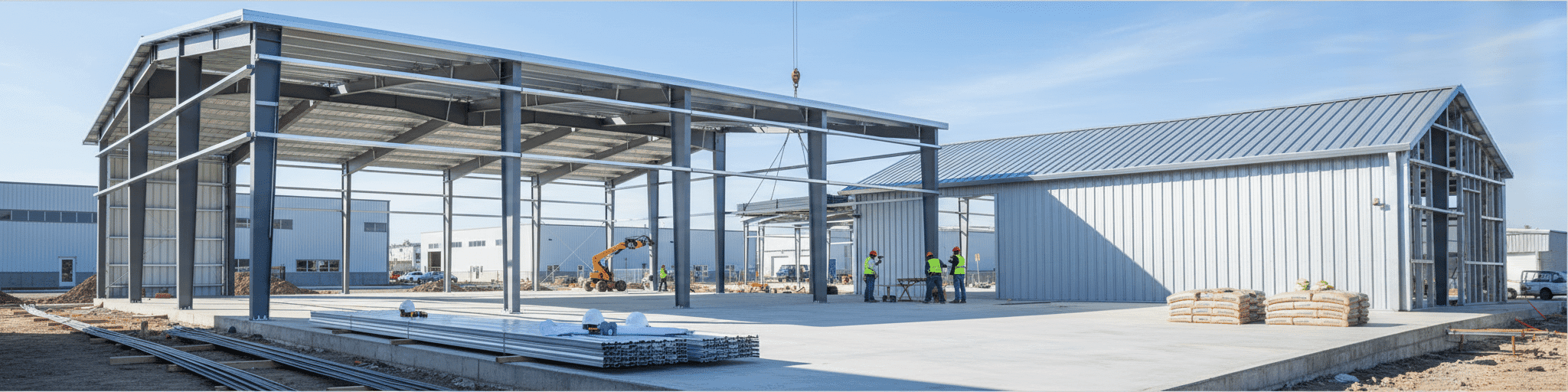

A comprehensive analysis of 30×40 metal building costs reveals total project expenses typically range from $23,000 to $40,000 for a completed structure. This guide breaks down every cost component from base kits ($10,000-$25,000) through professional installation ($7-12 per square foot), concrete foundations ($5,000-$10,000), and customization options. Understanding these detailed breakdowns helps buyers make informed decisions and avoid budget overruns in their metal building projects.
Introduction
What makes a 30×40 metal building the perfect balance of space and affordability?
The versatility and growing popularity of 30×40 metal buildings
A 30×40 metal building provides 1,200 square feet of adaptable space that serves multiple purposes across residential, commercial, and industrial applications [1]. These structures excel in three key areas: functionality, durability, and customization potential. At National Steel Buildings Corp, we’ve seen firsthand how these buildings can withstand harsh environmental conditions while requiring minimal maintenance, making them increasingly popular for workshops, storage facilities, and agricultural use [2]. Our clients appreciate the ability to customize their space with features like garage doors, windows, lean-tos, and interior partitions to match their specific needs [1]. The steel construction we provide offers superior protection against rot, mold, and pests compared to traditional wood structures, while also delivering faster construction times through our prefabricated building systems.
Why understanding cost breakdowns is essential before purchasing
Metal building costs fluctuate significantly due to market dynamics, making cost analysis crucial before purchase. Global steel demand continues to grow steadily, but recent years have seen considerable price volatility in structural steel components [3]. These variations stem from multiple factors: raw material costs, labor availability, regional differences, and design complexity [4]. Understanding the complete cost breakdown helps buyers identify potential savings opportunities and avoid budget overruns. As we’ll explore in detail throughout this guide, there’s often a substantial difference between initial kit prices and final installed costs. This is why at National Steel Buildings Corp, we believe in transparent pricing and helping our clients understand every aspect of their investment. Detailed cost analysis prevents unexpected expenses and helps you make informed decisions about your steel building project.
Overview of current metal building cost trends (2024-2025)
Metal building costs have evolved significantly as we move through 2025, influenced by several key market forces: steady global steel demand, ongoing labor dynamics in construction, and increased adoption of sustainable building practices. The metal building industry has responded to these pressures by emphasizing efficiency improvements and strategic ordering options to help manage costs [4]. Regional variations remain an important consideration, with factors like local permit requirements, site preparation needs, and contractor availability creating notable price differences between markets. For 30×40 structures specifically, we focus on providing high-quality materials that ensure long-term durability and value. Understanding these market dynamics is essential for making an informed investment in your metal building project, which is why we’ll break down each cost component in the sections that follow.
Base Metal Building Cost Analysis
Basic 30×40 metal building kits start at $10,000, but what drives the final price to $40,000?
Average price range for 30×40 metal building kits ($10,000-$25,000)
Basic 30×40 metal building kits typically range from $10,000 to $25,000, averaging $8-14 per square foot for standard packages that include the primary structure and basic trim. This base price covers essential structural components but excludes end walls and additional features. Several key factors drive these costs: material specifications like steel gauge thickness, roof style variations, and structural framing requirements all impact the final price. High-quality kits with premium materials and enhanced durability tend toward the upper price range, while basic configurations with standard materials fall at the lower end. Current market data shows complete project costs, including concrete and installation, typically landing between $23,000 and $40,000 for a finished structure. These price ranges reflect commercial-grade materials from North American suppliers, though actual costs vary based on regional availability and market conditions.
Cost per square foot breakdown for 1,200 sq ft structures ($15-$50/sq ft)
A 30×40 metal building’s cost per square foot varies significantly based on three main components. The base material costs range from $12-14 per square foot for commercial-grade steel I-beam frames, which provide superior structural integrity compared to cheaper tubular options. When calculating total project expenses, installed turnkey solutions typically cost $24-43 per square foot, encompassing the kit, concrete slab, delivery, and professional construction [5]. The wide price range reflects differences in customization levels, from basic storage buildings at the lower end to fully finished commercial spaces approaching $50 per square foot. Site-specific factors also influence per-square-foot pricing: challenging terrain requiring extensive preparation, regions with strict building codes, and projects needing specialized features like heavy-duty doors or climate control systems all push costs toward the upper range. Understanding these variations helps buyers budget accurately for their specific 1,200 square foot structure.
Kit prices vs. turnkey building solutions
Metal building buyers face a key choice between purchasing just the kit or opting for a turnkey solution. Basic kits range from $12,000-$30,000 for a 30×40 structure, requiring separate coordination of foundation work, construction labor, and other components. Turnkey solutions include professional installation, engineering drawings, and complete project management, typically costing $24-$43 per square foot when factoring in concrete, delivery, and construction. While turnkey packages offer convenience and professional oversight, they may limit scheduling flexibility and increase total project costs compared to kit-only purchases. Kit buyers can often save 20-30% by managing their own construction timeline and hiring local contractors as needed, though this requires more hands-on project coordination and construction knowledge. The choice ultimately depends on your budget constraints, construction expertise, and desired level of involvement—with many owners finding a hybrid approach most cost-effective by purchasing a quality kit and selectively outsourcing complex installation tasks like electrical or HVAC work.
Regional price variations across the United States
Metal building costs vary significantly across U.S. regions due to several market factors. Labor rates and material availability create price differences of 20-30% between locations, with areas experiencing construction labor shortages seeing higher installation costs. Local building codes and permit requirements also impact total expenses—regions with stricter regulations often require enhanced structural specifications that drive up costs. Transportation distance from suppliers affects pricing through freight charges ranging from $500-$2,500, making your location relative to steel manufacturers a key cost factor. Site accessibility and local climate requirements further influence regional pricing, as discussed in our Climate Considerations section. Areas with high wind or snow loads need additional structural reinforcement, increasing material costs above standard specifications. The Northeast and West Coast typically see the highest total costs due to stricter building codes and higher labor rates, while the Southeast and Midwest often offer more competitive pricing due to greater supplier competition and lower labor costs.
Material Expenses Breakdown
Why does red iron steel cost more but deliver superior long-term value?
Structural steel comparison: Red iron vs. tubular steel options
When selecting framing for your metal building, you’ll encounter two primary options that significantly impact both cost and performance. Red iron, or steel I-beam construction, represents the premium choice in our industry. This commercial-grade framing features structural steel with an iron oxide coating that provides exceptional water damage protection. While commanding higher upfront costs, red iron delivers unmatched structural strength and longevity.
Tubular steel buildings offer a more budget-friendly alternative, utilizing lighter metal tubing frames with steel panel covering. However, these systems require additional support posts that can limit your usable interior space. At National Steel Buildings Corp, we’ve seen how red iron’s superior tensile strength enables clear-span designs without internal columns – a crucial advantage for warehouses, aircraft hangars, and manufacturing facilities. Our commercial-grade steel I-beam frames from the USA and Canada ensure your investment stands strong for decades.
Secondary materials: Roofing, siding, trim, and fasteners
Secondary materials represent a substantial portion of your building’s total investment, and understanding these costs helps you make informed decisions. Roofing panels typically range from $2.00-$5.00 per square foot, with exposed fastener systems offering significant savings compared to standing seam options. When calculating your budget, remember that trim and flashing add approximately 25% to exposed fastener panel costs and 30-40% for concealed fastener systems.
Your choice of paint system directly affects both price and longevity. PVDF-coated panels, while commanding a 30-40% premium over standard SMP finishes, provide exceptional durability that justifies the investment in harsh environments. Similarly, selecting between 26-gauge and 24-gauge steel impacts your budget – the heavier 24-gauge option increases costs by 25-40% but delivers superior structural integrity and weather resistance. We include all necessary secondary components, fasteners, and sealants in our comprehensive building packages to ensure you receive everything needed for a complete installation.
Essential components: Doors, windows, and hardware expenses
Essential building components deserve careful consideration in your budget planning. Standard walk-in doors typically add $300-500 per unit to your project, while roll-up garage doors range from $800-2,000 based on size and insulation specifications. Window installations average $200-400 per unit, with pricing influenced by dimensions, glazing options, and energy efficiency ratings.
Hardware expenses – including door handles, locks, trim packages, and fastening systems – collectively add 5-10% to your base building cost. We recommend investing in commercial-grade components, which, while increasing initial costs by 25-40%, provide enhanced durability and security that pays dividends over your building’s lifetime. For most 30×40 structures, planning for at least one walk-in door and one equipment-access garage door ensures optimal functionality. Our team helps you select the right combination of components to balance your immediate budget needs with long-term operational requirements.
Material quality grades and their impact on longevity and cost
The quality of materials you select determines not only your initial investment but also your building’s performance over decades of use. As discussed in our structural comparison above, commercial-grade steel I-beam frames represent a premium investment that delivers exceptional returns through superior strength and minimal maintenance requirements.
Beyond framing choices, every material decision impacts your building’s longevity. Premium paint systems and thicker gauge steel – while increasing upfront costs – significantly reduce lifetime maintenance expenses and extend your structure’s serviceable life. At National Steel Buildings Corp, we guide clients through these material selections, helping you understand how today’s investment in quality translates to tomorrow’s operational savings. Our experience shows that buildings constructed with premium materials consistently outperform their initial cost differential through reduced maintenance, lower insurance premiums, and extended replacement cycles.
Foundation and Site Preparation Costs
Site preparation can add $2,000-$5,000 to your project – is your property ready?
Site evaluation and preparation expenses ($2,000-$5,000)
Site evaluation and preparation represent crucial early investments that determine your metal building’s long-term stability and performance. Professional site assessment typically ranges from $2,000 to $5,000, covering essential groundwork that ensures your structure performs optimally for decades. The building site’s characteristics—including soil quality, terrain grade, and existing drainage patterns—directly influence both foundation design requirements and overall construction complexity.
Challenging site conditions such as poor soil composition, uneven terrain, or inadequate drainage often require additional excavation and grading work that can push preparation costs toward the higher end of the range. Site accessibility presents another cost factor, as locations with restricted access may demand specialized equipment or extended labor hours for material delivery and equipment positioning. Beyond physical characteristics, local building codes establish specific preparation standards that vary significantly by jurisdiction, affecting both the scope of work required and associated expenses.
A thorough site evaluation should examine four critical elements: soil bearing capacity, natural drainage patterns, utility access points, and required grading modifications. Understanding these factors early helps prevent costly surprises during construction and ensures your investment delivers maximum value over the building’s lifetime.
Concrete foundation options and their associated costs ($5,000-$10,000)
Concrete foundation options for 30×40 metal buildings typically range from $5,000 to $10,000, representing a critical investment in your structure’s stability and longevity. As experienced steel building professionals, we emphasize that your foundation literally supports everything above it—making proper engineering essential for decades of reliable performance.
Standard reinforced concrete slabs for these structures require careful thickness calculations and strategic reinforcement placement to properly distribute the loads from your metal frame. Costs vary based on several technical factors: soil bearing capacity, frost line depth in your region, and specific load requirements for your building’s intended use. For instance, a workshop housing heavy equipment demands more robust specifications than a basic storage facility.
While metal building kits don’t include concrete work in their base pricing, this separation actually benefits buyers by allowing local concrete contractors familiar with regional soil conditions to provide competitive bids. The foundation typically represents 15-20% of your total project investment—a significant expense that pays dividends through enhanced structural integrity. Our recommendation: never compromise on foundation quality to save a few dollars upfront, as remediation costs far exceed initial savings.
Permit and inspection fees by region
Building permit fees represent a necessary but highly variable cost component, ranging from $150 in rural areas to $7,500 in major metropolitan markets. As discussed in our regional pricing analysis, these location-based differences significantly impact your total project budget. The national average typically falls between $550-$2,000, though your specific costs depend on local regulations and project scope.
Understanding permit fee structures helps with accurate budgeting: residential permits generally cost less than commercial ones, with commercial fees calculated either per square foot ($0.15-$0.84) or as a percentage of project value (1-5%). Most jurisdictions require separate permits for different building systems—structural, electrical, plumbing, and HVAC—each adding to your total permit expense.
Time-sensitive projects may benefit from expedited processing options, available in many areas for $200-$1,000 additional fees. This investment often proves worthwhile for businesses needing rapid construction completion. Special considerations apply in historical districts or environmentally sensitive zones, where additional permits and inspections ensure compliance with preservation standards or environmental protections. Our team guides clients through jurisdiction-specific requirements, helping navigate the permit process efficiently while ensuring full compliance.
Addressing site-specific challenges: Drainage, access, and utilities
Successful metal building projects require addressing three critical site challenges that directly impact structural performance and longevity. Each challenge demands professional attention during the preparation phase to ensure your investment delivers lasting value.
Drainage Management: Water represents the primary threat to any building’s foundation system. Proper site grading creates positive drainage away from your structure, preventing water accumulation that leads to foundation settlement, concrete degradation, and costly repairs. Your site’s natural topography and soil permeability determine the extent of grading work needed—clay soils require more aggressive drainage solutions than sandy soils, for instance.
Access Planning: Construction access extends beyond simply getting trucks to your site. Delivery vehicles for steel components require adequate turning radius and stable ground conditions to safely position materials. Long-term access planning ensures your completed building serves its intended purpose effectively, whether that’s accommodating customer parking, equipment movement, or service vehicle access.
Utility Coordination: Professional utility location and coordination prevents dangerous surprises during excavation. While marking services identify existing lines, any required rerouting demands licensed contractors familiar with local codes and safety requirements. This step becomes particularly critical when installing heavy electrical service for manufacturing operations or specialized plumbing for wash bays.
Investing in comprehensive site preparation helps ensure your metal building performs optimally throughout its service life, making this upfront expense a wise long-term investment.
Labor and Installation Expenses
Professional installation adds $7-12 per square foot but ensures code compliance and warranty validity.
Professional installation cost breakdown by construction phase
Professional installation of a 30×40 metal building follows distinct phases that impact labor costs. The initial site preparation and foundation work typically requires 20-25% of total labor expenses, with crews focusing on proper grading, drainage, and concrete slab installation. Frame assembly and structural erection represents 30-35% of labor costs, involving the placement of main support beams, columns, and roof trusses. Secondary component installation, including roofing, siding, doors, and windows, accounts for another 25-30% of labor expenses. Final finishing work like trim installation, sealing, and quality inspections makes up the remaining 15-20% of installation costs. As discussed in the cost analysis sections above, professional installation typically adds $7-12 per square foot to project costs. This labor cost breakdown assumes standard installation conditions – complex site requirements or custom features can shift these percentages significantly.
DIY vs. contractor installation: Hidden costs and considerations
The choice between DIY and contractor installation presents distinct cost implications for 30×40 metal building projects. DIY installation can reduce labor costs by 20-30% compared to professional installation, but requires significant project coordination and construction expertise. As outlined in the kit versus turnkey comparison earlier, professional installation transforms basic kits into complete structures. Hidden costs for DIY projects include equipment rental, additional labor help, and potential mistakes that require professional correction. Professional installation offers key advantages through included engineering drawings, complete project management, and guaranteed compliance with building codes. At National Steel Buildings Corp, our experienced installation teams ensure your structure meets all specifications while minimizing construction time and potential complications. The decision ultimately depends on construction experience, available time for project management, and comfort level with coordinating complex installation tasks.
Typical construction timeline and labor hour requirements
A 30×40 metal building typically requires 5-7 days for basic frame assembly and construction with an experienced crew. For a structure this size, a three-person crew can complete the framing and basic assembly in approximately five working days under normal conditions. Construction timelines depend heavily on several variables: crew size and experience level, weather conditions, equipment availability, and design complexity. Pre-engineered metal building systems reduce overall construction time by about 33% compared to traditional building methods since prefabrication eliminates most measuring, cutting, and welding at the job site. Simple rectangular designs with basic gable roofs erect fastest, while highly customized layouts or structures requiring special features take longer to complete. The construction schedule must also account for concrete curing time and site preparation work, which occur before the actual metal building assembly can begin.
Finding and evaluating qualified metal building contractors
Finding qualified metal building contractors requires evaluating several key factors. Start by examining contractors’ portfolios for relevant experience with metal buildings specifically, since these structures demand specialized knowledge different from traditional construction. Request and contact references from past clients while researching online reviews across multiple platforms to verify consistent quality work and customer satisfaction. When evaluating potential contractors, verify their licensing status and insurance coverage – both liability and workers’ compensation insurance are essential. Ask detailed questions about their familiarity with local building codes and permit requirements, as non-compliant construction can result in costly penalties. Professional contractors should readily partner with qualified HVAC, electrical, and plumbing specialists to ensure all technical aspects meet requirements. Once you’ve identified promising candidates, request detailed quotes that break down all costs including materials, labor, equipment rental, and potential additional fees. Document all conversations and agreements in writing through a comprehensive contract that outlines individual expenses, materials lists, warranties, and workmanship guarantees. Quality contractors will appreciate thorough vetting and provide transparent information about their experience, processes, and pricing. For those seeking turnkey solutions, working with experienced metal building specialists who offer both materials and installation can streamline the entire construction process.
Customization and Additional Cost Factors
Proper insulation can reduce energy costs by 30% – which option fits your budget?
Insulation options and their cost impact ($1-$3 per square foot)
Proper insulation transforms a basic metal building into a comfortable, energy-efficient space suitable for year-round use. Traditional fiberglass batt insulation represents the most economical choice at $1.00-$1.50 per square foot, providing adequate thermal protection for basic storage and workshop applications. Spray foam insulation, ranging from $2.00-$3.00 per square foot, creates a superior vapor barrier and air seal that significantly reduces energy costs over time. For clients seeking premium performance, closed-cell spray foam delivers R-values of 6-7 per inch while preventing condensation issues that can damage stored equipment or materials. The long-term energy savings from quality insulation often justify the higher initial investment, particularly for climate-controlled spaces or buildings used for manufacturing processes requiring stable temperatures. Our team helps calculate the optimal insulation strategy based on your specific climate zone and intended building use.
Interior finishing expenses for different applications
Interior finishing costs for 30×40 metal buildings vary significantly based on the desired level of completion and intended use. Basic drywall installation adds $1.50-$3.50 per square foot, creating finished walls suitable for offices or retail spaces. For residential conversions, kitchen and bathroom installations represent major expenses – kitchen cabinets typically cost $4,500-$15,000 installed, while plumbing fixtures and sink installations run $330-$1,300 per unit. Flooring installation adds another $4-$15 per square foot depending on material choice, with polished concrete offering durability at the lower end and premium vinyl or hardwood commanding higher prices. Essential systems like HVAC installation range from $7,000-$16,000 for a complete setup with ductwork, while electrical work including panel upgrades and light fixtures averages $3,000-$5,000 for standard configurations. Many workshop and storage facility owners strategically phase their finishing work, starting with basic insulation and lighting to control initial costs while planning future upgrades as business needs evolve.
Structural additions: Lean-tos, mezzanines, and partitions
Structural additions like lean-tos provide cost-effective ways to expand metal building functionality. Lean-to structures typically cost between $14-18 per square foot, offering an economical solution for adding covered space to existing buildings [41]. These attachments feature single-sloped roofs that often continue the main structure’s roofline and work well for multiple applications including equipment storage, animal shelter, and expanded workspace [41]. For a 30×40 metal building, a standard 10’x31’x10′ open lean-to addition costs approximately $5,300-6,500 when included with the base structure [42]. The versatility of lean-to additions allows them to serve as carports, storage areas, covered patios, or animal shelters while maintaining the building’s architectural flow [41]. Mezzanines and interior partitions can further maximize usable space, though their costs vary significantly based on materials used and structural requirements.
Climate considerations and their effect on total metal building cost
Climate considerations significantly impact metal building costs through required structural adaptations. Buildings in regions with heavy snow loads need reinforced roofing systems and stronger support columns, while coastal areas prone to high winds require additional bracing and enhanced connection details. These climate-specific modifications ensure the structure meets or exceeds local building codes, typically increasing material costs by 15-25% compared to standard specifications. Understanding your region’s specific requirements helps avoid costly surprises – for instance, areas with 40+ psf snow loads require heavier gauge purlins and closer spacing, while hurricane-prone zones mandate specific anchor patterns and wind-rated doors. Professional engineering teams factor these environmental loads into every design, ensuring your building maintains structural integrity throughout its service life. While climate adaptations increase initial investment, they deliver exceptional value by preventing weather-related damage and maintaining lower insurance premiums over the building’s 40-50 year lifespan.
Long-Term Value and Financial Considerations
How can strategic financing and energy efficiency turn your metal building into a smart investment?
Financing options and current rates for metal buildings
Understanding your financing options is crucial when planning a 30×40 metal building project. Home improvement loans provide accessible funding for smaller structures, typically offering $1,000-$50,000 with competitive APRs ranging from 4-20% for qualified buyers with credit scores between 660-850. For more substantial projects, construction-to-permanent loans streamline the process by combining building costs and long-term financing into one convenient package, with amounts from $5,000-$50,000 and flexible terms of 2-5 years.
Several specialized lenders now focus specifically on metal building construction, recognizing the unique value these structures provide. Agricultural and rural property owners have additional options through USDA Farm Service Agency programs, which offer loans and guarantees specifically designed for farmers and rural businesses. These agricultural lenders understand the practical benefits of metal buildings for farm operations and typically provide both fixed and variable rate options with more flexible terms than traditional banks. When exploring financing, consider discussing your specific project needs with lenders who have experience with steel structures to ensure the best possible terms.
Insurance benefits and potential savings
One of the most compelling financial advantages of metal buildings is the substantial insurance savings they provide. Property owners typically see premiums that are 30% lower than traditional structures, thanks to steel’s inherent fire resistance and exceptional durability. Insurance companies recognize that metal buildings significantly reduce their exposure to major claims from fire, water damage, and severe weather events.
These structures consistently achieve favorable Insurance Services Office (ISO) classifications, with steel-roofed buildings qualifying for Class 3 ratings that offer an optimal balance of protection and affordability. You can further optimize your insurance costs by incorporating safety features like sprinkler systems and enhanced fireproofing measures.
The natural resistance of steel to termites, rot, and moisture-related deterioration eliminates many common insurance claims that traditional buildings face. Additionally, the engineered design standards that allow these buildings to withstand winds up to 170 mph provide extra value in storm-prone regions. When you combine non-combustible materials, impact-resistant roofing rated at Class IV level, and superior structural integrity, insurance providers view metal buildings as lower-risk investments, translating to consistently reduced coverage costs throughout your building’s lifetime.
Maintenance costs compared to traditional construction
The maintenance advantages of metal buildings create significant long-term cost savings that enhance your investment value. Unlike traditional wood construction that requires constant attention to prevent rot, mold, and pest damage, steel structures eliminate these concerns entirely. This fundamental difference translates directly to your bottom line through reduced repair expenses and minimal downtime.
When you invest in high-quality steel frames and commercial-grade materials, you’re securing decades of reliable service with minimal upkeep. While premium materials may increase initial costs by 25-40%, this investment pays dividends through extended building lifespan and reduced maintenance needs. The engineered design of these structures provides exceptional protection against environmental damage, maintaining their integrity year after year.
Routine maintenance for a metal building involves simple periodic inspections and occasional touch-ups, a stark contrast to the frequent repairs, treatments, and replacements required by traditional construction. This simplified maintenance schedule not only reduces direct costs but also minimizes business disruptions and labor expenses. When calculating total cost of ownership, metal buildings consistently outperform conventional structures, making them the smart choice for budget-conscious property owners focused on long-term value.
Energy efficiency advantages and long-term return on investment
Energy efficiency represents one of the most compelling financial advantages of modern metal buildings. Industry data shows an impressive 6-to-1 return on investment for every dollar spent on energy efficiency measures and code compliance. This exceptional ROI stems from the integrated approach metal buildings take to energy management.
Today’s metal structures achieve superior energy performance through carefully designed systems. High-performance insulation options dramatically reduce HVAC demands, while cool roofing technology with reflective coatings keeps interior temperatures comfortable even in challenging climates. The precision-engineered components create an exceptionally tight building envelope that eliminates costly air leakage, a common problem in traditional construction.
Strategic design elements further enhance efficiency. Proper window and door placement maximizes natural daylighting while enabling improved temperature zoning throughout your building. Unlike traditional structures that experience settling, warping, and moisture damage over time, metal buildings maintain their energy efficiency for decades. The steel framework doesn’t shift or degrade, ensuring your insulation and weatherproofing continue performing at peak levels.
For businesses evaluating long-term operational costs, the combination of reduced utility expenses, minimal maintenance requirements, and sustained structural integrity makes metal buildings an increasingly attractive investment. To explore how these efficiency advantages can benefit your specific project, contact our team at National Steel Buildings Corp for a personalized consultation.
Conclusion
Ready to transform your 30×40 metal building vision into reality?
Summary of total cost expectations for 30×40 metal buildings
As we’ve explored throughout this guide, a 30×40 metal building represents a significant investment that varies based on numerous factors. The comprehensive cost breakdowns in previous sections reveal total project expenses typically ranging from $23,000-$40,000 for a completed structure. What’s crucial to understand is that today’s market conditions create both challenges and opportunities – while steel prices continue to fluctuate, working with experienced professionals who understand material sourcing and market timing can help you secure the best value. Regional variations, as detailed in our analysis above, can impact your final investment by 20-30%, making local expertise invaluable. Remember that premium features like commercial-grade steel I-beam frames and enhanced insulation, while increasing initial costs, deliver exceptional long-term value through reduced maintenance and superior performance.
Key factors that most significantly impact your final price
Your final investment in a 30×40 metal building hinges on several critical decisions we’ve examined throughout this guide. The structural system choice – particularly between commercial-grade steel I-beam frames and tubular options discussed in our materials section – fundamentally shapes both your budget and building performance. Site-specific factors, thoroughly covered in our foundation and preparation analysis, can significantly impact your bottom line through soil conditions, accessibility challenges, and local requirements. Your customization choices create the most variable cost factor – from basic shells to fully finished spaces with HVAC, electrical, and plumbing systems. Today’s steel market dynamics demand strategic timing and professional guidance to navigate price fluctuations effectively. Foundation requirements, which we’ve detailed extensively above, represent a substantial but necessary investment in your building’s longevity. Understanding how these elements interact empowers you to make informed decisions that balance immediate costs with long-term value – and that’s where professional expertise becomes invaluable in optimizing your investment.
Steps to secure accurate quotes and reliable construction partners
Your journey to a successful 30×40 metal building project begins with preparation and the right partnerships. Start by documenting your site thoroughly – capture drainage patterns, utility locations, and access routes. This preparation enables accurate pricing and prevents costly surprises during construction. When selecting your construction partner, prioritize metal building expertise over general contracting experience. Look for proven track records with similar projects, verified insurance coverage, and deep familiarity with local building codes.
The most successful projects involve contractors who maintain strong relationships with specialized trades – HVAC, electrical, and plumbing professionals who understand metal building integration. Request comprehensive quotes that detail every aspect: materials, labor, equipment, and potential contingencies. A transparent contractor welcomes questions and provides clear documentation of warranties, materials specifications, and project timelines.
At National Steel Buildings Corp, we understand that navigating these decisions can feel overwhelming. That’s why we offer expert guidance throughout your project, from initial planning through final construction. Our team brings decades of experience in commercial-grade steel buildings, ensuring your investment delivers maximum value and performance. Contact us today to begin your consultation and discover how our expertise can transform your building vision into reality.
- Basic 30×40 metal building kits range from $10,000-$25,000, averaging $8-14 per square foot for standard packages
- Total project costs typically land between $23,000-$40,000 when including concrete, delivery, and professional installation
- Professional installation adds $7-12 per square foot but ensures code compliance and warranty validity
- Commercial-grade steel I-beam frames cost more initially but deliver superior strength and longevity compared to tubular options
- Site preparation ($2,000-$5,000) and concrete foundations ($5,000-$10,000) represent crucial investments in structural stability
- Regional price variations of 20-30% stem from labor rates, building codes, and transportation distances from suppliers
- Quality insulation ($1-3 per square foot) can reduce energy costs by 30% and improve year-round comfort
- Metal buildings offer 30% insurance savings and minimal maintenance compared to traditional construction
- Energy efficiency investments deliver 6-to-1 returns through reduced HVAC demands and superior building envelope performance
- Working with experienced metal building specialists ensures optimal material selection, code compliance, and long-term value
- https://www.empirebuilt.com/30×40-metal-building/
- https://www.futurebuildings.com/blog/30×40-metal-garage.html
- https://www.steelcobuildings.com/metal-building-cost-a-comprehensive-guide-to-budgeting-and-planning/
- https://americansteelinc.com/blog/steel-building-costs-prices-guide/
- https://www.buildingsguide.com/metal-building-prices/?srsltid=AfmBOorQykCGCcZbCp7-HEBU_aD8DMGVw0OMNE5obfgMannJoGdqGVFP
- https://www.buildingsguide.com/metal-building-prices/?srsltid=AfmBOop1Unp5uQF4PYaWMou7BO3cDiYq3_uDJ8P-ulXm9nlBDtHIgaWm
- https://www.architecturecourses.org/build/prefab-metal-building-prices
- https://www.uspatriotsteel.com/blog/how-much-does-a-30×40-metal-building-cost/
- https://americanmetalgarages.com/30×40-metal-garage-cost-breakdown-what-you-get-and-how-it-works/
- https://www.metalbuildingoutlet.com/how-much-does-a-30×40-steel-building-cost/
- https://www.buildingsguide.com/metal-building-prices/?srsltid=AfmBOopGBzWiZy4Y4fqeoHt8OYdK2A7eDhyx7_HAfYGurNbPLpoOkP0W
- https://pricebuildings.com/steel-buildings/cost/30×40-metal-building-cost/
- https://www.buildingsguide.com/metal-building-prices/?srsltid=AfmBOorzyhiGsrAhqn5Atdy8MF1bLctU8cZNSDKC5ctRFXrP0VzoLheN
- https://www.torosteelbuildings.com/diy-steel-building-kits-vs-turnkey/
- https://www.buildingsguide.com/metal-building-prices/?srsltid=AfmBOopXyqQGXeGOISFrpCXkLydm57W4VH-aTbkPfhOmjx3Knm8DW-Kn
- https://mavericksteelbuildings.com/red-iron-building-vs-metal-tube-building-whats-the-best/
- https://www.buildingsguide.com/metal-building-prices/?srsltid=AfmBOoqxo8_s7-5cdNNtNnt4Q1ErbBQ4fASSE4P3306SZ9rTblXPayVP
- https://www.coast-to-coastcarports.com/red-iron-vs-steel-tubing-which-is-better-for-your-structure?srsltid=AfmBOopAJa8PcSmrnXyP7-th_AM8OuXY5KmiVCcn7pYHW2AH0-XteOkY
- https://www.westernstatesmetalroofing.com/metal-roof-cost
- https://www.buildingsguide.com/standard-sizes/30×40-metal-building/?srsltid=AfmBOorGGwB6KcBWL_4YSmUQVUacOFhLW455jZlr5CCBlXVKJT3VgwdC
- https://www.buildingsguide.com/metal-building-prices/?srsltid=AfmBOorZwnEAXVlvgrrx6YqYJFSiAdepq2-xLsXSM9oGGMQhTX9fiVvJ
- https://www.buildingsguide.com/metal-building-prices/?srsltid=AfmBOoo4AA5yUydrDiogLh75t6ArE-kVHrg674aAmczx-pP1N8QwM0O1
- https://www.metalbuildingoutfitters.com/analyzing-costs-of-custom-metal-buildings-a-guide/
- https://bulldogsteelstructures.com/blog/exploring-the-cost-efficiency-of-metal-buildings-vs-traditional-construction/
- https://www.buildingsguide.com/metal-building-prices/?srsltid=AfmBOoodPvpe83DhcrGQI6h7tC4kwnQ7I6CJGG_xHJsn9DL3nfd35o3C
- https://nationalsteelb.wpengine.com/2023/08/30/how-much-does-a-30×40-metal-building-with-a-concrete-slab-cost/
- https://www.buildingsguide.com/build/metal-building-codes-permits/?srsltid=AfmBOorvPWRd3UgY9b27M2MPhdrPS-ksVkmJ5XmzHGTy2FZQSXp1t1nL
- https://www.angi.com/articles/how-much-does-building-permit-cost.htm
- https://www.metalsales.us.com/blog/preparing-metal-building-site/
- https://www.premiermetalstructures.com/site-preparation/
- https://www.peaksteelbuildings.com/site-preparation-tips-for-metal-building-construction/
- https://www.buildingsguide.com/metal-building-prices/?srsltid=AfmBOoozasu5P-SwsAO0-6Du_zAQKIijydaupYyAC5C7PsuiEt5Q49Bv
- https://homeguide.com/costs/metal-building-cost
- https://www.buildingsguide.com/standard-sizes/30×40-metal-building/?srsltid=AfmBOopxw28HXMVE_wcLvjFnw_fjKrR_430TqiK1Z6stNM8VnpTEdPqq
- https://estimatorflorida.com/metal-building-installation-cost/
- https://www.rhinobldg.com/blog/how-long-does-it-take-to-erect-a-metal-building
- https://www.metalbuildingoutfitters.com/3-tips-metal-building-contractors/
- https://pbsbuildings.com/choosing-the-right-contractor/
- https://homeguide.com/costs/metal-building-homes-cost
- https://www.buildingsguide.com/metal-building-prices/?srsltid=AfmBOorV_fz01FmW-NeXiGL6cv9HkqylKBE7ErpSSVC11Ih2oFgT2w-M
- https://www.coast-to-coastcarports.com/how-much-does-it-cost-to-build-a-metal-building-lean-to?srsltid=AfmBOopaemL-jKjiSwn-KJCzot42XZZS0CRr8zVRqkLHDRJPCrR0ohXp
- https://www.vikingsteelstructures.com/buy-from-photos/30×40-metal-building-with-lean-to?srsltid=AfmBOopGpFxGxSoHPlcP2u3f332hGBpEHPCWrvcZnm5aQa1dkZZ2Kt7t
- https://www.buildingsguide.com/build/metal-building-financing/?srsltid=AfmBOoqH7z4Gt01vS3LrhXCApB-t66IE3kaNQL33gpmqL89VUrdPddkB
- https://bullbuildings.com/5-options-for-financing-your-metal-building/
- https://www.buildingsguide.com/build/pole-barn-vs-metal-building/
- https://www.peaksteelbuildings.com/is-insurance-cheaper-for-a-steel-building/
- https://bullbuildings.com/metal-building-insurance-what-you-need-to-know/
- https://metalbuildingsnorthamerica.com/30×40-metal-building-construction-facts/
- https://estimatorflorida.com/how-much-does-a-30×40-metal-building-with-a-concrete-slab-cost/
- https://www.facilitybuilders.com/blog/2021/07/energy-efficient-building-solutions.html
- https://www.metalbuildingoutfitters.com/why-choose-long-lasting-metal-structures-for-cost-effectiveness/
- https://reddirect.com/blog/how-metal-buildings-enhance-energy-efficiency/
- https://www.buildingsguide.com/metal-building-prices/?srsltid=AfmBOorLrsdJcX-rVO5ewAF1k0rSgxUxh4U74hBJKpnD0bAdsRiw6R7Z
- https://www.worldwidesteelbuildings.com/blog/pre-construction-checklist-for-metal-buildings/
- https://metalbuildingsnorthamerica.com/accurate-concrete-prices-for-metal-buildings/