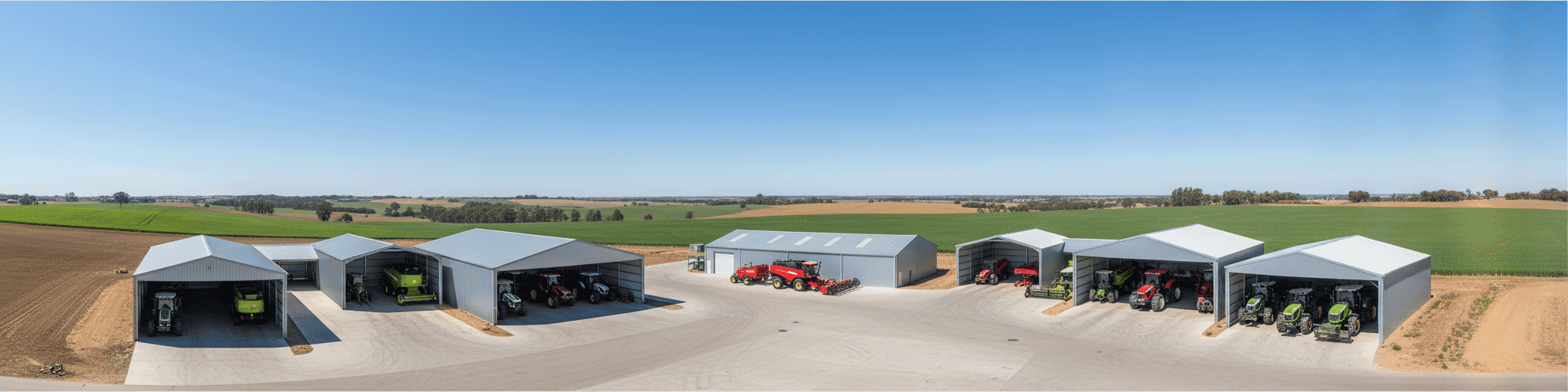

Understanding the critical differences between agricultural structures and buildings can save farmers thousands in permits, compliance costs, and operational inefficiencies while maximizing their return on investment. This comprehensive guide reveals how agricultural structures—from silos and fencing to irrigation systems—offer functional, often permit-exempt solutions under 200 square feet, while agricultural buildings like livestock barns and equipment storage require specific code compliance but provide superior protection and automation capabilities. Readers will discover why modern steel construction has become the preferred choice for durability and flexibility, how zoning exemptions can eliminate costly delays for legitimate farming operations, and why lifecycle costs typically exceed initial construction by 1.5-5x over 30 years, making material selection crucial for long-term profitability. The article explores cutting-edge integrations of IoT sensors, automated systems, and sustainable design features that transform traditional farms into intelligent, energy-efficient operations, while providing practical decision-making frameworks for evaluating infrastructure needs based on acreage, livestock requirements, equipment dimensions, and future expansion plans. Whether planning a small equipment shed or a large-scale livestock facility, farmers will learn to navigate regulatory frameworks, leverage agricultural exemptions, and design adaptable structures that accommodate evolving technologies and climate challenges while maintaining compliance and optimizing operational efficiency.
Defining Agricultural Structures vs. Agricultural Buildings
Agricultural structures range from open-air silos to animal pens, while agricultural buildings are enclosed, permanent facilities—from cattle barns to processing plants—engineered for livestock, storage, or processing with ventilation, insulation, and automation that demand strategic farmstead planning for efficiency and growth.
What qualifies as an agricultural structure: comprehensive definition
Agricultural structures encompass all functional facilities that support farming operations, including both enclosed and open-air installations. These structures serve to improve efficiency, convenience, and operational functionality without necessarily having walls or roofs.
According to the National Farm Building Code of Canada, agricultural structures are defined as non-residential constructions that directly support farming activities through production, protection, or storage functions [2]. Common examples include silos, sheds, fences, animal pens, produce storage facilities, grain bins, and manure storage systems [2].
The integration of these structures requires careful farmstead planning to ensure operational efficiency, environmental sustainability, and future expansion potential [2].
Agricultural buildings: specific characteristics and classifications
Agricultural buildings serve distinct functional purposes and fall into five main categories: livestock housing, storage facilities, equipment shelters, processing units, and multi-purpose structures [3]. Livestock buildings include specialized structures like cattle barns, poultry houses, and hog shelters, each designed with specific features for animal welfare and productivity. Storage facilities encompass grain storage sheds, hay barns, and cold storage rooms that protect harvests and maintain product quality.
Equipment buildings house machinery, tools, and maintenance facilities, while processing units handle activities like dairy processing, meat handling, and grain milling. Multi-purpose structures support broader farm operations through offices, worker housing, and agritourism facilities [3]. These buildings typically feature more enclosed, permanent construction compared to basic agricultural structures, with design elements like proper ventilation, insulation, and specialized systems for their intended use [4].
Today's agricultural buildings increasingly incorporate durable steel construction and automated systems to enhance operational efficiency and reduce labor costs, with materials and designs specifically chosen for their ability to withstand the demanding conditions of farm operations [3].
Technical and legal distinctions between the two categories
The distinction between agricultural structures and buildings extends beyond design into regulatory considerations. At the most fundamental level, agricultural facilities operate under different zoning rules – while counties can regulate residential, commercial, and industrial land uses, they cannot restrict legitimate farming activities [5].
This creates unique opportunities for farm operations but requires proper classification as a bona fide farm through appropriate documentation [5]. The building code classifications also differ significantly, with agricultural structures typically falling under Risk Category I requirements while other building types must meet higher Risk Category II standards [6].
These regulatory distinctions have practical implications for foundation systems, structural requirements, and safety measures – topics we'll explore in detail in our Regulatory Framework section. Understanding these fundamental differences helps farmers and agricultural businesses make informed decisions about which type of facility best suits their operational needs while ensuring compliance with applicable codes.
Historical evolution of terminology in farming construction
The terminology used for agricultural buildings and structures has evolved significantly alongside changes in farming practices and technology. In the early 20th century, agricultural engineers defined farm buildings as 'the farmer's factory,' emphasizing their role in efficient production [7]. By the 1940s, this perspective shifted as building designs needed to accommodate rapid technological changes, including electrification and mechanization [7]. The evolution accelerated post-World War II when labor shortages drove adoption of new technologies, requiring buildings to incorporate features like electric lighting, water systems, milking machines, and mechanical feed-handling equipment [7].
A fundamental shift occurred in the 1930s when the focus moved from permanent structures designed to last generations toward more flexible, adaptable buildings [7]. This change reflected growing recognition that farming methods were evolving too rapidly to justify extremely durable structures that couldn't be modified [7]. By 1956, agricultural engineer Deane Carter noted that buildings were becoming obsolete due to changing practices rather than physical deterioration [7]. Modern terminology continues to evolve as agricultural structures increasingly incorporate smart technology, automated systems, and sustainable design elements [8].
The transformation in agricultural building terminology has been driven by multiple factors, including changing demographics, environmental influences, economic pressures, technological integration, and evolving livestock management practices [8]. This evolution continues today as steel construction technology enables more versatile and durable agricultural facilities that can adapt to changing farming needs while providing superior protection for equipment, livestock, and harvests.
Core Functional Differences and Applications
Fences, silos, and irrigation systems boost farm efficiency by handling livestock control, grain preservation, and water delivery, while specialized barns and equipment sheds safeguard animals and machinery through engineered designs that cut labor costs and weather damage.
Primary purposes of agricultural structures (fences, silos, irrigation systems)
Agricultural structures serve distinct operational functions that enhance farming efficiency and organization. Key examples include fencing systems for livestock management and property boundaries, silos for bulk grain and feed storage, and irrigation infrastructure for water management.
These structures improve convenience and functionality without necessarily requiring full enclosure. Modern silos maximize storage capacity while minimizing spoilage through integrated aeration and unloading systems – whether constructed from concrete, metal, or fiberglass, each material offers specific advantages for different farming operations.
Unlike buildings, agricultural structures focus primarily on supporting specific farming operations: fences control animal movement and protect assets, storage structures preserve harvests, and irrigation systems distribute water efficiently across fields. The successful integration of these structures requires careful planning to ensure operational efficiency while allowing flexibility for future expansion as your farming operation grows.
Essential functions of agricultural buildings (livestock housing, equipment storage)
Agricultural buildings serve vital functions for housing livestock and storing equipment, representing significant investments in your farming operation. Livestock buildings include specialized structures like cattle barns, poultry houses, and hog shelters – each engineered with features for optimal animal welfare and productivity. Cattle barns provide controlled environments for feeding, milking, and calving while protecting animals from extreme temperatures.
Modern barns incorporate sophisticated ventilation systems and automated feeding stations that significantly improve herd health and reduce labor costs. Equipment storage buildings protect your valuable machinery investments from weather damage while enabling efficient maintenance. These structures typically feature large door openings of 18-20 feet high and 60-80 feet wide to accommodate today's modern farm equipment, along with reinforced flooring systems designed for heavy loads.
Many facilities now include dedicated maintenance areas with integrated workspaces – this combination of storage and service areas helps farmers extend machinery lifespan while minimizing costly operational downtime.
Overlap and distinction in practical applications
While agricultural structures and buildings serve distinct primary purposes, significant overlap exists in their practical applications. Smart farm design often integrates structures like fences and silos with enclosed buildings to create comprehensive operational systems.
For example, successful livestock operations frequently combine open-air structures like loafing sheds with fully enclosed barns, providing animals both shelter and outdoor access for optimal health and productivity. The evolution of modern farming has blurred traditional distinctions, with many facilities incorporating hybrid approaches – equipment storage buildings that feature both enclosed maintenance areas and open-sided implement parking maximize functionality while controlling costs.
Processing facilities demonstrate this convergence particularly well, requiring both enclosed climate-controlled spaces and supporting external structures like bulk storage units. This integration reflects agriculture's increasing sophistication, where operations must balance multiple functions within available space and budget.
How function influences design requirements and classifications
The specific function of agricultural facilities directly shapes their design requirements and regulatory classifications. Your building must accommodate modern equipment dimensions – door openings need to be at least 13-14 feet high for standard machinery and up to 17. 5 feet for specialty equipment.
Strategic planning of your operational workflow drives intelligent building design: storage areas require systematic organization, while maintenance facilities should be positioned for easy access yet far enough from residential areas to manage noise concerns. The functional requirements of your facility also determine critical systems like environmental controls. For livestock operations, proper ventilation becomes essential for animal health and productivity, while grain storage demands precise moisture control.
These specialized needs influence not just design but also regulatory considerations – as detailed in our Regulatory Framework section, agricultural facilities often qualify for specific zoning exemptions that can significantly impact your project planning and approval process.
Material and Construction Considerations
Corrugated steel’s 1949 leap to clear-span hundreds of feet still pays off today, slashing labor costs by half and lifetime upkeep to near zero while letting farmers reconfigure ventilated, sensor-rich buildings as crops, livestock, or equipment needs change.
Traditional vs. modern materials for agricultural structures
Agricultural structures have evolved dramatically from basic dirt and stone shelters to sophisticated engineered facilities. Early structures served general storage and livestock needs, but by mid-20th century, specialization drove development of purpose-built facilities as farmers focused on specific crops or livestock.
A pivotal innovation came in 1949 with corrugated steel panel buildings that could span hundreds of feet without internal supports, enabling cost-effective storage of large equipment and grain. Today's agricultural operations demand materials that deliver both performance and longevity.
Steel, wood, and concrete options for agricultural buildings
When comparing building materials for agricultural applications, each option presents distinct advantages and limitations. Steel buildings provide exceptional durability with minimal maintenance requirements—unlike wood structures that demand frequent chemical treatments and repairs, steel naturally resists decay, pests, and environmental degradation. The economics favor steel as well: while initial framing costs run approximately 5% higher than wood trusses, installation labor costs drop by up to 50% due to faster assembly times.
Wood's inherent vulnerabilities become apparent over time—its material properties vary significantly, and exposure to moisture causes swelling, cracking, and warping that compromise structural integrity. Steel maintains consistent strength regardless of environmental conditions. For foundations, steel buildings integrate seamlessly with reinforced concrete to create unified structures engineered for agricultural demands.
Modern agricultural steel buildings incorporate sophisticated features like ventilated eaves, specialized barn doors, and adaptable layouts that serve multiple functions from equipment storage to livestock housing. The modular design philosophy enables farmers to reconfigure spaces as operations evolve, with movable partitions and smart technology integration allowing real-time environmental monitoring and control through connected devices.
Durability, maintenance, and lifecycle cost comparisons
Understanding the true cost of agricultural buildings requires looking beyond initial construction expenses. As detailed in our Decision Guide section, operation and maintenance costs typically exceed initial construction investments by 1. 5-5x over a 30-year period. This reality makes material durability a critical factor in long-term profitability.
Steel structures excel in lifecycle value by minimizing ongoing maintenance requirements. While quality materials matter across all building types, the selection becomes especially crucial in agricultural environments. Machine-graded lumber provides verified strength properties for wood applications, but full-hard steel delivers twice the impact resistance of standard commercial steel—a significant advantage in high-use agricultural facilities. Proper ventilation systems prove essential for any material choice, as moisture from livestock operations can deteriorate wood and loosen fasteners over time.
In steel buildings, integrated ventilation manages humidity while maintaining structural integrity. These durability advantages, combined with steel's natural resistance to rot, pests, and chemical exposure, explain why pre-engineered steel systems have become the preferred choice for agricultural construction projects focused on long-term value.
Climate and environmental factors in material selection
Regional climate conditions directly impact material selection for agricultural structures and buildings. In semi-arid regions with extreme temperatures exceeding 100°F, materials must withstand prolonged heat exposure while resisting warping and degradation [17]. Fluctuating temperatures between seasons create structural stress through expansion and contraction, requiring materials that maintain integrity despite these changes [17].
Steel emerges as a leading choice for agricultural buildings in harsh climates, offering superior fire resistance and minimal warping in high temperatures [18]. While wood provides good insulation and cost-effectiveness in moderate climates, it becomes vulnerable in areas prone to moisture or extreme temperatures [18]. Concrete foundations and walls excel in regions with heavy precipitation, as they resist water damage while helping regulate interior temperatures through thermal mass properties [17].
For coastal agricultural zones, materials must withstand both saltwater exposure and storm impacts – metal roofing reflects sunlight to keep buildings cool while resisting moisture and high winds [18]. Climate change further complicates material selection, as increasing frequency of heavy precipitation can accelerate soil erosion and structural degradation [19]. This requires agricultural buildings to incorporate materials and designs that can withstand more extreme and variable weather patterns.
Regulatory Framework and Compliance
Skip the red tape: a 200-sq-ft feed shed needs no permit, but turning any barn into living space triggers a full re-engineering, re-permitting, and likely costs more than building new with dual-purpose design from day one.
Permit requirements: how classification affects approval processes
The permit approval process differs significantly between agricultural structures and buildings based on their risk category classifications, as discussed in our definitions section above. Understanding these differences can save considerable time and expense during your project planning. For agricultural structures under 200 square feet without electricity, no permit is typically required – making small feed storage or tool sheds straightforward additions to your operation. Larger structures, however, still need approval through your local building department.
The typical permitting timeline averages 14 business days for standard applications, though complex projects or special circumstances may extend this period. When planning agricultural buildings with any residential features, you'll need to satisfy comprehensive fire code requirements and proper egress dimensions. This is where working with experienced builders becomes invaluable – proper planning prevents costly delays. Converting an existing agricultural structure to residential use presents unique challenges.
The process requires complete re-engineering and re-permitting, including structural modifications to meet higher safety standards. You'll face third-party engineering reviews, major renovations for utility accommodations, extended permit reviews, and material upgrades throughout the structure. For many farm operators, building new with dual-purpose design proves more cost-effective than conversion.
Zoning regulations specific to agricultural structures
Agricultural structures operate under distinct zoning regulations that reflect their unique role in farming operations. As mentioned in our earlier discussion of technical distinctions, counties can regulate residential, commercial and industrial land uses but cannot restrict legitimate farming activities. This protection enables farmers to expand operations without typical commercial zoning constraints. To qualify for these valuable agricultural exemptions, properties must meet specific criteria. You'll need to provide documentation such as farm sales tax certificates, present use value taxation eligibility, Schedule F federal tax forms, or a forest management plan.
Before breaking ground, submit site plans showing your structure's dimensions and setback distances to local zoning administrators. This step, while straightforward, ensures smooth project progression. The beauty of agricultural exemptions lies in their flexibility. While farms remain exempt from most local bylaws, you'll still need to comply with town-established setback requirements that determine structure placement relative to roads and property lines. These requirements protect both your operation and your neighbors.
The exemption extends beyond traditional farming into value-added activities. Wine production facilities with tasting rooms typically qualify, though expanding into full restaurant operations would trigger standard commercial zoning. Recent statutory amendments have further clarified that agritourism activities qualify for exemption if the farm maintains proper tax status for three years. This opens doors for farms to host weddings, educational events, and seasonal attractions – diversifying income while maintaining agricultural status.
Building code compliance for agricultural buildings
Agricultural buildings must comply with specific building code requirements based on their classification as Group U structures. This category encompasses the heart of farming operations – livestock shelters, poultry buildings, equipment storage facilities, and horticultural structures. Understanding these requirements helps you maximize building potential while ensuring compliance. For one-story Group U buildings, you can bypass typical area limitations if your structure is surrounded by public ways or yards at least 60 feet wide. This provision enables construction of large-scale storage facilities and equipment shelters without artificial size constraints. Two-story unlimited area buildings require approved automatic sprinkler systems throughout – a worthwhile investment for intensive operations.
Different states offer varying exemptions to support agricultural development. Some jurisdictions exempt agricultural buildings under 1,000 square feet from permit requirements when they meet specific criteria. This includes nonresidential pre-engineered buildings, converted shipping containers, and shade structures. Larger buildings between 1,000-8,000 square feet may also qualify for exemptions when built to recognized construction standards. These exemptions come with important conditions to ensure safety and proper land use. Buildings must maintain minimum 15-foot separations between structures for fire safety and access.
They must be located on working farms or ranches and comply with floodplain management standards. Critically, exempt structures cannot contain residential features – no kitchens, bathrooms, bedrooms, or utility connections for domestic water and sewer. This maintains the agricultural designation while preventing unauthorized residential development. Safety remains paramount even with exemptions. All agricultural buildings must provide proper exit facilities, with maximum travel distances of 300 feet to approved exits. Plan for one exit per 15,000 square feet of floor area to ensure worker and livestock safety during emergencies.
Exemptions and special considerations for farm constructions
Agricultural buildings enjoy significant exemptions from standard building permit requirements when they meet specific criteria. These exemptions vary by state but share common themes of supporting agricultural productivity while maintaining public safety. In the Midwest, states have developed particularly farmer-friendly approaches. Michigan exempts buildings incidental to agricultural use from permit requirements, provided they're not used for retail trade. This includes temporary structures like seasonal tents under 120 square feet used for farm operations. Ohio takes an even broader approach, preventing local zoning from regulating buildings used primarily for agricultural purposes – including facilities for wine production and agritourism.
The interpretation of "primary use" proves surprisingly flexible. A barn can qualify for agricultural exemption even if wine production occupies just 4% of the space, as long as wine production represents the operation's highest-value activity. This recognition that modern farming often involves value-added processing helps farmers diversify without losing exemption status. However, exemptions have practical limits designed to protect public safety. While agricultural buildings may be exempt from permits, any electrical installations must still meet code requirements. Roadside farm stands with power connections, for instance, need proper electrical inspections.
Properties under five acres within established subdivisions may face additional restrictions to preserve residential character. Local jurisdictions maintain authority over certain safety aspects regardless of agricultural exemptions. Setback requirements ensure adequate fire access and protect neighboring properties. Access points must be designed to handle agricultural traffic safely. Working with knowledgeable builders who understand both agricultural needs and local regulations ensures your project maximizes available exemptions while meeting all safety requirements. The goal is creating functional, compliant structures that support your farming operation's growth and evolution.
Technological Innovations and Future Trends
Steel-framed smart barns packed with 100 million IoT sensors, AI-driven irrigation and recyclable IMPs are slashing costs and boosting yields as the agricultural IoT market races toward $33 billion by 2032.
Smart technology integration in modern agricultural structures
Modern agricultural structures are transforming through IoT sensor integration, enabling farmers to monitor and control operations remotely. These smart systems track everything from soil moisture to livestock location, optimizing resource usage while reducing labor demands. With farmers deploying nearly 100 million connected devices and the agricultural IoT market approaching $33 billion by 2032, technology adoption continues accelerating.
Today's implementations extend far beyond basic monitoring. Automated irrigation systems respond to real-time soil moisture data, while environmental controls maintain optimal conditions for both crops and livestock. As covered in previous sections, these ventilation and climate management systems work alongside structural design to create comprehensive operational efficiency.
The most impactful innovations combine multiple technologies – UAV imaging identifies crop stress patterns, machine learning algorithms predict equipment failures before breakdowns occur, and integrated automation manages feeding schedules. This convergence transforms traditional farm structures into intelligent operational hubs where data drives decisions, reducing costs while improving yields. Steel buildings provide the ideal framework for these technology integrations, offering the structural flexibility and durability needed to support evolving digital infrastructure.
Sustainable and eco-friendly approaches to agricultural buildings
Sustainable design has become essential in agricultural building construction, driven by both environmental responsibility and operational cost savings. Steel buildings lead this transformation through inherent sustainability advantages – the material itself contains significant recycled content and remains fully recyclable at structure end-of-life. Energy efficiency stands as the primary focus for modern agricultural facilities. [Insulated Metal Panels (IMPs)](https://nationalsteelbuildingscorp.
com/service/insulated-metal-panels-imps/) provide exceptional thermal performance, reducing heating and cooling costs while maintaining stable interior environments crucial for livestock health and crop storage. These advanced panel systems outperform traditional construction methods in both initial installation and long-term energy savings. Renewable energy integration has evolved from experimental to essential. Solar panel installations on steel roof systems, wind turbines on reinforced structures, and biogas generators transform agricultural buildings into energy producers rather than just consumers.
Combined with LED lighting conversions and rainwater harvesting systems, these features create facilities that operate with minimal environmental impact. The sustainability equation extends beyond individual components to encompass entire building lifecycles. Modular steel designs enable expansion without demolition waste, while durable materials reduce replacement cycles. This comprehensive approach helps agricultural operations achieve both immediate cost reductions and long-term environmental stewardship goals.
Prefabrication and modular solutions for both categories
Prefabrication has transformed agricultural construction timelines and budgets. Where traditional building methods require months of on-site work, modern pre-engineered steel structures arrive ready for rapid assembly. Components manufactured in controlled factory environments ensure consistent quality while reducing weather-related delays and construction waste. The modular approach offers particular advantages for agricultural operations that must adapt to changing needs. Starting with a basic equipment storage building, farmers can seamlessly add livestock housing wings, processing areas, or additional storage bays as operations expand.
This scalability eliminates the disruption and expense of demolishing undersized structures. Cost benefits extend well beyond initial construction savings. Factory-controlled manufacturing reduces material waste while precision engineering minimizes long-term maintenance needs. Studies indicate maintenance cost reductions up to 50% over five years compared to traditional construction methods. The durability of steel components further enhances these savings – properly maintained steel buildings serve agricultural operations for decades without major structural repairs.
Today's prefabricated agricultural buildings arrive equipped for modern farming demands. Integrated mounting systems accommodate solar panels, pre-installed connection points support automated feeding systems, and reinforced framing handles heavy equipment loads. This factory-integrated approach ensures new buildings support current operations while remaining adaptable for future technologies.
Emerging design concepts blurring traditional distinctions
Innovative design approaches are dissolving traditional boundaries between agricultural structures and buildings. Today's facilities seamlessly blend enclosed processing areas with open-air storage, creating unified operational spaces that adapt to seasonal needs and workflow requirements. This evolution reflects fundamental changes in agricultural operations. The farm-to-table movement drives transparency – facilities now showcase production processes through viewing windows and demonstration areas. What once were purely functional buildings now serve educational and community engagement roles alongside their primary agricultural purposes. Architectural flexibility has become essential.
Sliding wall systems transform enclosed buildings into open pavilions during harvest season. Retractable doors create loading areas that function as covered work spaces. These adaptable designs recognize that modern farming requires spaces that shift between multiple uses throughout the year. Technology integration accelerates this convergence. Unified control systems manage both climate-controlled buildings and open structures through single interfaces. Sensors monitoring grain bins communicate with building ventilation systems.
Solar arrays powering equipment sheds also supply processing facilities. The result: comprehensive agricultural facilities where the distinction between "structure" and "building" matters less than operational efficiency. Steel construction particularly enables these hybrid designs through clear-span capabilities and structural flexibility. Contemporary agricultural architecture embraces this versatility – creating facilities that support traditional farming while accommodating evolving practices and community connections.
Decision Guide for Farm Operations
Before you pour a single dollar into farm buildings, map every acre, test every well, and measure every gate—because a 20,000-gallon-a-week vegetable plot or an 80-foot-wide tractor can either make your operation or break it.
Assessing your specific agricultural infrastructure needs
Evaluating agricultural infrastructure needs requires systematic assessment of multiple operational factors. Start by mapping usable acreage through tools like USDA's Web Soil Survey and PaOneStop to calculate precise cropland measurements before planning building locations [37]. For livestock operations, consider that beef cattle require 20-40 square feet of shade per animal and adequate water access when temperatures exceed 80°F to manage heat stress [37].
Equipment storage demands careful analysis – modern agricultural machinery typically requires door heights of 18-20 feet and widths of 60-80 feet to accommodate today's larger equipment [37]. Infrastructure capacity also influences building decisions – a single acre of vegetables can require 20,000 gallons of water weekly during peak season, meaning a well producing 37 gallons per minute would need 12 hours just to irrigate that acre [37]. Before visiting potential building sites, carefully evaluate soil quality through comprehensive testing, as soil characteristics directly impact what can be produced profitably [37].
The site assessment should also examine existing infrastructure like wells and springs for water quality and quantity, with surface water requiring testing at least three times annually for microbial contamination if used for irrigation [37]. For vegetable producers, proper fencing is often essential – most Pennsylvania operations require 8-foot-tall deer perimeter fencing, though portable electric options may work better for short-term leases [37]. When evaluating building locations, consider sun exposure patterns throughout the year, as hills, trees and existing structures can create problematic shade areas that weren't apparent during initial site visits [37].
Cost-benefit analysis between different structure and building options
Cost-benefit analysis for agricultural structures and buildings requires systematic evaluation of multiple factors to determine optimal investments. The analysis must account for both direct costs like materials and construction as well as indirect costs including maintenance, insurance, and opportunity costs of capital [38]. For irrigation projects, benefits per hectare typically range from $1,000-3,000 annually, while costs can vary dramatically from under $10,000 to over $45,000 per hectare, making affordability a critical factor in economic viability [38]. When evaluating different options, farmers must consider time horizons carefully – a three-year analysis might favor conventional structures, while a ten-year view often supports more sustainable building investments [39].
The analysis should incorporate risk assessment covering weather variability, market fluctuations, and policy changes through sensitivity analysis to identify which assumptions most strongly influence outcomes [39]. For agricultural buildings specifically, life-cycle cost analysis reveals that operation and maintenance expenses typically exceed initial construction costs by 1. 5-5x over a 30-year period, making durability and maintenance requirements crucial considerations [38]. Modern pre-engineered steel systems have revolutionized agricultural construction through computer-aided design, creating precise, customized solutions valued at $12.
04 billion in 2023 with projected growth of 8. 4% through 2030 [38].
Long-term planning and adaptability considerations
Long-term planning for agricultural buildings requires careful evaluation of future operational needs and growth potential. Modern facilities increasingly incorporate flexible designs with modular layouts that can be reconfigured as requirements change, allowing seamless additions of bays, extensions, or entirely new sections without compromising structural integrity [11]. Smart infrastructure planning proves essential – installing oversized electrical panels, conduit pathways, and reinforced flooring provides capacity for future technology integration and equipment upgrades [11]. The financial impact of poor adaptability can be significant, as operation and maintenance expenses typically exceed initial construction costs by 1.
5-5x over a 30-year period [11]. Climate change adds another critical planning dimension, as increasing frequency of extreme weather requires agricultural buildings to incorporate materials and designs that withstand more variable conditions [11]. For optimal flexibility, steel buildings demonstrate superior adaptability through computer-aided design and building information modeling, creating precise, customized solutions valued at $12. 04 billion in 2023 with projected growth of 8.
4% through 2030 [11]. Successful long-term planning also requires establishing dedicated reserve funds for both planned improvements and unforeseen repairs, providing the flexibility to adapt as agricultural needs evolve [11].
Working with agricultural construction specialists
Agricultural construction specialists bring critical expertise for planning and executing farm building projects. These experts assess projects holistically – considering agronomic, ecological, and engineering factors to deliver cost-effective, resilient solutions that enhance productivity while supporting environmental sustainability [40]. When selecting specialists, look for firms with demonstrated experience in agricultural-specific construction, including greenhouses, laboratories, field stations, and specialized R&D facilities [41].
The most effective partners combine technical capabilities with agricultural business acumen, understanding metrics like animal capacity utilization, labor costs, nutrient balances, and operating margins [40]. Modern agricultural construction specialists increasingly offer comprehensive services spanning feasibility studies, site assessments, system design, and strategic planning [42]. They should demonstrate expertise in obtaining and leveraging funding programs – some firms have secured millions in agricultural grants and loans through programs like PENNVEST [40].
The best specialists also maintain strong relationships with regulatory bodies and industry organizations, staying current on trends, best practices, and compliance requirements that affect agricultural construction [40].
- Agricultural structures need no permit if under 200 sq ft and power-free, saving time and money.
- Steel buildings cut 30-year upkeep costs 1.5-5× versus wood, despite 5% higher upfront framing.
- Counties can’t ban legitimate farm structures, but you must prove bona-fide farm status with tax docs.
- Modern equipment demands 18-20 ft doors and 60-80 ft widths—size buildings before you buy.
- IoT sensor networks slash labor and boost yields; 100 M devices already deployed on farms.
- Operation and maintenance outspend construction 1.5-5× over 30 years—prioritize durable materials.
- Pre-fab steel slashes build time, waste, and later maintenance up to 50% while enabling easy expansion.
- https://www2.gov.bc.ca/gov/content/industry/agriculture-seafood/business-market-development/structures-mechanization
- https://nationalsteelbuildingscorp.com/blog/key-differences-between-farm-buildings-and-traditional-structures/
- https://agupdate.com/farm-buildings-grow-with-agricultural-practices/article_91b60673-bf43-55bf-9c6f-1bff76b1a7fe.html
- https://ruralbuildermagazine.com/how-agricultural-buildings-have-evolved/
- https://nationalsteelbuildingscorp.com/blog/the-complete-guide-to-agricultural-building-design-best-practices-and-tips/
- https://nationalsteelbuildingscorp.com/blog/30×40-metal-building-home-floor-plans-design-guide-duplicate/
- https://www.fs.usda.gov/t-d/pubs/htmlpubs/htm08732839/page01.htm
- https://www.epa.gov/climateimpacts/climate-change-impacts-agriculture-and-food-supply
- https://www.beaver.utah.gov/FAQ.aspx?QID=96
- https://canons.sog.unc.edu/2016/02/what-does-the-farm-exemption-from-zoning-regulation-include/
- https://agriculture.vermont.gov/farm-structures-and-how-theyre-regulated
- https://law.justia.com/codes/hawaii/title-6/chapter-46/section-46-88/
- https://data.capitol.hawaii.gov/sessions/session2022/Bills/HB1726_.HTM
- https://codes.iccsafe.org/content/IBC2018/appendix-c-group-u-agricultural-buildings
- https://www.michfb.com/agriculture/farming-resources/land-use-regulation/building-permit-exemption
- https://farmoffice.osu.edu/blog-tags/ohio-agricultural-exemption-zoning
- https://www.digi.com/blog/post/iot-in-agriculture
- https://www.spectroscopyonline.com/view/smart-farming-using-ai-iot-and-remote-sensing
- https://www.cropin.com/iot-in-agriculture
- https://medium.com/@kitbuildingsuk7/trends-and-innovations-in-agricultural-buildings-for-the-future-3e7a7b03d204
- https://www.archdaily.com/1024127/cultivating-spaces-where-architecture-meets-the-farm-to-table-movement
- https://architizer.com/blog/inspiration/collections/giving-thanks-farm-and-agriculture-buildings/
- https://extension.psu.edu/farmland-assessment-checklist/
- https://www.mcc.gov/resources/doc/agriculture-sector-cost-benefit-analysis-guidance/
- https://agriculture.institute/farm-cost-mgt/cost-benefit-analysis-agriculture-projects/
- https://hrg-inc.com/services/agricultural-engineering/
- https://www.agritecture.com/