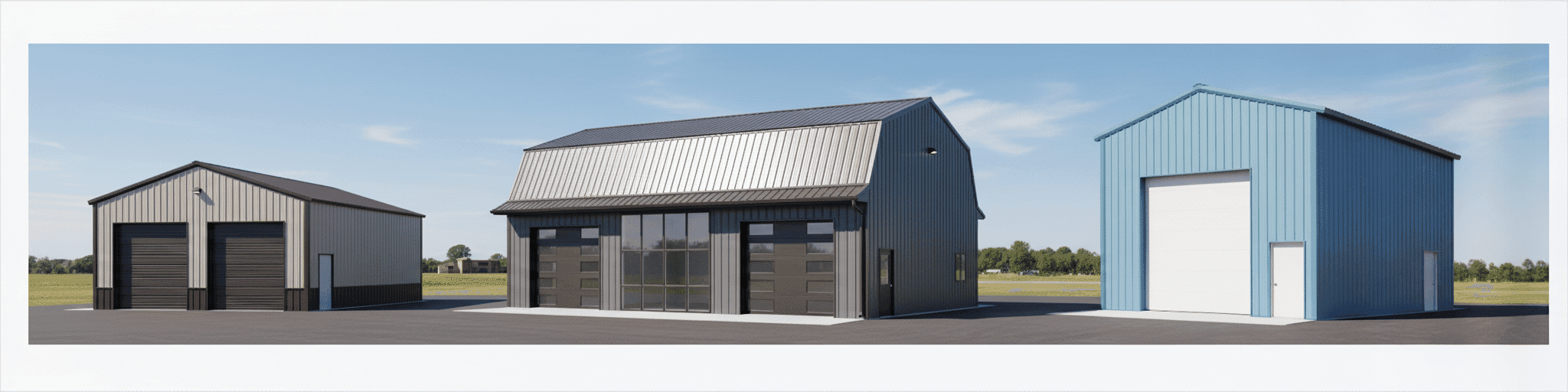

Modern metal garages are engineered clear-span steel shelters that outlast wood by decades, shrug off 150-mph winds, fire, pests, and corrosion, and do it all for 30-40 % less up-front cost while cutting labor time in half and slashing insurance and maintenance bills for the next 30-50 years. This guide walks you through every decision–roof style, dimensions, foundation, permits, insulation, doors, colors, and smart add-ons–so you can match the building precisely to vehicles, workshops, storage, or future expansion while maximizing energy efficiency and property value. You'll learn how recycled-steel frames, advanced coatings, and precision manufacturing create a structure that pays for itself through lower utilities, minimal upkeep, and the flexibility to adapt as needs change. Whether you DIY or hire pros, the article shows how to vet suppliers, compare real 20-year ownership costs, avoid common site-prep mistakes, and keep the building pristine with simple twice-year inspections–turning a metal garage into the fastest, greenest, most cost-effective way to protect assets and add usable space.
Understanding Metal Garage Fundamentals
Metal garages with clear-span construction eliminate interior columns, giving you decades of unobstructed, adaptable space that doubles the lifespan of traditional wooden structures.
What Defines a Modern Metal Garage
Modern metal garages represent a significant evolution in protective building design, combining galvanized steel frames with advanced engineering to create fully enclosed structures that safeguard your valuable investments [1]. What makes these structures truly exceptional is their clear-span construction–an engineering approach that eliminates interior support columns by distributing loads throughout the steel framework [1]. This creates unobstructed, adaptable space that evolves with your changing needs.
The engineering excellence extends beyond structural design. These buildings integrate comprehensive weather-resistant features and specialized galvanized coatings that deliver decades of reliable performance with minimal maintenance [1]. While traditional wooden structures typically last 20-30 years, professionally engineered metal garages offer 30-50 year lifespans–effectively doubling your investment value [1].
Design flexibility sets modern metal garages apart, accommodating everything from single-car residential needs to expansive commercial applications [1]. You'll find multiple roof styles designed for specific performance requirements: regular horizontal panels for economy, A-frame designs that efficiently shed snow, and vertical roof styles that excel at channeling water and debris away from the structure [1].
Today's metal garages adapt to serve multiple purposes beyond vehicle storage. Through strategic customization with various door types, window placements, and exterior finishes, these structures seamlessly complement existing architecture while functioning as workshops, storage facilities, home offices, or creative studios [2]. For properties in challenging environments–coastal areas or high-humidity regions–advanced coatings like Galvalume provide exceptional protection against rust and moisture damage [2]. This comprehensive engineering approach ensures your structure withstands nature's extremes, from heavy snow loads and hurricane-force winds to seismic activity [1].
Popular Types and Styles of Metal Garages
Understanding the various metal garage styles empowers you to make informed decisions that align with your specific climate, budget, and aesthetic preferences. Each roof design delivers distinct advantages tailored to different needs and environments.
Regular roof garages offer an economical entry point with their horizontal panels and curved edges. This streamlined construction method provides reliable protection in mild climates with minimal precipitation and moderate winds [5]. While the rounded corners and horizontal orientation create the most budget-friendly option, it's important to note that manufacturers typically advise against this design for structures exceeding 36 feet due to potential seam vulnerabilities [4].
A-frame (boxed-eave) garages blend traditional residential aesthetics with enhanced structural performance. These designs maintain horizontal panels while incorporating a peaked roof that strengthens the frame and elevates curb appeal [4]. The squared profile delivers superior integrity compared to regular roofs while harmonizing with existing conventional architecture [5]. Particularly well-suited for moderate climate regions like Kentucky and North Carolina, this mid-range option successfully balances visual appeal with reliable performance [4].
Vertical roof garages stand as the premium solution for maximum durability and weather resistance. Distinguished by panels running perpendicular from ridge to eave, these structures incorporate additional reinforcement through hat channel and ridge caps [5]. This vertical configuration excels at rapid water and debris drainage while providing exceptional resistance to hurricane-force winds and heavy snow loads [5]. Though requiring higher initial investment, vertical roofs deliver significantly reduced maintenance requirements and prove essential for northern regions, coastal environments, and any building exceeding 36 feet in length [4].
Additional options expand your design possibilities: flat roofs offer contemporary aesthetics with solar panel compatibility; gable roofs maximize interior headroom and natural ventilation; and hip roofs provide four-sided slopes for superior wind resistance in storm-prone areas [5]. Industry professionals consistently observe that clients rarely regret investing in higher-performance roofing systems, while those who choose basic options often wish they had upgraded after experiencing their first significant weather event [4].
Standard Sizes and Configurations
Standard sizes and configurations
Metal garage dimensions correlate directly with vehicle capacity and functional requirements. Single-car garages typically start at 10 feet wide, though 12 feet wide x 20 feet deep provides comfortable access for opening doors and walking around average vehicles [6]. For two vehicles, widths start at 20 feet minimum, with 24 feet being optimal for comfortable use–allowing approximately 3 feet on each side of standard 6-foot-wide vehicles [7]. The most common two-car metal garage configuration is 24×25 feet, differing slightly from traditional stick-built structures due to metal buildings' 5-foot on-center construction methods [7]. Three and four-car garages expand these dimensions proportionally, with widths of 26-30 feet for three cars and 40-42 feet for four vehicles [8].
Vertical clearance significantly impacts functionality, with standard wall heights starting at 9 feet–the minimum required to install 8×8 garage doors [7]. Though 10-foot walls are increasingly common, heights of 12 and 14 feet accommodate larger vehicles and equipment [7]. When considering clearance, roof design affects usable interior space; A-frame and vertical roofs provide 31-33 inches of additional height above the wall measurement in standard 24-foot-wide structures [7]. This extra height enables storage lofts or accommodation of taller vehicles. For truck owners, designs with at least 24 feet of depth prevent bumpers from contacting rear walls [6].
Door configurations present another critical dimension factor. Standard garage door sizes range from 8×8 feet (minimum for compact cars) to 14×14 feet for commercial or specialty vehicles [7]. Single-car garages typically use 8 or 9-foot-wide doors, while two-car designs often feature either two single doors or one 16-foot-wide double door [6]. For easier vehicle maneuvering, 10-foot-wide doors provide additional clearance, particularly valuable for trucks, SUVs, or drivers who prefer extra margin when parking [7]. When planning dimensions, allow at least one foot of wall height above any door opening to accommodate the door track system and header support [7].
Key Structural Components and Terminology
Key structural components and terminology
Metal garages rely on an engineered framework with specific components that create their durability and structural integrity. Primary framing consists of custom-designed I-beam frames that form the main load-bearing structure. These frames include columns (vertical supports) and rafters (spanning overhead members that connect opposing columns), creating the fundamental skeleton of the building [9]. Secondary framing components transfer loads from the exterior to the primary frame. Z-shaped purlins run horizontally across the roof, supporting roof panels and directing weight to the primary frame [9]. Similarly, Z-shaped girts attach to columns on walls to support wall panels [10]. At the intersection of roof and wall–called the eave–C-shaped eave struts provide critical support for both roof and wall panels [10].
Specialized components work together to ensure your metal garage delivers exceptional stability and weather resistance. Rod bracing (cross bracing) strategically placed every three to four bays provides critical structural stabilization, while wind bents (portal framing) offer alternative solutions when doors or openings would interfere with standard bracing configurations [9].
The exterior protection system offers choices to match your performance requirements and budget. Standard R-panels attach with through-fastened screws for reliable, cost-effective coverage, while premium standing seam panels create superior watertight barriers using clips and crimping technology that eliminates penetrating fasteners [9]. This advanced cladding approach significantly reduces potential leak points and enhances long-term weather resistance.
Perhaps most impressive is the clear-span design capability, which eliminates interior columns in buildings up to 100 feet wide [9]. This engineering achievement creates completely unobstructed interior space, maximizing usability and adaptability. By understanding these key components and their functions, you'll appreciate how metal garages achieve their remarkable strength-to-weight ratio and why they consistently outperform conventional construction methods under environmental stress [9].
Advantages of Metal Garages Over Traditional Options
Metal garages outlast wood by 15-20 years while delivering up to 40% lower insurance rates due to superior fire and weather resistance.
Superior Durability and Weather Resistance
When evaluating building options for your business operations, longevity stands as a critical decision factor. Metal garages deliver exceptional value by outlasting traditional wooden structures by 15-20 years, with typical lifespans of 30-50 years compared to just 20-30 years for wood construction [11]. This remarkable durability stems from steel's inherent resistance to the structural threats that plague traditional buildings–rot, warping, and pest damage simply cannot compromise metal structures [12]. The durability advantage extends to extreme weather conditions, where properly engineered metal structures withstand wind speeds exceeding 150 mph [12].
During earthquakes, steel's flexibility allows it to absorb and distribute seismic forces throughout the frame, preventing catastrophic failures common in rigid buildings [12]. Snow loads pose minimal threat to vertical roof designs that naturally shed accumulation before dangerous weight builds up [12]. Metal's non-combustible nature provides exceptional fire safety, stopping potential fires before they start while safely conducting lightning strikes to ground [12]. This comprehensive protection translates to tangible insurance benefits, with rates for metal structures up to 40% lower than traditional buildings due to their favorable "noncombustible" classification [13].
The durability extends through all environmental conditions–coastal saltwater exposure, high humidity regions, and areas with extreme temperature fluctuations–with proper galvanized coatings providing enhanced protection [12]. For businesses operating in disaster-prone regions, this resilience translates directly to operational continuity. Engineered metal buildings have consistently demonstrated superior performance during hurricanes, remaining intact while neighboring structures suffered complete destruction [12]. This remarkable weather resistance results from comprehensive engineering approaches detailed in our Material Science section, which evaluate multiple force factors including wind loads, seismic activity, and weight distribution [12].
Cost-Effectiveness and Long-Term Value
Metal garages provide significant cost advantages over traditional construction through both upfront savings and long-term value. Initial material costs run 30-40% less than wood structures, with standard metal builds ranging from $3,000-$10,000 versus $6,000-$15,000 for wooden equivalents [12]. This cost efficiency extends to foundations, as metal buildings often require only basic concrete slabs rather than the substantial footings needed for wood construction [12].
Labor expenses drop dramatically with metal construction–a critical consideration when time equals money in business operations. Pre-engineered components enable 50-75% faster assembly than traditional methods, generating labor savings of $4,000-$10,000 on medium-sized structures [12]. Professional installation teams can erect smaller metal garages in just 1-2 days, while larger buildings typically require only 1-2 weeks–dramatically faster than conventional construction timelines that can stretch for months [12].
The most compelling financial advantage emerges in long-term maintenance. Metal garages require approximately 1% of initial construction cost in annual upkeep ($1,500-$2,500), while wood structures demand 2-4% ($7,000-$20,000) plus potential emergency repairs like termite remediation costing up to $30,000 [12]. Traditional garages need regular repainting, pest treatments, and structural repairs that add thousands in upkeep over 10-15 years [14]. Steel garages maintain their value with minimal intervention, eliminating these costly maintenance cycles.
Insurance providers recognize metal's superior durability with premium discounts. Rates for metal structures can be up to 40% lower than traditional buildings due to their "noncombustible" classification [12]. This advantage stems from steel's inherent resistance to fire, pests, and extreme weather–providing both safety and financial benefits [14].
When we examine the complete financial picture through a 20-year lens, the advantages become even more compelling. For a 10,000 square foot commercial structure, metal buildings total approximately $350,000 in cumulative costs over two decades, while wood or brick construction ranges from $670,000 to $1.1 million when accounting for all expenses [12]. This dramatic difference allows businesses to allocate resources more effectively–whether that's investing in equipment, expanding operations, or building the right team for growth. Additionally, metal structures can increase overall property values by 5-20%, potentially adding $10,000-$40,000 to a $200,000 property [12].
Energy efficiency delivers another substantial operational advantage. Metal buildings equipped with proper insulation systems–as discussed in our Planning and Design section–reduce heating and cooling expenses by 10-20% annually, saving $2,000-$5,000 in utility costs per year for larger structures [12]. This efficiency combines with metal's exceptional adaptability, allowing businesses to repurpose spaces as needs evolve. The same structure can transition from vehicle storage to workshop, distribution center, or even office space without major renovations [14].
Metal vs. Wood Garages: A Comprehensive Comparison
Metal and wood garages differ fundamentally in structure, cost, and longevity. Metal garages cost 30-40% less initially ($3,000-$10,000 versus $6,000-$15,000 for comparable wood structures) and install 50-75% faster, typically finishing in days rather than weeks [15]. Foundation requirements also impact budgets–metal buildings often need only level gravel pads or simple concrete slabs, while wooden structures require substantial footings to prevent settling [15]. The maintenance gap creates the most significant long-term difference: wood garages demand regular painting, sealing, pest treatments, and structural repairs costing thousands over their lifespan, while metal structures require only occasional washing and minimal upkeep [15]. This maintenance disparity extends to weather resilience, with metal garages withstanding hurricane-force winds, heavy snow loads, and extreme temperatures that would damage or destroy wooden alternatives [15].
Insurance companies recognize these advantages, offering premium discounts up to 40% for metal buildings due to their noncombustible classification [15]. While both materials offer customization, they differ in approach–metal provides precise dimensions and consistent quality through factory fabrication, while wood allows on-site modifications but with less predictable quality [15]. The lifespan comparison reveals metal's superior value proposition: properly maintained steel garages last 30-50 years versus 15-30 years for wood structures, effectively halving the per-year ownership cost [15]. This extended durability combines with metal's recyclability to provide environmental advantages over wood construction [14]. When calculating total cost of ownership over 30 years including purchase, maintenance, repairs, and insurance, wood garages typically cost two to three times more than their metal counterparts [15].
For business leaders and property owners seeking both immediate affordability and long-term value, this comprehensive comparison demonstrates metal's clear economic advantages. The flexibility to adapt these structures for evolving business needs–combined with lower total ownership costs–makes metal construction the strategic choice for forward-thinking organizations [14]. At TriSearch, we understand that
Environmental Benefits and Energy Efficiency
Environmental benefits and energy efficiency
Forward-thinking businesses increasingly recognize that environmental responsibility and operational efficiency go hand in hand. Metal garages deliver on both fronts through steel's infinite recyclability and resource efficiency. Steel components in these structures typically contain 25-95% recycled content, diverting materials from landfills while reducing energy consumption and greenhouse gas emissions [16]. Unlike wood construction that contributes to deforestation, steel production creates a sustainable building cycle where materials maintain value through multiple lifespans [17].
The environmental impact extends beyond materials–metal garages integrate effectively with energy-efficient insulation options including spray foam, rigid board, and reflective barriers that reduce heating and cooling requirements by 10-30% [16]. These structures support renewable energy adoption through ideal surfaces for solar panel integration, with metal roofs providing optimal mounting conditions and orientation flexibility for photovoltaic systems that generate on-site power [16]. Additional eco-friendly features include rainwater harvesting systems that collect and store precipitation for irrigation and non-potable uses, reducing water consumption by up to 50% for property owners [16]. The durability advantage further benefits the environment–metal garages typically last 30-50 years versus 15-30 years for wood structures, effectively halving the embodied carbon cost per year of use while eliminating the waste and resource consumption from frequent replacements [17].
Modern metal garages also incorporate passive design elements like strategic window placement for natural ventilation and thermal mass utilization, significantly reducing reliance on mechanical systems [16]. For organizations committed to minimizing environmental impact while maximizing operational efficiency, metal garages provide a comprehensive solution that addresses both immediate sustainability requirements and long-term corporate responsibility goals.
Material Science and Construction Technology
I don't see specific content details provided in your request–only the section heading "Material Science and Construction Technology" without the actual section body text. Could you please share the section content so I can generate an accurate, fact-based callout sentence?
Steel Grades and Quality Indicators Explained
Steel Grades and Quality Indicators Explained
Lower gauge numbers mean thicker steel, so 22-24 gauge roofing delivers the durability your garage needs across most climates.
Understanding steel specifications empowers buyers to make informed decisions about their metal garage investment. Steel gauge numbers operate inversely–lower numbers indicate thicker, stronger steel. This counterintuitive system originated in industrial manufacturing, where each pass through rolling mills created progressively thinner metal [18].
For metal garages, strategic gauge selection directly impacts both performance and value. Structural frames require the thickest material, typically 12-14 gauge steel, to support the entire building load. Wall panels utilize lighter 26-29 gauge steel, providing adequate protection while managing costs. Roof panels represent a critical decision point–they face constant environmental stress from sun, rain, snow, and wind [19].
Premium 22 gauge roofing (0.0299 inches) delivers exceptional durability for harsh climates, while 24 gauge (0.0250 inches) represents the optimal balance for most applications. Budget-conscious buyers might consider 26 gauge (0.0188 inches) for moderate climates, though the minimal cost savings rarely justify the reduced longevity [19]. Reserve ultra-light 29 gauge (0.0142 inches) exclusively for interior partitions or decorative elements where structural demands are minimal [19].
Quality indicators extend beyond thickness alone. Professional-grade steel exhibits three key characteristics: consistent coating application that prevents thin spots vulnerable to corrosion, precise roll-forming patterns ensuring proper fit during assembly, and uniform coloration indicating quality control throughout production [18]. Additionally, galvanized steel specifications vary–26 gauge galvanized measures 0.0157 inches versus 0.0172 inches for standard carbon steel, reflecting the zinc coating's added dimension [20].
When evaluating suppliers, request documentation confirming ASTM compliance and look for dimensional consistency within +/-0.001 inch tolerance. For projects in extreme weather zones, certified steel with traceable mill documentation provides essential performance assurance [18][19].
Advanced Corrosion Protection and Rust Prevention
Protecting your metal garage investment requires understanding how corrosion develops and implementing proven prevention strategies. Rust forms through oxidation when iron, oxygen, and moisture combine, creating a chemical reaction that progressively weakens structural steel [21]. Environmental conditions dramatically influence this process–coastal salt spray, industrial pollutants, and high humidity accelerate deterioration if left unaddressed [21].
Today's metal garages incorporate multiple defense layers against corrosion. The foundation of protection begins with galvanized steel, where zinc coating serves as a sacrificial barrier. This zinc layer corrodes preferentially, protecting the underlying steel even when scratched or damaged [22]. As discussed in the durability advantages section, this protection significantly extends service life beyond traditional construction materials.
Advanced coating options provide specialized protection for specific environments:
- Epoxy paints seal out moisture while maintaining flexibility during temperature swings [22]
- Acrylic coatings reflect damaging UV rays in sun-intensive regions [21]
- Powder coatings create an exceptionally durable finish through electrostatic application and heat curing [23]
- Galvalume Plus steel combines aluminum, zinc, and silicon for premium protection, with some manufacturers warranting performance for 50 years [23]
Strategic building design complements these material defenses. Proper ventilation prevents moisture accumulation in vulnerable areas, particularly critical in humid climates [21][23]. Additionally, thoughtful drainage planning directs water away from the structure's base where corrosion often begins.
Early detection enables simple, cost-effective treatment. Watch for warning signs including reddish-brown discoloration, paint bubbling or peeling, surface roughness, or unusual blue tinting in heat-affected areas [21][23]. Address rust immediately through mechanical removal (sanding or wire brushing), chemical conversion using rust inhibitors, and prompt recoating of affected areas [21].
Establish a preventive maintenance routine focusing on regular cleaning to remove corrosive contaminants, systematic inspection of high-risk areas like fasteners and seams, and immediate touch-up of any coating damage [21][23].
Engineered Designs for Extreme Weather Conditions
Metal garages employ specialized engineering principles that significantly enhance their ability to withstand extreme conditions across diverse climate zones. The structural design incorporates high-strength steel frames that naturally flex during high winds and seismic events, absorbing and redistributing forces instead of cracking like rigid materials [24]. This flexibility allows properly engineered metal structures to withstand wind speeds exceeding 150 mph while maintaining structural integrity when conventional buildings would fail [25]. Wind resistance begins at the design phase with careful consideration of wind uplift–the upward force created when wind passes over a structure, generating pressure differentials that can damage roofing systems [26].
Professional designs address this through multiple testing standards including UL-580, FM Global Standard 4471, and ASCE 7-16, which evaluate a structure's ability to resist these destructive forces [26]. Snow load capacity represents another critical design factor, with engineers calculating that one foot of wet snow can exert up to 20 pounds per square foot on roofing systems [24]. Vertical roof designs specifically address this challenge by facilitating natural snow shedding before dangerous accumulation occurs [25]. The foundation-to-frame connection creates another crucial defense mechanism, with engineered anchor systems transferring wind and seismic forces safely into the foundation [26].
Modern metal garages incorporate strategic bracing and gusset plates at critical joints to enhance stability during extreme conditions, while newer buildings feature specialized coatings that resist corrosion from salt spray in coastal environments and reflect UV radiation to maintain structural integrity longer [24]. The comprehensive engineering approach extends to seismic performance, where metal structures distribute earthquake forces throughout the frame rather than concentrating stress at vulnerable points [25]. Building orientation and height significantly impact performance during extreme weather–structures positioned perpendicular to prevailing winds experience reduced loads, while shorter buildings generally demonstrate superior wind resistance compared to taller alternatives [26]. For regions experiencing hurricane-force winds or tornadic activity, certified metal buildings incorporate thicker 12-gauge framing instead of the standard 14-gauge used in residential applications, substantially increasing resistance to deformation under extreme pressure [26].
Innovative Materials and Future Trends
The metal garage industry continues advancing through material innovations that enhance both performance and sustainability. Recycled steel content now reaches 25-95% in modern structures without compromising strength, while next-generation coatings and insulation systems reduce operational energy consumption by 10-30% [27]. These developments support the growing net-zero building movement, where integrated solar systems and reflective roofing enable structures to generate their own power [28].
Smart technology integration represents another significant advancement, with IoT-enabled systems controlling lighting, HVAC, security, and energy usage from centralized interfaces or mobile devices [27]. These technologies make metal garages more responsive and efficient, with features like motion-activated lighting, remote surveillance, and automated climate control becoming standard in premium installations [27]. For specialized applications like agricultural storage, real-time monitoring of temperature and humidity provides valuable operational benefits [27].
Manufacturing processes are transforming through AI, robotics, 3D printing, and automated roll forming–improving quality while reducing labor requirements and project timelines [28]. These advancements support the growth of modular and prefabricated construction, where components are manufactured in controlled environments and delivered ready to install [29]. This approach reduces waste, speeds construction, and provides flexibility for future expansion [27].
As climate extremes become more common, resilience has emerged as a priority in metal garage design. New engineering techniques create structures capable of withstanding high winds, heavy snow loads, seismic activity, and wildfire exposure [27]. Enhanced coatings provide additional protection against corrosion, UV damage, and temperature fluctuations, particularly valuable in coastal environments and regions with extreme weather patterns [27].
Material science breakthroughs continue pushing performance boundaries. Advanced alloys enhance strength-to-weight ratios while innovative coating formulations improve corrosion resistance beyond traditional galvanization [28]. These developments, combined with digital design tools including 3D modeling and Building Information Modeling (BIM), enable precise customization while optimizing structural efficiency. The result: metal garages that adapt to evolving needs while delivering decades of reliable service [27].
Planning and Designing Your Ideal Metal Garage
Plan your metal garage with proper dimensions for current vehicles plus future needs, as building larger initially costs less than expanding later.
Assessing Your Space Requirements and Use Cases
Determining appropriate metal garage dimensions requires analyzing both current and future vehicle needs. Single-car garages typically start at 12' wide x 22' long, while each additional vehicle requires roughly 12' extra width [31]. Vehicle height–particularly for trucks or RVs–demands special attention to ensure adequate vertical clearance [31].
Secondary functions like workshops or storage can be accommodated by increasing either width (for side storage) or depth (for rear storage) based on property constraints [31]. Future-proofing means considering potential vehicle acquisitions or changing usage patterns, as building larger initially costs less than later expansion [30]. Site-specific factors should influence design choices–snow-prone areas benefit from roof styles that prevent accumulation, while hurricane zones require reinforced construction [30].
Comprehensive budgeting must account for the structure itself plus site preparation, foundation work, and customization options [30]. This thorough needs assessment ensures your metal garage provides optimal functionality throughout its lifespan.
Site Preparation and Foundation Considerations
Proper foundation selection directly impacts a metal garage's longevity, stability, and functionality. The three primary foundation options–concrete slab, gravel, and dirt–each offer distinct advantages for different applications [32]. Concrete slabs provide superior strength and durability, supporting heavier structures while creating a clean, level surface that prevents moisture infiltration [32]. The ideal concrete slab should be 4-6 inches thick, with 6 inches recommended for heavier vehicles like RVs [34]. Footings around the slab perimeter should extend at least 12 inches deep and 12 inches wide to properly support the garage walls, though local frost lines may require deeper footings [34]. For the slab dimensions, most metal buildings require foundations that extend one foot beyond the garage footprint on all sides to prevent edge cracking when anchoring the structure [34]. Alternatively, gravel foundations offer better drainage and cost 30-40% less than concrete, making them suitable for smaller structures and semi-permanent installations in areas with minimal environmental threats [32].
This option requires 4-6 inches of compacted gravel spread evenly across the site [32]. Dirt foundations, while offering the lowest initial cost, provide minimal stability and are only appropriate for temporary structures or in locations with highly stable soil conditions [32]. Site preparation begins with verifying local building codes and obtaining necessary permits before clearing vegetation, debris, and topsoil [33]. The cleared area should extend at least 5 feet beyond the planned building footprint to allow for proper drainage and construction access [33]. Level the site to within 2-3 inches across the entire area, as uneven surfaces can cause structural issues including door misalignment and anchoring difficulties [33]. For concrete installations, a vapor barrier placed between the ground and concrete prevents moisture migration, while proper curing (typically 7-28 days) ensures the foundation reaches full strength before installation [33]. When choosing between foundation types, consider your building's intended use–vehicle storage necessitates concrete, while equipment storage might work with gravel [32].
Regional weather conditions also impact this decision, as areas with heavy rainfall, freezing temperatures, or high winds require more substantial foundations [32]. Common foundation mistakes include failing to check zoning laws, skipping soil compaction, ignoring water drainage patterns, and underestimating future space needs [33]. For concrete foundations, consulting local professionals is advisable, as they understand regional soil conditions and code requirements [34]. Ask potential contractors about their experience with similar projects, timeline estimates, and whether they'll handle permits and inspections [34]. Alternatively, DIY installation can reduce costs by up to 50%, though this approach requires careful research and planning to avoid expensive mistakes [34].
Navigating Permits, Codes, and Local Regulations
Understanding permit requirements is crucial for any metal garage project. Building codes establish safety standards for design, construction, and materials while considering geographic factors like wind, snow, and seismic loads [35]. These regulations vary significantly between jurisdictions and ensure structures can withstand local environmental conditions without collapsing during moderate storms [35]. Before beginning construction, you must obtain both zoning approval (verifying location and placement compliance) and building permits (addressing structural specifications) [36]. Most jurisdictions require permits for any garage over 256 square feet or structures that include electric, plumbing, or HVAC systems [36].
Even smaller garages often need zoning clearance to ensure proper setbacks–typically 5-15 feet from property lines depending on local regulations [37]. The permitting process generally involves submitting detailed site plans, structural drawings, and specification documents to your local building department for review [35]. Applications undergo scrutiny for code compliance, safety requirements, placement concerns, and potential conflicts with easements or utility lines [35]. Costs vary widely, ranging from $40-$400 for residential garages, often calculated as a base fee plus per-square-foot charges [36]. Processing times typically range from two to four weeks, though more complex projects or backlogged departments may require 6-8 weeks [37].
Building without proper permits carries serious consequences, including work stoppages, fines, mandated demolition, and potential insurance coverage issues [35]. Some homeowners assume rural properties have relaxed requirements, but most jurisdictions enforce code compliance regardless of location [35]. For smoother approval, consult local building officials early in your planning process, research specific requirements for your jurisdiction, and consider hiring professionals familiar with local regulations [37]. Remember that permits typically expire if construction doesn't begin within six months or if no inspections occur during that period [36].
Customization Options for Functionality and Aesthetics
Metal garages offer extensive customization options that enhance both functionality and aesthetics while adapting to specific needs. Exterior customization begins with door selection–roll-up doors, walk-in doors, and sliding doors accommodate different vehicle types and access requirements [38]. Window placement enhances natural lighting while creating visual interest, with options ranging from standard rectangular designs to large floor-to-ceiling glass elements that transform traditional garage aesthetics [40]. Roof styles significantly impact both appearance and performance: regular horizontal roofs offer economy, A-frame designs provide traditional appeal, while vertical roofs deliver superior weather resistance [38].
Color customization allows garages to complement existing structures with various options for roof, walls, and trim–including wainscot or contrasting color combinations for visual distinction [39]. Interior customizations transform basic storage spaces into multipurpose environments through built-in shelving, cabinetry, and loft spaces that maximize vertical storage without compromising floor area [40]. Workshop conversions benefit from task-specific lighting, enhanced ventilation systems, and strategic electrical outlet placement [40]. Climate control options include various insulation systems that reduce energy costs by 10-30% while making the space comfortable year-round [38].
The minimalist design trend emphasizes clean lines, monochromatic color schemes, and concealed storage solutions that create sophisticated spaces beyond utilitarian functions [40]. For those seeking sustainable options, eco-friendly materials including recycled metal panels deliver environmental benefits without compromising structural integrity [40]. Modern metal garages increasingly incorporate modular components that facilitate future expansion as needs evolve–allowing property owners to start with essential functions and adapt over time [40].
Installation and Maintenance Best Practices
Professional metal garage installation ensures structural integrity, completes in a single day, and protects your manufacturer's warranty coverage.
Professional vs. DIY Installation: Making the Right Choice
The decision between DIY and professional installation of metal garages hinges on several key factors. DIY installation requires construction knowledge, specialized tools (drill, metal snips, hammer, level, power saw), and significantly more time investment compared to professional services [41]. While DIY approaches reduce labor costs, they often extend project timelines beyond initial estimates and may require purchasing additional equipment [42]. Professional installation leverages specialized expertise that ensures proper structural integrity, especially important in areas prone to harsh weather conditions [41].
Unexpected challenges that inevitably arise during construction can be readily addressed by experienced installers who have encountered similar issues previously [41]. Safety considerations strongly favor professional installation, particularly for larger structures where improper assembly could create hazardous conditions [41]. Warranty protection represents another crucial factor, as many manufacturers only honor warranties for professionally installed buildings [41]. The complexity of your project should influence your decision–simpler, smaller structures might be suitable for DIY while larger, more complex designs benefit from professional precision [42].
Professional teams typically complete installations in a single day, compared to the extended timeframes common with DIY projects [41]. Beyond time considerations, professional installation delivers immediate reliability without the uncertainty that comes with first-time DIY metal building construction [42].
Step-By-Step Installation Process Overview
Metal garage installation follows a structured sequence that ensures structural integrity and longevity. The process begins with component organization–unpacking and arranging all frame elements according to the manufacturer's instructions to facilitate efficient assembly [43]. Frame erection starts with assembling the main structure elements, beginning with end wall columns secured to foundation anchors, followed by connecting rafters to form the initial bay [43]. Temporary bracing plays a critical role during this phase, stabilizing the structure before permanent components are installed [43].
As additional frames are erected, secondary steel components including purlins, girts, and eave struts connect to the main frame, creating the building's structural skeleton [43]. Proper plumbing and squaring ensure the structure maintains perfect alignment–checking diagonal measurements across the building to verify rectangular corners and confirming columns stand perfectly vertical with levels and plumb bobs [43]. Wall and roof panel installation follows a specific sequence, with roof sheets typically installed first to provide weather protection, followed by wall panels working from one end to the other [43]. Each panel requires precise fastening according to the manufacturer's specifications, with proper overlap patterns and sealant application at seams to prevent moisture infiltration [43].
Final installation steps include adding trim pieces, gutters, and accessories that enhance both appearance and weather resistance [43]. Throughout the process, regular inspection for properly tightened connections and correct component placement prevents future structural issues [43]. Professional installation teams typically complete a standard-sized garage within 1-2 days, while DIY installations generally require 3-7 days depending on experience level and project complexity [44].
Preventative Maintenance Strategies for Longevity
Establishing a comprehensive maintenance program begins with regular inspections conducted twice annually to identify potential issues before they compromise structural integrity [46]. These evaluations should focus on critical areas including fasteners, joints, seams, and roof panels where problems typically manifest first.
Moisture control stands as the primary defense against structural degradation. Maintain clean gutters, address leaks immediately, and ensure proper foundation drainage to prevent water accumulation that accelerates deterioration [46]. As discussed in the Advanced Corrosion Protection section, various protective coating options provide essential defense against oxidation–from zinc galvanization to advanced powder coatings [21]. When rust appears, immediate intervention through mechanical removal and reapplication of protective finishes prevents costly spread [21].
Seasonal maintenance requirements vary significantly by region. Winter climates demand regular snow and ice removal to prevent excessive structural loads, while coastal environments require increased inspection frequency and specialized high-moisture coatings [21][46]. Essential structural maintenance includes:
- Regular fastener tightening to compensate for thermal expansion cycles
- Lubrication of all moving components including doors and hinges
- Ventilation optimization to control interior condensation [46]
Early corrosion indicators–including reddish-brown discoloration, paint bubbling, surface irregularities, or heat-related blue tinting–demand immediate attention to prevent escalation [21]. Annual professional inspections provide valuable expertise in identifying subtle deterioration patterns that property owners might overlook, creating a comprehensive maintenance strategy that maximizes your metal garage investment [46].
Troubleshooting Common Issues and Repair Solutions
Metal garages develop specific issues that require prompt attention to prevent structural damage. Roof problems often begin with thermal movement loosening fasteners or clips, sealant failure around skylights and penetrations, or blocked gutters leading to water pooling [47]. When you discover leaks, inspect panel seams and check sealant at all curbs, vents, and penetrations before replacing damaged components [47]. Foundation issues typically manifest as water collecting at the building's base, causing rust along panels and potentially shifting the slab [48].
Address this by extending downspouts 5-10 feet from the building and grading ground to slope away by at least 5% [49]. Wall panel deterioration appears as scratches, dents, or coating damage–especially around loading areas and high-traffic zones [49]. Pressure wash walls 1-2 times yearly to remove contaminants, inspect for finish damage with a flashlight to catch subtle discoloration, and immediately apply touch-up paint to prevent oxidation [49]. Penetrations through the structure–including HVAC units, plumbing vents, and electrical conduits–create vulnerability points that require inspection of pipe boots and curbs for cracked sealant, flashing integrity on rooftop units, and proper insulation around penetrations [49].
Component failures like rusted fasteners that expand and deform panels, missing screws that create wind uplift risks, and malfunctioning doors often cause disproportionate damage [49]. Address these by conducting annual torque tests on random fasteners (especially on south and west walls), inspecting door tracks and seals, and lubricating hinges semi-annually [49]. For comprehensive troubleshooting, maintain a detailed maintenance log documenting issues, repairs, contractors used, and materials installed–crucial documentation for warranty claims and proving compliance during inspections [49].
Cost Breakdown and Purchasing Guide
Metal garage costs range from $7,000 to $45,000 depending on size, design, location, and customization features you select.
Current Market Pricing by Size and Configuration
Today's metal garage market presents a clear pricing structure averaging $25,000, with investments typically ranging from $7,000 to $45,000 based on specific configuration requirements [50]. Understanding these cost drivers empowers buyers to make informed decisions aligned with their needs and budget. Size remains the primary cost factor–each additional square foot requires proportional increases in materials and engineering expertise [50].
As detailed in our roof style comparison earlier, vertical designs command premium pricing over horizontal options, reflecting their superior drainage and weather resistance capabilities [50]. Geographic location creates regional variations through material availability, skilled labor costs, and local building code requirements that may mandate specific structural reinforcements [50]. Customization features–from specialized door systems to comprehensive insulation packages–add value while increasing investment proportionally to their sophistication [50].
This substantial price range accommodates diverse needs: entry-level single-car structures provide essential protection starting around $7,000, while premium multi-bay facilities with advanced features approach $45,000 [50].
Key Factors That Affect Metal Garage Costs
Understanding the interconnected factors driving metal garage costs enables strategic decision-making throughout your purchasing journey. While size directly correlates with material requirements, savvy buyers recognize that larger structures often deliver better value through reduced cost per square foot [51]. Design sophistication naturally increases investment–each window, custom door placement, or ventilation upgrade enhances functionality while adding to the total [51].
Current steel market dynamics introduce variability through global supply chain conditions, trade policies, and raw material demand, making timing a consideration for budget-conscious buyers [53]. Regional factors create significant price variations: labor availability, shipping distances to remote sites, and climate-specific engineering requirements all influence final costs [52]. As explored in our roof style analysis, vertical designs justify their premium through superior performance, particularly in challenging weather conditions [51].
Foundation requirements, detailed in our site preparation section, range from economical gravel bases to engineered concrete slabs, each suited to specific applications and budgets [53]. Building code compliance–especially in extreme weather zones–may require certified engineering that increases costs but ensures long-term safety and insurability [52]. Professional installation, while adding upfront expense, often proves economical through faster completion and warranty protection [52].
Where to Buy: Evaluating Manufacturers and Dealers
Where to buy: evaluating manufacturers and dealers
Excellence in metal garage supply extends far beyond competitive pricing–it requires comprehensive evaluation of capabilities, reliability, and long-term support. Material transparency distinguishes professional suppliers from questionable operations. Industry leaders readily share steel grades, gauge specifications, and coating technologies, explaining precisely how these choices deliver decades of performance in your specific environment [54]. Established suppliers leverage years of expertise to anticipate challenges and deliver consistent quality, transforming potential problems into seamless solutions [54].
Digital credibility matters: legitimate companies maintain robust online presences with verified customer testimonials, active engagement, and transparent business practices [55]. Direct dialogue reveals supplier competence–call prospective partners to assess their technical knowledge, responsiveness, and commitment to your project's success [55]. Comprehensive warranty coverage demonstrates manufacturer confidence, encompassing structural integrity, protective coatings, and installation workmanship [54]. Code compliance expertise proves essential, particularly for suppliers who understand regional requirements and engineer solutions that exceed minimum standards [54].
Due diligence protects your investment: verify complete business information in contracts, confirm state registration status, and never proceed without clear specifications and timelines [55]. Strategic questioning uncovers critical details about post-deposit procedures, delivery logistics, installation support, and precisely what your investment includes [55]. Reference verification provides unfiltered insights–contact recent customers to understand real-world performance, problem resolution, and ongoing support quality that marketing materials cannot capture [54].
Maximizing Value Without Compromising Quality
Smart value engineering delivers exceptional metal garages without sacrificing essential quality or longevity. Efficient rectangular designs optimize material usage while maintaining full structural integrity, and incorporating expansion capabilities during initial planning eliminates costly future modifications [56][57]. DIY installation presents significant savings potential–reducing labor costs by 30-40% on appropriate projects–though success requires adequate equipment, experienced crew members, and realistic timeline expectations [57].
Premium steel investments, particularly galvanized or Galvalume Plus systems discussed in our materials section, return dividends through decades of minimal maintenance and superior performance [56]. Energy-efficiency upgrades generate compelling returns: professional-grade insulation and LED lighting systems typically achieve full payback within 3-5 years while slashing operational costs by 10-30% annually [56]. Total cost of ownership analysis reveals the true value proposition–premium buildings commanding 15-20% higher initial investment deliver 30-50 year lifespans versus 15-30 years for economy alternatives, effectively reducing annual ownership costs by half [58].
Foundation excellence, as detailed in our site preparation guide, prevents cascading failures that transform minor issues into major expenses [56]. Warranty intelligence protects your investment: understand coverage specifics, service accessibility, and claim procedures before committing, as comprehensive protection delivers both financial security and operational confidence throughout your building's extended service life [56].
- Metal garages last 30-50 years, doubling wood's 15-30 and cutting per-year cost in half.
- Vertical-roof designs drain snow and debris best, mandatory for buildings >36 ft or severe weather zones.
- Professional install finishes in 1-2 days and preserves the warranty; DIY risks voiding coverage.
- Up-front metal cost is 30-40 % lower than wood and annual upkeep is 1 % vs 2-4 % for wood.
- Concrete slab foundations need to be 4-6 in. thick and extend 1 ft past the garage footprint on all sides.
- Building permits are required above 256 sq ft or any electric/HVAC; penalties include fines and forced demolition.
- Insurance discounts up to 40 % apply to metal garages for their non-combustible rating and storm resistance.
- https://nationalsteelbuildingscorp.com/liquid-portfolio/metal-garages-the-ultimate-guide/
- https://armstrongsteel.com/blog/the-rise-of-residential-metal-garage-buildings-trends-and-innovations
- https://www.eaglecarports.com/blog/everything-you-need-to-know-about-carport-roof-styles
- https://americanmetalgarages.com/metal-building-roof-styles-an-experts-guide-to-making-the-right-choice/
- https://www.vikingmetalgarages.com/blog/comparing-vertical-roof-garages-with-horizontal-roof-styles-pros-and-cons
- https://alansfactoryoutlet.com/carport-sizes-garage-dimensions/?srsltid=AfmBOooXwZHR196I6DLdpNFQNl0I-iwBILtFlpG7D1TcV9GiMxJVuQeT
- https://www.legacycarports.com/post/2-car-garage-dimensions-a-guide-to-metal-garage-sizes
- https://directmetalstructures.com/blog/standard-garage-sizes-for-1-2-3-and-4-car-metal-garages/?srsltid=AfmBOorpOtAF5XWK7_yGipcFpi8kMFrHAEN3vXyK4kE7fpEVgfURdXXx
- https://www.clearspan.com/news/metal-building-components-understanding-metal-building-parts/
- https://www.fortifybuildingsolutions.com/resources/blog/purlins-girts–eave-struts–the-basic-components-of-metal-buildings/
- https://www.indacometals.com/resource/metal-vs-wood-buildings-comparison
- https://nationalsteelbuildingscorp.com/liquid-portfolio/metal-garage-buildings-pros-and-cons-explained/
- https://www.worldwidesteelbuildings.com/blog/how-long-do-metal-garages-last/
- https://idadevelops.com/are-metal-garages-worth-the-money/
- https://www.eaglecarports.com/blog/metal-garages-vs-wood-garages
- https://www.metalbuildingoutfitters.com/eco-friendly-metal-garage-designs-a-how-to-guide/
- https://ecosteel.com/ecosteelprefab/exploring-the-environmental-impact-steel-vs-traditional-building-materials/
- https://balsteelpipe.com/steel-gauge-chart/
- https://prairieexteriors.com/metal-roofing-gauge/
- https://www.worldwidesteelbuildings.com/blog/how-to-prevent-rust-on-metal-buildings/
- https://www.metalbuildingoutfitters.com/maximizing-durability-with-steel-garages-11-tips/
- https://www.futurebuildings.com/blog/tips-to-stop-rust-on-metal-garage.html
- https://jagmetalsllc.com/blog/how-metal-building-materials-are-adapting-to-extreme-weather-conditions/
- https://www.anssteelbuildings.com/11-ways-metal-buildings-are-built-to-withstand-extreme-weather
- https://garagebuildings.com/designing-your-metal-building-for-wind-resistance
- https://ludwigbuildings.com/blog/the-future-of-metal-buildings-trends-and-innovations
- https://metalcon.com/blog/metal-construction-industry-101-dive-into-the-basics-emerging-trends-of-2025/
- https://norsteelbuildings.com/steel-building-news-industry-trends/the-future-of-prefabricated-steel-buildings-trends-and-innovations/
- https://www.futurebuildings.com/blog/your-metal-garage-size-guide.html
- https://americancarportsinc.com/blog/right-size-garage-for-cars/
- https://www.carportsadvisor.com/blog/metal-garage-foundations-101-concrete-slab-gravel-or-dirt?srsltid=AfmBOoo63OVtZCqQbn0QjOoKvPeqbrH8nghhTL-JOj4A39iw-BEYw8iC
- https://directmetalstructures.com/blog/how-to-prepare-your-site-for-a-metal-garage-a-complete-step-by-step-guide/?srsltid=AfmBOoqvQ3HqVXE0ToraCng8w-jVgrPP51KqHLZ1V3jbcqwpcjRH4rRE
- https://alansfactoryoutlet.com/guides/garage/planning-and-pricing-your-foundation/?srsltid=AfmBOoonowlJzEWMkEYoTGnVnbCpYcAyBZowDz153adOAwHf03tf-3sL
- https://www.buildingsguide.com/build/metal-building-codes-permits/?srsltid=AfmBOor_Oetb6bY4durqkTOIQxl6h_-bNuRd0Xb_ZZYQKswkFWk1WPWG
- https://shedsunlimited.net/blog/garage-permits-in-va/?srsltid=AfmBOopCbt-_IjQV2Op-AhlnhaWM17jFAUiVgHhC3_asF5qnrvj9Ld4B
- https://www.premierstructures.biz/blog/garage-permits-in-virginia/
- https://americancarportsinc.com/blog/carport-installation-diy-vs-professional/
- https://premierbuildingswesternoklahoma.com/blog/diy-vs-professional-installation-pros-and-cons-for-metal-buildings
- https://fbsteelsupply.com/11-proven-strategies-to-prevent-rust-on-your-metal-garage-building/
- https://www.aametalbuildings.com/blog/how-to-extend-the-life-of-your-metal-building-12-maintenance-tips?srsltid=AfmBOoq2VAXfQHI03f58HY2epOXKoYGPg2MkwyARd4HnfPQUDrqnXlXs
- https://marbuildingsolutions.com/metal-building-maintenance-care-guide/
- https://www.youryardsuperstore.com/blogscape/the-ultimate-guide-to-metal-building-maintenance
- https://seufertconstruction.com/company/blog/metal-building-maintenance-checklist
- https://garagebuildings.com/metal-garage-prices
- https://betterbuiltusa.com/factors-that-influence-metal-garage-prices/
- https://www.carportcentral.com/blog/factors-that-affect-metal-garage-prices?srsltid=AfmBOooSm-F2aOu3jbCHN3wGjUsOcRGNq7jH8cU5GHHxCtj4I5f0XquF
- https://bullbuildings.com/budgeting-your-project-how-much-does-it-cost-to-build-a-metal-garage/
- https://www.eaglecarports.com/blog/top-qualities-to-look-for-in-metal-building-suppliers
- https://www.silverlinebuyersguide.com/
- https://www.metalbuildingoutfitters.com/smart-ways-to-save-on-metal-building-garages/
- https://www.rhinobldg.com/blog/more-ways-to-save-money-on-a-metal-building
- https://www.eaglecarports.com/blog/metal-building-prices