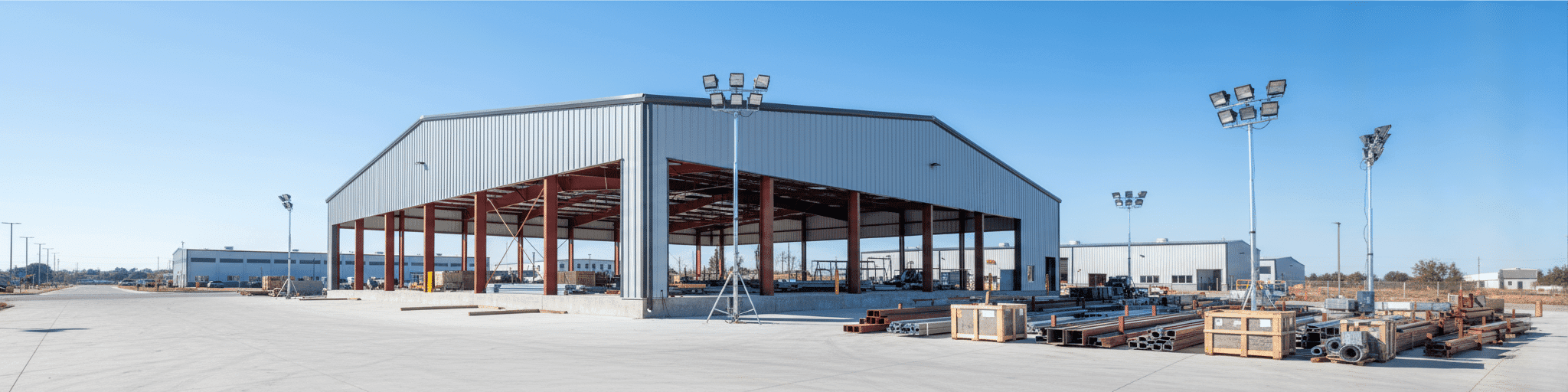

A metal shop building kit delivers a precision-engineered workspace that outperforms wood-frame construction in every metric—30-40 % lower material costs, half the labor time, zero rot or termite risk, and clear-span interiors up to 120 ft wide—while the article walks you through every decision point: sizing your footprint for workflow and future expansion, choosing between pre-engineered, arch-style, or hybrid systems, specifying insulation, ventilation, lighting and mezzanines for comfort and productivity, and balancing DIY savings against professional speed so your foundation, frame and accessories go up in weeks, not months. You’ll learn how certifications like AISC and IAS AC472 guarantee quality, why 3 000-lb forklifts and torque-controlled screw guns matter on assembly day, and how energy-smart envelopes and insurance-friendly fire resistance slash lifetime costs, turning a $15–20 per sq ft kit into a 6- to 8-year payback asset that can expand bolt-on bays and removable walls as your business grows.
Understanding Metal Shop Building Kit Fundamentals
A quality metal shop building kit delivers a complete, low-maintenance workshop solution that costs 30-40% less than wood, installs with half the labor, and provides superior fire, pest, and weather resistance through precision-engineered steel components.
What Defines a Quality Shop Building Kit
A quality shop building kit contains essential structural components that work together to create a durable and functional workspace. The core framework includes corner columns for foundational support, eave struts that connect walls to roofing, and frame columns with rafters that provide overall structural integrity. The kit should feature comprehensive weather protection through proper roofing components like ridge caps, ventilation systems, and gutters with downspouts to prevent foundation erosion.
Critical secondary elements include purlins and girts that add stability to walls and roofing, while cross-bracing transfers building loads effectively to the foundation. For maximum durability and longevity, the kit should use high-quality steel that offers superior strength-to-weight ratios and corrosion resistance. At National Steel Buildings Corp, our [structural steel components](https://nationalsteelbuildingscorp.
com/service/structural-steel-components/) are engineered to these exacting standards. Quality kits also incorporate proper insulation and cladding options that not only protect the structure but help maintain comfortable internal temperatures and reduce energy costs.
Steel vs. Other Materials: Why Metal Wins for Workspaces
Metal buildings offer distinct advantages over traditional wood construction for workshop spaces. Steel structures cost 30-40% less in materials than wood-framed equivalents, while requiring only half the labor costs during installation. The durability difference is substantial – steel resists warping, rot, termites, and fire damage, withstanding temperatures over 2,500°F.
While wood buildings need regular painting every 3-7 years plus ongoing pest and moisture treatments, metal structures require minimal maintenance beyond occasional cleaning. Steel buildings also provide superior structural efficiency, weighing 30-50% less than wood-framed buildings of equivalent size, which reduces foundation requirements and costs. For workshops specifically, metal construction enables clear-span interiors without support posts, maximizing usable space for equipment and workflow.
Though wood may offer lower initial costs, metal's combination of reduced maintenance, superior durability, and structural advantages delivers better long-term value for workspace applications.
Common Configurations and Structural Designs
Metal shop building kits come in standardized configurations optimized for workshop use. The most popular workshop sizes range from compact 30×40 foot designs providing 1,200 square feet of workspace to larger 40×60 foot layouts offering 2,400 square feet of area. These configurations utilize clear-span construction to eliminate interior support columns, maximizing usable floor space for equipment and workflow (detailed comparisons of clear-span versus multi-span designs are covered in the "Comparing Shop Building Kit Systems" section).
For optimal cost efficiency, square-shaped buildings provide maximum square footage with minimal perimeter walls, while rectangular designs with reduced width and increased length help minimize costs. Standard eave heights range from 10 to 30 feet in 2-foot increments to accommodate various equipment and vertical storage needs. The structural design allows for future expansion through expandable end walls, though this must be specified during initial ordering.
Workshop configurations can be customized with features like framed openings, sectional doors, and specialized workspace layouts to create functional environments tailored to specific uses.
Manufacturing Standards and Quality Certifications
Quality metal shop building kits must meet rigorous industry standards and certifications. The American Institute of Steel Construction (AISC) Quality Management Systems Certification sets national quality standards by evaluating fabrication processes, personnel qualifications, equipment, and documented procedures. The International Accreditation Service (IAS) AC472 accreditation serves as the gold standard specifically for metal building systems, requiring manufacturers to meet strict requirements across sales, engineering, and manufacturing functions.
Unlike other certifications that only assess manufacturing, AC472 evaluates the entire production process through comprehensive bi-annual inspections. Leading industry organizations like the Metal Building Manufacturers Association (MBMA) require member companies to maintain IAS accreditation to ensure consistent quality standards. These certifications help architects and buyers identify manufacturers who meet international benchmarks for excellence while demonstrating commitment to quality control, workplace safety, and proper building code compliance.
When selecting a building partner, verify their adherence to these critical standards to ensure you're investing in a structure that meets the highest quality benchmarks.
Assessing Your Workspace Requirements
Design your workspace now for both current efficiency and future expansion—balancing 3,000–10,000 sq ft for cost-effectiveness, square footprints for usable space, and door/wall heights that let equipment, vehicles, and workflow move smoothly for the next decade.
Determining Optimal Square Footage and Dimensions
Determining optimal square footage starts with evaluating your specific workspace needs and intended use. For maximum cost efficiency, square-shaped buildings provide the most usable space with minimal perimeter walls, while rectangular designs with reduced width and increased length help minimize material costs.
When planning dimensions, account for equipment storage, workflow patterns, and future expansion needs – a building that suits current requirements may become inadequate within 10 years. The most economical building sizes fall between 3,000-10,000 square feet due to economies of scale, with costs per square foot increasing for structures larger than 10,000 square feet.
For precise space planning, sketch a floor plan accounting for vehicle clearances, work areas, and storage zones. Professional consultation during this critical planning phase ensures your investment aligns with both immediate needs and long-term business growth.
Ceiling Height and Door Clearance Considerations
Ceiling height and door clearance requirements demand careful planning to ensure your workspace meets both current and future needs. Standard eave heights (where walls meet the roof) range from 10 to 30 feet, though specialized applications can extend to 40 feet with additional engineering. The eave height should extend at least two feet above the highest framed opening to accommodate proper framing depth.
When planning door clearances, consider vehicle dimensions plus adequate buffer space – typically 3 feet on each side for comfortable maneuvering. Remember that interior dimensions will measure approximately half an inch smaller than exterior specifications due to standard 14-gauge framing thickness. For maximum flexibility, position doors away from prevailing winds to enhance durability and reduce ongoing climate control costs.
Door placement and size should be determined by equipment access needs and workflow patterns to create an efficient, functional workspace.
Equipment Accommodation and Workflow Planning
Effective equipment accommodation starts with analyzing workflow patterns and traffic flow to minimize bottlenecks. Position workstations and machinery to create logical sequences that reduce unnecessary movement – proper placement can cut picking times in half and boost manufacturing output by up to 30% through optimized zones. When planning equipment layout, evaluate how materials will flow from receiving through production to shipping with minimal backtracking.
Bay spacing directly impacts equipment placement and forklift movement – warehouses typically need 25-30 foot spacing for standard pallet racking, while equipment showrooms may require 50-foot bays to accommodate large machinery. Consider vertical clearance requirements by planning eave heights higher than immediate needs to allow for future mezzanines, taller shelving, or overhead systems. Create dedicated zones for specific functions while maintaining flexibility through modular workstation designs that can adapt as operational needs change.
The layout should support both current workflow and allow for future modifications without major retrofits – smart planning during the initial design phase prevents costly changes later.
Future-Proofing Your Shop Investment
Future-proofing your shop investment requires strategic planning from the initial design phase. Start by allocating clearance space on at least one side of the building, free from permanent landscaping or utility lines, to create a designated expansion zone.
The structural design should incorporate load-bearing considerations like clear-span framing and strategically placed columns that won't obstruct future additions. For maximum cost efficiency, install oversized utility infrastructure during initial construction – spending an extra $2,000 on larger electrical panels and conduit can prevent $20,000+ in upgrade costs later.
Consider implementing modular components like pre-framed openings, bolt-on bays, and removable wall panels that facilitate seamless expansion. A real-world example demonstrates these principles' value: a manufacturing facility in Georgia saved over $50,000 on their 6,000-square-foot expansion by incorporating removable sidewall panels and higher-capacity electrical systems from day one.
Essential Features for Functional Shop Buildings
Engineered steel trusses that span 50 feet with 20-foot spacing deliver the same strength as multiple wooden trusses while using less material, and pairing them with ridge vents and exhaust fans turns your metal shop into a durable, condensation-free workspace.
Structural Components: Frames, Trusses, and Support Systems
Understanding your workshop's structural foundation is crucial for long-term success. At the heart of any quality metal shop building, you'll find an engineered system where primary and secondary framing work in perfect harmony. The primary frame serves as your building's backbone, featuring steel trusses constructed from 7 precisely arranged members in triangular configurations—this geometry isn't just elegant, it's engineering excellence that distributes weight and handles tension without bending [21].
These remarkable trusses demonstrate steel's superior strength-to-weight ratio, spanning up to 50 feet wide and 18 feet high while spaced as much as 20 feet apart. What does this mean for your workspace? A single steel truss carries the same load as multiple wooden trusses while using significantly less material [21].
Your secondary framing elements, including purlins and girts, connect seamlessly to the main frame through pre-welded clips—a detail that transforms complex assembly into a straightforward process [22].
Ventilation, Insulation, and Climate Control Options
Creating a comfortable, productive workshop environment requires addressing the unique climate control challenges metal buildings present. Without proper planning, you might face excessive heat buildup, condensation issues, or poor air circulation—problems that not only affect comfort but can lead to structural damage, corrosion, and mold growth over time [24]. Let's start with ventilation, the foundation of any healthy workshop environment. A well-designed system incorporates ridge vents at your building's peak, allowing hot air to naturally escape while drawing cooler air through lower openings.
This natural convection cycle maintains consistent temperatures without relying solely on mechanical systems [24]. For workshops where you'll be working with chemicals, paints, or generating fumes, dedicated exhaust fans become essential—they provide the controlled airflow needed to protect both your health and your building's integrity [25]. Insulation deserves equal attention as your first line of defense against temperature extremes and moisture problems. Quality insulation doesn't just maintain comfortable year-round temperatures; it significantly reduces the workload on your heating and cooling systems, delivering ongoing energy savings [26].
Consider these proven efficiency strategies: – Reflective roof coatings that deflect solar radiation – Proper sealing around all openings to eliminate air infiltration – Programmable thermostats that adjust to your work schedule – Strategic window placement for passive cooling and heating Remember, these systems must work together. Your ventilation, insulation, and climate control create an integrated environment that protects your investment while ensuring comfortable, productive workdays [25].
Lighting Solutions: Windows, Skylights, and Electrical Planning
A well-lit workshop enhances productivity, safety, and precision in your daily operations. The most cost-effective approach combines natural daylight with strategically placed artificial lighting to create an environment where detailed work thrives. Natural lighting offers impressive efficiency—each square meter of translucent surface (whether windows or wall lights) can effectively illuminate up to 8 square meters of floor space, meeting occupancy requirements while slashing your electric bills [27]. Consider incorporating clerestory windows near your roofline; they flood your workspace with natural light without sacrificing wall space for storage or equipment.
Skylights provide another option for central workshop areas, though they demand careful engineering to prevent the twin enemies of metal buildings: leaks and unwanted heat transfer [29]. For your artificial lighting strategy, LED high bay fixtures have become the workshop standard—and for good reason. They deliver brilliant, uniform illumination perfect for high-ceiling spaces while consuming a fraction of the energy traditional lighting requires [29]. Take efficiency further with smart controls and motion sensors that automatically adjust lighting based on actual use patterns.
Quality matters in workshop lighting. The Illuminating Engineering Society sets the standard at a Color Rendering Index (CRI) of 80 or higher—this ensures you can accurately distinguish colors and details in your work [28]. Equally important is minimizing harsh contrasts between bright and dark areas to reduce eye strain during long work sessions. Your lighting layout should complement your workflow: position natural light sources above primary work areas and storage aisles, while focusing windows and wall lights on loading zones and high-traffic paths where natural illumination provides the most benefit [27].
Specialized Additions for Workshop Environments
Your workshop's true potential emerges when you move beyond the basic shell to incorporate specialized features that multiply functionality. These strategic additions transform a simple metal building into a precision-engineered workspace tailored to your specific trade or industry. Mezzanines represent one of the smartest investments for expanding usable space without increasing your building's footprint. These elevated platforms serve dual purposes: creating additional office space or work zones while providing oversight of ground-level operations. They also solve a common workshop challenge—providing safe access for maintaining tall equipment without disrupting workflow below [30].
Smart storage systems keep your workshop flexible and efficient. Consider these proven solutions: – Mobile tool cabinets with locking casters that move where needed yet stay secure – Wall-mounted shelving systems that preserve precious floor space – Overhead storage that utilizes your building's height advantage For specialized trades, dedicated work zones within your open floor plan address specific requirements. Auto shops benefit from enclosed paint booths with specialized ventilation, while precision work might require climate-controlled rooms within the larger space. Each addition integrates seamlessly with your metal building's structural advantages [30]. Don't overlook overhead infrastructure—it's where metal buildings truly shine.
Vehicle lifts provide safe undercarriage access while doubling as temporary storage when raised. Properly engineered mounting points support everything from chain hoists to conveyor systems, multiplying your vertical workspace. Even simple additions like murphy-style folding workbenches maximize flexibility—they're there when you need them, out of the way when you don't [30]. These enhancements aren't just add-ons; they're strategic investments that evolve with your business, ensuring your workshop remains as dynamic as the work you perform.
Comparing Shop Building Kit Systems
Pre-engineered metal buildings slash construction time and costs in half while withstanding 160-mph hurricane winds, making them the fastest, toughest, and most cost-effective way to put up a shop.
Pre-Engineered Metal Building Systems (PEMB)
Pre-engineered metal buildings (PEMBs) represent a significant advancement in construction efficiency, with components fabricated in controlled factory environments before on-site assembly. These structures cut construction time by 50% while reducing overall costs by 30% compared to traditional building methods [31]. The precision manufacturing process ensures consistent quality control and structural integrity, with standardized designs enabling rapid assembly while minimizing errors [31].
PEMBs excel in durability, demonstrated during Hurricane Michael in 2018 when steel structures withstood winds exceeding 160 mph [31]. The system's efficiency stems from early collaboration with fabricators – roughly 70% of steel package costs come from fabrication and erection rather than raw materials, making early design optimization crucial for cost control [31]. Modern PEMBs offer extensive design flexibility, accommodating various architectural elements while providing the large, open spaces needed for warehouses, manufacturing facilities, and other commercial applications [32].
These structures deliver significant long-term value through reduced maintenance requirements and superior energy efficiency, particularly when equipped with high-performance insulation systems and sustainable features like solar panels [33]. The PEMB market's projected growth to $23. 5 billion by 2027 reflects increasing recognition of these advantages, especially in commercial and industrial applications where speed, cost-efficiency, and structural performance are paramount [31].
Arch-Style and Quonset Workshop Solutions
Arch-style and Quonset workshop solutions represent distinct approaches to metal building design, each with specific advantages for different applications. Quonset huts, which originated during World War I and saw widespread use in World War II, feature a distinctive semi-cylindrical cross-section made from corrugated galvanized steel [34]. While these structures offer some benefits like easy transport and assembly, they come with notable limitations – their curved roof design reduces usable side space, and their height is restricted to half their width, limiting vehicle clearance options [34].
Modern arch buildings must be custom engineered to meet local load requirements, with structural integrity depending entirely on individual arches that eliminate the need for interior support columns [34]. The gauge of steel determines overall strength, with lower gauges providing enhanced durability [34]. These structures typically restrict door and window openings to endwalls since the arch itself provides structural support, though additional engineering can accommodate sidewall openings at increased cost [34].
For maximum weather protection, butyl rubber caulking between arches during construction helps prevent water leakage, though many suppliers consider this an optional feature [34]. While traditional Quonset designs can span up to 125 feet in width, they offer less spatial efficiency per square foot compared to conventional metal buildings, which can extend to 300-foot spans [34].
Clear-Span Designs vs. Interior Column Configurations
Clear-span and multi-span designs represent fundamentally different approaches to metal building construction. Clear-span structures eliminate interior columns entirely, providing unobstructed floor space through rigid frames that support the building along its length [35]. These column-free designs can span up to 120 feet in standard configurations, making them ideal for applications like aircraft hangars, indoor sports facilities, and manufacturing plants that require maximum maneuverability [36].
In contrast, multi-span buildings incorporate interior support columns to achieve wider footprints – up to 300 feet – at a lower cost [36]. While these columns divide the interior into sections, they provide enhanced structural stability and make larger buildings more economically feasible [37]. The choice between designs depends primarily on intended use – clear-span maximizes flexibility for equipment movement and workflow optimization, while multi-span offers more cost-effective solutions for applications like warehouses and retail spaces where some internal supports are acceptable [35].
For buildings requiring widths beyond 120 feet, multi-span becomes necessary, though expansion joints may be needed for structures exceeding 300 feet to maintain structural integrity [36].
Hybrid Systems with Customizable Components
Hybrid building systems combine traditional steel construction with customizable components to maximize design flexibility and functionality. These systems integrate pre-engineered steel frames with conventional materials like wood, brick, or glass to achieve unique architectural styles while maintaining structural integrity [38].
The hybrid approach enables clear spans up to 200 feet without interior load-bearing walls, while allowing complete customization of interior layouts and finishes [39]. For enhanced versatility, hybrid designs can incorporate both steel web trusses as primary framing and wood framing as secondary elements, delivering the durability of metal with the warmth and configurability of traditional materials [40].
This construction method reduces overall costs by 30% compared to conventional building techniques while cutting construction time in half, making it particularly attractive for commercial and industrial applications that require both aesthetic appeal and structural performance [38]. The precision manufacturing of pre-engineered components ensures consistent quality control, while the integration of multiple materials creates airtight, energy-efficient structures that minimize long-term maintenance requirements [38].
Installation and Assembly Considerations
Professional installation completes your metal building in days—not weeks—eliminating costly DIY mistakes, while DIY saves 5% upfront but risks weeks of delays and structural issues if you lack experience.
DIY Installation vs. Professional Construction Services
The choice between DIY installation and professional construction services involves key tradeoffs that we help our clients evaluate based on their specific needs. DIY installation typically saves around 5% on total building costs since many distributors include installation in their pricing. However, inexperienced installers often face unexpected challenges that can delay projects by weeks or longer, which is why we always discuss realistic timelines during consultations.
Professional installation offers significant advantages – structures can be completed within days rather than weeks, with experts available to address leveling issues and handle large, bulky components efficiently. For larger workshops and commercial buildings, professional teams provide crucial additional labor while ensuring proper assembly of complex components. While DIY projects offer cost savings of 30-50% compared to professional installation, these savings must be weighed against potential equipment rental costs and the risk of structural issues from improper assembly.
Professional installation includes quality assurance through expert knowledge of steel structures, helping avoid costly mistakes and ensuring compliance with building codes. The decision ultimately depends on construction experience – those with significant DIY expertise can maximize savings through self-installation, while those prioritizing speed and reliability benefit from professional services that typically complete projects within 1-2 weeks.
Foundation Requirements for Metal Shop Buildings
Metal building foundations require careful engineering to handle unique structural demands, which is why we emphasize proper foundation planning with every project. For buildings 32 feet wide and larger, concrete slabs need minimum 4-inch thickness with an extra inch around the perimeter – a 40×60 workshop would require a 40'2" x 60'2" slab to provide reinforcement for concrete anchors and prevent cracking from structural movement. Foundations must extend below the local frost line and be substantially heavier than traditional building foundations since metal structures are lightweight and need additional ballast against wind uplift forces.
For larger structures, foundations require minimum 24" x 24" footings compared to standard 12" x 12" footings to accommodate concrete anchors and building weight. The foundation design must account for multiple factors including soil conditions, wind loads, snow loads, and seismic requirements – with wind resistance being particularly critical since metal buildings act like large sails that need robust anchoring. For proper drainage, concrete slabs should incorporate a minimum 3/4 inch slope away from door openings, extending at least 4 inches beyond the building perimeter to prevent water seepage.
Foundation plans must be created by a licensed structural engineer experienced with metal buildings, as these foundations differ significantly from conventional structures in their need to resist concentrated uplift and lateral loads.
Tools, Equipment, and Resources Needed
Successful metal building assembly requires specific tools and equipment matched to the project scope. Basic hand tools include cordless drills, socket wrenches, tin snips, and levels at least 3 feet long. Power tools are essential – specialized screw guns with adjustable torque settings up to 2,500 RPMs prevent stripping the neoprene washers on self-drilling screws, a detail that many first-time installers overlook.
For material handling, forklifts capable of lifting 3,000+ pounds are needed, with two forklifts required for components over 25 feet long. Larger projects demand cranes with spreader bars, as individual rafters can weigh 500-700 pounds for 60-foot wide structures. Safety equipment is mandatory – hard hats, safety goggles, work boots, and fall protection harnesses for elevated work must be used in compliance with OSHA guidelines.
We always emphasize to our clients that proper safety equipment isn't optional – it's essential for protecting your team and ensuring project success. For unloading and storage, blocking materials protect both the concrete slab and building components while enabling easy access with lifting equipment. Additional specialized tools include metal cutting blades engineered for precision cuts through steel, industrial-grade nylon slings for material handling, and waterproof tarps for protecting components during storage.
Typical Timeline and Construction Phases
Metal building construction follows distinct phases that determine overall project timelines. The process begins with 4-8 weeks of manufacturing and delivery after design approval, followed by 1-3 weeks of site preparation and foundation work. Frame assembly typically takes 1-2 weeks for medium-sized structures, with smaller buildings completing faster depending on crew experience and design complexity.
Roof and wall installation requires approximately one week, while doors, windows, and accessories installation adds 2-3 days. Weather conditions significantly impact construction speed – crews must plan for potential delays even with clear forecasts, which is why we help clients develop realistic project schedules. For maximum efficiency, three-person teams should work simultaneously on different wall sections during the sheeting phase.
The erection process follows a systematic sequence: first assembling columns, then installing ribs (purlins and girts are the horizontal structural members that support your walls and roof), followed by roof and wall sheeting. Final inspections and obtaining occupancy certificates mark project completion, with total timelines typically spanning 3-4 months from initial planning through final walkthrough, assuming minimal delays. Understanding these phases helps our clients plan effectively and avoid common scheduling pitfalls.
Cost Factors and Long-Term Value
Understanding that a metal shop building’s upfront cost—$15–43 per square foot depending on design, location, and features—quickly pays for itself through decades of rock-solid, energy-efficient performance helps you invest only in what truly maximizes long-term value.
Initial Investment: What Drives Metal Kit Pricing
When investing in a metal shop building, understanding the cost structure helps you make informed decisions that align with your budget and long-term goals. Basic metal building kits typically range from $15-20 per square foot, while complete turnkey installations—including the foundation, delivery, and professional construction—can range from $24-43 per square foot. These variations reflect the comprehensive nature of what's included in your investment. Several key factors influence your final investment.
The global steel market plays a significant role, with material costs fluctuating based on supply and demand dynamics. Design complexity naturally impacts pricing—a straightforward rectangular workshop costs less than one featuring multiple roof lines, numerous door openings, or architectural embellishments. Your geographic location also matters considerably. Regional differences in labor costs, local building code requirements, and climate-specific engineering needs all contribute to the final price.
The intended use of your building significantly affects costs as well. A basic storage facility requires minimal interior finishing, while a climate-controlled workshop demands insulation systems, HVAC integration, and interior electrical work. Understanding these variables empowers you to prioritize features that deliver the most value for your specific application. As discussed in the workspace requirements section, proper planning from the start ensures you're investing in a building that truly meets your needs without unnecessary expenses.
Operating Cost Benefits: Energy Efficiency and Maintenance
The true value of a metal shop building becomes evident in its remarkably low operating costs. Modern steel structures excel at maintaining comfortable interior temperatures year-round through advanced insulation systems.
Unlike traditional construction where settling creates gaps and drafts over time, steel maintains its precise dimensions permanently, ensuring your climate control systems work efficiently for decades. Energy efficiency starts with the building envelope itself.
Insurance Advantages and Building Code Compliance
Insurance companies recognize the inherent safety advantages of steel construction, often rewarding building owners with more favorable premium rates. The non-combustible nature of steel means your building won't ignite or contribute fuel to a fire—a critical factor in insurance risk assessment. Most metal structures achieve superior fire resistance classifications, which directly translates to premium savings compared to traditional construction methods. Beyond fire protection, insurers appreciate steel's comprehensive resistance to common hazards.
Your building won't succumb to termite infestations, won't harbor mold growth, and stands firm against extreme weather events. This proven durability during hurricanes, heavy snow loads, and seismic activity gives insurance underwriters confidence in the structure's resilience, often resulting in better coverage terms and lower annual costs. Building code compliance represents another insurance advantage. Professional steel building manufacturers provide engineer-certified plans that meet or exceed local building codes, eliminating compliance concerns that could affect coverage.
This documentation, combined with the structure's inherent safety features, positions your investment favorably with insurance providers. Consider enhancing these benefits further with additional safety systems like sprinkler installations or specialized coatings—improvements that can yield additional premium reductions while protecting your workspace and equipment.
Financing Options and Return on Investment Analysis
Financing your metal shop building has become increasingly accessible, with multiple options tailored to different project scales and business needs. For smaller workshop projects, home improvement loans offer straightforward financing with competitive terms. Larger commercial ventures often benefit from construction-to-permanent loans that seamlessly transition from building phase to long-term financing. Agricultural operations can access specialized lending programs through farm credit institutions that understand the unique value proposition of metal buildings.
The return on investment for metal buildings consistently outperforms traditional construction. Most owners see their investment pay for itself within 6-8 years through a combination of lower operating costs, minimal maintenance requirements, and—for those who lease space—strong rental demand in the industrial sector. This accelerated payback period, compared to the 10-15 year timeline common with conventional buildings, makes metal structures particularly attractive for business owners focused on long-term value. When evaluating your investment, consider both immediate costs and long-term benefits.
The operational savings detailed earlier—reduced energy consumption, minimal maintenance, and lower insurance premiums—compound over time. Additionally, the modular nature of steel construction means your building can grow with your business. Future expansions cost significantly less than initial construction, protecting your investment's relevance as your needs evolve. Smart financial planning includes setting aside a contingency buffer and timing your purchase strategically to maximize value while ensuring your workspace investment delivers returns for decades to come.
- Steel shop kits cost 30-40% less than wood and need only half the labor hours to erect.
- Clear-span frames up to 120 ft wide give column-free interiors, doubling usable floor area.
- Pre-engineered buildings cut build time 50% and total cost 30% versus conventional methods.
- Optimal workshop footprints are 30×40 ft (1,200 sf) or 40×60 ft (2,400 sf) for cost per sf.
- AC472-certified manufacturers undergo full-process audits, ensuring code compliance and quality.
- Foundations must be 24"×24" footings, 4" slab plus 1" perimeter edge, engineered for uplift.
- Energy-efficient insulation plus steel's dimensional stability slash HVAC and insurance costs.
- https://tripleasteelstructures.com/blog/what-are-the-basic-components-of-a-metal-building-kit
- https://www.steelcobuildings.com/steel-buildings-components/
- https://bulldogsteelstructures.com/blog/wood-vs-steel-buildings/
- https://alansfactoryoutlet.com/blog/metal-vs-wood-building/?srsltid=AfmBOoqqEgc6ENqoVtSvNJR93EE8T63-LV7sbsz8GeJpqHK8tdnxsgLb
- https://www.indacometals.com/resource/metal-vs-wood-buildings-comparison
- https://www.buildingsguide.com/standard-sizes/?srsltid=AfmBOopxW5613xrhlzOoMjhtQjKIk8uHmZOD1lcossKJd7HZUBvLwyhw
- https://gensteel.com/steel-building-kits/workshops/
- https://www.buildingsguide.com/design/metal-building-floor-plans/?srsltid=AfmBOorBIe2CnLRyVm9V1sWsLvyTRoD8u8sfhrev8O8CW2pgDlprHr7S
- https://www.aisc.org/certification/
- https://packagesteelsystem.com/the-gold-standard-for-metal-buildings-the-ias-accreditation-package-steel/
- https://www.nucorbuildingsystems.com/about-us/credentials/
- https://www.buildingsguide.com/standard-sizes/?srsltid=AfmBOoqXT5VG_tBfuk2I8czVTEo_DHGYGDy1sed5xPIlPxsaNCNXfoPV
- https://garagebuildings.com/determining-the-right-dimensions-for-your-steel-building
- https://alansfactoryoutlet.com/guides/metal-building/how-to-plan-and-size-your-metal-building/?srsltid=AfmBOoorlQbs1ExngzPGgNk5sjEdNTdbIKpQOOf6_Z8Zu1yoHQvyi9vG
- https://www.buildingsguide.com/build/metal-building-planning/?srsltid=AfmBOoqSAfPCl1M0IEIpjUl3sMTOJkMtbi30jnzA5m26FAsKONW0GW_v
- https://alansfactoryoutlet.com/guides/metal-building/how-to-plan-and-size-your-metal-building/?srsltid=AfmBOoo9JM1ETc7NW2TdCc4Co7daaaczgOhePA9i0PthuZg4zgYPpsJi
- https://www.metalbuildingoutfitters.com/designing-your-ideal-commercial-metal-building-a-guide/
- https://mbmisteelbuildings.com/blog/steel-building-layout/
- https://www.baldpates.org/blog/uncategorized/designing-a-metal-building-for-future-expansion-build-once-grow-forever/
- https://peb.steelprogroup.com/steel-structure/construction/expand-metal-building/
- https://www.simpsonsteel.com/steel-building-types/steel-truss-frame/
- https://swantonweld.com/key-components-of-steel-buildings/
- https://www.nucorbuildingsystems.com/products/framing-systems/
- https://cjmetals.com/4-effective-ventilation-strategies-for-metal-buildings/
- https://www.probuiltsteel.com/blog/metal-garage-ventilation-6-ways-to-promote-better-airflow/?srsltid=AfmBOopHxp5w48LbLuCKoPmeW7b3Akde7poi50ByknnRAiIMZN9xeosr
- https://www.metalbuildingoutfitters.com/optimizing-energy-efficiency-in-metal-buildings-a-how-to-guide/
- https://commercecon.pl/en/baza-wiedzy/skylights-or-windows-lighting-for-steel-halls/
- https://fsg.com/industrial-lighting-standards-guide/
- https://www.peakbuildingsystems.com/post/a-guide-to-lighting-options-for-pre-engineered-building
- https://pbsbuildings.com/metal-building-workshop-enhancement-tips/
- https://www.steelcobuildings.com/pros-and-cons-of-pre-engineered-metal-buildings/
- https://www.fortifybuildingsolutions.com/resources/blog/advantages-of-pre-engineered-metal-buildings/
- https://gensteel.com/resources/infographics/advantages-pre-engineered-buildings/
- https://norsteelbuildings.com/steel-building-basics/quonset-and-arch-type-structures/
- https://www.torosteelbuildings.com/clear-span-vs-multi-span-metal-shop/
- https://www.vikingsteelstructures.com/blog/difference-between-clear-span-buildings-and-multi-span-buildings?srsltid=AfmBOooqj1hvwOYTam3LuFGAEulPdZBWjNjmgQDk3GRJxRXFjj4uzDvW
- https://www.alliedbuildings.com/open-span-steel-buildings/
- https://westernsteel.com/a-complete-overview-of-hybrid-steel-buildings-meaning-benefits-applications-and-more/
- https://www.alliedbuildings.com/custom-metal-building-kits/
- https://www.worldwidesteelbuildings.com/projects/hybrid/
- https://www.carportcentral.com/blog/metal-building-installation-self-or-professional?srsltid=AfmBOoo695x3HheXdcnzkUTyOHnOvB2GxMI0iM2Sh_uI4eBROuwdFZu6
- https://prometalbuildings.com/steel-building-kits-vs-fully-installed-metal-buildings/?srsltid=AfmBOoomp2ujoXsUfEXduSfo3h2Ym-bFI8Ayalne3o3KeUSs_h_MgdLK
- https://mwsteelbuildings.com/foundation-requirements-for-steel-buildings-32-wide/
- https://www.buildingsguide.com/build/metal-building-foundations/?srsltid=AfmBOorUBUJe2UtbCCQfOnZZtU4QvOm6pBCjEGNCRzMOl3aIlQLcr2Kd
- https://www.worldwidesteelbuildings.com/blog/everything-youll-need-build-steel-garage/
- https://garagebuildings.com/recommended-tools-to-build-a-metal-building-without-a-hitch
- https://www.rhinobldg.com/blog/equipment-for-erecting-a-metal-building
- https://lionbuildings.com/what-is-the-building-timeline-for-diy-metal-building-kits/
- https://www.worldwidesteelbuildings.com/blog/im-building-a-steel-building-how-long-will-it-take/
- https://cdmg.com/building-faqs/what-to-expect-from-the-building-process
- https://www.buildingsguide.com/metal-building-prices/?srsltid=AfmBOoozIPXHs12H6xDgFSFhB-h0CQyTtPcTlbZ1wy6PEzmK0lGjv-vD
- https://titansteelstructures.com/metal-structure-tutorials/9-factors-to-consider-when-pricing-your-metal-building-project/
- https://americansteelinc.com/blog/steel-building-costs-prices-guide/
- https://www.fswest.com/energy-efficiency-of-metal-buildings/
- https://waldropmetalbuildings.com/the-benefits-of-metal-buildings-over-traditional-construction/
- https://packagesteelsystem.com/why-metal-buildings-are-more-energy-efficient/
- https://bullbuildings.com/metal-building-insurance-what-you-need-to-know/
- https://www.rhinobldg.com/blog/metal-building-benefits-for-buyers
- https://apxconstructiongroup.com/metal-building-kits/
- https://www.buildingsguide.com/build/metal-building-financing/?srsltid=AfmBOoqWNFG1tCQ4JzeryvAJdQBgwUHKweCsh2DFiuo8C08FwJGftKdL
- https://www.hswilliams.com/blog/commercial-metal-buildings-cost-vs-value-analysis
- https://lionbuildings.com/how-do-i-know-if-i-can-afford-investing-in-metal-buildings/3/