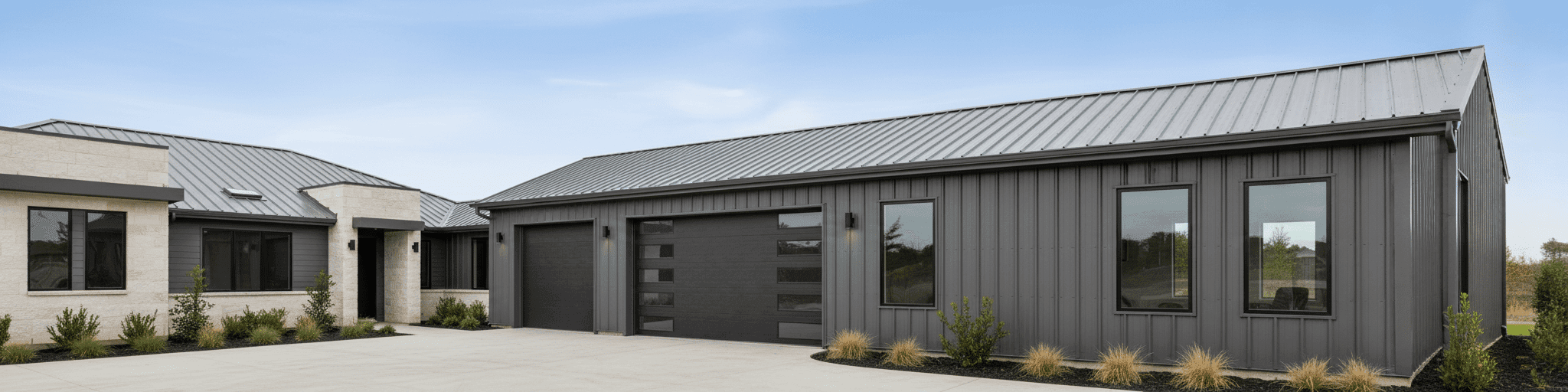

Metal garage buildings emerge as the smart, future-proof choice for anyone who wants maximum value, strength and flexibility from their first dollar spent through decades of service. Readers will discover how precision-engineered steel slashes construction costs by up to 40 %, trims yearly upkeep to a mere 1 % of the purchase price, and cuts insurance premiums as much as 40 % while resisting fire, pests, 170 mph winds and decades of weather without warping or rotting. The article walks through 64 size combinations, dozens of door, window, color and finish options, plus easy future expansion or even relocation, proving that a metal garage can be tailored to a single carport, a three-car dream shop, or a 5,000-sq-ft commercial bay that still looks like it belongs on the property. It also demystifies smart-tech upgrades—LED lighting, app-controlled doors, solar-ready roofs, EV-charger integration and advanced security systems—that turn the structure into an energy-positive, fortress-safe workspace. Along the way, readers learn why 93 % recycled steel, near-zero construction waste and 50-year lifespans make this the most sustainable building decision on the market, and why a properly permitted metal garage can raise home value 5-20 % and recoup its cost many times over through energy savings, insurance breaks and virtually no maintenance.
Cost Efficiency and Budget Benefits
Metal garages slash upfront costs by up to 40%, trim annual energy bills by a third, and still add tens of thousands to your property value—turning every dollar saved today into bigger equity tomorrow.
Lower Material Costs Compared to Wood
When you're planning a garage project, the numbers tell a compelling story. Metal garage buildings deliver 30-40% cost savings compared to traditional wood structures, with standard metal garages ranging from $3,000-$10,000 versus $6,000-$15,000 for comparable wood construction [1]. This advantage scales impressively—at the square-foot level, you'll invest around $5 for steel compared to $7+ for wood [2].
For larger projects, the savings become even more substantial. Take a 30'x40' building: our metal building kits typically cost $12,000-$20,000 in materials, while wood framing for the same footprint often requires $18,000-$30,000 [3]. Why such a significant difference?
It comes down to manufacturing efficiency. Our precision-fabricated steel components arrive at your site ready to assemble with minimal waste, unlike wood construction that requires extensive on-site cutting, fitting, and inevitable material loss [3]. This streamlined approach means more value in your pocket from day one.
Faster Construction Reduces Labor Expenses
Time is money in construction, and that's where metal garages truly shine.
Energy Savings Through Insulation Options
Smart insulation choices transform metal buildings from basic shelters into energy-efficient workspaces.
While uninsulated metal conducts heat rapidly, properly insulated metal garages slash HVAC demands by 30-40%, delivering substantial cost savings year after year [7].
Long‑Term Resale Value and ROI
Your metal garage isn't just a structure—it's a long-term investment that appreciates while saving you money. Property values typically increase 5-20% with quality metal garage additions, potentially adding $10,000-$40,000 to a $200,000 home [10]. Even better, these buildings see resale value increases of 20-30% over 20 years, beyond standard property appreciation [9].
The numbers paint a clear picture: over 20 years, a 10,000 square foot metal facility costs approximately $350,000 total, while comparable wood or brick construction runs $670,000-$1. 1 million [9]. This dramatic difference results from multiple savings streams working in your favor: • Minimal maintenance: Just 1% of initial investment annually (detailed in our Durability section) • Energy efficiency: 10-20% yearly savings through superior insulation systems • Insurance advantages: Up to 40% lower premiums (covered comprehensively in our Safety section) • Adaptability: 40% lower expansion costs when your needs grow [9] Whether you're a homeowner looking to add workshop space or a business planning for growth, metal garages adapt to your evolving needs without breaking the budget.
The flexibility to reconfigure spaces—from vehicle storage to studios, workshops, or business operations—means your investment continues delivering value as your requirements change [10]. Ready to explore how a custom steel building can work for your specific needs?
Durability and Structural Strength
Engineered with wind-resistant 170 mph frames, rust-proof galvanization, and 70-year corrosion warranties, a metal garage outlasts wood by decades while shielding vehicles from hurricanes, snow loads, and coastal salt with almost zero upkeep.
Resistance to Extreme Weather Conditions
When extreme weather strikes, your metal garage stands ready. Our engineered steel structures resist winds up to 170 mph with 12 or 14-gauge frames, while vertical roof designs provide even greater storm protection [12]. Unlike wooden structures that risk collapse, properly designed metal garages handle substantial snow loads—typically rated for 30-60 pounds per square foot based on your region [13].
This superior weather resistance goes beyond raw strength. Metal buildings channel rainwater safely away through waterproof design elements, protecting your investment [14]. For coastal properties, we recommend specialized finishes—durable painted, galvanized, or powder-coated options that resist salt spray, with 12-gauge panels backed by 20-year rust-through warranties [12].
The secret lies in engineered bracing systems that distribute loads evenly throughout the frame, maintaining integrity even during seismic events [14]. This comprehensive protection delivers real-world benefits: minimal maintenance, exceptional lifespan, and unwavering protection for your vehicles and equipment through any weather condition.
Corrosion‑Protected Steel for Lasting Performance
Your metal garage deserves protection that lasts generations. Through galvanization, we create a zinc shield using hot-dip processing that forms an active protective barrier [15]. This zinc layer provides sacrificial protection—corroding first to preserve your steel even when scratched [16]. The American Galvanizers Association confirms that properly galvanized steel maintains integrity for over 70 years in rural settings and 20-30 years in coastal environments [16].
For enhanced protection, we offer advanced coating systems including powder coatings in various colors and specialized finishes for extreme environments [15]. These systems extend building lifespan beyond 50 years while eliminating frequent repainting needs [10]. Though corrosion protection adds $0. 05 to $0.
15 per pound initially, this investment pays dividends through dramatically reduced maintenance costs [10]. We tailor protection to your environment—coastal properties benefit from dual-layer systems, while inland structures may need less intensive solutions [10]. Simple annual inspections at connection points ensure early problem detection [10]. As covered in our Modern Technology section, cutting-edge coating technologies now offer even more advanced protection options for demanding applications.
Pest‑Free and Fire‑Resistant Design
Metal garage buildings offer significant safety advantages through their inherent resistance to both fire and pests. Steel's non-combustible nature provides peace of mind that wood simply can't match.
Where a single spark might devastate a wooden structure, steel stops flames before they start [10]. The International Building Code recognizes this advantage, officially classifying steel construction as non-combustible [18].
Minimal Maintenance Requirements
As outlined in our Cost Efficiency section, metal garages require just 1% of initial cost in annual maintenance—a fraction of what wood structures demand [10]. This efficiency stems from steel's inherent resistance to rot, warping, and pests that plague traditional materials. Your maintenance routine becomes refreshingly simple: occasional fastener checks and minor touch-ups replace the endless cycle of painting, staining, and treatments wood requires [10].
Our galvanized coatings and protective finishes work continuously to preserve your investment, while the material's stability eliminates concerns about structural degradation [10]. Even large prefab metal garages maintain optimal condition with just periodic cleaning and basic inspections [19]. This low-maintenance advantage means more time enjoying your garage and less time maintaining it—delivering decades of reliable service that respects both your time and budget.
When you choose steel, you're choosing freedom from constant upkeep while ensuring your structure remains as strong and attractive as the day it was built.
Design Flexibility and Customization
From 64 dimension choices—12×22 ft to 50×100 ft—and doors with R-10.25 insulation to 30-ft eave heights, steel garages let you size, shape, and outfit the exact space for cars, RVs, boats, workshops, or commercial gear without wasting a square foot or dollar.
Wide Range of Sizes and Layouts
Metal garage buildings come in 64 standard dimensions, giving property owners unprecedented flexibility for virtually any application [20]. Popular sizes range from compact 12×22 foot single-car structures (264 sq ft) to expansive 50×100 foot buildings (5,000 sq ft), with endless variation between [21]. Dimension selection directly impacts both function and cost—a standard 30×40 building provides 1,200 square feet of unobstructed space perfect for multi-car garages or small workshops, while a 40×80 structure offers 3,200 square feet ideal for commercial applications or large equipment storage [20].
Building shape significantly affects cost efficiency, with square structures maximizing usable space while minimizing wall materials [20]. For vehicle storage, dimensions correlate directly with capacity—one-car garages typically require 12×22 feet, two-car garages need 20×22 feet, and three-car designs demand approximately 30×22 feet [22]. The inherent flexibility of steel construction allows property owners to select eave heights from 10-30 feet in 2-foot increments, creating vertical space for equipment, storage lofts, or vehicle clearance without expanding the building footprint [20].
This dimensional versatility enables precise matching of structure size to specific storage needs, whether for standard vehicles, RVs, boats, workshop space, or commercial equipment [22].
Options for doors, windows, and accessories
Metal garage buildings offer extensive customization through door, window, and accessory options that transform basic structures into fully functional spaces. Door selections range from practical walk-through entries to overhead doors with impressive R-values up to 10. 25, providing excellent thermal efficiency [23]. Understanding the difference between roll-up and sectional doors helps you make the right choice—roll-up doors coil into a compact canister to maximize overhead clearance, while sectional doors follow traditional tracks but offer quieter operation and better insulation options [25]. Window placement transforms your metal garage from a dark storage space into a bright, inviting environment.
Modern window options feature self-flashing and self-framing designs that simplify installation while maintaining weather-tight seals [23]. For maximum natural lighting without compromising wall strength, consider skylights or translucent roof panels that flood your space with daylight while reducing energy costs [23][24]. The right accessories elevate your building's performance dramatically. Quality insulation systems do more than control temperature—they eliminate condensation that can damage stored items, reduce outside noise, and create a more comfortable workspace [24]. Strategic ventilation through ridge vents, wall louvers, and turbine ventilators keeps air fresh and prevents moisture buildup without relying on powered systems [23][24].
Visual customization options let you create a structure that complements your property perfectly. From colored endwalls with durable silicone-modified paint finishes to architectural trim and canopy additions, these enhancements blend form with function [23][24]. Premium Kynar color coatings provide decades of fade resistance, while interior liner panels create finished walls that conceal framing and may help meet local fire codes [23].
Architectural Finishes to Match Any Home Style
Metal garages offer extensive architectural finish options to seamlessly integrate with any home style. Manufacturers provide fully customizable designs that match existing architecture through coordinated color schemes, textures, and structural elements [26]. Beyond basic metal panels, options include painted finishes with silicone-modified polyester (SMP) or PVDF (Kynar) coatings that resist fading while providing long-term color retention [27].
For traditional aesthetics, wainscoting adds visual interest and an additional protective layer while reducing visible dirt and dust on lower wall sections [27]. Buildings can incorporate contrasting trim and accent colors to highlight architectural features or complement the primary residence [27]. Modern metal garages embrace minimalist designs with clean lines and monochromatic color schemes, while others feature rustic elements with barnwood-style steel siding for a farmhouse aesthetic [26][28].
Materials can be combined creatively—steel structures with cedar accents, decorative stone, or brick veneers create distinctive hybrid appearances that bridge contemporary and traditional styles [27][28]. Regional architectural influences are easily accommodated, whether matching Pacific Northwest timber elements or Southwestern desert aesthetics [26]. This adaptability explains why metal garages have evolved from purely utilitarian structures to sophisticated design elements that enhance property aesthetics while maintaining superior durability and function [28].
Expandable or Relocatable Structures
Metal garages offer exceptional flexibility through expandable and relocatable designs that adapt to your changing needs. Think of it as building with life's uncertainties in mind—portable steel garages arrive fully assembled and can be disassembled, loaded, and transported to new locations when circumstances change [29]. This mobility proves invaluable for growing businesses, relocating families, or anyone facing evolving space requirements.
The modular construction approach revolutionizes how we think about building expansion. Need more space? Simply add compatible sections to your existing structure.
Downsizing? Remove modules without compromising the remaining building's integrity [30].
Environmental and Sustainability Benefits
A prefabricated metal garage slashes construction waste to near-zero, ships with minimal transport emissions, and—after half a century of service—can be 100% recycled into new steel without losing an ounce of strength.
High Recyclability of Steel Components
When property owners choose a metal garage, they're investing in one of the most environmentally responsible building options available.
Steel stands as the world's most recycled material, maintaining 100% recyclability with full strength and quality preserved through unlimited recycling cycles [32].
This remarkable sustainability characteristic sets metal garages apart from traditional construction methods that often end in landfills.
Reduced Waste with Prefabricated Kits
The precision manufacturing of prefabricated metal garage kits represents a significant advancement in sustainable construction practices. Unlike traditional building sites where up to 30% of materials end up in dumpsters, our controlled factory environment allows exact cutting and assembly that virtually eliminates waste [35][36]. This efficiency begins with digital modeling that determines precise material requirements before production starts, ensuring property owners purchase only what they need [36].
The environmental benefits multiply during delivery—prefabricated components require fewer truck trips than hauling raw materials, reducing transportation emissions and site disruption [35]. The waste reduction story continues throughout your building's entire lifecycle. Every component is designed for potential disassembly and reuse, creating a true cradle-to-cradle construction approach [37].
When a metal garage eventually outlives its original purpose—often after 50+ years of service—those same steel components can become raw materials for new structures without any loss in structural integrity [37]. This contrasts sharply with traditional construction debris that fills landfills indefinitely. For environmentally conscious property owners, choosing a prefabricated metal garage means making a decision that reduces waste at every stage: manufacturing, transportation, installation, and eventual recycling [35].
Energy‑Efficient Building Envelope
As discussed in the insulation benefits section, metal garages provide exceptional energy efficiency opportunities. What sets these structures apart from an environmental perspective is their ability to meet and exceed stringent energy codes while utilizing sustainable materials. The International Energy Conservation Code (IECC) recognizes metal buildings' unique thermal requirements across eight climate zones, establishing specific standards that our buildings consistently surpass [38].
Advanced building envelope systems—including continuous vapor barriers and multi-layer insulation approaches—work together to create structures that minimize energy consumption throughout their operational life [38][39]. Insulated metal panels (IMPs) represent the cutting edge of sustainable building technology, meeting both IECC and ASHRAE 90. 1 standards while providing superior air and moisture control [40].
When combined with cool roof technologies that reflect solar heat, these systems create metal garages that operate with minimal environmental impact while maximizing interior comfort [40].
Lower Carbon Footprint Versus Traditional Builds
Understanding the true environmental impact of any building requires examining its entire lifecycle—from raw material extraction through eventual disposal. While steel production does require significant initial energy input, metal garages deliver a remarkably low carbon footprint when evaluated over their 50+ year service life [41]. This extended durability means the initial production emissions are spread across decades of use, creating a per-year carbon impact that's substantially lower than structures requiring frequent replacement or major renovations [41]. The carbon advantages compound through multiple factors.
Modern metal buildings incorporate up to 93% recycled content, dramatically reducing the need for virgin material extraction and its associated emissions [41]. Precision prefabrication eliminates the 30% construction waste typical of traditional building methods, preventing both material waste and the emissions from producing excess materials [43]. During operation, metal garages continue delivering carbon benefits through reflective roofing that reduces cooling demands and superior insulation systems that minimize heating and cooling energy consumption [43]. Perhaps most importantly, metal's exceptional durability eliminates the hidden carbon costs of ongoing maintenance—no replacement roofing every 20 years, no structural repairs from rot or pest damage, no energy-intensive renovations [43].
When the building eventually reaches end-of-life, nearly 100% of the steel components reenter the manufacturing stream rather than occupying landfill space, providing raw materials for future construction without additional mining impacts [41]. For property owners committed to reducing their environmental footprint, choosing a metal garage represents a decision that delivers measurable carbon reduction benefits for generations [41].
Safety, Security, and Insurance Advantages
A steel garage packed with rolling-code doors, biometric locks, and intrusion alerts slashes 15-40% off insurance premiums while turning your stored vehicles and tools into a fortress thieves can’t crack.
Robust Doors and Locking Systems
Your metal garage building becomes a fortress for valuable assets through state-of-the-art door and locking technologies. Today's advanced systems feature rolling code technology that automatically changes access codes with each use, virtually eliminating the risk of unauthorized code capture [46]. When you choose reinforced steel or composite doors with tamper-resistant locks, you're creating barriers that withstand even determined forced entry attempts [45]. Smart access control takes security to the next level.
Through smartphone apps, you can monitor door status, operate entries remotely, and receive instant alerts about unauthorized access attempts—whether you're at work, on vacation, or simply inside your home [45]. For businesses and homeowners requiring maximum security, biometric authentication provides unmatched protection. Fingerprint and facial recognition scanners ensure that only authorized individuals can access your valuable vehicles and equipment [45]. Complete security systems integrate intrusion detection alarms equipped with high-decibel sirens and strobe lights, immediately alerting both you and your neighbors to potential threats [45].
This comprehensive approach to security delivers tangible financial benefits through reduced insurance premiums—insurers recognize the superior protection these systems provide [44]. By combining advanced door technologies with strategic motion-activated lighting around entry points, you create a security perimeter that deters intruders while ensuring safe access during nighttime hours [45].
Enhanced Protection for Vehicles and Tools
When protecting your vehicles, tools, and equipment, our steel buildings deliver multi-layered security that traditional structures simply can't match.
Lower insurance premiums due to fire resistance
Your investment in a metal garage building pays immediate dividends through insurance premium reductions of 15-40% compared to traditional wooden structures [50][52]. Insurance companies reward the superior safety profile of steel construction, classifying these buildings as "Noncombustible" (Classification 3)—a designation that acknowledges steel's remarkable ability to withstand temperatures up to 1,200 degrees Fahrenheit [52]. Understanding insurance calculations helps you maximize these savings. Risk assessment forms the foundation of premium pricing, with structural material serving as the primary factor. Simply put: the more fire-resistant your building, the lower your insurance costs [50].
As covered in our earlier discussion of fire-resistant design, steel's non-combustible properties dramatically reduce claim frequency, making your building particularly attractive to insurers seeking low-risk properties [51]. These financial advantages compound over time. While traditional building insurance rates climb 5% annually for commercial structures—and surge 10-20% in coastal regions following natural disasters—your metal building maintains stable, lower premiums [50]. You can enhance these savings further by incorporating additional safety features. Sprinkler systems and smoke detection equipment, when combined with steel construction, qualify for even deeper discounts [50].
The Insurance Information Institute identifies fire as a leading cause of property damage, generating billions in annual claims [51]. By choosing steel construction, you're not just protecting your assets—you're securing predictable, reduced operational costs that improve your bottom line year after year. This combination of superior protection and financial efficiency makes metal garages an increasingly intelligent choice for cost-conscious property owners.
Compliance with Building Codes and Standards
Ensuring your metal garage building meets all regulatory requirements protects both your investment and your peace of mind. International Building Code (IBC) standards provide the foundation, while local jurisdictions add specific requirements addressing regional challenges—Florida mandates hurricane wind resistance, California emphasizes seismic performance [10]. The permitting journey begins with comprehensive documentation. You'll need to submit detailed blueprints, specifications, and engineering drawings to your local building department. Permit costs vary significantly based on location and project complexity, ranging from $150 for simple residential garages to $7,500 for large commercial facilities [10].
Code compliance delivers benefits extending far beyond avoiding penalties. Insurance companies reward properly permitted buildings with preferential rates and broader coverage options. Buildings that meet or exceed code requirements often qualify for premium discounts, recognizing their superior safety profile [53]. Key compliance areas include: • Structural Design – Load calculations and wind/seismic resistance appropriate to your region • Fire Safety – Integration of fire-resistant materials and sprinkler systems where required • Systems Integration – Proper electrical wiring, plumbing, and drainage installation • Energy Performance – Insulation meeting thermal efficiency standards • Accessibility – Features ensuring compliance with disability access requirements [54] Starting construction without proper permits invites serious consequences. Penalties often double or quadruple original permit fees, insurance companies may deny coverage, and future property sales become complicated by code violations [10].
Success requires proactive planning. Research local requirements during the design phase, partner with professionals experienced in metal building codes, maintain meticulous documentation of all certifications, and coordinate inspection schedules throughout construction [54]. This systematic approach ensures your building not only meets legal requirements but also qualifies for maximum insurance benefits while protecting property values.
Modern Technology and Smart Features
LEDs that sip 80% less energy and last 50,000 hours, motion-sensor smart controls you can dim from your phone, and daylight-harvesting skylights turn your metal garage into an ultra-efficient, app-controlled workspace.
Integrated Lighting and Electrical Options
Modern metal garage buildings excel at incorporating advanced electrical and lighting systems that enhance both functionality and efficiency. Today's LED technology delivers remarkable 80% energy savings while providing 50,000+ hour lifespans—a perfect match for the durability of steel structures [55]. These fixtures generate minimal heat, addressing one of the key considerations in metal building design, while offering brightness levels from 30 to 150 foot candles to meet any requirement [57]. The most effective approach combines multiple lighting strategies: ambient overhead fixtures provide general illumination, while targeted task lighting focuses on specific work areas [56].
Smart controls take this efficiency further—motion sensors activate lights only when needed, and smartphone apps enable remote brightness adjustments, transforming how you interact with your garage space [56]. For comprehensive functionality, ceiling fans with integrated lighting serve double duty, improving air circulation while providing illumination—an especially valuable feature given metal buildings' unique thermal properties [56]. Natural lighting deserves equal consideration in your planning. Skylights and translucent panels reduce dependence on electrical systems during daylight hours, creating bright, welcoming spaces while cutting energy costs [55].
When selecting fixtures, consider color temperature carefully: cooler 5000K lighting enhances visibility for detailed work, while warmer tones create comfortable environments for recreational use [56]. This thoughtful integration of electrical systems elevates metal garages beyond simple storage, creating versatile spaces that adapt to your evolving needs.
Smart Garage Door Automation
Building on the physical security features discussed earlier, smart garage door automation adds a sophisticated layer of convenience and control to metal garage buildings. These advanced systems eliminate manual operation entirely—motors handle all door movements while maintaining secured access protocols [58]. Through smartphone apps, you gain complete control from anywhere, checking door status, operating remotely, and receiving instant alerts about any activity [58][59]. The most advanced installations detect approaching vehicles automatically, opening doors without any action required—imagine pulling into your driveway on a rainy night without reaching for a remote [58].
Integration with platforms like Amazon Alexa, Google Assistant, and Apple HomeKit enables voice commands and automated routines that coordinate with your broader home security ecosystem [59][60]. Safety remains paramount with these systems. Automatic reversing mechanisms prevent accidents when obstacles are detected, while battery backups ensure continuous operation during power outages—critical for maintaining access to vehicles during emergencies [59]. Real-time notifications alert you to any unauthorized access attempts, while detailed activity logs track all usage patterns [59].
Consider the investment carefully: smart openers range from $300-$500 compared to $150-$300 for standard models, and they require reliable WiFi connectivity to function properly [60]. Some older door hardware may need adapters or upgrades for compatibility [60]. For comprehensive protection of valuable vehicles and equipment, combine smart door technology with the motion-sensor lighting and security cameras mentioned in our safety features section—creating multiple layers of security that work together seamlessly [58].
Advanced Coatings for Rust Prevention
As detailed in our durability section, modern metal garages benefit from sophisticated corrosion protection systems that ensure decades of reliable service. Today's advanced coatings go beyond traditional galvanization, incorporating smart technologies like self-healing materials and nanotechnology-based protections that actively combat rust [61][62].
For property owners seeking maximum longevity, multi-layer protection systems combine zinc sacrificial layers with powder coatings and specialized topcoats—delivering the 50+ year lifespans that make metal garages such exceptional investments [61]. In coastal environments, cutting-edge metal-organic frameworks (MOFs) provide tailored protection against salt spray and marine conditions, maintaining structural integrity where traditional materials would quickly deteriorate [61][63].
These innovations in corrosion protection perfectly complement the inherent advantages of steel construction, ensuring your metal garage maintains both its structural strength and aesthetic appeal for generations.
Advanced coatings for rust prevention
Imagine a metal garage that heals its own scratches, senses corrosive threats, and releases protective agents on demand—today’s smart coatings turn that science-fiction into maintenance-free reality.
While traditional corrosion protection methods like galvanization remain foundational (as discussed in Durability and Structural Strength), modern metal garage buildings now incorporate revolutionary smart coating technologies. Today's most advanced systems actively respond to environmental threats rather than providing passive barriers. Self-healing coatings represent a breakthrough in metal protection. These innovative finishes contain microscopic capsules filled with healing agents that automatically rupture when the coating is scratched or damaged. The released compounds immediately seal the breach, preventing moisture and corrosive elements from reaching the steel substrate [61]. This technology essentially gives your metal garage the ability to repair its own minor damage—like having an immune system for your building's exterior.
Even more impressive are smart anti-corrosion systems equipped with environmental sensors. These coatings actively monitor conditions like humidity, salt exposure, and temperature changes, then release protective substances precisely when needed [63]. For property owners in coastal areas or regions with harsh winters, this adaptive protection provides peace of mind that traditional coatings simply can't match. Nanotechnology has also transformed protective coatings for metal buildings. These ultra-thin applications create barriers at the molecular level, offering superior resistance to UV radiation, chemical exposure, and environmental damage while maintaining the aesthetic appeal of your structure [62]. The microscopic nature of these coatings means they add virtually no weight while providing exceptional protection—particularly valuable for our [Structural Steel Components](https://nationalsteelbuildingscorp.
com/service/structural-steel-components/) that require both strength and longevity. For extreme environments, the latest multi-layer protection systems combine different technologies to create comprehensive defense. Advanced formulations now achieve 3,000–5,000 hours of neutral salt spray resistance—essentially providing decades of protection even in harsh marine environments [63]. These sophisticated coatings ensure your metal garage maintains its structural integrity and appearance far longer than any traditional building material, supporting the long-term value proposition that makes steel construction such a smart investment.
Compatibility with Solar Panels and EV Chargers
Metal garage buildings provide ideal platforms for renewable energy integration with structural advantages that traditional buildings can't match. Their standing seam roofs create perfect mounting points for solar panels without requiring roof penetrations that might cause leaks [64]. This compatibility starts with the roof design—south-facing orientations with pitches between 15-45 degrees maximize solar generation while metal's durability ensures the roof will last the full 20-30 year lifespan of the panels themselves [64]. The inherent strength of metal structures handles the additional 2-4 pounds per square foot that solar arrays add without requiring costly reinforcement that wood structures might need [64].
Installing EV chargers in metal garages capitalizes on these solar advantages while creating a complete energy ecosystem. Level 2 chargers, which operate at 240 volts and add 25-30 miles of range per hour, work perfectly with solar setups to fully charge vehicles overnight using stored solar energy [65]. The electrical infrastructure for both systems can be integrated during initial construction by installing appropriate conduit pathways, dedicated electrical rooms, and service panels sized for expansion [64]. This proactive planning reduces installation costs by up to 80% compared to retrofitting [65].
For complete energy independence, battery storage systems turn metal garages into blackout-proof charging hubs that maintain power even during grid outages—essential for ensuring vehicle availability during emergencies [65]. A properly sized system for average commuting needs (approximately 50 miles daily) requires 4-6 kW of solar capacity (10-15 panels) occupying 220-270 square feet of roof space [65].
- Metal garages cost 30-40% less than wood, saving $3-12K on typical builds.
- Galvanized steel frames last 50-70 years with only 1% annual maintenance cost.
- Prefabricated kits cut jobsite waste to near zero and steel is 100% recyclable.
- Insurance premiums drop 15-40% thanks to steel’s non-combustible fire rating.
- Expandable modular designs let owners add or relocate sections as needs change.
- Integrated solar-ready roofs and EV charging rough-in future-proof energy needs.
- Vertical-roof and 12-gauge framing resist 170 mph winds and 60 psf snow loads.
- https://www.eaglecarports.com/blog/metal-garages-vs-wood-garages
- https://alansfactoryoutlet.com/metal-garage-vs-wood-garage/?srsltid=AfmBOopguFTQyCVDrZrWhC6JIJ_k_BuFHdVyaqfZUqEqVrURiAgWC1SJ
- https://www.indacometals.com/resource/metal-vs-wood-buildings-comparison
- https://www.hswilliams.com/blog/how-pre-engineered-metal-buildings-save-time-labor-cost
- https://bulldogsteelstructures.com/blog/exploring-the-cost-efficiency-of-metal-buildings-vs-traditional-construction/
- https://www.cecobuildings.com/blog/efficiency-and-value-with-pre-engineered-metal-buildings/
- https://bulldogsteelstructures.com/blog/metal-building-insulation-benefits-types-cost-tips/
- https://therm-all.com/a-guide-to-metal-building-insulation/
- https://www.summitsteelbuildings.com/20-year-cost-comparison
- https://nationalsteelbuildingscorp.com/liquid-portfolio/metal-garage-buildings-pros-and-cons-explained/
- https://idadevelops.com/are-metal-garages-worth-the-money/
- https://bulldogsteelstructures.com/blog/metal-buildings-vs-bad-weather/
- https://valuemetalbuildings.com/blog/snow-load-and-wind-speed-ratings
- https://www.anssteelbuildings.com/11-ways-metal-buildings-are-built-to-withstand-extreme-weather
- https://lionbuildings.com/why-use-rust-resistant-materials-for-your-metal-building/3/
- https://www.vikingmetalgarages.com/blog/advantages-of-using-galvanized-steel-in-modern-steel-garages
- https://cdmg.com/building-faqs/safety-benefits-of-metal-buildings
- https://bulldogsteelstructures.com/blog/sustainable-and-secure-5-benefits-of-metal-garages-for-commercial-use/
- https://www.metalcarports.com/blog/metal-vs-wood-garage/
- https://www.buildingsguide.com/standard-sizes/?srsltid=AfmBOoqIxz3h3JJoUHi7SP-khrSslnmjzJsDznb63e-LiQW_dLRf4ey2
- https://alansfactoryoutlet.com/blog/metal-building-sizes/?srsltid=AfmBOopzo9dMJaFFGgcrgcdCPwClrk4OHOUg6luURrrU_Z2Qoop0i2AD
- https://www.aametalbuildings.com/blog/know-the-right-dimensions-for-your-metal-garage?srsltid=AfmBOoqeSkLB8RaGLN1dDPnXdoi46E1MK_Nz_U7E2bHJyoLdmeESi98V
- https://www.alliedbuildings.com/building-details/accessories/
- https://www.futurebuildings.com/blog/steel-building-accessories-for-looks-and-function.html
- https://gensteel.com/building-faqs/building-customizations/components/
- https://www.steelstructuresamerica.com/garages-shops/
- https://www.vikingmetalgarages.com/blog/top-exterior-options-for-metal-garage-buildings
- https://betterbuiltusa.com/innovative-design-ideas-for-modern-metal-garages/
- https://www.futurebuildings.com/blog/prefab-metal-garages-for-sale.html
- https://www.panelbuilt.com/blog/benefits-of-prefabricated-metal-buildings/
- https://gensteel.com/building-faqs/building-comparisons/versus-modular-buildings/
- https://www.steel.org/sustainability/
- https://www.summitsteelbuildings.com/why-steel-is-such-an-environmentally-sustainable-building-material
- https://wastemission.com/blog/metal-recycling-facts-statistics/
- https://www.universalsteel.com/how-prefabricated-buildings-help-the-environment/
- https://bulldogsteelstructures.com/blog/the-environmental-impact-of-pre-engineered-metal-buildings-a-green-building-solution/
- https://www.rhinobldg.com/blog/7-green-benefits-of-pre-engineered-steel-buildings
- https://www.cecobuildings.com/blog/energy-code-insulation-solutions-metal-buildings/
- https://www.rmax.com/blog/metal-building-insulation
- https://www.metallic.com/solutions/sustainable-metal-buildings/
- https://ecosteel.com/ecosteelprefab/exploring-the-environmental-impact-steel-vs-traditional-building-materials/
- https://www.sciencedirect.com/science/article/pii/S036013232400444X
- https://lionbuildings.com/are-metal-buildings-helping-the-environment/
- https://www.gdowv.com/why-are-reliable-garage-doors-so-important
- https://doorproamerica.com/secure-your-home-with-modern-garage-doors/
- https://elocksys-garage.com/garage-door-security/
- https://miracletruss.com/why-metal-buildings-can-decrease-the-cost-of-your-insurance-premium/
- https://www.victoriasteelframing.com/buildings-with-metal-stud-framing-mean-lower-insurance-rates-expert-explanation
- https://garagebuildings.com/how-metal-buildings-can-cut-insurance-costs
- https://lionbuildings.com/can-i-insure-my-metal-building/2/
- https://champion-buildings.com/blog/building-codes-for-steel-buildings
- https://www.metalbuildingoutfitters.com/6-best-energy-efficient-design-options-for-metal-garages/
- https://www.paclights.com/explore/metal-garage-building-ceiling-fan-forum-lighting-explained/
- https://lumenright.com/collections/metal-building?srsltid=AfmBOor7W_–oI8o_uXDpUht6_usk8W56IO-xKco5xb5GHh0gFwuIkNu
- https://www.vikingmetalgarages.com/blog/improve-safety-features-by-upgrading-metal-garage-doors
- https://jaydorco.com/blog/4-key-benefits-of-smart-garage-door-openers-garage-door-openers/
- https://www.geisdoors.com/blog/smart-garage-door-openers-pros-cons/
- https://www.sciencedirect.com/science/article/pii/S0001868623002221
- https://www.hswilliams.com/blog/the-latest-technology-in-pre-engineered-metal-buildings
- https://www.linkedin.com/posts/hussien-elkaluoby-855669110_smart-anti-corrosion-coatings-are-advanced-activity-7361454291036815360-pRQt
- https://lionbuildings.com/taking-solar-into-account-when-designing-your-metal-building/
- https://www.ecoflow.com/us/blog/build-solar-ev-garage-upgrade