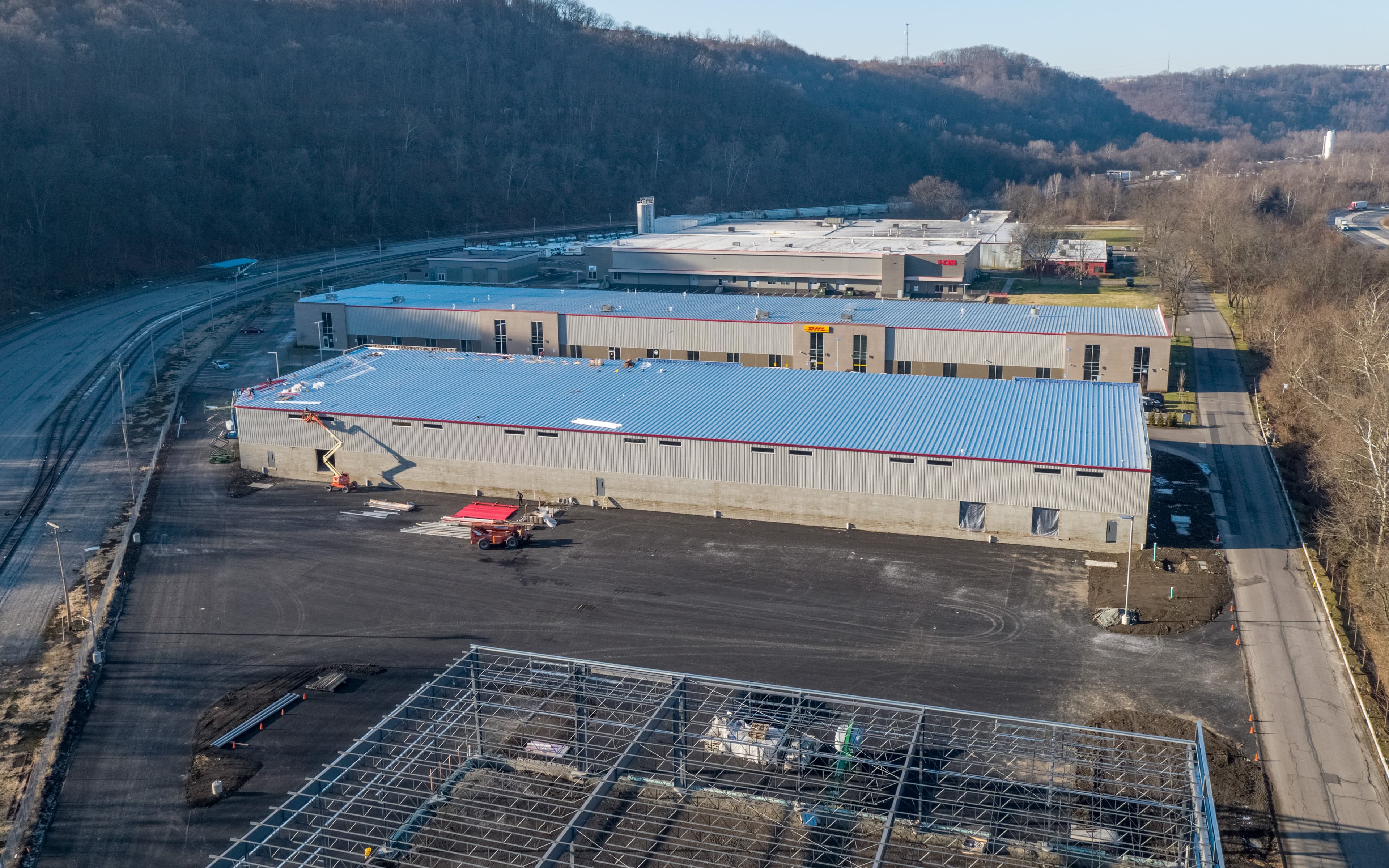
30×40 Metal Building vs. Pole Barn: 10-Year Cost Math

30×40 Metal Building vs. Pole Barn: 10-Year Cost Math
30x40 Metal Building vs. Pole Barn: 10-Year Cost Math
Summary

We walk you through the real 10-year cost comparison between a 30×40 metal building and pole barn, including foundation, maintenance, and repair expenses that online quotes typically miss.

Foundation First: Why a 30×40 Concrete Slab Costs What It Does

Upgrading from 4 inches to 6 inches costs roughly $840-$1,260 in extra concrete, but skipping rebar on heavy-load slabs invites repair bills many times larger.

Cost per square foot breakdown: 4-inch vs. 6-inch slab thickness The thickness gap between a 4-inch and 6-inch slab is 50% more concrete volume — but almost no additional labor, since the same crew forms, finishes, and cures the same 1,200 square feet.[4] That asymmetry matters when you're comparing bids: most of the price difference between thickness specs is pure material cost, not crew time.[4] One cubic yard of ready-mix covers 81 square feet at 4 inches; at 6 inches, that same yard covers roughly 54 square feet.[3] For a 30×40 pour, you're looking at approximately 15 cubic yards at 4 inches versus 22 cubic yards at 6 inches — a spread of about 7 yards at $120-$180 per yard in most 2026 U.S. markets.[4]

The intended use is what determines which spec you actually need. Light vehicle storage, workshops, and agricultural buildings work fine on a 4-inch, 3,000 PSI pour with wire mesh.[4] Heavy equipment traffic, loaded commercial vehicles, and buildings where posts or columns transfer point loads into the slab call for 6 inches with rebar and a 3,500-4,000 PSI mix.[4] Downgrading thickness to trim the budget is a short-term trade-off with long-term consequences — rebar especially is worth the upcharge, since the slab cost delta is modest but the repair cost gap is substantial.[4] For a full walk-through of which load scenarios push you into the thicker spec on a 30×40 footprint, the choosing concrete thickness for 30×40 steel buildings guide covers every decision point.

Site prep, labor, and regional price variations that impact your final bill

Before a single yard of concrete is poured, your site has to be excavated, graded, compacted, and sloped for drainage — work that runs $1 to $3 per square foot on its own.[6] For a 30×40 footprint, that means $1,200 to $3,600 in site prep before labor or materials hit the invoice. A proper drainage slope of at least 1/8 inch per foot is non-negotiable; skipping it is one of the fastest ways to crack a new slab from beneath.[6] Sites with poor soil or significant grade changes push toward the top of that range, since fill material and extra compaction add cost that no online estimator will capture until a crew walks your lot.

Labor is where regional variation hits hardest. Across most U.S. markets, crew time accounts for 33% to 50% of your total concrete bill.[6] The same forming, pouring, and finishing work that a rural Ohio crew performs for $2 per square foot can cost $4 to $5 per square foot in the San Francisco Bay Area — and urban markets broadly run 20% to 30% above rural rates in the same state.[6] If you're building in the Northeast or upper Midwest, frost-depth requirements add a separate line item: footings must extend 42 to 48 inches below grade in those regions, which can effectively double the concrete volume compared to a slab-on-grade in Georgia.[6] That's a structural requirement driven by code, not a contractor upsell — and it belongs in your budget from day one.

Three costs that rarely appear in online estimates consistently blow residential and light-commercial budgets. First, if a ready-mix truck can't back within a few feet of your pour site, you need a pump truck at $150 to $300 per hour with a two-to-three hour minimum — a single-line addition of $500 to $1,200.[6] Second, ready-mix trucks are loaded for 8 to 10 cubic yards; ordering less triggers a short-load surcharge of $50 to $150 per yard under the minimum.[6] Third, permits for slabs that change drainage patterns or support structures run $50 to $200 in most jurisdictions, and some counties require soil testing first at another $200 to $500.[6] Timing your pour strategically offsets some of this: scheduling in late fall or early spring — when contractor demand drops — typically yields 10% to 20% savings versus peak summer pricing, with better crew availability as a bonus.[6] If you're comparing bids from local prefab contractors, make sure each quote specifies the same site prep scope, reinforcement type, and thickness — otherwise you're comparing different projects at the same price. Metal Building vs. Pole Barn: Year-1 Installation Cost Comparison

30×40 metal building kit cost plus slab: turnkey pricing from National Steel Buildings

A 30×40 metal building kit runs $18,000 to $26,000 in 2026, covering primary framing (columns and rafters), secondary framing (purlins and girts), and roof and wall panels.[5] Add a reinforced concrete slab at $8,500 to $13,500 and you're already at $26,500-$39,500 before erection labor, insulation, doors, or permits appear on the invoice.[5] The full turnkey number — kit, foundation, erection, insulation, doors, electrical, and permits — lands between $52,000 and $106,000 depending on location, site conditions, and finish level.[5]

Build scopeTypical turnkey range
Basic shell: kit + slab, no interior finishes$35,000-$55,000
Standard build: kit + slab + erection + basic doors$52,000-$70,000
Fully finished, climate-controlled with utilities$90,000-$106,000+

Several variables push costs toward either end of that range. Structures in northern or seismic-zone markets require heavier engineering — adjusting roof pitch and strengthening support beams — which adds roughly 10-15% to the framing cost alone.[5] Professional erection of a 1,200-square-foot structure takes 3-5 days, with labor accounting for an estimated $6,000-$12,000 of the total bill — a line item some owners reduce by handling interior finish work themselves after the shell is up.[5][7] Kit delivery adds a timeline constraint most buyers underestimate: standard packages ship 6-10 weeks after design approval, and custom snow-load engineering can extend that window.[5] For a precise accounting of what arrives in the kit quote versus what hits the invoice as a separate charge, the kit price reality breakdown maps every component before you commit to a number.

Pole barn construction cost for the same footprint and foundation requirements

A 30×40 pole barn shell — posts, trusses, siding, and roof — runs $20,000 to $30,000 for a basic build, with fully customized or professionally constructed versions reaching $45,000 or more.[8] On a per-square-foot basis, that translates to $15 to $40 depending on design, materials, and regional labor rates.[9] The critical distinction from a metal building is structural: pole barns embed their posts directly into the ground, so they don't require a perimeter concrete foundation the way a steel frame on anchor bolts does. That lowers the structural entry cost — but it doesn't eliminate concrete from your budget if you want a functional floor.

If you're comparing on equal footing (a 30×40 slab under both structures), add $4 to $8 per square foot for a concrete floor inside the pole barn.[9] On a 1,200-square-foot footprint, that's $4,800 to $9,600 on top of the shell. Site prep — grading, clearing, and compaction — runs another $1,200 to $8,000 depending on soil conditions and lot access, and permits add $500 to $2,500 in most jurisdictions.[9] Stack those numbers together and the true all-in cost for a turnkey 30×40 pole barn, including concrete floor, site prep, and permits, lands between $26,000 and $50,000 for a standard build — consistent with the national project average of $27,500.[9]

The table below shows how pole barn cost tiers stack up on a 30×40 footprint once you account for the same foundation scope required to make both structure types genuinely comparable:

Build scopeEstimated cost range
DIY kit only (no labor, no concrete)$12,000-$25,000
Constructed shell, gravel floor$20,000-$30,000
Constructed shell + concrete floor$26,000-$40,000
Fully finished: concrete, insulation, doors, utilities$40,000-$50,000+

Kit quality varies significantly across that range and deserves scrutiny before you accept the cheapest number. Solid 6×6 posts — common in lower-cost packages — cannot be fully pressure-treated through their core and are prone to internal rot over time; laminated columns with individually treated boards perform differently over a decade.[8] For a side-by-side breakdown of what each structure type actually delivers per dollar at the 30×40 scale, the pole barn vs. 30×40 metal building comparison maps both options against the same use cases before you commit to either path.

Hidden costs both builders should disclose but often don't

The line items that quietly inflate your final invoice are remarkably consistent across both structure types — which is why comparing a pole barn quote to a metal building quote on sticker price alone almost guarantees a budget surprise. Delivery is the first place this happens: many suppliers advertise free shipping, but that offer typically applies only within a narrow radius or under specific volume conditions.[11] For both kit types, actual delivery costs vary by distance from the manufacturing plant, total freight weight, and whether your site requires a specialty vehicle or lift equipment — none of which appear in the headline number.[11] Engineering stamps are the second common omission: local building departments in most jurisdictions require stamped drawings that certify compliance with local wind, snow, and seismic load requirements, and some suppliers provide only generic drawings that don't satisfy local code.[11] Getting compliant stamped drawings after the fact can cost several hundred to several thousand dollars depending on the engineer and jurisdiction.

Insulation is almost never included in a kit quote for either building type — but it's rarely optional once you factor in how you'll actually use the space.[11] A workshop, storage facility, or agricultural building without vapor control will accumulate condensation that accelerates corrosion in steel panels and rot in wood members; for climate-controlled use, the insulation budget often runs $3,000 to $8,000 on a 1,200-square-foot structure.[11] Overhead doors present the same problem: pole barn material packages explicitly exclude them, leaving door selection and cost entirely to you after the shell is up.[8] Metal building kits handle this the same way — openings are engineered into the frame, but the doors themselves are a separate purchase.[11] Utilities add another gap that online estimators never flag: running electricity, water, or gas to a structure set back from existing service lines can cost thousands depending on how far the building sits from the main lines, and rural properties face meaningfully higher costs than in-fill lots where lines are close.[8]

The accountability question is the hidden cost that doesn't appear on any invoice but can cost you the most. When you purchase a kit from one supplier and hire a separate contractor to erect it, responsibility for fit and finish is split between two parties.[10] If panels don't align or the drawings contain an error, the kit supplier and the erection contractor each have contractual grounds to point at the other — and resolving that dispute falls to you.[10] Most established post-frame and metal building contractors won't accept erection-only work on customer-supplied kits precisely because they can't control what they didn't engineer.[10] Change orders add a third layer: design revisions that seem minor — adjusting roof pitch, moving a door, changing panel color — trigger re-engineering fees when they happen after final drawings are approved.[11] Locking in your exact specifications before signing anything is the single most reliable way to keep your project within budget over a decade of real ownership.

10-Year Total Cost of Ownership: Maintenance, Repair, and Durability Math

Proactive maintenance costs 44% less annually than reactive repairs, potentially extending your steel roof's lifespan from 10-14 years to 30-40 years.

Metal building maintenance costs: rust prevention, roof coatings, and annual upkeep

The gap between proactive and reactive maintenance is measurable in dollars and in years. Proactive upkeep runs $0.14 per square foot annually versus $0.25 per square foot for reactive repairs — a 44% cost difference that compounds across a decade.[12] On a 30×40 footprint, a scheduled maintenance program costs roughly $168 per year; waiting for problems to appear pushes that to $300.[12] Emergency leak repairs widen the gap further: unplanned labor runs 3 to 5 times higher than scheduled work, before accounting for inventory damage, operational disruption, or the accelerated deterioration that follows undetected water infiltration.[12] The stakes on that math are direct — well-maintained steel roofs reach 30 to 40 years of service life, while those that receive little attention may need full replacement in as few as 10 to 14 years.[12]

Rust is the cost driver worth interrupting at the earliest stage. Surface rust caught at the pitting or early discoloration phase is treatable: a contractor sands the area, applies rust-inhibiting primer, and seals the surface.[13] Left to progress to panel seams or fastener points — where protective coatings are already failing — corrosion repairs jump to $500 to $3,000 per affected section.[13] Neoprene sealing washers on exposed fastener systems degrade within 15 to 20 years, but evaluating them every 5 years catches compressed or rust-ringed washers before they become active leak points.[12] Annual inspections run $125 to $350 per visit; scheduling them every one to three years, and immediately after major storms, prevents small failures from compounding into large repair bills.[13]

Roof coatings deliver the highest ROI of any maintenance investment in a steel building's 10-year budget. Reflective and elastomeric coatings block UV degradation, slow oxidation, and reduce heat absorption — one documented commercial application dropped peak roof surface temperatures by 42 degreesF, cut AC energy consumption by 11%, and reduced peak electrical demand by 14%, saving approximately $7,200 annually on a single structure.[12] Coating failure is gradual and invisible; by the time rust or leaks surface, the protective layer has been compromised for some time, which is why periodic condition assessments matter more than waiting for visible damage.[12] Budget $50 to $100 per hour for annual pressure washing to clear debris and expose coating defects early, and plan recoating into your 10-year maintenance schedule before the underlying metal is exposed to the elements.[14] For a side-by-side view of how steel upkeep compares to wood-frame alternatives across the same maintenance cost drivers, the 40×80 pole barn alternative breakdown maps both structure types against real upkeep expenses over time.

Pole barn repair expenses: wood rot, termite damage, and structural decline over a decade

Wood rot is the highest-probability repair a pole barn will face over a 10-year window. Rot is a fungus that needs only darkness, moisture, and oxygen to establish itself — conditions that exist by default at ground level inside any post-frame building.[15] The damage concentrates within 6 inches of the soil surface, where posts make direct contact with the ground.[15] By the time visible decay appears on a solid post, structural integrity is already compromised.[15] Repair costs start at $500 per column with a minimum of six poles — putting the floor for a single rot-repair job at $3,000, before any additional work is factored in.[15] Buildings with concrete floors push costs higher, since crews must cut around each embedded post or install steel brackets to re-establish proper load transfer to the foundation.[15] The solid 6×6 posts common in budget packages compound the problem: pressure treatment doesn't penetrate through the core of a solid post, which is exactly why rot issues emerged industry-wide after the post-frame sector moved away from creosote-soaked columns.[15]

Termites add a second, less predictable cost layer. Inspections run $75 to $150 for a written report, but confirmed activity triggers treatment costs of $500 to $5,000 depending on the method used — and structural repair after infestation averages $3,000 for residential structures, climbing above $10,000 for commercial applications.[17] These pests can hollow posts from the inside, leaving no surface warning until the structure begins to shift.[16] Americans spend $5 billion annually on termite prevention and repairs collectively, which puts individual building-owner exposure in direct perspective.[17] Pressure treatment slows infestation risk but does not eliminate it, and the chemical protection degrades over time — particularly in posts embedded in wet or clay-heavy soil.[16]

Structural decline is the compounding result when rot and moisture go unaddressed. Treated wooden posts carry a base lifespan of 20 to 30 years under normal conditions; posts installed without protective sleeves or in poorly drained soil can fail well before that ceiling.[16] Visible warning signs — sagging rooflines, bowing walls, doors that bind — indicate post degradation has already advanced into the frame, at which point repairs become structural rather than cosmetic.[16] Mold follows moisture into degraded wood framing: inspections run $350 to $500 and remediation ranges from $500 to $4,000 on a structure this size, escalating to $6,000 or more if moisture reached an air system.[17] Foundation shifts driven by weakened or leaning posts add another cost tier — epoxy injection for hairline cracks runs $1,500 to $3,000, while repairs requiring excavation can reach $30,000.[17] Across a 10-year window, a pole barn owner managing even moderate rot, one termite treatment cycle, and routine mold remediation can realistically clear $15,000 to $25,000 in repair costs that a steel-framed building simply doesn't generate.

Insurance, property tax, and resale value differences between materials

Insurance is where the material choice produces its most direct annual cost difference. Pole barns are susceptible to fire damage, and that elevated risk profile translates directly into higher premiums compared to steel structures.[19] More than 200 horses die annually in barn fires, a statistic the University of Kentucky College of Agriculture has documented — and insurers price that risk into wood-frame policies accordingly.[19] Insurance costs for pole barns are generally a modest addition to existing homeowner policies, but fire vulnerability, pest exposure, and the structural decay risks inherent in wood construction push rates above what comparable steel buildings carry.[18] For a deeper look at how fire ratings and load-path engineering affect premium calculations across both frame types, the steel frame structure vs. wood frame guide maps those differences in detail.

Property tax treatment varies by jurisdiction, but the underlying pattern is consistent: many areas assess outbuildings at lower rates than primary structures, and agricultural exemptions may apply when the building serves qualifying farm purposes.[18] The trade-off is that any structure adding meaningful appraised value also raises your tax basis. A 30×40 pole barn in good condition with electrical service and a concrete floor can add $25,000-$35,000 to your property's appraised value — but appraisers typically calculate that figure at 50-70% of construction cost rather than at replacement value.[18] A steel building of equivalent size and condition adds comparably at appraisal, but without the depreciation pressure that adjusters and buyers factor into wood structures over time. Anticipated rot remediation, termite treatment history, and post-replacement timelines all reduce perceived value in a way that a steel frame simply doesn't generate.[19]

At resale, well-built pole barns can increase property values by 5-15%, and properties with functional outbuildings broadly command premiums of $15,000-$45,000 over comparable properties without them.[18] Data also shows that properties with functional pole barns sell 20-40% faster than comparable listings without outbuildings — a timeline compression that reduces carrying costs and improves certainty when coordinating a next purchase.[18] The steel building's resale advantage isn't in the appraised number itself; it's in what buyers don't discount. A steel-framed structure at year 10 arrives without a known rot remediation schedule, no termite treatment cycle to disclose, and no embedded post-replacement timeline in the inspection report.[19] Each of those absences is negotiating leverage for a seller — and each of the corresponding presences is a discount trigger when the building is wood and the buyer's inspector has done their job.

How to Calculate Your Actual 30×40 Building Cost: Decision Framework and Next Steps

Soil quality, local codes, and site accessibility drive real cost differences far more than national averages, so verify all three with your supplier before committing to a budget.

Cost factors Essentials: local labor rates, local codes, and site conditions

Three variables account for more budget variance than any national average can capture: labor rates, code requirements, and site conditions.

Regional labor differences are real and significant — a 30×40 build in the Midwest typically costs less than the same scope in coastal California, where seismic requirements add engineering complexity to every stamped drawing.[20] Code requirements are the factor buyers most consistently underestimate: Florida hurricane-load provisions and Colorado snow-load standards both mandate more steel and stricter engineering than a base kit assumes, and those upgrades land in the kit cost — not just erection labor.[20] Site conditions set the starting floor for everything else.

Soil quality, lot accessibility, and grade all determine how much prep work appears on your invoice before the first panel is installed; a lot with poor drainage, restricted truck access, or a significant elevation change can add thousands to a project that looks straightforward on paper.[21] In locations with strict code requirements or constrained material supply, costs climb regardless of how competitive the kit quote appears.[21] Giving your supplier accurate inputs on all three factors before accepting any number is the most direct path to a budget you can actually build a 30×40 project around — within budget, without surprises at the invoice stage.

When a metal building with slab wins on total cost of ownership versus pole barn

The steel-plus-slab combination doesn't win on every project — but it wins decisively under four conditions that commercial, agricultural, and industrial owners encounter far more often than they expect.

The first is expansive or unstable soil: because pole barn posts embed directly into the ground, shifting soil causes posts to move and compromises the frame's structural integrity over time, while a steel building anchored to a concrete slab sits on a stable, engineered surface that moves with the slab rather than independently.[19] The second is climate exposure — specifically, high-moisture regions or areas with active termite pressure.

Where wood is exposed to sustained moisture and oxygen, rot fungi establish quickly, and the Southeast and Northwest face compounded risk from pest pressure that can hollow posts from the inside with no surface warning.[19] The third condition is fire risk: steel is non-combustible, and the higher insurance premiums that pole barns carry because of their fire vulnerability add a recurring annual cost that compounds across a decade in ways the upfront price gap doesn't reflect.[19] The fourth is use intensity — any application involving heavy equipment traffic, commercial vehicles, or daily operational loads creates structural fatigue in wood framing that steel simply doesn't accumulate.[23] When you stack those four conditions together, the calculus shifts: pole barns can look cheaper at the quote stage, but their low initial cost balloons once maintenance, repair cycles, and elevated insurance are factored into the full 10-year ledger.[19] For property owners managing agricultural operations, workshops, or light commercial facilities where all four conditions apply, the steel barn cost vs wood barn 20-year math frames the long-run numbers before you commit to either path.

Getting an accurate quote from National Steel Buildings: what to prepare and expect

A quote is only as accurate as the information behind it. Before you pick up the phone or submit a quote request, gather six things: your building dimensions (width, length, and eave height measured exterior to exterior), the physical address of the construction site, a list of every door and framed opening you need, your intended use, whether the space will be conditioned or uninsulated, and a realistic budget range.[25] Your zip code is not a formality — it determines wind speed, snow load, and seismic zone, all of which feed directly into the engineering and therefore the kit price.[24] Even a few miles can change the design loads significantly, especially near coastlines, mountains, or county boundaries.[25] Providing your actual site address rather than a mailing address prevents a repriced quote after engineering is underway.

Door and opening decisions deserve more upfront attention than most buyers give them. Every overhead door, walk door, or framed opening requires a structural frame built into the primary steel; adding any of them after drawings are finalized triggers re-engineering fees that weren't in your original quote.[25] The same principle applies to special loads: cranes, mezzanines, suspended ceilings, solar panels, and HVAC equipment all affect the frame design, and disclosing them at the quote stage means the engineer designs for them from the start rather than reinforcing after fabrication.[25] Before requesting a quote, contact your local building department to confirm what PE-stamped drawings are required and to get the specific wind, snow, and seismic values your jurisdiction enforces — suppliers who provide only generic drawings not stamped to local code will cost you time and money when the permit desk rejects the submission.[25]

Once your inputs are complete, expect a formal line-item proposal that covers the base building package alongside optional quotes for concrete and erection services.[24] Each building is estimated individually based on your location, intended use, and current steel prices — which move with commodity markets, meaning a building specialist can advise on timing if price trends are a factor in your decision.[24] Factory lead times run 6 to 14 weeks depending on season and building complexity, so disclosing any hard deadline — a harvest window, a lease start date, a construction-season constraint — at the quote stage lets the team advise on feasibility before you commit.[25] If you're also working through financing options for a 30×40 build, sharing your budget ceiling upfront steers the conversation toward the right model and options rather than a spec that looks right on paper but lands outside your range at the proposal stage.[25]

Key Takeaways
  1. A 30×40 metal building with slab runs $52,000-$106,000 fully installed; pole barns cost $26,000-$50,000 but hide $15,000-$25,000 in 10-year maintenance.
  2. Concrete slab thickness (4 vs. 6 inches) costs $840-$1,260 more in material but prevents expensive repairs; rebar is worth the upcharge for heavy loads.
  3. Regional labor rates, code requirements (wind/snow/seismic), and site conditions account for more budget variance than any national average can predict.
  4. Pole barn wood posts rot within 6 inches of soil contact, termites hollow frames invisibly, and fire insurance premiums run 20-40% higher than steel.
  5. Steel roof coatings deliver highest ROI: one documented case saved $7,200 annually by reducing AC demand 11% and peak temps 42 degreesF.
  6. Hidden costs appear consistently across both structures: pump trucks ($500-$1,200), short-load surcharges, engineering stamps, insulation, and utilities.
  7. Proactive maintenance costs $0.14/sq ft annually versus $0.25/sq ft for reactive repairs–a 44% difference that compounds across a decade.
References
  1. https://www.americanmetalbuildings.com/blog/how-much-does-a-30×40-metal-garage-cost-in-2026-real-installed-prices-and-what-changes-the-quote/?srsltid=AfmBOoqhFcaOR8BGAEj-RRg0rOSQ2CjZhTzihemG8PYyZIgYVGe9RBCr
  2. https://www.engineeredmetalbuildings.com/blog/30×40-metal-building-prices/?srsltid=AfmBOopRzp5f7n6nGkyKhxsEH5yyxM78JkOeR9ZndIAHmXMAoq_oyHuD
  3. https://homeguide.com/costs/concrete-slab-cost
  4. https://costflowai.com/blog/concrete-slab-cost-2026/
  5. https://www.steelcobuildings.com/how-much-does-a-30×40-steel-building-cost-in-2026/
  6. https://www.myconcretecalc.com/learn/concrete-slab-cost
  7. https://americanmetalgarages.com/30×40-metal-garage-cost-breakdown-what-you-get-and-how-it-works/
  8. https://info.fbibuildings.com/blog/30-x-40-pole-barn-costs-diy-kits-vs.-construction
  9. https://www.angi.com/articles/how-much-does-it-cost-build-pole-barn.htm
  10. https://www.steelstructuresamerica.com/pole-barn-kit-vs-turnkey-cost/
  11. https://www.uspatriotsteel.com/blog/hidden-costs-to-watch/
  12. https://engineeredroofingsystems.com/feeds/blog/maintenance-tips-industrial-metal-roofs
  13. https://www.homeadvisor.com/cost/roofing/metal-roof-repair/
  14. https://www.angi.com/articles/repair-metal-roof-cost.htm
  15. https://info.fbibuildings.com/blog/rotted-pole-barn-columns
  16. https://themetalshopllc.com/how-long-will-pole-barn-posts-last/
  17. https://www.rhinobldg.com/blog/steel-buildings-promise-lower-maintenance-part-2
  18. https://matadorstructures.com/blog/pole-barns-increase-property-value/
  19. https://gensteel.com/building-faqs/building-comparisons/versus-pole-barns/
  20. https://www.probuiltsteel.com/blog/30×40-metal-building-cost/?srsltid=AfmBOoqo0yTk3mxAV_EMZT6JJX3IQe2_GRF4jjoXDB-W-iIBf7QY31FF
  21. https://pricebuildings.com/steel-buildings/cost/30×40-metal-building-cost/
  22. https://bargainmetalbuildings.com/pole-barn-vs-metal-building/
  23. https://www.omni-builders.com/home-tips/pole-barn-vs-metal-building-cost-maintenance-longevity-compared
  24. https://gensteel.com/price-your-building-online/
  25. https://www.factorysteeloverstock.com/prepare-custom-metal-building-quote-checklist/