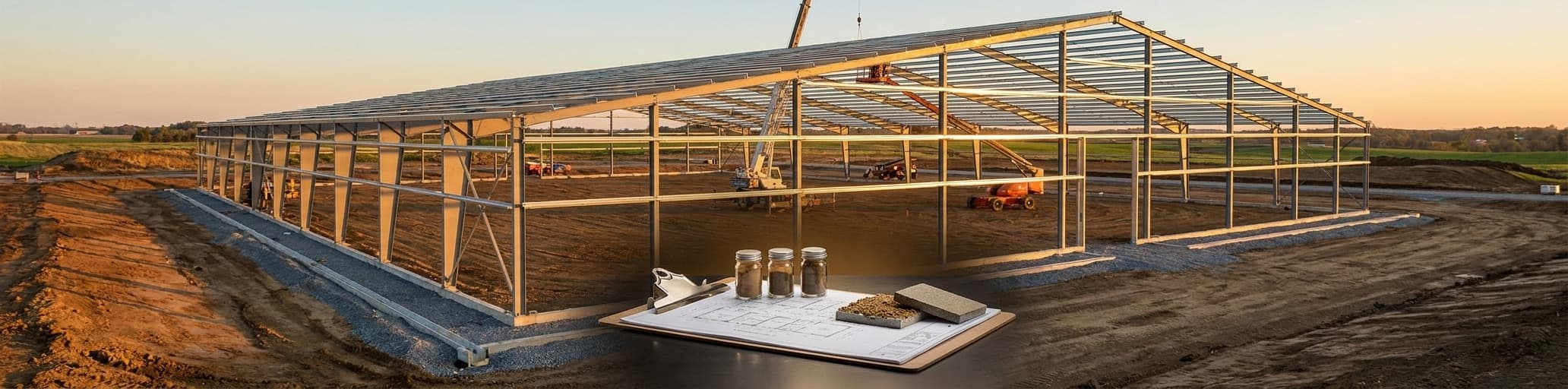

Indoor riding arena costs range from $40,000 to over $400,000 depending on size, structure type, and finish level, with material choice and site conditions creating the biggest budget swings. We help you understand where your project sits within this range and how steel's low maintenance costs deliver the best long-term value compared to fabric or wood alternatives.
How Much Does an Indoor Riding Arena Actually Cost in 2026?
Your indoor arena cost will likely fall between $180,000 and $450,000, determined primarily by building size, structure type, and finish level.
Direct cost range: $40,000 to $400,000+ depending on size and materials
Indoor riding arena cost spans a wider range than most property owners expect: from around $40,000 for a basic covered structure to well over $400,000 for a fully finished, climate-controlled facility.[3] The national average sits at $325,000, with most projects falling between $180,000 and $450,000.[1] Three variables explain nearly all of that spread–building size, structure type, and finish level.[2] A bare prefabricated metal shell for single-horse training sits at the low end; layer in premium footing, HVAC, a viewing room, tack storage, and attached stabling and the same footprint can cost three to four times more.[1] Regional labor rates and site conditions push costs further: high-labor markets like the Northeast or West Coast consistently hit the upper range of estimates, while rural sites on flat, well-drained ground keep budgets tighter.[2] Material choice also has long-term implications beyond the initial quote–as a 20-year steel barn cost comparison versus wood shows, lower upfront savings on wood construction can reverse quickly once maintenance cycles begin.
Understanding where your project sits within this cost range before you lock in a size or material is the single most effective way to stay within budget every step of the way.
Cost per square foot breakdown for common arena dimensions
Square footage is the fastest way to anchor your indoor riding arena cost estimate before a single contractor call. The national per-square-foot range runs $40 to $125, with basic covered structures at the low end and fully enclosed, finished arenas with premium footing at the high end.[1] That spread exists because the same footprint can carry very different scopes: a bare steel roof over open sides versus insulated walls, climate control, lighting, and a specialty footing system are priced entirely differently even on identical ground.[2]
Common arena sizes cluster around a few proven footprints, each tied to a specific use case. A 60×120 covered arena (open sides, basic riding surface) runs roughly $180,000 to $250,000 for the structure alone, while the same footprint fully enclosed with walls and basic finishing climbs to $250,000-$360,000 or more.[4] Larger formats like 80×200 or 100×200–needed for jumping, multi-horse work, or rodeo disciplines–require proportionally more material and labor, pushing totals well above the national average.[2] The table below maps the most common dimensions to their per-square-foot cost range so you can size your budget before finalizing plans.
| Dimensions | Sq Ft | Cost/Sq Ft (all-in) | Typical use case |
|---|---|---|---|
| 60×100 | 6,000 | $40-$125 | Single-horse training, basic covered structure |
| 60×120 | 7,200 | $40-$125 | Standard training, most common starter size |
| 80×200 | 16,000 | $40-$125 | Jumping, multi-horse, dressage |
| 100×200 | 20,000 | $40-$125 | Rodeo, boarding facilities, competition use |
One number the table can't show you: the per-square-foot rate tends to hold steady across sizes, but your total cost jumps sharply as dimensions grow.[1] A 100×200 wood indoor arena, for example, carries the same per-foot labor rate as a 60×120–but you're paying that rate across 20,000 square feet instead of 7,200, which is why the 100×200 footprint consistently draws the most questions about budget control.[2] If your discipline demands a larger footprint, material choice becomes critical; as the steel barn vs. wood barn 20-year math shows, lower upfront costs on alternative materials often reverse once maintenance cycles kick in on a large-footprint structure.
Why steel-frame structures typically offer better long-term value than alternatives
Steel's long-term cost advantage over wood and fabric comes down to three converging factors that compound over the life of the building.
First, maintenance: wood absorbs moisture from horses, humidity, and daily ground contact, leading to structural degradation that demands constant treatment, repair, and eventual replacement.[5] Steel resists moisture, rot, and pests, keeping upkeep to periodic inspections rather than structural interventions.[6] Second, total cost of ownership: while wood may carry a lower initial quote, maintenance expenses over 20+ years can approach or exceed the original construction cost–making lifecycle cost comparison over a 25-to-30-year horizon the more accurate measure of value.[5] Third, adaptability: concrete block construction locks you into a fixed footprint, since expanding or modifying it is expensive and disruptive, while steel accommodates future additions–stall blocks, wash bays, viewing areas–without compromising structural integrity.[6] Steel is also non-combustible, a meaningful safety factor in any facility where hay and flammable materials are routinely present.[6] Clear-span steel framing eliminates interior support columns entirely, giving you unobstructed riding space that works across disciplines without structural compromise.[5] For a direct material-by-material cost breakdown, the prefab steel vs. wood cost analysis runs the numbers across a realistic build timeline.
Indoor Riding Arena Cost Factors: Structure, Site, and Footing
Steel-frame arenas cost more upfront but deliver the lowest total cost of ownership while giving you unobstructed riding space and seamless expansion options.
Building structure costs: Steel frame vs. fabric vs. wood constructionStructure type is one of the biggest levers on your indoor riding arena cost, with each option carrying a different trade-off between upfront price and long-term overhead. Fabric structures–PVC or PVDF-coated tensile covers over a subframe–sit at the lowest initial cost, making them the most common entry point for a basic covered arena.[7] The catch: fabric requires periodic cleaning and repairs, particularly under heavy snow loads, UV exposure, or sustained wind, and replacement cycles arrive sooner than with rigid construction.[8] Wood falls in the mid-range upfront but carries the steepest long-term burden–moisture from horses and ambient humidity degrades wood framing steadily, and cumulative maintenance costs over 20 years can approach the original build price.[7] Steel-frame clear-span construction costs more than fabric at the outset but delivers the best total cost of ownership: steel resists pests, rot, and moisture without structural intervention, keeping upkeep to periodic inspections rather than active remediation.[7] The column-free design also gives you unobstructed riding space that works across every discipline–dressage, jumping, or rodeo events–without interior posts forcing layout compromises.[8] If you plan to add stall blocks, a wash bay, or a viewing area after the initial build, a steel frame farm building system handles those additions without disrupting the existing structure–an expansion flexibility that wood and fabric shells can't match.[7]
| Structure type | Initial cost position | Maintenance demand | Functional lifespan | Column-free span |
|---|---|---|---|---|
| Fabric (PVC/PVDF) | Lowest | Moderate — cleaning, periodic repairs | Shorter than rigid construction | Yes, subframe dependent |
| Wood frame | Mid-range | High — rot, pests, moisture damage | 20-30 years with active upkeep | Limited by structural span |
| Steel frame (clear-span) | Mid to higher | Low — periodic inspections only | 40-50+ years | Yes, fully unobstructed |
Site preparation, excavation, and foundation requirements that affect your budget
Site prep is where indoor riding arena cost surprises most property owners–and where the gap between a flat, well-drained lot and a challenging site translates directly into budget overruns. Land clearing, grading, and drainage installation run $10,000 to $50,000, shaped by existing vegetation, soil type, slope, and how much excavation your site requires.[1] If there are old barns, sheds, or a previous arena to remove, add another $5,000 to $30,000 for demolition and clearing before a single foundation form goes in.[1] Environmental conditions or local permitting requirements can compound those figures further–particularly where soil testing, erosion controls, or stormwater management plans are mandated.[2] The practical takeaway: choosing a level site with natural drainage is the single fastest way to compress site prep costs, sometimes saving tens of thousands before the structural package even arrives.[2]
Foundation requirements add a second layer of variability that the per-square-foot estimates in most arena quotes don't capture. Building permits alone run $1,000 to $10,000 depending on jurisdiction, and approval timelines in areas with strict zoning can stretch weeks to months–time that affects your overall project schedule even if costs stay flat.[1] Remote or difficult-to-access sites carry higher material delivery and labor costs on top of the base permit and grading line items, which is why rural locations don't always produce the savings they appear to on paper.[1] For arenas requiring a full concrete perimeter or slab system, foundation engineering adds structural engineer review fees of $2,000 to $8,000 before you've poured anything.[1] Understanding how slab thickness and concrete specification decisions compound across a large footprint gives you a sharper starting point for this line item–because on a 100×200 footprint, even modest per-square-foot shifts in foundation spec add up fast.[2] Labor across the full site prep and foundation phase can absorb up to 50% of your total project budget on a fully custom build, which makes getting multiple grading and excavation bids before finalizing your arena size one of the highest-leverage moves available at the planning stage.[2]
Arena footing and base system costs: the hidden expense that impacts long-term maintenance
Footing and base system costs are where indoor riding arena budgets take their biggest unplanned hit. Footing installation runs $2 to $8 per square foot in materials and labor, putting total costs between $15,000 and $50,000 for the riding surface alone–before you factor in the engineered base layer beneath it.[1] That base is where long-term maintenance expenses are effectively locked in at the moment of construction: industry data shows 80% of arena problems originate from inadequate base construction, meaning a bargain base reliably generates recurring repair costs that compound well beyond the initial savings.[9]
Three base system tiers define the market, each carrying a different upfront investment and a very different maintenance burden over the decades that follow.
| Base system type | Installed cost (per sq ft) | Maintenance interval | Estimated lifespan | 20-year reconstruction exposure |
|---|---|---|---|---|
| Traditional aggregate-only | $15-$25 | Every 3-5 years | ~10 years before reconstruction | $40,000-$80,000 |
| Hybrid geotextile + aggregate | $18-$28 | Moderate improvement over aggregate-only | 15-20 years | Reduced but recurring |
| Engineered geocell system | $12-$20 | Every 10-15 years | 75+ years | Minimal |
The math behind that comparison matters more than the sticker difference between tiers. Traditional aggregate-only bases show rutting within two years and typically require full reconstruction within ten, accumulating $40,000 to $80,000 in reconstruction costs over a 20-year horizon.[9] Engineered geocell systems invert that equation: a standard 60×120 arena needs only $7,000 to $8,500 in base materials with a geocell approach, compared to $10,000 to $15,000 in aggregate plus $5,000 to $10,000 in drainage systems for a conventional build–and the engineered base requires maintenance every 10 to 15 years rather than every 3 to 5.[10] That interval difference saves approximately $5,000 annually in equipment rental and labor, making the higher upfront system the lower-cost choice over any realistic ownership horizon.[9] One component most frequently omitted from budget installations is the geotextile separation fabric–a minimum 8-ounce non-woven layer that prevents fine soil particles from migrating up into the aggregate base and causing instability.[9] Skipping it accelerates base failure faster than almost any other single decision, which is why understanding the full base system cost–not just the footing surface–is essential to keeping your indoor riding arena cost within budget every step of the way.
2026 Indoor Riding Arena Cost Calculator: Estimate Your Project by Size
A 60×100 steel arena typically costs $240,000 to $390,000 when built to functional standards, with your final price determined by finish level and site-specific factors.
60×100 covered arena cost estimate with material and labor breakdown
A 60×100 steel arena covers 6,000 square feet–enough space for single-horse training, dressage practice, and spectator seating along one wall, without the footprint that pushes budgets into large-facility territory.[11] At $40 to $125 per square foot installed, your total indoor riding arena cost for this footprint runs $240,000 to $750,000 all-in, though a functional covered build with standard enclosure, basic lighting, and working footing typically lands between $240,000 and $390,000.[1] The wide spread comes down to finish level: a basic steel shell with open sides sits near the low end, while a fully enclosed, climate-controlled facility with premium finishes approaches the ceiling.[1] Understanding where each line item falls before you break ground is what keeps a 60×100 project within budget rather than spiraling past it.
The table below breaks out realistic cost ranges for each major component on a 60×100 build, scaled from national labor and material data:
| Cost category | Low estimate | High estimate | Notes |
|---|---|---|---|
| Structural frame + erection | $50,000 | $200,000 | Arena construction specialists; complexity and site access drive range |
| General contractor fees | $20,000 | $70,000 | Typically 10%-20% of total project cost |
| Site grading and drainage | $10,000 | $50,000 | Flat, well-drained sites compress this line |
| Footing (materials + labor) | $12,000 | $48,000 | $2-$8 per sq ft across 6,000 sq ft |
| Electrical and lighting | $5,000 | $25,000 | Scales with fixture count and panel complexity |
| HVAC / climate control | $8,000 | $40,000 | Omitted entirely on open-sided covered builds |
| Plumbing (wash bay, restroom) | $3,000 | $15,000 | Optional on basic builds; required for full-service facilities |
| Structural engineer review | $2,000 | $8,000 | Code compliance and design sign-off |
| Permits | $1,000 | $10,000 | Varies by jurisdiction and project complexity |
Labor is the line item that surprises most property owners on a 60×100 project: on a fully custom build, it can absorb up to 50% of the total budget.[2] That percentage makes getting multiple grading, erection, and specialty bids one of the highest-leverage moves at the planning stage–before size and finish decisions are locked in.[2] Arenas priced using indoor riding arena kits (pre-engineered steel packages) reduce this exposure by compressing erection time and cutting custom fabrication labor, which is why prefabricated structures consistently sit at the lower end of the per-square-foot range for this footprint.[1] For disciplines like dressage where a 60×100 footprint fully satisfies competition and training requirements, keeping the build to a single-story clear-span shell and deferring optional add-ons–viewing rooms, wash bays, HVAC–to a phased construction approach is the most reliable way to control your initial indoor riding arena cost without sacrificing long-term functionality.[1]
100×200 indoor arena cost: premium dimensions and what drives the price
A 100×200 arena covers 20,000 square feet–the largest standard indoor riding arena footprint–and is built for rodeo events, multi-horse boarding operations, and competition-level jumping where smaller dimensions simply can't deliver adequate working space.[2] At the national range of $40 to $125 per square foot all-in, your total 100×200 indoor arena cost runs $800,000 to $2,500,000 depending on structure type and finish level.[1] The per-square-foot rate doesn't change at this scale; what changes is that every decision you make–structure type, footing tier, enclosure level–multiplies across 20,000 square feet instead of 7,200.[2] That's the core reason this footprint generates more budget questions than any other.
For those asking specifically about a wood indoor 100×200 arena: wood frame sits in the mid-range upfront, but clear-spanning 100 feet in wood without interior support columns requires engineered heavy timber framing that carries a significant cost premium over standard wood construction.[7] Add the ongoing maintenance burden–moisture from horses and ambient humidity degrades wood framing steadily, and cumulative upkeep costs over 20 years can approach the original build price–and the wood option becomes the highest-cost choice over any realistic ownership horizon at this scale.[7] Steel clear-span framing handles the 100-foot span without interior posts, resists pests and rot without structural intervention, and keeps maintenance to periodic inspections rather than active remediation.[7] At 20,000 square feet, that maintenance gap compounds into a material budget difference year over year, which is why pre-engineered steel agricultural buildings are the default choice for 100×200 projects where both budget control and long-term durability matter.
Discipline-specific requirements lock in several additional fixed cost lines at this footprint that don't apply to smaller builds.[2] Rodeo events need high-panel livestock containment systems; competition facilities require doors at minimum 12 feet high and 16 feet wide for mounted rider passage; commercial boarding operations almost always include attached stabling, tack rooms, viewing areas, and restroom facilities.[2] Each adds to your total before a single optional upgrade is considered, which is why 100×200 projects consistently land in the upper half of the all-in range regardless of structure type.[1] Permit fees of $1,000 to $10,000, HVAC costs of $8,000 to $40,000 for a climate-controlled facility, and site preparation running $10,000 to $50,000 all apply at the same levels as smaller footprints–but against a much larger base cost.[1]
| Scope level | Structure type | Estimated all-in cost | Key cost drivers |
|---|---|---|---|
| Basic covered | Steel clear-span | $800,000-$1,200,000 | Shell, basic footing, minimal enclosure |
| Standard enclosed | Steel clear-span | $1,200,000-$1,800,000 | Full enclosure, lighting, standard footing, permits |
| Full-service facility | Steel clear-span | $1,800,000-$2,500,000 | HVAC, viewing area, stabling, premium footing, restrooms |
| Enclosed wood frame | Engineered wood | Mid-to-upper range + 20-yr maintenance | High upfront engineering cost; ongoing rot/moisture upkeep compounds |
Labor is the single line item most owners underestimate on a 100×200 project: on a fully custom build it can absorb up to 50% of the total budget, which makes getting multiple grading, erection, and specialty bids before locking in finish-level decisions one of the highest-leverage moves available at the planning stage.[2] Phased construction–building the clear-span steel shell and footing first, then adding stabling, viewing rooms, and HVAC as budget allows–is the most reliable way to control your 100×200 indoor riding arena cost without sacrificing the structural quality that protects the investment every step of the way.[2]
Interactive cost comparison: How building material choice impacts your total investment
Material choice doesn't just shift your opening line item–it multiplies across square footage in ways that turn a manageable per-foot gap into a six-figure ownership decision at larger footprints. At $40 to $125 per square foot installed, the distance between a fabric-covered structure and a fully enclosed steel clear-span build is real but containable on a 60×120 arena; spread that same per-foot differential across a 100×200 footprint and you're looking at a cost gap that compounds year over year before maintenance is factored in.[8] The table below runs all three material types across both footprints so you can see, side by side, where each choice lands on initial cost and total 20-year exposure.
| Material type | 60×120 initial estimate | 100×200 initial estimate | Annual maintenance range | 20-yr maintenance exposure |
|---|---|---|---|---|
| Fabric (PVC/PVDF) | $290,000-$468,000 | $800,000-$1,300,000 | Moderate — periodic cleaning and repairs | Adds meaningfully to total cost |
| Wood frame | $396,000-$612,000 | $1,100,000-$1,700,000 | High — rot, pests, moisture remediation | Can approach original build cost |
| Steel clear-span | $468,000-$900,000 | $1,300,000-$2,500,000 | Low — $5,000 to $20,000/yr full facility | Lowest over any realistic horizon |
What the table makes visible that individual footprint estimates obscure: fabric's lower initial position narrows sharply once maintenance cycles begin, and wood's mid-range opening cost reverses entirely when cumulative upkeep is tracked over 20-plus years.[7] Steel carries the highest initial position in some scenarios but consistently produces the lowest total cost of ownership–an outcome that becomes more pronounced, not less, as footprint grows.[8] For owners weighing prefab building cost and speed tradeoffs across material types, the per-square-foot rate tells only part of the story; the ownership math over a realistic horizon is where material selection actually controls your indoor riding arena cost every step of the way.[8]
Choosing the Right Builder to Control Indoor Riding Arena Costs
Design-build contracts keep arena costs predictable by eliminating handoff gaps between architects and contractors that typically trigger change orders and delays.
Single-source design-build vs. multi-contractor approaches: where you save moneyThe most predictable place your indoor riding arena cost spirals past budget isn't materials–it's the gap between your architect, your contractor, and your site prep crew. When you hire each party separately, nobody owns the full picture, and every handoff creates an opportunity for miscommunication, change orders, and delays that carry real dollar figures.[12] Design-build eliminates that gap by placing one team under one contract for both design and construction, which means cost and design decisions move in lockstep from day one instead of the traditional model where estimates are made after drawings are complete–forcing owners to either cut scope or absorb overruns.[13] Industry data backs the difference: design-build projects average nearly 4% less cost growth during construction than traditional design-bid-build approaches, and that gap widens further when scope adjustments arise mid-project, because a single integrated team resolves changes internally rather than triggering a formal billing dispute between separate firms.[12] The management savings compound that advantage–coordinating multiple contractors means more trips, more meetings, and more internal overhead time that never shows up on a quote but absolutely shows up in your total project cost.[14] A single-source design-build approach also locks in quality control and safety standards across every subcontractor under one accountability umbrella, which reduces the rework and reactive fixes that inflate budgets on multi-party builds.[14] For a closer look at how single-contract delivery plays out across a full build scope, the turnkey steel building process from dirt to door shows exactly what one point of contact owns–and why that ownership structure keeps projects within budget every step of the way.
| Delivery model | Cost growth risk | Change order handling | Owner management burden | Budget predictability |
|---|---|---|---|---|
| Design-bid-build (multi-contractor) | Highest — avg. ~4% above final estimate | Slow — disputed between separate design and construction firms | High — owner coordinates multiple parties | Low — estimates precede construction input |
| Construction manager at risk | Moderate — avg. ~2% above final estimate | Better but still fragmented accountability | Moderate | Moderate |
| Single-source design-build | Lowest — real-time cost validation during design | Fast — resolved internally within one team | Low — one point of contact | High — budget and design move together from day one |
Turnkey solutions that prevent budget overruns and timeline delays
Budget overruns aren't bad luck–they're a predictable outcome of fragmented project delivery. Industry data shows 70% of construction projects come in over budget, and the root cause is almost always the same: multiple parties, each owning a slice of the project, with no single entity accountable for how those slices connect.[16] For an indoor riding arena, that fragmentation compounds quickly–your site prep crew doesn't talk to your steel erector, your erector doesn't own the footing schedule, and every handoff creates a window for delays and change orders that carry real dollar figures.[15] Turnkey delivery closes those windows by consolidating design, permitting, grading, erection, and footing installation under one contract and one project manager.[15] Every cost and schedule decision moves in lockstep from day one, which means problems surface and get resolved internally–before they become change orders on your invoice.[17]
The timeline protection that turnkey delivers is just as concrete as the cost protection. Pre-engineered arena packages–where the steel is fabricated to spec before arriving on site–compress erection time compared to custom-fabricated or site-built alternatives, because sequencing is engineered into the package itself rather than improvised in the field.[16] That pre-planned sequencing is what separates projects that finish on schedule from those that stretch weeks past their delivery date while you're paying holding costs. For a direct look at how delivery milestones map across a pre-engineered steel project from order through occupancy, the prefab building kit delivery timeline breakdown shows exactly what controls each phase–and where the schedule either holds or slips depending on how the project is structured.[16] The practical difference between a turnkey build and a multi-contractor build isn't just accountability on paper; it's whether someone wakes up every morning owning your project's budget and schedule as their own.[17]
What to ask potential builders before committing to your arena project
The builder conversation that protects your indoor riding arena cost happens before you sign anything–not after the contract is executed. Three categories of questions separate builders who can own your project from those who will hand off accountability the moment a problem surfaces: their verified track record with arena-specific builds, their scope clarity on what each line item includes, and their transparency about subcontractor use.[18] Ask to see photos of recently completed arenas and request contact information for past clients–not a curated reference list, but owners of projects similar in size and scope to yours.[18] A builder who hesitates on either request tells you something important before a dollar changes hands.
Scope gaps are where indoor riding arena budgets quietly expand after commitment. The questions below target the line items most frequently excluded from initial estimates–footing, site prep, and finish details that get added as change orders once the project is underway.[18]
- How long have you been building riding arenas specifically, and how many similar projects have you completed?
- Can you show me photos and connect me with owners from recent comparable builds?
- Does this estimate include site grading, drainage, and foundation work–or are those separate bids?
- Will you be using subcontractors for any phase, and if so, who owns accountability when their work intersects with yours?
- Do you install footing, or is that scoped separately? What does that add to the total?
- What material do you recommend for this location and climate, and why?
- Will you provide a written, itemized estimate before any payment is made?
- Can we get bulk material pricing if we commit to a full scope rather than phasing?
One due-diligence step most owners skip: before committing to a builder on the full arena project, try them on a smaller job first–a site grading task, a small electrical project, or a drainage fix.[18] That test run tells you how close their estimate lands versus actual cost, how they communicate during the work, and how quickly they respond when something doesn't go to plan. Those three data points on a small job predict with high accuracy how the same builder will perform on a $300,000 to $2,500,000 arena build.[18] Pair that test with a contract reviewed by a lawyer who has experience in agricultural or commercial construction–not a general practice attorney–because arena contracts involve footing specs, site conditions, and material warranties that generic construction language doesn't cover.[18] Getting those questions answered and that contract language right before you break ground is the most reliable way to keep your indoor riding arena cost within budget every step of the way.
- National average indoor arena cost is $325,000, ranging from $40,000 basic to $400,000+ fully finished.
- Per-square-foot rates stay constant ($40-$125) across sizes, but total costs multiply sharply as footprint grows.
- Steel clear-span construction costs more upfront but delivers lowest 20-year total cost of ownership versus wood or fabric.
- Inadequate base system construction causes 80% of arena problems; engineered geocell bases need maintenance every 10-15 years versus 3-5 years for aggregate-only.
- Design-build single-source delivery averages 4% less cost growth than multi-contractor approaches by eliminating handoff gaps.
- Labor absorbs up to 50% of total budget on custom builds; getting multiple grading and erection bids before locking scope is highest-leverage cost control.
- Footing installation ($15,000-$50,000) and site prep ($10,000-$50,000) are the line items most frequently excluded from initial estimates.
- https://www.angi.com/articles/indoor-riding-arena-cost.htm
- https://www.homeadvisor.com/cost/additions-and-remodels/indoor-riding-arena/
- https://chinasteelbuildsales.com/indoor-arena-cost/
- https://www.farrowbuilt.ca/post/how-much-does-it-cost-to-build-a-riding-arena
- https://steelcraftbuilders.com/designing-a-steel-indoor-riding-arena/
- https://www.uspatriotsteel.com/blog/steel-vs-wood-riding-arenas/
- https://www.uspatriotsteel.com/blog/how-much-does-it-cost-to-build-an-indoor-riding-arena/
- https://innaturemanufacturer.com/blog/clear-span-indoor-arena-cost
- https://www.performancefooting.com/blog/horse-arena-base-construction/
- https://www.performancefooting.com/blog/all-weather-arena-construction-seasonal-planning/
- https://titansteelstructures.com/60×100-steel-riding-arenas/
- https://finfrock.com/how-design-build-maximizes-cost-savings/
- https://arielcon.com/blogs/design-build-vs-traditionalconstruction/
- https://www.korteco.com/construction-industry-articles/design-build-cost-savings/
- https://www.wisfarmer.com/press-release/story/12609/usa-cabinet-store-expands-turnkey-remodeling-contractor-services-across-fairfax-county/
- https://www.flemingconstructiongroup.com/what_is_lean_construction/
- https://www.rainwaterconstruction.com/ascension-fbo-built-on-partnership/
- https://homeguide.com/costs/indoor-riding-arena-cost