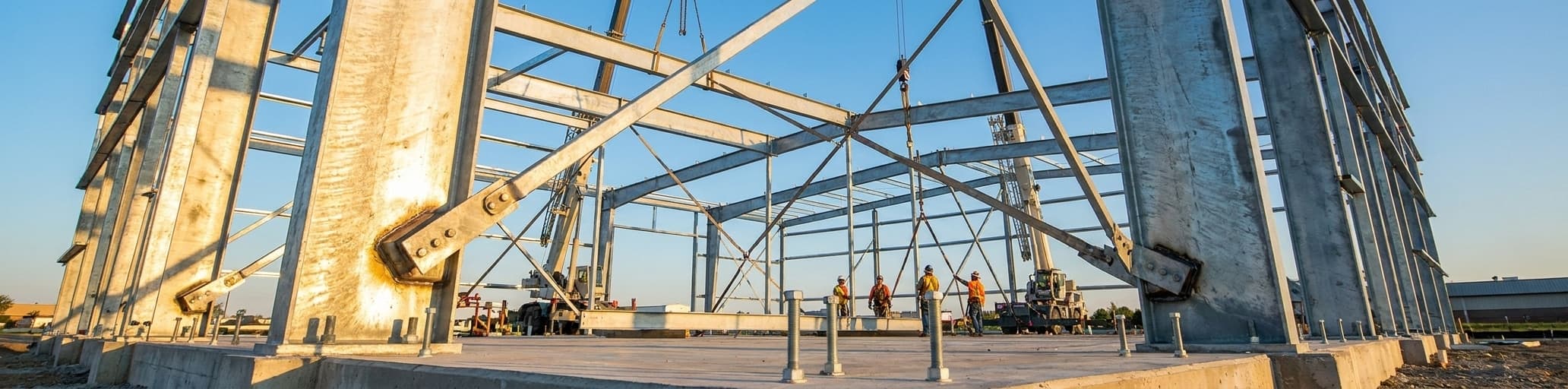

Steel garage buildings deliver 50-100 year lifespans with minimal maintenance compared to wood alternatives that cost 3-8 times more to upkeep over a decade. We help you navigate design, pricing, and installation so your structure performs reliably within budget from day one.
Why Steel Garage Buildings Outperform Traditional Alternatives
Steel garage buildings last 50 to 100 years with minimal maintenance, while wood structures need repainting, pest treatment, and roof replacement–costing you $20,000 to $50,000 more over 15 years.
Durability and low maintenance compared to wood and metal carports
Steel garage buildings built with galvanized or Galvalume steel can realistically last 50 to 100 years — roughly twice the lifespan of a comparable wood-framed structure.[1] The gap isn't just about the frame itself. Steel doesn't rot, won't attract termites, and is non-combustible, eliminating three of the most common failure modes that cut wood garage lifespans short regardless of upkeep.[1] For property owners in storm-prone regions, engineered steel also carries higher wind resistance than stick-built construction or open-bay metal carports, which lack the lateral bracing of a fully enclosed rigid frame.[1]
The maintenance comparison is where the real-dollar advantage shows up. A traditional wood garage typically needs repainting every few years, pest treatment in termite zones, and a full roof replacement around year 12.[2] A steel structure needs periodic washing and fastener inspection — nothing more.[1] Over a 10-year ownership window, traditional garage maintenance runs 3x to 8x more than a comparable steel garage.[1] Extend the horizon to 15 years, and most property owners spend $20,000-$50,000 more on a wood garage than a steel one.[2] If you want a full breakdown of where those savings accumulate, the pros and cons of metal garage buildings covers each cost category in detail.
Modern galvanized and Galvalume coatings handle corrosion in standard residential and agricultural environments without additional treatment.[1] In coastal or high-humidity settings, upgraded protective coatings are worth specifying at the design stage, but rust-related structural failure in a well-built steel garage remains rare.[1] That predictability matters most to commercial operators, rural landowners, and agricultural users who need a structure that performs without constant intervention — holding total cost of ownership within budget over the full life of the building, not just at delivery.
Customizable designs that match your property and use case
Roof style is the first design decision, and it does real functional work beyond aesthetics. A regular roof — horizontal panels with rounded eaves — keeps costs low and installs fastest, making it practical for mild-climate regions with minimal snow load.[3] The A-frame horizontal steps up to a peaked residential profile that sheds snow more effectively than a regular roof while costing significantly less than a vertical system, landing it as the default choice for most property owners who want their garage to complement an existing home.[3] When your site faces heavy snow loads, high winds, or driving rain, vertical roof panels running peak to eave eliminate the horizontal seams where water and ice accumulate, and hat channel support underneath adds structural integrity that the other styles lack.[3]
Size and footprint flex to match actual use rather than forcing you to compromise. Single-bay configurations run from 12×20 to a 20x20x9 standard that fits one vehicle with perimeter workspace; double-bay jumps to 24x35x10, which handles two vehicles or one vehicle plus a full workshop.[3] Triple-wide options — most commonly 30 feet wide by 40 or 50 feet long with 12-foot eave heights — accommodate multiple vehicles, commercial equipment, and overhead storage systems in a single clear-span structure.[3] Lean-to additions extend covered space along one wall without the cost of a separate building: 8-foot widths shelter tractors or ATVs, 10-foot widths add workspace alongside parked equipment, and 12-foot widths create a covered outdoor room that some owners convert into a patio by extending the concrete slab.[3]
Color and finish choices let steel garage buildings integrate with the surrounding property rather than stand apart from it. Two-tone wainscoting pairs a darker lower-wall section — typically matching the roof color — with a lighter upper field, giving the structure architectural definition while the darker base absorbs daily wear from equipment and vehicle contact.[3] For single-color builds, lighter shades like white, light gray, and tan are the most practical long-term choice: they camouflage dust and weather staining between washings the same way a white vehicle stays presentable longer than a dark one.[3] Insulation, ventilation fans, walk-in doors, and custom window placement round out the interior and access options, and any of these can be planned into the design at the outset so no structural modifications are needed after delivery.[3]
Single-source responsibility: design, fabrication, and erection in one partnership
The real friction in a steel garage project isn't the materials — it's coordinating the gap between the supplier who ships the kit, the engineer who stamps the drawings, and the crew that erects it.[4] Each handoff creates potential for delays, change orders, and disputes that land on you to resolve.[4] A single-source model eliminates those gaps: one partner handles design coordination, procurement, and on-site assembly under a single contract, giving you one point of accountability across the entire scope.[5] Kit pricing covers panels, beams, and supports, but architectural fees, equipment rental, erection labor, and the foundation typically arrive as separate line items — and coordinating those vendors yourself rarely saves money compared to a turnkey partner's all-in scope.[4] For commercial operators, agricultural users, and industrial property owners who need their steel garage buildings operational on a defined schedule, a single-source partner reduces RFIs, change orders, and downtime while keeping your project within budget.[5] The same principle holds across every application, from turnkey farm building construction to aviation hangars and retail facilities — you agree to one number at signing, and that's the number you build to.[4]
Steel Garage Building Costs: What to Budget in 2026
Steel garage buildings cost $18-$25 per square foot for materials or $24-$43 installed, with your final price shaped by size, location, and scope of work.
Price ranges by size: 24×24 through 60×80 footprints
Steel garage building prices follow a predictable per-square-foot curve, so knowing your footprint gives you a reliable budget anchor before you talk to anyone. Material-only kits — covering panels, beams, and supports but not the slab, erection, insulation, or delivery — run $18 to $25 per square foot.[7] Full turnkey packages that include the concrete slab, delivery, and construction labor land at $24 to $43 per square foot.[6] The table below maps those rates across the size range most property owners are evaluating.
| Size | Sq Ft | Materials only | Installed (turnkey) |
|---|---|---|---|
| 24×24 | 576 | $10,400-$14,400 | $13,800-$24,800 |
| 30×40 | 1,200 | $21,600-$30,000 | $28,800-$51,600 |
| 40×60 | 2,400 | $43,200-$60,000 | $57,600-$103,200 |
| 60×80 | 4,800 | $86,400-$120,000 | $115,200-$206,400 |
Two things drive the wide installed ranges: geographic labor rates and the scope of work you bundle into the contract.[6] A 40×60 steel garage building in a rural Midwest market with a simple slab and standard roof sits near the low end; the same footprint in a coastal metro with engineered snow-load upgrades, insulation, and multiple access doors pushes toward the high end.[6] Material costs also move with global steel markets — the per-square-foot figures above reflect 2026 conditions and can shift quarter to quarter, which is why locking in a written quote early matters.[7] For a detailed cost breakdown on a 40×80 steel building kit, including what's optional at signing versus what becomes essential later, that guide covers every line item in the quote.
Cost drivers: foundation, customization, local labor, and material markets
The slab alone reshapes your budget before a single panel is set. Concrete runs $5-$10 per square foot, which translates to $12,000-$24,000 for a 40×60 footprint before accounting for grading, excavation, or utility connections.[9] Soil type, slope, and site access all add complexity that varies property to property — foundation and site prep routinely represent 25-45% of a complete installed project budget, yet most kit-only quotes exclude every dollar of it.[8] Before committing to a final number, a site assessment that addresses soil bearing capacity and drainage is worth completing before your foundation contractor is engaged.[8] The 30×40 concrete slab cost breakdown shows exactly how thickness decisions and soil conditions shift that per-square-foot figure.
Customization choices have predictable price signatures you can plan around. A boxed eave roof runs about 14% less than a vertical panel system; steeper pitches in the 3:12 to 5:12 range require more steel than a 1:12 or 2:12 pitch; and each window adds roughly $200 while each overhead door can reach $800.[9] Insulation lands at $1-$3 per square foot for fiberglass or $3-$7 per square foot for spray foam — a meaningful line item on any structure over 1,200 square feet.[9] Sticking to standard footprints like 30×40 or 40×60 avoids the custom engineering fees that non-standard dimensions consistently trigger, and simpler rectangular layouts reduce costs 15-30% versus more complex configurations.[9]
Labor costs vary up to 60% across U.S. regions — a project in rural Tennessee will cost materially less than the same scope in coastal Florida or a major metro market.[9] Certified erection crews charge $5-$12 per square foot for kit assembly, and bringing in a general contractor to oversee the full scope adds 10-20% to total project costs.[9] Permit fees run $550-$2,000 nationally but climb as high as $7,500 in larger cities, and those figures don't include the time cost of managing multiple contractors across foundation, erection, electrical, and permitting independently.[8]
Material markets are the fourth driver, and they're moving fast. Hot-rolled coil steel is currently trading near $1,002 per ton, Section 232 tariffs have added a 25-30% cost burden on imported steel from major trading partners, and nonresidential construction input prices rose at an annualized rate of 7.1% in January 2026 — with metal trim and molding up nearly 50% year-over-year.[9] Steel building quotes are typically valid for only 30-60 days, so locking in pricing early with a written commitment is the most direct way to keep your project within budget against mid-year fluctuations.[9]
Cost estimator: get your project quote from National Steel Buildings
The most expensive move at this stage is waiting.
A customer in Arizona held off 90 days expecting steel prices to soften — his first quote came in at $27,400; the second, three months later, landed at $31,200.[12] Freight climbed, crews booked out, and hesitation cost him nearly $4,000 with nothing to show for it.[12] Steel building quotes are typically valid for only 30-60 days, which means the window between "thinking about it" and locking in a written number is exactly where budgets absorb their first unplanned hit.[12] To get an accurate figure from National Steel Buildings, bring three things to the conversation: your target footprint and intended use, any known site conditions such as slope or soil type, and your move-in deadline — those three inputs determine which line items are fixed in the quote and which get flagged as variables before you sign anything.[10] Installed turnkey packages run $24 to $43 per square foot, covering the kit, concrete slab, delivery, and construction, so your square footage alone produces a reliable opening range before your first call.[10] Comparing written quotes from multiple sources before committing is the clearest way to distinguish accurate all-in pricing from kit-only estimates that exclude foundation work, erection labor, and permitting — the line items that routinely represent 40-60% of a complete project budget.[11] National Steel Buildings manages design, fabrication, and erection under a single contract, so you agree to one number at signing and build to that number, with no vendor handoffs to manage mid-project and no surprise scope gaps that arrive after the slab is poured.
Steel Garage Kits vs. Custom Build: Which Path Fits Your Timeline
Pre-engineered kit advantages: faster delivery and predictable costs
The core advantage of a pre-engineered steel garage kit is that the engineering is already complete before you place your order.
Components are factory-manufactured to proven load configurations, so production starts immediately rather than waiting for original drawings to clear engineering review.[13] That head start compresses delivery to 6-10 weeks from order to site, compared to 12-20 weeks or more for a fully custom build — and those weeks compound into months when you look at total project timelines: 3-5 months for a pre-engineered package versus 5-8 months for custom.[14] Cost predictability follows the same logic.
Pre-engineered systems typically run 15-25% less than custom alternatives because manufacturers producing hundreds of similar buildings have already optimized their engineering, detailing, and fabrication processes — and that efficiency passes directly to your budget.[14] A standard kit covers primary framing, secondary framing, roofing and wall panels, trim, fasteners, and state-stamped engineering drawings — everything an erection crew needs to begin assembly on the first day on site.[13] What kits exclude — foundation work, erection labor, doors, windows, and insulation — should be confirmed before you compare quotes, since those line items routinely represent 40-60% of total project cost and are easy to miss when stacking a kit price against a turnkey number.[13] For a side-by-side look at what different kit tiers cover, comparing steel garage kits breaks down the feature and cost differences across available options.
Custom engineering for unique requirements and site constraints
Pre-engineered kits cover the majority of steel garage building projects — but some sites and use cases simply fall outside what a standard design envelope can handle cleanly. Custom engineering is the right call when your project involves very wide clearspans, irregular bay spacing, multiple rooflines, or foundation conditions that deviate from standard bearing assumptions.[13] Mixed-use configurations with different load zones — say, a combined vehicle bay and overhead crane area — also push beyond what a kit modification can address without extensive re-engineering that erases the kit's cost advantage.[14] In those situations, a fully custom build starts from original structural analysis: an engineer designs every component specifically for your dimensions, local code requirements, snow and wind load specifications, and any site conditions that would otherwise require costly workarounds after the slab is poured.[13] The trade-offs are real.
Custom design and fabrication typically add 12 to 20 weeks or more to your project timeline compared to a pre-engineered package, and upfront engineering costs run 20 to 30% higher because you're paying for original work rather than adapting a proven system.[14] For a straightforward 40×60 shop, that premium rarely makes sense. For a 120-foot clearspan facility with a mezzanine, specialized drainage requirements, or a sloped site that demands non-standard column heights, the custom route often saves money compared to forcing a standard kit through repeated modifications — modifications that standard systems weren't designed to accommodate without significant upcharges.[13] The honest measure is project scope: if your requirements fit within standard parameters with minor adjustments, a kit delivers better value on every metric; if your site or use case is genuinely out of range, custom engineering is the only path that gets you exactly what you need without structural compromise.[13]
How National Steel Buildings combines kit speed with custom flexibility
The gap between kit and custom is narrower in practice than it looks on paper.
Most buyers working with an experienced builder end up using pre-engineered packages for the structural system while customizing finish work, doors, insulation, and interior layout — a hybrid approach that captures the cost and timeline advantages of pre-engineered components without locking you into a generic result.[13] That's exactly how National Steel Buildings structures every project: standard pre-engineered architecture handles the load paths, lead times, and per-square-foot cost efficiency, while the design conversation at the outset locks in your specific dimensions, roof profile, access configuration, and any site conditions that need accommodating before production begins.[13] Single-source assurance is the mechanism that makes the hybrid work — one partner is responsible for designing and engineering the building to your specifications, which eliminates the coordination gap between a kit supplier, an independent engineer, and a separate erection crew.[13] You don't manage those handoffs; the project moves as one scope under one contract.
For steel garage buildings that require something outside standard parameters — unusual clearspans, mixed-use load zones, or non-standard column heights driven by a sloped site — that custom engineering capability sits within the same organization as the kit supply chain, so requirements that push past the standard design envelope don't require starting over with a new partner.[13] The practical result: you get 6-to-10-week delivery timelines and pre-engineered pricing on the structural side, with the flexibility to reach for custom cold-formed steel construction when your project genuinely needs it — under a single contract, on a predictable schedule.[13]
Installation Process: From Site Prep to Move-In Ready
A geotechnical test costing $500-$1,500 prevents costly foundation mistakes by revealing soil conditions that determine your slab specifications and long-term building performance.
Foundation requirements and timeline for steel garage buildings
The foundation decision starts with building size. Steel garage buildings up to about 24×30 can sit on a compacted gravel pad with ground anchors, costing roughly $1-$3 per square foot — a practical option for portable structures outside permit jurisdictions.[15] Any steel garage 30 feet wide or wider, any built-on-site project, and any structure requiring a permit needs a concrete slab.[15] That slab does three things a gravel pad cannot: distributes column loads to prevent settling, resists wind uplift forces through anchor bolt connections, and maintains the level support your structural warranty requires.[17]
Slab specifications follow intended use directly. Light storage works with a 4-inch pour at 3,500 PSI minimum, reinforced with welded wire mesh and a 12-inch perimeter beam.[15] Garages, workshops, and anything holding vehicles or heavy equipment need a 6-inch slab at the same PSI rating with #4 rebar on an 18-inch grid — and a 24-inch perimeter beam on expansive clay soils.[15] The cost difference is about $1.15 per square foot, but the performance gap under vehicle loads and equipment traffic is substantial.[15] Anchor bolts embedded in the slab perimeter form the physical connection between your steel frame and foundation; positioning errors of even an inch prevent proper column alignment during erection, so contractors use manufacturer-supplied templates during the pour.[17] A 6-mil vapor barrier under the slab stops ground moisture from wicking through the concrete and corroding tools, equipment, and the building itself — skip it and you'll pay for it later.[15]
Soil conditions shape every specification listed above, which is why a geotechnical test ($500-$1,500) is money well spent before your concrete contractor is engaged.[17] Expansive clay soils require deeper perimeter beams, adjusted reinforcement, and sometimes soil stabilization; sites with high water tables may need drainage systems or fill to raise the pad above saturation levels.[17] In regions with freeze-thaw cycles, footers must extend below the local frost line — ranging from 12 inches in southern climates to 48 inches or more in northern zones.[17] For a detailed look at how slab thickness decisions interact with 30×40 metal building with slab cost totals, that guide walks through every line item before you commit to a number. The total timeline from site prep to a cured slab ready for steel erection runs about two weeks — one day for the pour on a standard residential footprint, then a minimum of 5-7 days of curing before any frame goes up.[15] Improper curing can reduce concrete strength by up to 50%, which compromises anchor connections and everything above them.[16] The sequence that protects your schedule: confirm exact building frame dimensions before pouring, secure permits before breaking ground, complete the soil assessment first, and don't schedule your erection crew until the slab has hit at least 7-10 days of cure time in normal weather conditions.[17]
Erection sequence and why professional installation protects your investment
With a cured slab locked down, erection begins with staging — every primary framing component organized near its final position so the lift sequence runs without delays from searching for misidentified pieces.[18] Verifying the shipping manifest against the blueprints happens before anyone picks up a wrench; a mis-shipment discovered mid-erection halts the crew and erases days from your schedule.[18]
Primary frame assembly follows a center-out sequence: I-beam columns and rafters go up first, leveling each column before moving to the next.[19] Getting the first bay perfectly plumb and square is non-negotiable — any deviation compounds through every subsequent frame until misalignment becomes a structural problem you cannot correct without disassembly.[18] Temporary bracing stabilizes each bay immediately after it's raised and stays in place until wall sheeting creates a rigid diaphragm.[19] Secondary framing follows: the eave strut installs where walls meet the roof, purlins run across the roof, and girts run down the walls at the exact spacing specified in your erection drawings to meet local wind, snow, and seismic load requirements.[18] Bolting torque matters here — too loose and connections fail under load; too tight and the steel warps, creating stress concentrations that shorten service life.[18] Bracing then ties the frame into a single rigid unit that resists racking under lateral pressure.[18]
Closing the envelope follows a deliberate sequence: wall panels from a corner working around the perimeter, then roof panels starting at the eave and moving toward the ridge so each course overlaps the one below and sheds water correctly.[18] Insulation blanket rolls out between purlins and girts immediately before panel attachment — gaps here translate directly into energy loss across the building's full service life.[18] Fasteners driven past the correct torque crush the neoprene washer, destroy the weatherproof seal, and create a leak point that won't appear until the first heavy rain.[18]
Professional erection protects your investment at every one of these steps. Heavy steel components require specialized rigging equipment and crew coordination that exceeds what a skilled DIYer can manage on any structure of significant size.[18] The field mistakes that blow budgets — anchor bolt misalignments discovered after the pour, framing proceeding without adequate temporary bracing, and over-driven panel fasteners — are all avoidable with an experienced erection crew following the engineered drawings exactly.[18] Before selecting an installation partner, the vetting guide for local prefab contractors outlines the five questions that separate a qualified erector from one whose callbacks will cost more than any quoted savings.
Permitting, inspections, and local code compliance throughout the project
Permitting starts before a single dollar goes toward site prep — not after. Every steel garage building, whether residential, agricultural, or commercial, requires a building permit that authorizes construction, covers structural elements and the foundation, and creates the legal record that your structure was reviewed and approved.[20] Zoning permits come first in the sequence: they confirm your intended use matches the area's classification before any structural review begins, and if your proposed use doesn't align with current zoning, a conditional use permit or variance may be required before the building department will accept your application at all.[20] Projects that alter drainage, require new parking, or connect to utilities add a site development permit to the stack, and electrical, plumbing, and mechanical systems each carry their own sub-permits issued to licensed trade contractors separately from the main building permit.[20] HOA covenants operate independently of municipal permits and carry their own enforcement authority, so verify both before committing to a design — failing to clear either can halt construction mid-project.[22]
The technical foundation for all permit review is the International Building Code, adopted in most U.S. jurisdictions with regional modifications for wind, snow, and seismic conditions.[22] Your steel garage's engineered drawings must demonstrate compliance with the specific load requirements for your location: coastal and open-plain sites face higher wind uplift specifications, northern climates require roof and framing systems calculated for heavier snow accumulation, and seismic zones in California, Washington, and Alaska mandate flexible connections and secure anchoring systems that go beyond standard residential detailing.[21] Fire codes govern material coatings and egress configurations depending on occupancy classification, and ADA accessibility requirements affect entrance widths, door hardware, and parking layout for any structure with public access.[20] Your permit application package needs to show all of this — structural calculations, load path documentation, foundation details, and connection specifications — because a submission with missing load calculations or unsigned plan sheets triggers re-submittal requests that add weeks to your timeline with nothing to show for the wait.[22]
Once the permit is issued, inspections run in sequence through construction: foundation and anchor bolt placement is reviewed before the slab cures, framing is checked before wall panels close the envelope, and trade rough-ins for electrical and mechanical systems are reviewed before any finish work proceeds.[20] Final occupancy approval is the last gate before the building is legally usable.[20] The most reliable way to clear each inspection without a callback is submitting complete, professional engineering drawings from the start — jurisdictions in high-wind or seismic zones, larger metro markets with heavy workloads, and commercial-use structures all take longer to review, but a complete package materially reduces that timeline compared to returning with missing submittals.[22] Building without a permit carries consequences that outlast the project: insurance carriers can deny claims on unpermitted structures, lenders and buyers require proof of permits at sale or refinancing, and a building that doesn't meet applicable codes can face costly retrofitting or demolition orders regardless of how long it has been standing.[22] For projects that span multiple approval authorities or involve additions to existing structures, the state-by-state permitting roadmap for warehouse additions details how approval requirements and timeline delays vary across jurisdictions.
- Steel garage buildings last 50-100 years with minimal maintenance, costing 3-8x less than wood over 10 years.
- Turnkey steel garage packages cost $24-43 per square foot installed, but foundation and labor represent 25-45% of total project cost.
- Pre-engineered kits deliver in 6-10 weeks at 15-25% lower cost than custom builds, but custom engineering is necessary for unusual clearspans or mixed-use loads.
- Steel quotes lock pricing for only 30-60 days; delaying commitment costs thousands as material markets and labor availability shift rapidly.
- Concrete slab specifications vary by use: light storage needs 4-inch pour, while vehicle garages require 6-inch slab with proper reinforcement and perimeter beams.
- Professional erection crews prevent costly field mistakes like anchor bolt misalignment and over-driven fasteners that compromise structural integrity and weatherproofing.
- Building permits must clear zoning, structural, site development, and trade-specific approvals before construction–unpermitted structures face insurance denial and resale complications.
- https://betterbuiltusa.com/metal-building-vs-wood-structure-which-is-better-for-long-term-use/
- https://garagebuildings.com/blog/steel-garage-vs-wood-garage-an-honest-2026-breakdown
- https://metal-america.com/metal-garage-building-styles/
- https://www.summitsteelbuildings.com/the-hidden-costs-of-metal-building-kits
- https://m2steel.com/
- https://www.buildingsguide.com/metal-building-prices/?srsltid=AfmBOoqr8GE242vO50Emvm-WZAB0EfDWLRxz21HQWBykWwEk77hp8rcy
- https://www.metalbuildingoutlet.com/metal-building-cost/
- https://builtmammoth.com/how-much-does-a-steel-building-cost/
- https://ameribuilds.com/steel-building-costs-what-to-expect-2026/
- https://www.buildingsguide.com/metal-building-prices/?srsltid=AfmBOoprnIgwvdy4OmEFe2yzXrMzM2414LZkvg3ztIv_om8p0idoAuHl
- https://americansteelinc.com/blog/steel-building-costs-prices-guide/
- https://www.aametalbuildings.com/blog/2025-metal-building-price-trends-are-steel-building-costs-going-up-or-down-this-year?srsltid=AfmBOoo1-lFPyeWUWj60cNFf-Y933owu0g5gieEyCDnwPiaURpiWBKLr
- https://www.steelstructuresamerica.com/pre-engineered-vs-custom-metal-buildings/
- https://mbmisteelbuildings.com/blog/pre-engineered-vs-custom/
- https://www.northtexassheds.com/concrete-foundation-steel-building-guide
- https://norsteelbuildings.com/steel-building-foundations/an-introduction-to-building-foundations/
- https://mbmisteelbuildings.com/blog/steel-building-foundation/
- https://harrisconstructorsinc.com/metal-building-erection/
- https://titansteelstructures.com/metal-structure-tutorials/metal-building-installation-step-by-step-process/
- https://www.arcosteel.com/what-permits-and-codes-are-required-for-steel-buildings/
- https://steelcommandercorp.com/permitting-zoning-code-compliance/
- https://www.buildingsguide.com/build/metal-building-codes-permits/?srsltid=AfmBOoq6eysN5bU-0gBKIr1edEkN8JwrS-S7sgj4Om-IdJFPNTRXCCyp