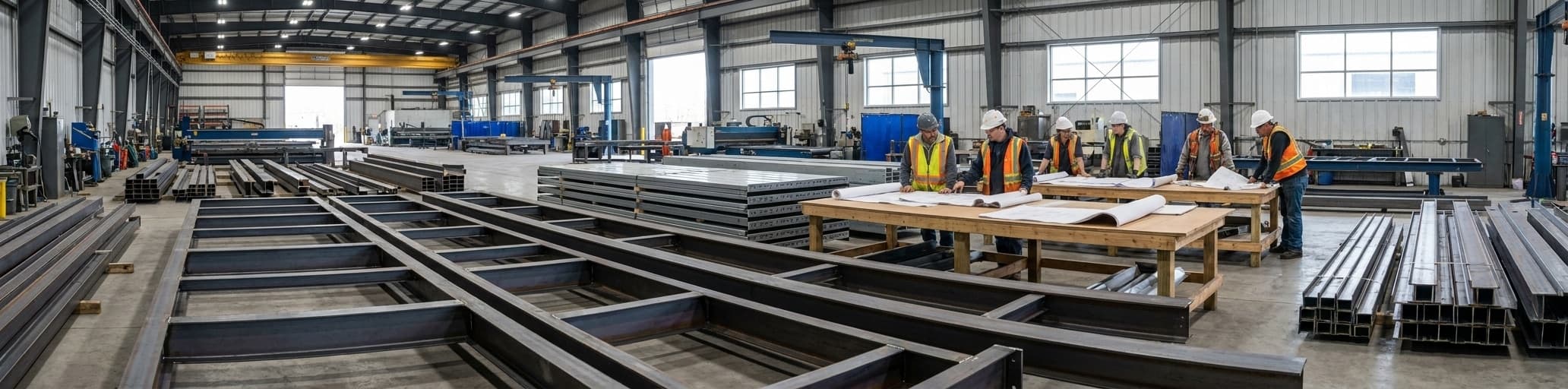

We walk you through today's steel market dynamics, regional cost variables, and hidden add-ons that separate kit quotes from installed prices on 20×40 buildings. Locking your specifications early, running site prep in parallel with fabrication, and working with a single-source provider keeps your project on schedule and within budget.
Understanding Today's 20×40 Steel Building Market
Steel tariffs and domestic mill pricing set a baseline cost floor that won't drop, so understanding your site's load zone and structural specs is where real price variation occurs.
Key Factors Influencing 20×40 steel building price
The steel market itself is the first variable to understand before pricing any structure. Section 232 tariffs on steel imports rose to 50% effective June 4, 2025, and domestic mill indices have since stabilized in the low-to-mid $800s per short ton.[2] That tariff floor supports U.S. price levels even when demand softens, which means the baseline material cost baked into your 20×40 steel building price isn't coming down–and seasonal demand surges in Q4 typically push lead times and prices higher before spring construction season begins.[2] Accessories, foundation complexity, site logistics, and local code requirements all layer on top of that material baseline to produce the number you actually pay.[2]
The structural specification is where individual quotes diverge most sharply. Steel gauge and frame type are two of the biggest cost drivers: heavier gauge steel manages wind and snow loads better but costs more, and rigid clear-span framing–the I-beam standard used in commercial and industrial applications–adds to the steel package price compared to lighter alternatives.[1] If your site sits in a high-load zone, expect the engineer to specify heavier framing, stronger connections, and additional bracing or uplift anchoring, which can add $5,000 to $20,000 or more compared to a structurally identical building in a lower-load region.[1] Wall height is another lever–upgrading from a standard 12-14 foot eave to 16-18 feet to clear an RV, a two-post lift, or large agricultural equipment adds both material cost and insulation surface area if you plan to condition the space.[1] You can see how these structural choices stack up across different footprints in this breakdown of 30×40 prefab building costs, where the same principles apply at a comparable scale.
The biggest gap between an online kit quote and a real installed price comes from the add-on costs that rarely appear in advertised figures. The concrete slab alone on a mid-size metal building runs $10,000-$18,000 at 4-inch thickness; thicker slabs for heavy equipment, rebar reinforcing in place of wire mesh, in-floor radiant heat, or poor soil conditions push that number higher in ways that don't show up until construction starts.[1] Insulation is almost never included in a base quote–fiberglass batt installs at roughly $1.50-$3.00 per square foot, while spray foam runs $3.00-$7.00+ per square foot, meaning a properly insulated building adds $10,000-$28,000 to a mid-size project depending on the system you choose.[1] Each insulated commercial overhead door adds $1,500-$2,500 installed, and erection labor typically runs 30-50% of the steel package cost depending on building complexity and local crew availability.[1]
Regional variables and code cycles determine the final slice of your cost. Labor rates shift by market–urban areas carry higher wages, while rural markets may offer lower rates but fewer experienced erection crews, which can extend timelines and close the savings gap.[1] The 2024 IBC now references ASCE 7-22 tornado provisions for certain occupancy types, which changes required steel weight and connection specifications by ZIP code.[2] Choosing higher-grade steel with enhanced corrosion resistance costs more upfront but lowers long-term maintenance–a practical trade-off for owners of agricultural, aviation hangar, or industrial buildings that need to perform for decades without major intervention.[3]
Current Price Ranges Across U.S. Regions
The 20×40 steel building price shifts meaningfully by region, and the spread is wider than most buyers anticipate. Installed, turnkey steel buildings run $24-$43 per square foot nationally, which puts a 20×40 structure between roughly $19,200 and $34,400 fully delivered and erected.[4] The kit alone–primary framing, secondary steel, sheeting, and trim–lands at $15-$20 per square foot before foundation, erection labor, or accessories enter the picture.[4] The low end of both ranges applies in states with moderate wind and light snow, where standard engineering specifications apply without expensive uplifts.
The high end reflects markets where local codes mandate heavier materials. Florida, for instance, requires 26-gauge sheeting in place of the standard 29-gauge to handle hurricane-strength winds, and because sheeting is a major component of any building package, that single code difference pushes your material cost up across the entire structure.[5] Northern markets carry a parallel premium: Pennsylvania, West Virginia, and northern Indiana require 50 psf snow load certification versus the 35 psf standard used in lower-accumulation areas, which forces heavier secondary framing and increases the total steel weight–and price–of your package.[5] Understanding how climate specs shape your steel package before you request quotes is the fastest way to avoid comparing numbers that aren't built to the same standard.
Shipping distance from the fabrication facility adds another regional layer, since delivery charges scale with miles and apply to every project regardless of where the steel originated.[6]
How Material Costs and Supply Chains Affect Pricing
The BLS producer price index for iron and steel climbed 10.4% between April 2025 and April 2026, while the steel mill products index rose 13.3%–both feeding directly into the structural steel and metal decking line items that carry the most weight in any building package.[7] On a quarterly basis, structural steel and metal decking costs rose 3.8% in Q1 2026 alone, with metal stair fabrication up 4.5% and steel framing erection up 4.1%.[8] That quarterly pressure compounds fast: construction input prices overall rose at a 12.6% annualized rate through the first two months of 2026, and energy cost spikes from geopolitical disruptions added further upward pressure on diesel and shipping before those figures were even published.[9] What that means for your project is straightforward–a quote secured today can shift materially if your start date slips by even one quarter, so locking in fabrication pricing quickly carries more value now than it did two years ago.
Supply chains have broadly stabilized relative to 2021-2022 peak disruptions, but metal categories and long-lead electrical components remain constrained in high-demand markets, particularly where data center and large-scale infrastructure construction is competing for the same mill output and erection crews.[8] For a 20×40 structure, your steel package components are the most time-sensitive procurement items–fabrication slots fill earlier when regional demand spikes, and waiting on a quote rarely saves money in a market where year-over-year nonresidential construction costs are running 6.8% higher than the prior year.[8]
Accurate Lead Time Estimates for 20×40 Projects
Plan your 20×40 project for six to twelve weeks from signed drawings to a weather-tight structure, assuming you order steel six to eight weeks before your target construction start.
Typical Production Timelines in 2026
A 20×40 pre-engineered steel building moves through four sequential phases, and knowing where time is actually spent helps you plan procurement before a single bolt is ordered. Design and engineering typically consume one to three weeks–shorter when you arrive with a locked footprint, clear use case, and no mid-process changes.[10] Fabrication of the primary frames, secondary steel, wall and roof panels follows at three to six weeks for a structure this size, with the lower end applying to standard configurations and the upper end to buildings with crane provisions, mezzanines, or custom cladding.[10] Once fabricated components ship, staging and off-loading at your site generally completes within a week if access roads and anchor-bolt positions are pre-arranged.[10] Erection of the frame, panels, and trim then runs one to three weeks depending on crew experience and weather.[10] That math puts a well-prepared 20×40 project at roughly six to twelve weeks from signed drawings to a standing, weather-tight structure–a pace pre-engineered kit schedules consistently reflect when site prep overlaps with fabrication rather than waiting for steel to arrive.[11] The 2026 variable that compresses or blows out that window is mill capacity: U.S. raw steel utilization was running in the mid-70% range in early 2026, and buyer surveys noted lead times bumping upward across sheet and plate products–which means fabrication slots fill earlier than they did two years ago, and ordering six to eight weeks before your target construction start date is a practical minimum rather than a conservative cushion.[12]
| Phase | Typical duration | Key variable |
|---|---|---|
| Design & engineering | 1-3 weeks | Speed of client decisions and plan revisions |
| Fabrication | 3-6 weeks | Building complexity and current mill lead times |
| Delivery & site staging | ~1 week | Access road prep and anchor-bolt readiness |
| Erection & finalization | 1-3 weeks | Crew availability and weather |
| **Total (overlapping site prep)** | **6-12 weeks** | **Permit timing is the most common wildcard** |
Shipping, Permits, and Site Preparation Impacts
Shipping is the most predictable variable in a 20×40 project timeline, but only when the site is ready to receive steel. Once fabricated components leave the facility, delivery and on-site staging typically completes within a few hours to one full day–provided access roads are clear, anchor-bolt positions are confirmed, and crew can stage materials efficiently.[13] Tight site access, soft ground, or limited staging area all slow that process and can push delivery coordination into an extra day.[13] Ordering your anchor-bolt layout and access plan at the same time you confirm your fabrication slot eliminates this variable before it becomes a problem.
Permits are consistently the longest and least controllable phase on a 20×40 project. Rural and agricultural zones typically clear in two to three weeks; commercial or urban jurisdictions routinely run four to six or more weeks, especially where plan review queues are long.[14] The permit application itself requires detailed plans and specifications, a site plan, structural calculations, an energy efficiency report, and applicable fees–and if any document is incomplete or non-compliant, the review restarts.[15] Submitting a full, code-compliant drawing package on the first attempt is the single most effective way to prevent a four-week review from stretching to eight. If your project crosses state lines or involves an expansion, the state-by-state permit requirements vary enough that understanding local review timelines before you order steel is worth the research.
Site preparation overlaps with fabrication on well-run projects, which is the move that compresses your total schedule. Gravel and dirt pads for smaller structures can be completed in a single day; concrete slabs add cure time that cannot be rushed regardless of schedule pressure.[13] The slab must be within tolerance and fully cured before installation begins–starting erection on an uncured or out-of-tolerance foundation creates structural and inspection problems that cost far more to fix than the time saved.[14] Aligning your concrete contractor's pour schedule with your fabrication lead time so steel arrives to a ready, compliant site is the fastest path to a standing, weather-tight building.
Strategies to Reduce Delays and Ensure On‑time Delivery
The move that compresses a 20×40 schedule most reliably is running site prep in parallel with fabrication rather than in sequence.[16] While your primary frames and panels are being produced, grading, foundation pours, and utility rough-ins should already be underway–eliminating the dead window between foundation completion and framing start that quietly adds weeks to sequential builds.[16] Beyond that parallel-track discipline, five actions consistently separate on-time projects from delayed ones:
- Lock your specs before ordering. Provide dimensions, load requirements, and intended use to your supplier upfront. Mid-process changes restart engineering and push your fabrication slot.[11]
- Submit permits early. File permit applications as soon as preliminary drawings are complete. Waiting until final drawings are done can hand four to six weeks of avoidable review time straight to the calendar.[16]
- Request phased delivery when schedules are tight. Some fabricators ship primary framing first and secondary components afterward, so erection can begin before the full package arrives.[11]
- Hold a pre-construction kickoff with all parties. Aligning your erector, general contractor, and supplier on delivery sequences before steel ships prevents components from arriving in the wrong order and leaving crews idle.[16]
- Communicate regularly with your project coordinator. Check-ins during fabrication catch documentation gaps–missing specs, permit revisions, site-access changes–before they delay shipping rather than after.[11]
Local climate and soil conditions belong in the plan from day one, not as late-stage discoveries. Factor in seasonal weather patterns when scheduling delivery and erection, and complete soil testing before finalizing your foundation design–poor-soil surprises during the pour are among the most expensive mid-project corrections a 20×40 owner can face.[16] Choosing an experienced erection crew familiar with local prefab contractor vetting also matters: inexperienced crews generate RFIs and field modifications that consume the time savings pre-engineered systems are designed to deliver.[16]
Optimizing Cost‑Effectiveness Without Compromising Quality
Measure your largest equipment with turning clearance, then verify the footprint accommodates everything before ordering to avoid costly retrofits or undersizing.
Right‑Sizing Your 20×40 Structure for Real Needs
Buying more building than you actually need is one of the fastest ways to inflate your 20×40 steel building price without adding usable value.[19] An 800-square-foot footprint works cleanly for two vehicles, a single-bay maintenance space, a farm supply room, or light commercial storage–but only if you've mapped actual equipment dimensions, workflow clearances, and door placements against the floor plan before ordering.[18] If your use case involves two full-size trucks plus bench space, a 20×40 is already undersized and you're better served by a 30×40 from the start than by trying to retrofit function into a constrained footprint later.
On the other side, oversizing for a seasonal storage use or a small hobby workshop adds material cost, insulation surface area, and slab square footage without improving daily function.[17] A practical step before finalizing any footprint: list every item that will be stored or operated inside, measure the largest piece of equipment with turning clearance factored in, then verify the 20×40 plan accommodates all of it without compromise–guidance on how equipment dimensions translate to building specs is covered in depth in this farm equipment storage building dimensions guide.
One design decision that preserves flexibility without expanding the current footprint is engineering the endwalls for future expansion at the time of the original order.[19] That choice costs little during fabrication and eliminates a full structural re-engineering project if your operation grows–making it one of the few right-sizing moves that keeps you within budget today while protecting your options tomorrow.[19]
Choosing Value‑Driven Features and Finishes
Not every upgrade adds equal value to a 20×40 steel building price, and the gap between a feature that pays back daily versus one that just adds to your invoice is wider than most suppliers will tell you.
The customizations that consistently justify their cost are those that shape function or reduce operating expense over time: insulated commercial overhead doors that prevent heat loss at the largest thermal breach in the envelope, framed window openings that bring in natural light and reduce daytime lighting load, and interior partition walls that let a single footprint serve a workshop and a storage zone simultaneously without a second building.[20] Climate control–even a basic ventilation package–makes the difference between a space you can use year-round and one that sits idle in summer heat or winter cold, and it costs far less to rough-in during fabrication than to retrofit after erection.[20] On the finish side, wall and roof panel color is one of the lowest-cost choices you make and one of the most consequential for unconditioned spaces: lighter panels reflect more solar energy and measurably reduce interior temperatures, which matters whether you're storing temperature-sensitive inventory or just trying to work in the building without industrial fans running constantly.[20] Enclosed vs. open-sided configuration splits the cost picture directly–fully enclosed buildings provide complete weather protection and security at a higher package price, while open-sided structures with a roof suit covered agricultural staging or outdoor workspace at a meaningfully lower cost.[20] Spend upgrade dollars on steel building insulation before cosmetic finishes: a properly specified insulation system pays you back every month through reduced energy costs for the life of the building, while a premium painted finish adds appearance but no operating value.[21] Comparing quotes carefully–and asking each supplier to itemize which features are included versus optional–is the fastest way to see which price reflects genuine value and which one is buying you upgrades you didn't ask for.[21]
Single‑Source Solutions to Streamline Procurement
Managing a 20×40 project across separate vendors for the steel kit, slab, erection crew, and permit coordination is the fastest way to introduce schedule risk and cost surprises into an otherwise straightforward build.
The time spent sourcing, vetting, and communicating schedule changes between independent contractors is a real project cost that no quote ever captures–and when something shifts mid-project, each vendor's response time and priorities diverge.[22] The budget risk compounds from how the industry prices kit-only packages: some providers advertise the lowest possible figure without accounting for local regulations, site conditions, customization needs, or required building loads, and buyers typically discover the gap only after placing a deposit.[6] A single-source provider who covers design, engineering, fabrication, permit coordination, delivery, and erection under one contract removes those hand-off gaps entirely.
Add-on costs that routinely inflate a multi-vendor project by 20-30% become predictable line items when one party owns the full scope from day one.[22] The practical result: one call resolves a scheduling conflict that would otherwise require coordinating three separate contractors, and your prefab building costs and timeline stays on the trajectory you planned–within budget, on schedule, every step of the way.[22]
Next Steps: Planning, Purchasing, and Ongoing Support
Get every material detail–pricing validity, included features, and design specifications–in writing before you sign to prevent costly disputes and engineering restarts.
Clear Communication Essentials for Your Builder
The most expensive gap on a 20×40 project isn't a price spike–it's an assumption that was never put in writing.
Before you sign anything, ask your supplier how long the quoted price is valid, then get written confirmation that your price is locked once you place a deposit, regardless of where the steel market moves during fabrication.[25] Suppliers who can't offer that assurance often have poor credit terms with their manufacturer, which creates cash-flow risk that can ripple into your timeline.[25] A deposit of 25-30% upfront is the industry standard; if a supplier asks for substantially more, treat it as a flag.[25] Beyond pricing, every material detail that matters to you–whether gutters and downspouts are included, what panel finish is standard, which base trim options apply, and whether eave overhangs are part of the base design or an upgrade–should appear on the agreement before you sign.[25] Verbal assurances don't survive a dispute; the more you have in black and white, the less ambiguity you carry into the build.[24] Adding framed openings for windows and doors mid-process doesn't just add incremental steel cost–it typically forces entire wall sections from X-bracing to portal framing, which restructures the engineering scope and increases the package price in ways that don't appear in original estimates.[25] Arriving with complete dimensions, all door and window placements, load requirements, and intended use documented before your first call is the one move that keeps your builder communication fast and smooth and prevents a four-week engineering restart from quietly consuming your construction window.[24]
Financing Options and Total Cost of Ownership
The installed 20×40 steel building price typically runs $19,200-$34,400–a figure most commercial, agricultural, and industrial buyers finance rather than pull from operating reserves.[26] Six paths exist for funding steel building projects: traditional bank loans, construction loans, personal loans, rent-to-own programs, government grants, and vendor financing, each structured around different credit profiles, collateral positions, and repayment timelines.[27]
| Financing type | Typical terms | Best fit |
|---|---|---|
| Traditional bank loan | Fixed rate, collateral required | Buyers with strong credit and pledgeable assets |
| Construction loan | Draws against project milestones | Projects where cash flow timing is critical |
| Personal / home improvement loan | $1,000-$50,000 * 2-12 yrs * 4%-20% APR | Smaller 20×40 projects under $50K all-in |
| Vendor financing | 84-month reduced rate * 120-month fixed APR * 6-month no-interest option | Buyers who want one simplified payment plan |
| Equipment leasing | Regular payments, reduced upfront outlay | Owners prioritizing capital preservation over immediate ownership |
| Rent-to-own | No large deposit required | Buyers who need occupancy now but aren't ready to commit full capital |
Before approaching any lender, assess your available capital, existing debts, and creditworthiness–those three inputs determine which financing types are genuinely accessible rather than just theoretically listed.[27] Lenders require a comprehensive project plan covering scope, budget, and timeline before they'll evaluate your application seriously, so preparing one before your first lender conversation puts you weeks ahead of most applicants.[27] Total cost of ownership extends well beyond the purchase price: steel buildings remain cost-effective and durable compared to traditional construction over time, and the long-term economics are largely set at procurement–correct specifications, locked-in pricing, and supplier comparison at the outset matter more than any single line-item negotiation later.[21] A quote that trims the upfront number by leaving accessories or mechanical rough-ins unspecified saves nothing on monthly operating costs; understanding your financing options for a metal building project before you sign any contract is how you keep total cost within budget from the start.[27]
Service Excellence: Maintenance, Warranty, and Future Upgrades
A properly built 20×40 steel building demands almost nothing from you year to year–but "almost nothing" still requires a schedule. Annual inspections run $200-$500 and are worth every dollar: a loose panel or minor gutter gap caught in spring costs far less than the water intrusion it becomes by fall.[28] Seasonal checks should cover fastener tightness, panel seams, flashing around penetrations, and any debris accumulation on the roof that traps moisture against the sheeting.[29] Steel doesn't rot, warp, shrink, or attract termites, which eliminates the class of ongoing repairs that consumes wood-frame budgets–but corrosion at scratched or abraded paint surfaces is the failure mode you're actually guarding against, and catching it at the inspection stage means a touch-up rather than a panel replacement.[28]
Your warranty coverage operates on two separate tracks, and understanding both prevents expensive surprises. Factory-applied rust-resistant paint carries 30-40 year warranties and requires only basic cleaning to maintain the protective finish–no repainting cycles, no stripping, no contractor call.[28] Structural panel coatings carry a 25-year manufacturer warranty under the same condition: keep surfaces clean and avoid mechanical damage.[28] A third layer of coverage, a defect and shortage warranty, typically runs 30-60 days from delivery and covers missing or defective components at no cost–but only if you inspect your delivery thoroughly and report within that window; after it closes, replacement parts are a purchase, not a warranty claim.[29] Leaks fall outside warranty coverage in almost every supplier agreement because they trace to installation rather than material failure, which means your erection contractor's workmanship directly determines whether your building performs as specified for decades.[29]
Future expansion is the third dimension of long-term value that most buyers don't price into their original decision–but should. Steel's modular geometry means adding bays, lean-tos, or mezzanines to an existing structure is straightforward when the original endwalls were engineered for expansion at the time of fabrication; retrofitting expansion capability into walls that weren't designed for it is a full structural re-engineering scope.[28] Insurance premiums on steel structures run up to 40% lower than comparable wood-frame buildings because steel is fireproof, pest-resistant, and damage-resistant–a recurring annual saving that compounds across the building's life.[28] For agricultural, aviation hangar, and industrial owners who expect operations to grow, planning steel frame systems that accept future add-ons at the original order stage costs little upfront and eliminates the most expensive part of any future expansion: starting the engineering from scratch.
- 50% steel tariffs and stabilized mill pricing mean baseline material costs won't decline regardless of demand softness.
- Installed 20×40 steel buildings run $19,200-$34,400 nationally; kit-only pricing ($15-$20/sq ft) excludes foundation, labor, and accessories.
- Hidden add-on costs–concrete slab ($10K-$18K), insulation ($10K-$28K), and erection labor (30-50% of steel cost)–routinely inflate quotes by 20-30%.
- Well-planned projects compress timelines to 6-12 weeks by running site prep in parallel with fabrication rather than sequentially.
- Permits are the longest and least controllable phase; submitting a complete, code-compliant drawing package on first submission prevents 4-8 week delays.
- Single-source providers covering design, engineering, fabrication, and erection eliminate hand-off gaps that multi-vendor projects introduce.
- Lock specifications, submit permits early, and get written price guarantees before ordering to prevent mid-project engineering restarts and cost surprises.
- https://www.steelstructuresamerica.com/metal-building-cost/
- https://gensteel.com/building-faqs/steel-building-prices/forecast/
- https://www.hcggsteel.com/a/news/commercial-steel-building-cost-per-square-foot-2026.html
- https://www.buildingsguide.com/metal-building-prices/?srsltid=AfmBOor5Iu8alxlcOdgy-ZD5uSEjYywkoJpE4WS9yc6phLb_LNv_8J1f
- https://alansfactoryoutlet.com/metal-building-prices/?srsltid=AfmBOoq19yFKFHoWXuy07QFDo-q4huNIsR9JzyO33EAroxmUIapvzjYU
- https://norsteelbuildings.com/steel-building-news-industry-trends/how-much-do-steel-buildings-cost/
- https://eurometal.net/steel-tariff-boosts-us-industry-raises-costs-for-end-users/
- https://www.mortenson.com/news-insights/construction-cost-index-q1-2026
- https://www.constructiondive.com/news/staggering-construction-prices-february-2026/815257/
- https://metalprobuildings.com/pre-engineered-steel-building-timeline/
- https://www.metfraa.com/blog/how-fast-can-your-peb-be-delivered-understanding-supplier-timelines/
- https://www.tylerbuilding.com/post/2026-metal-building-cost-variables
- https://www.eaglecarports.com/blog/how-long-does-metal-building-installation-take
- https://www.builtbyad.com/learning/how-long-does-it-take-to-build-a-metal-building
- https://www.steelcobuildings.com/navigating-construction-permits-for-steel-buildings-requirements-and-things-to-know/
- https://www.tylerbuilding.com/post/speed-to-market-how-pre-engineered-metal-buildings-cut-construction-time-by-30
- https://www.buildingsguide.com/metal-building-prices/?srsltid=AfmBOoqO5W9yJHQ7wojrJN5SzhMb6rcJEvm6FI29hHEb75zE7JxEHEvn
- https://directmetalstructures.com/blog/comparisons-between-our-most-popular-building-sizes-20×40-30×40-and-40×60-metal-buildings/?srsltid=AfmBOoq-Oj1bq1rqo80K3am89yW2Cqs65gPPnyrNgZDMnXDHiGT9ol3w
- https://www.rhinobldg.com/blog/more-ways-to-save-money-on-a-metal-building
- https://www.buildingsguide.com/metal-building-prices/?srsltid=AfmBOoozuxS1TBEBk3stQq8pNOud2VtKpOf3f1nhHZtZDfK1zM0ddBu2
- https://americansteelinc.com/blog/steel-building-costs-prices-guide/
- https://builtmammoth.com/how-much-does-a-steel-building-cost/
- https://buildway.com/questions-to-ask-a-metal-building-supplier/
- https://www.braemarbuildings.com/getting-started-guide.php
- https://backfortybuildings.com/7-questions-to-ask-your-metal-barndominium-building-supplier/
- https://www.buildingsguide.com/metal-building-prices/?srsltid=AfmBOorLHuSfaCJRhQFR6tW_rPg8l-d5SfEZaMg0HmFPJ6GQqZrPW2Lq
- https://www.steelcobuildings.com/steel-building-financing/
- https://www.steelcobuildings.com/metal-building-cost-a-comprehensive-guide-to-budgeting-and-planning/
- https://futurebuildings.com/blog/steel-building-maintenance.html