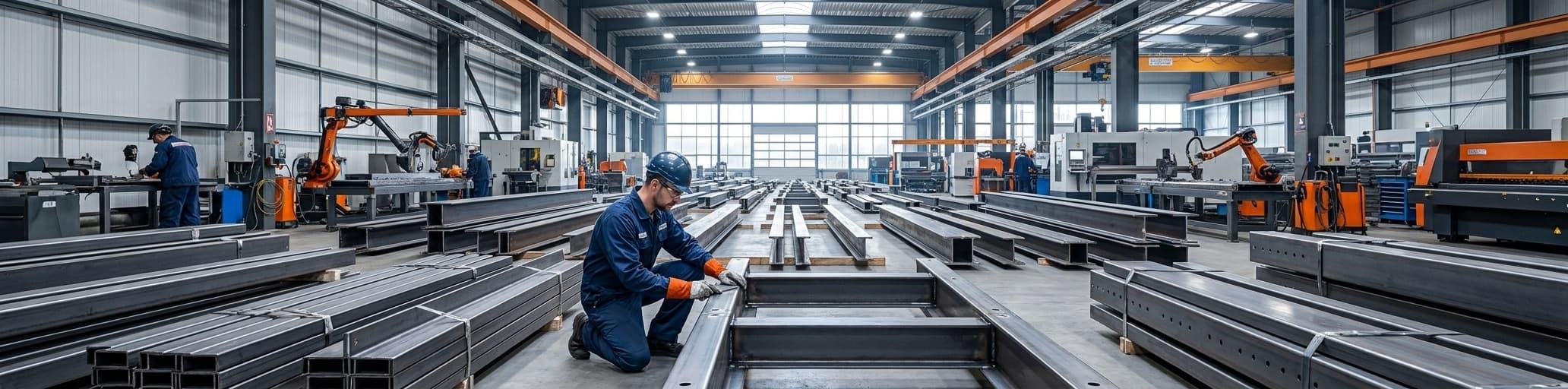

Pennsylvania steel building manufacturers must engineer structures to meet state-specific snow loads, wind exposure categories, and UCC code requirements that vary by county and elevation. Working with a certified manufacturer who handles design, fabrication, and erection keeps your project permit-ready and 30-50% faster than traditional construction.
Why Pennsylvania Manufacturers Matter for Your Steel Building Project
Pennsylvania's snow load, wind exposure, and seismic requirements vary by county and site conditions, so your manufacturer must engineer to your specific location's code criteria.
Understanding Pennsylvania's Unique Building Code and Climate Requirements
Pennsylvania runs its construction standards through the Uniform Construction Code (UCC), a statewide framework built on model codes published by the International Code Council (ICC).[2] The UCC applies to virtually all commercial and residential construction across the state — local municipalities handle permits and inspections, but the underlying requirements come from the state-level code.[2] For any steel building project, that means your structure must satisfy both your manufacturer's engineering package and the local office that stamps your permit.
The climate-driven requirements are where most projects hit unexpected friction. Pennsylvania's code mandates climatic and geographic design criteria that directly shape steel frame engineering, covering wind loads, seismic design categories, and floodplain construction.[1] Snow accumulation is the headline concern: roof systems must be engineered for ground snow loads that vary by county and elevation across the state.[1] Wind design criteria add another variable — the code assigns exposure categories based on terrain, so an open agricultural site in Lancaster County carries different lateral load requirements than a building sited in a sheltered industrial corridor.[1] Seismic design categories also apply in parts of Pennsylvania, affecting how the foundation and frame connections must be detailed.[1] You can see how quickly the compliance picture gets complex when you're buying from a manufacturer unfamiliar with PA's specific table values.
The code is actively changing. Pennsylvania is updating the UCC to align with the 2021 ICC code series, with new rules enforceable January 1, 2026.[2] That update tightens documentation requirements, reinforces snow and wind engineering standards, and clarifies moisture-control requirements for metal roofing assemblies — all of which affect how your steel building's specs get drawn up from the start.[2] A manufacturer already engineering to 2021 standards keeps your project permit-ready on day one instead of triggering costly redesigns after the local inspector raises a flag.[2]
The Advantage of Working with a National Manufacturer Operating in PA
Pennsylvania's manufacturing base isn't background noise — it's a direct cost lever for your project. The state's materials fabrication and electronic components value chain employs roughly 25,800 workers across the region, with competitive advantages rooted in precision engineering, machining, and component integration that supply the broader construction supply chain.[3] That industrial depth means a national steel building manufacturer operating here isn't sourcing components across a 2,000-mile logistics chain — it's drawing on a dense, established supplier network that keeps lead times shorter and material costs tighter than you'd see from a manufacturer with no regional footprint.
Those savings move down to your quote. A national manufacturer also brings procurement volume that a local-only fabricator simply can't match: bulk steel orders negotiated at the national level, then engineered and delivered to a PA address, give you the pricing muscle of a large operation without sacrificing the code-specific engineering the state requires.
The contrast with fragmented vendor arrangements is stark — when one organization controls design, engineering, fabrication, and delivery, every variable that typically inflates a project budget gets managed before it reaches you.
How Local Expertise Combines with National Resources at National Steel Buildings
The payoff of combining national engineering resources with Pennsylvania-specific knowledge is a project that moves straight from signed quote to stamped permit — no revision cycles, no surprise redesigns.
Pre-engineered steel components arrive pre-cut and pre-drilled, sized to your site's exact county-level snow load and wind exposure category before anything leaves the fabrication floor.[4] Code compliance isn't a checkbox added at the end; buildings engineered this way meet or exceed local and national standards — including Pennsylvania's variable ground snow loads, wind resistance criteria, and fire safety requirements — as part of the base engineering package.[5] That same national-scale operation gives you full customization: wide-open clear-span interiors, high ceilings, and adaptable layouts sized to your operation from day one.[4] And when your business grows, the structure grows with it — steel's scalability means you can expand without tearing apart what's already built.[5] One team controlling design, fabrication, and delivery removes the coordination gaps that push projects past deadline and over budget.[4] For a clear picture of what that looks like from order to jobsite, the prefab building kit delivery timeline walks through each phase so you know exactly when to expect your crew on-site.
What to Look for in a Pennsylvania Steel Building Manufacturer
Single-source design-build keeps your project 30-50% faster and within budget by coordinating labor, components, and logistics before anything ships.
Single-Source Design-Build vs. Fragmented Vendor RelationshipsThe difference between these two approaches shows up most clearly in total project cost — and it usually surfaces after you've already committed. When you buy a steel building kit from a direct-to-consumer supplier, you're pricing one component: the steel shell.
Erection, site work, foundation prep, and the engineering drawings required to pull a permit are all separate contracts you source, coordinate, and pay for on your own.[7] On a 50×100 building, that gap can turn a $45,000 kit quote into a $150,000 finished project — more than three times the number you started with.[7] Fragmented vendor arrangements also expose you to a risk single-source projects don't carry: if one supplier falls behind or fails mid-construction, the coordination burden lands entirely on you.[6] Single-source design-build eliminates both problems. When one organization controls the entire building envelope, all components arrive as a single labeled kit with a complete packing list, and if anything is missing or damaged, there's one call to make.[6] That same accountability extends to code compliance, local permitting relationships, and post-installation support — the areas where out-of-state DTC suppliers consistently fall short because they lack the local contractor relationships that move a project through the permit stage.[7] The practical payoff is a project that runs 30-50% faster than traditional construction and stays within budget, because labor, components, and logistics are coordinated before anything ships rather than reconciled after problems appear.[6] For a closer look at what true turnkey delivery covers from contract to completed structure, that breakdown maps every phase so you know exactly what's included and what's not.
In-House Erection Capability: Why It Matters for Your Timeline and Quality
Most general contractors don't carry in-house structural steel erection teams — which means your project typically routes through a subcontractor who never touched your engineering drawings.[10] That handoff is where schedules slip and quality control becomes a negotiation between two organizations with separate incentives.
When a manufacturer self-performs erection, the same crew that sets your primary columns also installs purlins, girts, bracing, and closes in the building — no trade handoffs, no gap where accountability disappears.[9] That continuity matters because field questions get answered against the same drawings that left the engineering desk, not relayed through a subcontractor chain.[8] The practical outcome is a shorter overall project schedule, daily quality control checks tied directly to your original design intent, and a single point of contact if anything needs correcting after the building is enclosed.[8] For a sharper picture of how that compressed timeline plays out phase by phase, the 30×40 steel building timeline breakdown maps each stage so you know exactly when to expect crews on your site.
In-house erection also lowers your risk exposure: when one organization controls design, fabrication, and field installation, there's no gap for a subcontractor failure to stall your project mid-frame — the coordination burden stays off your plate and on theirs, every step of the way.[8]
Custom Engineering That Meets Pennsylvania Snow Load and Wind Specifications
Pennsylvania's structural code requires construction documents to explicitly name roof snow load data, wind design data, and earthquake design data as discrete fields before a permit office will issue approval.[11] That documentation requirement is exactly where certified engineering pays for itself.
A certified steel building ships with stamped drawings that map directly to those code fields — ground snow loads under Section 1608, wind exposure categories under Section 1609, and the load combinations in Section 1605 that govern how those forces stack during a simultaneous storm event.[11] Without that package already in hand, your local building office requests it separately, which means commissioning an engineer to produce documents a certified manufacturer already includes in the base price.[12] Snow load also dictates roof geometry: in Pennsylvania's higher-elevation counties — the Pocono highlands, the Appalachian ridge — engineers spec steeper pitches with vertically oriented panel runs specifically so snow sheds before pack weight approaches the design load limit, rather than accumulating toward ponding instability.[12] Wind exposure category shifts the lateral load numbers the structural steel components in your frame must resist — Section 1609 assigns that category based on surface roughness of the surrounding terrain, so an open agricultural site in Chester County carries a different calculation than a sheltered industrial corridor in the Lehigh Valley.[11] Getting those variables locked before fabrication is the only way to avoid a redesign after steel is already cut — and a manufacturer who engineers to Pennsylvania's exact table values keeps your project on schedule and within budget from the first drawing to the final inspection.[12]
Steel Building Types Pennsylvania Manufacturers Specialize In
Pre-engineered steel components arrive custom-fabricated to your exact specifications and erect faster than conventional construction, protecting your seasonal planting and harvest windows.
Agricultural Steel Barns and Farm Storage Buildings
Pennsylvania farms don't follow a standard construction schedule. Planting windows close fast, hay needs cover before the next rain, and a building sitting half-finished doesn't just slow things down — it can cost you the entire season.[13] Pre-engineered steel addresses this directly: components arrive custom-fabricated to your site's exact wind and snow loads, erect faster than conventional construction, and hold up under daily agricultural use without the rot, warping, or pest pressure that compromises wood structures over time.[14][15]
The building type determines the specifications, and getting those specifications right from the start is where projects succeed or fail. Equipment storage requires door heights and clear-span widths matched to actual machine dimensions — a combine or large tractor doesn't fit a generic floor plan, and a building that forces tight turns costs you maneuvering time every single day.[13] For detail on how to size those openings correctly before fabrication begins, the farm equipment storage building dimensions guide maps common machine footprints to practical bay widths. Hay and feed buildings carry a different set of demands: engineered ventilation, proper clearances, and structural ratings that keep moisture out and inventory accessible, because a storage building that admits dampness pays for itself in spoilage losses within a single season.[13] Livestock facilities add drainage, interior layout, and ventilation requirements that support daily workflow from the first day of use — details that standard building specifications routinely miss.[13]
Steel also handles the multi-use configurations that working farms actually need. One structure can manage equipment on one end, feed storage in the middle, and flexible processing or overflow space on the other — the clear-span interior makes that layout possible without structural posts interrupting the floor plan.[14][15] Structural warranties run 30-plus years, steel's fire resistance can reduce farm insurance premiums, and routine maintenance drops to periodic fastener and roof panel checks — no repainting, no rot treatment, no post replacement.[14][15] That combination of low operating cost and long service life is what makes steel the cost-effective choice on Pennsylvania farms where every input dollar is accounted for.[15]
Commercial Warehouses and Industrial Facilities
Commercial warehouses in Pennsylvania have a single non-negotiable structural requirement: clear-span interiors wide enough to support racking systems, forklift circulation, and dock door layouts without interior columns eating into usable floor space.[17] Pre-engineered steel delivers this directly — rigid frame construction eliminates interior posts across spans that conventional framing can't match, letting you configure storage density, aisle widths, and loading zones around your actual logistics workflow rather than around structural constraints.[16][17] Vertical roof panels are the right call for Pennsylvania warehouse projects specifically: the panel orientation sheds snow before pack weight accumulates toward design load limits, and the hat channel reinforcement underneath adds rigidity against the lateral wind loads that flat-terrain logistics sites along the I-78 corridor or Lehigh Valley regularly face.[16]
Manufacturing and industrial applications push the structural requirements further. Heavy machinery loads, overhead crane systems, and mezzanine levels all require engineering that a standard storage building spec won't cover — and getting those variables locked before fabrication is the only way to avoid costly field modifications after steel is already cut.[18] Pre-engineered industrial steel buildings can be designed with crane support systems and multi-level mezzanines integrated into the primary frame from day one, so your equipment access and workflow clearance requirements are structural features rather than afterthoughts bolted on later.[18] For a detailed look at how clear-span engineering handles the load variables warehouse buyers typically overlook, the 40×80 metal warehouse clear-span load guide maps the structural decisions that protect your operation long-term. Construction timelines for pre-engineered commercial steel run roughly 33% faster than conventional methods — a direct reduction in labor, site management, and time-to-occupancy costs that compounds quickly when your business is waiting on a new facility to become operational.[16]
Aviation Hangars, Religious Buildings, and Specialty Structures
Aviation hangars have structural requirements that separate them from every other building type on this list. The hangar door is the most consequential decision in the design process — bi-fold options can be placed at ends or sides and can include self-supporting overhangs up to 14 feet that extend covered area for weather protection.[19] Clear-span interiors eliminate the interior columns that would otherwise force tight aircraft maneuvering, and every structural component must be engineered to FAA regulations alongside your site's specific snow and wind load data.[19] Pre-engineered steel hangars are built to handle heavy snow loads, high winds, and extreme climates simultaneously — not as separate design considerations, but as a single integrated load case factored before fabrication begins.[19] Pennsylvania's variable county-level snow loads apply here exactly as they do for agricultural or commercial structures, which means a hangar designed for a Pocono-area airfield carries different roof engineering than one sited in a lower-elevation corridor near Philadelphia. For a complete breakdown of how prefab aviation hangars get sized and permitted from wingspan to door selection, that guide maps every structural decision before you commit to a footprint.
Religious buildings place demands on structural design that most buyers underestimate going in. Sanctuary spaces need column-free interiors that preserve sightlines across the full congregation floor — clear-span steel frames deliver this without the structural constraints that force conventional construction to break up the space with posts.[20] A functioning church campus rarely stops at the sanctuary: fellowship halls, youth group rooms, outreach program spaces, and community service areas all need to be configured within the structure or added as future expansions without dismantling what's already built.[20] Pre-engineered steel handles both requirements within a single engineering package — the base structure accommodates the worship area, and the frame is designed from day one to accept future additions so your congregation can grow without a second foundation project.[20] Steel's cost-effectiveness doesn't mean visual compromise: exterior finishes, roof profiles, and architectural detailing can reflect the character of your faith community while keeping the project within budget and erecting significantly faster than conventional masonry or wood-frame construction.[20]
Specialty structures — equestrian arenas, event venues, multi-bay auto service facilities, cold storage buildings — share one engineering challenge: standard floor plans don't accommodate their specifications, and getting the variables wrong before fabrication means expensive field modifications after steel is already cut.[21] Clear-span widths up to 300 feet eliminate interior columns across the largest production, event, or storage footprints without requiring multiple interior supports.[21] Cold storage applications add insulated panel systems and controlled-environment configurations that must account for unique condensation and load challenges beyond what a standard structural spec covers — variables that need to be locked into the engineering package before anything leaves the fabrication floor.[21] What makes pre-engineered steel the right material for all three building types is the same thing that makes it work for hangars and sanctuaries: one engineering team addresses every load variable, door configuration, and local code requirement upfront, so your specialty structure arrives permit-ready rather than triggering a redesign cycle after the inspector raises a flag.[19]
Manufacturer Selection Checklist: How to Choose the Right Steel Building Partner
Verify AISC certification, inspect a portfolio matching your building type, and confirm the manufacturer handles both fabrication and on-site erection to ensure quality accountability.
Evaluating Manufacturer Track Record and Local Project Examples
The fastest way to separate credible steel building manufacturers from long-shot vendors is to ask for documented proof of what they've actually built.
A track record in Pennsylvania specifically means completed projects engineered to the state's exact snow load zones, wind exposure categories, and UCC permit requirements — not a generalized portfolio of steel structures from other states or climates.
Start with certifications: AISC certification and AWS-certified welders are baseline quality indicators that verify fabrication and field work against documented standards your local permit office recognizes.[22] Years of continuous operation tell a parallel story — a manufacturer with 40-plus years of regional project history has navigated supply disruptions, mid-project code changes, and field conflicts that derail newer operations before delivery.[22] When you request a portfolio, look for photos, building specs, and completed structure descriptions that match your intended use — agricultural, commercial, industrial, or aviation — rather than a curated gallery of only the largest jobs.[23] Many companies offer prefab steel buildings, but not all have the track record to back up their claims, and a portfolio that shows real project specs across building types tells you far more than a marketing brochure.[23] Consistent five-star buyer feedback from farmers, business owners, and commercial developers adds a third data layer: it confirms that delivery performance holds across different building types and site conditions, not just on showcase projects.[23] Manufacturers who handle both fabrication and on-site erection under one roof provide a clear quality advantage in this evaluation — the crew that built your components also installs them, so field questions get resolved against the original engineering drawings rather than relayed through a subcontractor chain.[22] For a practical vetting framework before you commit to any manufacturer, the local prefab contractor vetting guide walks through the five checks that surface problems before they reach your jobsite.
Comparing Total Cost of Ownership vs. Lowest Bid Pricing
The lowest bid on your steel building quote is the least useful number on the page. What it typically excludes — foundations, site preparation, engineering drawings, permits, and erection — represents 30-60% of the total project value on its own, meaning a competitive kit price can still produce a budget overrun that doubles your original estimate once all supporting costs land.[26] Choosing the wrong manufacturer or contractor based on price alone is one of the most reliable ways to turn an exciting project into an expensive repair cycle.[25] The bid you should actually be comparing is the 40-year number: steel structures require significantly less maintenance than wood-frame alternatives, don't rot or attract pests, and with routine inspection can deliver 40-60 years of service without major capital reinvestment.[26] Insurance premiums alone run 20-30% lower for steel buildings due to reduced fire risk, improved weather resistance, and longer life expectancy — savings that compound annually and materially shift the long-term cost picture in steel's favor.[26] For a complete breakdown of what a real total project budget looks like line by line, the full budget guide for a 30×40 steel building maps every cost category from kit price through occupancy so you can compare bids on an equal footing rather than on the shell price alone.
| Cost category | Lowest bid approach | Total cost of ownership approach |
|---|---|---|
| Kit / shell price | Minimized upfront | Engineered to spec, no redesign costs |
| Hidden project costs | Excluded (30-60% of total value) | Scoped and included before contract |
| Annual maintenance | Higher (wood/mixed materials) | Low — no rot, pests, or warping |
| Insurance premiums | Standard rate | 20-30% lower for certified steel structures |
| Service life | 20-30 years typical | 40-60+ years with routine inspection |
| Resale / adaptability | Limited | High — steel accepts future expansions |
Verification Checklist: Communication, Warranty, and Post-Installation Support
Before you release a final payment or sign off on a completed project, ask every manufacturer candidate how they handle field issues in writing. A credible operation follows a documented escalation path: direct discussion with the site supervisor first, then written notice to the project manager, then formal notice to company management if the issue remains unresolved.[28] That sequence matters because verbal-only resolutions leave you with no documentation if a warranty claim surfaces 18 months later. Every deficiency you identify should be captured in writing with date-stamped photos and a reference to the applicable specification or code — not as an adversarial move, but as the baseline record that protects both parties and moves correction timelines forward.[28]
The warranty conversation should happen before the contract is signed, not after the last bolt is set. Ask for two separate warranty documents: the installation workmanship warranty, which covers the erection crew's field work, and the manufacturer's material warranty, which covers steel panels and framing components — these carry different terms and different durations.[27] Before releasing final payment, verify the warranty period start date is confirmed in writing, all punch list corrections are complete, and you have received the full closeout documentation package.[28] That package should include structural drawings and calculations, material certifications, manufacturer warranties, maintenance instructions, and as-built drawings that reflect any field changes made during erection.[28] A manufacturer who can't produce this package at job completion is telling you something important about how responsive they'll be when you call three years from now.
The first year after installation is your most valuable monitoring window. After the first rain, check for leaks or drainage issues. After temperature swings, inspect for condensation. After wind events, test door operation and look at bracing connections. After heavy snow accumulation, evaluate roof deflection before it approaches design load limits.[28] A manufacturer with genuine post-installation support will offer a structured annual inspection service so those seasonal checks don't fall entirely on you.[27] Use the table below to run a fast verification pass before you accept any steel building project as complete:
| Verification area | What to confirm before closeout | Red flag |
|---|---|---|
| Communication protocol | Written escalation path with defined response timelines | Verbal-only resolution process, no paper trail |
| Workmanship warranty | Separate document covering erection crew's installation work | Single vague warranty with no erection-specific terms |
| Materials warranty | Manufacturer document covering steel panels and framing | No distinction between workmanship and materials coverage |
| Closeout documentation | Structural drawings, certifications, as-builts, maintenance manual | Missing documents, promise to send later |
| Warranty start date | Confirmed in writing at final acceptance | Unclear when coverage period begins |
| Post-installation support | Annual inspection option and direct contact for future repairs | No follow-up process after delivery |
| Seasonal monitoring | First-rain, temperature, wind, and snow-load check schedule provided | No guidance on what to watch during first year |
Running this checklist at contract review — not at final walkthrough — keeps every variable on the table while you still have leverage. Manufacturers who answer these questions clearly before the project starts are the ones who answer the phone every step of the way after it finishes.
- Single-source design-build manufacturers reduce project costs by 30-50% compared to fragmented vendor arrangements by coordinating design, fabrication, and erection under one organization.
- Pennsylvania is updating its building code to 2021 ICC standards effective January 1, 2026, requiring manufacturers to engineer buildings to new documentation and moisture-control requirements.
- Pre-engineered steel buildings arrive with stamped drawings meeting Pennsylvania's discrete code requirements for snow load, wind design, and earthquake data before local permit office review.
- Manufacturers controlling both fabrication and on-site erection eliminate subcontractor handoffs, reducing schedule delays and quality control gaps that typically inflate project budgets.
- Total cost of ownership favors steel over 40-60 years due to lower maintenance, 20-30% reduced insurance premiums, and no rot or pest damage compared to conventional construction.
- https://up.codes/viewer/pennsylvania/irc-2015/chapter/3/building-planning
- https://www.reimagineroofing.com/blog/pennsylvanias-2025-2026-building-code-update/
- https://www.brookings.edu/articles/southeastern-pennsylvania-market-assessment-for-growing-opportunity-industries-and-economic-mobility/
- https://redironbuildings.net/pennsylvania-red-iron-buildings/
- https://norsteelbuildings.com/us/buildings/industrial-metal-buildings/
- https://norsteelbuildings.com/advantages-of-steel-series/advantages-single-source-responsibility/
- https://www.tedescoconstruction.com/2023/01/04/direct-to-consumer-metal-buildings-more-benefit-than-threat/
- https://www.patcocommercial.com/our-process/
- https://www.alpha-labor-co.com/blog/pemb-erection-timeline
- https://www.flemingconstructiongroup.com/the-extraordinary-benefits-of-working-with-fcg/
- https://up.codes/viewer/pennsylvania/ibc-2018/chapter/16/structural-design
- https://www.aametalbuildings.com/blog/snow-load-wind-speed-requirements-for-metal-buildings-with-codes-pricing-impact?srsltid=AfmBOopLcG0C2Bx4rFcQLgpfoTswgyCcW6gF84CAx4zBnZtWNwijsj3R
- https://coastalsteelstructures.com/uses/agriculture-metal-buildings-farms-barns/
- https://sunwardsteel.com/pennsylvania/
- https://www.buildingsguide.com/metal-building-kits/farm/?srsltid=AfmBOoqx4MVg9o4AGKNFOAeODyfWttj7tjS7RG5HdgaG7HYzwdkes1LF
- https://www.vikingsteelstructures.com/commercial-metal-buildings-pennsylvania-pa?srsltid=AfmBOop5TpvstnLIzuBHl5anBStWq1D6F117bcuLoeahXQ8de1Spb931
- https://www.whitetailconstructionllc.com/commercial/warehouses
- https://ironbuiltbuildings.com/steel-buildings-pennsylvania-2/
- https://www.worldwidesteelbuildings.com/steel-buildings/aircraft-hangars/
- https://sunwardsteel.com/building-type/church/
- https://www.rigidbuilding.com/industrial-metal-buildings/
- https://kinsleysteel.com/contactus/
- https://titansteelstructures.com/steel-building-services/why-is-titan-steel-structures-the-best-pre-engineered-steel-building-company/
- https://towersteelbuildings.com/blog/steel-building-long-term-cost-savings/
- https://nordicsteel.construction/dont-make-these-5-costly-errors-in-your-steel-building-project/
- https://www.ibeehivesteelstructures.com/blog/exploring-the-factors-affecting-steel-structure-costs/
- https://keensbuildings.com/installation-guide/?srsltid=AfmBOorO75NBApJx01aLhP-WhR63yeajDQp2S-9ej76aK6_NdrunTIWR
- https://ztsteelstructure.com/steel-construction-quality-checklist-10-key-owner-inspection-points/